Showing posts with label Polls. Show all posts

Tuesday, December 09, 2014

Decision Time: Best Crime Covers of 2014


Later this week, I’ll begin posting lists from Rap Sheet contributors of their favorite crime, mystery, and thriller novels published over the last 12 months. Meanwhile, though, I want to get the discussion started about 2014’s top book cover designs.

Except in 2012, this blog has polled readers annually ever since 2007 to determine what they thought were the most engaging and elegant crime novel fronts produced in the preceding 12 months. We’ve sometimes been surprised by the choices made, but never disappointed. Despite what some people might say, cover design is a vital ingredient of any book. Hardcover jackets and paperback façades act as posters, announcing the subject and tenor of the story to be told in the pages that follow. At their best, book fronts are also fine art, works worth admiring and perhaps collecting on their own. Sadly, many of the genre entries filling up bookstore shelves these days do little to distinguish themselves from one another; they play it safe, using imagery (men or women fleeing from the camera, desolate landscapes, haunted human faces, etc.) that some marketing person is convinced will immediately tell readers what to expect. “The path of least resistance when you’re designing a jacket,” says Peter Mendelsund, an associate art director at publisher Alfred A. Knopf, “is to give that particular demographic exactly what they want. It’s a mystery novel, so you just splatter it in blood, and put the shadowy trench coat guy on it, and use the right typography.” The covers most deserving of attention and acclaim are instead those that defy expectations, those that employ photographs, illustrations, and headline typefaces in ways (and combinations) that engage the eyes as well as the imagination.

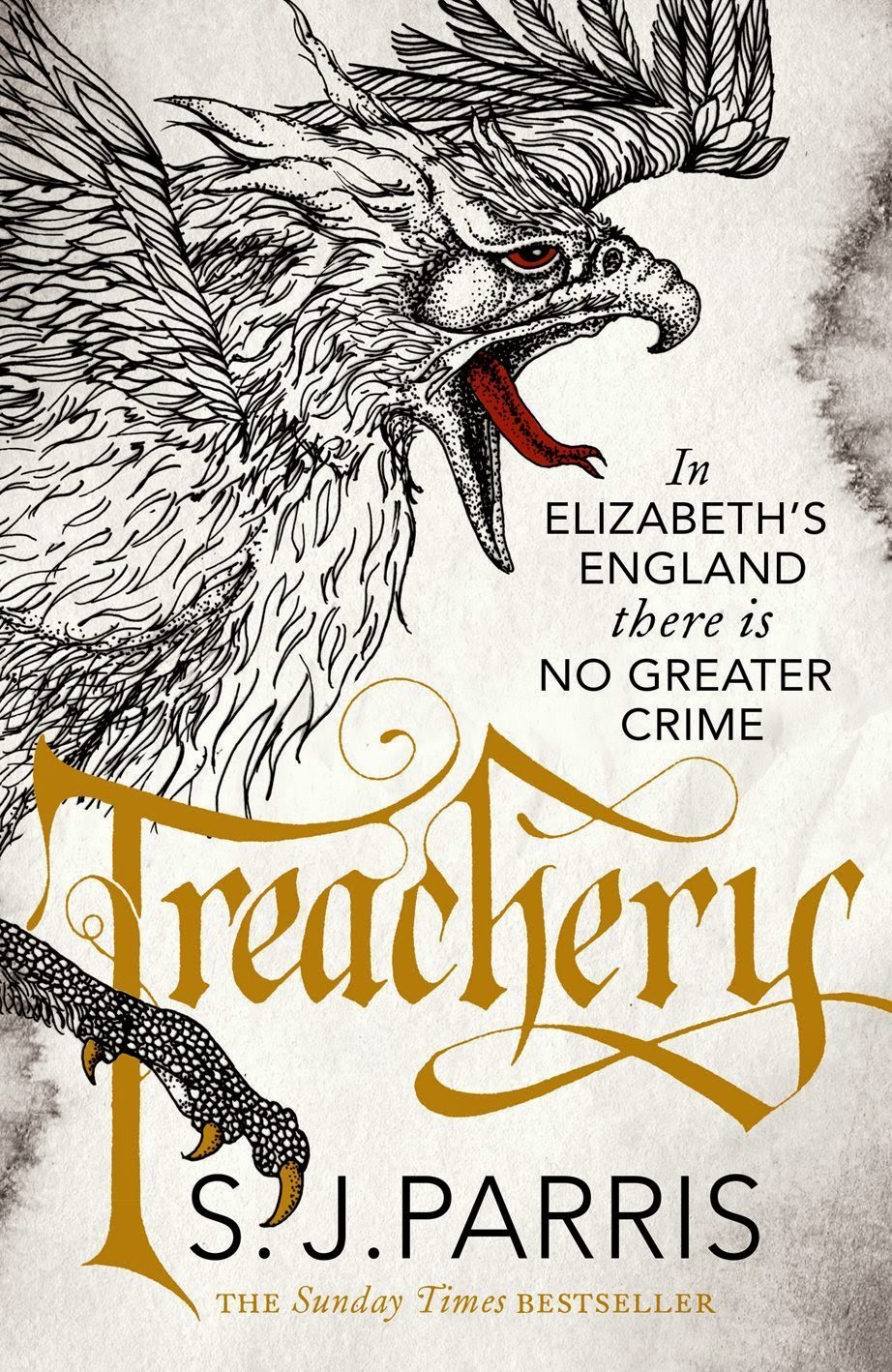
Combining some of our own choices with additional suggestions from Rap Sheet followers, we’ve assembled the gallery below of 20 crime novel covers--all released during 2014, on both sides of the Atlantic--that offer more than the usual complements of expertise, cleverness, subtlety, and freshness. Now it’s your turn to declare which of these you like best.

At the bottom of this post you’ll find a simple ballot on which to vote for your favorites among these contenders. You are welcome to select as many covers here as you think deserve praise. We’ll keep the voting open until midnight on Sunday, December 21, after which the results will be tallied and announced.

Click on any of the covers below to open an enlargement.


ONE THING MORE: If you think we have neglected to mention some other crime-fiction cover from 2014 that is also deserving of widespread praise, please post a comment about it at the end of this piece. Just be sure to include a link to where on the Web other Rap Sheet readers can see that additional cover for themselves.

Tuesday, September 24, 2013

Where Readers Dare

I’m hoping that The Rap Sheet’s well-read visitors will help me out with a little project I have been working on lately, focusing on the once-acclaimed Scottish thriller writer Alistair MacLean.

Below is a poll asking you to choose your favorites from among MacLean’s more than two dozen novels (listed here in the order of their publication). Feel free to select one or more of these books. If you need to refresh your memory about MacLean’s works, click over to this site and then hold your cursor above the “Book Reviews” tab; a pop-up menu will lead you to concise plot summations.

And if you’d like to share your opinions--positive or negative--about MacLean’s oeuvre, please do so in the Comments section at the bottom of this post.

This survey will remain open until the beginning of November 2013.

Tuesday, April 12, 2011

Find a Winner

What a response! Normally, when The Rap Sheet mounts a book-giveaway contest, the number of entries runs between 60 and 100. We’ve always considered that very respectable participation. However, our announcement last week that we were going to hand out two free sets of four standalone Ross Macdonald novels--Blue City (1947), The Three Roads (1948), Meet Me at the Morgue (1953), and The Ferguson Affair (1960)--redefined our expectations of what to expect from such a competition.

Within the very first day of accepting entries, we had received 40. And the number climbed quickly from there. By yesterday at midnight, when this contest officially ended, the count of requests for those two sets of Macdonald paperbacks had reached a whopping 157! Whether because we were giving away four novels at a shot, or because the Macdonald moniker draws so much more attention than those of other authors whose books have been our prizes before, this turned out to be our most popular contest yet.

Now comes the big announcement of our two lucky winners, chosen completely at random. They are Mike Galbreath of Kalamazoo, Michigan, and Wendy Roberts of Newport Coast, California. Congratulations to both Rap Sheet readers! We hope you’ll enjoy visiting or revisiting all four of those early Macdonald works. And of course, we trust you will continue to enjoy reading The Rap Sheet.

At the same time as we solicited entries in our latest drawing, we asked readers to vote their favorite works among Macdonald’s 18 books starring Los Angeles private eye Lew Archer. Again, the response was heavy. With 225 votes counted, here are the top five ballot winners:

1. The Chill (1964) -- 31 votes, or 14 percent
2. The Underground Man (1971) -- 20 votes, or 9 percent
3. The Galton Case (1959) -- 19 votes, 8 percent
4. The Zebra-Striped Hearse (1962) -- 19 votes, 8 percent
5. The Instant Enemy (1968) -- 14 votes, 6 percent

(The full rundown of results is available here.)

Rap Sheet followers who aren’t yet familiar with Macdonald’s memorable body of work, but would like to read the best he had to offer, would do well to start with those five Archer adventures.

Thanks to everyone who participated in our latest book-giveaway contest, and who made their opinions known in our Ross Macdonald poll. You can expect another book competition to appear on this page soon.

Tuesday, June 29, 2010

The Girl, the River, and the Great Debate

This news will undoubtedly come as no surprise to Ali Karim, The Rap Sheet’s British correspondent, who began touting The Girl with the Dragon Tattoo even before the first appearance of its English translation in the UK, but that 2008 novel by Swedish journalist-author Stieg Larsson has been chosen in a poll of this blog’s readers as the Best Mystery/Crime Novel of the Decade (2000-2009). With 292 ballots having been cast, Larsson’s thriller came out on top with 82 votes, or 28 percent of the total.

Second-place honors go to Dennis Lehane’s 2001 novel, Mystic River. It racked up 78 votes, or an extremely close 27 percent of the total. The third- and fourth-place positions in our survey were strongly contested as well. In the end, Irishman Ken Bruen’s initial Jack Taylor detective novel, The Guards (2001), captured the No. 3 slot with 52 votes (18 percent), while Spanish writer Carlos Ruiz Zafón’s first adult novel, The Shadow of the Wind (2001), slid into the No. 4 position with 46 votes (16 percent). Standing at the back of the winner’s circle: The Lincoln Lawyer (2005), by Michael Connelly, which came in at No. 5 with 21 votes (or 7 percent of the total), and Canadian author Louise Penny’s Still Life (2005), scoring 13 votes (4 percent).

The six books featured in this poll were taken from Deadly Pleasures Mystery Magazine’s new list of Barry Award nominees. Its Mystery/Crime Novel of the Decade category is a special one for 2010.

Predictably, there were many people who expressed disappointment that their favorites weren’t among the contenders on Deadly Pleasures’ docket, and therefore weren’t featured in The Rap Sheet’s poll. Alternative book suggestions included Peter Robinson’s Aftermath (2001), Gillian Flynn’s Sharp Objects (2006), Arnaldur Indriðason’s Jar City (2000), Peter Temple’s The Broken Shore (2005), Martin Cruz Smith’s Wolves Eat Dogs (2004), Philip Kerr’s A Quiet Flame (2008), Nancy Pickard’s The Virgin of Small Plains (2007), Louis Bayard’s Mr. Timothy (2003), Craig Holden’s The Jazz Bird (2002), Stephen Booth’s Blood on the Tongue (2002), and Megan Abbott’s Queenpin (2007). Some of the folks who commented on this survey didn’t identify specific works they would have liked to see in the running, but instead named authors they thought deserved to be mentioned, people such as George Pelecanos, Robert Crais, Laura Lippman, Reginald Hill, Max Allan Collins, Fred Vargas, Robert Littell, James Lee Burke, and Kate Atkinson.

There was nothing scientific about this poll, and there’s obviously plenty of room for disagreement. We just thought it would be interesting to know whether Deadly Pleasures had chosen anything close to being called the Best Mystery/Crime Novel of the Decade in its latest Barry Award nominations. It’s now up to the magazine’s readers and subscribers to decide which one of the half-dozen nominees in this category deserves top honors. All they have to do is e-mail their pick to editor George Easter at george@deadlypleasures.com. (Selections in six other Barry categories can also be sent to that same e-mail address.)

Feel free to voice your own opinions on the results of our poll and on Deadly Pleasures’ picks in the Comment section below.

Sunday, June 13, 2010

Is This Really the Cream of the Crime?

On Thursday, Deadly Pleasures Mystery Magazine announced its nominees for the 2010 Barry Awards. In addition to the usual categories of Best Novel, Best First Novel, Best Short Story, and the rest, the list also included a new group from which to choose: Best Mystery/Crime Novel of the Decade (2000-2009). The contenders for that title are:

The Guards, by Ken Bruen (Minotaur)
The Lincoln Lawyer, by Michael Connelly (Little, Brown)
The Girl with the Dragon Tattoo, by Stieg Larsson (Knopf)
Mystic River, by Dennis Lehane (Morrow)
Still Life, by Louise Penny (Minotaur)
The Shadow of the Wind, by Carlos Ruiz Zafón (Penguin Press)

Now, while all of those half-dozen works certainly deserve acclaim, and some of them (particularly Larsson’s first thriller) have become bestsellers, we are left wondering whether they really represent the best crime and mystery novels the first decade of the 21st century had to offer. And if so, which one ought to walk away with the Barry?

We would like to know what you, the extremely well-read members of The Rap Sheet’s readership, think of these selections. So we’ve set up an informal poll near the top of the right-hand column on this page. (See the compact, silver-shaded box.) Feel free to vote for your favorite among the six books the Deadly Pleasures judges think are the best. Or feel free to suggest alternative “best crime novels of the decade” in the Comments section of this post.

Our poll will remain on the page for the next couple of weeks, until midnight on Monday, June 28. After that we’ll tally up the votes. Whether Deadly Pleasures readers and subscribers--the folks who will ultimately name a Barry Award recipient in the Best Mystery/Crime Novel of the Decade category--agree with your preferences is another matter altogether. But at least you will have had your say.

UPDATE: The winners of this poll can be found here.

Thursday, March 26, 2009

Everything’s Coming up Chandler

Just over a week ago, we launched a poll in The Rap Sheet to determine which of Raymond Chandler’s seven original Philip Marlowe novels our readers think is his finest. (We chose not to include the posthumous work Poodle Springs, which Chandler began writing back in 1959, but which was completed by Robert B. Parker and published in 1989, 30 years after Chandler’s demise.) Today, we have the results of that survey.

In total, 178 votes were cast, with The Long Goodbye (1953) receiving the greatest number--55, or 31 percent. In second place, with 25 percent of the vote, we find The Big Sleep (1939), which is rather surprising, given how often readers remark on that story’s confusing plot. Third place in this poll goes to Farewell, My Lovely (1940), with 22 percent. The other four contenders rank downward from there: The Little Sister (1949), 10 percent; The Lady in the Lake (1943), 8 percent; and The High Window (1949) and Playback (1958), both with 2 percent of the vote (though The High Window edges out Playback with one more vote).

Thank you to everybody for participating in this poll.

In case you haven’t noticed yet, the crime-fiction blogosphere today offers up a variety of tributes to Chandler and his famous fictional private eye. Sarah Weinman points us to a few choice posts, including biographer Judith Freeman’s excellent review of the author’s life and career in L.A. Weekly, Baltimore Sun writer David Rosenthal’s fill-in-the-blanks quiz on Chandler’s trademark descriptive phrases, Utter Scoundrel’s re-reading of Playback, and Chris Routledge’s recollection of this novelist’s early life. And although we chose to ignore Poodle Springs, Gregory McNamee gives credit to that “lost” novel in the Encyclopedia Britannica blog.

One more treat to enjoy today: Here is the Los Angeles Times’ obituary of Chandler from 1959. It’s pretty short for a guy who made such a big impact on fiction.

Tuesday, March 17, 2009

Rating Raymond

With just over a week to go before the 50th anniversary of author Raymond Chandler’s death on March 26, we’ve decided to conduct a little poll. Nothing fancy. We’re just asking a question that has caused more than a few arguments among crime-fiction readers over the last half century:
Which of Chandler’s seven novels is his best?
The usual prime contenders are Farewell, My Lovely (1940) and The Long Goodbye (1953), but other readers are known to have contrary opinions. Not everybody believes, for instance, that Playback (1958) is the weakest link in the Marlowe series chain. And people who love the 1969 James Garner film Marlowe, which was adapted from The Little Sister (1949), can also be particularly fond of that book.

But what do you think? Near the top of the right-hand column on this page, you’ll find a silver-tinted box in which you can vote for your favorite Chandler novel. Make your opinions known. You can vote for more than one title, but only once a day.

This poll will remain open through next Wednesday, after which we’ll announce the results.

What the hell are you waiting for? Go vote! And if you have more complicated opinions about Chandler’s work that you’d like to share, please feel free to do in the Comments section of this post.

Thursday, February 14, 2008

Be Mine

Happy Valentine’s Day, everyone. It’s a time for sharing your love ... and sharing your fantasies. Last week, The Rap Sheet posted its first ever (and likely last) poll asking readers, “Which crime-fiction character would you most like to be kissing on Valentine’s Day?” The votes came in hot and heavy, and there were some early leaders who wound up being left at the altar. But we can finally announce the results.

In the category of male protagonists, there were 174 votes recorded, and the winner is ... Jack Reacher, British author Lee Child’s former U.S. military policeman turned international troubleshooter. There was definitely a surge in the Reacher selection at the end, and we suspect somebody was rousing their troops in a last-minute effort to put Child’s man over the top. But heck, this is a friendly place, so we’ll accept the results at face value. The second-place vote-getter is one of our favorite TV detectives of the past, Jim Rockford, played so wonderfully during the late 1970s by James Garner; while third place goes to Adam Dalgliesh, P.D. James’ poetry-writing commander in the Metropolitan Police Service. Also making good showings in the survey were Ross Macdonald’s compassionate private eye, Lew Archer; James Lee Burke’s Louisiana cop Dave Robicheaux; and Robert Crais’ Joe Pike, the erstwhile Marine and Elvis Cole sidekick who starred in last year’s The Watchman. You can see the full results of voting in the male protagonist category here.

Among the women, there were 210 votes registered ... and we almost had a tie between teenage TV sleuth Veronica Mars (played by the not-so-teenage Kristen Bell) and author Dennis Lehane’s Boston private eye, Angela Gennaro, who was portrayed so engagingly in the recent movie Gone Baby Gone by lovely Michelle Monaghan. (As one reader pointed out, it definitely helps crime-fiction characters in a poll such as this, if they’ve been brought to life well on either the large or small screens.) Mars received only a single vote more than Gennaro did, and we thought the tally might end up deadlocked; but one person out there in Rap Sheet reader-land made all the difference--which just goes to prove that old adage about every vote counting. Falling in somewhat distantly behind these two top draws in our poll were James Bond inamorata Vesper Lynd, from the 1953 Ian Fleming novel, Casino Royale (and brought to such seductive life by Eva Green in last year’s second film adaptation of Fleming’s book); FBI Missing Persons Unit Special Agent Elena Delgado, who’s played on American TV’s Without a Trace by eye-catching Puerto Rican actress Roselyn Sanchez; and Natalie Teeger (Traylor Howard), dysfunctional detective Adrian Monk’s personal assistant on the TV series Monk. The complete tally of votes in this category can be found right here.

Thanks to everyone for playing along. You are now free to go off and buy roses for that flesh-and-bones love of your life. Or, if you choose, you can always continue fantasizing. No law against it, right?

READ MORE:Neptune Noir: Unauthorized Investigations into Veronica Mars,” by Bruce Grossman (Bookgasm).

Wednesday, February 06, 2008

Pucker Up, Baby!

Memo to all you romantics out there: You have just eight more days in which to prove your worth. Valentine’s Day comes on February 14, a week from tomorrow. Do you have reservations at the right restaurant? A present that shows your love, or at least makes clear your developing interest? The right flavor of body paint? Yeah, it’s a big commitment, all of this romance stuff, and Valentine’s Day has become every bit as commercial as Christmas and Mother’s Day. But still ... still ... you can’t be seen as falling down on the job, now can you?

Of course, performing well for Valentine’s Day is easier if you happen to be with the right person. And maybe you’re not. Maybe you fantasize about being with somebody completely different. Maybe ... oh, Veronica Mars (shown at left)? Or Harry Orwell? I did say this was fantasizing, after all. There’s no reason you have to dream about locking lips with a real person on February 14, no reason why the woman or man of your dreams can’t exist only on the small screen, or only in books.

Which raises the obvious question: If you could be kissing any character from crime fiction this Valentine’s Day, who would it be? We’ve assembled a list of 40 possibilities in a two-part poll, now debuting in the silver-shaded box on the right-hand side of this page. (We have split the survey into lists of men and women. You should be able to view the alternate half simply by reloading this page.)

If fantasy could be made reality, would you prefer to be snuggled up beside Detective Sergeant Siobhan Clarke from Ian Rankin’s John Rebus novels? Romancing P.D. James’ Commander Adam Dalgliesh of Scotland Yard? Putting the moves on secretary Peggy Fair, from Mannix? Trying to soothe the savage beast that is Elvis Cole’s associate, Joe Pike? Our list of potential lovers ranges from the well known (Lew Archer, Irene Adler, Jack Reacher, V.I. Warshawski, etc.) to some that might not come quite as readily to mind (spectral sleuth Marty Hopkirk from Randall and Hopkirk [Deceased], private eye Anna Lee from Liza Cody’s novels and the old TV series Anna Lee, homicidal Serge A. Storms from Tim Dorsey’s popular series of books, the winsome Natalie Teeger from Monk, and trouble-prone paparazza Nina Zero from Robert Eversz’s novels).

We’re not judging here, just inquiring. All choices are anonymous. Feel free to vote for as many characters as you’d like, but you can only vote once during each 24-hour period. We will keep this survey up until Valentine’s Day, so you have a bit of time to think about your preferences. And if you’d like to suggest some ideal Valentine’s Day partners we have not listed in the poll, don’t hesitate to mention those in the Comments section of this post.

Fantasize away, friends.

Sunday, August 05, 2007

The Jury Has Reached a Verdict

“Who’s the best TV/movie criminal attorney in history?” That was the question posed in The Rap Sheet’s third and latest survey, and over the last two weeks readers responded in fairly great numbers. In fact, more people participated in this poll than made their opinions known in our previous blog surveys about favorite TV cops and private eyes and long-missing crime novelists. With 329 votes cast, the top five picks are:

1. Atticus Finch, To Kill a Mockingbird (Gregory Peck)--63 votes
2. Perry Mason, Perry Mason (Raymond Burr)--54 votes
3. Horace Rumpole, Rumpole of the Bailey (Leo McKern)--39 votes
4. Alexandra Cabot, Law & Order: Special Victims Unit (Stephanie March)--19 votes
5. Jack McCoy, Law & Order (Sam Waterston)--18 votes

To be frank, I had expected Erle Stanley Gardner’s renowned trial advocate, Mason, to lead this pack. However, Finch’s win might have been predicted. After all, as Wikipedia reminds us, in 2003 the American Film Institute named Atticus Finch as “the #1 Greatest Hero of American film”; and in 2002, “a panel of 55 authors, literary agents, editors, and actors” assembled by the now-defunct Book Magazine, rated Finch #7 on its rundown of the “100 Best Characters in Fiction Since 1900” (right behind Sherlock Holmes). Obviously, Rap Sheet readers have good taste. That’s proven true, as well, by the fact that the late McKern’s Rumpole, an eccentric British barrister who would probably not appeal to today’s younger audience of action-movie junkies, scored so high.

That New York Assistant District Attorney Cabot (who actually bowed out of Law & Order: SVU back in 2003, only to reappear in the short-lived Conviction three years later) and newly promoted District Attorney McCoy occupy the fourth and fifth positions in this poll probably owes both to the brilliance of the actors portraying them and to the general, continuing popularity of creator-executive producer Dick Wolf’s ratings-grabbling series franchise.

More surprising are the characters--all of them TV figures--who fill the next four spots on this survey. Coming in at #6 is Tony Petrocelli, the Harvard-educated lawyer (portrayed by Barry Newman) who, in Petrocelli, left the higher-paying playing field of Manhattan to take up a very different sort of practice in the fictional cow town of San Remo, Arizona. Petrocelli held a place on NBC’s TV schedule for only two years (1974-1976), but, as evidenced by our poll, its protagonist is still fondly remembered. (Petrocelli received 17 votes.) The same goes for #7 on our list: Los Angeles District Attorney Hamilton Burger (William Tallman), who was Perry Mason’s customary adversary on the 1957-1966 CBS TV series. He walked away with 16 votes in our poll. Which, it should be noted, is just one more than was received by Billy Jim Hawkins, the deceptively bright West Virginia criminal attorney portrayed by Jimmy Stewart in the CBS-TV series Hawkins (1973-1974). At #8, Hawkins barely squeaked ahead of Owen Marshall (Arthur Hill), the avuncular counselor from Owen Marshall: Counselor at Law (1971-1974); he scored 14 votes.

Capturing the last spot on our top 10: Paul Biegler, the better-than-able defense attorney (also played by Stewart) in the 1959 movie Anatomy of a Murder. He won 12 votes.

A full table of the results from this poll can be found here.

As our readers pointed out, we forgot at least two criminal attorneys who might have made good showings in this survey: Alan Shore (James Spader), the offbeat, womanizing, but still somehow endearing go-to lawyer lead from ABC-TV’s very popular series Boston Legal; and the fondly remembered--if not quite so broadly recalled--Lawrence Preston (E.G. Marshall) from The Defenders (1961-1965), a CBS series about a father-son team of attorneys who took on definably hopeless cases. (Robert Reed, later of The Brady Bunch, played the junior Preston.) There’s one other character, as well, who I can hardly believe I forgot to include in this poll’s choices: Theodore “Ted” Hoffman (Daniel Benzali) from the 1995-1996 first season of Steven Bochco’s unconventional Murder One. Quietly powerful and resolutely ethical, if not brimming with human warmth, Hoffman was exactly the sort of advocate one wanted on his or her side, when there seemed no hope in sight of a favorable verdict. So terrific was Benzali in that first season, that I was astounded to see him replaced by Anthony LaPaglia in season two.

There’s no way of knowing whether any of these additional candidates might have swayed the voting in The Rap Sheet’s recent poll. But I suspect they, too, would have found many admirers among our readers. Maybe next time.

Wednesday, July 18, 2007

Courting Public Opinion

Yesterday’s birthday tribute to Erle Stanley Gardner, the creator of celebrated fictional lawyer-detective Perry Mason, got us to thinking: In the past, The Rap Sheet has asked readers about their favorite TV police detectives and private eyes, but we’ve never inquired as to your favorite attorneys from screens large and small.

Why wait any longer? You will find near the top of the right-hand column on this page a silver-shaded box in which we ask, Who’s the best TV/movie criminal attorney in history? The 20 nominees are drawn from both media, and from works current as well as historical. Some of the choices will be more easily recognized than others. We anticipate that there’s no great necessity to remind people of who Atticus Finch is, for instance (he’s the middle-aged lawyer-father in Harper Lee’s Pulitzer Prize-winning 1960 novel, To Kill a Mockingbird). And fans of Scott Turow’s legal thrillers are likely to recognize Rusty Sabich, the chief deputy prosecuting attorney in Turow’s 1987 first novel, Presumed Innocent, played by Harrison Ford in the movie. Followers of the Law & Order TV series franchise should have no troubled identifying New York Assistant District Attorney Jack McCoy (recently promoted to fill D.A. Arthur Branch’s shoes) on the original Law & Order series, or ADA Alexandra Cabot (Stephanie March) from Law & Order: Special Victims Unit. And we’re pretty confident that savvy frequenters of The Rap Sheet will remember Horace Rumpole, the British barrister created by novelist John Mortimer and played with such aplomb by Leo McKern on the UK TV show Rumpole of the Bailey, as well as Ben Matlock, the cantankerous Georgia attorney portrayed by Andy Griffith on eight seasons of Matlock.

Other figures, though, are rather more obscure. One example being small-town lawyer Paul Biegler, who was played by Jimmy Stewart in the 1959 movie adaptation of Robert Traver’s 1958 novel, Anatomy of a Murder. Another Stewart character appears on this list, too: West Virginia criminal attorney Billy Jim Hawkins, who gave his moniker to the regrettably short-lived (1973-1974) CBS-TV series Hawkins. And it might take some head scratching, especially by Americans, to recall criminal law barrister James Kavanagh of British television’s Kavanagh QC (starring John Thaw, better recognized for his role as Detective Chief Inspector Endeavour Morse). Three other TV lawyers included in our poll and destined to try the memories of crime-fiction fans: Anthony J. Petrocelli (Barry Newman), the Harvard-educated attorney who relocated from Manhattan to Arizona with his wife in Petrocelli (1974-1976); Clinton Judd (Carl Betz), the flamboyant Texas advocate who headlined Judd, for the Defense (1967-1969); and Deputy District Attorney Paul Ryan (Robert Conrad), the no-quarter-given prosecutor in the Los Angeles-based series The D.A. (1971-1972). If you can’t place the name Harmon Cobb either, don’t feel stupid. He’s the elderly, World War II-era lawyer Walter Matthau portrayed in a trio of 1990s made-for-TV courtroom dramas (The Incident, Against Her Will: An Incident in Baltimore, and Incident in a Small Town). Don’t confuse him with another contestant in our survey: Harmon “Harm” Rabb (David James Elliott), the U.S. Navy captain and lawyer who led the cast in JAG (1995-2005).

Our final few criminal attorneys are drawn from both television and movies. That latter category is represented here by Jake Brigance, the star of John Grisham’s 1989 novel, A Time to Kill, portrayed so well in the 1996 feature film by Matthew McConaughey. While from the small screen we get Indiana Deputy Prosecutor Annabeth Chase (Jennifer Finnigan, shown at right) of the 2005-2007 crime drama Close to Home; defense attorney Owen Marshall (Arthur Hill), the avuncular counselor from Owen Marshall: Counselor at Law (1971-1974); and Sebastian “Shark” Stark (James Woods), the “notorious” L.A. deputy district attorney from CBS-TV’s Shark.

Of course, we wouldn’t think to conduct this poll without including Perry Mason, played so memorably in the 1957-1966 TV series by Raymond Burr. And just for the sake of fairness, we’ve decided to include in this survey Mason’s most familiar adversary, L.A. District Attorney Hamilton Burger (William Tallman). Depending on the vote count, this could be one of those rare occasions when Burger actually gets the upper hand on Perry.

Feel free to vote for one or more of your favorite characters on this list. We’ll tally the poll results and announce the winners in a future Rap Sheet posting.

And if there are other criminal lawyers from television or the movies that you would like to recommend, please tell us about them in the Comments section of this post.

READ MORE:The Jury Has Reached a Verdict,” by J. Kingston
Pierce (The Rap Sheet).

Thursday, March 29, 2007

Top Cops and Slick Dicks

This isn’t the first time I’ve addressed the question of the greatest detectives in TV history, and it undoubtedly won’t be the last. As long as people are free to exercise independent judgment, such matters will go unresolved. Nonetheless, I feel the overwhelming need to tell TV Squad contributor Bob Sassone that he’s full of shit. But I say that in the nicest way possible, since I generally respect Sassone’s writing in TV Squad, Salon, and elsewhere. It’s just that, when he got around to making lists of American TV’s five greatest police detectives and eight greatest private eyes, he seems to have abandoned his keen sense of the differentiation between “great” and merely “good.”

Here, for instance, are his greatest police detectives picks:

1. Lieutenant Columbo, Columbo (Peter Falk)
2. Sledge Hammer, Sledge Hammer! (David Rasche)
3. Steve McGarrett, Hawaii Five-O (Jack Lord)
4. Detective Robert Goren, Law & Order: Criminal Intent (Vincent D’Onofrio)
5. Dr. R. Quincy, Quincy, M.E. (Jack Klugman)

And of course, I must follow with his rundown of the P.I.s he thinks are most deserving of plaudits:

1. Spenser, Spenser: For Hire (Robert Urich)
2. Sherlock Holmes (Jeremy Brett)
3. Thomas Banacek, Banacek (George Peppard)
4. Jessica Fletcher, Murder, She Wrote (Angela Lansbury)
5. Carl Kolchak, Kolchak: The Night Stalker (Darren McGavin)
6. Mike Hammer, Mickey Spillane’s Mike Hammer (Stacey Keach)
7. Robert McCall, The Equalizer (Edward Woodward)
8. Thomas Magnum, Magnum, P.I. (Tom Selleck)

Given that he’s no dumb guy, Sassone justifies his 13 choices here--some more ably than others. The problem is that he’s simply wrong in touting a few of these characters, while failing to mention more deserving candidates. I mean, how could anyone promote annoying Jessica Fletcher over, say, Jim Rockford (James Garner), who as far as I’m concerned should be at the very top of any list of best TV private eyes. And while I can agree with most of the five police detectives he mentions, and certainly endorse his selection of the dogged Columbo for the numero uno spot, was Sassone smoking crack and drinking Cuervo by the bucketful when he decided that the ridiculous Sledge Hammer--a parody of Clint Eastwood’s Dirty Harry--should follow the unassuming L.A. cop on this roster? What’s more, Kolchak wasn’t even a private eye, unless you use the most liberal description of the job, in which case--though I liked Night Stalker as much as the next TV geek--a number of investigating attorneys, from Perry Mason (Raymond Burr) to Tony Petrocelli (Barry Newman), as well as Wild West gun-for-hire Paladin (Richard Boone, from Have Gun--Will Travel), would qualify as contestants for placement on this list--and perhaps be more deserving of inclusion than McGavin’s rumpled reporter-cum-monster slayer.

Rather than just dump on Sassone here, though, I would like to suggest my own nominees in both categories--and then let you, the readers, have a say on these subjects, too.

Me first. My top five choices for TV private eyes are:

1. Jim Rockford, The Rockford Files (James Garner): Hands-down, Rockford is the best private eye in an American TV series, a sleuth with a heart of gold but a bank account seriously in need of funds, and less bravery than bunco talent to go around.

2. Harry Orwell, Harry O (David Janssen): I just got through gushing all over Janssen’s dour detective, so I won’t bore you with more enthusiasm. But I will add that the pantheon of TV “eyes” who can make you happy to have watched an episode of their series, even when its plot was thin or transparent, is pretty damn small; Harry O, though, deserves a spot in those exalted ranks.

3. Jake Axminster, City of Angels (Wayne Rogers): Rogers left his plum role on M*A*S*H to star in this 1976, Stephen J. Cannell/Roy Huggins-created NBC series about an often frustrated and confused, but still determined gumshoe working the Depression-hit streets of L.A. in the 1930s. Sadly, City of Angels didn’t get a sufficient run and Rogers later dissed it for bad scripting. Others knocked it for its obvious debts to 1974’s Chinatown. Yet some of this series’ stories (particularly the three-part opener, “The November Plan,” based on a real-life undercover conspiracy by big-money businessmen to overthrow President Franklin Delano Roosevelt in 1933), were both novel and memorable. If anyone out there has tapes of City of Angels episodes that they’d like to share, I’ll be the first to put in a request.

4. Spenser, Spenser: For Hire (Robert Urich): Here, I’ve got to go along with Sassone, who writes that the eponymous character, adapted from Robert B. Parker’s still-continuing series, “was smart, clever, caring, a wiseass, and ridiculously moral. What else do you want in a private eye?” ’Nuff said.

5. Sherlock Holmes (Jeremy Brett): Again, when Sassone is right, he’s right. And even though part of me thinks membership on this list ought to be restricted to characters who originated on television, not also those who leapt to the small screen from the printed page, Brett’s decade-long portrayal (1984-1994) of Holmes in a series of Granada Television films was outstanding. Better than any other actor who has played Holmes (sorry, Basil Rathbone, wherever you are), he captured the incisive intelligence, antisocial air, and tendency toward manic behavior that are all part of the “consulting detective” Sir Arthur Conan Doyle left to the ages.

As I said, I’d make fewer modifications in Sassone’s rundown of estimable police detectives. Columbo’s an obvious winner, and plaudits are certainly due for D’Onofrio’s Goren, who seems perpetually to be right on the edge of exploding--shattering his intense and brainy front to show that, underneath it all, he’s no less crazy than some of the malefactors he pursues. I’ll even give Sassone Steve McGarrett, though I was never a huge fan of Hawaii Five-O. But I have to insist that Sledge Hammer be nixed in favor of NYPD Blue’s Sergeant Andy Sipowicz (Dennis Franz), a character who evolved tremendously over Blue’s dozen-year run, from a drunken and bigoted malcontent to someone who demonstrated what may be the best human weakness of all: our inability to remain rigid in our opinions and biases when faced with evidence of our misapprehensions about others. And since this list doesn’t yet contain any women, allow me to suggest Detective Sergeant Christine Cagney (Sharon Gless) from CBS’ Cagney & Lacey as a substitute for Klugman’s Quincy (who I liked initially, but whose development as a protagonist eventually left me wanting). Like Sipowitz, Cagney was forced to overcome realistic disappointments and tragedies in her life, but--with help from her partner, Mary Beth Lacey (Tyne Daly)--she managed to overcome the worst of it without sacrificing either her humanity or, thank goodness, her sanity.

But what do you think?

In The Rap Sheet’s second readership poll (see the two silver boxes near the top of the right-hand column on this page), we put the questions to you: Who’s the best TV police detective in history? And, Who’s the best TV private eye in history? Sassone’s choices in both categories can be found among the contenders, as can my alternatives and several other nominees that I thought might be appropriate (and test your knowledge of TV sleuths).

Feel free to vote for your favorite characters in each group. I’ll tally the results and announce the winners in a future Rap Sheet posting.

And if you have other series protagonists you’d like to nominate in either of these categories, tell us about them in the Comments section of this post.

FOLLOW-UP: The results of this poll can found here.

Thursday, February 08, 2007

Kisses and Killers

It’s now less than a week until Valentine’s Day, and most of us are probably clueless as to what we’ll be doing next Wednesday, February 14, when lovers are traditionally supposed to demonstrate their deep and abiding affection for one another. Children still delight in exchanging Valentine’s cards, and can feel their hearts stirred by either receiving, or not receiving, a Hallmark product scrawled in tribute to them. Pubescents still titter over the exchange of conversation hearts candy, imprinted with brief wishes: BE MINE. LET’S KISS. HUG ME. SAY YES. But the older you get, it seems, the harder it is to work up interest in buying boxes of chocolates or heart-shaped balloons, and going out for fancy dinners somehow meant to prove that you’ll never run away with your teaching assistant or shapely assed boss, and that you’d marry your spouse again in a heartbeat. Till death do you part.

What if, though, the person you were scheduled to lock lips with this Valentine’s Day was, say, Philip Marlowe? Or private eye Angela Gennaro from the Dennis Lehane novels? Or, perhaps, “Bond GirlXenia Onatopp (Famke Janssen), who, in the 1995 film GoldenEye, kills in order to receive sexual satisfaction? (Hey, I didn’t say that these “dream dates” had to be good guys, did I?) Then, how much would you put yourself out next Wednesday, hmm?

So, let’s imagine that you could have any character out of crime fiction as your Valentine’s Day companion. Who would it be? Would you want to spend the night on the town (or, more likely, the evening in a smoke-filled sitting room) with Sherlock Holmes? Would you sup by candlelight with tall, red-maned Carlotta Carlyle from Linda Barnes’ books, or chow down on tacos with Jim Rockford, or share fava beans with Thomas Harris’ Clarice Starling, or swap double entendres with Robert B. Parker’s Hawk, or maybe listen to Honey West talk on and on about her damn ocelot? Then again, who says you have to pick a major or series character? Instead, you might prefer the pseudonymous and truth-challenged Brigid O’Shaughnessy of The Maltese Falcon fame, or “monkeywrencher” and former Florida Governor Clinton Tyree from Carl Hiaasen’s stories, or the captivating and uninhibited model Maddalena from Michael Pearce’s A Dead Man in Trieste.

One’s mind reels at the possibilities, if any of these players from television, film, and novels could accompany you to the theater, or join you for sushi, or help you test out those 200-thread-count percale sheets you just bought. Who would you invite?

The striking but peril-prone Kim Bauer (Elisha Cuthbert) from 24?

Detective Hieronymous “Harry” Bosch from Michael Connelly’s series?

Vivian Sternwood from Raymond Chandler’s The Big Sleep?

Anyone for the casually homicidal Raymond “Mouse” Alexander from Walter Mosley’s Easy Rawlins books?

Just to get things started, let me tell you that my own “dream date” from this genre might well be underappreciated P.I. Laura Holt (Stephanie Zimbalist) from TV’s Remington Steele. Or perhaps the dangerously seductive Theresa Fitzgerald from John A. Miller’s novel Tropical Heat. Now that I consider it, though, my vote could be just as well spent on gumshoe Claire McCarron (Margaret Colin) from the 1987 series Leg Work, or on feisty Lydia Chin from S.J. Rozan’s best-known books. Oh, and how could I forget about Sally McMillan (Susan Saint James) from McMillan & Wife?

Now, let us know what you think. (Just click the Comments link below.) If you could spend Valentine’s Day with anybody you want from crime fiction, who would it be? And be sure that, in the case of film or television appearances, you give the character’s name, not just that of the actor or actress playing him or her.

Sunday, October 29, 2006

The Please-Come-Back Kids

So, which long-missing crime novelist would Rap Sheet readers most like to see publishing new books again in the near future?

The answer, according to a recent online survey, is ... Jonathan Valin, the Ohio-born, Shamus Award-winning author of The Lime Pit (1980) and 10 subsequent books featuring Harry Stoner, a tough, brooding, but thoroughly appealing Cincinnati private detective once touted as “the Philip Marlowe of the eighties.” Of the 105 votes cast, Valin received 18. The five closest runners-up were: Stephen Greenleaf (16), Martha C. Lawrence (15), R.D. Wingfield (14), and Karen Kijewski and Arthur Lyons, both of whom secured 12 votes apiece. (To take a gander at the complete Rap Sheet poll results, click here.)

Unfortunately, none of this is likely to convince Valin (shown above, in a photo from the back jacket of The Lime Pit) to re-enter the crime-fiction-writing game. His last Stoner book was Missing, which came out way back in 1995, and caused New York Times crime-fiction critic Marilyn Stasio to coo of Valin: “He is 100 percent dependable. He can plot a story and give it an ironic twist at the end, his characters have a kink or two, and he always tosses in a moral issue to give one pause. The voice of his narrator, a Cincinnati gumshoe named Harry Stoner, can be stern, but never mean or nasty.” The great George V. Higgins was no less effusive in complimenting Valin. “He is the best thing to emerge from Cincinnati since Johnny Bench,” Higgins once remarked. Yet Stoner himself went missing 11 years ago (somehow failing to prompt the usual APBs), and there have been only sporadic reports about his creator during the past decade. One, published in The Cincinnati Enquirer in 2000, found the novelist trying to explain why he needed to get away from his fictional P.I. after almost a dozen books:
“I had a feeling back after I finished Missing ..., that I was starting to repeat myself, that I wasn’t bringing anything new to Harry. All writers write from a mass of experience, and I wasn’t experiencing anything sitting in front of a computer night and day, day in and day out ...

“So, I left Harry with a decent shot at happiness. I had toyed with killing him, but instead I found him a woman and had him thinking about marriage. Then I went on to something else.”
That “something,” explained the paper’s Jim Knippenberg, was a music-criticism magazine Valin helped found, called Fi (“as in Hi-Fi”). “My notion was to put all types of music--classical, jazz, rock--under one tent,” the author told Knippenberg. “We were close to making it work. It was a wonderful magazine but we ran out of money.” Nonetheless, Valin continues to write about music and audio technology; he’s listed on the masthead of The Absolute Sound, an Austin, Texas-based mag, as a senior writer (though his name is misspelled, at least in the online version, “Johnathan Valin.”) And, as he told the Enquirer, he hasn’t completely given up writing novels. “I owe my publishers a novel and I’m sure they’re wondering where it is,” Valin said in 2000. “I started one four years ago, but it’s not even close. I don’t like to talk about it because, like all writers, I hate to talk about works in progress.” Unfortunately, the author explained that this very incomplete book was “a non-Stoner” novel.

So, that’s the last we’ve seen of Harry Stoner, his beat-up Pinto, and his office in Cincinnati’s Riorley Building? Maybe not. In that same Enquirer piece, Valin--who’ll turn 58 next month--said that his detective protagonist remains on his mind:
“I used to pretend he was an invention, but I realize he’s a lot like me. He’s a loner and so am I. Neither of us is particularly social. We both love the city, but it’s a love/hate thing. ...

“If he comes back, and I really think he will, so maybe I should say
when he comes back, maybe in a year or two, he’ll be older, wiser and still the knight errant. But I’ve changed and so has he.”
Change. Goddamned change. It can be a character killer. Sometimes, as with Valin, the decision to leave a popular protagonist behind is the author’s. (That might also have been the case with A.E. Maxwell, the husband-wife team who ceased writing about a Los Angeles-based troubleshooter named Fiddler after their eighth book, Murder Hurts, came out in 1993. The Fiddler novels are now set to be reissued.) At other times, though, abandoning a fictional sleuth midway through a series is the result of publisher disinterest, brought on by low or stagnant book sales. In an interview with Mystery*File, Stephen Greenleaf, a lawyer turned novelist who penned 14 novels starring San Francisco P.I. John Marshall Tanner, beginning with Grave Error (1979), explained that his “retirement” from crime-fiction writing “was more forced than elected. When no publisher was willing to bring Strawberry Sunday [1999] out in softcover, even though it had been nominated for an Edgar, I knew Tanner’s day was done. Luckily I was able to write Ellipsis [2000] as the last chapter in the saga, and allow its subtext to suggest the reason my series had come to an end. I don’t see any need (or much demand) for the Tanner series to continue.”

In a recent posting to the listserv Crime Thru Time, historical mystery writer I.J. Parker (Black Arrow) reiterated the daunting challenges facing non-best-selling fictionists:
The disappearance of series authors just when readers are beginning to catch on is a problem not only for the other sub-genres but for historical mysteries also. Without the sales, the books will not stay in print. Without reader demand, they will disappear. Publishers no longer have the patience to wait out the reading public’s slow response. And publishers do not promote, except in rare cases or for already best-selling authors. These days it’s nearly miraculous for a new series to stay in print for more than 2 books. It takes at least 5 to establish the author’s name so that a new reader will pick up a book in the store.
No wonder Rap Sheet readers, many of whom are novelists themselves, responded so enthusiastically when we asked them to choose their favorite among 10 crime writers who haven’t been heard from in a while (but also haven’t died). Like Parker, they know that you can be gathering an Edgar or Anthony one day, and be denied a future publishing contract only months later. There’s simply no guarantee of success, even if you’re as frequently touted as, say, Arthur Lyons (creator of the Jacob Asch series), or show as much promise as Martha Lawrence, who managed to produce five books featuring San Diego private eye and parapsychologist Elizabeth Chase before suddenly disappearing from bookstores.

The uplifting thing about The Rap Sheet’s first online survey was to see how many readers continue to care about these missing mysterymakers. What was discouraging was to be reminded of how many other authors weren’t included on our original list of 10. We had forgotten, for instance, about Jerome Doolittle, who turned out half a dozen books (beginning with Body Scissors, 1990) featuring a quirky, unlicensed Cambridge, Massachusetts, P.I. named Tom Bethany before hanging it up. And what of Robert Irvine, who wrote about an ex-Mormon gumshoe in Salt Lake City, Utah, by the name of Moroni Traveler (Called Home, Pillar of Fire)? Or the Shamus-winning Lia Matera, who concocted seven books around a young San Francisco attorney named Willa Jansson (the last being 1998’s Havana Twist) before falling out of sight? Or Seattle’s Frederick Huebner, who turned out five books starring attorney Matthew Riordan (the last being 1994’s Methods of Execution), plus a non-series novel called Shades of Justice (2001), before joining Matera, Irvine, and the rest on mystery’s MIA list?

Rare are the novelists, such as Timothy Harris, creator of Los Angeles private eye Thomas Kyd, who return after a decade or more to pick up with their protagonists where they left off. (In 2004, Harris introduced his third Kyd novel, Unfaithful Servant, 25 years after its predecessor had been published.) But small miracles do happen. We’ve been hearing, for instance, that R.D. Wingfield, whose last novel about grumpy British Detective Chief Superintendent Jack Frost was Winter Frost (1999), has another Frost foray in the works, in which the aging cop might finally sever his association with the police. Such stories give us hope that other absent sleuths will also someday come out of hiding.

Are you listening, Mr. Valin?

Saturday, October 07, 2006

The Case of the Missing Mystery Writers

OK, so we’re experimenting with something new here at The Rap Sheet. For a while now, I have been trying to figure out how to integrate Internet polling software into the site, and I finally stumbled across a simple method, thanks to Jeri Westerson’s blog. Provided free of charge (at least for the time being) by an enterprise called Pollhost, the software makes it possible for us to post, monitor, and change at will surveys related to books, authors, and other crime-fiction-related subject matter.

My first try at what I hope will become an amusing, irregular addition to this blog can be found in a silver box at the bottom of the right-hand column. The poll there asks: Which long-missing crime novelist would you most like to see turning out new books? It’s a question inspired by a note I received recently from author Michael Newton, asking me whatever happened to California novelist Martha C. Lawrence, who penned five books for St. Martin’s Minotaur featuring a San Diego private eye and parapsychologist named Elizabeth Chase before seemingly disappearing from the scene. Her last Chase novel was Ashes of Aries, published in 2001. (For those of you who are now also wondering about Lawrence’s fate, let it be known that I’ve sent her an e-note requesting just such information. I shall report whatever I hear back.)

Newton’s query got me to thinking about other writers in this genre whose work I once found interesting, but who appear to have fallen off the face of the planet. People such as Arthur Lyons, a Palm Springs restaurateur and the creator of Jacob Asch, the half-Jewish journalist turned private eye who appeared in 11 books, including Castles Burning (1980) and False Pretenses (1994); and Stephen Greenleaf, an Edgar-nominated lawyer who produced 14 novels starring San Francisco P.I. John Marshall Tanner, the last of which was Ellipsis (2000). Likewise, whatever became of Jonathan Valin, creator of Cincinnati sleuth Harry Stoner (The Lime Pit)? Or Karen Kijewski, the Anthony and Shamus award winner who gave us Sacramento, California, detective Kat Colorado (Katwalk)? Or Anthony Olcott, the Russian studies professor whose 1981 novel, Murder at the Red October, introduced Russian security officer Ivan Duvakin? Or, for that matter, William Jasperson, who birthed former baseball pitcher and fly fisherman Peter Boone, star of two promising novels from the 1980s, Lake Effect and Native Angels? Among the missing, as well, is A.E. Maxwell (the joint nom de plume of Ann and Evan Maxwell), who published eight action-filled books about a Los Angeles-based troubleshooter named Fiddler (Just Another Day in Paradise, Murder Hurts). And what of Australian William Marshall, who gave us the Yellowthread Street mysteries (The Hatchet Man, Skullduggery), along with a couple of 1880s thrillers (The New York Detective, Faces in the Crowd) led by New York City cop Virgil Tillman? Finally, what of R.D. Wingfield, the ex-oil businessman whose five adventures of British Detective Inspector Jack Frost spawned a popular UK TV series starring David Jason? He hasn’t delivered a new installment of his series since 1999’s Winter Frost.

To the best of my knowledge, none of these people has died in the last decade. They’ve merely stopped writing crime fiction, for whatever reasons. And I wish they’d resume production. Post haste.

But what do you think? Which of the 10 authors I have listed in this first-ever Rap Sheet poll would you most like to see turn out a new book? You can vote for more than one person, if you’d prefer. And suggestions of other missing mysterymakers are welcome in the Comments section of this post.

FOLLOW-UP:The Please-Come-Back Kids,” by J. Kingston Pierce
(The Rap Sheet).