It happens almost every time: I publish one of my “Bullet Points” posts, only to realize soon afterward that I left out a few newsy items. So consider this an addendum to yesterday’s wrap-up.
• The Killing Times brings news today that 40-year-old Scottish actor Richard Rankin (The Crimson Field, Outlander, Trust Me) will fill the role of Detective Inspector John Rebus in a new small-screen adaptation of Ian Rankin’s novels, titled simply Rebus. The Nordic streaming service Viaplay, “recently launched in the UK,” has commissioned the forthcoming series. That streamer says Rebus will find its protagonist “at a personal crossroads after a fight with a notorious mobster in Edinburgh. He struggles with the job that is increasingly controlled by business-driven technocrats, while realising that he is living in an unhealthy relationship that he should end and that he has more or less been replaced in the role of father in his daughter’s life by his ex-wife’s new, wealthy husband. Now he must find his new position, both privately and professionally. In a world that is increasingly governed by politics and class differences, he feels that the system is becoming increasingly watered down. And if no one else follows the rules, why should he?” Viaplay will reportedly serve up the first six-episode season of Rebus in 2024.
• This from Deadline: “A second season of smash John le Carré adaptation The Night Manager is in the works at Amazon Prime Video and the BBC, with Tom Hiddleston set to reprise his role as protagonist Jonathan Pine. Under the codename Steelworks, Deadline understands Season 2 will film later this year in London and South America. Although it is yet to be formally greenlit by Amazon and the BBC, we hear that it is set to receive a two-season order.”
• Meanwhile, Season 3 of the ITV crime drama Grace, starring John Simm and based on Peter James’ books about Brighton police detective Roy Grace, will debut this coming Sunday, March 19, in Britain. The stories told in these latest three episodes are drawn from James’ novels Dead Like You, Dead Man's Grip, and Not Dead Yet.
• The streaming-TV service Peacock has announced that Tony Shalhoub will return to his role as “defective detective” Adrian Monk in a new movie scripted by Monk series creator Andy Breckman.
• During an interview with Crimespree Magazine, in which author Charles Todd talks about The Cliff’s Edge (Morrow), the 13th and last Bess Crawford mystery he composed with his mother, Caroline (who died in 2021), Todd explains that his next novel with be the 25th installment in their series starring Scotland Yard inspector Ian Rutledge. “I am putting quality over quantity so I might not put out a book every six months,” he explains. “As soon as I get one book done, I start on the next one. I will not find another writer to work with me, because no one can automatically pick up where my mom left off. The next Ian book is with my agent, and we will see what happens from there, since my contract is up, but it will go on to some publisher. I am also writing a short story, part of an anthology, based on titles of songs of the entire album, ‘Back in Black’ by AC/DC. Each author wrote a story based on one of these songs.”
• In a Facebook post, author-screenwriter Lee Goldberg draws my attention to a March 28 non-fiction release titled Music for Prime Time: A History of American Television Themes and Scoring (Oxford University Press). Its author is Jon Burlingame, hailed as “one of the nation’s leading writers on the subject of music for films and television.” Library Journal notes in its review of this $35 book that it’s “a revised, updated, and expanded version of Burlingame’s Sound and Vision of 2000 … Burlingame comprehensively documents the themes and soundtracks that have become earworms for many TV viewers … [He] highlights theme song composers such as Nelson Riddle (Route 66), Lalo Shifrin (Mission: Impossible), Neal Hefti (Batman; The Odd Couple), Mike Post (Rockford Files; Hill Street Blues), and many talented but less heralded composers.” Goldberg enthuses: “I've been looking forward to this book for years.” Being another fan of classic film and TV themes, I’ll likely be ordering my own copy.
• Speaking of Oxford University Press, it has just published handsome new paperback editions of Arthur Conan Doyle’s Sherlock Holmes stories through its Oxford World’s Classics imprint. For various reasons, says blogger Kate Jackson at Cross-Examining Crime, these reprints “are a great choice if you are looking to upgrade your existing cop[ies] or you are wanting to dig deeper into the canon.”
• If you’re wondering what has become of the blog Bookgasm, you’re not alone. It’s been offline since December—long enough that I was worried whether it was coming back. But according to editor Rod Lott, the dysfunction is only temporary. “Some issue with the SSL certificate,” he informed me in mid-February. Then, just yesterday—with the site still inaccessible—Lott wrote to say: “Since we last spoke, I hired a professional, who confirmed it got hacked. The site has been successfully cleaned of all the malware, as of today. Now it’s just a matter of him restoring the content, which he believes can be done.” I, for one, look forward to celebrating Bookgasm’s return—and seeing all of my links to it from The Rap Sheet operating again.
• And Republican right-wingers in the States are frothing at the mouth about the damage caused by “woke” politics. You’d think they would have come up with a solid definition of the term by now. Instead, says Salon, it’s become a “choose your own bigotry” label.
Showing posts with label Ian Rankin. Show all posts
Showing posts with label Ian Rankin. Show all posts
Thursday, March 16, 2023


Wednesday, November 23, 2022
Some Pre-Thanksgiving Treats
• The Masterpiece Mystery! historical whodunit series Miss Scarlet and the Duke, starring Kate Phillips and Stuart Martin, is slated to return to PBS-TV with its third season, beginning on Sunday, January 8, of next year. However, the network will make that entire six-episode season available to PBS Passport and PBS Masterpiece Prime Video Channel subscribers as of tomorrow, Thursday, November 24. A frustratingly brief Season 3 preview can be found here.
• Speaking of TV reappearances, the Victorian-era detective drama Vienna Blood, based on books by Frank Tallis, is expected back on BBC Two in Britain come Wednesday, December 4. According to The Killing Times, this third season of the delightful Matthew Beard/Jürgen Maurer mystery will be based on Tallis’ fifth Max Liebermann novel, Deadly Communion (aka Vienna Twilight). The PBS Web page devoted to Vienna Blood supplies no information yet on when its third season will debut in America. But the sooner the better, I say.
• And I just learned this morning that there is going to be an eighth novel in Tallis’ Liebermann series, titled Mortal Secrets. Amazon says it’s due out in the UK from Little, Brown on May 9, 2024. The author announced on his Twitter page this last June 15 that he’d finally submitted his manuscript to the publisher. I loved 2018’s Mephisto Waltz, which found Vienna psychiatrist Liebermann and Detective Inspector Oskar Rheinhardt investigating a most peculiar murder in an abandoned piano factory, in 1904. I look forward enthusiastically to getting my hands on this forthcoming sequel. UPDATE: More information about this forthcoming book can be found here.
• We have been aware for the last five months that Douglas Henshall was giving up his starring role as Detective Inspector Jimmy Perez in the BBC One crime drama Shetland, but we didn’t know who would replace him. Until today, that is. The Killing Times reports that 53-year-old Scottish actress Ashley Jensen—“whose illustrious and critically acclaimed career includes cosy crime drama Agatha Raisin—will star as DI Ruth Calder, a native Shetlander who returns to the isles after 20 years working for the Met in London. Ruth takes on the lead detective role left vacant by DI Jimmy Perez …, working closely with DS Alison ‘Tosh’ McIntosh (Alison O’Donnell) and will make her debut when the series returns to BBC One and BBC iPlayer next year.”
• And I neglected to flag this previously. Also from The Killing Times:
• Wow! I didn’t even know this was in the works. In Reference to Murder brings news that “Steven Spielberg has found his Frank Bullitt, according to Deadline. Bradley Cooper has closed a deal to play the no-nonsense San Francisco cop in the new original Bullitt story centered on the classic character famously played by Steven McQueen in the 1968 thriller. Cooper will also produce the movie along with Spielberg and his producing partner, Kristie Macosko Krieger (marking their second collaboration after Maestro), with Josh Singer on board to pen the script. Steve McQueen’s son, Chad, and granddaughter, Molly McQueen, will exec produce the new movie. Sources are adamant this is not a remake of the original film but a new idea centered on the character.” In case don’t know this, Bullitt was created by author Robert L. Fish for his 1962 novel, Mute Witness. While the film adaptation was based in San Francisco (complete with a renowned car-chase scene), the book takes place in New York City. There’s no word at this time on where Cooper’s flick will be set.
• Really? Singer Taylor Swift played a corpse on CSI?
• Two deadlines to bear in mind: This coming Sunday, November 27, is the cutoff date for votes to be entered in stage one of the annual Goodreads Choice Awards competition. You’ll find the list of 20 contenders for “Best Mystery & Thriller” honors here. And next Wednesday, November 30 (at noon GMT), will be your last chance to choose favorites among shortlisted contenders for the 2022 Crime Fiction Lover Awards. Go here to fill out your ballot.
• And with tomorrow being Thanksgiving Day here in the United States, it’s time to check on Janet Rudolph’s updated list of Thanksgiving-related mysteries. Should you require a reading escape sometime on Thursday, Rudolph suggests Cindy Bell’s Fatal Festivities, Sammi Carter’s Goody Goody Gunshots, Evelyn David’s Murder Takes the Cake, and so many more works from years past.
• Speaking of TV reappearances, the Victorian-era detective drama Vienna Blood, based on books by Frank Tallis, is expected back on BBC Two in Britain come Wednesday, December 4. According to The Killing Times, this third season of the delightful Matthew Beard/Jürgen Maurer mystery will be based on Tallis’ fifth Max Liebermann novel, Deadly Communion (aka Vienna Twilight). The PBS Web page devoted to Vienna Blood supplies no information yet on when its third season will debut in America. But the sooner the better, I say.
• And I just learned this morning that there is going to be an eighth novel in Tallis’ Liebermann series, titled Mortal Secrets. Amazon says it’s due out in the UK from Little, Brown on May 9, 2024. The author announced on his Twitter page this last June 15 that he’d finally submitted his manuscript to the publisher. I loved 2018’s Mephisto Waltz, which found Vienna psychiatrist Liebermann and Detective Inspector Oskar Rheinhardt investigating a most peculiar murder in an abandoned piano factory, in 1904. I look forward enthusiastically to getting my hands on this forthcoming sequel. UPDATE: More information about this forthcoming book can be found here.
• We have been aware for the last five months that Douglas Henshall was giving up his starring role as Detective Inspector Jimmy Perez in the BBC One crime drama Shetland, but we didn’t know who would replace him. Until today, that is. The Killing Times reports that 53-year-old Scottish actress Ashley Jensen—“whose illustrious and critically acclaimed career includes cosy crime drama Agatha Raisin—will star as DI Ruth Calder, a native Shetlander who returns to the isles after 20 years working for the Met in London. Ruth takes on the lead detective role left vacant by DI Jimmy Perez …, working closely with DS Alison ‘Tosh’ McIntosh (Alison O’Donnell) and will make her debut when the series returns to BBC One and BBC iPlayer next year.”
• And I neglected to flag this previously. Also from The Killing Times:
Sir Ian Rankin will partner [with the streaming service] Viaplay UK for a major reimagining of his iconic detective, Inspector John Rebus, drawn from the instantly recognisable universe of Rankin’s books.Casting specifics have not yet been released, but filming on this series is expected to begin this coming spring.
Set in contemporary Edinburgh, the six-part series places Rebus at the heart of a compelling new story.
In the drama, Rebus is in his 30s, recently divorced and demoted to Detective Sergeant. He has a new colleague, Detective Constable Siobhan Clarke, and is struggling to deal with the changes in his personal and professional life. At the same time, Rebus’s daughter, Sammy, and ex-wife, Rhona, are enjoying an affluent existence with Rhona’s new partner—while Rebus’s brother Michael is finding out that in a society where the gaps between the `haves and have-nots’ keep widening, taking shortcuts to provide for your family is no longer a temptation, but a necessity.”
• Wow! I didn’t even know this was in the works. In Reference to Murder brings news that “Steven Spielberg has found his Frank Bullitt, according to Deadline. Bradley Cooper has closed a deal to play the no-nonsense San Francisco cop in the new original Bullitt story centered on the classic character famously played by Steven McQueen in the 1968 thriller. Cooper will also produce the movie along with Spielberg and his producing partner, Kristie Macosko Krieger (marking their second collaboration after Maestro), with Josh Singer on board to pen the script. Steve McQueen’s son, Chad, and granddaughter, Molly McQueen, will exec produce the new movie. Sources are adamant this is not a remake of the original film but a new idea centered on the character.” In case don’t know this, Bullitt was created by author Robert L. Fish for his 1962 novel, Mute Witness. While the film adaptation was based in San Francisco (complete with a renowned car-chase scene), the book takes place in New York City. There’s no word at this time on where Cooper’s flick will be set.
• Really? Singer Taylor Swift played a corpse on CSI?
• Two deadlines to bear in mind: This coming Sunday, November 27, is the cutoff date for votes to be entered in stage one of the annual Goodreads Choice Awards competition. You’ll find the list of 20 contenders for “Best Mystery & Thriller” honors here. And next Wednesday, November 30 (at noon GMT), will be your last chance to choose favorites among shortlisted contenders for the 2022 Crime Fiction Lover Awards. Go here to fill out your ballot.
• And with tomorrow being Thanksgiving Day here in the United States, it’s time to check on Janet Rudolph’s updated list of Thanksgiving-related mysteries. Should you require a reading escape sometime on Thursday, Rudolph suggests Cindy Bell’s Fatal Festivities, Sammi Carter’s Goody Goody Gunshots, Evelyn David’s Murder Takes the Cake, and so many more works from years past.
Tuesday, May 24, 2022
Rankin Ranks Number One
During a celebration held last evening in London, Scottish author Ian Rankin was declared the winner of the 2022 British Book Award for crime and thriller fiction. He received said commendation for The Dark Remains (Canongate), a surprise 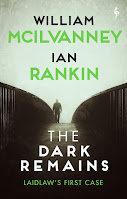 fourth entry in the popular Glasgow-set Jack Laidlaw series created by William McIlvanney. McIlvanney had left that book unfinished when he died in 2015, and Rankin was asked to complete it.
Also competing in this year’s Crime and Thriller category were:
• Girl A, by Abigail Dean (HarperFiction)
• The Appeal, by Janice Hallett (Viper)
• A Slow Fire Burning, by Paula Hawkins (Doubleday)
• 1979, by Val McDermid (Sphere)
• The Man Who Died Twice, by Richard Osman (Viking)
The British Book Awards, or “Nibbies,” are administered by The Bookseller, a UK magazine reporting on the publishing industry. A complete list of this year’s prize nominees, in multiple categories, can be found here, with just the winners named here.
fourth entry in the popular Glasgow-set Jack Laidlaw series created by William McIlvanney. McIlvanney had left that book unfinished when he died in 2015, and Rankin was asked to complete it.Also competing in this year’s Crime and Thriller category were:
• Girl A, by Abigail Dean (HarperFiction)
• The Appeal, by Janice Hallett (Viper)
• A Slow Fire Burning, by Paula Hawkins (Doubleday)
• 1979, by Val McDermid (Sphere)
• The Man Who Died Twice, by Richard Osman (Viking)
The British Book Awards, or “Nibbies,” are administered by The Bookseller, a UK magazine reporting on the publishing industry. A complete list of this year’s prize nominees, in multiple categories, can be found here, with just the winners named here.
Wednesday, September 15, 2021
It Was Only a Matter of Time Before Crime Solving Became Reality-TV Sport
Who expected this? “Best-selling crime author, Ian Rankin, has written a TV series for Channel 4 in the UK that will see members of the public take on the role of detective and lead their own investigations,” reports blogger B.V. Lawson. “Murder Island, which was filmed during the summer and airs next month, will blend fact, drama, and competition formats. Filmed on the remote Scottish island of Gigha, the six-part series is based around a murder plot, written and developed by Rankin, that stars a group of amateur detectives who will compete to solve a crime and build a ‘watertight case’ that can stand up in court. Contestants on Murder Island will be overseen by some of the UK's leading senior investigating officers.”
Friday, December 11, 2020
Bullet Points: Totally Jam-Packed Edition
• Coming off his recent success with the Netflix mini-series The Queen’s Gambit, filmmaker Scott Frank is said to now be “working on the development of a Sam Spade TV series that he is hoping [English actor] Clive Owen will star in. And his pitch for the series, which follows the adventures of the protagonist from The Maltese Falcon, sounds like it could be pretty incredible,” remarks The Playlist. “‘What if you do Sam Spade later in life, when he’s 60 years old?’ explained Frank. ‘He’s now an ex-pat living in the South of France … And his past finds him in this small town. We’re doing six episodes. Clive Owen is going to play Sam Spade.’” The idea reminds me of the concept behind Lawrence Osborne’s Only to Sleep, a remarkably satisfying 2018 Philip Marlowe novel that imagined Raymond Chandler’s Los Angeles private eye as a 72-year-old man, living in retirement in Baja California and being hired to investigate the suspicious swimming death of a debt-ridden con man/developer. Owen, as you might recall, was talked of years ago as the perfect person to play Marlowe in a feature-length film  based on one of Chandler’s famous yarns. Are we any more likely to see him star in a Sam Spade TV drama than we were to witness his performance in a Marlowe flick? Time will tell. (Hat tip to Frederick Zackel.)
• The Gumshoe Site brings this exciting news: “Canogate Books asked [Scottish author] Ian Rankin to complete William McIlvanney’s handwritten manuscript of [a] final Inspector Jack Laidlaw novel. McIlvanney, often called ‘The Godfather of Tartan Noir,’ was the author of three novels featuring Inspector Jack Laidlaw of Glasgow CID, and died in December 2015 at the age of 79. His living partner, Siobhan Lynch, found an unfinished novel, The Dark Remains, the story of Laidlaw’s first case, and took the manuscript to Canongate Books, which had republished McIlvanney’s books in 2013. As McIlvanney was a literary hero of Rankin, Rankin … accepted the offer [to complete that novel]. The Dark Remains will be published by Canongate in September 2021.” In its own report on this posthumous literary partnership, The Guardian quotes Rankin as saying that McIlvanney left behind only “notes towards a book, a few scenes, some central characters, a sense of what the story might actually be about, but fairly incomplete. … Willie doesn’t quite lay out who the killer is, so I had to get inside his head to see what he was actually saying,’ he said. ‘It seemed like he had two or three stories that he was juggling … It was an act of archaeology, and an act of detection.’” Regardless, you can count on me to purchase a copy of the finished product!
• This item comes from In Reference to Murder:
• CrimeReads is out with its “choices for 2020’s best crime novels, mysteries, and thrillers.” Several of its 10 top titles were predictable, but there are a few surprises. Liz Nugent’s Little Cruelties (Scout), for one. Elizabeth Hand’s The Book of Lamps and Banners (Mulholland), for another. And Alexandra Burt’s Shadow Garden (Berkley).
• Tom Nolan’s 10-best list for The Wall Street Journal contains another handful of eye-openers. He turns thumbs-up on not only Cara Black’s Three Hours in Paris (Soho Crime) and Tom Bouman’s The Bramble and the Rose (Norton), but also Anne Perry’s One Fatal Flaw (Ballantine) and Peter Swanson’s Eight Perfect Murders (Morrow).
• Despite all of my recent attention to “best crime fiction of the year” lists, I missed spotting BookPage’s post about its own 10 mystery and suspense choices. Among that monthly review’s picks are Sophie Hannah’s Perfect Little Children (Morrow), Stuart Turton’s The Devil and the Dark Water (Sourcebooks Landmark), Sara Sliger’s Take Me Apart (MCD), and Heather Young’s The Distant Dead (Morrow).
• Earlier this week I provided a link to New York Times columnist Marilyn Stasio’s inventory of her favorite crime novels of 2020, but I failed to note the publication of Times writer-at-large Sarah Lyall’s list of what she claims are “The Best Thrillers of 2020.” Her nominees stretch from Tana French’s The Searcher (Viking) and Gilly Macmillan’s To Tell You the Truth (Morrow) to Debra Jo Immergut’s “startling” You Again (Ecco). The question, however, is do these books really qualify as “thrillers”?
• Meanwhile, George Easter at Deadly Pleasures Mystery Magazine has collected his own review staff’s reading favorites from the last dozen months. There are eight contributors represented in his compilation—too many titles for me to mention. But offered below are editor Easter’s 12 “best novel” selections:
— The Last Flight, by Julie Clark (Sourcebooks Landmark)
— Victim 2117, by Jussi Adler-Olsen (Dutton)
— The Finisher, by Peter Lovesey (Soho Crime)
— The Last Hunt, by Deon Meyer (Atlantic Monthly Press)
— Troubled Blood, by Robert Galbraith (Sphere)
— Blacktop Wasteland, by S.A. Cosby (Flatiron)
— The Law of Innocence, by Michael Connelly (Little, Brown)
— House Privilege, by Mike Lawson (Atlantic Monthly Press)
— Blind Vigil, by Matt Coyle (Oceanview)
— The Boy in the Woods, by Harlan Coben (Grand Central)
— Moonflower Murders, by Anthony Horowitz (Harper)
— The Curator, by M.W. Craven (Constable)
• By the way, not long ago Deadly Pleasures launched a brand-new Web site to coincide with its transformation from a print publication to a full-color quarterly digital periodical. Easter says his “goal is to post something new [there] every day or two.” Online contents will include book reviews and newsy bits about crime-fiction commendations, as well as vintage reprints from the magazine’s past (such as Ted Fitzgerald’s 1997 interview with author Stephen Marlowe). The editor has also begun a series called “George’s Mystery Library Videos,” episodes of which are fairly short (lasting 15 or fewer minutes) and have thus far found him talking on camera about “signed material with the same cover art,” James Grady’s “Condor” novels and short fiction, and what makes a “true” first edition. I look forward to seeing how the Deadly Pleasures site evolves in the near future.
• Deadline brings word that “Netflix has greenlit a five-part Swedish-language series on Stig Engström, the man who was named as the probable murderer [in 1986] of former Swedish Prime Minister Olof Palme. The Unlikely Murderer is made by Swedish producer FLX—which is behind Netflix series Quicksand and Love & Anarchy—and stars Robert Gustafsson as Engström. The part-fictionalized story is based on a 2018 book [The Unbelievable Truth] by Thomas Pettersson. Following the assassination of Palme in 1986, Engström managed to elude justice right up to his death through a combination of audacity, luck, and a perplexed police force.”
• Jane Harper’s The Dry was one of my favorite crime novels of 2017, so I’m pleased to learn that a big-screen adaptation of that suspenseful yarn is due out on January 1. The bad news is that it will only be showing in Australian theaters—for the time being, anyway. As a post on Harper’s Web site explains, this movie stars Aussie actor Eric Bana, was directed by Robert Connolly (Balibo, Paper Planes, Deep State), and “was filmed across more than 15 towns in rural Victoria, Australia, last year.” The Dry had originally been planned to premiere last August, but was delayed by the COVID-19 pandemic. There’s no word yet on when it might reach viewers outside of Australia.
• My breath caught for a moment when I heard that FOX-TV was preparing a new Banyon series. What came immediately to mind was the short-lived, 1972 NBC crime drama Banyon, starring Robert Forster as a hard-headed private investigator in 1930s Los Angeles. Could it really be that after all these years, someone was intending to revive/reboot that underrated show? Alas, no. As The Hollywood Reporter makes clear, FOX is “developing an animated comedy based on the Crag Banyon Mysteries books by James Mullaney.
• In the States, Rebecka Martinsson is available via Acorn TV.
• With the novel coronavirus continuing to discourage social activities of any sort, my search continues for spirited, thoughtful, and at least moderately distinctive small-screen entertainments. A recent discovery was McDonald & Dodds, a light-hearted and oft-clever two-episode ITV show initially broadcast in the spring of 2020. It features Tala Gouveia as Detective Chief Inspector Lauren McDonald, a young, black, thorough-going go-getter from London who has been reassigned to the much quieter city of Bath, England. There she’s partnered with Detective Sergeant Dodds (Jason Watkins), an older white male who has spent years trapped behind a desk, yet retains an uncommon perspicacity when it comes to crime solving. In his review of that program’s pilot, Steve Lewis of Mystery*File writes: “I don’t know about you, but I’m always interested in yet another pair of mismatched homicide policemen, whether British or American. I love watching how their differences play off each other, how get to know each other, and maybe even get to respect each other. Old and worn-out stuff, I know, but when the show is well-written, which it is in this case, and when the players are perfectly selected, even more so this time around, well, to sum it up, I enjoyed this one.” You can see a trailer for the series here. Radio Times reports that a second three-part series of McDonald & Dodds is already in production. Hurrah!
• The Guardian posted a fine review of that series last spring.
• Next up on my to-be-screened list: Amazon Prime’s new neo-noir film I’m Your Woman (trailer above), starring The Marvelous Mrs. Maisel’s Rachel Brosnahan as a sheltered wife and mother who’s “forced to go on the run after her [thief] husband betrays his business partner.” Have any of you faithful Rap Sheet readers seen this two-hour picture? Are you willing to share your opinions of it?
• TV Guide’s look back at what it calls “The 15 Best TV Performances of 2020” applauds, among others, Nathan Lane for his appearance in Showtime’s quirky Penny Dreadful: City of Angels and Matthew Rhys for his headline turn in HBO’s eight-episode Perry Mason. “The mostly-good-but-definitely-not-perfect reboot of Perry Mason was buoyed by an all-good-and-damn-near-perfect performance by Matthew Rhys,” writes Tim Surette, “who brought the classic character to the modern age not just with boozing and f---ing, but with an inner rage that we all could relate to. Rhys was actually the second choice to play Perry Mason; Robert Downey Jr. (who is an executive producer on the series) was slated to take on the role, but his feature film commitments made it impossible, and frankly, we’re all better for it. Fresh off receiving long overdue recognition for The Americans, Rhys made Perry an exhausted grump with a bent moral compass that saw him skirt the law to get justice, but with his soulful eyes during times of defeat and menacing outbursts during times of rage, we not only allowed it, we forgave it. Rhys is the regular-guy hero that our generation needs.”
• IndieWire names Max Allan Collins’ Nate Heller P.I. books among several others that it says deserve TV series treatment: a sequel to Hjortsberg’s 1978 occult-tinged crime tale, Falling Angel. Much of Nette’s article focuses on differences between the novel Falling Angel and its cinematic adaptation, 1987’s Angel Heart. “A posthumously published book can be tricky property,” writes Nette in CrimeReads, “given the inevitable question of whether the author was able to finalize the manuscript to the degree they wanted, were they alive. Although Angel’s Inferno does not feel incomplete, it lacks the economy and flow of Falling Angel. It is also far darker, more debauched and violent. When you’ve made a pact to sell your soul to Satan, in terms of what you’re prepared to do, the sky, or in Angel’s case, the depths are the limit.”
• Three other CrimeReads pieces worth finding: Dwyer Murphy unearths a 1965 BBC interview between British spy-turned-talk-show host Malcolm Muggeridge and British intelligence officer-turned-espionage-novelist John le Carré; Gabino Iglesias praises the “politically engaged, wildly entertaining novels of Paco Ignacio Taibo II”; and Olivia Rutigliano recalls UK author Evelyn Waugh’s unexpected admiration for the works of Erle Stanley Gardner.
• Happy 10th anniversary to Pulp Covers, a Web site presenting some of the finest scans available of classic novel and magazine fronts. (As you might expect, I’m a frequent visitor.) I don’t see any notice of this milestone on the Pulp Covers main page, but its associated Twitter page mentions that the site now boasts “over 20,000 posts,” and its unidentified editor offers “a big shout-out to all the loyal fans who have stuck with this project over the past decade and encouraged us to continue. Without you, I’d have a lot more free time on my hands.” If you’d like to see how Pulp Covers started, visit its December 2010 postings.
• A half-century-old Columbo mystery, finally solved.
• Interviews to enjoy: Nancie Clare chats with E.A. Barres (They’re Gone), Anthony Horowitz (Moonflower Murders), and H.B. Lyle (The Year of the Gun) for her Speaking of Mysteries podcast; Max Allan Collins—yes, him again—talks with Andrew Sumner of Forbidden Planet about his latest paperback original, Skim Deep, his first Nolan novel in 21 years; and Scott Montgomery of Mystery People scores a brief Q&A with Jeff Vorzimmer, editor of 2020’s The Best of Manhunt 2.
• Finally, a couple of belated good-byes. First, to Sue Henry, who penned separate mystery series featuring either dog-sled racer Jessie Arnold or peripatetic Alaska widow Maxine “Maxie” McNabb. My introduction to her work came in the late 1990s, after I returned from a hike over the historic Chilkoot Pass Trail between Alaska and the Canadian Yukon, and was hungry for books about that path to Klondike gold; Henry’s Termination Dust (1995) fit the bill perfectly. Henry died on November 20 at age 80. Also no longer with us is Alanna Knight, the prolific Scottish author of historical mysteries and romantic thrillers, who passed away on December 2 at age 97. Fellow novelist Martin Edwards remembers her in his blog as “a leading light in Scottish literary circles” and a “stalwart” of the British Crime Writers’ Association, as well as “a biographer and playwright and expert on the work of that gifted fellow Scot, Robert Louis Stevenson.” Knight has at least one last novel, Murder at the World’s Edge (Allison & Busby), due out next year. I offer my condolences to both of their families.
 based on one of Chandler’s famous yarns. Are we any more likely to see him star in a Sam Spade TV drama than we were to witness his performance in a Marlowe flick? Time will tell. (Hat tip to Frederick Zackel.)
• The Gumshoe Site brings this exciting news: “Canogate Books asked [Scottish author] Ian Rankin to complete William McIlvanney’s handwritten manuscript of [a] final Inspector Jack Laidlaw novel. McIlvanney, often called ‘The Godfather of Tartan Noir,’ was the author of three novels featuring Inspector Jack Laidlaw of Glasgow CID, and died in December 2015 at the age of 79. His living partner, Siobhan Lynch, found an unfinished novel, The Dark Remains, the story of Laidlaw’s first case, and took the manuscript to Canongate Books, which had republished McIlvanney’s books in 2013. As McIlvanney was a literary hero of Rankin, Rankin … accepted the offer [to complete that novel]. The Dark Remains will be published by Canongate in September 2021.” In its own report on this posthumous literary partnership, The Guardian quotes Rankin as saying that McIlvanney left behind only “notes towards a book, a few scenes, some central characters, a sense of what the story might actually be about, but fairly incomplete. … Willie doesn’t quite lay out who the killer is, so I had to get inside his head to see what he was actually saying,’ he said. ‘It seemed like he had two or three stories that he was juggling … It was an act of archaeology, and an act of detection.’” Regardless, you can count on me to purchase a copy of the finished product!
• This item comes from In Reference to Murder:
Sisters in Crime announced the creation of the new SinC Pride Award for Emerging LGBTQIA+ Crime Writers. The SinC Pride Award will be a $2,000 annual award to support an emerging writer of the LGBTQIA+ crime-fiction writing community with both financial and practical career guidance and support. Similar to the Eleanor Taylor Bland Crime Fiction Writers of Color Award, the recipient of the SinC Pride Award may use funds for activities including workshops, seminars, conferences, retreats, online courses, and research activities required for completion of the work. An unpublished writer is preferred, however, publication of not more than 10 pieces of short fiction and/or up to two self-published or traditionally published books will not disqualify an applicant. John Copenhaver, Cheryl Head, and Kristen Lepionka will serve as judges for the inaugural award. Applications will open on January 15 and run through March 15, with the winner announced in early April. For more information, contact grants@sistersincrime.org.• I never knew that H.G. Wells wrote a mermaid novel.
• CrimeReads is out with its “choices for 2020’s best crime novels, mysteries, and thrillers.” Several of its 10 top titles were predictable, but there are a few surprises. Liz Nugent’s Little Cruelties (Scout), for one. Elizabeth Hand’s The Book of Lamps and Banners (Mulholland), for another. And Alexandra Burt’s Shadow Garden (Berkley).
• Tom Nolan’s 10-best list for The Wall Street Journal contains another handful of eye-openers. He turns thumbs-up on not only Cara Black’s Three Hours in Paris (Soho Crime) and Tom Bouman’s The Bramble and the Rose (Norton), but also Anne Perry’s One Fatal Flaw (Ballantine) and Peter Swanson’s Eight Perfect Murders (Morrow).
• Despite all of my recent attention to “best crime fiction of the year” lists, I missed spotting BookPage’s post about its own 10 mystery and suspense choices. Among that monthly review’s picks are Sophie Hannah’s Perfect Little Children (Morrow),
 Stuart Turton’s The Devil and the Dark Water (Sourcebooks Landmark), Sara Sliger’s Take Me Apart (MCD), and Heather Young’s The Distant Dead (Morrow).
• Earlier this week I provided a link to New York Times columnist Marilyn Stasio’s inventory of her favorite crime novels of 2020, but I failed to note the publication of Times writer-at-large Sarah Lyall’s list of what she claims are “The Best Thrillers of 2020.” Her nominees stretch from Tana French’s The Searcher (Viking) and Gilly Macmillan’s To Tell You the Truth (Morrow) to Debra Jo Immergut’s “startling” You Again (Ecco). The question, however, is do these books really qualify as “thrillers”?
• Meanwhile, George Easter at Deadly Pleasures Mystery Magazine has collected his own review staff’s reading favorites from the last dozen months. There are eight contributors represented in his compilation—too many titles for me to mention. But offered below are editor Easter’s 12 “best novel” selections:
— The Last Flight, by Julie Clark (Sourcebooks Landmark)
— Victim 2117, by Jussi Adler-Olsen (Dutton)
— The Finisher, by Peter Lovesey (Soho Crime)
— The Last Hunt, by Deon Meyer (Atlantic Monthly Press)
— Troubled Blood, by Robert Galbraith (Sphere)
— Blacktop Wasteland, by S.A. Cosby (Flatiron)
— The Law of Innocence, by Michael Connelly (Little, Brown)
— House Privilege, by Mike Lawson (Atlantic Monthly Press)
— Blind Vigil, by Matt Coyle (Oceanview)
— The Boy in the Woods, by Harlan Coben (Grand Central)
— Moonflower Murders, by Anthony Horowitz (Harper)
— The Curator, by M.W. Craven (Constable)
• By the way, not long ago Deadly Pleasures launched a brand-new Web site to coincide with its transformation from a print publication to a full-color quarterly digital periodical. Easter says his “goal is to post something new [there] every day or two.” Online contents will include book reviews and newsy bits about crime-fiction commendations, as well as vintage reprints from the magazine’s past (such as Ted Fitzgerald’s 1997 interview with author Stephen Marlowe). The editor has also begun a series called “George’s Mystery Library Videos,” episodes of which are fairly short (lasting 15 or fewer minutes) and have thus far found him talking on camera about “signed material with the same cover art,” James Grady’s “Condor” novels and short fiction, and what makes a “true” first edition. I look forward to seeing how the Deadly Pleasures site evolves in the near future.
• Deadline brings word that “Netflix has greenlit a five-part Swedish-language series on Stig Engström, the man who was named as the probable murderer [in 1986] of former Swedish Prime Minister Olof Palme. The Unlikely Murderer is made by Swedish producer FLX—which is behind Netflix series Quicksand and Love & Anarchy—and stars Robert Gustafsson as Engström. The part-fictionalized story is based on a 2018 book [The Unbelievable Truth] by Thomas Pettersson. Following the assassination of
 Palme in 1986, Engström managed to elude justice right up to his death through a combination of audacity, luck, and a perplexed police force.”
• Jane Harper’s The Dry was one of my favorite crime novels of 2017, so I’m pleased to learn that a big-screen adaptation of that suspenseful yarn is due out on January 1. The bad news is that it will only be showing in Australian theaters—for the time being, anyway. As a post on Harper’s Web site explains, this movie stars Aussie actor Eric Bana, was directed by Robert Connolly (Balibo, Paper Planes, Deep State), and “was filmed across more than 15 towns in rural Victoria, Australia, last year.” The Dry had originally been planned to premiere last August, but was delayed by the COVID-19 pandemic. There’s no word yet on when it might reach viewers outside of Australia.
• My breath caught for a moment when I heard that FOX-TV was preparing a new Banyon series. What came immediately to mind was the short-lived, 1972 NBC crime drama Banyon, starring Robert Forster as a hard-headed private investigator in 1930s Los Angeles. Could it really be that after all these years, someone was intending to revive/reboot that underrated show? Alas, no. As The Hollywood Reporter makes clear, FOX is “developing an animated comedy based on the Crag Banyon Mysteries books by James Mullaney.
Mullaney and Shane Black will write and executive produce the project, which is titled “Crag Banyon P.I.” It follows the supernatural adventures of an alcoholic ex-cop and current private investigator, Banyon, as he solves cases in an alternate noir, otherworldly reality.• January 8 will bring, to British TV viewers, the return of Rebecka Martinsson, a crime series based on a succession of books by Åsa Larsson—only this season’s episodes introduce a new lead actress. “[S]eries one of Rebecka Martinsson was a big hit with Nordic Noir fans,” notes The Killing Times. “Starring Ida Engvoll, the Swedish series told the story of a prosecutor who returned to her roots in Kiruna to attend the funeral of the priest that confirmed her. Series two sees Engvoll replaced by Sascha Zacharias in the lead role.” Setting up the storytelling arc of this eight-installment run, The Killing Times says: “Several years have passed and Rebecka’s anxieties about truly fitting in and whether she made the right choice have worsened. As a distraction she throws herself head-first into work to solve gruesome crimes in the area.” Click on the Killing Times link for a trailer.
The project marks Mullaney’s first television writing gig. He has published nine books in the Crag Banyon series to date, as well as writing numerous entries in the “Destroyer” and “Red Menace” book series.
• In the States, Rebecka Martinsson is available via Acorn TV.
• With the novel coronavirus continuing to discourage social activities of any sort, my search continues for spirited, thoughtful, and at least moderately distinctive small-screen entertainments. A recent discovery was McDonald & Dodds, a light-hearted and oft-clever two-episode ITV show initially broadcast in the spring of 2020. It features Tala Gouveia as Detective Chief Inspector Lauren McDonald, a young, black, thorough-going go-getter from London who has been reassigned to the much quieter city of Bath, England. There she’s partnered with Detective Sergeant Dodds (Jason Watkins), an older white male who has spent years trapped behind a desk, yet retains an uncommon perspicacity when it comes to crime solving. In his review of that program’s pilot, Steve Lewis of Mystery*File writes: “I don’t know about you, but I’m always interested in yet another pair of mismatched homicide policemen, whether British or American. I love watching how their differences play off each other, how get to know each other, and maybe even get to respect each other. Old and worn-out stuff, I know, but when the show is well-written, which it is in this case, and when the players are perfectly selected, even more so this time around, well, to sum it up, I enjoyed this one.” You can see a trailer for the series here. Radio Times reports that a second three-part series of McDonald & Dodds is already in production. Hurrah!
• The Guardian posted a fine review of that series last spring.
• Next up on my to-be-screened list: Amazon Prime’s new neo-noir film I’m Your Woman (trailer above), starring The Marvelous Mrs. Maisel’s Rachel Brosnahan as a sheltered wife and mother who’s “forced to go on the run after her [thief] husband betrays his business partner.” Have any of you faithful Rap Sheet readers seen this two-hour picture? Are you willing to share your opinions of it?
• TV Guide’s look back at what it calls “The 15 Best TV Performances of 2020” applauds, among others, Nathan Lane for his appearance in Showtime’s quirky Penny Dreadful: City of Angels and Matthew Rhys for his headline turn in HBO’s eight-episode Perry Mason. “The mostly-good-but-definitely-not-perfect reboot of Perry Mason was buoyed by an all-good-and-damn-near-perfect performance by Matthew Rhys,” writes Tim Surette, “who brought the classic character to the modern age not just with boozing and f---ing, but with an inner rage that we all could relate to. Rhys was actually the second choice to play Perry Mason; Robert Downey Jr. (who is an executive producer on the series) was slated to take on the role, but his feature film commitments made it impossible, and frankly, we’re all better for it. Fresh off receiving long overdue recognition for The Americans, Rhys made Perry an exhausted grump with a bent moral compass that saw him skirt the law to get justice, but with his soulful eyes during times of defeat and menacing outbursts during times of rage, we not only allowed it, we forgave it. Rhys is the regular-guy hero that our generation needs.”
• IndieWire names Max Allan Collins’ Nate Heller P.I. books among several others that it says deserve TV series treatment:
There’s a reason there are so many detective series on this list—they’re addictive, easily digestible, and the format lends itself perfectly to television. IndieWire’s Kristen Lopez recommends Max Allan Collins’ Nathan Heller series, which follows a wise-cracking private detective who is instrumental in cracking plenty of historically significant cases. The books [17 of them published so far] vacillate between hard-boiled detective novels and historical thrillers, and the ride begins with 1983’s “True Detective,” which finds Heller investigating mob corruption in 1932 Chicago.• Andrew Nette, my editor on 2019’s wonderful Sticking It to the Man: Revolution and Counterculture in Pulp and Popular Fiction, 1950 to 1980, has a new post up in CrimeReads about the late William Hjortsberg and his recently published posthumous novel, Angel’s Inferno (No Exit Press),
 a sequel to Hjortsberg’s 1978 occult-tinged crime tale, Falling Angel. Much of Nette’s article focuses on differences between the novel Falling Angel and its cinematic adaptation, 1987’s Angel Heart. “A posthumously published book can be tricky property,” writes Nette in CrimeReads, “given the inevitable question of whether the author was able to finalize the manuscript to the degree they wanted, were they alive. Although Angel’s Inferno does not feel incomplete, it lacks the economy and flow of Falling Angel. It is also far darker, more debauched and violent. When you’ve made a pact to sell your soul to Satan, in terms of what you’re prepared to do, the sky, or in Angel’s case, the depths are the limit.”
• Three other CrimeReads pieces worth finding: Dwyer Murphy unearths a 1965 BBC interview between British spy-turned-talk-show host Malcolm Muggeridge and British intelligence officer-turned-espionage-novelist John le Carré; Gabino Iglesias praises the “politically engaged, wildly entertaining novels of Paco Ignacio Taibo II”; and Olivia Rutigliano recalls UK author Evelyn Waugh’s unexpected admiration for the works of Erle Stanley Gardner.
• Happy 10th anniversary to Pulp Covers, a Web site presenting some of the finest scans available of classic novel and magazine fronts. (As you might expect, I’m a frequent visitor.) I don’t see any notice of this milestone on the Pulp Covers main page, but its associated Twitter page mentions that the site now boasts “over 20,000 posts,” and its unidentified editor offers “a big shout-out to all the loyal fans who have stuck with this project over the past decade and encouraged us to continue. Without you, I’d have a lot more free time on my hands.” If you’d like to see how Pulp Covers started, visit its December 2010 postings.
• A half-century-old Columbo mystery, finally solved.
• Interviews to enjoy: Nancie Clare chats with E.A. Barres (They’re Gone), Anthony Horowitz (Moonflower Murders), and H.B. Lyle (The Year of the Gun) for her Speaking of Mysteries podcast; Max Allan Collins—yes, him again—talks with Andrew Sumner of Forbidden Planet about his latest paperback original, Skim Deep, his first Nolan novel in 21 years; and Scott Montgomery of Mystery People scores a brief Q&A with Jeff Vorzimmer, editor of 2020’s The Best of Manhunt 2.
• Finally, a couple of belated good-byes. First, to Sue Henry, who penned separate mystery series featuring either dog-sled racer Jessie Arnold or peripatetic Alaska widow Maxine “Maxie” McNabb. My introduction to her work came in the late 1990s, after I returned from a hike over the historic Chilkoot Pass Trail between Alaska and the Canadian Yukon, and was hungry for books about that path to Klondike gold; Henry’s Termination Dust (1995) fit the bill perfectly. Henry died on November 20 at age 80. Also no longer with us is Alanna Knight, the prolific Scottish author of historical mysteries and romantic thrillers, who passed away on December 2 at age 97. Fellow novelist Martin Edwards remembers her in his blog as “a leading light in Scottish literary circles” and a “stalwart” of the British Crime Writers’ Association, as well as “a biographer and playwright and expert on the work of that gifted fellow Scot, Robert Louis Stevenson.” Knight has at least one last novel, Murder at the World’s Edge (Allison & Busby), due out next year. I offer my condolences to both of their families.
Tuesday, August 11, 2020
Bullet Points: Never a Dull Moment Edition
• Renowned movie and TV composer Billy Goldenberg—who died on Monday, August 3, at age 84—was the son of two musicians and took his first breaths in Brooklyn, New York, in 1936. He began his Hollywood career directing music for TV programs such as Hullabaloo and 1968’s Elvis: The Comeback Special. As Variety recalls, “In late 1968, Goldenberg became assistant to Universal TV music director Stanley Wilson, who assigned him scores for series [such] as Ironside, It Takes a Thief and The Name of the Game. He met [director Steven] Spielberg on Name of the Game and later did the director’s television work, including Night Gallery, Duel and three installments of Amazing Stories in the 1980s.” Goldbenberg wrote the music for 1971’s Ransom for a Dead Man, the teleflick that served as the actual pilot for Columbo, and went on to create the  music for “Murder by the Book,” that series’ first regular episode. Among his other crime-drama credits are the themes for Harry O, Banacek, Kojak, and Delvecchio. When asked about Goldenberg’s contributions to the TV mystery field, Gary Gerani, a screenwriter and film historian now working on a documentary about the composer, offered these comments:
(Above) The opening scene from Ransom for a Dead Man—with music by Billy Goldenberg—finds a lawyer (played by Lee Grant) assembling a ransom note for her husband (actor Harlan Warde), editing a tape recording to prove that he was indeed snatched, and finally shooting him in their living room.
• Also lost last week: journalist and author Pete Hamill. A longtime, much-admired New York City newspaperman, Hamill also published in The New Yorker, Rolling Stone, Playboy, and Esquire. (A variety of his pieces can be read here, with one of his best-known Esquire features available at this link.) On top of all those credits, he penned close to a dozen novels, recalls Jiro Kimura of The Gumshoe Site, “including A Killing for Christ (Little, Brown, 1968), his first novel which was a thriller about a plot to assassinate the Pope in Rome.” Hamill produced, as well, a quartet of action-packed thrillers starring Gotham freelance reporter Sam Briscoe, beginning with 1978’s Dirty Laundry (about which I wrote in CrimeReads) and running through 2011’s Tabloid City. Kimura goes on to note that Hamill’s “mystery short stories include ‘The Men in Black Raincoats,’ first published in the December 1977 issue of Ellery Queen’s Mystery Magazine, and ‘The Book Signing’ (first published in Brooklyn Noir; Akashic, 2004), which was an Edgar nominee. His teleplays include Laguna Heat (1987, based on the novel by T. Jefferson Parker) and Split Images (1992, based on the novel by Elmore Leonard).” Click here to enjoy New York magazine’s fine tribute to Hamill, who passed away from heart and kidney failure on August 5. He was 85 years of age.
• Like so many other crime-fiction gatherings, Belfast, Ireland’s NOIRELAND International Crime Fiction Festival has had its ups and downs this year. A one-day event had been planned for March 28, only to be postponed until October due to the novel coronavirus. And now … “Sadly, it seems we were a little optimistic!” writes festival manager Angela McMahon. “The risk to public health from COVID-19 is still significant and unlikely to change for some time. As the well-being of our audiences, our authors and our many wonderful volunteers is paramount, we have concluded that in the circumstances we cannot go ahead with NOIRELAND this year.” She promises that tickets will be refunded over the next couple of weeks.
• Also cancelled was this year’s Pulpfest. Nonetheless, organizers announced that the winner of that planned convention’s 2020 Munsey Award is Mike Ashley, “the author or co-author of numerous works related to the pulps, science fiction, and fantasy. … Ashley has also edited many anthologies and single-author collections, often drawing work from the pulps. He is currently part of a team compiling an index to the most important British popular fiction magazines published between 1880 and 1950, including all the British pulps.” In 2003, Ashley’s Mammoth Encyclopedia of Modern Crime Fiction captured the Edgar Award for Best Critical/Biographical Work.
• Plans are quite different for another annual get-together, the Crime Fiction Weekend at St. Hilda’s College, University of Oxford. The two-day conference (August 14-15) will take place entirely online. As publicity committee member Jean Harker says in an e-mail note, “This year’s theme is ‘All Our Yesterdays: Historical Crime Fiction’ … and speakers include Andrew Taylor, Mick Herron, Andrew Wilson, Elly Griffiths, Anna Mazzola, etc.” She adds that “St. Hilda’s alumna and Honorary Fellow Val McDermid will preside over some of the proceedings. There will also be a tribute to Dame Agatha Christie as we celebrate the centenary of the publication of The Mysterious Affair at Styles—and a solve-it-yourself Whodunnit playlet written by Andrew Taylor and acted by a cast of crime writers.” Click here to find the full program. Proceedings are supposed to be recorded and made available to ticket-holders for a month. The ticket price is £30, with a discount available to students. You can register here.
• As the coronavirus lockdown continues, you may be curious to know how retired Edinburgh Detective Inspector John Rebus (soon to return in A Song for the Dark Times) is managing the isolation. His creator, Ian Rankin, answers that question in this delightful scripted video short starring Emmy Award-winning Scottish actor Brian Cox. It imagines Rebus coping with the absence of pubs, the need for exercise, the ubiquity of Zoom communications, and much more. (Hat tip to Randal S. Brandt)
• I’m just in the midst of reading Sam Wasson’s The Big Goodbye: Chinatown and the Last Years of Hollywood (Flatiron), and here comes news that Ben Affleck is spearheading a film based on that character-rich tale about the making of Chinatown (1974). The Hollywood Reporter says he’ll pen the script and direct the picture, and co-produce with Lorne Michaels, “who initially nabbed the rights to the book.” Let’s hope for the best from this project.
• In other story-to-screen news, The Killing Times brings word that Megan Abbott’s next novel, The Turnout—to be published in the summer of 2021—is already scheduled for television treatment. It says the story “is set in the hothouse world of a ballet school led by the Durant sisters, Dara and Marie, and Dara’s husband Charlie. Their connection is intense, forged by a glamorous but troubled family history. But after they hire Derek, a charismatic, possibly shady contractor to renovate the studio, Marie throws herself into an intense affair with him that threatens their tight bonds and brings forward family secrets until an act of violence overturns everything.”
• Meanwhile, it’s been reported that actress Elisabeth Moss (The West Wing, The Handmaid’s Tale) “will be developing Araminta Hall’s forthcoming Imperfect Women as one of the first projects of her new production company, Love & Squalor Pictures.” Publishers Weekly calls that novel a “heart-wrenching psychological thriller.”
• Netflix has chosen September 3 as the debut date for Young Wallander, its six-episode series inspired by Henning Mankell’s tales of Swedish police inspector Kurt Wallander.
• Here’s a show I didn’t expect: HBO’s The Undoing, a psychological drama starring Nicole Kidman and Hugh Grant. Variety explains,
• And Netflix is offering images from its adaptation of Daphne du Maurier’s 1938 Gothic novel, Rebecca, which was already so well filmed by Alfred Hitchcock in 1940. Netflix’s interpretation will premiere on October 21. As Deadline explains, “Lily James and Armie Hammer lead the cast this time out, playing the aristocratic widower Maxim de Winter (Laurence Olivier in Hitchcock’s version) and his new wife (previously Joan Fontaine), with Kristin Scott Thomas as Mrs Danvers.”
• August brings what would have been Earl Derr Biggers’ 136th birthday, were the creator of Charlie Chan still around to enjoy such festivities. (He perished in 1933, aged 48.) To celebrate, Lou Armagno, who blogs at The Postman on Holiday, has compiled a “musical montage” of compositions and musicians associated with Biggers’ Chinese-American detective, the majority of which relate to the 44 vintage Chan films. Among the many things I hadn’t know before: David Raksin, who created music for the 1941’s Dead Men Tell, starring Sidney Toler as Chan, would three years later compose the eerily beautiful score for that film noir classic, Laura.
• Laura seems to be burning bright in the zeitgeist lately. Otto Penzler placed that 1944 Gene Tierney/Dana Andrews picture at Number 6 in his CrimeReads countdown of “The Greatest Crime Films of All Time.” And in Loren D. Estleman’s new, sixth Valentino mystery, Indigo (Forge), his imperfect film detective is presented with the original Laura Hunt portrait painted for that movie.
• Regarding Penzler’s picks, he’s identified his top two—Chinatown (1974) and The Maltese Falcon (1941)—but we’re still waiting to see which motion picture he thinks belongs at the top of the heap.
• In a new interview with Hollywood Soapbox, Hard Case Crime editor Charles Ardai talks about his company’s initial inspiration, forthcoming works by Ray Bradbury and Max Allan Collins, and the importance of original cover artwork for HCC titles.
• Speaking of Hard Case, Entertainment Weekly has revealed the Paul Mann-painted cover of Later, Stephen King’s third contribution to that paperback line (following 2005’s The Colorado Kid and 2013’s top-selling Joyland). Due out in March 2021, Later is described by Ardai as “a beautiful story about growing up and facing your demons—whether they’re metaphorical or (as sometimes happens when you’re in a Stephen King novel) the real thing. It’s terrifying, tender, heartbreaking and honest, and we’re so excited to bring it to readers.”
• When it comes to crime- and mystery-fiction blogs, patience is sometimes rewarded. In July 2018, Brooklyn writer, critic, and musician Cullen Gallagher put up what appeared to be the final contribution to his fine site, Pulp Serenade: an interview with author Paul D. Brazill. Given Gallagher’s previous posting prolificacy, though, I hesitated to delete Pulp Serenade from The Rap Sheet’s blogroll—and now my restraint has been vindicated. Almost a full two years after Gallagher seemed to disappear, he suddenly returned in mid-June with a flood of posts, some of them reprints but others new (such as his reviews of S.A. Cosby’s Blacktop Wasteland and Lawrence Block’s Dead Girl Blues). I don’t know how long his renewed commitment to Pulp Serenade will last, but let’s hope it will not flag any time soon.
• So what’s happened to Reviewing the Evidence? Created in 2001 by Barbara Franchi, it has more recently been managed by Yvonne Klein. However, the last time that site saw an update was back in January of this year. I hope the pandemic has not spelled an end to RTE. I recently sent an e-mail inquiry to Klein, but have not yet received a response. If anybody out there knows about the site’s future, I hope they’ll reveal it in the Comments section at the end of this post.
• This could be interesting. From In Reference to Murder:
• Tied to the recent release of Eliot Ness and the Mad Butcher: Hunting America’s Deadliest Unidentified Serial Killer at the Dawn of Modern Criminology (Morrow), which he wrote with A. Brad Schwartz, author Max Allan Collins submits to The Strand Magazine’s blog a list containing “10 Additional Surprising Facts About Eliot Ness.”
• Collins also posted a piece in CrimeReads that answers the question, “Whatever Happened to Eliot Ness After Prohibition?”
• Let me recommend one other story in CrimeReads: Andrew Cartmel’s look back at the “lost classics” of 20th-century hard-boiled author Charles Williams.
• I’m not much for audiobooks, since I can generally read a work faster myself than somebody else can read it to me. However, I have enjoyed listening to Phoebe Judge’s presentations at Phoebe Reads a Mystery, a podcast I first heard about from blogger Dave Knadler. Since the novel coronavirus struck, she’s been recording chapter-by-chapter deliveries of classic works, some of the most recent being Bram Stoker’s Dracula, Anna Katharine Green’s The Leavenworth Case, Agatha Christie’s Murder on the Links, and Wilkie Collins’ The Moonstone. While I still shy away from audio versions of new novels, I find that I quite enjoy revisiting books I have already read, transported into another time and place by Judge’s soothing voice.
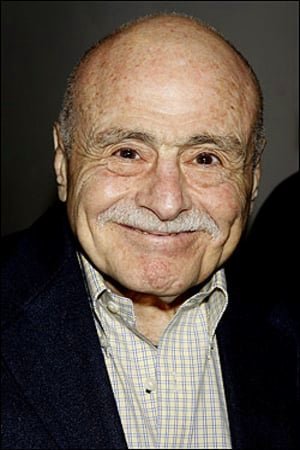 music for “Murder by the Book,” that series’ first regular episode. Among his other crime-drama credits are the themes for Harry O, Banacek, Kojak, and Delvecchio. When asked about Goldenberg’s contributions to the TV mystery field, Gary Gerani, a screenwriter and film historian now working on a documentary about the composer, offered these comments:
Billy Goldenberg certainly didn’t invent crime and mystery TV music. But what he brought to the genre was a perverse, transcendent elegance, something missed even by immortal composers like Bernard Herrmann and Jerry Goldsmith. Having followed his career from the very beginning, I think it’s significant that Broadway-based Goldenberg began his TV-film work with supernatural music (Fear No Evil, Ritual of Evil, Night Gallery). This led his aural ideas and arrangements in a darkly surreal direction … ”romantic mysticism” he called it. It was just a short walk from the demonic investigations of Dr. David Sorell (Louis Jourdan) to the insanely upper-class, full of themselves, larger-than-life villains facing Columbo. And in all of this … beauty. Elegance. Class. Billy was able to find an elegant “inner life" even in the bald-headed, lollipop-slurping countenance of Telly Savalas, his Kojak theme finding something eternal in the man and his city.Goldenberg collected almost two dozen Emmy nominations during his lengthy career, winning for such small-screen gems as Queen of the Stardust Ballroom (1975) and for miniseries including The Lives of Benjamin Franklin (1974) and King (1978). The Internet Movie Database (IMDb) carries an extensive list of his work.
What will Mr. Goldenberg be remembered for? The Spielberg collaborations, of course; before John Williams, Goldenberg was Spielberg’s go-to composer, with Duel a very high-profile title on Billy’s résumé. And his Bartok-inspired supernatural music clearly defined the TV-movie flavors of the ’70s. But Columbo, beloved by fans all over the world, is probably the pop-culture property he’s most identified with. [His] Ransom for a Dead Man score was essentially the next step from his more cosmic television movies. This score influenced the “elegant beauty” style of music used in most detective TV shows produced by Dean Hargrove later in the decade, and beyond; even Murder, She Wrote’s harpsichord owes something to what Billy brought to the genre with Ransom. His approach captures the off-center personality of the Columbo episodes themselves far better than Henry Mancini’s [NBC] Mystery Movie theme, which is loads of fun, but clearly doesn’t belong in the same provocative, “perverted melodious” universe as Goldenberg’s creations. So yes, it’s fair to say that Billy Goldenberg’s compositions defined the signature sound of the 1970s mystery movie, and much of what followed in its wake.
(Above) The opening scene from Ransom for a Dead Man—with music by Billy Goldenberg—finds a lawyer (played by Lee Grant) assembling a ransom note for her husband (actor Harlan Warde), editing a tape recording to prove that he was indeed snatched, and finally shooting him in their living room.
• Also lost last week: journalist and author Pete Hamill. A longtime, much-admired New York City newspaperman, Hamill also published in The New Yorker, Rolling Stone, Playboy, and Esquire. (A variety of his pieces can be read here, with one of his best-known Esquire features available at this link.) On top of all those credits, he penned close to a dozen novels, recalls Jiro Kimura of The Gumshoe Site, “including A Killing for Christ (Little, Brown, 1968), his first novel which was a thriller about a plot to assassinate the Pope in Rome.” Hamill produced, as well, a quartet of action-packed thrillers starring Gotham freelance reporter Sam Briscoe, beginning with 1978’s Dirty Laundry (about which I wrote in CrimeReads) and running through 2011’s Tabloid City. Kimura goes on to note that Hamill’s “mystery short stories include ‘The Men in Black Raincoats,’ first published in the December 1977 issue of Ellery Queen’s Mystery Magazine, and ‘The Book Signing’ (first published in Brooklyn Noir; Akashic, 2004), which was an Edgar nominee. His teleplays include Laguna Heat (1987, based on the novel by T. Jefferson Parker) and Split Images (1992, based on the novel by Elmore Leonard).” Click here to enjoy New York magazine’s fine tribute to Hamill, who passed away from heart and kidney failure on August 5. He was 85 years of age.
• Like so many other crime-fiction gatherings, Belfast, Ireland’s NOIRELAND International Crime Fiction Festival has had its ups and downs this year. A one-day event had been planned for March 28, only to be postponed until October due to the novel coronavirus. And now … “Sadly, it seems we were a little optimistic!” writes festival manager Angela McMahon. “The risk to public health from COVID-19 is still significant and unlikely to change for some time. As the well-being of our audiences, our authors and our many wonderful volunteers is paramount, we have concluded that in the circumstances we cannot go ahead with NOIRELAND this year.” She promises that tickets will be refunded over the next couple of weeks.
• Also cancelled was this year’s Pulpfest. Nonetheless, organizers announced that the winner of that planned convention’s 2020 Munsey Award is Mike Ashley, “the author or co-author of numerous works related to the pulps, science fiction, and fantasy. … Ashley has also edited many anthologies and single-author collections, often drawing work from the pulps. He is currently part of a team compiling an index to the most important British popular fiction magazines published between 1880 and 1950, including all the British pulps.” In 2003, Ashley’s Mammoth Encyclopedia of Modern Crime Fiction captured the Edgar Award for Best Critical/Biographical Work.
• Plans are quite different for another annual get-together, the Crime Fiction Weekend at St. Hilda’s College, University of Oxford. The two-day conference (August 14-15) will take place entirely online. As publicity committee member Jean Harker says in an e-mail note, “This year’s theme is ‘All Our Yesterdays: Historical Crime Fiction’ … and speakers include Andrew Taylor, Mick Herron, Andrew Wilson, Elly Griffiths, Anna Mazzola, etc.” She adds that “St. Hilda’s alumna and Honorary Fellow Val McDermid will preside over some of the proceedings. There will also be a tribute to Dame Agatha Christie as we celebrate the centenary of the publication of The Mysterious Affair at Styles—and a solve-it-yourself Whodunnit playlet written by Andrew Taylor and acted by a cast of crime writers.” Click here to find the full program. Proceedings are supposed to be recorded and made available to ticket-holders for a month. The ticket price is £30, with a discount available to students. You can register here.
• As the coronavirus lockdown continues, you may be curious to know how retired Edinburgh Detective Inspector John Rebus (soon to return in A Song for the Dark Times) is managing the isolation. His creator, Ian Rankin, answers that question in this delightful scripted video short starring Emmy Award-winning Scottish actor Brian Cox. It imagines Rebus coping with the absence of pubs, the need for exercise, the ubiquity of Zoom communications, and much more. (Hat tip to Randal S. Brandt)
• I’m just in the midst of reading Sam Wasson’s The Big Goodbye: Chinatown and the Last Years of Hollywood (Flatiron), and here comes news that Ben Affleck is spearheading a film based on that character-rich tale about the making of Chinatown (1974). The Hollywood Reporter says he’ll pen the script and direct the picture, and co-produce with Lorne Michaels, “who initially nabbed the rights to the book.” Let’s hope for the best from this project.
• In other story-to-screen news, The Killing Times brings word that Megan Abbott’s next novel, The Turnout—to be published in the summer of 2021—is already scheduled for television treatment. It says the story “is set in the hothouse world of a ballet school led by the Durant sisters, Dara and Marie, and Dara’s husband Charlie. Their connection is intense, forged by a glamorous but troubled family history. But after they hire Derek, a charismatic, possibly shady contractor to renovate the studio, Marie throws herself into an intense affair with him that threatens their tight bonds and brings forward family secrets until an act of violence overturns everything.”
• Meanwhile, it’s been reported that actress Elisabeth Moss (The West Wing, The Handmaid’s Tale) “will be developing Araminta Hall’s forthcoming Imperfect Women as one of the first projects of her new production company, Love & Squalor Pictures.” Publishers Weekly calls that novel a “heart-wrenching psychological thriller.”
• Netflix has chosen September 3 as the debut date for Young Wallander, its six-episode series inspired by Henning Mankell’s tales of Swedish police inspector Kurt Wallander.
• Here’s a show I didn’t expect: HBO’s The Undoing, a psychological drama starring Nicole Kidman and Hugh Grant. Variety explains,
The six-episode series follows Grace Fraser (Kidman), a successful therapist who discovers that her husband Jonathan (Grant) may be wrapped up in the death of another woman. She must unravel a chain of mysteries to reclaim her family’s life. The limited series, based on Jean Hanff Korelitz’s [2014] novel You Should Have Known, is written and executive produced by David E. Kelley. Susanne Bier, Per Saari, Bruna Papandrea, Stephen Garrett, Celia Costas and Kidman also executive produce. Bier also directs.The Undoing is slated to start its run on October 25.
• And Netflix is offering images from its adaptation of Daphne du Maurier’s 1938 Gothic novel, Rebecca, which was already so well filmed by Alfred Hitchcock in 1940. Netflix’s interpretation will premiere on October 21. As Deadline explains, “Lily James and Armie Hammer lead the cast this time out, playing the aristocratic widower Maxim de Winter (Laurence Olivier in Hitchcock’s version) and his new wife (previously Joan Fontaine), with Kristin Scott Thomas as Mrs Danvers.”
• August brings what would have been Earl Derr Biggers’ 136th birthday, were the creator of Charlie Chan still around to enjoy such festivities. (He perished in 1933, aged 48.) To celebrate, Lou Armagno, who blogs at The Postman on Holiday, has compiled a “musical montage” of compositions and musicians associated with Biggers’ Chinese-American detective, the majority of which relate to the 44 vintage Chan films. Among the many things I hadn’t know before: David Raksin, who created music for the 1941’s Dead Men Tell, starring Sidney Toler as Chan, would three years later compose the eerily beautiful score for that film noir classic, Laura.
• Laura seems to be burning bright in the zeitgeist lately. Otto Penzler placed that 1944 Gene Tierney/Dana Andrews picture at Number 6 in his CrimeReads countdown of “The Greatest Crime Films of All Time.” And in Loren D. Estleman’s new, sixth Valentino mystery, Indigo (Forge), his imperfect film detective is presented with the original Laura Hunt portrait painted for that movie.
• Regarding Penzler’s picks, he’s identified his top two—Chinatown (1974) and The Maltese Falcon (1941)—but we’re still waiting to see which motion picture he thinks belongs at the top of the heap.
• In a new interview with Hollywood Soapbox, Hard Case Crime editor Charles Ardai talks about his company’s initial inspiration, forthcoming works by Ray Bradbury and Max Allan Collins, and the importance of original cover artwork for HCC titles.
• Speaking of Hard Case, Entertainment Weekly has revealed the Paul Mann-painted cover of Later, Stephen King’s third contribution to that paperback line (following 2005’s The Colorado Kid and 2013’s top-selling Joyland). Due out in March 2021, Later is described by Ardai as “a beautiful story about growing up and facing your demons—whether they’re metaphorical or (as sometimes happens when you’re in a
 Stephen King novel) the real thing. It’s terrifying, tender, heartbreaking and honest, and we’re so excited to bring it to readers.”
• When it comes to crime- and mystery-fiction blogs, patience is sometimes rewarded. In July 2018, Brooklyn writer, critic, and musician Cullen Gallagher put up what appeared to be the final contribution to his fine site, Pulp Serenade: an interview with author Paul D. Brazill. Given Gallagher’s previous posting prolificacy, though, I hesitated to delete Pulp Serenade from The Rap Sheet’s blogroll—and now my restraint has been vindicated. Almost a full two years after Gallagher seemed to disappear, he suddenly returned in mid-June with a flood of posts, some of them reprints but others new (such as his reviews of S.A. Cosby’s Blacktop Wasteland and Lawrence Block’s Dead Girl Blues). I don’t know how long his renewed commitment to Pulp Serenade will last, but let’s hope it will not flag any time soon.
• So what’s happened to Reviewing the Evidence? Created in 2001 by Barbara Franchi, it has more recently been managed by Yvonne Klein. However, the last time that site saw an update was back in January of this year. I hope the pandemic has not spelled an end to RTE. I recently sent an e-mail inquiry to Klein, but have not yet received a response. If anybody out there knows about the site’s future, I hope they’ll reveal it in the Comments section at the end of this post.
• This could be interesting. From In Reference to Murder:
Independent publisher Canelo is launching a new crime fiction imprint, Canelo Crime, and has promoted Louise Cullen as publishing director to oversee the list. The imprint will launch with a selection of eight titles, including novels by Rachel Lynch and Nick Louth, due for release on September 24. Cullen is now actively seeking new novels with “bestseller potential” for inclusion in the imprint in 2021 and beyond, with a target of 15–18 new releases next year.• If you’ve ever wondered what it would like to be in the company of prolific Texas author James Reasoner, click over to this YouTube interview he did with Paul Bishop of Wolfpack Publishing and fellow writer Robert Vaughan. By the way, Reasoner just declared that he’s finished work on his 386th novel. I suddenly feel very lazy …
• Tied to the recent release of Eliot Ness and the Mad Butcher: Hunting America’s Deadliest Unidentified Serial Killer at the Dawn of Modern Criminology (Morrow), which he wrote with A. Brad Schwartz, author Max Allan Collins submits to The Strand Magazine’s blog a list containing “10 Additional Surprising Facts About Eliot Ness.”
• Collins also posted a piece in CrimeReads that answers the question, “Whatever Happened to Eliot Ness After Prohibition?”
• Let me recommend one other story in CrimeReads: Andrew Cartmel’s look back at the “lost classics” of 20th-century hard-boiled author Charles Williams.
• I’m not much for audiobooks, since I can generally read a work faster myself than somebody else can read it to me. However, I have enjoyed listening to Phoebe Judge’s presentations at Phoebe Reads a Mystery, a podcast I first heard about from blogger Dave Knadler. Since the novel coronavirus struck, she’s been recording chapter-by-chapter deliveries of classic works, some of the most recent being Bram Stoker’s Dracula, Anna Katharine Green’s The Leavenworth Case, Agatha Christie’s Murder on the Links, and Wilkie Collins’ The Moonstone. While I still shy away from audio versions of new novels, I find that I quite enjoy revisiting books I have already read, transported into another time and place by Judge’s soothing voice.
Wednesday, May 13, 2020
Enjoyment Found in a “Lost” Thriller
By Jim Napier
Originally released as a hardcover work in 1990 in the UK, and now reissued in 2020, Ian Rankin’s Westwind offers a rare glimpse into the mind of a very talented, and ultimately world-class novelist who was struggling to understand and give direction to his craft in the nascent days of his career.
Rankin is candid about his state of mind at the time. Lamenting the fact that Westwind initially garnered but one scant review, he admits in an introduction to this new edition, that he was not “in a good place” in those days. His first novel starring Edinburgh police detective John Rebus, Knots & Crosses, had been published three years earlier. Rankin was living in London’s Tottenham district and working as an assistant at the National Folktale Centre, housed in a nearby polytechnic. He struggled to get to the point where he could quit his day job and devote all of his time and creative energy to his first love: becoming a novelist. It was against that background that Rankin decided, rather rashly, to try and compose a best-selling techno-thriller of the sort to be found on the shelves of airports and railway stations. It was not to be the emerging writer’s most felicitous idea.
The yarn captures Britain in the waning days of the Cold War, when Europeans are less than happy about hosting a formidable U.S. military presence in their own backyard, and the Americans are reluctantly withdrawing their troops to friendlier environs. Working at a small satellite tracking station in the UK, protagonist Martin Hepton is witness to a double disaster. First the ground station temporarily loses contact with a key British surveillance satellite code-named Zephyr. Then a space shuttle goes awry, plunging to earth with its crew of six astronauts, five Americans and a single Briton. Shortly thereafter, one of the ground technicians responsible for monitoring the satellite also disappears. The explanation—that he had become ill and been taken to hospital—is dismissed by Hepton: that these three events are unrelated seems to stretch the bounds of credulity.
Miraculously, one of the crew has survived the shuttle crash. It is the sole Brit, Major Michael Dreyfuss. He has been found unconscious, with the hands of a dead astronaut around his throat; but before he can be questioned he is whisked away to a hospital in America, where he faces hostile questioning by a high-ranking U.S. military officer.
And so begins the young Ian Rankin’s foray into the fast-moving world of techno-thrillers. Standing on the shoulders of his literary forebears (notably John le Carré and Ian Fleming), Rankin weaves a plausible tale of international tensions, conspiracy plots, larger-than-life villains, chase scenes, and attempted assassinations across the British landscape, with occasional side-trips to the continent and America.
Prior to its most recent incarnation, Westwind was given a light and sympathetic edit, but Rankin says it is essentially the same book he published three decades earlier. Not surprisingly, the characters in Westwind are less nuanced than those we have come to expect in Rankin’s later writing, for this novel is very much a child of its times. More seriously, the tale never quite manages to stand on its own; the reader is constantly aware of stories by other writers of the day that manage to carry readers to a higher level.
Yet, although it is not up to the standards of Rankin’s Rebus books (nor should we expect it to be), Westwind remains a revealing portrait of—dare I say it?) —The Artist as a Young Man, and offers a few glimpses of the master wordsmith he would become. Since 1990, of course, Rankin has gone on to become one of the finest writers of contemporary crime fiction, all but inventing the sub-genre known as Tartan Noir, and receiving an OBE and more honorary degrees than will fit in this review. Westwind is Rankin’s gift to aspiring writers everywhere, who hope someday to rise to his literary heights, and who can learn much from his early efforts. This novel remains an interesting read, and will undoubtedly be welcomed to the bookshelves of Rankin’s legion of fans.
Originally released as a hardcover work in 1990 in the UK, and now reissued in 2020, Ian Rankin’s Westwind offers a rare glimpse into the mind of a very talented, and ultimately world-class novelist who was
struggling to understand and give direction to his craft in the nascent days of his career.Rankin is candid about his state of mind at the time. Lamenting the fact that Westwind initially garnered but one scant review, he admits in an introduction to this new edition, that he was not “in a good place” in those days. His first novel starring Edinburgh police detective John Rebus, Knots & Crosses, had been published three years earlier. Rankin was living in London’s Tottenham district and working as an assistant at the National Folktale Centre, housed in a nearby polytechnic. He struggled to get to the point where he could quit his day job and devote all of his time and creative energy to his first love: becoming a novelist. It was against that background that Rankin decided, rather rashly, to try and compose a best-selling techno-thriller of the sort to be found on the shelves of airports and railway stations. It was not to be the emerging writer’s most felicitous idea.
The yarn captures Britain in the waning days of the Cold War, when Europeans are less than happy about hosting a formidable U.S. military presence in their own backyard, and the Americans are reluctantly withdrawing their troops to friendlier environs. Working at a small satellite tracking station in the UK, protagonist Martin Hepton is witness to a double disaster. First the ground station temporarily loses contact with a key British surveillance satellite code-named Zephyr. Then a space shuttle goes awry, plunging to earth with its crew of six astronauts, five Americans and a single Briton. Shortly thereafter, one of the ground technicians responsible for monitoring the satellite also disappears. The explanation—that he had become ill and been taken to hospital—is dismissed by Hepton: that these three events are unrelated seems to stretch the bounds of credulity.
Miraculously, one of the crew has survived the shuttle crash. It is the sole Brit, Major Michael Dreyfuss. He has been found unconscious, with the hands of a dead astronaut around his throat; but before he can be questioned he is whisked away to a hospital in America, where he faces hostile questioning by a high-ranking U.S. military officer.
And so begins the young Ian Rankin’s foray into the fast-moving world of techno-thrillers. Standing on the shoulders of his literary forebears (notably John le Carré and Ian Fleming), Rankin weaves a plausible tale of international tensions, conspiracy plots, larger-than-life villains, chase scenes, and attempted
assassinations across the British landscape, with occasional side-trips to the continent and America.Prior to its most recent incarnation, Westwind was given a light and sympathetic edit, but Rankin says it is essentially the same book he published three decades earlier. Not surprisingly, the characters in Westwind are less nuanced than those we have come to expect in Rankin’s later writing, for this novel is very much a child of its times. More seriously, the tale never quite manages to stand on its own; the reader is constantly aware of stories by other writers of the day that manage to carry readers to a higher level.
Yet, although it is not up to the standards of Rankin’s Rebus books (nor should we expect it to be), Westwind remains a revealing portrait of—dare I say it?) —The Artist as a Young Man, and offers a few glimpses of the master wordsmith he would become. Since 1990, of course, Rankin has gone on to become one of the finest writers of contemporary crime fiction, all but inventing the sub-genre known as Tartan Noir, and receiving an OBE and more honorary degrees than will fit in this review. Westwind is Rankin’s gift to aspiring writers everywhere, who hope someday to rise to his literary heights, and who can learn much from his early efforts. This novel remains an interesting read, and will undoubtedly be welcomed to the bookshelves of Rankin’s legion of fans.
* * *
Since 2005 Jim Napier’s book reviews and author interviews have appeared in several Canadian newspapers and on various crime-fiction and literary Web sites, including his own award-winning review site, Deadly Diversions. His debut crime novel, Legacy, was published in the spring of 2017, and the second entry in that series, Ridley’s War, is scheduled for release in the fall of 2020.
Thursday, January 16, 2020
Let’s Not Forget These Items
• Scottish crime novelist Ian Rankin has been tapped as programming chair for the 2020 Theakston Old Peculier Crime Writing Festival, which is to be held in Harrogate, England, from July 23 to 26. Helen Donkin, the Harrogate International Festivals literature festival manager, explains that “The Programme Chair, which changes each year, is responsible for the various themes the discussion panels debate, as well as which authors sit on them. And by having a different chair each year this helps keep the festival fresh and exciting.”
• Deadline is reporting that “Amazon Studios has greenlit Jack Reacher, a drama series based on the character from Lee Child’s international bestselling series of books. Produced by Amazon Studios, Skydance Television and Paramount Television Studios, the television series will be written by Nick Santora (Scorpion, Prison Break), who will also executive produce and serve as showrunner for the series. The first season will be based on the first Jack Reacher novel, The Killing Floor.” So who should be cast as Reacher for this forthcoming program? CrimeReads offers a few ideas.
• A calendar note from In Reference to Murder:
• I’ve added a new name to The Rap Sheet’s right-hand-column list of “Crime/Mystery Podcasts”: Doings of Doyle, which “celebrat[es] the works of Sir Arthur Conan Doyle, creator of Professor Challenger, Brigadier Gerard and Sherlock Holmes.”
• No wonder American voters crave change: As Donald John Trump’s impeachment trial begins in the U.S. Senate, presidential historian Douglas Brinkley tells CNN that its impossible to measure Trump against previous Oval Office occupants. “We always are trying to compare presidents to each other,” he says, “but we haven’t had an outlaw president before, and that’s what you have with Donald Trump.”
• Thank you to The Stiletto Gumshoe. In its post about how stock photos have reduced the novelty of today’s book covers, the blog has some complimentary things to say about The Rap Sheet.
• And I forgot to mention this earlier: “The family of 20th-century killer Dr. Crippen—who gained a reputation as one of the most notorious murderers in British history—want his body to be returned to the United States where he was born,” reports the UK’s Daily Mail. “Dr. Hawley Harvey Crippen murdered his opera singer wife Cora in their home in London in July 1910, and then told everyone she had gone to America before fleeing Britain with his mistress Ethel Le Neve. Now, nearly 110 years after he was hanged for the killing, Dr. Crippen's family want his body to be exhumed from the grounds of Pentonville Prison in Islington, north London and returned to Dayton, Ohio, in the U.S.” The newspaper adds: “In a letter addressed to the Prime Minister and seen by The Daily Telegraph, a descendant of Dr. Crippen, retired marketing executive Patrick Crippen, writes that his ancestor is innocent and that he wants the body buried in the family plot.”
• Deadline is reporting that “Amazon Studios has greenlit Jack Reacher, a drama series based on the character from Lee Child’s international bestselling series of books. Produced by Amazon Studios, Skydance Television and Paramount Television Studios, the television series will be written by Nick Santora (Scorpion, Prison Break), who will also executive produce and serve as showrunner for the series. The first season will be based on the first Jack Reacher novel, The Killing Floor.” So who should be cast as Reacher for this forthcoming program? CrimeReads offers a few ideas.
• A calendar note from In Reference to Murder:
Coming up this weekend, Baltimore will celebrate the 211th birthday of the inventor of the detective novel and an early master of the horror genre, Edgar Allan Poe. Festivities include the free PoeZella Birthday Bash with food and a display of Poe-themed photographs (courtesy of the Baltimore Camera Club); a free Edgar Allan Poe House Literary Landmark Dedication; and the Edgar Allan Poe Birthday Celebration at Poe’s final resting place, Westminster Hall and Burying Ground, with the Poe Project’s “Poe-pourri!” staged adaptations of three of Poe’s works: “The Coliseum,” “Eldorado” and “The Raven.”• News this week that 18-year-old singer Billie Eilish will perform the title song in this year’s 25th James Bond film, No Time to Die (set to premiere in April), provoked The Spy Command to research the ages of previous Bond vocalists. Not surprisingly, Eilish is the youngest among them. The next closest in age was Sheena Easton, who was only 22 years old when she recorded the title number for the 1981 Roger Moore 007 flick, For Your Eyes Only. Learn more here.
• I’ve added a new name to The Rap Sheet’s right-hand-column list of “Crime/Mystery Podcasts”: Doings of Doyle, which “celebrat[es] the works of Sir Arthur Conan Doyle, creator of Professor Challenger, Brigadier Gerard and Sherlock Holmes.”
• No wonder American voters crave change: As Donald John Trump’s impeachment trial begins in the U.S. Senate, presidential historian Douglas Brinkley tells CNN that its impossible to measure Trump against previous Oval Office occupants. “We always are trying to compare presidents to each other,” he says, “but we haven’t had an outlaw president before, and that’s what you have with Donald Trump.”
• Thank you to The Stiletto Gumshoe. In its post about how stock photos have reduced the novelty of today’s book covers, the blog has some complimentary things to say about The Rap Sheet.
• And I forgot to mention this earlier: “The family of 20th-century killer Dr. Crippen—who gained a reputation as one of the most notorious murderers in British history—want his body to be returned to the United States where he was born,” reports the UK’s Daily Mail. “Dr. Hawley Harvey Crippen murdered his opera singer wife Cora in their home in London in July 1910, and then told everyone she had gone to America before fleeing Britain with his mistress Ethel Le Neve. Now, nearly 110 years after he was hanged for the killing, Dr. Crippen's family want his body to be exhumed from the grounds of Pentonville Prison in Islington, north London and returned to Dayton, Ohio, in the U.S.” The newspaper adds: “In a letter addressed to the Prime Minister and seen by The Daily Telegraph, a descendant of Dr. Crippen, retired marketing executive Patrick Crippen, writes that his ancestor is innocent and that he wants the body buried in the family plot.”
Monday, August 12, 2019
A Monday Morning Medley
• Double O Section brings word that, five years after its development was initially announced, the William Boyd-created, Cold War-backdropped series Spy City finally appears to be taking off: “Originally set up as a 10-part series at Gaumont, Deadline reports that Boyd’s vision will finally come to life as a 6-part series for Miramax and Germany’s H&V Entertainment and ZDF.” The show will star Dominic Cooper (of Agent Carter and Fleming fame) as “a British agent dispatched to Berlin in 1961 to root out a traitor in the UK Embassy or among the Allies, shortly before the construction of the Berlin Wall. ‘The city, declared by Soviet leader Nikita Khrushchev as “the most dangerous place on earth,” is teeming with spies and double agents. One wrong move could trigger the looming threat of nuclear war as American, British and French troops in West Berlin remain separated from their Soviet and East German counterparts by nothing more than an imaginary line.’” No debut date has yet been publicized.
• Maine author Lea Wait, who penned the Mainely Needlepoint Mysteries series, the Shadows Antique Print mysteries, and the Maine Murder Mystery series, died on August 9 of pancreatic cancer, according to this obituary in Janet Rudolph’s Mystery Fanfare. Wait was 73 years old. Her latest Needlepoint Mystery, Thread on Arrival, was published in April 2019, and she has another, Thread and Buried, due out this coming November. In The Gumshoe Site, Jiro Kimura recalls that Lea Wait was “the single mother of four adopted daughters,” and Shadows at the Fair (2002)—the first novel in her Shadows Antique Print series featuring Maggie Summer—was nominated for the 2003 Agatha Award for Best First Novel.
• Somehow, I missed seeing this news before: Brash Books, which has already published a couple of novels by the late British screenwriter and director, Jimmy Sangster (Touchfeather and Touchfeather, Too), is bringing back into print Sangster’s trilogy of hard-boiled thrillers starring former Scotland Yard detective and now self-styled beach bum James Reed. The first of those books, Snowball (1986), came out at the end of July. Hardball (1988) is due for re-release later this month, with Blackball (1987) to follow. Meanwhile, Brash paperback editions of Sangster’s two John Smith espionage novels, The Spy Killer (aka Private I, 1967) and Foreign Exchange (1968), should turn up in stores come September.
• Although he died in February 2018, author Bill Crider is far from forgotten. Designer Richard Greene notes in Facebook that Issue 104 of Paperback Parade (left)—currently being printed—features a tribute to the Texas creator of Sheriff Dan Rhodes.
• Happy 10th anniversary to Do Some Damage!
• I learned this last weekend that publication of the non-fiction book Sticking It to the Man: Revolution and Counterculture in Pulp and Popular Fiction, 1950 to 1980, edited by Andrew Nette and Iain McIntyre (PM Press)—a work to which I contributed a piece—has been postponed until October 1. Grrr!
• The Web site BookRiot is proving to be a useful cheerleader for Polis Books’ brand-new crime-fiction imprint, Agora, which it says will “focus on diverse voices, putting out between six and ten books per year.” Under the direction of Polis founder Jason Pinter and editor Chantelle Aimée Osman, the Agora line is being readied for a September launch. BookRiot takes a peek at some of those Agora titles due out this fall, as well as others for 2020—fresh works by John Vercher, Patricia Smith, Gary Phillips, and others.
• This is an unexpected turn. From In Reference to Murder:
• Editor Elizabeth Foxwell alerts me to the fact that the latest installment in her McFarland Companions to Mystery Fiction series—this one focusing on the works of Ian Rankin—is due out in February 2020. The volume, she explains in her blog, “provides a comprehensive examination of Rankin’s writing career, including short stories that the Scottish author had forgotten he had written and interesting sidelights such as the Rebus play Long Shadows.”
• The sixth and newest episode of the Paperback Warrior Podcast examines “the mysterious career of author and publisher Peter McCurtin,” notes host Tom Simon. “We examine McCurtin’s Escape from Devil’s Island as well as [offer] two new reviews—[of] Duel in the Snow by German author Hans Meissner and the debut Malko novel, West of Jerusalem by Gerard De Villiers.” Listen here.
• It was on this date in 1964 that “Ian Fleming, a World War II naval intelligence officer, journalist and author of the James Bond thrillers, died.” He was only 56 years old.
• Following last week’s news that the 1981-1991 British TV series Bergerac may be rebooted for modern audiences, World of Shaft author Steve Aldous has posted a short review of the original show’s first episode, starring John Nettles.
• Classic Film and TV Café revisits 1973’s “gritty, urban cop picture,” The Seven-Ups, starring Roy Scheider and featuring a 10-minute car chase that’s arguably “the best … in movie history.”
• In the wake of America’s most recent mass shootings in El Paso, Texas, and Dayton, Ohio—and Republican Donald Trump’s resistance to gun reforms—The Washington Post’s Ronald G. Shafer looks back in this piece to the 1930s, when a rash of gangsters wielding Thompson submachine guns convinced a very different president, Democrat Franklin D. Roosevelt, to champion what was known unofficially as the “Anti-Machine Gun Bill.” As Shafer recalls, “Rather than a federal ban on machine guns, the Roosevelt administration proposed taxing the high-powered weapons virtually out of existence. It would place a $200 tax on the purchase of machine guns and sawed-off shotguns. The tax—equal to about $3,800 today—was steep at a time when the average annual income was about $1,780.” Although “Congress eventually stripped the bill of regulations on pistols and revolvers,” it “passed the firearms act in June [1934[, and Roosevelt signed it into law along with more than 100 other bills.” Why do the White House and Congress today lack the same sort of courage to take decisive action in defense of American lives?
• Maine author Lea Wait, who penned the Mainely Needlepoint Mysteries series, the Shadows Antique Print mysteries, and the Maine Murder Mystery series, died on August 9 of pancreatic cancer, according to this obituary in Janet Rudolph’s Mystery Fanfare. Wait was 73 years old. Her latest Needlepoint Mystery, Thread on Arrival, was published in April 2019, and she has another, Thread and Buried, due out this coming November. In The Gumshoe Site, Jiro Kimura recalls that Lea Wait was “the single mother of four adopted daughters,” and Shadows at the Fair (2002)—the first novel in her Shadows Antique Print series featuring Maggie Summer—was nominated for the 2003 Agatha Award for Best First Novel.
• Somehow, I missed seeing this news before: Brash Books, which has already published a couple of novels by the late British screenwriter and director, Jimmy Sangster (Touchfeather and Touchfeather, Too), is bringing back into print Sangster’s trilogy of hard-boiled thrillers starring former Scotland Yard detective and now self-styled beach bum James Reed. The first of those books, Snowball (1986),
 came out at the end of July. Hardball (1988) is due for re-release later this month, with Blackball (1987) to follow. Meanwhile, Brash paperback editions of Sangster’s two John Smith espionage novels, The Spy Killer (aka Private I, 1967) and Foreign Exchange (1968), should turn up in stores come September.
• Although he died in February 2018, author Bill Crider is far from forgotten. Designer Richard Greene notes in Facebook that Issue 104 of Paperback Parade (left)—currently being printed—features a tribute to the Texas creator of Sheriff Dan Rhodes.
• Happy 10th anniversary to Do Some Damage!
• I learned this last weekend that publication of the non-fiction book Sticking It to the Man: Revolution and Counterculture in Pulp and Popular Fiction, 1950 to 1980, edited by Andrew Nette and Iain McIntyre (PM Press)—a work to which I contributed a piece—has been postponed until October 1. Grrr!
• The Web site BookRiot is proving to be a useful cheerleader for Polis Books’ brand-new crime-fiction imprint, Agora, which it says will “focus on diverse voices, putting out between six and ten books per year.” Under the direction of Polis founder Jason Pinter and editor Chantelle Aimée Osman, the Agora line is being readied for a September launch. BookRiot takes a peek at some of those Agora titles due out this fall, as well as others for 2020—fresh works by John Vercher, Patricia Smith, Gary Phillips, and others.
• This is an unexpected turn. From In Reference to Murder:
In one of the biggest surprises this past pilot season, ABC’s NYPD Blue reboot did not go to series but was kept in midseason contention with a possibility for redevelopment. It now appears that particular iteration of NYPD Blue, a sequel to the original Emmy-winning series, is dead. However, it’s not the end of NYPD Blue’s comeback at the network, which aired the iconic 1990s cop drama series. According to ABC Entertainment president Karey Burke, “There are conversations about continuing it but possibly in a different iteration.” The recent NYPD Blue pilot starred newcomer Fabien Frankel and co-starred original cast members Kim Delaney and Bill Brochtrup. The sequel centers on Theo (Frankel), the son of Dennis Franz’s Detective Andy Sipowicz character from the original series, who tries to earn his detective shield and work in the 15th squad while investigating his father’s murder.• Will Lee Child join the judging panel for the 2020 Booker Prize? The Bookseller quotes Child biographer Andy Martin as saying that the author of the Jack Reacher thriller series, who “also won Author of the Year at this year’s British Book Awards and has sold 13.2 million books for £80m, would be a ‘natural’ judge. ‘Lee’s a natural because he reads so many books already (300 a year roughly). Although he is a commercial writer, there is an intellectual, professorial side to him. As he says, he is “100% commerce, 100% art.”’”
• Editor Elizabeth Foxwell alerts me to the fact that the latest installment in her McFarland Companions to Mystery Fiction series—this one focusing on the works of Ian Rankin—is due out in February 2020. The volume, she explains in her blog, “provides a comprehensive examination of Rankin’s writing career, including short stories that the Scottish author had forgotten he had written and interesting sidelights such as the Rebus play Long Shadows.”
• The sixth and newest episode of the Paperback Warrior Podcast examines “the mysterious career of author and publisher Peter McCurtin,” notes host Tom Simon. “We examine McCurtin’s Escape from Devil’s Island as well as [offer] two new reviews—[of] Duel in the Snow by German author Hans Meissner and the debut Malko novel, West of Jerusalem by Gerard De Villiers.” Listen here.
• It was on this date in 1964 that “Ian Fleming, a World War II naval intelligence officer, journalist and author of the James Bond thrillers, died.” He was only 56 years old.
• Following last week’s news that the 1981-1991 British TV series Bergerac may be rebooted for modern audiences, World of Shaft author Steve Aldous has posted a short review of the original show’s first episode, starring John Nettles.
• Classic Film and TV Café revisits 1973’s “gritty, urban cop picture,” The Seven-Ups, starring Roy Scheider and featuring a 10-minute car chase that’s arguably “the best … in movie history.”
• In the wake of America’s most recent mass shootings in El Paso, Texas, and Dayton, Ohio—and Republican Donald Trump’s resistance to gun reforms—The Washington Post’s Ronald G. Shafer looks back in this piece to the 1930s, when a rash of gangsters wielding Thompson submachine guns convinced a very different president, Democrat Franklin D. Roosevelt, to champion what was known unofficially as the “Anti-Machine Gun Bill.” As Shafer recalls, “Rather than a federal ban on machine guns, the Roosevelt administration proposed taxing the high-powered weapons virtually out of existence. It would place a $200 tax on the purchase of machine guns and sawed-off shotguns. The tax—equal to about $3,800 today—was steep at a time when the average annual income was about $1,780.” Although “Congress eventually stripped the bill of regulations on pistols and revolvers,” it “passed the firearms act in June [1934[, and Roosevelt signed it into law along with more than 100 other bills.” Why do the White House and Congress today lack the same sort of courage to take decisive action in defense of American lives?
Saturday, October 06, 2018
Worth Mentioning
• Ian Rankin is quoted by The Star, in Sheffield, England, as joking that he was nervous in the run-up to this month’s UK release of In a House of Lies (Orion), his 22nd John Rebus novel. “When it’s published,” he told the newspaper, “suddenly you get a flood of people who’ve read it and of course now, thanks to social media, they can immediately let you know what they think.” In a House of Lies is due out in late December in the States, from Little, Brown.
• With her new standalone suspense novel, The Witch Elm (Viking), set to appear in bookstores early next week, Dublin fictionist Tana French talks with New York magazine’s pop-culture Web site, Vulture, about “how to write a red herring.”
• Yikes! John D. Macdonald’s 1960 novel The End of the Night is “cited as one of his finest stand-alone novels,” and I have never even read it. Obviously, that situation must be remedied.
• Having watched the trailer for The Cry, a four-part British/Australian crime drama starring Jenna Coleman (Victoria), I’m now very much looking forward to seeing the full program. Unfortunately, that might take awhile. Although The Cry—based on Helen FitzGerald’s 2013 novel of that same name—has already premiered in the UK, and is slated for showing Down Under sometime later this year, there’s still no firm date for its broadcast in the United States, as far as I can tell.
• Such a bookstore sign is especially relevant right now.
• Sadly, this probably won’t be the last we’ll see of such reprehensible characters in fiction. In its report on how Bath, England, resident Georgia Fancett “has picked up a £20,000 publishing contract with Century for her ‘hard-hitting’ police procedural, The Fifth Girl,” The Bookseller adds that Fancett’s story pairs “a gay detective, [Detective Inspector] Alice Warnes,” with “a lazy, Trump-loving bigot” of a police partner. It seems Donald Trump will only reinforce the worldwide cliché of the “ugly American.”
• Author and educator Sean Carswell writes in the Los Angeles Review of Books about how the early 20th-century West Virginia “coal mine wars” inspired James M. Cain to embark on a career penning crime fiction. (Hat tip to Mystery Fanfare.)
• James Bond and Aston Martins belong together.
• For the CrimeReads Web site, Sherry Thomas—author of the Charlotte Holmes series (The Hollow of Fear)—picks seven mystery tales and TV shows that she says “imbue their Sherlock Holmes reinterpretations with far greater emotional resonance” than Arthur Conan Doyle’s original stories ever offered.
• And more author interviews worth exploring: MysteryPeople talks with George Pelecanos (The Man Who Came Uptown); Tom Leins quizzes Hector Duarte Jr. about his new short-story collection, Desperate Times Call; The Killing Times chats with Robert Olen Butler about Paris in the Dark, his fourth novel starring early 20th-century newspaper correspondent Christopher Marlowe “Kit” Cobb; and Rick Ollerman, my editor at Down & Out: The Magazine, answers six questions about the publication in Jim Harrington’s blog.
• With her new standalone suspense novel, The Witch Elm (Viking), set to appear in bookstores early next week, Dublin fictionist Tana French talks with New York magazine’s pop-culture Web site, Vulture, about “how to write a red herring.”
• Yikes! John D. Macdonald’s 1960 novel The End of the Night is “cited as one of his finest stand-alone novels,” and I have never even read it. Obviously, that situation must be remedied.
• Having watched the trailer for The Cry, a four-part British/Australian crime drama starring Jenna Coleman (Victoria), I’m now very much looking forward to seeing the full program. Unfortunately, that might take awhile. Although The Cry—based on Helen FitzGerald’s 2013 novel of that same name—has already premiered in the UK, and is slated for showing Down Under sometime later this year, there’s still no firm date for its broadcast in the United States, as far as I can tell.
• Such a bookstore sign is especially relevant right now.
• Sadly, this probably won’t be the last we’ll see of such reprehensible characters in fiction. In its report on how Bath, England, resident Georgia Fancett “has picked up a £20,000 publishing contract with Century for her ‘hard-hitting’ police procedural, The Fifth Girl,” The Bookseller adds that Fancett’s story pairs “a gay detective, [Detective Inspector] Alice Warnes,” with “a lazy, Trump-loving bigot” of a police partner. It seems Donald Trump will only reinforce the worldwide cliché of the “ugly American.”
• Author and educator Sean Carswell writes in the Los Angeles Review of Books about how the early 20th-century West Virginia “coal mine wars” inspired James M. Cain to embark on a career penning crime fiction. (Hat tip to Mystery Fanfare.)
• James Bond and Aston Martins belong together.
• For the CrimeReads Web site, Sherry Thomas—author of the Charlotte Holmes series (The Hollow of Fear)—picks seven mystery tales and TV shows that she says “imbue their Sherlock Holmes reinterpretations with far greater emotional resonance” than Arthur Conan Doyle’s original stories ever offered.
• And more author interviews worth exploring: MysteryPeople talks with George Pelecanos (The Man Who Came Uptown); Tom Leins quizzes Hector Duarte Jr. about his new short-story collection, Desperate Times Call; The Killing Times chats with Robert Olen Butler about Paris in the Dark, his fourth novel starring early 20th-century newspaper correspondent Christopher Marlowe “Kit” Cobb; and Rick Ollerman, my editor at Down & Out: The Magazine, answers six questions about the publication in Jim Harrington’s blog.
Subscribe to:
Posts (Atom)