Showing posts with label The Rockford Files. Show all posts

Thursday, February 12, 2026

Nothing Will Replace the Original

Do we really need a reboot of that 1974-1980 TV classic, The Rockford Files? No! Yet that’s what NBC is anxious to force down our throats, with 56-year-old David Boreanaz (Angel, Bones, SEAL Team) cast as Los Angeles private eye Jim Rockford, a character synonymous with the significantly more appealing James Garner. From Deadline:
As expected, Rockford was a sought-after role. While broadcast pilots typically go through up to half-dozen offers for the leads until someone engages, there were only two offers in the case of The Rockford Files. Both got interest and led to negotiations, with the reason the first did not pan out being logistical, tied to the series’ filming location, I hear. ...

While
The Rockford Files is set in Los Angeles, the pilot will shoot in Atlanta with additional filming in Los Angeles. It has not been determined where production on the potential series would be based should the pilot get picked up; it’s possible that the show applies for a California tax credit.

The Rockford Files, a contemporary update on the classic series of the same name, comes from writer Mike Daniels, producers Sarah Timberman and Carl Beverly and Universal Television.

In it, newly paroled after doing time for a crime he didn’t commit, James Rockford (Boreanaz) returns to his life as a private investigator using his charm and wit to solve cases around Los Angeles, with his charmingly gruff exterior masking a strong moral core. It doesn’t take long for his quest for legitimacy to land him squarely in the crosshairs of both local police and organized crime.
This isn’t the first effort made to remake Rockford for a modern audience. Dermot Mulroney starred in one pilot that bombed back in 2010. A film adaptation of the series was proposed in 2012, with Vince Vaughn (seriously, Vince Vaughn?!!) in the lead, but it was never produced. And now we have NBC intending to serve up David Boreanaz as wisecracking and perennially skint “Jimbo.” Consider me skeptical. Rap Sheet contributor Jim Thomsen put it best when he wrote on Facebook, “The Seventies was the point of The Rockford Files. Absolutely nobody wants to see Jim Rockford doing database searches or being paid in crypto or tracking down missing TikTok personalities. We’re there for plaid jackets and payphones and pay toilets. And answering machines big enough to be used as murder weapons.”

It’s not hard to imagine how Garner would take this news.

Wednesday, January 25, 2023

Just a Few Things on Our Radar

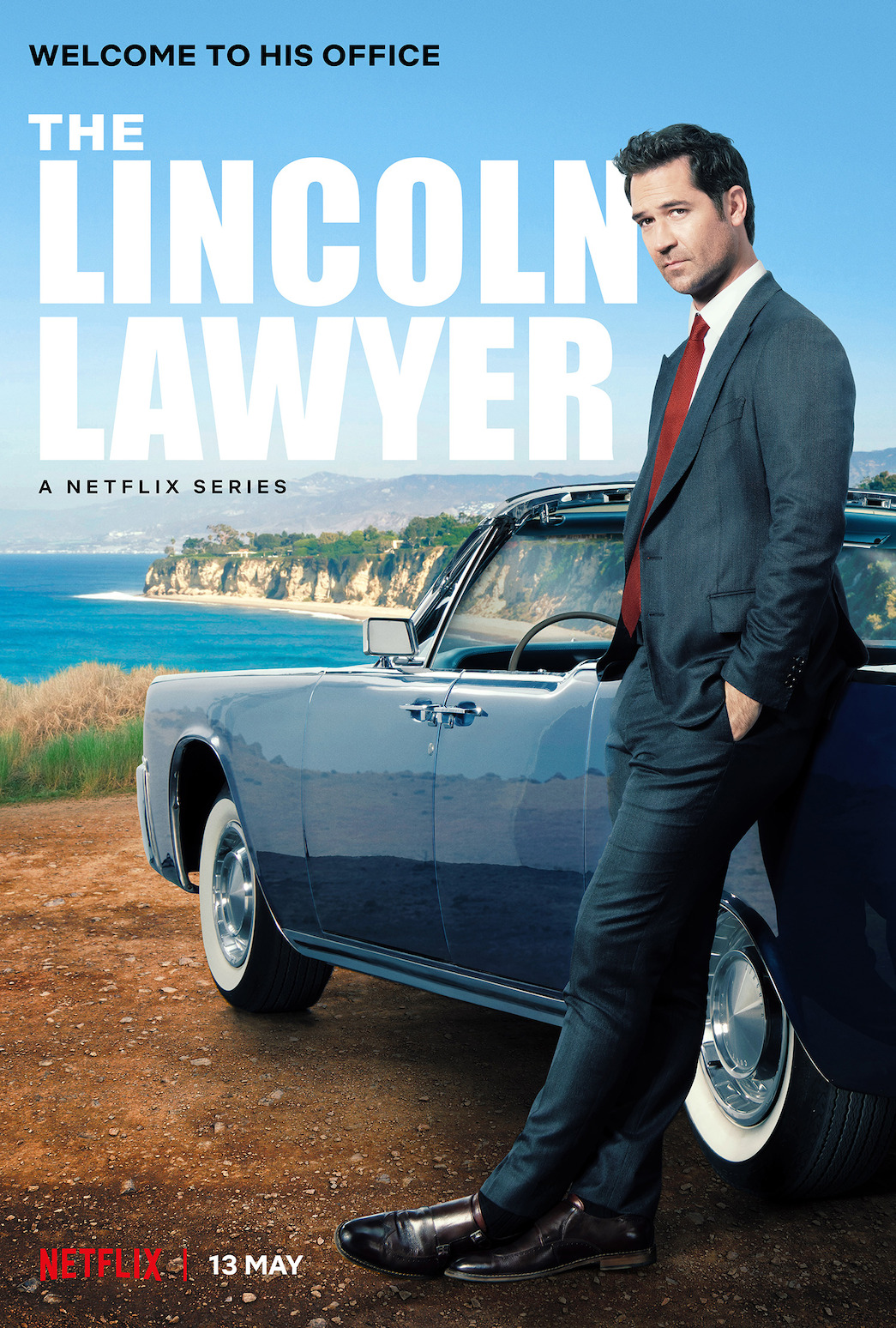
• Although there’s no word yet on when the 10-episode second season of Netflix’s The Lincoln Lawyer will debut, we do now know—thanks to Deadline—about three actors who’ve won recurring roles. Lana Parrilla (Why Women Kill, Once Upon a Time) will play “a beloved chef and community advocate struggling to keep her restaurant afloat as a predatory real estate developer threatens the neighborhood around her.” Yaya DaCosta (Chicago Med, Our Kind of People) “will portray Andrea Freemann, a cut-throat prosecutor and Mickey Haller’s (Manuel Garcia-Rulfo) undefeated courtroom rival, who is also a friend of his ex-wife Maggie (Neve Campbell).” And Matt Angel (Dave) is set to play Henry Dahl, “a cosmopolitan erudite with a hipster haircut and clothes. He is the host of a successful true crime podcast that acts the role of a good Samaritan. Distrustful of Henry’s motives, Mickey … warns him not to interfere with an ongoing case.” The sophomore season of The Lincoln Lawyer is said to be based on Michael Connelly’s 2011 novel The Fifth Witness.

• Mystery Fanfare draws our attention to a couple of British crime dramas set to debut soon in the United States. Season 12 of Vera, the series starring Brenda Blethyn and based on Ann Cleeves’ Vera Stanhope mysteries, will show up this coming Sunday, January 29, on the BritBox streaming channel. Meanwhile, watch for the freshman season of DI Ray, a procedural starring Parminder Nagar as Detective Inspector Rachita Ray of the fictitious Birmingham, England, police force. (Birmingham actually falls under the purview of the West Midlands Police.) DI Ray’s four episodes will be available to those who subscribe to the PBS Passport on-demand service beginning on February 20, with the series’ PBS Masterpiece broadcast premiere coming on July 9. The Killing Times reports that DI Ray has already been renewed for a second season in the UK.

• Shots’ Mike Stotter charts the 20 most popular British TV detective shows, starting with Line of Duty and Unforgotten.

• Max Allan Collins’ latest blog post contains a fine half-hour interview he did with Titan editor Andrew Sumner about his 18th Nate Heller novel, The Big Bundle (Hard Case Crime), released this week.

• Peter May gives us the background on his own brand-new novel, a standalone titled A Winter’s Grave, in this piece for Shots.

• Moscow-born author Katja Ivar chats with Crime Fiction Lover’s Garrick Webster on the subject of her writing career and her third Cold War-era-set Hella Mauzer thriller, Trouble (Bitter Lemon Press), now on sale in Great Britain and due out in the States on February 21.

• And one more superior exchange to mention: Speaking of Mysteries host Nancie Clare’s discussion with debut crime novelist Iris Yamashita about the latter’s City Under One Roof (Berkley), a claustrophobic, Alaska-backdropped tale that Publishers Weekly says “heralds the arrival of a major new talent.”

• We’re going to be seeing less of Sarah Weinman in The New York Times. The January edition of her newsletter, The Crime Lady, includes mention of her “Crime & Mystery” column (which she took over from longtime critic Marilyn Stasio in early 2021) shifting from twice-a-month appearance to only monthly publication. “There are many reasons for this change,” she explains, “including scheduling and print space and making sure all the genre columns get equal play. But from my standpoint, it turns out reviewing eight books a month is hard! And having experienced column burnout in the past, I did not want it to repeat itself. A more sustainable schedule also means more time for other projects, some of which are already in the works.”

• What relationship is there between author John le Carré and serial-lying Republican U.S. congressman George Santos? From Vox:
Sean Wilentz, a Bancroft Prize-winning historian at Princeton University, told Vox that Santos was more a character out of American literature than American history, citing Herman Melville’s The Confidence-Man. “This is nothing that a historian can be much help on,” he said. “There is no example like it.” It’s not that Santos was an entirely foreign object—the huckster is an American archetype, and nothing is more clichéd than a dishonest politician. As Wilentz put it, he’s “made of materials that one can identify.” But that such a shadowy figure and compulsive liar wound up on Capitol Hill is still remarkable. “Embellishing happens a fair amount that a lot of people get away with,” Wilentz said. “This is a different order because this is a made-up life.”

He noted that “it’s one thing to be Marjorie Taylor Greene and making up all of this crazy stuff, and here you just have a cipher.” Using another literary reference, Wilentz compared Santos to the “kind of nothing man that drips all through the novels” of John le Carré.
• There were plenty of “Best Crime Fiction of 2022” lists pouring in at the end of last year, but that doesn’t mean everyone had their say. Kevin Tipple, of Kevin’s Corner fame, today delivered a rundown of his 10 favorites in the blog Lesa’s Book Critiques. They include Rick Helms’ A Kind and Savage Place, Claire Booth’s Dangerous Consequences, Lee Goldberg’s Movieland, Terry Shames’s Murder at the Jubilee Rally, and Laurie Loewenstein’s Funeral Train.

If only I could be in Britain on March 4 for Mystery Fest

• There was an intriguing, if passing, mention in The New York Timesobituary of veteran TV news correspondent Bernard Kalb earlier this month, having to do with his early journalism experience: “After graduating from the City College of New York in 1942, Mr. Kalb spent two years in the Army, mostly working on a newspaper published out of a Quonset hut in the Aleutian Islands of Alaska. His editor was Sgt. Dashiell Hammett, the author of the detective novels ‘The Maltese Falcon’ and ‘The Thin Man.’” More on The Adakian, that daily mimeographed paper Hammett created for the Adak Army Air Base, can be found here. (Hat tip to Mark Coggins.)

• For CrimeReads, Zack Budryk looks back at how the “rampant corruption and incompetency” of U.S. president Warren G. Harding’s 1920s administration “pave[d] the way for a new century of politics.”

• Other recent CrimeReads pieces I’ve enjoyed include this one by Mark Ellis (Dead in the Water), asking whether historical accuracy actually matters in historical fiction; this other one, by Janice Hallett (The Twyford Code), focused on crime yarns featuring “recently released or escaped prisoners”; Samuel Martin’s exploration of what he calls “North Atlantic noir”; and Elizabeth Held’s contemplation of why teenage detectives remain so appealing.

• Devoted Rockford Files fan Jim Suza tells the story of how “several hundred film images” from the photo shoot for that 1970s series’ memorable opening title sequence were lost, almost trashed, and eventually found their way into his possession.

• Finally, if the new Netflix historical film The Pale Blue Eye has left you curious to learn the facts about Edgar Allan Poe’s short, self-sabotaged career at the U.S. Military Academy in West Point, New York, click over to this piece from The Washington Post.

Saturday, July 10, 2021

Taking the Leads

• The good folks behind PBS-TV’s Masterpiece Mystery! series have announced their broadcast lineup over the next four months. They report that Season 4 of Unforgotten, starring Nicola Walker and Sanjeev Bhaskar as London-based cold-case detectives, will debut tomorrow, July 11, with the first of six weekly episodes. That will be followed on Sunday, September 5, by a pair of two-hour installments of Guilt, focusing on brothers (Mark Bonnar and Jamie Sives) who try to cover up a hit-and-run accident. On October 3, expect to see the opening episode (of eight) in Season 6 of Grantchester, starring Tom Brittney and Robson Green. And lastly, on October 17, will come the first of six Season 2 installments of Baptiste, starring Tchéky Karyo as French detective (and brain tumor survivor) Julien Baptiste. Click here to find a short trailer covering all of these programs.

• By the way, UK viewers need not wait until October for Baptiste. It kicks off Season 2 in Britain on Sunday, July 18. A preview is here.

• Although there’s no air date yet, the sophomore season of the Victorian-era mystery Miss Scarlet and The Duke, starring Kate Phillips and Stuart Martin, has commenced filming in Belgrade, Serbia, according to The Killing Times.

• This caught me by surprise: “George R.R. Martin is co-executive producing another TV show—and this time, it’s not one based on his own books,” explains Tor.com. “Martin is part of the team behind Dark Winds, a series adaptation of Tony Hillerman’s [Joe] Leaphorn & [Jim] Chee series. The show is set to star Kiowa Gordon (Roswell, New Mexico) and Zahn McClarnon (Westworld), with McClarnon also producing. AMC has already ordered a six-episode first season.” The site goes on to note, “Dark Winds takes its title from the fifth book in the Leaphorn and Chee series, The Dark Wind, though according to a statement from Martin, the primary source material is Listening Woman, the third book in the series. The show, according to Variety, is ‘a psychological thriller that follows two Navajo police officers in the 1970s Southwest, as their search for clues in a grisly double murder case forces them to challenge their own spiritual beliefs and come to terms with the trauma of their pasts.’”

• I haven’t had time yet to watch the second five episodes of Lupin, the French Netflix series starring Omar Sy. But already Hector DeJean has a (rather mixed) review up in Criminal Element.

• I did, though, see the seventh and final season of Amazon’s Bosch. And it’s hard to argue with Paul Levinson’s assessment that it’s the “best cop drama ever on television,” despite a few hiccups here and there. I shall definitely be watching for the still-unnamed sequel set to appear on Amazon’s ad-supported streaming service, IMDb.TV.

• Speaking of Bosch, the Web site of Australian broadcaster SBS offers this delightful (and much overdue) tribute to Harry Bosch’s most eccentric Hollywood Division colleagues, Detective “Barrel” Johnson (Troy Evans) and Detective Robert “Crate” Moore (Gregory Scott Cummins). Are they that show’s “real heroes”?

• Can I just tell you how much I hate slideshows on the Web? Having to flip through one page after another just to take in an entire feature is usually too much for me to bear; I almost always quit before the end. That said, I did enjoy this rundown of what YardBarker’s Chris Morgan thinks are “The 25 Best Episodes of The Rockford Files.”

• One last TV-related story: At Classic Film & TV Café, blogger “Rick29” looks back at The Delphi Bureau, a 1972 pilot film for the 1972-1973 ABC-TV series of that same name. Both starred Laurence Luckinbill as a reluctant spy with a photographic memory. Clickety-clack here to see The Rap Sheet’s own piece about that short-lived show, which ran as part of the wheel series The Men.

• OK, I lied. Here’s an additional piece—and quite a thorough one—about a vintage television series, in this case the 1962 episodes (Seasons 3 and 4) of The Untouchables. This is Part III of a post series about that Robert Stack-headlined show in Television's New Frontier: the 1960s. Part I is here; Part II can be found here.

• Director-producer Richard Donner, who died earlier this week at age 91, maybe be best known for making flicks such as Lethal Weapon, The Goonies, and Superman. But as The Spy Command points out, he also “directed four episodes of The Man From U.N.C.L.E., three episodes of The Wild Wild West, and two episodes of Get Smart.”

The San Diego Union-Tribune reports that “Musician-turned-mystery-writer Corey Lynn Fayman took top honors in the 2021 San Diego Book Awards for Ballast Point Breakdown, a wisecracking novel that features a guitar-playing detective, Navy SEALs, and trained dolphins. The book received the Geisel Award, a best-in-show prize named after Ted ‘Dr. Seuss’ Geisel, who wrote many of his best-selling and influential children’s books while living in La Jolla.” Ballast Point Breakdown was released in 2020 by Konstellation Press.

• Meanwhile, PulpFest brings word that Gary Phillips, the creator of Los Angeles private eye Ivan Monk and author of last year’s Matthew Henson and the Ice Temple of Harlem, is among 12 contenders for the 2021 Munsey Award, a prize “named after Frank A. Munsey—the man who published the first pulp magazine. It recognizes an individual or organization that has bettered the pulp community, be it through disseminating knowledge about the pulps or through publishing or other efforts to preserve and foster interest in the pulp magazines we all love and enjoy.” The winner is to be announced on Friday, August 20—in the middle of Philadelphia’s PulpFest 2021 (August 19-22).

• I had missed the unfortunate news, carried this week by In Reference to Murder, that “Perseverance Press is closing its doors after [a] long run. In a statement by Meredith Phillips, originally sent to the Dorothy-L Listserv, she announced that ‘Perseverance Press/John Daniel & Co. will be going out of business soon, with the recent sad demise of John Daniel [in December 2020]. We ended our 22-year publishing history this spring on a high note: the starred PW review for Lev Raphael’s Department of Death.’”

• Mike Ripley’s July “Getting Away with Murder” column for Shots contains notes about long-ago author A.G. “Archie” Macdonell; recycled novel titles; and new or forthcoming works by Peter Lovesey, Graham Hurley, Peter Guttridge, Peter Hanington, and Vaseem Khan. You’ll find all of that—plus more—here.

• The program for this year’s Theakston Old Peculier Crime Writing Festival (July 22-25) has been released. So has the list of online events comprising the July 14-17 More Than Malice conference.

• And the dust jacket of Paul Doiron’s new Mike Bowditch novel, Dead by Dawn, confirms that aerial shots of snowy forests really have become a recurring theme on covers these last few years.

Saturday, June 20, 2020

Bullet Points: Pre-Father’s Day Edition

• If you’re not sufficiently aware of this already, tomorrow night will bring the debut of HBO-TV’s eight-part Perry Mason mini-series starring Matthew Rhys (The Americans). It’s conceived as a prequel to the classic 1957-1966 CBS series of that same name, which cast Raymond Burr as the almost unbeatable Los Angeles criminal defense attorney introduced by Erle Stanley Gardner in 1933’s The Case of the Velvet Claws. HBO’s version, set just one year before that—in 1932—imagines Mason as a down-and-out, heavy-drinking private eye “retained for a sensational child kidnapping trial, and his investigation portends major consequences for Mason, his client, and the city itself.” The character Rhys plays here is actually closer than Burr’s portrayal was to Gardner’s original conception of Mason as (to quote from Otto Penzler’s The Private Lives of Private Eyes, Spies, Crime Fighters and Other Good Guys) a “hard-boiled, two-fisted and noncerebral” advocate for justice. But writers/showrunners Ron Fitzgerald and Rolin Jones have sought to flesh out their protagonist’s back story, as well. The Killing Times explains: “Mason is haunted by his wartime experiences in France and suffering the effects of a broken marriage.” An extended, noir-accented trailer (found here) nicely captures Depression-era L.A., with its recent Olympic Games, its unlikely “evangelical fervor,” the rise of the oil industry, and of course its Hollywood glamour. Vulture calls this new Perry Mason “a simultaneously gorgeous, gritty, and sometimes downright gory period piece filled with fine performances.” John Lithgow, Tatiana Maslany, Shea Whigham, Stephen Root, and Robert Patrick join Rhys in the cast. After disappointing previous attempts to revive Perry Mason (remember Monte Markham’s The New Perry Mason of 1973-1974?), it will be nice if HBO can draw upon what fans like about Gardner’s protagonist, while imbuing his story with greater emotional depth and substance. I’ll be watching with my fingers crossed.

• Scottish writer Lee Randall contributes a useful backgrounder about Gardner to CrimeReads, in which she recalls the lawyer-turned-author’s original intent with Mason: “I want to make my hero a fighter, not by having him be ruthless with women and underlings, but by having him wade into the opposition and battle his way through to victory. … [T]he character I am trying to create for him is that of a fighter who is possessed of infinite patience. He tries to jockey his enemies into a position where he can deliver one good knockout punch.” Yep, that nicely sums up the typical Mason yarn.

• Florida journalist Craig Pittman provides something of a public-service piece to aspiring legal-thriller writers, consulting various attorneys who have become novelists on how one might best compose realistic courtroom dramas. “I would suggest that authors treat courtroom scenes much like any other and not let the legal and technical details override the narrative,” says Alafair Burke, once a prosecutor in Oregon and now a professor at New York’s Hofstra University School of Law. “Too many courtroom scenes read like an intentional display of the research the author conducted to prepare for the scene. Instead, focus on character, setting, plot, dialogue—all the things that drive a good book. If the legal details don’t further a critical aspect of the narrative, skip them.”

Crimespree Magazine brings word that writer Val McDermid “has unveiled the hotly tipped ‘New Blood’ authors for 2020, showcasing the year’s best breakout crime-writing talent.” Her choices:

— Deepa Anappara, Djinn Patrol on the Purple Line (Chatto & Windus)
— Elizabeth Kay, Seven Lies (Sphere)
— Jessica Moor, Keeper (Penguin)
— Trevor Wood, The Man on the Street (Quercus)

“Since 2004,” explains Crimespree’s Erin Mitchell, “the best-selling Scottish author of the Tony Hill and Carol Jordan series has curated an annual celebration of the most formidable debuts taking the crime and thriller genre by storm, with an invitation to join the line-up of the world’s largest and most prestigious crime-fiction festival: Theakston Old Peculier Crime Writing Festival.” Although this year’s festival was cancelled due to the pandemic, Mitchell says McDermid’s 2020 “New Blood” showcase “will be streamed on the festival’s HIF Player on what would have been the legendary weekender on Saturday 25 July 2020.” You should be able to access the audio here at that time.

• I know, I know, it’s the frickin’ middle of June already, but only now am I finally getting around to remarking upon Mike Ripley’s latest edition of his “Getting Away with Murder” column for Shots. Featured among his plentiful subjects this time are: older books he’s taken up reading during the COVID-19 lockdown; forgotten writers Douglas Sanderson (Blondes Are My Trouble) and Peter Leslie (Bootleg Angel); fresh crime fiction by Sharon Bolton, Douglas Lindsay, Barbara Nadel, and Martin Walker; and the end of the line for the Top Notch Thrillers and Ostara Crime imprints, for which Ripley served as editor.

• In Reference to Murder features this tidbit:
Foreword INDIES Book of the Year Awards announced this year's winners, including in the Mystery Category. The Gold winner was Below the Fold by R.G. Belsky; Silver winner was A Plain Vanilla Murder by Susan Wittig Albert; and Bronze winner was Moonscape by Julie Weston. In the Thriller Category, the Gold winner was The Nine by Jeanne Blasberg; the Silver winner was The Unrepentant by E.A. Aymar; and the Bronze winner was Green Valley by Louis Greenberg. The Guilt We Carry by Samuel W. Gailey was also a Thriller Honorable Mention.
• Congratulations to Joe Kenney for 10 years at the helm of Glorious Trash, one of the best blogs about forgotten (and sometimes best-forgotten) works of paperback fiction.

What a beautiful selection of vintage B-movie posters, all painted by Albert Kallis. I’m particularly fond of his placards for The Brain Eaters and The Astounding She-Monster, two science-fiction productions released in 1958.

• Like so many other writers, San Francisco-area author Mark Coggins has decided to launch a podcast during the COVID-19 lockdown. It’s called Riordan’s Desk, after his series private eye, August Riordan, and he’s currently reading chapters from his latest Riordan novel, The Dead Beat Scroll (2019). Chapter 15 just went up a few days ago. To listen, look for Riordan's Desk on iTunes or any of the popular podcast directories. Or, to listen from the Web, click here.


• Seeing as we’re now just a little over a month away from the TNT-TV premiere of The Alienist: Angel of Darkness, the eight-episode mini-series sequel to last year’s acclaimed Victorian-era thriller, The Alienist, don’t you think it’s time to watch a trailer for that new production? You’ll find a good one embedded above. Both shows are adapted from crime novels published in the 1990s by Caleb Carr. The Killing Times offers this synopsis of the coming sequel:
In The Alienist: Angel of Darkness, Sara [Howard] has opened her own private detective agency and is leading the charge on a brand-new case. She reunites with Dr. [Laszlo] Kreizler and John Moore, now a New York Times reporter, to find Ana Linares, the kidnapped infant daughter of the Spanish Consular. Their investigation leads them down a sinister path of murder and deceit, heading towards a dangerous and elusive killer.

The promo blurb says that series two will “shine a light on the provocative issues of the era—the corruption of institutions, income inequality, yellow press sensationalism, and the role of women in society—themes that still resonate today.”
This new mini-series is set to drop on Sunday, July 26.

• In other small-screen news, Variety reports that “Amazon is developing a series centered on Lisbeth Salander, the character created by Stieg Larsson for the so-called Millenium books. The project, which is currently titled The Girl With the Dragon Tattoo, will not be a sequel or continuation of the story from the books or the films into which they were adapted. It will instead take Salander and place her in today’s world with a wholly new setting, new characters, and a new story. No writer or lead actress is currently attached to the series.”

• And January Magazine recommends that Harlan Coben followers tune in to “a six-part Netflix mini-series based on The Woods, Coben’s 2007 novel,” it’s action transferred from New Jersey to Poland. “The switch creates some real magic: Coben’s terrific storytelling reimagined here with a gritty European sensibility,” January enthuses. Netflix debuted this six-part mini-series on June 12.

• For some reason, Janet Rudolph posted her list of Father’s Day mysteries last month. But tomorrow is actually Father’s Day here in the States, so let’s revisit that collection of titles now.

• As a veteran newspaper guy, I was interested to read this excerpt of a story from The Wall Street Journal about how some struggling local papers “are shutting down their [printing] presses and, to save money for distant corporate owners, printing their daily editions at other newspaper headquarters hours away. The papers still bear the names of the cities where they’re read, but they roll off presses elsewhere, sometimes in different states.” Included with that excerpt is a fabulous scene from the 1952 picture Deadline—U.S.A., in which “crusading managing editor” Humphrey Bogart instructs his press room foreman to start running the giant presses, churning out copies of the broadsheet containing an exposé of a mobster’s misdeeds. “That’s the press, baby. The press,” he tells the doomed hood over the phone. “And there’s nothing you can do about it. Nothing.”

• November 1 is the deadline for essay proposals on the theme of “Historical Crime Fiction,” the focus of a future edition of Clues: A Journal of Detection. The mag’s managing editor, Elizabeth Foxwell, explains that Rosemary Erickson Johnsen (Contemporary Feminist Historical Crime Fiction) will act guest-edit that issue.

• I’m very sorry to learn that Spanish novelist Carlos Ruiz Zafón, best known worldwide for penning 2001’s The Shadow of the Wind, died Friday from colorectal cancer. He was only 55 years old. An obituary in The Guardian notes that this Barcelona-born fictionist “was frequently described as the most-read Spanish author since Cervantes,” and it quotes Zafón as saying “he felt he had ‘no other choice’ but to be a writer: ‘Sometimes people ask me what piece of advice I would give to an aspiring author. I’d tell them that you should only become a writer if the possibility of not becoming one would kill you. Otherwise, you’d be better off doing something else. I became a writer, a teller of tales, because otherwise I would have died, or worse.’”

• Also announced was the demise of Grace F. Edwards, a Harlem mystery writer and former executive director of the Harlem Writers Guild, who passed away on February 25 of this year, at age 87. “Though she began writing at age 7,” recalls The New York Times, “Grace F. Edwards waited until she was 55 to publish her first novel. That book, In the Shadow of the Peacock, was a lush portrayal of Harlem during World War II, a girl’s coming-of-age story set against the race riots of the time. It was a placeholder for the six detective stories she would later write, mysteries set in Harlem starring a female cop turned sociologist and accidental sleuth named Mali Anderson, always with a backbeat of jazz. The first of these, If I Should Die, was published in 1997, when Ms. Edwards was 64.”

• Finally, I offer a sad good-bye to Dennis “Denny” O’Neil. The Spy Command explains that O’Neil was “a comic book writer and editor who [in the 1970s] returned Batman to his dark origins,” following a very lighthearted period “during the run of the 1966-68 television series starring Adam West.” In an obituary of his own, author Scott D. Parker describes O’Neil as “easily one of the people you’d put on the Mt. Rushmore of Batman creators.” Meanwhile, Terence Towles Canote writes that “In addition to his work in comic books, Dennis O’Neil also wrote several novels, including The Bite of Monsters (1971) and Dragon’s Fists – Richard Dragon, Kung Fu Master (with Jim Berry, 1974), as well as novels ... featuring Batman and Green Lantern. Over the years he also wrote several stories and novellas published in such magazines as Ellery Queen's Mystery Magazine, Fantasy & Science Fiction, Fantastic Stories, and Unknown Worlds of Science Fiction.” O’Neil died on June 11 at age 81.

• A few author interviews worth your attention: For her excellent Speaking of Mysteries podcast, Nancie Clare talks with both Craig Robertson (Watch Him Die) and Paul D. Marks (The Blues Don’t Care); Steve Powell goes one-on-one with Shelley Blanton Stroud (Copy Boy); Rich Ehisen quizzes Timothy Jay Smith (A Fire on the Island); and MysteryPeople’s Scott Montgomery chats with James Wade about the latter’s new novel, All Things Left Wild.

• Len Deighton enthusiast Rob Mallows relates the tale of his longtime search for “a simple postcard, part of the marketing materials for the first UK edition of SS-GB.”

• My late father and I generally had quite different TV-watching tastes. He was partial to fare such as Hee Haw, The Benny Hill Show, Hunter, The A-Team, and Walker, Texas Ranger, none of which I fancied. However, we did watch The Rockford Files together. In fact, I think I may have introduced him to that 1974-1980 NBC detective series, after enjoying its pilot film. Only later did I learn that my father had been a fan of actor James Garner ever since the late 1950s, when he starred in Maverick. But my point here is that I enjoyed Rockford when it was originally broadcast, and I take just as much pleasure in watching episodes occasionally more than four decades later. So I was a prime candidate to appreciate Nathan Ward’s recent tribute to the show, in CrimeReads. It contains numerous smile-inducing reminders of what the series offered, the first of those being Ward’s fond memory of the 1974 pilot:
The first show did not reek of tough-guy promise. First of all, [Rockford] turned down the job he was hired for not once but twice, and except for his California P.I. license he seemed like just another big affable guy with ordinary problems: an understocked fridge, people hectoring him through his answering machine. His concerns seemed unheroic and, perhaps worst of all, he did not even carry a gun, keeping one only for emergencies in a cookie jar in the kitchen of his house trailer. And when at one point his client asked, a little concerned, “You’re not afraid of him, are you?” he told her the truth, “You’re damn right I am.”

But what grabbed me from the first episode was one hilarious scene: Jim Rockford, tired of being trailed by … [a] muscular killer (William Smith) in a long red convertible, pulls into the Mayfair Music Hall, a Santa Monica venue of vaudeville-era entertainments. The bow-tied bartender greets Rockford and asks “The usual?” as a young woman performs a slow split atop a wire, meaning Jim either comes here often to lose a tail or he likes novelty acts. After his brawny pursuer enters the bar and growls his drink order, Jim heads to the men’s room to prepare his trap. The Mayfair switches to a troupe of dancing poodles as Rockford’s man stalks to the bathroom, where Jim has drizzled hand soap across the floor and retrieved a roll of nickels from his coat pocket, taunting, “You musclebound guys are always overcompensating.” The charge of latency draws a macho scream and a high kick that slides him back onto the soapy tile, where Jim lands a cheap insurance shot. According to Ed Robertson’s history of
The Rockford Files, this scene nearly broke the ASI meter when the pilot was tested, and may have made the show. It did for me. By cheating a little, it seemed a clever man could take down a bully. I was hooked.
Ward has much more to say about The Rockford Files here.

• Not to go overboard in promoting recent CrimeReads articles, but here are a few more I have enjoyed: Olivia Rutigliano’s excellent analysis of Inspector Bucket, Charles Dickens’ “devious, hypocritical ‘nice guy’ cop” in Bleak House (1853); Shane Mawe’s profile of Freeman Wills Crofts, once a prolific Irish mystery novelist (The Cask, The 12:30 from Croydon, etc.) and “a contemporary of Agatha Christie and Dorothy L. Sayers, … [whose] reputation has failed to match that of these luminaries”; Chris McGinley’s profile of Virginia Kellogg, who “wrote some of the greatest crime movies in Hollywood's Golden Age,” but is today pretty much forgotten; and Paul French’s exploration of the various books and authors that have helped make Sydney “Australia’s undisputed capital of Noir.”

• Are you a big Ian Rankin admirer? If you, you might be interested to know that the Scottish creator of Inspector John Rebus is the subject of the latest entry in the McFarland Companions to Mystery Fiction series. At more than 400 pages long, Ian Rankin: A Companion to the Mystery Fiction is said to include “alphabetized entries on Rankin’s works, characters, and themes; a biography; a chronology; maps of Rebus’ Edinburgh; and an annotated bibliography.”

• Martin Edwards also recommends H.R.F. Keating: A Life of Crime, by Sheila Mitchell (Level Best). He describes this study of the British author behind Indian policeman Inspector Ganesh Ghote as “affectionate and entertaining” and says it “gives wonderful insights into the ups and downs of the crime writing life,” as well as a few curious bits of triva. “For instance,” remarks Edwards, “one thing I didn’t know was that Harry wrote the novelisation of Neil Simon’s Murder by Death.” The prolific Keating passed away in 2011.

• Thirteen years after The Sopranos ended its six-season run on HBO, creator/writer David Chase has finally revealed the meaning of its last episode’s ambiguous ending.

• And the next time you need a musical pick-me-up, try this.

Saturday, October 19, 2019

Just Trying to Keep Up

Variety brings word that “PBS Masterpiece has boarded the remake of classic European detective series Van der Valk and will co-produce and air the show in the U.S. Masterpiece’s Rebecca Eaton will exec produce the project. It is the latest in a healthy line of U.K.-originated drama that Masterpiece has boarded since becoming the U.S. home for British-made hits such as Downton Abbey.” Production of this new Amsterdam-set series is said to be underway, with no firm release date as yet. The original Van der Valk, starring Barry Foster and based on a succession of novels by Nicholas Freeling, was broadcast (on and off) between 1972 and 1992. (Hat tip to Lee Goldberg.)

• Meanwhile, Mystery Fanfare reports that Lara Prescott’s debut novel, The Secrets We Kept, along with Adrian McKinty’s acclaimed The Chain are slated for Hollywood film adaptation.

• And Mystery Tribune says Swedish writer Camilla Läckberg (The Girl in the Woods) “has turned her attention into creating a new TV series titled Hammarvik, which can be characterized as a Nordic version of Desperate Housewives with a serial killer on the loose.”

• Not long after the posting of my latest CrimeReads piece, “Detecting During Disasters”—about mystery and detective novels set amid real-life catastrophes, including San Francisco’s 1906 earthquake and city-destroying fire—I received a note from Randal S. Brandt, a librarian with the University of California, Berkeley’s Bancroft Library. He told me of an article he’d written for a 2006 edition of the Bancroft’s newsletter, about novels featuring that trembler—everything from Sara Dean’s Travers: A Story of the San Francisco Earthquake (1908) and Shaken Down (1925), by Alice MacGowan and Perry Newberry, to Mignon G. Eberhart’s Casa Madrone (1980) and Dianne Day’s Fire and Fog (1996). Titled “The Big Shake,” Brandt’s feature is accessible in this PDF; simply scroll down to page 10.

• I’d never heard mystery-maker Ngaio Marsh speak—until now.

• Houston-born novelist Attica Locke has won the 2019 Texas Writer Award. Sponsored by the Texas Book Festival, this prize is given out annually to authors who have “significantly contributed to the state’s literary landscape.” Locke is, of course, known for penning such books as Bluebird, Bluebird (2017) and its new sequel, Heaven, My Home. She will be presented with her award during an October 26 ceremony in Texas’ state capitol in Austin. (Hat tip to The Gumshoe Site.)

• I’ll be sorry to miss this presentation. “If you’re going to Bouchercon [in Dallas, October 31-November 3],” writes B.V. Lawson in In Reference to Murder, “you won’t want to miss The Ghost Town Mortuary, a radio play by Anthony Boucher, performed by members of Mystery Writers of America NorCal, Friday, November 1, 11 a.m., at the Landmark Ballroom in the Hyatt Regency. Authors scheduled to participate include Laurie R. King, David Corbett, Kelli Stanley, Reece Hirsch, Randal S. Brandt, Dale Berry, Gigi Pandian, James L’Etoile, and Terry Shames.”

• Looking for a Christmas present for yours truly? This set of 20 Rockford Files trading cards would be a fun choice.

• England’s Daily Telegraph newspaper carries a story—reproduced by Chris Sullivan in his blog—about how actor Laurence Fox, late of Inspector Lewis and currently appearing in Victoria, has found solace in his music, after a divorce and the death of his best friend.

• Comfort TV blogger David Hofstede continues his series of posts about two-part television episodes—good and definitely not so good—with write-ups that mention several crime dramas, such as The Hardy Boys/Nancy Drew Mysteries, The Fugitive, and Charlie’s Angels.

• It’s always good to be reminded of ABC-TV’s classic gumshoe series, Peter Gunn, and its “jazz chanteuse,” played by Lola Albright.

• Finally, if you could use some financial assistance to attend next year’s Left Coast Crime convention in San Diego, California (March 12-15), you may be in luck. The LCC National Committee has drummed up funds for five scholarships to the event, plus expense money. More information and application procedures are available here.

Tuesday, April 02, 2019

Bullet Points: Various and Sundry Edition

• With production on the 25th James Bond film having been pushed back, and the picture’s release now delayed until April 2020, that leaves extra time for rumors to fill in where facts are so far absent. Talk that Agent 007 (again played by Daniel Craig) will be killed off in the next movie is probably bogus. But word that the still-untitled film might be shot, at least partly, in Jamaica appears to be true. The Spy Command reports that “The government of Jamaica on March 29 confirmed it’s in ‘advanced’ talks about having Bond 25 shooting on the island nation.” This wouldn’t be the first time 007 has invaded the lush land of reggae and jerk spices. Spy Command managing editor Bill Koenig writes, “Both Dr. No (1962) and Live and Let Die (1973) were filmed in Jamaica (it doubled for the fictional San Monique in the latter movie). Ian Fleming also wrote the first drafts for his 007 stories while in Jamaica during the winter.”

• Sadder Bond-related news: The Spy Command brings word that English actress/model Tania Mallet, “who had a small but key role in Goldfinger, has died at 77.” It goes on to tell that “In 1964’s Goldfinger, Mallet played Tilly Masterson, sister to Jill Masterson (Shirley Eaton), who had been killed by being ‘painted gold,’ causing skin suffocation. Tilly seeks to avenge her sister’s death and is tailing Auric Goldfinger (Gert Frobe) in Switzerland. She takes a rifle shot at Goldfinger but almost hits Bond (Sean Connery).” Following that big-screen debut, Mallett (a cousin of actress Helen Mirren) resumed modeling, though she did appear as herself in several TV shows, and took an uncredited role in “The Midas Touch,” a 1978 episode of The New Avengers.

• Britain’s Piccadilly Publishing, which usually specializes in Westerns and men’s adventure yarns, will be making at least some of the numerous tales about newhound-turned-private eye Larry Kent available in e-book format—with their original “good girl” artwork. (See Curves Can Kill on the right.) Kent, if you don’t remember, began life on a 1950s Australian radio drama series (created by Ron Ingleby), then became a phenomenon in print—initially in a succession of novelettes, but ultimately in hundreds of novels, all of them with high body counts. More info is on the Piccadilly Web site.

• Criminal Element continues to roll out its posts revisiting books that, over the last 65 years, have won the Edgar Award for Best Novel. Although the quality of entries is inconsistent, and some participating critics have insisted on judging works according to modern viewpoints rather than historical ones, in general, the series has offered an interesting look back at wonderful—if sometimes forgotten—criminal yarns. The latest installment, contributed by novelist Philip Margolin (The Perfect Alibi) re-examines The Quiller Memorandum (aka The Berlin Memorandum), the first book in Adam Hall’s 20-volume series starring the spy known only as Quiller. Margolin writes:
The Quiller Memorandum is in many was an experimental novel. It is narrated in a stream of consciousness style by Quiller, and the narrative is frequently exhausting as we are forced to read page after page detailing the mechanics of losing a tail and other spycraft. What saves the book is Hall’s description of the Nazi horrors that motivate Quiller to find the Nazis in hiding and bring them to justice. There are some good twists and an interesting relationship between Quiller and Inga, the mysterious femme fatale. I moved back and forth between fascination, boredom, and misbelief while reading the novel, especially the interrogation sequences.
If you’ve fallen behind in reading Criminal Element’s Edgar Awards series, you can catch up with all of the posts here.

• Philip Kerr’s Metropolis, his 14th and final Bernie Gunther novel, won’t go on sale for another week. But its welcome is already in full swing. Crime Fiction Lover has posted a handy guide to the series, all of the books—whether set in Europe, South America, or Cuba—starring Gunther, a mordantly humorous, half-Jewish, Nazi-hating Berlin homicide detective turned (sometimes reluctant) private eye. Meanwhile, the Rap Sheet’s UK correspondent, Ali Karim, has posted this video of the book’s official launch at London’s Daunt Books, well attended by publishing types and critics pleased to celebrate author Kerr, who died a year ago, at age 62. On hand, too, were Kerr’s editor, Jane Wood, and his wife, journalist-novelist Jane Thynne, who delivered a warm, revealing tribute to her late husband.

• While I remain skeptical of the whole enterprise, I’m not surprised by this news: HBO-TV has greenlighted a new “Perry Mason origin series, starring Matthew Rhys as the titular icon.” Deadline Hollywood notes that “prolific TV director, writer, and producer Tim Van Patten (Boardwalk Empire, The Sopranos, Game of Thrones) has been tapped to direct and executive produce” the show.

• I wish this Rockford Files diorama was widely available.

Sopranos fans, looking forward to the September 25, 2020, release of David Chase’s prequel film, The Many Saints of Newark, will be interested in a tidbit contained in B.V. Lawson’s latest “Media for Murder” column, explaining that the movie “has cast its final major lead role. Michela De Rossi, the Italian-born actress who made her debut in Boys Cry, has been set to join Alessandro Nivola, Vera Farmiga, Ray Liotta, Jon Bernthal, Corey Stoll, Billy Magnussen, John Magaro, Michael Gandolfini, and the just-cast Leslie Odom Jr. in the ensemble drama for New Line.” A bit more information about De Rossi can be found in Entertainment CheatSheet.

• I’ve been a fan of James McClure’s novels ever since college. Beginning with 1971’s The Steam Pig, this author—who died in 2006—composed eight police procedurals set in apartheid-era South Africa, all starring a racially mixed pair of sleuths, Afrikaan Lieutenant Tromp Kramer of the Murder and Robbery Squad and his Zulu assistant, Sergeant Mickey Zondi. If you haven’t yet discovered these works, definitely check out Neil Nyren’s briefing on his fiction.

• It was nice to see the 1986-1988 TV series Crime Story receive a little love recently from New York magazine’s Vulture site. Comparing that 1960s-set Michael Mann drama with another, better-known Mann project, Miami Vice, Nathan Smith opines:
Where Miami Vice brought the police procedural into the future—flashy clothes, big tunes, heaps of style—Crime Story went back in time, and even if it’s the lesser-known of the two series, it revolutionized the genre on a molecular level, whereas Miami Vice achieved the same only on the surface. Two decades before The Sopranos and The Wire, Crime Story was one of the very first serialized prime-time dramas to ditch the procedural format and tell a season-long story. …

Crime Story unlocked the gates for shows like Wiseguy, Twin Peaks, and The X-Files, the wayward step-children of the police procedural. Its gritty realism would be carried on by the likes of Homicide: Life on the Street and NYPD Blue. But its most important contribution, the three words “to be continued … ” at the end of every single episode, influenced nearly every subsequent drama on prime time. Though Crime Story wasn’t the first series to flash those words across the screen—every show from Dallas to The Brady Bunch had done a multi-episode arc—the idea of a story that continued seemingly without end or resolution in sight, was new.
• For your amusement, from Flavorwire:Classic Songs Reimagined as Vintage Pulp Book Covers.”

• During the mid-1960s, the American TV network NBC broadcast a 26-episode animated series called The Famous Adventures of Mr. Magoo. It starred the popular elderly, short, and extremely near-sighted character Quincy Magoo (voiced by Jim Backus of Gilligan’s Island fame), who in this show played an actor appearing in abbreviated stage productions of classic works of fiction. “The series was originally shown in prime time …,” explains Wikipedia, “therefore certain more mature elements were present. These included death threats (William Tell, Robin Hood, Don Quixote, The Three Musketeers, Sherlock Holmes), children in danger (Treasure Island, Gunga Din, William Tell), insanity (Don Quixote, Moby Dick), heroic self-sacrifice (Gunga Din), religious themes (Noah’s Ark), and realistic (although mostly bloodless) violence including swordplay, shooting, clubbing, drowning, and character deaths (most episodes).” I remember watching reruns of the episodes based on Frankenstein, Cyrano de Bergerac, A Midsummer Night’s Dream, and The Count of Monte Cristo. But I’d forgotten until this last weekend that there was a Sherlock Holmes episode, featuring Magoo as the faithful Doctor John H. Watson. (Thank you to the Man from U.N.C.L.E.—Spies & Detectives Facebook page for reminding me.) The case undertaken in that episode, writes Scott Monty in his blog I Hear of Sherlock Everywhere, “is a clever little mystery that includes touches of a number of Sherlock Holmes stories, including The Sign of Four, ‘The Speckled Band,’ ‘The Musgrave Ritual,’ and ‘The Six Napoleons’ to name a few.” Providing the voice of Holmes was actor Paul Frees, who also voiced antagonist Boris Badenov on The Rocky and Bullwinkle Show. The episode is only 23 minutes long, and at least for the nonce, can be enjoyed here.

• This year’s Mystery Fest Key West won’t take place until late June, but its publicity minions are already heralding its scheduled components. This year’s headliner will be psychological suspense master Jeffery Deaver, with special host Heather Graham. And a Whodunit Mystery Writing Competition has been organized in association with the convention. From a news release: “Sponsored by Absolutely Amazing eBooks, candidates wishing to compete are invited to submit the first three pages (maximum 750 words) of a finished, but unpublished manuscript to whodunitaward@mysteryfestkeywest.com no later than April 15, 2019. There is no fee to enter; finalists will be notified by May 1, and will have until May 10 to submit full manuscripts.” You will find more news about the 2019 Mystery Fest here.

• There’s been a lot written of late about Jack the Ripper—not bad for a guy (presumably) whose claim to infamy dates back more than 130 years. Media reports in March suggested that DNA analysis had finally identified the Ripper as being “Aaron Kosminski, a 23-year-old barber of Polish descent who lived in London at the time [1888],” but was subsequently committed to an insane asylum. Proof, it was said, could be found in seminal fluid left behind on a shawl belonging to Catherine Eddowes, the killer’s fourth recorded victim. However, doubts were soon raised as to whether Eddowes had ever owned such a scarf, and whether DNA found upon it could be trusted, given that it would’ve been “handled by countless people over the years.” In the midst of these debates, British social historian Hallie Rubenhold’s latest work of non-fiction, The Five: The Untold Lives of the Women Killed by Jack the Ripper, was published in the UK (with a U.S. edition due for release next week). The Guardian greeted the book as “a landmark study [that] calls time on the misogyny that fed the Jack the Ripper myth.” Reviewer Frances Wilson writes:
Few women have had the moment of their deaths returned to more often, and with as much relish, as Mary Ann “Polly” Nichols, Annie Chapman, Elizabeth Stride, Catherine Eddowes and Mary Jane Kelly. In each case their throats were cut, and four of them had their entrails removed. Kelly, the only one of “the canonical five”, as Jack the Ripper’s known victims are called, to die in her bed, was completely mutilated. Forests have been felled in the interests of unmasking the murderer, but until now no one has bothered to discover the identity of his victims. The Five is thus an angry and important work of historical detection, calling time on the misogyny that has fed the Ripper myth.

It is astonishing how little we know about these five, apart from their names. Hallie Rubenhold fleshes out their stories from the scraps that are available: coroner’s inquests (three of which are missing); “a body of edited, embellished, misheard and re-interpreted newspaper reports”; parish registers; court registers; birth, marriage and death records; rate books and the archives of the London workhouses. For accounts of poverty in London she turns to Francis Place, Henry Mayhew and Charles Booth; she gets facts and figures from Mrs Beaton. With the documentary veracity of a set of Hogarth prints, Rubenhold follows the victims’ doomed footsteps from birth to death. Except that there is no attempt to imagine each woman’s last moments, or describe the state of her body, or further the search for their killer. Instead she asks how it is that these women—all of them somebody’s daughter, somebody’s sister, somebody’s lover—ended up alone and destitute on the streets of Whitechapel.
Happy 80th birthday, Batman!

• Speaking of Gotham’s Caped Crusader, it seems his family’s butler, Alfred Pennyworth, is about to get his own 1960s spy show, appropriately titled Pennyworth. The Double O Section informs us that “In the 10-episode drama series, Alfred Pennyworth (The Imitation Game’s Jack Bannon), described by Deadline as ‘a former British SAS soldier in his 20s,’ forms a private security company ‘and goes to work with young billionaire Thomas Wayne (Fleabag’s Ben Aldridge), who’s not yet Bruce’s father, in 1960s London.’” Pennyworth is set to premiere this summer on EPIX. By the way, that Double O Section post includes a very brief trailer for the series.

• In a new piece for CrimeReads, author Stephanie Jo Harris (The Poet Recusant) contends that Victor Hugo’s 1862 masterpiece, Les Miserables, both “created a model for police procedurals” and, in the person of Inspector Javert, gave us a “standard for the unyielding, driven law enforcement officer obsessed with justice.”

• I was surprised to learn, while reading Bill Selnes’ Mysteries and More from Saskatchewan, that Margot Kinberg “has decided to cease writing her blog,” Confessions of a Mystery Novelist. Selnes notes: “For almost 10 years Margot provided a daily post. By my calculations she wrote over 3,000 posts. She highlighted at least 500 different authors!” I would have included a link here to Confessions of a Mystery Novelist, so that people less than familiar with Kinberg’s work could check out what she had accomplished. However, it seems she’s not just stopped writing her blog, but has removed it entirely from the Web. What a shame, not only because good blogs like Kinberg’s can still provide useful information to readers, even when they’re no longer being updated, but because all of the links other blogs established to hers over the last decade are now broken. I have sifted through the full run of The Rap Sheet, scouting for links to Confessions of a Mystery Novelist, and have changed most of them to connect instead with pages in the Internet archive Wayback Machine, but a handful remain inoperative. I don’t mean to criticize Kinberg for her actions; I’m sure they made sense to her at the time. However, I really wish that when bloggers stop working on their sites, they would simply leave them dormant, rather than deleting them entirely.

• Maybe, though, I’m just more sensitive to these matters than most people. I cannot imagine deliberately scrubbing The Rap Sheet from the Web. I have put far too many hours of work into writing and editing this blog to see it all disappear. Unless the world experiences electronic catastrophe, I expect The Rap Sheet to outlast me.

• Despite its impersonal salutation (“Dear Journalists”), I was intrigued recently by a letter sent my way by Bloomsbury Publishing, promoting a forthcoming biography called Beyond the Thirty-Nine Steps: A Life of John Buchan. The author is Buchan’s granddaughter, Ursula Buchan. Bloomsbury offered this brief on her work:
John Buchan’s name is known across the world for The Thirty-Nine Steps. In the past one hundred years the classic thriller has never been out of print and has inspired numerous adaptations for film, television, radio and stage, beginning with the celebrated version by Alfred Hitchcock.

Yet there was vastly more to “J.B.” He wrote more than a hundred books—fiction and non-fiction—and a thousand articles for newspapers and magazines. He was a scholar, antiquarian, barrister, colonial administrator, journal editor, literary critic, publisher, war correspondent, director of wartime propaganda, member of parliament and imperial proconsul—given a state funeral when he died, a deeply admired and loved Governor-General of Canada.

His teenage years in Glasgow’s Gorbals, where his father was the Free Church minister, contributed to his ease with shepherds and ambassadors, fur-trappers and prime ministers. His improbable marriage to a member of the aristocratic Grosvenor family means that this account of his life contains, at its heart, an enduring love story.
Beyond the Thirty-Nine Steps is due out on June 18.

• An entirely different letter informed me that Crossroad Press, a North Carolina-based digital publishing venture, last month reissued the 1967 spy novel The Man from Pansy, by Don Rico. Now, you may be shocked to learn this, but I’d never heard of such a book or its star, Pentagon agent Buzz Cardigan. Crossroad helpfully characterized it as a “Swingin’ ’60s spy spoof—think James Bond with LOTS of snark—a time capsule for genre fans and fun for any reader.” What makes the three-book series distinctive, too, is that Cardigan (as in the sweater?) is “a dedicated straight spy [who] must take on the role of a gay man to root out enemies of the U.S. who lurk in the shadows of the sexual revolution.” In addition to The Man from Pansy, Crossroad has made its sequels, The Daisy Dilemma (1967) and The Passion Flower Puzzle (1968), available to Kindle users. If any Rap Sheet followers have read these novels, and can offer their opinions I hope they’ll do so.

Here’s another series that tried to capitalize on the 1960s interest in spy fiction, this one starring Dan Walker, “a businessman and former Naval Intelligence Officer who takes periodic assignments from the CIA where he saves the world and gets laid.”

• Chris Sullivan, who writes the blog Morse, Lewis and Endeavour, has created two YouTube playlists showcasing the music featured in all three TV series based on or inspired by Colin Dexter’s Inspector Morse stories. If you click here, you can listen to either the opera music or the other classical music heard in all of those shows.

• More than a few fine author interviews have sprouted up on the Web recently. Among them are conversations with Joe R. Lansdale (The Elephant of Surprise), Betty Webb (Desert Redemption), Max Allan Collins (Girl Most Likely), Jacqueline Winspear (The American Agent), Harlan Coben (Run Away), Jane Stanton Hitchcock (Bluff), Tim O’Mara (Down to the River), Edith Maxwell (Charity’s Burden), Glen Erik Hamilton (Mercy River), and Megan Collins (The Winter Sister).

Along with so many others, The Rap Sheet’s Google+ page disappeared earlier today, never to be seen again.

• And though I’m not a big reader of spooky yarns, the new anthology Ghost Stories: Classic Tales of Horror and Suspense, edited by Lisa Morton and Leslie S. Klinger (Pegasus), certainly has me intrigued. That’s because it includes lesser-known stories by such authors as Charles Dickens, Edith Wharton, and Mark Twain right alongside “overlooked works” by horror-fiction favorites such as Edgar Allan Poe and M.R. James. Co-editors Morton and Klinger introduce their collection with this essay.

Thursday, March 19, 2015

Bullet Points: St. Paddy’s Week Edition

• To hardly anyone’s surprise, Amazon has renewed the TV crime drama Bosch for a second season. That show is based on Michael Connelly’s popular novels featuring Los Angeles police detective Harry Bosch. You’ll find The Rap Sheet’s recent coverage of Bosch here.

• In the latest installment of her fine newsletter, The Crime Lady (now available online, not just to e-mail subscribers, it seems), critic Sarah Weinman relates a very uncomfortable moment during last weekend’s Left Coast Crime convention in Portland. UPDATE: Gar Anthony Haywood has since apologized for what he calls his “boneheaded, sexually-offensive joke.”

• As you might expect, I already own all six seasons of James Garner’s renowned private-eye series, The Rockford Files, on DVD, and have managed over the years to find most of the subsequent teleflicks on YouTube. But word has finally come down that Universal Studios Home Entertainment will release The Rockford Files: The Complete Series--a 34-disc anthology including 120 episodes and all eight TV films--on May 26. Retail cost: $149.98. On that very same day, says TV Shows on DVD, Universal will put on sale a DVD set of the last four Rockford movies, those that weren’t featured in The Rockford Files: Movie Collection--Volume 1, which hit shelves back in 2009. The Rockford Files: Movie Collection--Volume 2 will reportedly retail for $26.98. If you’ve been waiting for the right moment to add Rockford to your DVD-viewing diet, now might be the perfect time.

• Also worth watching for is the release, on June 16, of The Bold Ones: The Senator. Starring Hal Holbrook, that 1970-1971 NBC-TV political drama was one of several series rotating under the umbrella title The Bold Ones. Only nine episodes (plus a pilot film) of The Senator were made, yet it won five Emmys, including one for Holbrook himself. TV Shows on DVD offers this program synopsis:
In this gripping drama, Senator Hays Stowe [Holbrook] … works tirelessly to serve his constituents, and the American people as a whole. Exploring the issues facing our nation, The Senator received praise for its intelligent portrayal of the challenges and responsibilities inherent in one of the most sacred duties imaginable.

Co-starring Sharon Acker and Michael Tolan, and featuring guest appearances by Randolph Mantooth and Burgess Meredith,
The Bold Ones: The Senator is a fascinating look back at the ideals held within our political system and a program whose themes still resonate today.
The Bold Ones: The Senator--The Complete Series will be a three-disc offering produced by Timeless Media Group, a division of Shout! Factory. It will set you back $29.93.

• Have you ever seen Harry Houdini’s 1926 death certificate?

• Might President Barack Obama and his family be planning to buy the beachfront estate on the Hawaiian island of Oahu that once served as “Robin’s Nest,” home to private eye Thomas Magnum (Tom Selleck) in the 1980-1988 CBS-TV series Magnum, P.I.? The president clearly loves Hawaii, where he was born in 1961 (nutty “birther” theories aside) and where the First Family has often vacationed since Obama’s election to the White House in 2008. But so far, this is just a rumor and there’s no official confirmation that Obama will take up residence in Magnum’s old digs after he leaves office in early 2017.

• We already knew that Christian Bale was slated to star as Florida “salvage consultant”-cum-private eye Travis McGee in a film adaptation of John D. Macdonald’s 1964 novel, The Deep Blue Good-by, and that Rosamund Pike would play the female lead in that picture. Now, though, I hear Game of Thrones star Peter Dinklage has been cast as McGee’s brainier-than-thou sidekick, Meyer, in this story that sends McGee “on the trail of stolen sapphires, which leads to a sadistic torturer.” Meanwhile, the lovely 20-year-old actress Nicola Peltz (Transformers: Age of Extinction) “will play a woman who acts older than she is, knows more about the sapphires than she lets on, hires McGee to find them, and ends up on the wrong side of the torturer.” This big-screener is currently scheduled for a 2016 debut. Oh, and did I mention that author Dennis Lehane is working on its screenplay?

• Lehane, whose new novel, World Gone By, has just seen print, is certainly a busy guy these days. As fellow author Craig Mcdonald writes: “Word on the street is Dennis Lehane is mounting a TV series about [former Untouchables investigator Eliot] Ness that will presumably come closer to the real and ‘touchable’ Ness than previous incarnations ever contemplated.” Ohio’s Cleveland Plain Dealer explains that Lehane is putting together a program “based on Douglas Perry’s 2014 biography, Eliot Ness: The Rise and Fall of an American Hero. The series will focus on the crime-fighter’s post-Untouchables years [in Cleveland] as public safety director, mayoral candidate, society swell, and alcoholic. Don’t get too excited, though,” remarks the newspaper’s book editor, Joanna Connors.  “As Lehane cautioned last week, in a phone interview, the show still has many steps to take before you add it to your DVR lineup.”

• And before we leave the subject of John D. MacDonald, here’s a link to a post Peter Quinones wrote about the women appearing in the first four Travis McGee novels.

• The new James Bond film poster is downright uninspiring.

• Stephen King’s novel Joyland has already won a good deal of publicity, including critic Ali Karim’s choice of it, in January Magazine, as one of the best crime novels of 2013. However, paperback publisher Hard Case Crime--which previously also issued a hardcover limited edition of Joyland, with new frontal art by Robert McGinnis--has still more plans for King’s popular book. HCC announced yesterday that it will release an illustrated edition of Joyland in September 2015.
The acclaimed coming-of-age story set in a possibly haunted small-town amusement park spent more than 25 weeks on the New York Times Best-Seller List in paperback and e-book format. Aside from certain extremely limited editions for collectors, however, no hardcover edition of the book has ever been published. The new edition will feature a brand-new cover painting by popular Hard Case Crime artist Glen Orbik, whose other covers for the series include books by Gore Vidal and Michael Crichton; a map of the Joyland amusement park illustrated in the classic “mapback” style by Susan Hunt Yule; and more than twenty interior illustrations by acclaimed artists Robert McGinnis, Mark Summers, and Pat Kinsella.
• Was Arthur Conan Doyle the victim of a police conspiracy?

• Paula Hawkins, author of the much talked-about novel The Girl on the Train, dropped a few hints to Entertainment Weekly about her next project: “It’s a similar genre [as that of Train] and it’s also going to be narrated by women, but a very different book. I haven’t really talked about this much because it’s quite a difficult thing to explain. Because it sounds weird. It’s got quite a gothic feel to it. It’s not about witch-hunting, I can tell you this. However, I wanted there to be something about women being accused of witchcraft. That didn’t happen much in the south of England. Mostly that happened in Scotland and the north. That part of England really lends itself to a dark and gothic and brooding novel, so it worked out. I’m not at the point where I’ve got an elevator pitch, as you can tell! But I’m working on it and I think that [the novel] will be out next year.”

• Since I recently interviewed novelist David Morrell for Kirkus Reviews (with part of our e-mail exchange spilling over into The Rap Sheet), my radar is still quite sensitive to stories about his work. So it was to be expected that I’d catch mention on Facebook of a forthcoming collector’s edition of First Blood, his 1972 debut novel and the story that introduced resourceful Vietnam War veteran John Rambo. On his Facebook author page, Morrell writes that Gauntlet Press will issue “a numbered edition of 500 signed copies and a lettered edition of 52 signed copies. The lettered edition includes everything that’s in the numbered edition, but it also has additional items: manuscript pages, research photographs, and 1972 publicity materials.” Gauntlet’s own site adds that, along with Borderlands Press, it “will publish special editions of the entire Rambo trilogy over the next three years.” Something to look forward to, indeed.

• So, as it turns out, I’ve been loading toilet paper the wrong my whole life. Inventor Seth Wheeler apparently had specific ideas about this when he applied for his patent in 1891.

• I’d pretty much forgotten the one-season TV spinoff, Law & Order: Los Angeles. But then Mystery*File reminded me of its passing.

• This is a most promising development: Publisher Altus Press has announced the premiere of its new line, The Argosy Library series, which will resurrect fiction originally featured in Argosy magazine (one of my grandfather’s favorite publications) or its sister periodicals, The All-Story, Flynn’s Detective Fiction Weekly, and others. Ten books at a time are set to be brought to market (in hardcover, paperback, and e-book versions), with the initial batch coming in May. As the press release for this venture phrases it, “The Argosy Library expects to showcase the varied mix of genres that made Argosy one of the most popular pulps of all time, and Series 1 does just that by showcasing adventure, mystery, Western, science fiction, fantasy, and crime stories by … authors such as Lester Dent, W. Wirt, Otis Adelbert Kline, W.C. Tuttle, George F. Worts, and Theodore Roscoe …” Click here to find the covers and write-ups about each volume.

• With his first book, On the Road With Del and Louise: A Novel in Stories, coming out this fall from Henery Press, Virginia author Art Taylor explores the “novel in stories” concept in this piece for the Ellery Queen Mystery Magazine blog.

• Who remembers Robert Loggia’s T.H.E. Cat?

• After revisiting the 1974-1975 ABC-TV crime drama Get Christie Love! during last month’s Classic Detective TV Blogathon (see his post here), Hal Horn of The Horn Section has apparently decided to stay on the GCL beat at least a while longer. Go here to read his review of the November 13, 1974, episode, “Downbeat for a Dead Man.” Personally, I’d be happy to see him write about all 24 regular episodes of that Teresa Graves series, though since there’s been no DVD release of the show, I suspect they’re hard to locate.

• Director Guy Ritchie’s big-screen version of The Man from U.N.C.L.E.--set to premiere this coming August--has evidently fiddled a bit with the back story of American secret agent Napoleon Solo (portrayed in the original 1960s TV series by Robert Vaughn). The Spy Command has that story.

• I’m intrigued to read that Portland, Oregon, author Evan Lewis has resurrected Dashiell Hammett’s The Continental Op for a story--the first in a new series--being published in the May 2015 edition of Alfred Hitchcock Mystery Magazine. More here.

• Finally, it seems Benedict Cumberbatch and Martin Freeman, who play Sherlock Holmes and Dr. John Watson, respectively, in the BBC One TV series Sherlock, will--by some strange alchemy of storytelling--be sent back to Victorian England (Holmes’ traditional milieu) for a holiday special “likely set to air next Christmas.”