Showing posts with label Peter James. Show all posts

Friday, September 16, 2022

Bullet Points: Hope and Hype Edition

• I first read about the possible shutting down of Mystery Scene magazine in Janet Rudolph’s Mystery Fanfare blog. Then came a bit more information in Deadly Pleasures Mystery Magazine editor George Easter’s post-Bouchercon round-up. There seems no escaping the truth of this matter: the Winter 2022 (mid-November) issue of Mystery Scene will be the last one produced by editor-in-chief Kate Stine (a veteran of the still-lamented Armchair Detective) and her husband, Brian Skupin, who acquired the publication in 2002 from previous owners Ed Gorman and Martin H. Greenberg. That’s 20 years of success, marked in part by their winning an Anthony Award for Best Mystery Magazine in 2004 and, in 2006, an Ellery Queen Award for contributions to mystery publishing. But can this really be the end of Mystery Scene, a periodical so many of us have come to rely on for news, reviews, interviews, and features about the genre’s history? Stine tells me in an e-mail message that she and Skupin are definitely quitting as publishers. However, she adds, they are “putting the word out to anyone interested that the magazine is available [for sale]. We would be willing to work closely with new owners.” Anybody who could rescue this important asset to the mystery-fiction community is encouraged to contact Stine at katestine@mysteryscenemag.com. “So, we’ll have to wait and see if the magazine ends with us or carries on,” says Stine. “We’re planning on keeping the Web site and the monthly newsletter going through the end of the year.”

• Because I was a big fan of Louis Bayard’s 2006 historical whodunit, The Pale Blue Eye, I have been following closely news about that book’s adaptation as a forthcoming Netflix film. The streaming company recently released “a first-look image” of actor Christian Bale in the role of Augustus “Gus” Landor, a lonely, alcoholic New York City detective, who—with help from cadet Edgar Allan Poe—investigates the vicious murder of another cadet at the West Point military academy in 1830. In addition, it was announced that this version of The Pale Blue Eye “will arrive on Netflix on January 6, after a limited awards-qualifying theatrical run that begins on December 23.” Harry Melling (The Queen’s Gambit) will play the young Poe, with Gillian Anderson, Toby Jones, Charlotte Gainsbourg, and the ever-lovely Lucy Boynton (Why Didn’t They Ask Evans?) helping to round out the cast.

• Meanwhile, word has spread that Enola Holmes 2, the quite unimaginatively titled sequel to Millie Bobby Brown’s enjoyable 2020 Netflix movie, Enola Holmes, is being readied for its small-screen premiere on November 4. “Enola’s newest adventure,” says Entertainment Weekly, “begins after a young girl working in a match factory hires her to locate her missing sister. Before long, Enola finds herself drawn into a high-stakes chase across London, journeying from the city’s seedy industrial underbelly to the glitzy galas of high society. In other words, the game is most certainly afoot.” Henry Cavill will again portray Enola’s elder sibling, Sherlock Holmes, with Helena Bonham Carter returning as Eudoria Holmes, and Adeel Akhtar slipping into the shoes of Scotland Yard Detective Inspector Lestrade.

• The broadcast news source Radio Times reports that Professor T., the humorous ITV-TV crime drama based on a Belgian program of the same name, will return to UK boob tubes with fresh episodes, beginning tonight. “Starring [Ben] Miller as Jasper Tempest and Harry Potter star Frances de la Tour as his mother Adelaide,” the magazine’s Web site explains, “the story will once again be set in Cambridge as the Professor continues to help the police solve unusual crimes. Season 2 may finally see the Professor get the help he needs as he embarks on therapy, which unearths more secrets from his troubled childhood.” There’s no word on when Season 2 might reach U.S. screens.

• Having concluded its run in the UK, Season 7 of Shetland premiered this week on BritBox in the States, bringing viewers the first of six final episodes to star Douglas Henshall as Shetland Islands Detective Inspector Jimmy Perez, a character created by Ann Cleeves. The plot line this time out finds Perez being cleared, after a year’s uneasy suspension, of any wrongdoing in the shocking suicide of terminally ill patient Donna Killick. He then moves on quickly to investigate the disappearance and subsequent demise of a “sensitive” young graphic novelist, Connor Cairns. The Killing Times offers recaps of this week’s episode, plus the five others to come, though you may wish to exercise caution in reading, as spoilers are on offer.

• The Killing Times also brings news that filming has begun on the third season of Grace, the ITV-TV series starring John Simm and based on Peter James’ novels about Brighton-based Detective Superintendent Roy Grace. Like Season 2 (which I watched only last week), that upcoming series will comprise three episodes. I only hope Zoë Tapper returns as forensic pathologist Cleo Moray, whose relationship with the DSU helped flesh out his character and soften his intensity.

• And with James’ 18th Grace novel, Picture You Dead, due for release on this side of the Atlantic in late September, it’s worth looking over an interview he did with The Guardian a while back. In it, the author talks about how he learned a few pointers on techniques of art forgery—a major component of this new book’s story.

• Nobody should be surprised by news that I’m a huge fan of newspaper book-review sections, so I was pleased to read this in The Complete Review: “The Washington Post’s old stand-alone Book World section was discontinued in 2009 but, as former editor Ron Charles now reports: ‘The Washington Post’s stand-alone print book section is coming back!’—on 25 September. This is certainly good to hear. With the Canadian The Globe & Mail apparently also re-making their Arts & Books section as a stand-alone (on 10 September), this almost looks like a trend … Who will be next?”

• At the end of last month, I mentioned on this page that the anonymous author of The Columbophile Blog would soon welcome into the world his new book, The Columbo Companion, 1968-78: Investigating Every Detail of All 45 ‘Classic Era’ Columbo Adventures (Bonaventure Press). Back then, there were no ordering links online, but now I see it’s at least available from Amazon.

• While we’re talking about The Columbophile Blog, let me draw your attention to a trio of posts there that deserve your notice. Two of them finally identify the mysterious actresses behind memorable minor characters in Peter Falk’s original series—the nude model from “Suitable for Framing” and the “snooty” Tricon Industries from “An Exercise in Fatality”—while the third explains the “gargantuan” task of casting Columbo. (Included are many performers who never quite made it onto that rotating NBC Mystery Movie drama.)

From In Reference to Murder: “Writing for The New Yorker, Adam Gopnik profiled Georges Simenon and ‘The Mysterious Case of Inspector Maigret.’ He concluded that the Maigret books, seventy-five in all, seem more likely to be remembered than [Simenon’s] romans durs, the ‘hard books’ often set outside Paris and meant ‘as works of more self-conscious art.’” Time will tell. Andrew Nette looked back at those romans durs earlier this year in a fine CrimeReads piece.

In its tweet touting “James Bond Day” on October 5, Ian Fleming Publications teased the coming of a major—though unspecified—announcement. Rumors are now rife that there will be a new Bond continuation novel, to follow the last three by Anthony Horowitz.

• Former James Bond portrayer George Lazenby may want to amend some of his moral positions before again seeking public attention.

• In a long, thoughtful piece for The Conversation, a news and analysis site, writers Stewart King, Alistair Rolls, and Jesper Gulddal consider “how crime fiction went global, embracing themes from decolonisation to climate change.”

• With two months or so yet to go before a winner is pronounced, Karen Meek writes in the Euro Crime blog that “31 of the 34 titles that were eligible for the 2022 Petrona Award for the Best Scandinavian Crime Novel of the Year have been entered by the publishers.” Among them are works by Anders de la Motte, Lilja Sigurðardóttir, Arnaldur Indridason, Antti Tuomainen, and Yrsa Sigurðardóttir.

• Believe it or not, there’s a certifiable whodunit on this year’s longlist of 10 National Book Award nominees in the Fiction category. It’s Shutter, by Ramona Emerson, released in early August by Soho Crime. Here’s the plot synopsis from Amazon:
Rita Todacheene is a forensic photographer working for the Albuquerque police force. Her excellent photography skills have cracked many cases—she is almost supernaturally good at capturing details. In fact, Rita has been hiding a secret: she sees the ghosts of crime victims who point her toward the clues that other investigators overlook.

As a lone portal back to the living for traumatized spirits, Rita is terrorized by nagging ghosts who won’t let her sleep and who sabotage her personal life. Her taboo and psychologically harrowing ability was what drove her away from the Navajo reservation, where she was raised by her grandmother. It has isolated her from friends and gotten her in trouble with the law.

And now it might be what gets her killed.
The competition for this annual prize is likely to be fierce, and Shutter may not triumph in the end. Still, it’s nice to see a work of crime fiction recognized for its literary excellence.

• I won’t argue with this assessment, in the blog Paperback Warrior, of Alistair MacLean’s already much-praised 1957 novel: “The Guns of Navarone is an absolute masterpiece of high-adventure, and I give it the highest recommendation. You won’t be disappointed with the story, plot development, or characters. MacLean deserved the heaps of praise his early and mid-career novels received. He was a master craftsman and you owe it to yourself to read one of his best. Whether this one is as good, or better, than Where Eagles Dare [1966] is up for debate. I love them both equally.”

• R.I.P., Elizabeth Gunn, “author of the Detective Jake Hines series and the Sarah Burke series,” and best-selling American horror writer Peter Straub (Ghost Story). Also gone is Williams Reynolds, who starred as Special Agent Tom Colby on 161 episodes of The F.B.I.

• Finally, the death last week of Queen Elizabeth II led publications worldwide to reflect not only on the real-life, 70-year career of that British monarch, but also on her numerous appearances—without her express permission, of course—in works of fiction. An Associated Press piece, for instance, recalled the queen’s role in the plots of various films and TV shows, and observed that author S.J. Bennett has turned her into a sleuth in two novels thus far, with another (Murder Most Royal) due out in November. The article might also have noted Canadian author Douglas Whiteway’s three novels, penned under the pseudonym C.C. Benison, about a fictional royal housemaid, one Jane Bee, who is infrequently called upon by Her Majesty to solve crimes at the Queen’s estates; that series’ opening installment was Death at Buckingham Palace (1996). And what of Susan Elia MacNeal’s 2021 mystery, Princess Elizabeth's Spy, in which MI5 agent-in-training Maggie Hope safeguards the young future soverign and her sister from possible Nazi provocateurs at Windsor Castle? Or William F. Buckley’s Saving the Queen (1976)? Although that first Blackford Oakes espionage novel, set in 1952, finds the undercover CIA agent in Britain protecting (and eventually bedding) a young “Queen Caroline,” that character is unquestionably based on Elizabeth, who ascended to the thrown in 1952 after the demise of her father, King George VI.

Thursday, October 08, 2020

Rendering Judgment Under Duress

By Jim Napier
Full disclosure: I am an unabashed fan of British thriller writer Peter James. His 2005 debut novel in the Roy Grace series, Dead Simple, is a contemporary classic, outshining even Edgar Allan Poe with its masterful plot and ever-building suspense, and it served as a launching pad for his record of more than 20 million books sold to date. Yet I must confess, I was somewhat dismayed by the plot of his 16th Brighton, England-set Grace novel, Find Them Dead (Macmillan UK): a villain is arrested for a major crime, of which he is guilty. The evidence against him is overwhelming. If convicted, he faces serious prison time. So he seeks to nobble the jury by making one member an offer he or she cannot refuse: not money, but the life of a loved one.

Of course, that plot had been done several (many?) times before. What could even a gifted writer such as James possibly add that was fresh? Was I in for a major disappointment?

I needn’t have worried. Find Them Dead is an absolute corker of a thriller, in which a young woman traveling through South America during her gap year is in mortal danger. Unknown to her, her every action is being monitored by the villain’s henchmen, and it is clear that only one thing will save her: her widowed mother, Sarah Hope, sitting on that jury, must hold out for a full acquittal of the defendant on trial. Anything short of that, including bringing in the police, will result in the death of her daughter. Drawing on the resources of the Internet and other high-tech means of surveillance, the criminals make it clear that they are in total control of Sarah’s life: they are monitoring her calls, and know where she goes and who she sees. They can enter her house at any time, leaving clear signs that they have been on the premises. And as the jury moves to determine the villain’s fate, Sarah is reminded that if she fails to convince a majority of the jury to vote for acquittal, her daughter will die.

Peter James deftly navigates the terror faced by this woman, and her increasingly desperate attempts to protect her daughter, as the trial moves inexorably toward its conclusion, while Detective Superintendent Roy Grace remains—at least initially—oblivious to the whole situation.

Readers familiar with these books will encounter the latest developments in the myriad subplots that define Roy Grace’s life. A serial killer and former nemesis who almost killed Grace, Dr. Edward Crisp, is coming up for trial, and the DS is concerned that he may well be planning yet another escape attempt from custody. Grace’s wife, Clio, is expecting their child, and Grace cannot put aside the complex relationship they have with his son, Bruno, by a former marriage. He also finds himself locked once again in combat with his superior officer, Assistant Chief Constable Cassien Pewe, who seems perversely determined to make Grace’s existence a misery, despite the fact that the detective recently saved his life.

All in all then, Find Them Dead is a finely plotted, atmospheric, and superbly written addition to the Grace canon, and I was rash to consider, even for the moment, that its author was not fully up to the job. It marks a new high point in what is already an impressive series of stories, as good as anything out there. Well done!

* * *

Jim Napier is a novelist and crime-fiction reviewer based in Canada. Since 2005 his book reviews and author interviews have been featured in several Canadian newspapers and on multiple Web sites. His crime novel Legacy was published in April 2017, and the second installment in that series, Ridley’s War, is scheduled for release in November 2020. Napier can be reached at jnapier@deadlydiversions.com

Saturday, January 23, 2016

James Nabs the Diamond

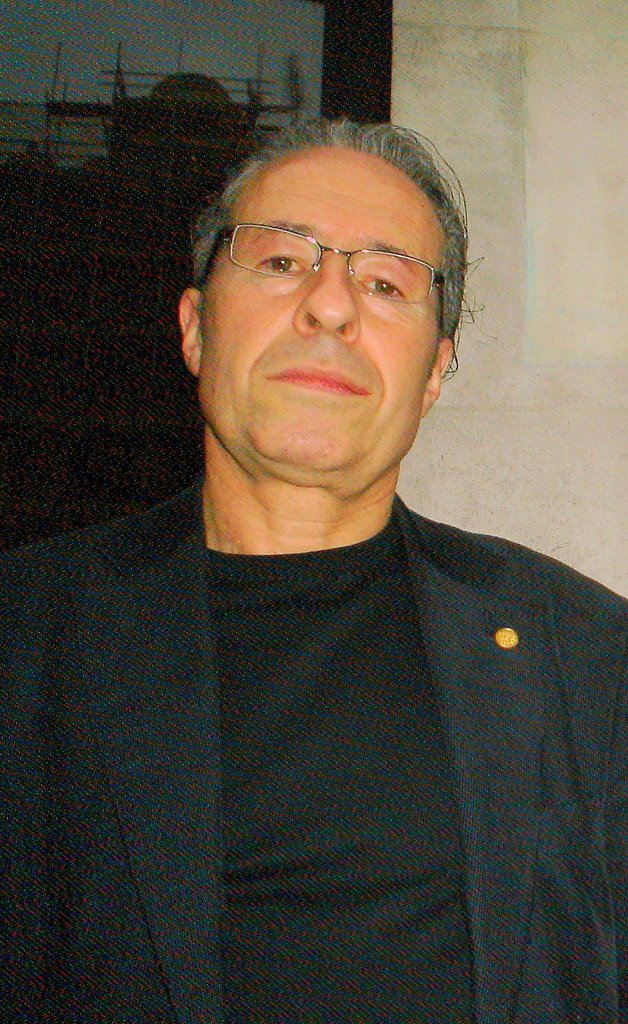
Peter James, 67-year-old author of a Brighton, England-based series starring Detective Superintendent Roy Grace (You Are Dead, Love You Dead), has been selected by the British Crime Writers’ Association (CWA) as the winner of its 2016 Diamond Dagger award.

In a press release announcing this prize, CWA chair L.C. “Len” Tyler called James “King of the Police Procedural. His books combine up-to-the-minute accuracy with tight plotting and a fast pace. Over the past 30 years or so, Peter has established himself as one of the best-known and best-loved thriller writers in the country. He is immensely supportive of other authors and his wide-ranging work inside and outside the genre has been recognized both by Brighton University and Sussex Police. I know this will be a popular choice both amongst readers and other crime writers.”

Previous recipients of the Diamond Dagger, which is given annually to “a writer who has a career marked by sustained excellence,” include Frederick Forsyth, Lee Child, Simon Brett, and Catherine Aird.

Saturday, May 26, 2007

Falling Man, Feeling Man

I just heard from British crime writer Peter James about his recent visit to New York City, where he attended last month’s Edgar Awards presentation and took time out to do some research on his fourth Roy Grace police procedural. The third, Not Dead Enough, is due for release shortly in the UK and in 2008 in the States.

As James explains in his blog, the next Grace outing will be set in America and focus on the tragedies of September 11, 2001:
I’ve recently spent a few extraordinary days in New York with two police officers, Detective Inspectors Dennis Bootle and Pat Lanigan, researching for my new Roy Grace novel, which will be published next year, and which features a character who tries to benefit commercially from the attack on the World Trade Centre. Part of the novel is set back in time around the day of 9-11 and the immediately following days.

Pat and Dennis were among the very first officers one the scene at 9-11. They were in the NYPD in Brooklyn police station when the first plane struck the North Tower. Immediately they were despatched over the Brooklyn Bridge and arrived just as the second plane struck the South Tower. As they climbed out of the patrol car a burning jet engine bounced in Vesey Street, right in front of them. Then as they ran across the plaza, they heard a thud, described in Pat’s words as “like a sack of potatoes hitting the ground.” It was one of the first jumpers. At one point they were having to look up to dodge the falling bodies. Then, when the South Tower began to collapse they had to run for their lives. Dennis went down below the Atrium and Pat ran for the river. Pat described the “crunching, roaring, rumble” of the tower coming down as the scariest sound he had ever heard in his life, as if the world was ending.
James was deeply affected by talking with people who witnessed the disaster unfold:
There is a moving line at the beginning of one of the Nicci French novels: It reads: “Bad things happen on beautiful days.” It is a line I’ve never been able to get out of my head. When Peter Benchley wrote Jaws he managed to turn the beauty of the ocean into something sinister for many people. With 9-11, terrorists turned a clear blue sky into a thing of potential dread for far, far more people.

But it is not the horror of all that happened that is the most dominant thing I take away from that terrible day. It is the image of the rescue workers patting dogs. It is the inner strengths of Pat and Dennis (more on whom in my next blog) two of the most decent human beings I ever met. It is the knowledge of the triumphs of the human spirit and of friendship. Dr. Martin Luther King said it best of all: “Even if I knew that tomorrow the world would go to pieces, I would still plant my apple tree.”
Read more of James’ thoughts, and see some pictures from his recent cross-Atlantic excursion, here.

Thursday, April 12, 2007

The Crème Rises

Shots editor Mike Stotter tipped me off that British author Peter James (Looking Good Dead) traveled recently to France in order to attend a crime-writing festival in Lyons. James writes about that experience in his blog:
I met Mark Billingham (whose books I like a lot) for the first time. Everyone had told me what a nice guy he was, and they are right--I thought he was extremely nice. We spent some time commiserating with each other about the British Book Awards--Mark was shortlisted last year for Crime Thriller of the Year, and like me, did not win (he lost to Martina Cole). I asked him how he felt when the winner was announced and it wasn’t him, and he replied “gutted”. That was a very honest reply, and it summed up exactly how I felt too!
Also among the attendees at this French soirée were American writers Robert Crais and Kathy Reichs. Read more here.

Friday, April 06, 2007

Remakes and Recollections

Being a big fan of director-producer Bob Clark’s pre-Porky’s horror movies, I was dismayed to read of his death and that of his son in a head-on collision early Wednesday morning.

It has been reported that Clark was in pre-production on a remake of his 1972 horror film, Children Shouldn’t Play with Dead Things. And according to one source, he was set to meet with director-screenwriter Quentin Tarantino, another of his fans, who had expressed interest in working on the new Children. (The two had crossed paths at recent events promoting Tarantino’s Grindhouse.) The future of that remake, though, is now uncertain.

When I had lunch a few months ago with crime novelist and film producer Peter James, we spoke briefly about Clark, as James had worked with him early in his moviemaking career. Remembering that, I e-mailed James last night--only to discover that he hadn’t yet heard about Bob Clark’s tragic demise. Later, James sent me this note about the enigmatic American-born Canadian resident:
I was immensely saddened to learn today of the tragic death of Bob Clark, the film director who gave me my first break as a producer, and a man who became a very close friend for many years back in the 1970s. Bob and I worked together on the late stages of Children Shouldn’t Play with Dead Things, but it was really the wonderful screenplay of Death Dream (originally titled The Veteran and then The Night Andy Came Home) that I read and fell in love with as a young film school graduate back in 1971. We raised the money and made the film, which became immensely successful, after a slow start, and then went on to collaborate on many other films together, including in the incredibly horrific Deranged (Necromania), based on the true life story of Ed Gein, the [basis for the] skinner in The Silence of the Lambs.
To read more of Peter James’ recollections of working with Bob Clark, click here.

Tuesday, April 03, 2007

Risky Business

Late last year I had the distinct pleasure of having lunch with crime novelist Peter James, whose novel Looking Good Dead was recently in contention for a British Book Award. (It didn’t win.) So, I was interested to discover in this last Sunday’s London Times a quite candid piece regarding James’ complex financial affairs. The, er, money quotes:
How much did you earn last year?

I made a fairly high six-figure sum.

Have you ever been really hard up?

When I was about 24, I made a fortune with a film-production company in Canada. I owned it with three partners and we sold it for £8m, so I got a share of that. I then personally guaranteed a girlfriend’s company in Canada which made television commercials. That went under for a massive amount of money and it nearly dragged me down. Suddenly I was faced with the prospect of losing everything. While I was still in the film business, I wrote a novel and, to my surprise it was published, which helped me to recover. It was a very bad spy thriller called
Dead Letter Drop. It’s out of print now--at my request.
When James was asked about his best investment, he revealed in his answer that sometimes, crime really does pay. Handsomely.
About five years ago, I spent two years without a publishing contract so I could research a detective character called Roy Grace. For me, that has been the most successful thing I’ve ever done. Novels based on this character, Dead Simple and Looking Good Dead, have done very well. I went round the world and spent a lot of time with police in places like Sussex, Spain and Germany. It was a bit of a risk, but it paid off.
If you’d like to read the whole Times piece, it can be found here.

James’ next Detective Superintendent Roy Grace novel, Not Dead Enough, will be published in the UK in June of this year, but not until 2008 in the States.

Wednesday, March 07, 2007

Richard and Judy and James

I’m delighted to hear that British film producer and author Peter James, about whom I last wrote in this space just a few months back, has been nominated for yet another literary award. This time his 2006 novel, Looking Good Dead (which is only now being released in the States), has been shortlisted in the Galaxy British Book Awards’ (GBBA) Thriller of the Year category. The announcement was made at central London’s fashionable Sketch restaurant by Richard Madeley and Judy Finnigan, co-hosts of Britain’s popular Richard & Judy TV-magazine show. (If you’re not familiar with them, Richard and Judy are the UK equivalent of Oprah Winfrey, in terms of television book promoters.)

This nomination caps off a triumphal period for James, who has already won a succession of foreign accolades. Last year, he received Germany’s Krimi-Blitz award as Crime Novelist of the Year as well as France’s Le Prix Polar International 2006, and earlier this year he picked up the prestigious Prix Coeur Noir award for Looking Good Dead. James’ inclusion on the British Book Awards shortlist, together with Ian Rankin and Kate Atkinson (One Good Turn), only confirms his status as one of the UK’s crime-fiction heavyweights.

After hearing that he’d been shortlisted, James enthused: “None of the awards I have won abroad has given me the thrill of this nomination in my own country. In my view, this award, about the sheer joy of reading, is by far the most important UK award--I would a million times rather be shortlisted for this than the dreary Booker.”

Winners of these awards are to be chosen both by members of the GBBA Academy along with the reading public. (You can vote for Peter James to win in the Crime-Thriller category on the Galaxy British Book Awards Web site from today through March 26.) The victorious books and authors will be announced during a ceremony at London’s Grosvenor Hotel on Wednesday, March 28. The ceremony will be hosted by Richard and Judy and broadcast on Britain’s Channel 4 at 8 p.m. on Friday, March 30.

By the way, Peter James’ next novel, Not Dead Enough--the third installment in his series featuring Brighton Detective Superintendent Roy Grace--will be available from Macmillan on June 1.

READ MORE:Pistols at Dawn--the Nibbies Are Coming,” by Mike Stotter (Shotsmag Confidential).

Thursday, February 01, 2007

France Takes Another Hit

British novelist and film producer Peter James has been awarded France’s prestigious Prix Coeur Noir award for his 2005 novel, Dead Simple. Shotsmag Confidential reports:
The win is the latest in a succession of foreign accolades for Peter’s writing, firmly rooting him as one of the UK’s most internationally successful crime writers. Last year, Peter received the 2005 Krimi-Blitz award for Crime Novelist of the Year in Germany, and he also won Le Prix Polar International 2006, France, for Best Crime Novel--Dead Simple.

On receiving the prize, Peter James said: “France is a country known for its patriotism; when I heard I was shortlisted against two French authors and the award is voted for by the public, I didn’t think I had a chance. I am very proud and very thrilled. To have won one French award was an incredible feeling. Now to have won two, I’m just amazed! And very, very honoured.”

Le Prix Coeur Noir is organized by librarians, readers of
Les Amis des Médiathèques and booksellers of Saint-Quentin-en-Yvelines. The public were able to vote from October 2006 January 2007 from shortlist of three crime novels.

The shortlist comprised of [
sic]: Le Chien Tchéchène by Michel Maisonneuve, Comme une Tombe by Peter James and La Lune de Glace by Jan Costin Wagner. Peter James was the clear winner with more than 50% of the votes.
There seems to be a trend of late toward foreign authors winning coveted French prizes. Last year, you will recall, American Jonathan Littell captured the Académie Française’s top literary prize with his debut literary novel, Les Bienveillantes (The Furies).

Wednesday, December 13, 2006

Dining with a “Dead” Man

London’s crime/thriller literary scene is rather civilized, with launch parties, bookstore signings, and the famous literary lunches during which reviewers have a chance to meet with writers, editors, agents, and publishers and talk about books and the writing life. My busy schedule makes it tough to “do lunch” very often, but every once in a while I’m able to accept an invitation--as I did last Wednesday, when I had the delightful opportunity to meet Peter James, the British film producer and author of Dead Simple, which was released earlier this year in the States.

We met for lunch at The Wolseley, a renowned local restaurant located next door to The Ritz in Piccadilly. Also joining us were Crime Time editor Barry Forshaw, novelist and literary critic Mark Timlin, and Carla McKay, a regular reviewer for Karen Meek’s Euro Crime Web site as well as The Daily Mail. Once we were seated, Peter ordered some wine, while I stuck to an icy beer, and we toasted his latest thriller, Looking Good Dead, which has just been released in paperback in the UK. Then we shifted our conversation to the return of Thomas Harris and the release last week of Hannibal Rising. Mark and I were both enthusiastic about this fourth outing for Dr. Lecter, while we knew that Barry and Carla were lukewarm on the subject, at best. But like civilized people, we came to agreement on the opinion that Red Dragon (1981) and The Silence of the Lambs (1988) represent the twin pinnacles of Harris’ work. (It’s interesting, by the way, that Peter James references The Silence of the Lambs in his latest detective thriller.)

I already knew some about Peter because of his early work in the horror genre, which had won him designation as “the British Stephen King.” I used to be heavily involved in that genre, and enjoyed some of Peter’s horror novels, such as Host, Possession, and Prophecy. But he’s not one to be constrained by genre boundaries; Peter has published thrillers as well as horror, and Dead Simple is the first entry in a police procedural series featuring Superintendent Roy Grace of the Brighton, England, constabulary. (The second entry, of course, is Looking Good Dead, which was at No. 2 in the UK paperback bestseller charts this week and will be released in the States next February by Carroll & Graf.) Over lunch, I talked with Peter about Grace and about Brighton, his south-coastal hometown. What he told me echoed something he’s written on his Web site:
“Roy Grace is a new, and very different detective, based in Brighton, in England--a city that is the favoured place to live in the UK for first division criminals (I was told this by a former Chief Constable). Grace’s own experience and personal loss--his wife, Sandy, has been missing for nine years--leaves him open-minded to all methods of police work in order to find the truth about the cases he investigates--and to try to find out what happened to his wife. He uses everything available, from high tech to old-fashioned police slog, from forensics [to] pathology analysis, and because of his own interest in the paranormal, [he’s] open to input from mediums and clairvoyants. I’m deeply fascinated by the many facets of police work, and particularly how it is changing with the times, and my research for the Grace novels takes me through almost all of it.”
We also talked, though, about his personal history. It seems Peter is the son of Cornelia James, glove manufacturer to the Queen. Educated at Charterhouse and then at film school, he began his career in North America working as a screenwriter and film producer (his projects included the award-winning 1974 horror flick Dead of Night) before returning to England. Until recently he was managing director of one of the largest UK film companies, Movision Entertainment, and has recently produced numerous films, including The Merchant of Venice, which starred Al Pacino, Jeremy Irons, and Joseph Fiennes; Head in the Clouds, featuring Penelope Cruz and Oscar-winner Charlize Theron; and The Bridge of San Luis Rey, headlined by Robert DeNiro, Kathy Bates, Harvey Keitel, and Gabriel Byrne. In addition, Peter co-created the hit Channel 4 series Bedsitcom, which was nominated for a Rose d’Or Award.

He has written a dozen international bestsellers, which have been translated into 27 languages. Dead Simple sold more than 70,000 copies in hardback, and another 169,000 copies in paperback. Looking Good Dead sold in excess of 35,000 copies in its first month of publication and went straight onto the Sunday London Times bestseller list at No. 8. TV rights to both Dead Simple and Looking Good Dead have already been sold to Company Pictures. A two-part TV drama series is planned, with Peter writing the screenplay.

All of Peter James’s novels reflect his deep interests in criminology, medicine, science, and the paranormal. They are also meticulously researched, which for Dead Simple and Looking Good Dead meant that he had to spend several days at the Brighton and Hove mortuary, and many more days out on patrol and as a fly on the wall with several divisions of the Sussex Police. Peter has also studied the criminal mind by visiting Broadmoor Hospital, a maximum-security facility, and he works closely with the Brighton police murder squad to get authentic insight into how investigations are carried out.

A great believer in technology, Peter watched his BlackBerry blip all through lunch. Yet he could hardly have been more gracious in answering my questions, even discussing the recent murders of several prostitutes in the east coast town of Ipswich, which has people talking about a modern-day “Ripper” on the loose. I found him to be a most delightful lunch companion--both modest and erudite, and he certainly knows his wine, as he does the crime genre.

If you haven’t read the Superintendent Roy Grace novels yet, you’re in for a treat.