Showing posts with label Tess Gerritsen. Show all posts

Sunday, April 05, 2009

The Great American Invasion, Part II

(Editor’s note: This is the final installment of a two-part report from British correspondent Ali Karim. The first part can be found here.)

As Dennis Lehane, seated in an office of the Borders bookstore in London’s Charing Cross Road, finished signing my unbelievably numerous collection of his novels, I switched off my tape machine’s microphone. We talked and drank our coffee, until Tess Gerritsen--who was making a joint appearance at the store that evening with fellow American Lehane--entered the room. She and I had just enough time to talk, before the audience massing outside would call for both authors to making a showing.

I pulled out a second hold-all full of books. Lehane looked over at me, laughed, and said, “Not more books!” But he was obviously relieved, and Gerritsen equally delighted, as both of them recognized that these hefty new piles I was heaving onto the table were Gerritsen’s novels, not more Lehanes.

With no time to waste, I switched on my microphone again as Gerritsen got down to the serious business of signing her books. I’ve followed Gerritsen’s fiction-writing career for many years now, so was looking forward to asking her about her circuitous route to becoming a crime novelist, why she sets most of her novels in Massachusetts’ biggest city, the covers of her books on both sides of the Atlantic, and of course her latest novel, Keeping the Dead (or, as it’s known in the America, The Keepsake).

Ali Karim: You now have a very successful series going, featuring Detective Jane Rizzoli of the Boston Police Department and medical examiner Maura Isles. However, you’ve switched genres several times in the past, starting out writing romantic thrillers, then moving on to techno-medical thrillers [beginning with Harvest in 1996], science fiction, and finally crime novels. How has your readership reacted to these switches?

Tess Gerritsen: They get very confused, very confused. I know that some of my crime readers occasionally come across one of my earlier romance books and they are completely flabbergasted to find out that I used to write romance. On the other hand, some of my crime readers come across Gravity [1999] and are surprised to discover that I wrote science-fiction.

AK: Some of your science fiction was in the mode of the late Michael Crichton, who also liked to move around between the genres, at one point writing mysteries under the nom de plume “John Lange.”

TG: Precisely. I think basically I write whatever I feel like writing, and wherever it takes me.

AK: A novel’s location is so often key to the telling of a tale. You set your 2007 bestseller, The Bone Garden, in historical Boston and your Rizzoli and Isles novels [beginning with The Surgeon in 2001] in that same city, only in modern times. However, you live in Maine. What’s this fascination of yours with Beantown?

TG: Partly because [my books deal with] a couple of characters who are homicide investigators, and quite honestly we have one of the lowest homicide rates in the country in the state of Maine, so it would start to feel rather unrealistic if I were to have serial killers running around rural Maine. So I wanted to set my crime novels in the nearest large city that you could have serial killers operating … and I chose Boston.

AK: Have you ever lived there, or worked in Boston?

TG: No, I haven’t lived there. But I am very familiar with Boston, as I spend a lot of time there doing research in the city.

AK: To what degree do you attribute the success of your books to your characters, Jane Rizzoli and Maura Isles? And where did those two players come from?

TG: I attribute a great deal of my success to the characters, particularly Jane Rizzoli, who I think is the character most readers have the most fun with.

AK: That’s interesting, because she has some problems ...

TG: Yes, she’s not a lovey-dovey person. And perhaps to answer [the second part of] your question, I’ll have to reveal something that many of my readers may not be aware of. Jane first appeared in … The Surgeon, and a lot of people told me that “I don’t like her, she is quite a bitch.” And the explanation for her appearing that way was that she was never intended to survive that book--she was going to die. You see, I never planned to write a series. But when I got to the scene where she was supposed to die, she frankly refused to die. So when she survived that book, I became really interested in her and wanted to find out what happened in her life, so then I wrote the second book [The Apprentice, 2002] … and suddenly I had a series. It was totally unplanned.

AK: So is Maura Isles you, Tess?

TG: Very much. We both have backgrounds in science, both studied medicine, and both like to believe that there is a logical explanation to why things happen. So whenever there is any biographical detail required in Maura’s life, like what wine does she drink, what car does she drive? I just take it from my own life.

AK: I’m very interested in the differences between the covers of your U.S. editions and of those published in the UK. I find the ones produced by British publisher Transworld to be much more interesting.

TG: I love my UK covers. They are stark and clean and very distinctive. … I would go as far as to say that [Transworld’s jackets] were revolutionary in their design. I don’t think anyone else was making such minimalist imagery work in the crime-fiction world. As it turned out, it was those covers that really caught people’s eyes …

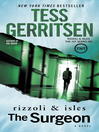
AK: For instance, the UK cover for The Surgeon is very minimal--just a white sink basin with three drops of blood--whereas your American cover for that same book is far busier and more colorful. What’s your take on cover design?

TG: I think [the differences are] cultural. Americans like more color. We like a lot of sex on our covers--the female form, faces. A lot of this has to do with the art director at the publishing house and their taste; and to be honest I don’t really know what makes a cover work or not work. So I leave it to my publisher. I don’t want to second guess them, as they are usually right.

AK: You have become quite adept at blogging, both at Murderati and in the blog associated with your Web site. Why do you enjoy blogging, and does the exercise have any downsides for you?

TG: I blog because I have a very solitary profession. I sit in my office all day, and something will occur either in the business of writing or in the process of writing that makes want to write about it, and I blab. I like the sense of wanting to share with others what I am dealing with, and I really didn’t think anybody cared, until I discovered that I do indeed have quite a few blog readers--especially a lot of other writers who can identify with what I am talking about.

AK: Your latest work in the UK, Keeping the Dead, is a Rizzoli-Isles thriller. In the States, though, it’s called The Keepsake. How do you feel about your publishers changing your books’ titles for their separate markets?

TG: I always worry about confusion. ... Some [readers] don’t realize that both are the same book, but with different titles. In my latest book, both my U.S. and UK editors had very strong opinions ..., [and] neither liked the other title. So, to make everyone happy we decided to go with the two titles.

AK: On the subject of confusion, I was amused to see that much of your backlist is being reissued by Mira UK, and the covers are similar to the Transworld style. How do you feel, seeing your earlier work re-packaged and back on shelves?

TG: Well, again I’m a little concerned about the confusion this causes. As much as I am very happy to have my early romance novels re-released, what happens is that my current crime-fiction readers think they are crime novels, and I get a lot of angry e-mails from readers.

AK: Really?

TG: Yes, really. I get some upsetting e-mails from people: “What is wrong with you? Your style has changed? I’ll never read your stuff again!” Nasty stuff.

AK: Well, that’s bizarre. Aren’t these people bright enough to read the copyright page?

TG: Well, perhaps not, and I end up responding nicely by telling them that the next time you want to pick up one of my books, you should check the copyright page and date, because if it’s before 1997, it may very well be a romance novel. I am, however, concerned that I may have lost readers who never told me this, who never realized about my backlist being re-released with covers that accentuate the crime-fiction angle, when in reality they are romance novels.

AK: Is this just a UK issue, or are your romance novels also being re-issued in the States to look like crime novels?

TG: It’s all over--not just the U.S. and UK, but all over the world. Mira has re-released my older work in a number of countries.

AK: So what comes next, what’s after Keeping the Dead? A standalone, perhaps, or another Rizzoli-Isles thriller?

TG: Well, my next contract specifies three more Jane and Maura novels. I love doing the standalones, but what I’ve noticed is that they just don’t seem to sell as well as the Jane and Maura series. But saying that, The Bone Garden sold very well. I think readers get very attached to the characters of Jane and Maura, and want more. I have plenty of ideas for standalones, but I’m not sure if I’ll be doing one just yet, as I am working on a Jane and Maura book right now.

AK: In today’s world, how much time do you have to spend away from your garret, working with publishers to promote your books? And what are your feelings about having to take that time way from the actual writing process?

TG: It has become a more and more a critical part of establishing a career as a novelist. I do love going on tour [and] meeting readers ... But the problem is, you do have to turn out a book a year--that’s what my publishers want. So that combination of having to tour, not just in the U.S. but internationally, plus turn in a book a year has made writers’ lives pretty insane. If it was up to me, I’d turn in a book every two years, and do a leisurely tour. ... How much can a writer manage these days, [between] promotion and writing, without going insane?

AK: Finally, given the present tate of the economy and changes in the publishing world, how do you look at all those people who are foolhardy enough to embark on a fiction-writing career nowadays?

TG: From what I understand, it is very hard for a debut author to sell a book, simply because readers don’t know what they will expect from that author in future work. Whereas, if you’re an established author ..., you have a readership. Looking at book sales in late 2008, they have held pretty steady compared to other retailers, so let’s hope this year that book sales are not going to be hit as hard as other sectors, such as general retail, manufacturing, etc.

READ MORE:Dennis Lehane and Tess Gerritsen at Borders, by Ayo Onatade (Shotsmag Confidential).

Thursday, April 02, 2009

The Great American Invasion, Part I

(Editor’s note: This is the first installment of a two-part report from British correspondent Ali Karim. It was actually supposed to have appeared in The Rap Sheet before now, but Karim’s business schedule delayed him from finishing the posts. The second installment should appear in the next couple of days.)

Tess Gerritsen and Dennis Lehane, during their visit to the UK

“May you live in interesting times.” That ancient Chinese saying (or curse) has sounded many times in my head over the last few months, as economic storm clouds have gathered over the world. My own life has certainly been interesting since this new year dawned. The financial crisis, coupled with the appalling weather across Britain, challenged my business career immensely. But as is often true, in every downside there is a ray of sunshine. For me, the high promise of crime fiction and the feeling of paper between my fingers is a comfort when the world looks so cold and gray.

Then, on an otherwise miserable day in January, just as I seemed to be reaching new depths of depression, I stumbled across this little nugget on American author Tess Gerritsen’s blog, relating to her then upcoming UK book tour:
Thursday 12th February
Evening event, Borders London, Charing Cross Road
(This will be a joint event with Dennis Lehane!)
I spat my coffee across the table when I read that last line. Dennis Lehane was coming to London! I had missed seeing him in 1999, when he ventured across the Atlantic with George Pelecanos to participate in Crime Scene at the London Film Festival. And I’d only had a few tongue-tied minutes with him back in October, when I bumped into Lehane at Bouchercon and posed for a picture beside him, fellow author Roger Jon “R.J.” Ellory, and Rap Sheet editor J. Kingston Pierce. I hoped the approaching event with Gerritsen would allow me more time with this man I consider to be one of our finest modern fictionists--an author whose stories have fixed themselves firmly in my mind, and whose characters seem more real than some of the people I meet on a daily basis. (As stand-up comedian Bill Hicks often says, “Life is a ride,” and we shape our own reality.)

Without delay, I got on the phone to Patsy Irwin, the publicity director for Transworld, which publishes both Lehane and Gerritsen in Britain. I’ve known Irwin for many years, and she has set me up to interview such stars of this genre as Tom Cain, Lee Child, Mo Hayder, Simon Kernick. My wish was that she would arrange interviews for me with both of these visiting American authors. She said she would--no easy assignment, given how packed the writers’ schedules would be, as they toured on Transworld’s behalf in support of their latest novels: Lehane’s The Given Day and Gerritsen’s Keeping the Dead (or The Keepsake, as it’s known in the States).

During the weeks that followed, as I anticipated my interviews, I realized I had a problem. Not only did I wish to speak with Lehane and Gerritsen, but I wanted to have them sign my copies of their books. All of their books. Over the years, you see, I have collected various editions of their work. Pride of place in that collection is held by a rare Xerox copy of Lehane’s 2003 suspenser, Shutter Island, with their other novels scattered throughout piles of boxes in four different locations. (This is what happens to an inveterate book collector.) Luckily, I’ve bumped into Gerritsen several times over the years, because she publishes new books annually and frequently tours the British Isles; she was a guest, for instance, at last summer’s Harrogate Crime Writing Festival. So I’d already had her sign most of her books from my shelves. However, aside from a copy of a U.S. edition of The Given Day (which he was kind enough to ink in Baltimore at Bouchercon), my Lehane collection remained uninscribed.

So I spent more than a little time, when I could find any extra in my busy schedule, going through my book collection--box by box--and gathering the unsigned copies of novels by Gerritsen and Lehane. I added the Shutter Island manuscript and even an issue of Romantic Times magazine that featured interviews with both authors. By the time I was done, I had filled two giant hold-alls. I’d also distracted myself from all of the dire financial reports filling the newspapers. When times are bad, you need to fall back on activities and events that produce comfort and keep your outlook positive. For me, the main comforts come from my family and my books.

But I digress …

On the Friday before the appearance of Lehane and Gerritsen at the Charing Cross Borders store, and with huge snow falls blocking roads and causing mayhem across the country, I received a call from Selina Walker, the publishing director at Transworld. As with her colleague Patsy Irwin, I have enjoyed a long acquaintance with Walker, who’s recognized as one of the top crime-fiction editors in the UK. She informed me that she, too, was planning to interview the visiting American authors at Borders. Due to time constraints, I would probably have no more than 45 minutes before the February 12 event began to speak with Lehane and Gerritsen--not much time, but enough if I played my cards right. I went ahead and contacted Yoav Hessayon, the events manager for that Borders outlet, arranging for a room in which to conduct my interviews--and accepting the guidance of another Chinese proverb: “May you come to the attention of those in authority.”

* * *

When the appointed night arrived, the snow had cleared and the roads were back to normal (aside from the damned potholes that are caused by significant frost damage). I left work early, and with my book-filled hold-alls in the trunk and the help of my car’s handy satellite navigation system, I found parking close to the bookstore. No sooner had I entered Borders, with the intention of grabbing a cup of coffee first, than I heard someone shout, “Hey, Ali.” I turned, and at the crest of the escalator were Dennis Lehane and Patsy Irwin.

Lehane proffered his hand as he approached, and I shook it enthusiastically. I then apologized for acting like such a babbling fan-boy at Bouchercon; it’s just not everyday, I explained, that I encounter one of my literary heroes. He laughed it off and said he understood completely. As Irwin went to find Yoav Hessayon and the room I’d organized to use, Lehane and I chatted about our respective recent reads. (It turns out that he too has been enraptured by the late Swedish author Stieg Larsson’s “Millennium” series.) He noticed my hold-alls, and I explained that I’d taken the liberty to bring my entire collection of his work--not only finished hardcovers, but advance reader versions, movie tie-ins, and paperback editions from both sides of the Atlantic. (I am nothing if not a completist.) Would he mind signing everything? I asked. Lehane just smiled and said, sure, he’d be flattered to do so.

As he began that task, both of us now comfortably settled in a room set off from the rest of the store, I turned on my tape machine to ask Lehane about his book titles, his much-anticipated return to penning private-eye fiction, the translation of his prose to film, and whether he knows where his writing career is bound.

Ali Karim: You started out, in A Drink Before the War [1994], writing a series of novels that featured Boston private eyes Patrick Kenzie and Angela Gennaro. Since then, you’ve written three standalones. Were you nervous when you first jumped out of the comfort zone of a very successful P.I. series?

Dennis Lehane: I got a little nervous after a point, sort of like that Chinese proverb that warns, “Be careful what you wish for.” At first I was a little excited to get back to the third-person narrative with Mystic River, and I felt that, wow, I can do anything. Then months later, I thought “Oh, shit” as I realized I had to make choices, which you don’t get to do with a first-person perspective. So it was strange at first with the standalones, but then I soon found a comfort zone in third-person.

AK: I’ve heard that one your earlier novels, Darkness, Take My Hand [1996], was originally titled Cold Cold Heart. But you changed it, because there was another novel with that same title, written by James Elliott [a pen name of J.C. Pollock]. Are there other occasions when you’ve altered a book title?

DL: Yes, well spotted. I’ve had a few title changes. For instance, Shutter Island was originally going to be titled The Barrens, but then found out that Joyce Carol Oates had a book out with the same title; hence, I went for Shutter Island. The Given Day was originally going to be A Country at Dawn, but I decided that title sounded a little pretentious. However, I discovered that The Given Day has been published in several countries under that title, such as France; my French publishers liked that title.

AK: You once made it sound as if you’d never go back to the Patrick and Angie P.I. series. But it has now been widely reported that you are indeed returning to their fictional world. Why the switch?

DL: I don’t want to say too much at this stage. Just, “Hey, they’re back,” and that’s it. In fact, I won’t say any more until the book comes out.

AK: I’m still going to pump you. … Boston seems to be a familiar location as a backdrop for your work. So will Patrick and Angie operate in Boston in the new book?

DL: [Laughs] To answer your question, “Yes.” Yes, they will. I took them once to Florida in Sacred (1997). That was fun, but as a reader I always hated reading a P.I. novel [in which] the P.I. and sidekick head to L.A. to hunt down a missing actress, and this was because all the writers were out in L.A. working on movie deals. So I decided that I’ll never do that; hence, Patrick and Angie will operate on their home turf of Boston. OK, if there was a reason to take them to Dublin, I’d do that. No West Coast travel, though.

AK: Will the next Patrick and Angie novel carry on immediately after the events contained in Prayers for Rain [1999]? Or will some time have elapsed? After all, it’s been a decade since that last novel appeared.

DL: I know there will be gap, but it won’t be a full 10 years. I don’t see them in a pre-9/11 America. A lot has happened in the last decade. It would be ridiculous to take them back in time, if you follow me.

AK: Back when the film version of your 1998 novel, Gone, Baby, Gone, was being released in the States, were you aware of the concurrent issues surrounding the disappearance of the British infant Madeline McCann in Portugal? The film release was delayed in the UK, partly because the actress who played the missing girl was also named Madeline [O’Brien].

DL: And hey, the actress Madeline O’Brien bore a very striking resemblance to the missing Madeline McCann. I remember having a conversation with [director] Ben [Affleck] about it at the time. We were on the same page. We totally understood that the film’s release at that time could be potentially hurtful, so why do it? We understood. It didn’t feel like censorship.

AK: There was a five-year gap between the release of Shutter Island and The Given Day. I’ve read that you had a bad experience finishing Prayers for Rain, and you vowed never to have to work to a tight deadline again. Could you tell us what happened in the composition of Prayers for Rain that caused this deadline problem? I did notice that Prayers seemed to end rather abruptly.

DL: The issue with Prayers for Rain was that I released the book from my hands faster than I normally release a manuscript. The book was written blindingly fast, but that’s not the issue here, as I have written books fast before. But I was never quite satisfied with the end result. I wished I had more time. I don’t mean taking three years, five years, 10 years, or whatever; it’s taking whatever time the book needs, and I know instinctively when a book needs more time to finish it. For example, The Given Day was completed a whole year before I sent it in, because I … actually needed the time. No one saw it until I felt it was ready.

AK: I’ve heard that The Given Day is the start of a trilogy. True?

DL: Possibly a trilogy. [Laughs] Possibly a deca-olgy. At this stage I really don’t know.

AK: Now on to one of my favorite novels of all time, Shutter Island, and the film Ashcliffe.

DL: Actually, Ashcliffe was just the working title when they were filming, but the finished film will be titled Shutter Island.

AK: Tell us why you never got involved in screen-writing, now that three of your novels have been adapted for the big screen.

DL: I’m not a good adapter, and certainly not a qualified adapter of my own work. I guess I feel it would be like a surgeon operating on his own child. Could I write an original screenplay? Maybe. Could I adapt someone else’s work for the screen? Maybe. But the last person who should be entrusted with adapting one of my novels is me.

AK: How did you feel when you heard Martin Scorcese was going to be associated with Shutter Island?

DL: I was totally bummed out. [Laughs] What can I say? It was embarrassing.

AK: [Laughs] Yeah, a real bummer. First Clint Eastwood [Mystic River, 2003)], and now Scorcese.

DL: I go from having home runs with my first two filmed novels, and then I get a call saying “the world’s greatest film director wants to direct one of your books.” I felt ... humbled, embarrassed, confused. I was so shocked that I didn’t tell anyone.

AK: You first opened up your Web site many years ago--

DL: Sorry to correct you, Ali, but I did not; that was my publisher’s Web site. I’d like to say that the way I chose to engage--or not engage--with that world of blogs, Web sites, etc., is, believe it or not, a way to maintain my creative edge. I don’t want to get into the persona of who I am. [Staying out of that world] allows me to be the man who writes books, gets home, and his wife says, “There’s dog shit in the backyard; go clean it up” without me saying, “Hey, I’m Dennis Lehane!” My only way to keep that part of myself stable is to not engage that world at all. Now, that’s not saying that’s the way it should be done. It’s purely my way ... But someone’s set up a Facebook page in my name. I don’t know who the guy is, but I hope people don’t think that’s me. I just can’t deal with it.

AK: Do you still split your time between Boston and Florida?

DL: Yes, my [optician] wife has a practice in Florida, so I can’t look her in the eye and say I can only write in Boston. So I have the tough job of having to spend time in Florida. [Laughs]

AK: One thing that intrigues me is the difference in the design of your book covers--those produced by William Morrow in the States, versus those from your UK publisher, Transworld. Would you care to comment on that?

DL: Unless one [of the covers] is particularly heinous, which has rarely happened to me, I assume each international publisher knows its people and country, and so I can’t presume to tell them what they should have on the covers. I’ve had issues perhaps only with four books, globally, in my time. And when that happened I’d say, “Hey, I’m not keen on that cover; but hey, you know your market, so go with it.” But that’s rare. Most of the time it’s me saying “fine by me.” Some of my British covers are gorgeous, as are some of my French, German, [and] Japanese covers. Some are not, but what am I going to tell my Japanese publishers? Can I say, “Hey, don’t do that cover, I don’t like it”? [Laughs] I just don’t know the market. All I do is hope for the best.

AK: Considering the path of your career from writing a P.I. series to penning a standalone crime thriller [Mystic River], Gothic noir [Shutter Island], and now a historical opus [The Given Day], let me ask you: Did you, or can you, see a “game plan” to your writing?

DL: I think the one commonality ... is that they are all urban novels. They are concerned with the machinery or soul of the city, if you will. So in the end that’s the canvas that I work--the urban novel--with the exception of that trip to the Gothic world in Shutter Island.

AK: And what a tremendous book Shutter Island was, in my opinion. I’m confident it will be one of the novels for which you are best remembered. It was magnificent in terms of ambition, with a Gothic dread that infuses the narrative.

DL: Wow, thank you, thank you. I go by the dictum that you write the book you want to read. If you have that sort of love and passion for a book, then I think it will translate and people will be entertained.

AK: How do you look at your popularity with readers? Even though your fans have clamored for more Kenzie and Gennaro books, they’ve been willing to follow you in all of these other directions.

DL: It’s simple, it’s such an honor to have loyal readers. I always remember, every day, that I have my success due to my readers. I have my house due to my readers, I have everything due to my readers. So I have no issues with my fans and readers--they make my career possible.

AK: Finally, what do you make of his dreadful economic crisis that’s affecting so much, including the publishing industry?

DL: I think we deregulated a bunch of regulations that were put in place for a very good reason during the Great Depression. We fucked it all up, and the poor are suffering as the poor always do, and I couldn’t be more serious about this--people should be going to jail over this. It’s disgusting. I don’t know what else to say. Another thread I write about in my work is this eternal war between the haves and the have-nots, and you see that war in clear focus right now. I just find the economic situation revolting.

(Part II can be found here.)

Tuesday, December 05, 2006

The Wolfe at the Door

I was away for a few days in chilly (and I do mean chilly--9 to 12 degrees Fahrenheit) Minneapolis, Minnesota, attending a friend’s surprise birthday party. So forgive me for coming to you late with this news: Tess Gerritsen has won the 2006 Nero Wolfe Award for her novel Vanish (2005). The award is given out by The Wolfe Pack, a New York-based Nero Wolfe fan association. Gerritsen received her commendation during a banquet held in Manhattan on December 2.

“Around 80 people turned out to dine at the private party,” Gerritsen recalls in her blog. “And the evening could only be described, in Nero’s immortal words of high praise, as ‘most satisfactory.’ This was not your usual mystery awards night, primarily because the attendees weren’t mystery writers at all, nor even people in the publishing world. These were readers from all walks of life, from a former captain in Military Intelligence, to a former pediatrician (who once treated primates in the Bronx Zoo), and everyone in between. What unites them is a fondness (one might call it an obsession) for the character of Nero Wolfe--gourmand, private detective and orchid aficionado.”