Saturday, August 12, 2017

Narrowing the Field of Neddies

Earlier today, during the Mudgee Readers’ Festival in New South Wales, the Australian Crime Writers Association announced its shortlist of contenders for the 2017 Ned Kelly Awards, in three categories.

Best Fiction:
An Isolated Incident, by Emily Maquire (Picador)
Crimson Lake, by Candice Fox (Bantam)
Out of the Ice, by Ann Turner (Simon & Schuster)
Police at the Station and They Don’t Look Friendly, by Adrian
McKinty (Serpent’s Tail)
The Golden Child, by Wendy James (Commercial Women’s Fiction)
The Rules of Backyard Cricket, by Jock Serong (Text)

Best First Fiction:
Burn Patterns, by Ron Elliott (Fremantle Press)
Goodwood, by Holly Throsby (Allen & Unwin)
Only Daughter, by Anna Snoekstra (Harlequin)
Something for Nothing, by Andy Muir (Affirm Press)
The Dry, by Jane Harper (Pan)
The Love of a Bad Man, by Laura Elizabeth Woollett (Scribe)

True Crime:
Code of Silence, by Colin Dillon with Tom Gilling (Allen & Unwin)
Denny Day, by Terry Smyth (Ebury)
Getting Away with Murder, by Duncan McNab (Vintage)
Roger Rogerson, by Duncan McNab (Hachette Australia)
Murder at Myall Creek, by Mark Tedeschi (Simon & Schuster)
The Drowned Man, by Brendan James Murray (Echo)

Winners will be declared on September 1 during the annual Ned Kelly Awards Presentation in Melbourne, Victoria.

Thursday, August 10, 2017

Top Dogs Among Crime Blogs

After working for many years as an editor of magazines, newspapers, and online publications, I have developed a healthy skepticism toward “bests” lists of any sort. As you might suspect, most such inventories—whether they be of doctors, residential neighborhoods, travel destinations, hamburgers, beauty salons, or books—aren’t based on meticulous scientific analysis, but instead reflect the limited experiences of their creators. On rare occasion, a periodical will go to the trouble of sending a brief survey out to, say, local attorneys, asking them who among their peers they would recommend readers hire. However, that’s usually as far as the research goes. Much more frequently, editors and writers simply solicit their fellow employees, friends, and other contacts for recommendations, and then present the results as authoritative.

So when I read recently that the online journal produced by MysteryPeople, the crime-fiction department of Austin, Texas’ “largest independent bookstore,” BookPeople, had been featured among Feedspot’s “Top 50 Mystery Blogs and Websites for Mystery Lovers and Authors,” I was immediately suspicious—not because the MysteryPeople blog doesn’t deserve such acclaim (it most certainly does), but because I’d never heard of Feedspot. As I subsequently learned, it’s a newsfeed aggregator that collects the latest posts—in a wide variety of subjects—from blogs and other Internet sites. The selections are extremely uneven in quality, though that’s what you would expect from an aggregator. Feedspot’s “Top 50 Mystery Blogs” choices reflect a similarly arbitrary approach. While a number of them merited recognition, I’d never heard of others mentioned (and remember, this is my field of expertise!). Furthermore, there were only 41 sites included, rather than the headline-promised 50. What was to be made of all this?

I pay scant notice to most rankings of this sort, judging them to be vanity ventures. However, I was puzzled that The Rap Sheet had been excluded from Feedspot’s roster. I took advantage, therefore, of a “Submit Your Blog” button on the left side of the “Top 50 Mystery Blogs” page. It allowed me to suggest The Rap Sheet as a site worthy of Feedspot’s attention, and also supply my name and e-mail address. What the hell, I figured, let’s see if anything happens.

Well, the very next day I received an e-note from one Anuj Agarwal, who identified himself as the “founder of Feedspot.” He wrote: “I would like to personally congratulate you as your blog The Rap Sheet has been selected by our panelist as one of the ‘Top 50 Crime Novel Blogs’ on the web. … I personally give you a high-five and want to thank you for your contribution to this world.” Huh. This was a different Feedspot register on which The Rap Sheet had finally found a place (one listing 49, rather than the avowed 50 honorees), but that seemed just fine. Especially since the “Top 50 Crime Novel Blogs” index included more sites with which I was familiar, arranged in a manner that—while confounding to the rest of us—must surely make sense to that unidentified but purportedly discriminating “panelist” Agarwal cited in his missive. The Rap Sheet had won the No. 11 spot. So what if Feedspot misreported that this blog updates only once a week, instead of the four or five times it actually does?

Then within an hour after that initial message, a second one dropped into my e-mailbox, also from Agarwal. It led with flattery (“You have an impressive blog with high quality and useful content on Mystery”), and went on to inform me: “If you subscribe to Feedspot Gold subscription, we will feature your blog in our ‘Top 50 Mystery Blogs’ post”—the one I had wondered about originally. A subscription to Feedspot Gold, it turns out, would cost $23.88 a year, although the site was willing to provide me a 12-month trial free of charge.

Now, I understand that people today are quite obsessed with making money, and entrepreneurs are still searching for foolproof ways to turn a buck online. But trying to convince the general public that your Web site can be trusted to name only the “best” of anything, while simultaneously offering blogs placement on those supposedly exclusive lists for a price, doesn’t seem even close to kosher.

The Rap Sheet’s Feedspot listing includes the number of its Facebook fans and Twitter followers, and its Alexa ranking. (Click the image to open an enlargement).

What bothers me, in addition, is that other bloggers have not been similarly hit up for Feedspot subscriptions, yet their sites were awarded choice positions among the “Top 50 Mystery Blogs and Websites” or “Top 50 Crime Novel Blogs.” Steve Lewis, the editor of Mystery*File—which appears in the former inventory—explains in a note that he’d “never heard of this list. It’s news to me. I see I’m ranked number four, which ordinarily would be quite an honor, but most of the other [sites] I’ve never heard of.”

Asked about the process involved in assembling his “bests” lists, Agarwal tells me, “We have a team of over 25 editorials [sic] working on making the best list. … We consider social metrics, Google ranking, post frequency, and of course our editors personally review the blogs before featuring them.” And how does he defend his practice of selling subscriptions in exchange for spots on his lists? “Of course, taking a subscription is not mandatory,” Agarwal avers, “but it helps us covering the cost of the project. (We are not a funded company.)”

My point here is not to steal away the satisfaction MysteryPeople, The Crime Segments, and other blogs might have derived from being mentioned among Feedspot’s crime-fiction resources; we can all use greater validation of our online efforts. I also don’t find any joy in slamming Feedspot in particular, as it’s bit player on the huge Internet stage. Nor am I naïve enough to believe similar business practices aren’t employed elsewhere, both on- and offline. However, I do think it a disservice to bloggers as well as trusting readers that a site such as Feedspot should contend that its “bests” lists represent reputation, quality, and social-media impact, while simultaneously selling slots on those registers. Feedspot suggests, on the one hand, that it’s a credible editorial product, while making clear on the other that any influence it wields can be cheaply purchased. Caveat emptor? Sorry, but Web readers aren’t fools, and they shouldn’t be treated as such.

* * *

This brings up a question sent my way recently by an anonymous reader. He/she wanted recommendations of crime-fiction blogs and Web sites, other than The Rap Sheet, that I think are worth frequenting. As is obvious from the extensive blogroll on this page’s right-hand side, I have made a study over the years of just such compendia of knowledge, covering both classic and current works. And though I’m hesitant to single out the “bests” among them, perhaps that exercise could prove valuable, if only to counter Feedspot’s more dubious such endeavor. Below, then, are 66 Web pages—listed alphabetically, and all currently active—that I visit most frequently for news, reviews, and other information related to this genre.

Again, these are my personal choices. I would expect those of other writers and reviewers to differ, at least somewhat. Finally, let it be said that no site has paid a red cent to be included here.


Euro Crime Blog (and its parent site, Euro Crime)
Pattinase (home of “Friday’s Forgotten Books”)
Shotsmag Confidential (and its parent site, Shots)

Which other blogs and Web sites do you turn to for crime-fiction book reviews and developments in this genre? Please click the “Post a Comment” link below and tell everyone about them.

Tuesday, August 08, 2017

Revue of Reviewers, 8-8-17

Critiquing some of the most interesting recent crime, mystery, and thriller releases. Click on the individual covers to read more.


A Rhinestone Cowboy Leaves the Arena

His death doesn’t come as a complete shock: Singer, songwriter, and film actor/TV host Glen Campbell announced back in 2011 that he’d been diagnosed with Alzheimer’s disease, and Wikipedia says “symptoms of the disease had been occurring for years, becoming more and more evident as the years progressed.” Still, the man who rose from an Arkansas sharecropping family to become a star and release more than 70 albums of country and rock music had been with us so long, he seemed a permanent part of the American cultural landscape. Until today. From Rolling Stone:
Glen Campbell, the indelible voice behind 21 Top 40 hits including “Rhinestone Cowboy,” “Wichita Lineman” and “By the Time I Get to Phoenix,” died Tuesday. He was 81. A rep for Universal Music Group, Campbell's record label, confirmed the singer's death to Rolling Stone. During a career that spanned six decades, Campbell sold over 45 million records. In 1968, one of his biggest years, he outsold the Beatles. …

Campbell was a rare breed in the music business, with various careers as a top-level studio guitarist, chart-topping singer and hit television host. His late-career battle with Alzheimer’s—he allowed a documentary crew to film on his final tour for the 2014 award-winning
I’ll Be Me—made him a public face for the disease, a role President Bill Clinton suggested would one day be remembered even more than his music.

“He had that beautiful tenor with a crystal-clear guitar sound, playing lines that were so inventive,” Tom Petty told
Rolling Stone during a 2011 profile of Campbell. “It moved me.”
I know, this news is far off my usual crime-fiction beat (though Campbell did guest-star in a 1967 installment of The F.B.I.). But so what; it still demands attention, for Campbell was a familiar figure from my youth. His hit songs—including not only those cited above, but also “Galveston” and “Country Boy (You Got Your Feet in L.A.)” were part of the soundtrack of my most difficult growing-up years. I have never been a country music fan, but partly as a result of the fact that my family rarely missed seeing an episode of his 1969-1972 CBS-TV variety series, The Glen Campbell Goodtime Hour (some episodes of which can be watched here), I still appreciated Glen Campbell.

READ MORE:Glen Campbell, Country Music Legend, Is Dead at 81,” by Blake Farmer (National Public Radio); “Glen Campbell, Whose Hit Songs Bridged Country and Pop, Dies at 81,” by Michael Pollak
(The New York Times); “Glen Campbell Dies at 81; Country-Pop Singer Battled Alzheimer’s,” by Adam Tschorn (Los Angeles Times).

Monday, August 07, 2017

If at First You Succeed …

I keep hearing about how we are living through a particularly creative, fertile period for filmmakers and television producers. Why, then, do so many Hollywood releases offer little more than warmed-over concepts and deliberate retreads?

Case in point: Bruce Willis’ Death Wish, a remake of the 1974 movie of that same name starring Charles Bronson as Manhattan architect-turned-vigilante Paul Kersey. In Willis’ version, due out in November, Kersey is re-imagined as a bald Chicago doctor—“a man divided, a grim reaper for bad guys who, as a surgeon, removes bullets from the bodies of suspected criminals,” explains Deadline Hollywood. The trailer features more humor than was to be found in the original Bronson picture (or its four sequels), but otherwise the novelty of this remake appears in notably short supply. It doesn’t even rise to the level of Edward Woodward’s The Equalizer, a 1985-1989 CBS-TV series about a much more urbane purveyor of street-level justice.

Equally worthy of a giant eye-roll is news that NBC-TV wants to bring back Miami Vice, the stylish 1984-1989 crime drama starring Don Johnson and Philip Michael Thomas as a pair of boundaries-pushing Miami-Dade police detectives. Deadline Hollywood reports this series reboot will have “the Fast & Furious duo of Vin Diesel and Chris Morgan producing. The remake, which had been in the works since last season, will be written by Peter Macmanus (The Mist, Satisfaction) and produced by Universal Television, Chris Morgan Productions and Diesel’s One Race TV. No executive producers have been locked in yet, but Morgan and Ainsley Davies of Chris Morgan Productions are expected to serve as EPs along with Diesel and Shana Waterman of One Race and Macmanus. Both Morgan and Diesel have deals with Universal TV.” Deadline Hollywood says this new Miami Vice is “already in the works for next season.”

What’s next, guys, the revival of Magnum, P.I.?

Saturday, August 05, 2017

Here’s Looking at You Again, Kid


Just when I think I’ve seen the 1942 American film Casablanca about as many times as a human being should be allowed to do, along comes an event—such as this morning’s reassessment of the movie on National Public Radio’s Weekend Edition Saturday—that sends me back for another viewing. Maybe it’s also time for me to buy a copy of Noah Isenberg’s We’ll Always Have Casablanca: The Life, Legend, and Afterlife of Hollywood's Most Beloved Movie (2016), which I can enjoy reading and later place on my bookshelves next to a 1973 hardcover copy of Howard Koch’s Casablanca: Script and Legend.

There are many great scenes in Casablanca, and NPR’s Scott Simon referenced a few of those this morning, including the one in which German and French patrons of Rick's Café Américain in Casablanca, Morocco, compete in the singing pf patriotic songs (a segment I previously mentioned in relation to actress Madeleine LeBeau’s death last year). But the one everyone remembers best, of course, is the one embedded above, featuring Dooley Wilson, Ingrid Bergman, and Humphrey Bogart. “Play it, Sam. Play ‘As Time Goes By.’”

That damn song always makes my eyes tear up a bit.

Friday, August 04, 2017

“Down & Out” Is In

I haven’t even yet seen a copy of the premiere issue of Down & Out: The Magazine—and that publication (as I explained recently in The Rap Sheet) features my new “Placed in Evidence” crime-fiction column. But you can now pick up your very own print edition of this promising periodical at Amazon. It’s available, too, in a Kindle version.

I’ll be curious to hear your opinion of it.

Wednesday, August 02, 2017

Terrible … or Terrific?

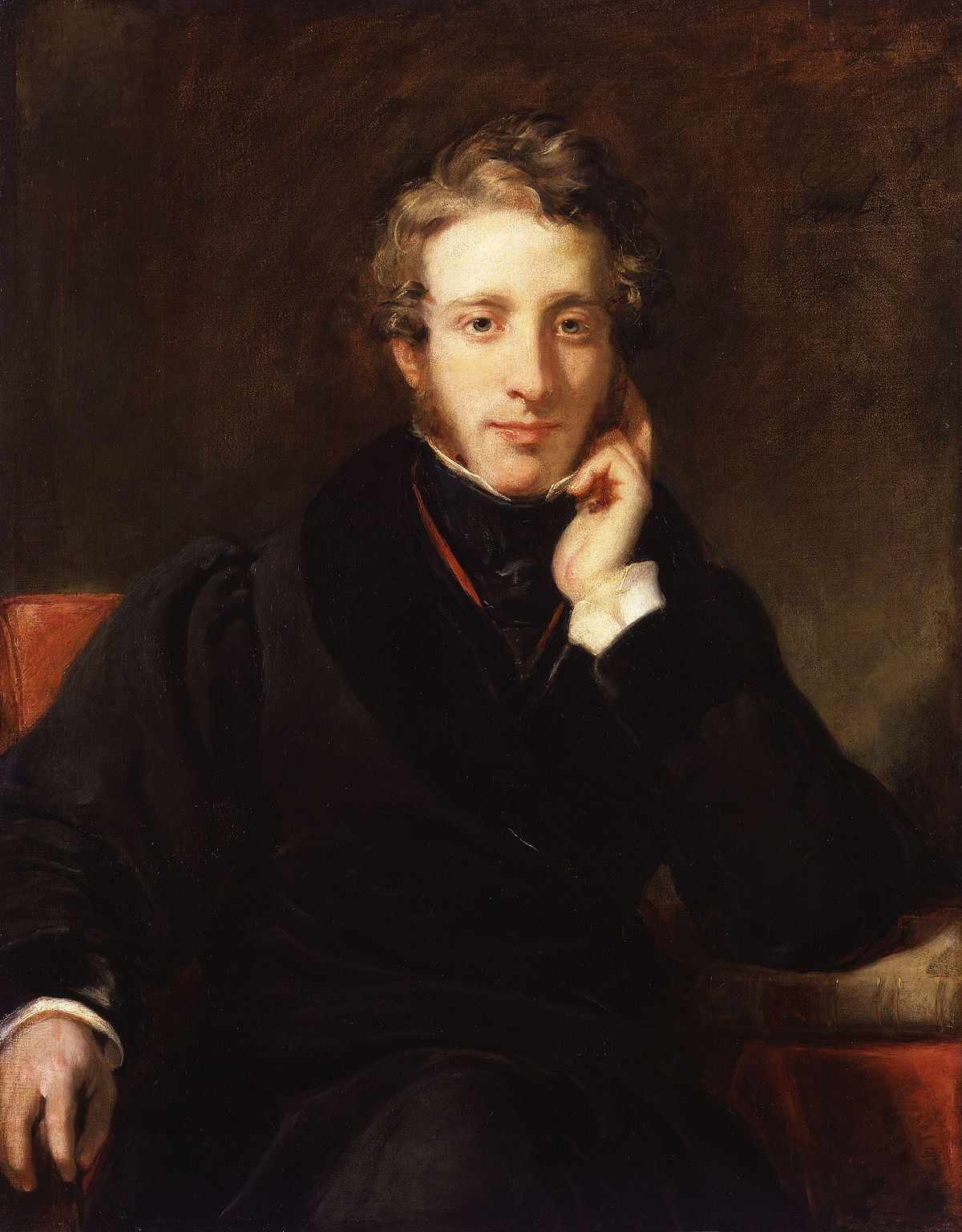
It’s become a most pleasant tradition here at The Rap Sheet to announce each year’s winners of the Bulwer-Lytton Fiction Contest, which solicits the worst (i.e., funniest and most outlandish) opening sentences from never-to-be-finished books. As Neatorama explained in a post earlier today, this competition, “running 35 years now, was named in honor of Edward George Earle Bulwer-Lytton, who in 1830 began a novel with the phrase ‘It was a dark and stormy night,’ which has been parodied endlessly ever since.”

Twenty-six-year-old outdoor retailer Kat Russo of Loveland, Colorado, has been declared the overall winner of the 2017 Bulwer-Lytton competition, after submitting this start to a fantasy tale:
The elven city of Losstii faced towering sea cliffs and abutted rolling hills that in the summer were covered with blankets of flowers and in the winter were covered with blankets, because the elves wanted to keep the flowers warm and didn’t know much at all about gardening.

Novelist, playwright, and politician Edward Bulwer-Lytton

Moving on to the Crime/Detective category, we find that Doug Self of Brunswick, Maine, has nabbed top honors with this oddball entry:
Detective Sam Steel stood at the crime scene staring puzzled at the chalk outline of Ms. Mulgrave’s body which was really just a stick figure with a dress, curly hair, boobs, and a smiley face because the police chalk guy had the day off.
My personal favorite among the Crime/Detective contenders, though, comes from the Dishonorable Mention pile and was sent in by Beth Armogida of Sierra Madre, California:
“It’s a classic,” she muttered, as she flicked the hair from the old fur coat purchased from eBay for sixty-eight dollars plus overnight shipping for the purpose of this very moment when she stuck out her hip, pulled the trigger, and shot him in that stupid face of his.
Click here to find all of the 2017 winners, in 13 categories. The deadline for submissions to the 2018 Bulwer-Lytton Fiction Contest is June 30 of next year.

(Hat tip to Bill Crider’s Pop Culture Magazine.)

Of Spies, Sales, and Speculations

Today’s quick hits from around the crime-fiction world.

• The August edition of Mike Ripley’s “Getting Away with Murder” column for Shots includes brief mentions of London’s “Summer of Spies” promotion, HarperCollins UK’s decision to reissue Desmond Bagley’s adventure thrillers, an “absolutely magnificent” John le Carré book cover, Mattias Boström’s thorough study of Sherlock Holmes’ rise “from fictional creation to media megastar,” and new novels by Will Dean, Brooke Magnanti, Karen Ellis, and others.

• Worrisome news from In Reference to Murder:
[T]he Seattle Mystery Bookshop is up for sale. Founded by Bill Farley 27 years ago, the shop has hosted a veritable who's who of crime-fiction authors through the years for talks and signings. The store sells both new and used books within the genre, from noir to cozy, espionage, classics, [and] historical, and also specializes in hard-to-find, collectible, and signed first editions and Northwest mysteries.

Current owner J.B. Dickey hastened to add that the store isn't closing … yet. But they already had to resort to a GoFundMe drive which brought in enough funds to pay off overdue bills and sock away enough to last through this past winter. As Dickey noted, “It bought us a year—but barely, and that has taken its toll. While we could do another such fundraiser, that’s not a viable way to continue in business.”
My fingers are crossed that Seattle Mystery Bookshop will find a buyer able to steady that store’s financial outlook for the long term.

• If you remember CBS-TV’s Q.E.D., you may be among the few people who do. As explained by Wikipedia, it was “a 1982 adventure television series set in Edwardian England, starring Sam Waterston as Professor Quentin Everett Deverill. The Professor was a scientific detective in the mold of Sherlock Holmes, and the series had a smattering of what would later be called steampunk [devices]. In the show, the lead character was known primarily by his initials, Q.E.D; the reference here is that Q.E.D. usually stands for quod erat demonstrandum, a statement signaling the end of a proof.” I barely recall this show, and I’m not sure I ever watched it when it was originally broadcast. But suddenly, I have a second chance. Somebody signing himself “Howard Carson” has posted all six of the hour-long Q.E.D. episodes on YouTube. Enjoy them while you can!

• Oops! Britain’s Daily Mirror newspaper is enduring a public thrashing over its allegedly “fabricated story” (cited recently in The Rap Sheet) about the next, 25th James Bond motion picture being set in Croatia and based on U.S. author Raymond Benson’s 2001 Bond continuation novel, Never Dream of Dying. “What has yet to be uncovered in this tale,” writes the Bond blog MI6, “is the original source of the false rumour. Most likely, someone e-mailed the Mirror’s showbiz tip line with the claims of having inside information.”

In a piece for The Paris Review, Megan Abbott remarks on In a Lonely Place, Dorothy B. Hughes’ 1947 genre-bending noir novel, which is set to be reissued by publisher NYRB Classics on August 15.

• Meanwhile, New York journalist-turned-fictionist Julia Dahl (Conviction) writes in the Columbia Journalism Review about her years as a freelancer for the tabloid New York Post—an experience that, as she has written elsewhere, “changed my life in more ways than I could have ever imagined.” Click here to read her recollections in CJR.

• For the list fanatics among us: Kirkus Reviews’ rundown of the “10 Most Overlooked Books of This Summer” includes Riley Sager’s Final Girls and Bill Loehfelm’s The Devil’s Muse. Among the Chicago Review of Books’ “12 Books You Should Definitely Read This August” are Ryan Gattis’ Safe, Christopher Swann’s Shadow of the Lions, and Augustus Rose’s The Readymade Thief. For the Strand Magazine blog, British Columbia author Sam Wiebe names his “Top 10 Vancouver Crime Novels.” And U.S. novelist Warren Adler delivers to Crime Fiction Lover a selection of his “Top 5 British [TV] Crime Shows.”

• Finally, congratulations are due The Spy Command and its managing editor, Bill Koenig, for reaching their first million pageviews. Koenig’s spy fiction-oriented blog debuted in 2008 as The HMSS Weblog, but was renamed in 2015, following the failure of its associated Web site, Her Majesty’s Secret Servant.

Monday, July 31, 2017

Revue of Reviewers, 7-31-17

Critiquing some of the most interesting recent crime, mystery, and thriller releases. Click on the individual covers to read more.


Could “Grantchester” Be at an End?

Oh no, I hadn’t heard this before! From Leslie Gilbert Elman’s recap of last night’s final Season 3 episode of Grantchester:
At the time of this writing, Grantchester’s future is a question mark, and no plans for a Season 4 have been announced. (These decisions usually have been made well before the season concludes in the U.S.) Robson Green even made some comments about the possibility of the series continuing with different actors. We’ll see what happens, but for now, the future of Grantchester is a mystery.
Say it ain’t so! Grantchester is a superior offering from PBS-TV’s Masterpiece Mystery!, even if it does tend to downplay the whodunit aspects of its stories in favor of character building.

I’ll let you know when I hear more about this show’s future.

Sunday, July 30, 2017

Bullet Points: Brimming Over Edition

• With so much news about crime-fiction prizes coming out of late, it’s been difficult to keep up with it all. For instance, organizers of the annual Killer Nashville conference (set to take place this year from August 24 to 27 in Tennessee’s capital city) just announced the finalists for their 2017 Silver Falchion Awards. There are 14 categories of contenders for those reader’s choice commendations (10 of which have already been publicized, with more to come), but two of particular interest to Rap Sheet followers are these:

Best Fiction Adult Mystery:
Amaretto Amber, by Traci Andrighetti
The Heavens May Fall, by Allen Eskens
Fighting for Anna, by Pamela Fagan Hutchins
Love You Dead, by Peter James
Coyote, by Kelly Oliver
Grace, by Howard Owen
Exit, by Twist Phelan
Dead Secrets, by L.A. Toth
A Brilliant Death, by Robin Yocum

Best Fiction Adult Thriller:
Blonde Ice, by R.G. Belsky
Blood Trails, by Diane Capri
Ash and Cinders, by Rodd Clark
The 7th Canon, by Robert Dugoni
Clawback, by J.A. Jance
Assassin’s Silence, by Ward Larsen
Child of the State, by Catherine Lea
Blood Wedding, by Pierre LeMaitre
The Last Second Chance, by Jim Nesbitt
Brain Trust, by Lynn Sholes

A full list of 2017 Silver Falchion nominees can be found here.

• Meanwhile, the recipients of this year’s Scribe Awards—sponsored by the International Association of Media Tie-in Writers—were declared on July 21, during the Comic-Con International gathering in San Diego, California. According to a post on the IAMTW’s Facebook page, Assassin’s Creed, by Christie Golden, won in the Best Adapted—General and Speculative category, while Robert B. Parker’s Slow Burn, by Ace Atkins, took home honors in the General Original category. The full list of contenders in both of those groups can be found here.

• And Madrid-born Prague writer David Llorente has been given the Dashiell Hammett Black Novel Award for Madrid: Frontera (2016). Sponsored by the International Association of Black Novel Writers and the Asociación Internacional de Escritores Policíaco, this prize was presented earlier in July, during the annual Semana Negra literary festival in Gijón, Spain. (Hat tip to Janet Rudolph’s Mystery Fanfare.)

• I mentioned way back in March that I had been invited to become a regular columnist for Down & Out: The Magazine, a new crime-fiction digest being planned by Eric Campbell of Down & Out Books, with Rick Ollerman acting as editor. The original idea was to premiere this potential quarterly in June, in both print and e-book formats. However, June came and went, and then July did likewise, and there was still no sign of the thing. As Campbell explained in an e-note sent to contributors this weekend, “due to life events beyond control we are a little behind.” Fortunately, those problems appear to have been resolved at last. The cover of Issue No. 1, touting a new Moe Prager yarn by Reed Farrel Coleman, has been finalized and is shown on the right. Other writers featured this time around include Eric Beetner, Michael A. Black, Jen Conley, Terrence McCauley, and Thomas Pluck. The contents mix will also include a short story from “forgotten master” Frederick Nebel, and the debut of my book review column “Placed in Evidence”—which earns me a welcome cover credit. Campbell’s note suggests Down & Out: The Magazine will be soon become widely available; check its Facebook page and Web page for updates and subscription information. UPDATE: The e-book version of Down & Out: The Magazine can now be purchased from retailers Amazon, Barnes & Noble, and Kobo.

• With a few facts now known about the as-yet-untitled 25th James Bond film, and Daniel Craig having finally been confirmed to star, The Spy Command asks: Might it be appropriate to dedicate that 2019 big-screener to the memory of Roger Moore, who played Agent 007 in seven Bond pictures and died earlier this year at age 89? Were the producers to ask me, I’d say yes, without a doubt.

• There’s lots of speculation about the plot of that next Bond flick. Britain’s Daily Mirror suggests the working title is Shatterhead, and that its story will be based on Raymond Benson’s 2001 Bond continuation novel, Never Dream of Dying. (If so, this would make it the first 007 movie adapted from a continuation novel.) However, in a Facebook post, Benson throws cold water on that rumor: “I know nothing of this, but as I have not spoken with any Mirror journalists at all, I can only assume that the article is a piece of fabrication. It would of course be wonderful if it were true.”

• In association with the release earlier this month of the Library of America omnibus Ross Macdonald: Four Later Novels: Black Money/The Instant Enemy/The Goodbye Look/The Underground Man, editor Tom Nolan has composed an excellent essay about the origins and creation of Black Money, Macdonald’s 1966 Lew Archer private-eye novel. Nolan tells me he’s put together similar pieces about the other three novels contained in this new volume. Those will be posted individually on the Library of America site between now and September, when the three-volume set of LoA’s classic Macdonald tales goes on sale.

• Nancie Clare’s two most recent guests on her Speaking of Mysteries podcast are Glen Erik Hamilton, author of the Van Shaw thriller Every Day Above Ground (Morrow), released just last week; and Karen Dionne, who penned the much-acclaimed psychological suspense yarn The Marsh King’s Daughter (Putnam).

• British “Queen of Crime” P.D. James passed away in 2014, but only now is publisher Faber and Faber getting around to releasing Sleep No More: Six Murderous Tales, a collection of her short stories that The Bookseller says all build around the “dark motive of revenge.” It goes on to explain that James’ yarns “feature bullying schoolmasters, unhappy marriages, a murder in the small hours of Christmas Day, and an octogenarian exerting ‘exquisite’ retribution from the safety of his nursing home.” Sleep No More, something of a companion to last year’s The Mistletoe Murder and Other Stories, should see print in the UK in early October, with an American edition due out from Knopf in mid-November—just in time for holiday gift-giving.

Direct from In Reference to Murder:
Toni Collette’s Vocab Films and RadicalMedia are adapting Julia Dahl’s novel Invisible City
into a [TV] series, with Collette already writing the pilot script. The actress optioned the book and will serve as executive producer along with Jen Turner. Dahl’s novel centers on Rebekah Roberts, whose mother, an Hasidic Jew from Brooklyn, abandoned her Christian boyfriend and newborn baby to return to her religion. Now a recent college graduate, Rebekah has moved to New York City to follow her dream of becoming a big-city reporter, but her coverage of a story involving a murdered Hasidic woman takes her into some uneasy truths and dangerous territory. Click here to revisit my 2017 interview with author Dahl.

• FirstShowing.net has posted an English-translated trailer for Swedish filmmaker Tarik Saleh’s The Nile Hilton Incident, described as “an intense political thriller set against the backdrop of the Egyptian Revolution. … The story is about a police officer investigating the murder of a woman at [Cairo’s Nile] Hilton hotel, who discovers there’s much more going on than it seems.” The picture, which stars Fares Fares, Mari Malek, and Yasser Ali Maher, is scheduled to premiere at select U.S. theaters on August 11.

• Ohio resident Kristen Lepionka, author of The Last Place You Look, delivers a list to The Guardian of what she contends are the “Top 10 Female Detectives in Fiction.” Among her picks: Tana French’s Antoinette Conway, Rachel Howzell Hall’s Elouise “Lou” Norton, Linda Barnes’ Carlotta Carlyle, and Peter Høeg’s Smilla Jaspersen.

• Another character who might have found a spot among Lepionka’s choices, but did not, is Lynda La Plante’s Detective Chief Inspector Jane Tennison, whom we saw portrayed most recently by fetching Stefanie Martini in the prequel series Prime Suspect: Tennison. I had my doubts going into that three-part mini-series, broadcast last month as part of PBS-TV’s Masterpiece Mystery! lineup. I was quite thoroughly convinced beforehand that only Helen Mirren could possibly play the role … only to slowly but surely be swept away by the drama’s characters, plot, and 1970s background music. And I was evidently not the only one to be so struck. In a retrospective piece for Criminal Element, Leslie Gilbert Elman writes, “I was hooked from the first moment with Jane on the double-decker bus and Blind Faith on the soundtrack. If Jane had compiled the soundtrack to her life, it would sound like this one (okay, it would sound like my iPod), and Series 2 would kick off with ‘Won’t Get Fooled Again.’” Unfortunately, there will not be any additional installments; the show was cancelled even before its PBS run. Maybe if it hadn’t sought to resurrect LaPlane’s protagonist, but had instead employed different character names but the same story, it would’ve fared better. We’ll never know.

• Speaking of Masterpiece Mystery!, look to that umbrella series tonight for the seventh and concluding episode of Grantchester, Season 3. Its begins at 9 p.m. ET/PT. If you have missed any of the preceding installments, you can catch yourself up with Leslie Gilbert Elman’s recaps, available here.

• And don’t forget that Season 4 of Endeavour, starring Shaun Evans and Roger Allam (and inspired by the last Colin Dexter’s Inspector Morse novels), will commence its four-episode roll-out on Masterpiece Mystery! come Sunday, August 20.

• For several years now, I’ve been pondering whether to give up my subscription to Esquire magazine, a publication I have been reading ever since the early 1980s (and have the boxes of back issues in my basement to prove it). Do I still fit Esquire’s demographic target, since I no longer aspire to be a snappy dresser, am mostly bored by celebrities, and have no need to keep up with the very latest films, musical groups, or vacation destinations? Probably not. But it seems every time I’m prepared to cancel, Esquire publishes something I would have been sorry to miss, and I put off pulling the plug for another month. The August issue, for example, showcases this profile of English actor Idris Elba, former co-star of The Wire and ex-headliner on Luther. And though it fails to answer the question posed on the cover, “Is Idris Elba the Next James Bond,” it does contain this anecdote about Elba scoring his part on HBO’s The Wire:
The role that changed his life, as Elba puts it, came as a consolation prize. He badly wanted to play drug kingpin Avon Barksdale. David Simon, the show’s creator, was on the casting team; he tells me he had no idea Elba was from London because the actor never broke his American accent throughout the audition process. After several callbacks, the Wire team informed Elba that they wanted him not for Barksdale but for [narcotics trafficker] Stringer Bell.

“I was like, ‘Great, great!’” Elba says. “But really, I was like,
Who?” As initially sketched out in the pilot, Bell came off as a shrewd Baltimore dealer, but Elba set out to make the character more his own, as though asking himself, How the fuck do I approach this to get anything that no one else has done before? “Where I grew up, gangsters had to be smart,” he says. “That whole flashy thing—no, mate. It was suits and smiles. I said, ‘That's how I’m going to make Stringer.'’”
Elsewhere in the August Esquire—though not available online without charge—is Alex Belth’s mini-preview of Lawrence P. Jackson’s new biography, Chester B. Himes (Norton). It includes the suggestion that anyone embarking on a cruise through Himes’ series of Harlem Detectives novels starring Gravedigger Jones and Coffin Ed Johnson would do well to start with All Shot Up (1959). Good advice.

Variety reports on a new original-for-TV series, Safe, being concocted by best-selling author Harlan Coben and starring Michael C. Hall (Dexter). In the show, says Variety, Hall “will play a British pediatric surgeon raising two teenage daughters, Jenny and Carrie, alone after the death of his wife. The family is seemingly safe inside a gated community when the elder daughter sneaks out to a party and a murder and disappearance follow, changing all of their lives.” Safe is a joint venture between Netflix and France’s Canal+ Group.

• T. Jefferson Parker (The Room of White Fire) writes in Criminal Element about his favorite crime movies and novels. No great surprises here, but I am pleased to see him include in the latter category Norman Mailer’s Tough Guys Don’t Dance, a 1984 murder mystery that doesn’t always receive the respect it deserves.

• The latest issue of Mystery Readers Journal focuses on wartime mysteries. You’ll find a complete list of contents, plus links to several stories available online, by clicking here.

• A few author interviews worth checking out, from Mystery People: Rob Hart talks about The Woman from Prague; Bill Loehfelm remarks on The Devil’s Muse; and Jordan Harper has a few things to say about She Rides Shotgun. Finally, one discussion from a different source—K.J. Howe chats with Crimespree Magazine about The Freedom Broker.

• Good news for Amazon streaming customers. According to The Hollywood Reporter, that service is “adding a series of adaptations to its originals lineup from Agatha Christie Limited, the company that manages the literary and media rights to the late English crime novelist’s works. The first show to come from the deal is an adaptation of Ordeal by Innocence, which began production earlier this month in the UK.” No word yet on when these adaptations be broadcast.

• In Shotsmag Confidential, Michael Sears and Stanley Trollip—who write the Botswana-set Detective Kubu series (Dying to Live) as “Michael Stanley”—offer a rather brief, but useful overview of Africa’s underappreciated mystery fiction.

Jon Jordan on the “10 Best Cop Shows Ever.”

• Late last month we brought you the 2017 Macavity Award nominees, including the half-dozen Best Short Story rivals. The winner is set to be identified on Thursday, October 12, during the opening ceremonies at Bouchercon in Toronto, Ontario. If you’d like to read and judge all of those stories before then, however, just click on over to Mystery Fanfare to find the necessary online links.

• By the way, I have to deliver some bad news regarding this year’s Bouchercon. Although I insisted in March that I was going to take part in those festivities, I have subsequently changed my mind. A variety of factors went into this decision, but what ultimately swayed me was my good friend and colleague Ali Karim’s choice not to make the journey either, due to racism and over-the-top airport searches he’s had to endure as an Anglo-Indian male flying from Britain to North America during the time of Trump. (Ali explains some of his experiences here.) If Ali isn’t traveling to Toronto, then a significant part of the enjoyment I usually find at Bouchercon will be missing, so I’m also bowing out. This doesn’t mean I am swearing off Bouchercons; goodness knows, I have had tremendous fun at such convocations over the years, and would like to have more. But this time around, Bouchercon-goers will just have to get along without me.

Friday, July 28, 2017

The Book You Have to Read:
“Dog Soldiers,” by Robert Stone

(Editor’s note: This is the 149th installment in The Rap Sheet’s continuing series about great but forgotten books.)

By Steven Nester
Robert Stone’s Dog Soldiers is not your basic wham-bam-thanks-Uncle Sam adventure novel of dope smuggling during the Vietnam War era. It was Stone’s second book (following 1966’s A Hall of Mirrors), and at the time of its debut in 1974, his name was not familiar to many mainstream readers; so, at first glance, those looking for a thrill might have mistaken it for beach fare. But that impression is immediately dispelled: This novel is the finest sort of literature of the most accessible kind. At front and center in Dog Soldiers is the pervasive corruption and nihilism bred by the lengthy Vietnam War, which led men to lose both their better judgment and their humanity.

John Converse, a once-promising playwright, is now “a journalist of sorts,” who writes for his old-school lefty father-in-law’s sensational crime tabloids. His wife, Marge, is the boss’ daughter. She works in the box office of a San Francisco porn theater. With that seemingly innocuous detail, Stone’s brilliant and ubiquitous, so-in-your-face-you-might-not-see-it aplomb transforms the 1960s mantra of “make love, not war” into a sleazy commodity. As for Converse—recently credentialed as a press correspondent in Vietnam—coping with life in that increasingly unprincipled and war-torn country teaches him to override his “moral objections” to the manifest brutality with crude sophistry. Once this simple survival trick has been mastered, Converse finds that anything is possible, such as attempting to seduce an elderly missionary in Saigon—or smuggling heroin back to the States. In the crucible of Southeast Asia, “where everybody finds out who they are,” very few people like what they see in the mirror. However, none of them have a plan better than to keep on truckin’.

The long, strange trip John Converse makes from mediocre reporter to drug trafficker is born of a “desperate emptiness” and the guilt he feels at having nothing much to show for his 18 months covering a war. He recruits his ex-Marine Corps pal, Ray Hicks (“Self-defense is an art I cultivate”), as the courier. A Nietzsche enthusiast, Hicks fancies himself as a kind of Zen warrior. Needing “a little adrenaline to clean the blood,” he agrees to help ship Converse’s three kilos of pure heroin off to America’s West Coast and put them into Marge’s hands.

As might have been expected, though, this scheme was fixed from the beginning, and before the drugs can be delivered, a botched rip-off occurs, perpetrated by a couple of sociopaths posing as cops in the employ of a corrupt federal agent named Antheil. With no strategy in mind for the dope’s disposal, but wanting to keep it safe from thieves, Hicks strains for divine clarity and guidance as he stands on feet of clay. “In the end,” he muses, “there were not many things worth wanting—for the serious man, the samurai. But there were still some. In the end, if the serious man is still bound to illusion, he selects the worthiest illusion and takes a stand.”

Sounds like a plan. Except that when criminals with badges and waning patience zero in, Hicks—now on the run, with Marge taken along for the ride—has nowhere to go except to the New Mexico mountaintop retreat of his buddy Dieter Bechstein. Back when Hicks was a “natural man of Zen,” he and others spent time with Dieter in search of an elevated consciousness, only to have their ideals polluted by drugs. Such a turn was not so uncommon during the ’60s. Like any good bargain hunter, people such as English writer Aldous Huxley, American psychologist Timothy Leary, and novelist Ken Kesey—on whom the character of Dieter is based—sought a shortcut to spiritual enlightenment through LSD and other hallucinogens. Unfortunately, they soon realized the folly of their ways, and it was all downhill from there. Waiting at the bottom for some of the crestfallen believers was the Frankenstein’s monster of heroin.

Robert Stone’s bona fides as player/qualified observer at the birth of the 1960s’ psychedelic scene is well-documented. Together with Kesey, he was a Stegner Fellow at Stanford University’s creative-writing program, and his involvement with the scene was memorialized by Tom Wolfe in The Electric Kool-Aid Acid Test. In fact, Stone’s counterculture street cred is so solid, that when Kesey and his Merry Pranksters took their legendary bus trip to the 1964 World’s Fair in Queens, New York, the group swung by Stone’s upper Manhattan apartment just to say “hi!” (Anyone interested in learning more about Robert Stone, or reading about the ’60s as remembered by one of America’s leading novelists, should read his 2007 book, Prime Green: Remembering the Sixties.)

But back to Dog Soldiers

When Converse himself returns stateside, he is kidnapped by the two pursuing sociopaths, who use him as bait in hopes of convincing Marge to hand over the drugs. But Hicks will have none it, and by this point in the journey, Marge has become a heroin addict, so she’s not giving up the goods either. The clock is ticking on the dope, and the crooked fed, Antheil, has little time to storm the partners’ stronghold before this all becomes an official police operation. Stone makes clear that Antheil has found a very worthy opponent in Ray Hicks. As Dieter says of the former Marine: “Whatever he believed in he had to embody absolutely.” Take that to mean anyone attempting to come up against Hicks will have their work cut out for them, as the crooked cops and federal agents soon realize. At this book’s finale, it’s unclear who won. The line between the good guys and the bad guys no longer exists.

As an adventure writer, Stone—who died in 2015—is a modern master, not even comparable to Ernest Hemingway (who was primarily a short-story writer, and thus most concerned with climactic moments). The back-stories of his characters are interwoven into the evolving narrative so invisibly, that they support rather than ornament. This is particularly clear in the case of Danskin, a guy who holds Converse hostage and pursues Hicks, and who relates his criminal and psychological history with a Stonesque spin on “the inmates are running the asylum.” Danskin, we’re told, is just as at home in a mental institution as in the outside world, because it “was dope and politics in that place, just like outside.” Differences between the two are equally hard to find in Stone’s yarn.

A movie adaptation of Dog Soldiers, retitled Who'll Stop the Rain and starring Nick Nolte, was released in 1978. As a thriller it cuts the mustard, yet it leaves the heavy messages on the cutting-room floor, instead emphasizing this story’s chase elements. By all means, go see the film. But first read Stone’s novel, in which dope—and the money it brings—is a more potent defoliant to “flower power” hopes than Agent Orange ever was. Dog Soldiers is no bum-trip; it’s a tour de force. Stone’s prose carries freight with ease and wit; and without a doubt, this tale represents the most fitting Viking funeral of the 1960s ever written. No one makes this clearer than the skag-addicted Marge, who at one point disparages Dieter’s spirit and goodness thusly: “Please don’t give me hippie sermons, Mr. Natural. I’m not part of your parish.” The sad fact of the matter is that in Dog Soldiers, out of the ashes of good intentions come decadence and evil.

And the Lucky Number Is ...

Yowza! Sometime over the last several days, The Rap Sheet registered its five-millionth pageview! We’ve certainly come a long way since this blog’s start more than 11 years ago, and also since we counted our one-millionth pageview during the spring of 2011. As we rapidly approach the publication of our 6,800th post, it’s time again to thank everyone who follows and trusts in the value of this humble site.

Thursday, July 27, 2017

Going Short on the Daggers

This seems to happen all too often. I go out of town for a couple of days, just to relax a bit and escape the persistent siren’s call of my computer, and in my absence all sorts of things happen in the world of crime fiction. Yesterday, for instance, the British Crime Writers’ Association (CWA) announced its shortlists of nominees for the 2017 Dagger awards. (The longlists were released in May.) The results are below.

CWA Gold Dagger:
The Beautiful Dead, by Belinda Bauer (Bantam Press)
Dead Man’s Blues, by Ray Celestin (Mantle)
The Dry, by Jane Harper (Little, Brown)
Spook Street, by Mick Herron (John Murray)
The Girl in Green, by Derek B. Miller (Faber and Faber)
A Rising Man, by Abir Muckerjee (Harvil Secker)

CWA Ian Fleming Steel Dagger:
You Will Know Me, by Megan Abbott (Picador)
The Killing Game, by J.S. Carol (Bookouture)
We Go Around in the Night Consumed by Fire, by Jules Grant
(Myriad Editions)
Redemption Road, by John Hart (Hodder & Stoughton)
Spook Street, by Mick Herron (John Murray)
The Constant Soldier, by William Ryan (Mantle)

CWA John Creasey (New Blood) Dagger:
The Pictures, by Guy Bolton (Point Blank)
Ragdoll, by Daniel Cole (Trapeze)
Distress Signals, by Catherine Ryan Howard (Corvus)
Sirens, by Joseph Knox (Doubleday)
Good Me, Bad Me, by Ali Land (Michael Joseph)
Tall Oaks, by Chris Whitaker (Twenty 7)

CWA Non-fiction Dagger:
A Dangerous Place, by Simon Farquhar (History Press)
Close But No Cigar: A True Story of Prison Life in Castro’s Cuba,
by Stephen Purvis (Weidenfeld & Nicolson)
The Scholl Case: The Deadly End of a Marriage, by Anja
Reich-Osang (Text)
The Wicked Boy: The Mystery of a Victorian Child Murderer,
by Kate Summerscale (Bloomsbury)
A Passing Fury: Searching for Justice at the End of World War II,
by A.T. Williams (Jonathan Cape)
Another Day in the Death of America, by Gary Younge
(Guardian Faber)

CWA Endeavour Historical Dagger:
The Devil’s Feast, by M.J. Carter (Fig Tree)
The Ashes of Berlin, by Luke McCallin (No Exit Press)
The Long Drop, by Denise Mina (Harvil Secker)
A Rising Man, by Abir Muckerjee (Harvil Secker)
By Gaslight, by Steven Price (Point Blank)
The City in Darkness, by Michael Russell (Constable)

CWA International Dagger:
A Cold Death, by Antonio Manzini;
translated by Anthony Shugaar (4th Estate)
A Fine Line, by Gianrico Carofiglio;
translated by Howard Curtis (Bitter Lemon Press)
Blood Wedding, by Pierre Lemaitre;
translated by Frank Wynne (MacLehose Press)
Climate of Fear, by Fred Vargas;
translated by Sian Reynolds (Harvill Secker)
The Dying Detective, by Leif G.W. Persson;
translated by Neil Smith (Doubleday)
The Legacy of the Bones, by Dolores Redondo;
translated by Nick Caister and Lorenza Garcia (Harper)

CWA Short Story Dagger:
“The Assassination,” by Leye Adenle (from Sunshine Noir, edited by Anna Maria Alfieri and Michael Stanley; White Sun)
• “Murder and Its Motives,” by Martin Edwards (from Motives for Murder, edited by Martin Edwards; Sphere)
• “The Super Recogniser of Vik,” by Michael Ridpath (from Motives
for Murder)
• “What You Were Fighting For,” by James Sallis (from The Highway Kind, edited by Patrick Millikin; Mulholland)
• “The Trials of Margaret,” by L.C. Tyler (from Motives for Murder)
• “Snakeskin,” by Ovidia Yu (from Sunshine Noir)

CWA Debut Dagger (for unpublished writers):
Strange Fire, by Sherry Larkin
The Reincarnation of Himmat Gupte, by Neeraj Shah
Lost Boys, by Spike Dawkins
Red Haven, by Mette McLeod
Broken, by Victoria Slotover

The winners of these commendations are to be declared during a “gala dinner” at London’s Grange City Hotel on Thursday, October 26. During that same event, UK novelist Ann Cleeves will be presented with the Diamond Dagger, and Mari Hannah will receive the Dagger in the Library award. Master of ceremonies for the evening will be author-critic Barry Forshaw (American Noir). For more information or to claim a seat, click here or send an e-mail note to admin@thecwa.co.uk.

I am sorry to see that Andrew Gross’ The One Man (Macmillan) and Linwood Barclay’s The Twenty-Three (Orion) have both failed to make the leap from the longlist to the shortlist of rivals for this year’s Ian Fleming Steel Dagger, and am equally disappointed that Thomas Mullen’s Darktown (Little, Brown) has been eliminated from the running for both the Gold Dagger and Endeavour Historical Dagger. On the other hand, I’m thrilled to see that Steven Price’s By Gaslight—one of my favorite novels of 2017—remains in contention for the Historical Dagger. My fingers are crossed that it will capture the prize!

(Hat tip to Mystery Fanfare.)

READ MORE:The CWA 2017 Dagger Shortlists,” by Ali Karim (Shotsmag Confidential).

Tuesday, July 25, 2017

Many Bond Questions, Few Answers

It looks as if James Bond fans will be waiting for some time before the release of the 25th Bond motion picture. Deadline Hollywood reports:
The next installment of the James Bond film franchise now has a release date. The untitled Bond 25 movie has been slotted for November 8, 2019, the producers said today, with a traditional earlier release in the UK and rest of the world.
There’s not much more information available about this project. The Spy Command notes that “the movie is being written by Neal Purvis and Robert Wade and will be produced by Barbara Broccoli and Michael G. Wilson. … However, there was no word about a distributor, whether actor Daniel Craig will return for a fifth outing as James Bond, or a director.” We’ll just have to sit tight, waiting for further details, hoping all the while that this latest installment in the prosperous film series will be better than the last one, Spectre.

(Hat tip to January Magazine.)

READ MORE:Caveat Emptor: 007 Sale Rumor Surfaces,” by Bill
Koenig (The Spy Command).