• During this year’s Black Orchid Banquet, held on December 4 in New York City, it was announced that Washington, D.C., author Stephen Spotswood has won the 2021 Nero Award for his 2020 novel, Fortune Favors the Dead. The Nero is presented annually by the fan organization The Wolfe Pack to “the best American mystery written in the tradition of Rex Stout’s Nero Wolfe stories.”

 (Last year’s recipient was David Baldacci.) That same festive event saw Alexis Stefanovich-Thomson being given the 2021 Black Orchid Novella Award for her story “The Man Who Went Down Under,” published in the July 2022 issue of Alfred Hitchcock Mystery Magazine. The Black Orchid is sponsored jointly by The Wolfe Pack and AHMM and honors the novella format popularized by Stout. Honorable mentions for the Black Orchid went to “Bad Apples,” by Kathleen Marple Kalb (writing as Nikki Knight); “The Inside Shake,” by Jason Koontz; “House of Tigers,” by William Burton McCormick; “The Mystery of the Missing Woman,” by Regina M. Sestak; and “Lovely As,” by Jacqueline Vick.
• The Bookseller reports that “Dettie Gould has won the Harvill Secker Bloody Scotland Crime Writing Award with her ‘deliciously dark thriller’ The Light and Shade of Ellen Swithin. Her story follows Swithin, who is a skilled actuary in an accounting firm, a dutiful daughter, and a latent serial killer.” It adds that “Gould will have her book published under the Harvill Secker imprint, in a publishing deal with an advance of £5,000. She will also appear on a panel at the Bloody Scotland festival and receive a guest pass for the weekend’s events. The Arvon Foundation, which sponsored the competition, has also offered the winner the chance to attend any one of its creative writing courses.” (Hat tip to In Reference to Murder.)
• Crime Time FM, an interview podcast hosted by Paul Burke in affiliation with the Web site Crime Time, has named its first Crime Novel of the Year: S.A. Cosby’s Razorblade Tears (Headline). Receiving runner-up honors is Dominic Nolan’s Vine Street (Headline). Also shortlisted for this inaugural commendation were The Village of Eight Graves, by Seichi Yokomizo (Pushkin Press); The Turnout, by Megan Abbott (Faber & Faber); The First Day of Spring, by Nancy Tucker (Hutchinson); and Future Perfect, by Felicia Yap (Wildfire).
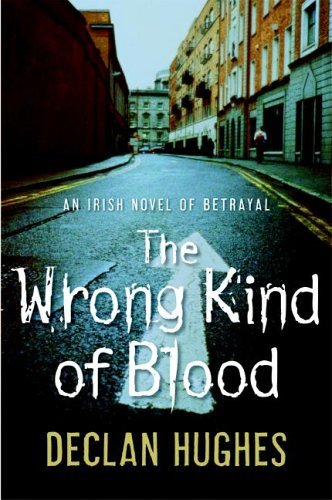
• While I have online subscriptions to both The New York Times and The Washington Post, I don’t enjoy similarly unfettered access to Dublin’s Irish Times. So I have not been able to look through that broadsheet’s recent “Best Crime Fiction of 2021” list. However, author-playwright Declan Hughes, who put the piece together along with fellow Irish writer Declan Burke, sent George Easter of Deadly Pleasures Mystery Magazine his 10 choices, via e-mail. They are:
— Dream Girl, by Laura Lippman
— The Survivors, by Jane Harper
— Hidden Lies, by Rachel Ryan
— Blood Ties, by Brian McGilloway
— A Man Named Doll, by Jonathan Ames
— Vera Kelly Is Not a Mystery, by Rosalie Knecht
— Palace of the Drowned, by Christine Mangan
— The Plot, by Jean Hanff Korelitz
— A Slow Fire Burning, by Paula Hawkins
— 56 Days, by Catherine Ryan Howard
• English professor Carole E. Barrowman offers her own roll of favorite mysteries in Wisconsin’s Milwaukee Journal.
• Speaking of “best” books, CrimeReads this morning posted its selections of “The Best True Crime Books of 2021.” I’m pleased to see that its 10 picks include Dean Jobb’s The Case of the Murderous Dr. Cream: The Hunt for a Victorian Era Serial Killer (Algonquin), a work I consumed in a captivated rush this last summer.
• Another CrimeReads piece worth noticing: Keith Roysdon’s tribute to the 1967-1975 TV detective drama Mannix, which starred Mike Connors. As Roysdon writes:
Sure, there have been cool P.I.s (Craig Stevens’ “Peter Gunn” with Henry Mancini’s theme music, full of smooth menace) and affably hot P.I.s (our boy Thomas Magnum) and cerebral consulting detectives (“Sherlock”) and the most charming, hard-luck P.I. on the California coast (“This is Jim Rockford, at the tone leave your name and message …”)Roysdon’s full article can be found here. Click here if you’re interested in my own comments on that CBS-TV series.
But as far as a play-it-straight-down-the-middle investigator who could take a blow to the head and come back swinging, nobody topped Mike Connors’ “Mannix.” And the show had a hell of a theme too, by Lalo Schifrin.
• Television tidbits: Veronica Mars alumna Kristen Bell has a new psychological thriller coming to Netflix on January 28, The Woman in the Street, a trailer for which can be enjoyed in The Killing Times. And Deadline brings word that “Jo Nesbø’s Headhunters is returning to screens, this time as a TV series for Sweden’s C More and TV2 Norway starring Betrayed’s Axel Bøyum and Mr. Robot’s Martin Wallström. … Headhunters, which was made into a highly-rated Norwegian film 10 years ago … follows a headhunter lying and manipulating his way to success both in his career and in his love life. But one lie leads to another, and soon he is so entangled in his own stories that it becomes a danger to both himself and the people around him.”
• There have been far too many deaths among members of the crime-fiction community lately. The Gumshoe Site mentions one that I somehow missed: “Gordon McAlpine died on November 29. The former college writing teacher wrote his first novel, Joy in Mudville (Dutton, 1989), set in 1930s Chicago’s Wrigley Field. Woman with a Blue Pencil (Seventh Street Books, 2015) was nominated for the 2016 Edgar Award for best paperback. He used his pseudonym Owen Fitzstephen to write Hammett Unwritten (2013) and The Big Man’s Daughter (2020; both from Seven Street Books). The last two novels feature Dashiell Hammett and some people on whom Hammett modeled … the colorful characters in The Maltese Falcon. He was 62.”
• I’m tardy in bringing attention to a pair of posts focused on this year’s Iceland Noir festival (November 16-20), but I don’t want to just let them go unmentioned. Kristopher Zgorski’s report is in BOLO Books; Abby Endler’s recollections are in Crime by the Book.
• Randal S. Brandt, a friend of this blog and a librarian at the University of California Berkeley’s Bancroft Library, was profiled last month in the San Jose Mercury News because of his labors as curator of the Bancroft’s massive California Detective Fiction Collection. The story includes news that Mark Coggins, a Stanford University graduate and infrequent Rap Sheet contributor, added “a complete set of [Raymond] Chandler and [Dashiell] Hammett first editions” to the collection. Explains the News’ Chuck Barney: “Coggins, known for his August Riordan private eye novels, which are also in the Bancroft collection, had been acquiring the books since the early ’90s. He viewed himself as ‘sort of a custodian.’”
• Finally, yesterday’s episode of Terry Gross’ Fresh Air radio program focused on crime of a different sort—and a truly frightening scenario: the end of American democracy, engineered by Donald Trump’s Republican Party. “In a new article titled ‘Trump’s Next Coup Has Already Begun,’ published in The Atlantic,” she told listeners, “my guest, journalist Barton Gellman, warns January 6 was just practice. We face a serious risk that American democracy as we know it will come to an end in 2024. The attempt by Trump and other Republicans to overturn the results of the 2020 election failed. But Gellman reports that Republicans have been building an apparatus for election theft. They’ve studied Trump’s crusade to overturn the 2020 results. They’ve noted points of failure and have taken steps to avoid failure next time by working to change whose votes are counted, who oversees the election, who chooses the electors and what happens in the courts.” You can listen to the whole interview here. If you’re an Atlantic subscriber, you can read Gellman’s article here.