Long before The Rap Sheet existed, way back in my college days, I penned (actually, typed—on a manual typewriter!) a column of information and opinion for the school’s weekly newspaper called “In the Fast Lane.” Since that time, I’ve launched similar wrap-ups for the assorted publications at which I found employment (most of which no longer exist), from Oregon Magazine’s “Grapevine” and Monthly Detroit’s “Lip Service” to “Native Intelligence” (Washington Magazine) and a media-news compendium known as “Cuff Notes” (Seattle Weekly). While my journalism career has allowed me ample opportunities to compose longer, more in-depth pieces, I’ve never lost
 my taste for gathering together tidings of greater and lesser import, all for the education and entertainment of the reading public.
In that sense, “Bullet Points” might be thought of as the latest incarnation of an enterprise I’ve engaged in since I was too young to order bar service. Herewith, my first wrap-up of 2024.
• At almost 900 pages in length, there’s no question that The FBI Dossier: A Guide to the Classic TV Series Produced by Quinn Martin and Starring Efrem Zimbalist, Jr. (Black Pawn Press), by Bill Sullivan with Ed Robertson, is the definitive resource for fans of ABC’s The FBI (1965-1974). It may also provide a supposedly large segment of modern society with an introduction—or reintroduction—to that hour-long law-enforcement procedural. Despite the broadcast having scored top-10 or at least top-20 ratings during most of its nine years on the boob-tube, Sullivan and Robertson quote one source as calling it “the most successful long-running show that no one seems to remember.” And they appear determined, with this paperback doorstopper, to overcome that astonishing cultural amnesia. The FBI Dossier isn’t merely an episode guide, though you can certainly find in its pages detailed material about all 241 installments of the series. It boasts, as well, a brief history of the U.S. Federal Bureau of Investigation; listings of the various performers who trod across the program’s sets (Ed Asner, Suzanne Pleshette, Henry Darrow, Lindsay Wagner, Roy Thinnes, etc.); promotional materials and advertisements for The FBI; and a veritable flood of intriguing info about the show’s regulars (notably the friendship between Zimbalist and FBI Director J. Edgar Hoover),
 its creators (Quinn Martin and Philip Saltzman), and its place in the history of American television. I was far from a loyal follower of The FBI, yet I found myself sitting for significant stretches of time recently with this book propped open on my lap, jumping randomly between its sections, enthralled throughout by the knowledge and insights its authors have to share. An index at the back might have made finding such particulars easier, but its lack isn’t a terrible knock on the product as a whole. As It’s About TV! blogger Mitchell Hadley wrote in his own critique of this work, “Don’t let the book’s size be daunting; if you’re a fan of The FBI—either from its original run or through the DVDs that Warner [Bros.] issued in the last few years—The FBI Dossier is a must-have. If you’re unfamiliar with the series, or have seen just a few episodes, you’ll find yourself wanting to read, and watch, more.”
• Remember A.J. Finn, otherwise known by his real moniker, Daniel Mallory? His 2018 psychological thriller, The Woman in the Window, became an international best-seller and was adapted into a 2021 film of that same name. But as The Real Book Spy’s Ryan Steck recalls, the book editor-turned-novelist’s skyrocketing renown took a severe hit in 2019, when The New Yorker published a “scathing and surgical takedown of Mallory/Finn, taking nearly 12,000 words to paint a full picture of Mallory’s antics—which range from ‘borrowing story ideas’ to lying about having brain cancer to lying about relatives dying to lying about his own background and education (specifically that he had a master’s degree from Oxford; he, apparently, does not) to lying about his past work history.” Only now, five years after The Woman in the Window debuted, does Finn have a second novel in the offing: End of Story, due out from William Morrow on February 20. Bookpage says that its story, “billed as “part Knives Out, part Agatha Christie, … centers on mystery novelist Sebastian Trapp, who invites Nicky Hunter, an expert on detective fiction, to his luxurious home to help draft his memoirs. But while there, Nicky becomes obsessed with solving the mysterious disappearance of Sebastian’s first wife and son.”
• Next Wednesday, February 14, will be Valentine’s Day. In anticipation of that, The Book Decoder has selected “10 Gripping Mystery Novels Where Romance Takes a Dark Turn.” And yes, before you ask, Gillian Flynn’s Gone Girl is included.
• The blog Promoting Crime Fiction presents its own impressive aggregation of Valentine’s Day mysteries, while Janet Rudolph tenders a no-less-substantial list in Mystery Fanfare.
• U.S. publisher Soho Press is introducing a new horror-fiction imprint called Hell’s Hundred. “Named after the once bleak, now chic New York City neighborhood of SoHo—formerly known as ‘hell’s hundred acres’ for its grim industrial facades and deadly fires—Hell’s Hundred provides fertile ground for new nightmares to take root,” explains the imprint’s inaugral catalogue. Publishers Weekly adds: “The first two books from Hell’s Hundred will debut this summer. First up is youthjuice, by former beauty editor E.K. Sathue [the pseudonym of Erin Mayer], which Soho associate editor Taz Urnov bills as ‘a horror satire about the beauty industry that really puts the gore in gorgeous,’ slated for June. And in August, Soho Crime list stalwart Stuart Neville, whose noir mysteries often incorporate supernatural elements and regularly border on horror proper, will jump to the Hell’s Hundred list with Blood Like Mine, his tenth book for the publisher. Soho calls the novel ‘a chilling monster story about a mother and daughter on the run across the Southwest’ and ‘as much an inauguration of Hell’s Hundred as it is a new chapter in Neville’s oeuvre.’”
• Deadline notes that, 30 years after his initial appearance on NBC-TV’s Law & Order, actor Sam Waterston is leaving the show. “Waterston’s final appearance as District Attorney Jack McCoy, whom he played across more than 400 episodes, will air on February 22,” we’re told. “As Waterston exits, the cast will be joined by Tony Goldwyn (Oppenheimer, Scandal), who will portray the new district attorney. Goldwyn has previously starred in
 the Law & Order spinoff Criminal Intent as Frank Goren, a character who died in the series. Goldwyn will be playing a new character on Law & Order.”
• Editor George Easter is out with the first issue of Deadly Pleasures Mystery Magazine for 2024. Roughly the opening quarter of this 88-page PDF-only quarterly is devoted to “best crime fiction of 2023” lists, gleaned from DP’s own critics as well as those from assorted other sources (including The Rap Sheet). In addition, there are myriad reviews of new and soon-to-be-published fiction released on both sides of the Atlantic, as well as in Australia (thanks to contributor Jeff Popple), and a selection of the “most anticipated mysteries of 2024.” Robin Agnew’s “Historical Emporium” column of historical mysteries is always a DP go-to for me, and Easter introduces here “Ripster’s Revivals,” a new feature by Mike Ripley (also to be found in Shots) that focuses on crime novels and thrillers he’s been intending to read for years, but never quite got around to. Finally, Easter’s “Editor’s Message” contains tidbits of news about the health of people long involved with the magazine, including L.J. Roberts, who he says “has unfortunately not rebounded from her most recent health crisis and will have to discontinue her review column for the foreseeable future.” Click here to subscribe to Deadly Pleasures for $10 per annum.
• After many years as a journalist, I am naturally drawn to books and movies in which reporters play prominent roles. A few years back I wrote a CrimeReads piece about news gatherers involved in the solving of fictional mysteries. More recently, and for the same online publication, fellow ink-stained wretch Keith Roysdon dwelt upon the intersection of films and newspapers, while in an earlier piece author Tara Lush celebrated the appearance of reporters in cozy whodunits. It all makes me want to break out one of my old reporter’s notebooks and set to questioning somebody about something!
• If you’re already on the CrimeReads site, poking around, search out these three terrific February posts: “The 1931 Murder That Foretold a New Era of Crime and Corruption in New York City,” an excerpt from Michael Wolraich’s new non-fiction work, The Bishop and the Butterfly (which just happens to be the next book on my TBR stack); “Drama King: Hake Talbot and the Art of the Impossible,” Curtis Evans’ appreciation of “two cleverly deceptive tales by mystery's greatest showman”; and the latest fine entry in Neil Nyren’s “Crime Reader’s Guide to the Classics” series, appraising the three-decades-long career of Laurie R. King, whose 18th Mary Russell book, The Lantern’s Dance, will be released next week by Bantam Books.
• Brydon Coverdale, a journalist based in Melbourne, has won the 2024 Louie Award, given by the Australian Crime Writers Association for best fast fiction (stories of up to 500 words in length). His entry, “Good Old Collingwood Forever,” followed this year’s theme of “artificial intelligence.” The ACWA also commended two other writers for their submissions: Catherine Craig for “Abe Taught Me,” and Brent Towns for “She Made Me.” According to a press notice, “The winner receives $500 cash and the two highly commended writers receive $125 each.” You will find links to all of their stories here.
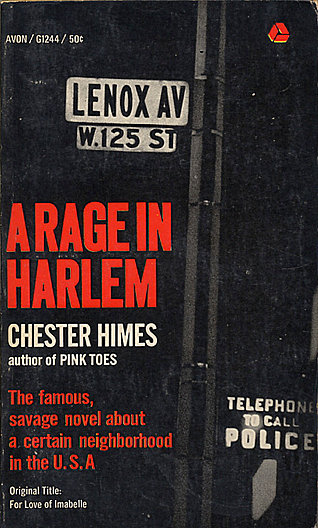
• The Essential Chester Himes, a new Everyman’s Library collection of that author’s four best-remembered Grave Digger Jones/Coffin Ed Johnson novels, is prominently on my birthday wishlist this spring. So I was delighted to read, in advance, this adaptation of S.A. Cosby’s introduction to said work in The New York Times. “If Chandler is considered the poet of crime fiction and Hammett its great journalist,” Cosby opines, “then Himes is the songwriter of the
 downtrodden. His stories sing with a fire and light that comes from a simmering sense of loss. A loss of respect, of humanity, of honor.”
(Left) Toby Jones stars in Mr. Bates vs. the Post Office on PBS.
• My TV viewing habits have been all over the map so far in 2024. I really enjoyed watching former Happy Valley star Sarah Lancashire’s warm-hearted and multi-layered portrayal of cookbook author/cooking show chef Julia Child in HBO Max’s Julia, only to learn that series was cancelled after two seasons on the air. I’m four episodes into Monsieur Spade, which casts Clive Owen as Dashiell Hammett’s former San Francisco gumshoe, Sam Spade, in a complex yarn about slain nuns and a much-sought-after but mysterious boy. Owen is entirely credible as Spade, and the program’s periodic references to The Maltese Falcon just make me smile. Hulu-TV’s Death and Other Details, about a locked-room murder on board a luxury cruise line, I find far less captivating—and more than moderately confusing—but will try to stick with it through all 10 of its weekly installments. And now I’m looking forward to the U.S. presentation of Mr. Bates vs. the Post Office, set to premiere under PBS’ Masterpiece umbrella on Sunday, April 7. This four-part drama, based on a true story and aired originally on UK screens in January, isn’t crime fiction, but it is certainly rooted in wrongdoings. Here’s a plot synopsis supplied by PBS:
When money started to seemingly disappear from its local branches, [Great Britain’s] government-owned Post Office wrongly blamed their own managers for its apparent loss. For more than a decade, hundreds were accused of theft and fraud, and many were even sent to prison—leaving lives, marriages, and reputations in ruins. But the issue was actually caused by errors in the Post Office’s own computer system—something it denied for years. Revealing a shocking David vs. Goliath fight for justice, this is the story of the decent ordinary people who were relentlessly pursued, coerced and controlled by a powerful corporation, and their ongoing battle, against seemingly insurmountable odds, to right so many horrific wrongs.Toby Jones (The Witness for the Prosecution, The Pale Blue Eye) leads the ensemble cast of this series, which The Guardian called “a devastating tale of a national scandal.”
• Oh, and I still haven’t seen all of Jodi Foster’s True Detective: Night Country. I tuned in to the first of its half-dozen episodes on HBO back in mid-January, but found the plot—with its supernatural elements—more than a tad confounding. Maybe I simply wasn’t in the right mood, or my workday had left me unable to relax and soak it in. Whatever the case might have been, I determined to wait until the final installment was broadcast on February 18, and then binge-watch this fourth season of True Detective over a week. I’ve done that on occasions when a show’s story is so involved that viewing one episode every seven days allows me time to forget plot nuances.
• A belated “happy birthday” to Batman co-creator Bill Finger!
• I came to Danish writer Jussi Adler-Olsen’s fiction fairly early, reviewing his first Department Q mystery, One Last Chance, for Kirkus Reviews back in 2011. Now The Killing Times brings word that Netflix is preparing a small-screen series based on those books, actually adapted from a succession of earlier Danish films and featuring British actor Matthew Goode (Downtown Abbey, The Crown) as homicide cop Carl Morck. This new show will be set in Edinburgh, rather than Copenhagen. The Killing Times offers the following summary of its storyline: “After a violent incident turns Morck’s life upside down, the emotionally scarred detective is charged with setting up a cold case unit, Department Q, upon his return to work. At first, the disillusioned cop is happy to waste his days away, but his detective instincts are ultimately reawakened and his new department becomes a magnet for a crew of misfits and mavericks.” There is as yet no reliable estimation of a debut date for this program.
• Speaking of forthcoming TV presentations, Deadline reports:
The BBC is keeping its Agatha Christie tradition alive by setting Towards Zero as its next adaptation of the great author’s work.• Neil Albert, author of the Dave Garrett detective series, has spent much of the last few years writing an excellent blog about another crime-fictionist, the renowned Ross Macdonald. However, he has determined that his multi-post approach to analyzing each of Macdonald’s books hasn’t been paying off in readership stats. So he announced recently that he’s changing his approach.
Following on from 2023’s limited series Murder Is Easy, the BBC has commissioned Mammoth Screen and Agatha Christie Limited to reimagine the writer’s 1944 novel.
Towards Zero unfolds around the murder of an elderly widow at a clifftop seaside house, linking a failed suicide attempt, a schoolgirl wrongfully accused of theft, and the romantic life of a famous tennis player.
“I will write one post per book, briefly summarizing the plot without spoilers,” he says. “I will start again at the beginning, with The Dark Tunnel. The follow-up posts, released every five days, will be posts on specific subjects related to the book under discussion. No more chapter-by-chapter summaries; if you want to see those, they will remain available and are searchable. I expect to have two or three follow-up posts per book. … I hope the readership finds it more agreeable. Ross Macdonald deserves to be remembered one way or another.” Do check out Albert’s endeavors here when you get a free moment or two.• Should you happen by Chicago between March and October of this year, don’t miss the Museum of Science and Industry’s new exhibit, “007 Science: Inventing the World of James Bond.”
• The online platform Substack doesn’t draw a great deal of my attention, but I have become fond of one weekly offering there: “Secret Sleuths,” by British crime historian (and host of Murder by the Sea) Dr. Nell Darby. A source of fascination for those of us hungry for more unusual stories of crimes through time.
• R.I.P., Don Murray. The California-born actor, who earned an Oscar nomination for his performance in the 1956 film Bus Stop, and who starred on TV in The Outcasts (1968-1969) and Knots Landing (1979-1981), died on February 2 at age 94. In addition to those better-known parts, Murray appeared in episodes of Amy Prentiss, Police Story, T.J. Hooker, Matlock, Murder, She Wrote, and Twin Peaks.
• It’s nice to see Christopher Huang’s second mystery, Unnatural Ends—one of my favorite books of 2023—selected by Cross-Examining Crime blogger Kate Jackson as her January “Book of the Month.” She observed recently that Unnatural Ends “is not an alibi-focused mystery, nor is it one in which lots of physical evidence is poured over for postmarks, fingerprints, or DNA. In that sense it reminds me of Five Little Pigs (1942) by Agatha Christie. It is a mystery of character and only by understanding the people involved and the past, will the truth emerge. You really get to know the characters, but it doesn’t drag as a book. I did anticipate the final solution, as it fits the characters perfectly, but I don’t think it was a cast-iron idea in my head—I did consider other possibilities as I went along. Given its character-driven nature, its dramatic secrets, and the engaging way the story is told, I think this would make for a great TV series.”
• Joe Peschi starred in a TV crime drama? Well, 1985’s Half Nelson was really more of a comedy-drama that found the pint-size Peschi portraying Rocky Nelson, described by Wikipedia as “a former New York City cop who moved to Beverly Hills, where he got a job at a private security service for the rich and famous, while attempting to make it as an actor. In addition to guarding celebrities, he also helps solve crimes.” Professional football players Bubba Smith and Dick Butkus, and singer-actor Dean Martin, helped fill out the cast of this show from producer Glen A. Larson. With such a lineup, you would have expected its run to be longer than six episodes. For the time being, you can watch the first episode of Half Nelson on YouTube.