• Although there’s no word yet on when the 10-episode second season of Netflix’s The Lincoln Lawyer will debut, we do now know—thanks to Deadline—about three actors who’ve won recurring roles. Lana Parrilla (Why Women Kill, Once Upon a Time) will play “a beloved chef and community advocate struggling to keep her restaurant afloat as a predatory real estate developer threatens the neighborhood around her.” Yaya DaCosta (Chicago Med, Our Kind of People) “will portray Andrea Freemann, a cut-throat prosecutor and Mickey Haller’s (Manuel Garcia-Rulfo) undefeated courtroom rival, who is also a friend of his ex-wife Maggie (Neve Campbell).” And Matt Angel (Dave) is set to play Henry Dahl, “a cosmopolitan erudite with a hipster haircut and clothes. He is the host of a successful true crime podcast that acts the role of a good Samaritan. Distrustful of Henry’s motives, Mickey … warns him not to interfere with an ongoing case.” The sophomore season of The Lincoln Lawyer is said to be based on Michael Connelly’s 2011 novel The Fifth Witness.
• Mystery Fanfare draws our attention to a couple of British crime dramas set to debut soon in the United States. Season 12 of Vera, the series starring Brenda Blethyn and based on Ann Cleeves’ Vera Stanhope mysteries, will show up this coming Sunday, January 29, on the BritBox streaming channel. Meanwhile, watch for the freshman season of DI Ray, a procedural starring Parminder Nagar as Detective Inspector Rachita Ray of the fictitious Birmingham, England, police force. (Birmingham actually falls under the purview of the West Midlands Police.) DI Ray’s four episodes will be available to those who subscribe to the PBS Passport on-demand service beginning on February 20, with the series’ PBS Masterpiece broadcast premiere coming on July 9. The Killing Times reports that DI Ray has already been renewed for a second season in the UK.
• Max Allan Collins’ latest blog post contains a fine half-hour interview he did with Titan editor Andrew Sumner about his 18th Nate Heller novel, The Big Bundle (Hard Case Crime), released this week.
• Peter May gives us the background on his own brand-new novel, a standalone titled A Winter’s Grave, in this piece for Shots.
• And one more superior exchange to mention:Speaking of Mysteries host Nancie Clare’s discussion with debut crime novelist Iris Yamashita about the latter’s City Under One Roof (Berkley), a claustrophobic, Alaska-backdropped tale that Publishers Weekly says “heralds the arrival of a major new talent.”
• We’re going to be seeing less of Sarah Weinman in The New York Times. The January edition of her newsletter, The Crime Lady, includes mention of her “Crime & Mystery” column (which she took over from longtime critic Marilyn Stasio in early 2021) shifting from twice-a-month appearance to only monthly publication. “There are many reasons for this change,” she explains, “including scheduling and print space and making sure all the genre columns get equal play. But from my standpoint, it turns out reviewing eight books a month is hard! And having experienced column burnout in the past, I did not want it to repeat itself. A more sustainable schedule also means more time for other projects, some of which are already in the works.”
• What relationship is there between author John le Carré and serial-lying Republican U.S. congressman George Santos? From Vox:
Sean Wilentz, a Bancroft Prize-winning historian at Princeton University, told Vox that Santos was more a character out of American literature than American history, citing Herman Melville’s The Confidence-Man. “This is nothing that a historian can be much help on,” he said. “There is no example like it.” It’s not that Santos was an entirely foreign object—the huckster is an American archetype, and nothing is more clichéd than a dishonest politician. As Wilentz put it, he’s “made of materials that one can identify.” But that such a shadowy figure and compulsive liar wound up on Capitol Hill is still remarkable. “Embellishing happens a fair amount that a lot of people get away with,” Wilentz said. “This is a different order because this is a made-up life.”
He noted that “it’s one thing to be Marjorie Taylor Greene and making up all of this crazy stuff, and here you just have a cipher.” Using another literary reference, Wilentz compared Santos to the “kind of nothing man that drips all through the novels” of John le Carré.
• There were plenty of “Best Crime Fiction of 2022” lists pouring in at the end of last year, but that doesn’t mean everyone had their say. Kevin Tipple, of Kevin’s Corner fame, today delivered a rundown of his 10 favorites in the blog Lesa’s Book Critiques. They include Rick Helms’ A Kind and Savage Place, Claire Booth’s Dangerous Consequences, Lee Goldberg’s Movieland, Terry Shames’s Murder at the Jubilee Rally, and Laurie Loewenstein’s Funeral Train.
• There was an intriguing, if passing, mention in The New York Times’ obituary of veteran TV news correspondent Bernard Kalb earlier this month, having to do with his early journalism experience: “After graduating from the City College of New York in 1942, Mr. Kalb spent two years in the Army, mostly working on a newspaper published out of a Quonset hut in the Aleutian Islands of Alaska. His editor was Sgt. Dashiell Hammett, the author of the detective novels ‘The Maltese Falcon’ and ‘The Thin Man.’” More on The Adakian, that daily mimeographed paper Hammett created for the Adak Army Air Base, can be found here. (Hat tip to Mark Coggins.)
• For CrimeReads, Zack Budryk looks back at how the “rampant corruption and incompetency” of U.S. president Warren G. Harding’s 1920s administration “pave[d] the way for a new century of politics.”
• Other recent CrimeReads pieces I’ve enjoyed include this one by Mark Ellis (Dead in the Water), asking whether historical accuracy actually matters in historical fiction; this other one, by Janice Hallett (The Twyford Code), focused on crime yarns featuring “recently released or escaped prisoners”; Samuel Martin’s exploration of what he calls “North Atlantic noir”; and Elizabeth Held’s contemplation of why teenage detectives remain so appealing.
• Devoted Rockford Files fan Jim Suzatells the story of how “several hundred film images” from the photo shoot for that 1970s series’ memorable opening title sequence were lost, almost trashed, and eventually found their way into his possession.
• Finally, if the new Netflix historical filmThe Pale Blue Eye has left you curious to learn the facts about Edgar Allan Poe’s short, self-sabotaged career at the U.S. Military Academy in West Point, New York, click over to this piece from The Washington Post.
• Let’s have a show of hands: Who remembers Sammy Davis Jr. playing private investigator Larry Miller in the 1969 movie The Pigeon? I would’ve counted myself among the uninformed until the other day, when I happened across that 90-minute ABC Movie of the Week on YouTube. (Watch it here, while you can!) Scripted by Edward J. Lakso (The Mod Squad, Mission: Impossible, Charlie’s Angels) and Stanley Roberts (Mannix, Petrocelli, Police Woman), the teleflick “is great,” according to an IMDb review, “because Sammy … doesn’t take himself too seriously and the dialogue uses a number of clichés from the 60’s. Sammy is searching for a girl who doesn’t want to be found. I especially love the scenes between Sammy and Roy Glenn, the veteran actor who plays his dad, a police lieutenant.” Why Wikipedia doesn’t list The Pigeonamong Davis’ motion-picture and TV credits, but does include Poor Devil, an awful NBC comedy pilot from 1973, is really anybody’s guess.
• Speaking of forgotten crime-solvers, how about Valerie Bertinelli in the 1990 CBS-TV series Sydney? As Wikipedia recalls, that erstwhile One Day at a Time actress headlined as Sydney Kells, “the daughter of a now-deceased policeman, [who] brings her New York City detective agency (in which she is the only investigator) back to her hometown and her family.” Matthew Perry (later of Friends) held forth as Kells’ rookie-cop brother, while Craig Bierko portrayed an attorney “with whom she shares sexual chemistry.” This spring replacement series lasted only 13 episodes. The best thing about it may have been its opening theme, “Finish What Ya Started,” by Bertinelli’s then-hubby Eddie Van Halen. Clickety-clack right here to watch the main title sequence from Sydney, paired with the introduction to her 1993-1994 sitcom, Café Americain.
• One more YouTube discovery:The Blue Knight, a 1973 NBC mini-series starring William Holden, Lee Remick, Sam Elliott, and Joe Santos, and based on Joseph Wambaugh’s 1972 novel of that same title. It’s been many years since I saw this teleflick with Holden as William “Bumper” Morgan, a 20-year veteran of the Los Angeles Police Department—long enough that I didn’t even remember it was originally broadcast in one-hour segments over four consecutive nights. The production was popular enough to spawn a subsequent series, likewise called The Blue Knight (but on CBS, rather than NBC), starring George Kennedy as Morgan; it ran for two seasons, from 1975 to 1976.
• Oh alright, here’s another:Jigsaw, a 1968 film (“originally made for television,” says Wikipedia, “but shown first in theaters”)
starring Bradford Dillman, Harry Guardino, Hope Lange, Michael J. Pollard, and a young Susan Saint James. “After someone places sugar cubes laced with LSD in his cup of coffee,” the YouTube plot synopsis reads, “Jonathan Fields [Dillman] regains consciousness, only to find a woman drowned in his bathtub and flecks of blood on his hands and clothes.
Suffering from amnesia, Fields can't think of anyplace else to turn, so he hires Arthur Belding [Guardino], a private detective, to help him find out what
happened.” Jigsaw is a remake of 1965’s Mirage.
• Dexter: New Blood, the 10-episode revival of Michael C. Hall’s 2006-2013 drama, Dexter, is now expected to appear on Showtime come November 7. Wikipedia says this show will open “approximately ten years after the original series’ finale.” In the meanwhile, Hall’s Dexter Morgan “has moved to the fictional small town of Iron Lake, New York, hiding his identity under the name of Jimmy Lindsay, a local shopkeeper. He has developed a relationship with Angela Bishop, the town’s chief of police, and has suppressed his serial killing urges. A string of incidents around Iron Lake cause Dexter to fear that the ‘dark passenger’ within him will reveal itself.” The Killing Times offers a 90-second trailer for Dexter: New Blood, which incorporates a version of
Del Shannon’s 1961 hit song, “Runaway” (previously employed as the theme for the 1986-1988 NBC police drama Crime Story).
• Almost five years ago, NBC-TV optioned Ben H. Winters’ Edgar Award-winning 2012 science fiction/mystery novel, The Last Policeman, with hopes of creating a series from it. Nothing came of that deal. Now, reports Tor.com, writer-producer Kyle Killen (Awake, Mind Games) is working on a pilot for Fox-TV, based on the same book, the resulting series—to be retitled The Last Police—expected to debut as part of the 2021/2022 season. Deadline explains that this show will follow “a small-town police detective, who, as an asteroid races toward an apocalyptic collision with Earth, believes she’s been chosen to save humanity, while her cynical partner can’t decide what he’ll enjoy more: her delusional failure, or the end of the world itself.” In Winters’ “existential detective novel,” the protagonist was a young male police detective in New Hampshire, one Henry Palace. In 2012, the author suggested that the role go to Jim True-Frost (The Wire, Manifest); no word yet on who might headline Fox’s adaptation.
• This is splendid news, from
In Reference to Murder: “The new season of BritBox’s modern cozy mystery series, McDonald & Dodds, premieres on August 3rd. The series follows newly promoted DCI McDonald and veteran sergeant Dodds as they investigate complex mysteries with a web of clues that has everyone guessing who are the real victims and villains. Ahead of the new season, BritBox dropped a trailer, which you can view here.”
• Actress Jessica Walter, who died in March at age 80, has been nominated for a posthumous Emmy Award “for her voice-over work in FX/FXX’s animated comedy series Archer,” according to The Hollywood Reporter. “Walter voiced the toxic matriarch Malory Archer, the abrasive mother of H. Jon Benjamin’s Sterling Archer. She’s being recognized for her work in the sixth episode of the 11th season, ‘The Double Date.’” Should Walter secure this Emmy, it would be the second of her career; in 1975, she won Outstanding Lead Actress in a Limited Series honors for her portrayal of San Francisco’s first female chief of detectives in the NBC Mystery Movie rotator Amy Prentiss.
• In the latest edition of her newsletter, The Crime Lady, author and New York Times crime-fiction columnist Sarah Weinman gives us a sneak peek of her latest true-crime book, Scoundrel: How a
Convicted Murderer Persuaded the Women Who Loved Him, the Conservative Establishment, and the Courts to Set Him Free. Due out in February 2022, it tells the bizarre story of Edgar Herbert Smith, who killed a 15-year-old New Jersey honor student in 1957, subsequently contested his case in the media—being given special support by conservative pundit William F. Buckley Jr.—and, after winning a retrial and release, kidnapped and tried to kill another woman, this time in California. “By the time Scoundrel is published next year,” Weinman explains, “more than seven years will have passed since I first began researching and reporting the project. I can’t wait to fill you all in on what that entailed, the voluminous trove of documents and letters I consulted across multiple archives, the people I spoke with, and the strange juxtaposition of criminal justice, conservative thought, and book publishing that connected the crimes and misdeeds of one man who fooled so many into looking past his worst instincts to see what was never really there.”
• The Southern California town of Agoura Hills has selected Lee Goldberg’s Lost Hills (2020), his first novel featuring Los Angeles County Sheriff’s Department homicide detective Eve Ronin, as its One City One Book 2021 honoree. “That means,” says Goldberg in his blog, “the local libraries, schools, etc. will be encouraging everyone to read the book and to come to City Hall on Sept. 30th to see me in conversation, buy a copy of my book if they haven’t already … and get their copies signed. Past honorees include Michael Connelly and Dick Van Dyke.” Admission to Goldberg’s Thursday, September 30, appearance will be free, but space is limited and advance registration is required; click here after August 1 to find out more.
• A big change for Britain’s Crime Writers’ Association:
For the first time in its 68-year history, the prestigious Crime Writers’ Association will allow self-published authors to join its ranks. The move comes after the CWA consulted its members, who voted with an 84% majority in favour to accept self-published authors.
Maxim Jakubowski, Chair of the Crime Writers’ Association, said: “The founding mission of the CWA was to support, promote and celebrate the crime genre and its authors. In the past, we only accepted traditionally published authors into the CWA, as this was the best indicator of quality. The publishing landscape has changed in recent years, and self-publishing has become a route for professional writers, and indeed there are many trailblazers in this field. The time is right to update our membership criteria.”
The news release adds: “Self-published authors wishing to become a CWA member will need to demonstrate a level of professionalism through a simple-to-complete application form. This will be available on the CWA website
from 13 September, when the CWA will first accept applications.”
• It sounds as if this year’s Killer Nashville convention, expected to take place in Franklin, Tennessee, from August 19 to 22, is coming along right on schedule. Keynote speakers at this in-person event will be Walter Mosley, J.T. Ellison, and Lisa Black. More information is available here for anyone who would like to participate, but hasn’t yet registered. The full four-day registration will set you back $419.
• “Mystery Writers of America (MWA) is honoring the memory of its 2020 Grand Master, the late Barbara Neely, with a scholarship to new Black writers …,” writesMystery Scene magazine’s Oline Cogdill. “MWA will annually present two scholarships of $2,000 each. One scholarship will be for an aspiring Black writer who has yet to publish in the crime or mystery field, and another for Black authors who have already published in crime or mystery.” September 30, 2021, is the deadline for applications (available here); a winner will be declared “in the late fall.” Click here for more information.
• Like millions of other Americans, my wife and I have been watching Season 4 of Unforgotten, part of PBS-TV’s Masterpiece Mystery! summer schedule. There are three additional Sunday-night installments yet to come, but already, Crimespree Magazine’s Erin Mitchell has declared Unforgotten, which stars Nicola Walker and Sanjeev Bhaskar as London-based cold-case detectives, “the best show on television.” She continues: “Unforgotten is one of those rare shows that does not tell a story at its surface, doesn’t just lead us on a step-by-step procedural journey. The procedure is there, of course, but the subtlety of the remarkable performances addresses the characters’ motivation to allow us to experience the often painful journey though the case. In that way, the experience of watching it is more akin to reading a book, which is the highest praise I can give a TV show.” A 90-second introduction to Season 4 is embedded below.
• Regé-Jean Page, a popular alumnus of the Netflix series Bridgerton, is set to star as The Saint, aka Simon Templar, in a new film based around that Leslie Charteris-created, “Robin Hood-esque criminal and thief for hire.” Deadline says the forthcoming Paramount picture “will be a completely new take that reimagines the character and world around him.” Author-screenwriter Lee Goldberg, nephew of Saint authority Burl Barer (The Saint: A Complete History in Print, Radio, Television, and Film), opines on Facebook that Page “will make a great Saint, but I hope they don’t stray too far from what we all loved about Leslie Charteris’ books, the George Sanders movies, and the [1962-1969] Roger Moore TV series.”
• With the abundance of resources provided in The Rap Sheet’s right-hand-column blogroll, you can be excused for not noticing when a new site is added. But let me direct your attention to one in particular: The Ross Macdonald Blog. Composed by Neil Albert, author of the Dave Garrett series (The January Corpse, etc.), it’s turning the critical microscope on every one of Macdonald’s novels, in chronological order, beginning with his non-Lew Archer yarns. Albert—who calls Macdonald (aka Kenneth Millar) “one of the three greatest writers in the genre of the hardboiled private eye, along with Dashiell Hammett and Raymond Chandler” (no argument from yours truly)—has been working on this site primarily since the end of last year, and has so far progressed to The Three Roads (1948), Macdonald’s fourth novel. Each book is being considered in detail, over a succession of postings, The Dark Tunnel (1944) and Trouble Follows Me (1946) having each generated 11 entries. (Hat tip to Kevin Burton Smith.)
• Nobody who reads this page regularly should be surprised to hear that I own the 30th-anniversary edition of Mark Dawidziak’s The Columbo Phile: A Casebook, a work originally published in 1989. But now comes word of Bonaventure Press’ Shooting Columbo: The Lives and Deaths of TV’s Rumpled Detective, due out this coming September and written by David Koenig. Although somewhat shorter than Dawidziak’s book (only 248 pages, compared with 410), Shooting Columbo promises behind-the-scenes intelligence about that iconic Peter Falk series, plus “a blow-by-blow account of the making of all 69 classic mysteries, from the first [figurative] pilot, Prescription: Murder, to the last special, Columbo Likes the Nightlife.” The question is, do I need Koenig’s book on my shelves, too?
• Caroline Crampton hosts the podcastShedunnit, but she’s also the author of a map and guide called Agatha Christie’s England, from London-based Herb Lester Associates, which years ago produced The Raymond Chandler Map of Los Angeles. Already out in England, and due for a September release in the States, Crampton’s publication focuses on “the real and fictional locations in the Queen of Crime’s canon,” as she writes in her e-mail newsletter. “There are dozens of places included, and for each I’ve researched why and how Christie wrote about them. I certainly felt like I gained a greater understanding of her work in the process of putting the guide together, and if you read it I hope you will feel the same.”
• From the “everything old is new again” department:TV Guide critic Matt Roush recently included this exchange in his blog:
Question: Will some forward-thinking Hollywood executive reboot the George Peppard vehicle Banacek? —Steve O.
Matt Roush: Would a reboot of a 1970s private-eye series really be forward-thinking? I loved the randomness of this suggestion, because there were so many higher-profile spokes of NBC’s “Mystery Movie” wheel: McCloud, McMillan and Wife, and, of course, Columbo. Seriously, though, because Banacek is lesser known, reviving a show and a hero that had a sense of humor about itself wouldn’t be the worst idea. In the bigger picture, I’d like to see a network try the “mystery wheel” format again, rotating its series on a weekly or monthly basis. Something like that could air year-round with fewer episodes per series, and that might be refreshing.
While I cringe a bit at Roush labeling Thomas Banacek a “private eye” (he was actually a Boston insurance investigator), I applaud his optimism on the matter of resuscitating television’s once-widespread “wheel series” format (about which I wrote last summer in CrimeReads). And Banacek—with its suave, totally immodest lead and supposedly impossible crimes—might, indeed, make for a fun reboot. But who do you think should fill Peppard’s loafers?
• Bay Area author-photographer Mark Coggins is out with Season 2 of his podcast, Riordan’s Desk. He launched this project in May 2020, at the start of the COVID-19 pandemic, with a chapter-by-chapter reading of his seventh August Riordan private-eye novel, 2019’s The Dead Beat Scroll. Earlier this month, he packaged up the final installment of Season 2, a full reading (35 chapters in all) of his 2015 Riordan yarn, No Hard Feelings. And Coggins has already begun reading from Candy from Strangers (2006), his third Riordan mystery. Listen to the complete run of Riordan’s Desk by clicking here.
• Listen up, Bosch fans! “The Everybody Counts Podcast talks Bosch Season 7, Episode 5 and interviews Michael Connelly.”
• Charlie Chan authority Lou Armagnoinforms us that 92-year-old actor James Hong, who portrayed “Son No.1 to J. Carrol Naish’s Charlie Chan in The New Adventures of Charlie Chan [1957-1958], is to be honored next year with a star on Los Angeles’ Hollywood Walk of Fame. Hong, born in Minneapolis to Hong Kongese parents, and “the last living actor to star as a primary Chan character, either in film or television,” will be the third Chan cast member honored in this fashion; Keye Luke and the aforementioned J. Carrol Naish both won stars before him. Hong’s list of credits extends well beyond The New Adventures of Charlie Chan to include roles in everything from Richard Diamond, Private Eye and Hawaii Five-O to Kung Fu, Harry O, The Rockford Files, Switch, and the 1974 film Chinatown.
• From a patron of The Rap Sheet’s YouTube page: “I’m not making light of the condominium disaster in Florida, but every time a reporter who is covering that story says ‘Surfside,’ this song pops into my head.” Learn more about this other Surfside here.
• The blog maintained by History (formerly The History Channel) recently highlighted what it claims are “the most influential classic shows” from the 1950s, “TV’s “Golden Age.” In the category of crime (click
here, then scroll to the bottom of the page), it mentions Martin Kane, Private Eye (1949-1954), Man Against Crime (1949-1954), and Dragnet (1951-1959). But what about Naked City (1958-1959, 1960-1963), Mickey Spillane’s Mike Hammer (1958-1959), M Squad (1957-1960), Richard Diamond, Private Detective (1957-1960), Decoy (1957-1959), Have Gun—Will Travel (1957-1963), 77 Sunset Strip (1958-1964), Perry Mason (1957-1966), and Peter Gunn (1958-1961)? Today’s younger viewers may be unaware of this, but the ’50s brought us myriad TV detective shows that are still worth watching.
• Was this really a good idea? You may recall that Deadline reported last year, “James Patterson and Condé Nast are teaming to revive vintage crime fighter The Shadow in a series of books that will also aim to be adapted for the screen.” Hachette Book Group imprint Little, Brown will publish the original series … The Shadow [aka society gadabout Lamont Cranston], a signature New York vigilante, originated in the 1930s as a series of pulp novels by Walter B. Gibson. A popular radio drama based on the books featured the voice of Orson Welles. In 1994, Universal released a feature film adaptation starring Alec Baldwin.” Anyway, Patterson’s introductory entry in this new series, set in the late 21st century and simply titled The Shadow, came out on July 13, and was greeted with more than a modicum of skepticism. San Francisco tour guide and author Don Herron remarks, “I had thought about giving it a shot, and then I saw the cover [shown on the left]. The only thought I could process was Where the fuck is HIS HAT???”
• Dashiell Hammett’s first novel, Red Harvest (1929), has inspired a number of cinematic creations over the years, including the 1930 picture Roadhouse Nights and the 2005 neo-noir mystery Brick. But the book, which stars Hammett’s nameless San Francisco private eye, the Continental Op, has never been given a faithful adaptation. It did once come close, however, as a series of newspaper clippings in Davy Crockett’s Almanack of Mystery, Adventure, and the Wild West makes clear. In 1941, the Los Angeles Times carried word of Paramount Pictures decision not to remake its 1935 film based on Hammett’s fourth novel, The Glass Key, but to instead develop a script from Red Harvest. Brian Donlevy was slated to portray the Op, with Paulette Goddard and a young Alan Ladd helping to fill out the cast. Unfortunately, that film was first “postponed” and later abandoned. Hoping to boost Ladd’s Hollywood career, Paramount decided to remake The Glass Key after all. Donlevy was nominally the headliner, but Ladd was the real star of that production, while Veronica Lake replaced Goddard as its distaff attraction.
• Did author Hammett really break the window of a downtown department store in Miami, Florida, during a
four-day visit he made to that city in 1934? The Palm Beach Postrecalled the story late last year, but it may just be an urban legend.
• Talk about dropping the ball! I realized this week that, while I had reported on nominees for the 2021 Scribe Awards, I never announced the winners. In the category of greatest interested to crime-fiction readers—“General Original Novel and Adapted Novel”—Max Allan Collins and Mickey Spillane’s 12th Mike
Hammer novel, Masquerade for Murder (2020), lost out to a video-game-related adventure, Day Zero: Watchdogs Legion, by James Swallow and Josh Reynolds (Aconyte).
• Were I able to attend this year’s PulpFest, taking place in Pittsburgh, Pennsylvania, from August 19th through 22nd, I would definitely want to be in the audience for “popular culture scholar” Doug Ellis’ presentation, “The Weird Tales of Margaret Brundage.” “Initially disguising her gender by signing her work as M. Brundage, the artist redefined sensuality for the already scandalous pulp market,” observes the PulpFest Web site. “Her work was later targeted by New York Mayor LaGuardia’s 1938 decency campaign. … Margaret Brundage [1900-1976] created 66 covers for Weird Tales between 1932 and 1945, making her the most in-demand cover artist for the fantasy, horror, and science-fiction magazine. Only Virgil Finlay was a close rival.” Ellis’ remarks on Brundage are scheduled for Friday, August 20.
• The best interview I’ve heard with T.J. Newman, the former flight attendant and author of the new thriller Falling (Avid Reader Press/Simon & Schuster), was conducted by Dave Davies on NPR’s Fresh Air program. You can listen to their whole conversation here.
• Powell’s Books, the Portland, Oregon, landmark heralded as “the world’s largest independent bookstore,” is celebrating its 50th anniversary this year. As part of the celebration, it has assembled “a curated collection of 50 books from the past 50 years.” I’d be more enthusiastic about this list if—in addition to Larry McMurtry’s Lonesome Dove, Alice Walker’s The Color Purple, Barry Lopez’s Arctic Dreams, and Kim Stanley Robinson’s The Ministry for the Future—it contained even one crime, mystery, or thriller novel. No such luck!
• Max Allan Collins mentions in his blog that the 13th Mike Hammer novel he’s “co-authored” with the late Mickey Spillane, is due out from Titan Books in 2022—75 years after the appearance of Spillane’s
first Hammer yarn, I, the Jury. This one will be titled Kill Me If You Can.
• There have been so many crime novels backdropped by San Francisco, that Paul French was bound to fail when he determined to collect, for CrimeReads, a representative sample of their diversity. Why, for instance, does he mention Stuart M. Kaminsky’s Poor Butterfly (2012)—the only Toby Peters mystery set in the Bay Area (most of them took place in L.A.)—or Charles Willeford’s one-off, Wild Wives (1956), but completely ignore the oeuvres of Colin Willcox, Stephen Greenleaf, Kelli Stanley, and Bill Pronzini? That said, French’s piece—parked here—is entertaining, and might give you some ideas of things to read as this summer season winds to an end.
• For broader exposure to fictional offenses set in and around San Francisco, consult Randal S. Brandt’s Golden Gate Mysteries wiki.
• And how much fun is this? Blogger Evan Lewis is showcasing the covers, contents pages, copyright information, and occasional lagniappes from every early edition of Ellery Queen’s Mystery Magazine. As he explains in this introductory post, “Some months ago, my old friend and fellow book collector Jim Rogers passed away, and left behind a complete run of EQMM from 1941 to 1959. Those mags have now passed into the care of another old friend, Mr. Larry Paschelke, and Larry agreed to let me scan the covers and share them with you here. (Jim, I have no doubt, would have done the same had I asked, but I didn't know he had them!)” Click here to catch up with Lewis’ project in progress.
Congratulations to books critic and author Sarah Weinman, who is replacing Marilyn Stasio as The New York Times Book Review’s crime-fiction columnist. Weinman’s debut column will appear in this coming Sunday’s paper, but is already available online.
Stasio has been writing her fortnightly column ever since 1988. Although she’s now relinquishing the reins, a news release from the daily explains that she’ll “continue to contribute reviews to the Times on crime, true crime and other related subjects.” This new arrangement should open up Stasio’s leisure reading schedule to at least some degree; in a brief 2009 profile for the newspaper, she said she was in the habit of consuming “maybe 150” mystery and thriller novels annually. She has also critiqued theater for Variety.
Weinman is the author of The Real Lolita: A Lost Girl, An Unthinkable Crime, and a Scandalous Masterpiece (2018) and the editor of last year’s Unspeakable Acts: True Tales of Crime, Murder, Deceit & Obsession. She’s been a periodic contributor to CrimeReads, and more of her non-fiction work has featured in publications such as Vanity Fair, The Washington Post, and of course, the Times. In addition, she once penned crime-fiction reviews for January Magazine, another Webzine with which I have long been associated. (Pieces of hers that I was pleased to edit include this review of William Landay’s Mission Flats, and this piece about Greece-set puzzlers.)
As the Times’ resident judge of current crime fiction, Weinman succeeds not only Stasio, but a pantheon of previous Times critics, as well: “Newgate Callendar” (aka Harold C. Schonberg), Allen Hubin, and Anthony Boucher, who originated the paper’s “Criminals At Large” column. Her new duties are likely to limit her future participation at Bouchercon and other conventions, and can be expected to force some change in her composition of The Crime Lady, a newsletter she has been e-mailing out for the last several years.
All of us here wish Sarah the best in her latest adventure!
• Sarah Weinman should be feeling awfully damn proud right now about her work on Women Crime Writers: Eight Suspense Novels of the 1940s &
’50s (Library of America), a two-volume collection of riveting tales by female fictionists who--aside from Patricia Highsmith and Margaret Millar--have been forgotten by most of today’s mystery-fiction fans. Not only does Weinman explain, in the LOA’s Reader’s Almanac blog, how the project came about, and offer an introduction to the books here, but she benefits from a wide-ranging interview in The Life Sentence, plus a smaller one in Patrick Balestar’s Picks by Pat. She also writes, again in The Life Sentence, about “a quartet of female editors”--including the renowned Joan Kahn--“who, for all intents and purposes, invented the mystery publishing field in America.” Of the eight novels featured in Women Crime Writers, I’ve read only two--Vera Caspary’s Laura and Millar’s Beast in View--so I have the chance, like everyone else, to catch up with other writers such as Elizabeth Sanxy Holding (The Blank Wall) and Dolores Hitchens (Mischief) thanks to Weinman’s efforts here. Chances are this LOA collection will send readers off to check out her previous book, Troubled Daughters, Twisted Wives (2013).
• Stephen King, who pens crime fiction along with horror yarns, “will be one of ten recipients of this year’s National Medal of Arts,” reports the blog io9. President Barack Obama will present King with this honor during a ceremony to be held in the White House’s East Room on September 10. Award organizers cite King as “one of the most popular and prolific writers of our time,” adding that he “combines his remarkable storytelling with his sharp analysis of human nature.” Among this year’s other recipients of the National Medal of Arts will be actress Sally Field and author Tobias Wolff.
• Today we mourn the loss, at age 81,of Warren Murphy, the New Jersey-born co-creator of the successful Destroyer series of thrillers featuring U.S. government operative Remo Williams. Those books almost didn’t make it into print, Jiro Kimura explains in The Gumshoe Site: “When the former political consultant and his former reporter colleague Richard Sapir (1936-1987) made a proposal for a book about a former cop, Remo Williams the Destroyer, in 1961, no publisher was interested. Then, after Don Pendleton’s Executioner series made the bestseller list, Murphy and Sapir’s Created: The Destroyer (Pinnacle,
1971) hit the street. The Detroyer series was finally made into the 1985 movie, Remo Williams: The Adventure Begins, starring Fred Ward, and into the 1988 TV movie, Remo Williams: The Prophecy.” Ben Boulden points out, in Gravetapping, that beyond the Destroyer novels, Murphy created “the brilliant Tracenovels, and a bunch of straight suspense thrillers in the 1980s and 1990s. I am particularly fond of his suspense novels. The best was probably The Grandmaster (1984), which won the Edgar Award for Best Paperback Original.” A full list of Murphy’s books can be found on this site maintained by his son Brian. Murphy is said to have “died peacefully on September 4 after a long illness at his home in Virginia Beach, Virginia.” What is probably his last book, Bloodline--“a gritty historical novel about the Mafia in 1920s New York”--is set to be published by Forge in November.
• The September edition of Mike Ripley’s“Getting Away with Murder” column in Shots includes his remarks on Charles Williams’ vintage thrillers, recent Sherlock Holmes-focused works, a collection of Tom Adams’ crime-novel artistry (also mentioned here), and fresh fiction by Anthony Horowitz, Alex Howard, Michael Ridpath, Lynda La Plante, and others. Ripley also draws my attention to The Real Mary Kelly (Blink), in which Wynne Weston-Davies, “a Fellow of the Royal College of Surgeons, … sheds new light on the identity
of [Jack the] Ripper, but more importantly on the identity of his fifth (and some would say not final) victim known up until now as ‘Mary Jane Kelly.’” Weston-Davies’ book is due out in the States in
April 2016.
• Keep in mind that this year’s Bloody Scotland convention will take place in Stirling beginning this coming Friday, September 11, and run through Sunday the 13th. Prominent among the festivities will be the announcement, on Saturday, of who has won the fourth annual Bloody Scotland Crime Book of the Year award. The shortlist of nominees, which includes Ann Cleeves and Chris Brookmyre, is here.
• This is fairly exciting news, and something I missed spotting earlier. As Bill Crider reports in his blog, author Robert Skinner--whose Wesley Farrell noir series, set in Depression-era New Orleans, drew more than a few plaudits over the last two decades--recently came out with a new novel titled Spanish Luck (CreateSpace). Writes Crider:
The setting is New Orleans in 1944, and things get off to a fast start with a murder that’s investigated by Des Cortes. Meanwhile, a lowlife named Al Martin gets out of prison and immediately picks up his son and takes him with him to introduce him to a life of crime.
Des’ brother, Sal, is hired by the boy’s mother to find him. Al is part of a gang put together by Fade Taber, whose plan is to rob one of the local banks. Skinner weaves these plot threads (and several more) together skillfully to put together a novel that’s a mystery and a caper rolled into one. Highly recommended.
• The estate of Arthur Conan Doyle is said, by Variety, to have “reached an agreement in principle with the makers
of the recent Sherlock Holmes movie Mr. Holmes, which the estate claimed infringed on stories that still remain under copyright.” As we reported back in May, the Conan Doyle estate was “suing Miramax, Roadside Attractions, director Bill Condon, author Mitch Cullin [on whose 2005 novel, A Slight Trick of the Mind, the film was based], and Penguin Random House for copyright infringement.” Details of this agreement are sparse, with Benjamin Allison, attorney for the Conan Doyle estate, quoted in Entertainment Weekly as saying only that his clients are “very pleased” with the outcome.
• I somehow neglected to mention last month that New Jersey resident Stephen T. Miller, who has spent years indexing pulp-fiction magazines, and who, “along with Michael Cook, … compiled Garland Publishing’s Mystery, Detective, and Espionage Fiction: A Checklist of Fiction in U.S. Pulp Magazines, 1915-1974, won the 2015 Munsey Award during PulpFest 2015, which was held in Columbus, Ohio, from August 13 to 16. The Munsey is “presented annually to a person who has worked for the betterment of the pulp community.” Other nominees for this commendation were Ron Fortier, Joel Frieman, Chris Kalb, William Lampkin, Laurie Powers, the late Chris Steinbrunner, Mike Taylor, George Vanderburgh, and Dan Zimmer.
• Finally, if you haven’t already seen it, here’s the short trailer for Season 4 of Longmire, which is set to debut on Netflix this coming Thursday, September 10.
• Although Slate’s staff picks of 2014’s “best books” feature only one work of fiction that might come under The Rap Sheet’s consideration (David Shafer’s “funny techno-thriller,” Whiskey Tango Foxtrot), the Web mag’s critics include a whopping two novels from this genre among their 27 “Overlooked Books of 2014”: Adrian McKinty’s The Sun Is God and Lauren Beukes’ Broken Monsters.
• On the topic of “best books,” note that Crimespree Magazine editor Jon Jordan has posted his selection of 11 “damn good reads” from the last year, including Meg Gardiner’s Phantom Instinct, Chelsea Cain’s One Kick, and Tim Hallinan’s For the Dead.
• There are so many Christmas-related mysteries, that blogger-editor Janet Rudolph has had to split up her list of them in Mystery Fanfare. Click here to find dozens of works by authors whose names begin with the letters A through D. At least three more such postings of seasonal fare should follow in the coming days.
• Is there a “lost work” by Raymond Chandler? Yes, but as Sarah Weinman reports
in The Guardian, it’s a comic opera discovered in the Library of Congress in Washington, D.C. Weinman explains:
The 48-page libretto to the comic opera The Princess and the Pedlar, with music by Julian Pascal, has hidden in plain sight at the library since its copyright was first registered on 29 August 1917.
The work, a copy of which was obtained by the Guardian, was found in March by Kim
Cooper, shortly after she published her debut novel, The Kept Girl, featuring a fictionalised Chandler in 1929 Los Angeles.
While looking for more information about Pascal, Cooper discovered a missing link between Chandler’s English boyhood and his detective fiction: a witty, Gilbert-and-Sullivan-inflected libretto for a fantasy-tinged romance between Porphyria, daughter to the King and Queen of the Arcadians, and
Beautiful Jim, a “strolling Pedlar.”
• For the blog Book Noir, UK editor Barry Forshaw recalls his encounters with “two of my favourite creators (both massively talented, but neither the sweetest individual): I was able to speak to both--wait for it!--Alfred Hitchcock and Patricia Highsmith.”
• One of the most enduring urban legends has it that illustrator-turned-empire builder Walt Disney was “cryogenically frozen after he died [in 1966] so that he could be reanimated in the future.” Unfortunately, it’s not true.
• If you have never seen the 2003 pilot for a TV series based on the film L.A. Confidential, and starring Kiefer Sutherland, here it is.
• Number 36 in Robin Jarossi’s amusing, nostalgic countdown of “50 crime shows that blow us away” is Life on Mars, the 2006-2007 BBC One time travel/police procedural that starred John Simm and Philip Glenister, and “won a following through its freshness and cheekiness.” (Sadly, the U.S. version of that show didn’t fare so well.)
• In a short interview with The New York Times Book Review, David Baldacci was
asked, “What’s the key to a great thriller?” His answer:
The same as any other genre: a great story. Characters you either hate or love, a compelling plot whose seemingly skeletal simplicity belies the mounds of meat underneath. And of course a contortionist writer at the helm who manages to stay a step ahead of even the most astute/cynical story-gobblers. You make it look easy and seamless, when it’s actually the hardest thing you’ve ever done in your life and the whole thing seems held together by fraying duct tape and spit.
• In conversation with Crimespree, Michael Connelly addresses the question of whether the career of his main protagonist, Los Angeles cop Harry Bosch (The Burning Room), is coming to an end. “It is very clear from the last few books his time is up with the badge, but not as a literary character,” insists Connelly. “I planted a number of seeds in the last three or four books that can show his continuation in some way. It does not necessarily have to be Harry Bosch up front. I have not decided yet what to do and have it as open-ended in this book so I have time to think about it. There are a number of possibilities including bringing him back as a cop in one more book, although I am leaning towards not doing it. It appears that his life is not dictated by any dates, but the needs of the series. In every four or five books something happens. It is time for a new direction for Harry.” You might remember that Detective Hieronymus “Harry” Bosch was introduced in Connelly’s first novel, The Black Echo (1992).
• And longtime supporter of The Rap Sheet Randal S. Brandt writes: “My friend Jean Buchanan has published a short piece called Mr. Dodge, Mr. Hitchcock, and the French Riviera: The Story Behind To Catch a Thief. It is published as an Amazon Kindle Single and is available via this link: http://www.amazon.com/Mr-Dodge-Hitchcock-French-Riviera-ebook/dp/B00P9GIATI/ (Or in the UK, from this link: http://www.amazon.co.uk/Mr-Dodge-Hitchcock-French-Riviera-ebook/dp/B00P9GIATI/) … The new piece explores the relationship between the novel and the film, and the circumstances under which the novel was written.” He adds that “Jean also contributed the Afterword to the Bruin Books edition of To Catch a Thief that was published in 2010, as well as adapting the novel as a radio play for BBC Radio 4 (broadcast in 2010).”
A weekly alert for followers of crime, mystery, and thriller fiction.
Troubled Daughters, Twisted Wives: Stories from the Trailblazers of Domestic Suspense, edited by Sarah Weinman (Penguin):
After a two-week hiatus, during which I concentrated on assembling
The Rap Sheet’s extensivecoverage of Elmore Leonard’s death, “Pierce’s Picks” is finally back with several new selections from bookstore shelves. First up is critic-author Sarah Weinman’s Troubled Daughters, Twisted Wives, an anthology of 14 short stories, written by women from the 1940s through the mid-1970s and plucked from the sub-genre of “domestic suspense.” As Weinman related during a recent interview with the Tulsa World, there were a number of female authors turning out mystery and crime stories of “real elegance and economy” during that period, but their work--which frequently dealt with real-life issues, from bad marriages and children seeking their own paths to working women displeased with their jobs--customarily won them less attention than their male counterparts received. Those distaff fictionists may have been “marginalized,” she said, “because they wrote about home and marriage and relationships. And their principal characters were women--wives, spinsters, the elderly. Yet the stories they tell are a real reflection of what was going on in the country at that time.” Not every one of Weinman’s selections here is a standout, but there are several that made me want to explore their author’s other works more closely. Notable among those
are Margaret Millar’s Twilight Zone-ish “The People Across the Canyon,” Dorothy B. Hughes’ slight but memorable “Everybody Needs a Mink,” and Elisabeth Sanxay Holding’s “The Stranger in the Car.” That last yarn is among this collection’s longest, focusing on a conservative businessman whose efforts to deal with trouble only show how little he understands the women in his sphere.
Although this book could have used some additional proofreading (it’s odd to see a quality publisher like Penguin allowing so many typos to go uncorrected), it serves as a delightful sampler of what women such as Vera Caspary, Patricia Highsmith, Shirley Jackson, and others accomplished in this field. Use it as a guide to explore the genre further.
* * *
Also new and deserving of attention: Sandrine’s Case (Mysterious Press), by Thomas H. Cook, an emotionally and psychologically rich work that builds around a college professor who only remembers how much he loved his wife after he’s accused of
murdering her. ... Detroit Shuffle (Minotaur), D.E. Johnson’s fourth
mystery--following last year’s Detroit Breakdown--to involve Will Anderson, an amateur sleuth who’s also the son of an early 20th-century Detroit, Michigan, electric-car manufacturer. Will’s efforts here to protect his girlfriend, women’s suffrage supporter Elizabeth Hume, lead him to “bug” the offices of a pro-liquor activist, accuse Elizabeth’s bodyguard of conspiracy to murder, and ally himself with a woman he once thought of as his foremost nemesis. ... Holy Orders (Henry Holt), by Benjamin Black, in which 1950s Dublin pathologist Quirke tries to solve the murder of his daughter’s reporter friend, only to discover that such a quest will pit him against a Catholic
Church unwilling to feed its own to the dogs. There’s plenty of character
development here, with Quirke fearful that his recent tendency to imagine things may be symptomatic of worsening health, and his daughter exploring an aspect of herself that she never realized existed. Unfortunately, Holy Orders has too much the feel of a transition novel, seeming to have been published in large part simply to introduce themes that we won’t see fully developed until subsequent installments of this series. ... Children of the Revolution (Hodder & Stoughton UK), Peter
Robinson’s 21st outing for British Detective Chief Inspector Alan Banks. Here we see Banks and his fellow detectives struggling to solve the case of a 59-year-old college lecturer, Gavin Miller, who plummeted to his death from a disused railway line with £5,000 in his pocket. The key to the solution Banks seeks may lie in Miller’s past, which is chock-a-block with titled figures and more than a few controversies. (Children of the Revolution won’t be released in the States until March 2014). ... And finally The Maid’s Version (Little, Brown), by Daniel Woodrell, which looks closely at people associated with an Ozarks-area dance hall fire in 1928. There are mobsters and violence in these pages, and tragedies that will at least make your heart crack a bit. But the real attraction of The Maid’s Version, as is true of so many other Woodrell novels, is the prose. His observations on the oft-sorry state of human interactions require instant re-reading, and the term “lyrical” hardly suffices to describe his writing style.
Not everyone is pleased to see Tom Rob Smith’s first novel, Child 44, a serial-killer thriller set in Stalinist Russia, find a place on this year’s longlist of nominees for the Man Booker Prize. In a piece for the Los Angeles Times, critic-blogger Sarah Weinman quotes Canongate Books publisher Jamie Byng as saying, “I cannot respect a judging committee that decides to pick a book like ‘Child 44,’ a fairly well-written and well-paced thriller that is no more than that.”
But Weinman suggests that the inclusion of Child 44--the first thriller to be named on the Booker longlist “since such lists were made public and official in 2001”--may not be quite the aberration it seems. “Indeed,” she writes, “this is the most recent example of the blurring of the line between crime fiction and literature, which makes me hopeful that the so-called genre wars are lurching toward, if not [to] an end, then at least a tentative cease-fire.” She goes on to recount the notorious history of crime and thriller fiction being overlooked and dissed by noteworthy critics, but also points out how genre awards, including the Edgars, have increasingly gone to authors of more or less mainstream fiction.
What’s most remarkable about Child 44’s nomination is that the novel isn’t really all that remarkable--a point well made in Weinman’s piece by both Byng and American-born, London-based reviewer Michael Carlson. It’s certainly a propulsive read, a good, solid thriller with characters finding their places up and down the range of moral virtues and (mostly) vices; and it bears in its protagonist and his wife two brilliantly nuanced figures whom readers ought to be anxious to see more of in the near future. Nonetheless, Child 44’s basic plot--about dead children and the realization that some one individual is behind their slayings--isn’t a ground-breaker. The book itself is less a standout than several others published this year, including Philip Kerr’s A Quiet Flame and Stieg Larsson’s The Girl with the Dragon Tattoo. What’s most significant about Smith’s work is that the combination of publicity, trenchant storytelling, and perhaps a willingness among judges to see beyond the blinkered limits of what should be considered “literary” in 2008 have combined to earn crime fiction a place at the Big Name Awards table. A place that it has deserved for many years already.
Child 44 might finally be the novel to set a precedent. (In prizes as in politics, 2008 could turn out to be the year that hope makes a comeback.) But even if it isn’t, its nomination for the Booker will have opened a door through which other crime, thriller, and mystery fiction works might one day pass. Proudly.
Since 2005, Sarah Weinman’s idiosyncratic voice has reverberated through Galley Cat, the self-proclaimed “first word on the book publishing industry.”
Last Wednesday, though, Weinman announced that she was leaving the galley to editor Ron Hogan in order to pursue other interests:
In other words: after two years, thousands of posts, scores of parties and readership that's more than quadrupled since Ron and I took over GalleyCat in October 2005, it's time to see what's out there beyond the publishing industry's idiosyncratic, mercurial and fascinating borders.
Weinman, who is a January Magazine contributing editor, will continue to helm her own blog and contribute columns to the Los Angeles Times and The Baltimore Sun. In addition, she plans to “spend more time on neglected matters: fiction-writing, my own crime fiction-centric site, or making some use of that forensic science degree after all.”
Today at the inimitable Murderati blog, Barry Award-winning novelist Elaine Flinn (Deadly Collection) manages to get blog-goddess and sometime January Magazine contributor Sarah Weinman (pictured at left) on her special interview bubble.
The result is, as usual with Flinn’s bubble interviews, slightly mad, but very fun, as she gets Weinman talking about the rumor of her twinship, what it takes to be a cabana person, and the fact that bloggers--and writers--have feelings, too.
Send Us News:
The Rap Sheet is always on the lookout for information about new and soon-forthcoming books, special author projects, and distinctive crime-fiction-related Web sites. Shoot us an e-mail note here.
Check out The Rap Sheet’s picks of more than 400 books for crime, mystery, and thriller lovers, all due to be released between now and New Year’s Day. Click here.
The Rap Sheet has now been around long enough that some older posts may include links to stories or Web sites that no longer exist. If you encounter such broken links, try searching for the original material via the Wayback Machine, an invaluable archive of digital content.
Also, we’d be very grateful if you could let us know where those inoperable links can be found. We’ll update them as soon as possible.
If You Can, Please Help The Rap Sheet to Survive and Thrive
Your Vigilance Is Welcome
Those of us responsible for The Rap Sheet try to get everything right, and we work to keep our Web links up to date. But we’re not perfect. So, if you spot any errors (typographical or otherwise) in this blog, or discover links or embedded videos that aren’t functioning properly, please let us know via e-mail.
The Rap Sheet Faithful
Disclosure Notice
The Rap Sheet accepts books sent free of charge from publishers, publicists, and authors. Those works may inspire comments on this page. However, in no case is there any promise given that a book will be the subject of an endorsement or review, either positive or negative.
Back in the fall of 1971, NBC-TV introduced its most successful “wheel series,” the NBC Mystery Movie. Look for our anniversary posts here.
Videos Disclaimer
From time to time, The Rap Sheet features short video clips. Use of these is for historical and entertainment purposes only, and is not meant to establish ownership of such materials. Rights to those clips stay with their owners/creators.
The One Book Project
In honor of The Rap Sheet’s first birthday, we invited more than 100 crime writers, book critics, and bloggers from all over the English-speaking world to choose the one crime/mystery/thriller novel that they thought had been “most unjustly overlooked, criminally forgotten, or underappreciated over the years.” Their choices can be found here.
In the Beginning ...
Before The Rap Sheet was a blog, it was a monthly newsletter in January Magazine. To find all the old editions of that newsletter, just click here.

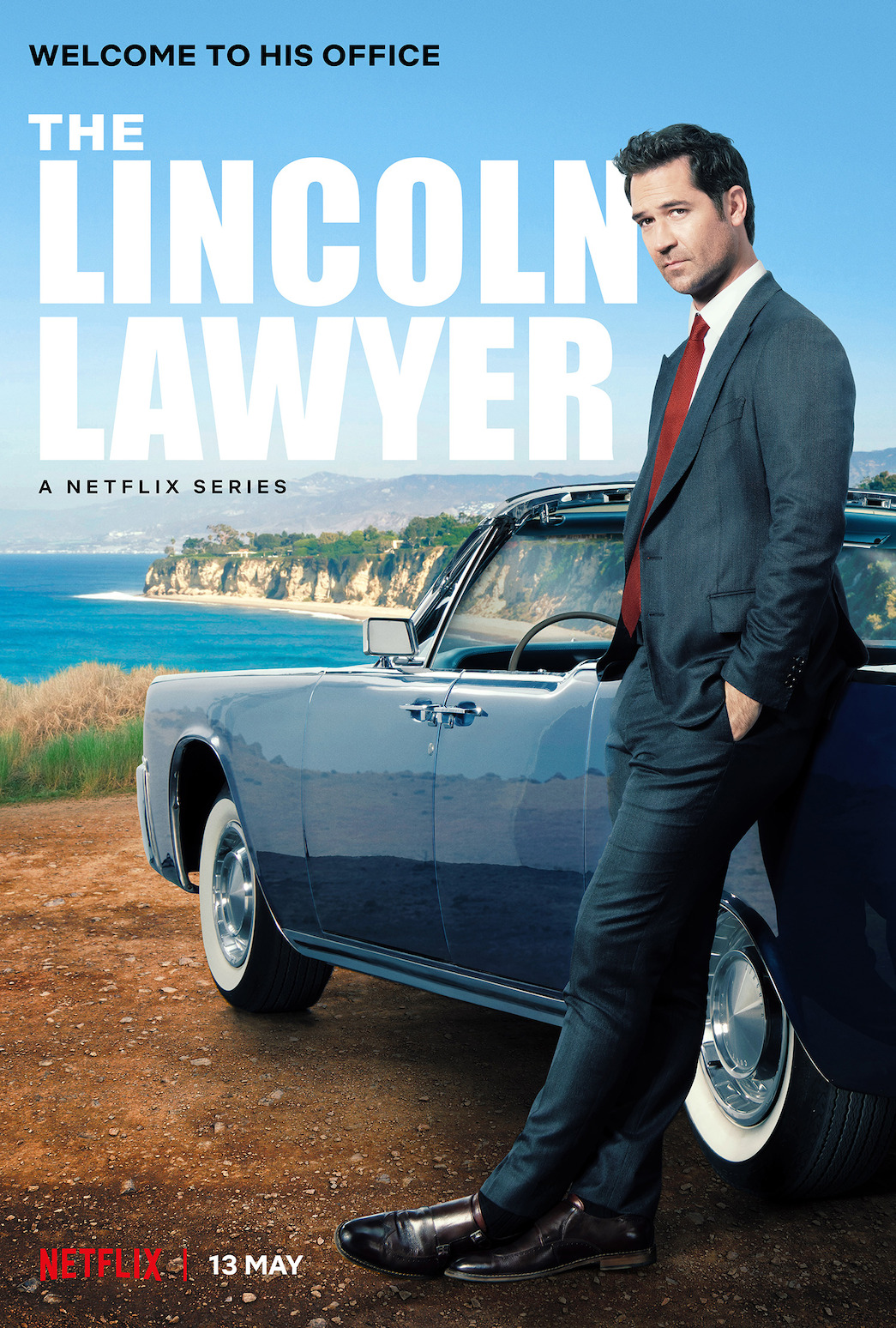 acts the role of a good Samaritan. Distrustful of Henry’s motives, Mickey … warns him not to interfere with an ongoing case.” The sophomore season of The Lincoln Lawyer is said to be based on Michael Connelly’s 2011 novel The Fifth Witness.