Showing posts with label Best Books 2021. Show all posts

Thursday, February 10, 2022

Bullet Points: Full Meal Deal Edition

It’s been too long since I found the time to write one of these news wrap-ups, so I have much to share. Let’s dive right in.

• I was overjoyed last September to learn that Crippen & Landru would be releasing a posthumous collection of short stories by screenwriting partners William Link and Richard Levinson, best known for having created the NBC Mystery Movie series Columbo. C&L publisher Jeffrey Marks said the book was to be titled Shooting Script and Other Mysteries, and that he would send me a copy. Four months passed, no book found its way into my mailbox, and I became busy with other things. It wasn’t until mid-January that I thought to check on Shooting Script’s status … only to learn that it had gone on sale in November, and I just wasn’t aware. Naturally, I ordered a copy immediately, and have been working my way slowly through its 194 pages ever since. The book comprises 17 abbreviated yarns, written between 1954 and 1966. Most appeared originally in Alfred Hitchcock’s Mystery Magazine. One, “Whistle While You Work,” was composed by the pair while they were still high school students in Philadelphia, and sold to Ellery Queen’s Mystery Magazine, but the remainder, explains Jim Noy in The Invisible Event, were turned out when Link and Levinson were in their 30s. “[S]traight away the tonal shift is evident,” he says, “concerned less with immediate narrative cleverness than with capturing the intrusion of crime as a terrifying-but-regenerative thing. ‘Shooting Script’ (1959), ‘Operation Staying-Alive’ (1959), and ‘Robbery, Robbery, Robbery’ (1959)—this last also published under the title ‘Robbery, Robbery!’, which manages to miss the point quite impressively—see ordinary people pulled into the maelstrom and emerging in different ways: bewildered, energised, sometimes terrified.” In Noy’s opinion, the best of the bunch here is “Dear Corpus Delicti” (1960), “in which we follow a man’s perfect scheme to murder his wife and start a new life with his mistress.” It’s obvious from the outset that “Dear Corpus Delicti” was part of the source material these authors harvested when they sat down to write the play and, later, the TV film Prescription: Murder, the figurative first pilot for Columbo.

Earlier this week, I asked Joseph Goodrich, who edited Shooting Script, what he learned about Link and Levinson by bringing their forgotten short stories back to print. He got back to me pronto:
First of all, as a fan of Link and Levinson’s work, it was a pleasure to read the stories and watch them apply what they learned from reading mystery fiction to the writing of it. These aren’t detective stories, even though Columbo’s origins are contained in the collection; to me they have more in common with, say, Stanley Ellin’s stories, in which a shift of focus or perspective throws a new and unexpected (and often-shocking) light on what we assumed was happening.

Apart from 1954’s “Whistle While You Work,” the majority of the stories were written in the late ’50s and early ’60s, and reflect a world that was in the process of vanishing, the world of down-at-heels boarding houses and small-town postmen, and patients who smoke in doctors’ offices. I think there’s also just a hint of the turbulent world that would soon take over in stories like “Top-Flight Aquarium” and "The Man in the Lobby." Gruesome death and a deadly resignation …
Shooting Script and Other Mysteries offers insight into the evolution of Link and Levinson as storytelling masters. Highly recommended.

• Speaking of Messieurs Link and Levinson, what’s been swirling around in the zeitgeist that might explain why so much has been written recently about their 1975-1976 NBC-TV series, Ellery Queen? Early last month, Ah Sweet Mystery! blogger Brad Friedman undertook the formidable task of reviewing—in pairs—all 22 weekly episodes. You should be able to access those pieces here. (Friedman remarked on the March 23, 1975, pilot, “Too Many Suspects,” in his introduction to that project.) After concluding his efforts, he presented this poll page, inviting veteran Ellery Queen enthusiasts as well as newcomers to that hour-long whodunit to identify their favorite episodes. Friedman will keep his survey up until February 16, then reveal its results.

• Meanwhile, Curtis Evans—spurred on by Friedman’s deep dive—presented his own memories and opinions of Ellery Queen in The Passing Tramp. In his case, he covered that short-lived Jim Hutton/David Wayne series in five installments (see here, here, here, here, and here), before presenting his top-10 list of favorite episodes. This all makes me want to go back and watch the full run of the show myself. Maybe after I finish Reacher.

• Author Robert Crais announced this week that his next novel, Racing the Light—starring P.I. Elvis Cole, Joe Pike, and mercenary John Stone—will be released by Putnam on November 1.

• News that Monica Vitti, often referred to as “the Queen of Italian Cinema,” died on February 2 at age 90, left me wondering how best to honor her memory in The Rap Sheet. Then, while reading Terence Towles Canote’s obituary of Vitti, I was reminded that she’d starred as the eponymous criminal-turned-crime fighter in Modesty Blaise, a lightweight but diverting 1966 British spy-fi picture. She also became artist Robert McGinnis’ model for that character, when he sat down to paint the cover for Fawcett’s paperback tie-in novel, Modesty Blaise, by Peter O’Donnell. The book front and actress are shown below.


• By the way, at least for now can watch the full two-hour length of Modesty Blaise by clicking over to YouTube.

• The lineup of prominent international authors invited as guests to this year’s Iceland Noir festival, taking place in Reykjavik from November 16 to 19, has been broadcast. It includes Ruth Ware, Richard Osman, Paula Hawkins, Mark Billingham, and Sophie Hannah. Tickets to the popular literary event can be purchased here.

• Coming up sooner than that is Mystery Fest, being planned for Saturday, March 12, in Portsmouth, England. The Guest of Honor at this year’s gathering will be Priscilla Masters, the creator of Detective Inspector Joanna Piercy (Almost a Whisper) and coroner Martha Gunn (Bridge of Sighs). Also appearing for panel discussions that day will be authors Edward Marston, Leigh Russell, and Judith Cutler. Events will take place on the third floor of the Portsmouth Central Library, beginning at 10 a.m. and concluding at 5 p.m.

• Oh, and let us not forget Lyme Crime, which—according to its Web site—“launched online in June 2020 and returns with a full, three-day festival 23 to 25 June 2022.” Tickets go on sale in March, and the program is expected to be publicized soon. For now, Shotsmag Confidential at least provides us with a look at the authors attending this convocation in the Dorset coastal town of Lyme Regis.

• Deadly Pleasures Mystery Magazine is out with its new, digital-only Winter 2022 issue, devoted in substantial part to what its editors (and others) say were the best mysteries, crime novels, and thrillers published over the course of 2021. Editor George Easter has filled these pages with numerous “best of the year” lists he posted in his blog at the end of 2021, then broken the top picks down according to the number of times they were mentioned. (S.A. Cosby’s Razorblade Tears scored best, with an astonishing 44 recommendations!) Elsewhere in the issue, assistant editor Larry Gandle assesses this year’s Edgar Award-nominated books; recent deaths within the crime-fiction community are acknowledged (goodbye again, G.M. Ford); contributor George H. Madison looks back at the rough road to making the Raymond Chandler-scripted 1946 film, The Blue Dahlia; Ted Hertel and Brian Ritt both revisit the work of George Harmon Coxe (1901-1984); and there are myriad critiques of recent releases, including from debut columnist Meredith Anthony. That’s a hell of a lot of copy to cram into one magazine. Good thing that Deadly Pleasures no longer needs to worry about paper and printing costs.

• A rare “best of 2021” compilation that didn’t make it into Deadly Pleasures comes from The Strand Magazine. Its absence may be chalked up simply to the fact that it came out so tardily: managing editor Andrew Gulli posted his top 20 favorites in late January. They include Sleep Well, My Lady, by Kwei Quartey (Soho Crime); The Whispering Dead, by Darcy Coates (Black Owl ); The Wayward Spy, by Susan Ouellette (CamCat); Her Perfect Life, by Hank Phillippi Ryan (Forge); and The Maidens, by Alex Michaelides (Celadon).

• A different sort of “bests” roster was presented more recently by Robert Lopresti in the Sleuth Sayers blog. As he explains, it’s his “thirteenth annual list of the year’s best mystery [short] stories as determined by yours truly. It goes without saying that the verdicts are subjective, personal, and entirely correct.” Almost a third of Lopresti’s 16 picks originated in Alfred Hitchcock Mystery Magazine, with almost as many drawn from Ellery Queen Mystery Magazine.

• How his hoax execution affected Fyodor Dostoevsky’s fiction.

• It’s been a long time in coming, but the six-part Apple+ TV series Slow Horses is finally set to premiere on Friday, April 1. And that’s no joke, folks. Mystery Fanfare reports that this spy drama, adapted from Mick Herron’s first Slough House novel of the same name, will start with back-to-back presentations of its opening two installments, “followed by one new episode weekly every Friday.” Slow Horses focuses on a team of British intelligence agents who are considered, well, troublesome and expendable. Gary Oldman plays the arrogant and oft-offensive head of that misfit squad, Jackson Lamb. Also among the cast are Kristin Scott Thomas, Jonathan Pryce, and Olivia Cooke. Anyone who doesn’t know about Herron’s series should check out the cover story from last spring’s edition of Deadly Pleasures.

(Left) Joe Cole plays Harry Palmer in The Ipcress File.

• In other small-screen news, Crime Fiction Lover alerts us that UK network ITV will roll out, sometime in March, its six-part series The Ipcress File, based on both Len Deighton’s 1962 espionage novel, The IPCRESS File, and the 1965 Michael Caine film adapted from that book. Judging by a one-minute trailer, says CFL, “It looks like no expense has been spared … and the initial impression is sexy, witty and dangerous.” Deighton Dossier blogger Rob Mallows adds: “While little of the plot is given away, it’s clear that the series will make some significant departures from both the book and the [film] …, such as the more active agent role for Jean, played by Lucy Boynton, evidence of the backstory of the ‘unnamed spy’—Harry Palmer—and his role in the Berlin black market which led to military prison and ultimately, the job with W.O.O.C.(P)., plus the sidebar story involving the nuclear test in the Pacific, which is a big part of the book but which was of course not featured in the original film.” In addition to Boynton, The Ipcress Files’ cast features Joe Cole and Tom Hollander. UPDATE: This mini-series is supposed to be carried in the States on AMC+, but no airdate has yet been publicized.

• I can’t say I’m terribly surprised to hear this. From Deadline:

Marg Helgenberger is eyeing a possible return to the CSI franchise with a reprisal of her role as Catherine Willows ... Helgenberg would appear in the upcoming second season of CSI: Vegas, the sequel to the groundbreaking 2000 series, in which Helgenberger starred for the first 12 seasons. …

Season 1 opened a new chapter in Las Vegas—the city where it all began, introducing a serialized storytelling to the classic crime procedural drama. Facing an existential threat that could bring down the entire Crime Lab and release thousands of convicted killers back onto the neon-lit streets of Vegas, a brilliant new team of investigators led by Maxine Roby (Paula Newsome) enlisted the help of old friends, Gil Grissom (William Petersen) and Sara Sidle (Jorja Fox), to investigate a case centered around former colleague David Hodges (Wallace Langham). This combined force deployed the latest forensic techniques to follow the evidence—to preserve and serve justice in Sin City.
Actors Petersen and Fox had earlier announced they will not be returning for the sophomore season of CSI: Vegas.

• This Monday is Valentine’s Day. Do you know what books you’ll crack for that occasion? Janet Rudolph offers some suggestions.

• CrimeReads senior editor Molly Odintz supplies an alternative reading list: “Your Anti-Valentine’s Day Round-Up of the Sexiest Mysteries to Read with Your FWBs.” Yes, I had to look up that initialism, too: it stands for “friends with benefits.”

• Wait just a darn minute here, I thought Christopher Fowler was done penning his time-spanning yarns about detectives Arthur Bryant and John May of London’s fictional Peculiar Crimes Unit. When the 20th such mystery, Bryant & May: London Bridge Is Falling Down, came out last summer, The Guardian made quite clear that it was “bringing to a close a much-loved series that started in 2003 with Full Dark House.” So much for that. Fowler writes this week in his blog that he’s now “in the final stages of the edit” of a 21st Peculiar Crimes book, which sounds more like a tour guide than a novel. Says Fowler:

For 20 books, London has been a central character in the Bryant & May series, so I decided that the detectives’ next investigation should be of London itself. And that this investigation has been going on—in a sort of louche way—for the last twenty years.

After all, the nation’s oldest serving detectives have spent a lifetime investigating crimes in the murkiest corners of London. They’ve been walking the streets and impulsively arresting citizens for decades. Who better to take you through London’s less savoury side?

They’re going to be remembering old buildings and odd characters, lost venues, forgotten disasters, confusing travel routes, dubious gossip, illicit pleasures and hidden pubs. The idea is to make strange connections and show readers why it’s almost impossible to tell separate and fiction in the city.

The book will be very much a part of the existing canon; Volume 21,
Bryant & May’s Peculiar London. It will have a cover by our usual superb artist Max Schindler and will be the same size and format as all earlier volumes.
Amazon UK says Fowler’s new book will be released on July 14.

• Funny, this 1977 NBC-TV movie was supposed to be set in my hometown of Seattle, Washington, but I’ve never heard of it before. The Modcinema sales site describes Ransom for Alice as “the pilot film for the unsold series The Busters. The protagonists are not narcotics agents as might be assumed, but instead a male-female team of government undercover agents (Gil Gerard, Yvette Mimieux) operating in Seattle in the 1890s. … Ransom for Alice is an uncertain blend of cop drama, western, and espionage caper.” Do any Rap Sheet readers remember watching this 75-minute feature?

• A couple of podcasts have been added to The Rap Sheet’s right-hand column of crime-fiction resources: Hark! The 87th Precinct Podcast, which deals with the varied works of Ed McBain, and The le Carré Cast, concentrating on espionage novelist John le Carré.

• While we’re on the topic of le Carré, let us note the coming publication of a new collection of his writings. The following comes from Jeff Quest’s blog, Spy Write: “After being teased by Nick Harkaway, one of le Carré’s sons, during book events surrounding the release of Silverview, we now have additional details on a book of John le Carré/David Cornwell correspondence. The book, currently titled A Private Spy: The Letters of John le Carré, 1945-2020, has a UK release date of November 3rd, 2022 and a healthy page count of 400, although [publisher Viking’s] U.S. page lists a release date of October 11th, 2022 and 144 pages. So there is some conflicting information that will hopefully be cleared up soon.”

• Beware, spoilers ahead! Although the British-French crime drama Death in Paradise debuted way back in 2011, my wife and I only became fans during the months of COVID-19 isolation. That program’s cast has changed a good deal over the last decade, offering viewers four different male leads (my favorite being Kris Marshall as Detective Inspector Humphrey Goodman), backed up by a trio of female detective sergeants—the best of whom, to my mind, is six-season veteran Florence Cassell, played by lovely French actress Joséphine Jobert. Season 11 was introduced with a 90-minute Christmas special this last December, and has been airing new episodes in Great Britain since early January. So far, there seems to be no U.S. premiere scheduled for this latest series; however, word of its plot progress has been leaking across the pond—including sad news that Jobert is no longer part of the show after Episode 4. Indeed, the UK’s Hello! magazine confirms that in the fifth episode, she’s replaced by Shantol Jackson playing newly promoted DS Naomi Thomas.

• Why is strychnine the mystery writers’ poison of choice?

• Saima Mir, author of the 2021 debut novel Khan, has been named as “the first recipient of the CrimeFest bursary for a crime fiction author of colour.” According to a news release, that scholarship “will cover the cost of a full weekend pass to CrimeFest this May, a night’s accommodation at the Mercure Bristol Grand Hotel, and a guaranteed panel appearance. … Three runners-up were also chosen to receive complementary passes to this year’s convention: Elizabeth Chakrabarty, Amita Murray, and Stella Oni.”

• Sioux Falls, South Dakota, fictionist William Reynolds has been enjoying some favorable press notices of recent date, thanks to the fact of Brash Books reissuing his half-dozen crime novels about Nebraska, a single-monikered writer and private eye operating in Omaha, Nebraska. “From the beginning,” he tells the Sioux Falls blog Pigeon 605, “I wanted him to be sort of this average guy. He’s not 6-foot-6 and 250 pounds of square-jawed raw muscle; he’s average. In fact, there’s instances in which he deliberately uses his averageness to kind of blend in. He’s self-aware, and sometimes he screws up. He blunders into things he shouldn’t blunder into.” Reynolds’ series commences with The Nebraska Quotient (1984) and runs through Drive-By (1995)—at least, so far. Might all of this fresh attention to his work spur the author to compose a new Nebraska tale? Pigeon 605’s Jill Callison says, Reynolds “doesn’t have a new plot in mind. But he did spend time over the summer thinking about it.”

• Also receiving attention is the fourth issue of Men’s Adventure Quarterly, edited by Robert Deis and Bill Cunningham, and released last month. “I’m running out of superlatives to describe what a beautiful publication Men’s Adventure Quarterly is,” enthuses prolific novelist James Reasoner. “Every issue lovingly reprints great covers and interior art from the men’s adventure magazines of the Fifties, Sixties, and Seventies, along with stories and features from those magazines, all of it enhanced by well-written and informative editorials and introductions.” Glorious Trash’s Joe Kenney adds that this edition “is different from the previous three, not only due to its focus on female characters, but also because it features a few stories that were actually written by a female author. As Bob Deis notes in his intro, Jane Dolinger was definitely unique in the world of men’s magazines: a female writer who turned out escapist adventure yarns and who also happened to be a stacked beauty who posed nude for the very magazines she wrote for!” I admit, I haven’t yet purchased any of these magazines. Clearly I have been missing out.

• Count me as lax, too, for not having already mentioned Michael Stradford’s beautiful coffee-table book, Steve Holland: The World’s Greatest Illustration Art Model (‎St. Clair). Stradford has turned his boyhood fascination with the old Doc Savage paperback series—fronted so often by illustrations including actor-model Steve Holland—into a tribute volume that Paperback Warrior calls “absolutely a mandatory reference for anyone fascinated by 20th-century paperbacks, magazines and male-oriented advertisements. … More than 20 years after his death, Holland’s face is still selling publications. That is a testament to his phenomenal physique, likable face and ability to provide the perfect likeness for all of these amazing visuals. Stradford has honored Holland in such a beautiful way and I can’t thank him enough for his labors in creating it.”

• Should you be unacquainted with Steve Holland’s once-ubiquitous presence on paperbacks and magazines, see examples here.

• PulpFest, the annual celebration of pulp magazines and genre fiction—scheduled to take place this year in Pittsburgh, Pennsylvania, from August 4 to 7—is soliciting nominations for two familiar prizes. First is the Munsey Award, named for America’s first pulp mag publisher, Frank A. Munsey, and recognizing “an individual or organization that has bettered the pulp community, be it through disseminating knowledge about the pulps or through publishing or other efforts to preserve and foster interest in the pulp magazines we all love and enjoy.” (Last year’s Munsey recipient was publisher and book designer Rich Harvey.) The second commendation seeking nominees is the Rusty Hevelin Service Award, “designed to recognize those persons who have worked long and hard for the pulp community with little thought for individual recognition.” More info about these honors and how to submit names for consideration is available here.

Tuesday, January 25, 2022

Wrapping Up the Wrap-Ups

A loyal reader from India asks that I please post any “best crime fiction of 2021” lists not mentioned on this page over the last couple of months. As it happens, there are a few still deserving of attention.

British blogger Mary Picken released her favorites list just before Christmas. It includes Will Dean’s The Last Thing to Burn, Laura Shepherd-Robinson’s Daughters of the Night, Simone Bucholz’s Hotel Cartagena, Mick Herron’s Slough House, Val McDermid’s 1979, Abir Mukherjee’s The Shadows of Men, and Sharon Bairden’s You Need Me. You’ll find all of her choices in Live and Deadly.

The Australian critic who signs himself only as “dfordoom,” and writes the excellent Vintage Pop Fictions blog, waited until the first week of January to name his reading highlights of 2021. As could well have been predicted, his picks are not new—nothing on the list debuted later than the Nixon administration. But there are a few books I really need to add to my own library, among them Seven Clues in Search of a Crime, by Bruce Graeme (1941); Tears Are for Angels, by “Paul Connolly,” aka Tom Wicker (1952); and Driscoll’s Diamonds, by “Ian MacAlister,” aka Marvin H. Albert (1973).

Another Aussie, The Unseen Library’s Michael Popple, just this week listed his favorite Down Under books from last year. Among the crime/mystery/thriller titles he applauds are Jack Heath’s Kill Your Brother, Sarah Bailey’s The Housemate, Tim Ayliffe’s The Enemy Within, and Prisoner, by S.R. White.

Finally, Suspense Magazine has delivered its reader’s selections of the best crime, romantic suspense, horror, and suspense thriller works published in 2021. Winning spots in the pile are S.A. Cosby’s Razorblade Tears, Mia P. Manansala’s Arsenic and Adobo, Marco Carocari’s Blackout, Darynda Jones’ A Good Day for Chardonnay, and numerous other novels.

By the way, while announcing Suspense’s January contents, its editors explained that “this will be our final issue. We will no longer be producing a digital magazine, instead we will be using the website to post all reviews, interviews, stories and much more. Everything you see in the magazine will now be online, with the website being updated once a week.” So, I guess, we can look forward to more here.

Sunday, January 02, 2022

Easter’s Evaluations

Over the last couple of months, Deadly Pleasures Mystery Magazine editor George Easter has been collecting and sorting through “best crime fiction of 2021” rosters, looking to see which of last year’s myriad releases earned the greatest number of nominations. He eventually amassed 85 such picks lists.

Yesterday, Easter posted the final results of that assiduous tabulating, naming S.A. Cosby’s Razorblade Tears (Flatiron)—which scored a whopping 44 mentions—as the Crime Novel of the Year.

Another 10 novels featured on 12 to 17 “bests” registers:

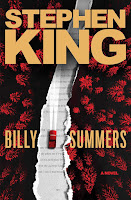
• Billy Summers, by Stephen King (Scribner)
• Harlem Shuffle, by Colson Whitehead (Doubleday)
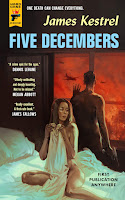
• Five Decembers, by James Kestrel (Hard Case Crime)
• The Dark Hours, by Michael Connelly (Little, Brown)
• Dream Girl, by Laura Lippman (Morrow)
• The Other Black Girl, by Zakiya Dalila Harris (Atria)
• The Man Who Died Twice, by Richard Osman (Pamela Dorman)
• Clark and Division, by Naomi Hirahara (Soho Crime)
• The Turnout, by Megan Abbott (Putnam)
• The Plot, by Jean Hanff Korelitz (Celadon)

Click here to read more about Easter’s interest in this subject and his surveying methodology. Note, too, that a similar diagnosis by Rap Sheet contributor Fraser Massey achieved a slightly different outcome, likely because of variations in the lists they consulted.

READ MORE: “Favorite Reads of 2021,” by Jeff Quest (Spy Write); “Raven’s Yearly Round Up 2021 and Top 10 of the Year,” by Jackie Farrant (Raven Crime Reads); “Book Review of 2021,” by Kate Atherton (For Winter Nights); “My Favorite Reads of 2021,” by Kathy Reel (The Reading Room); “Top Reads of 2021,” by L.J. Roberts (It Is Purely My Opinion); “Looking Back at 2021,” by Aubrey Hamilton (Happiness Is a Book); “Bill’s Best of Fiction for 2021,” by Bill Selnes (Mysteries and More from Saskatchewan).

Wednesday, December 29, 2021

This Year’s Critical Hits

By Fraser Massey
When presenting the list of their favorite 2021 crime, mystery, and thriller works a few weeks back, Washington Post critics Maureen Corrigan and Richard Lipez remarked on the range of settings and themes to be found amid their choices, and they pronounced that level of diversity to be fitting “for a year of so much uncertainty and a far higher than normal rate of social chaos.”

Contentiously, they went on to argue that the high quality of the cream of the novels published over these last dozen months demonstrated “a level of talent and craftsmanship that can compete with any Golden Age of crime fiction.”

Maybe we have entered a new Golden Age. After spending the past few weeks consulting the multiple 2021 “bests” lists submitted by critics covering this field across the globe (those sources are spelled out at the end of this post), I must agree with Corrigan and Lipez about the excellence and variety of titles put forward.

In our now annual quest to determine which novels from this genre were most often recommended (see 2020’s story here), we found that some of the titles being regularly acclaimed this year were by writers previously unknown to us, such as James Kestrel and Abigail Dean. However, there were also many familiar and much-loved wordsmiths once more presenting high-quality fiction.

Topping the chart for the second year in a row—and again by a considerable distance ahead of all other contenders—is S.A. Cosby, who himself was a relative unknown when his slice of southern U.S. noir, Blacktop Wasteland, turned him into the darling of the critics last year.

The latest by “Shawn” Cosby, who, when he’s not writing drives a hearse for his wife’s funeral home in Virginia, is Razorblade Tears. It’s a multi-layered buddy-buddy tale of two ex-cons—one black, one white—who are thrown together on a dangerous quest. Appropriately for these post-woke days, there’s a 21st-century twist to what links those protagonists, Ike Randolph and Buddy Lee Jenkins. Their sons made up a gay, married couple who were killed in what appears to have been a hate crime. Randolph and Jenkins find they must band together in their bid to exact vengeance, and also to confront their own prejudices along the way.

That book’s place at the top of our 2021 list of the 10 most critically acclaimed crime novels seems particularly timely.
1. Razorblade Tears, by S.A. Cosby (Flatiron [U.S.], Headline [UK]) “has unexpected depth for such a violent, confrontational book,” wrote Lesa Holstine in her Library Journal review.
2. Five Decembers, by James Kestrel (Hard Case Crime [U.S., UK]). The Rap Sheet’s own Jim Napier was among the numerous fans of Hawaii-based attorney Kestrel’s debut mystery yarn. His review described it as “a sweeping saga of love, hate, innocence, and evil, consummately told.”
3. Billy Summers, by Stephen King (Scribner [U.S.], Hodder & Stoughton [UK]). Geoffrey Wansell, in Britain’s Daily Mail, hailed veteran novelist King’s tale of a hit man’s last job as “a thriller that tugs at the heart-strings.”
4. Harlem Shuffle, by Colson Whitehead (Doubleday [U.S.], Fleet [UK]).
5. The Dark Hours, by Michael Connelly (Little, Brown [U.S.], Orion [UK]).
6. Slough House, by Mick Herron (Soho Crime [U.S.], John Murray [UK]).
7. Silverview, by John le Carré (Viking [U.S., UK]).
8. Girl A, by Abigail Dean (Viking [U.S.], HarperCollins [UK]).
9 (tie). Clark and Division, by Naomi Hirahara (Soho Crime [U.S.]).
9 (tie). Velvet Was the Night, by Silvia Moreno-Garcia (Del Rey [U.S.], Jo Fletcher [UK]).
As is so often the case—even today, when women are gaining overdue recognition for their contributions to our favorite genre—this assessment is dominated by male writers.

Our inventory also poignantly features the final, short novel by that master of the espionage thriller, John le Carré, who died in December 2020. His Silverview was published posthumously, after being discovered among the great man’s papers by le Carré’s son Nick Cornwell (aka Nick Harkaway), who readied it for publication.

We thank Cornwall and all of the other writers featured on the list above for providing us with so much wonderful material to read during these difficult times.

CrimeReads senior editor Molly Odintz recently waxed poetic, while introducing one that site’s manifold “best of the year” lists, writing: “As we’ve sleepwalked through the second year of the pandemic, lucid dreaming our way through endless possibilities in the midst of endless isolation, these authors have sought to capture the highs and lows, perils and opportunities, of a changing world.”

Long may they continue to do so.

* * *

Our top-10 register for 2021 was compiled from choices made by our own Rap Sheet contributors, as well as those from crime fiction, mystery, and thriller critics published by the following print publications and digital sites (all are U.S.-based unless otherwise stated): CrimeReads, Daily Express (UK), Daily Mail (UK), The Daily Telegraph (UK), Deadly Pleasures Mystery Magazine, Esquire, Financial Times (UK), The Globe and Mail (Canada), Good Housekeeping, The Guardian (UK), The Irish Times (Ireland), Library Journal, Literary Review (UK), Marie Claire, Milwaukee Journal Sentinel, The New York Times, New Zealand Listener, South Florida Sun-Sentinel, The Spectator (UK), The Sunday Times (UK), Time, The Times (UK), The Wall Street Journal, and The Washington Post.

Special thanks are owed to editor George Easter of Deadly Pleasures. Without his tireless efforts to list so many writers’ “best of” recommendations on his splendid Web site, the task of creating this year’s Rap Sheet tally would have proved impossible.

Our top-10 chart ranks the most frequently chosen books in order of the number of times they appeared on critics’ lists. In the event of a tie for places on the chart, the novels that appeared highest in any lists where rankings were published were given precedence (whenever possible). Titles selected, which were released in either the U.S. or UK prior to the start of 2021, were omitted from the calculations.

READ MORE: “Favorite Books of 2021,” by Lesa Holstine (Lesa’s Book Critiques); “My Books of 2021,” by Kate (The Quick and the Read); “Brad’s Best Reads of 2021,” by Brad Friedman (Ah Sweet Mystery Blog); “Top Five Books of 2021,” by both CrimeFictionLover and Erin Britton (Crime Fiction Lover); “The Very Best Reads of the Second Plague Year,” by Brian Busby (The Dusty Bookcase).

Thursday, December 23, 2021

Attention Grabbers

• Deadly Pleasures’ George Easter points me toward a very entertaining, 90-minute podcast discussion of this year’s top crime and mystery novels, organized by Crime Time and with Barry Forshaw serving as master of ceremonies. The “august” panelists are novelist-critic Laura Wilson, Crime Writers’ Association chair Maxim Jakubowski, Shots blogger and critic Ayo Onatade, Daily Telegraph crime-fiction critic Jake Kerridge, novelist-podcast presenter Victoria Selman, and critic-podcast editor Paul Burke. Easter compiled at least most the titles of the recommended books here.

• Thanks, too, to Elizabeth Foxwell of The Bunburyist for drawing my attention to a soon-upcoming exhibition in New York City titled “Sherlock Holmes in 221 Objects.” Among the rarities to be included—all drawn from the “preeminent collection assembled by Glen S. Miranker”—will be “leaves from The Hound of the Baskervilles; four short story manuscripts; original artwork by the British and American illustrators who created Sherlock’s iconic look for readers; a wealth of holograph letters from Arthur Conan Doyle to friends, colleagues, and well-wishers; a fascinating cache of pirated editions; the only known salesman’s dummy for the U.S. Hound; an ‘idea book’ of Conan Doyle’s private musings in which he (in)famously penned ‘Killed Holmes’ on his calendar for December 1893; and a handwritten speech—never before displayed—with the author’s explanation for killing Holmes …” “Sherlock Holmes in 221 Objects” will open on January 21, 2022, at Manhattan’s Grolier Club, and continue through April 16.

• Shoot, I wish I had known, before scratching out this year’s Christmas wish list, that Harlan P. Halsey’s 1874 work Old Sleuth, the Detective: Or, The Bay Ridge Mystery, was being reissued. As Wikipedia explains, “The Old Sleuth, appearing in The Fireside Companion story paper beginning in 1872, was the first dime-novel detective and began the trend away from the western and frontier stories that dominated the story papers and dime novels up to that time. He was the first character to use the word sleuth to denote a detective, the word’s original definition being that of a bloodhound trained to track. He is also responsible for the popularity of the use of the word old in the names of competing dime novel detectives, such as Old Cap Collier, Old Broadbrim, Old King Brady, Old Lightning, and Old Ferret, among many others.” In his new introduction to this classic yarn, journalist Henry Stewart notes:
He’s not, by the way, a sleuth—his name is Sleuth. He lives in New York City, and he’s respected by the police but operates independently; the only times he interacts with official lawmen are when they’ve apprehended him, and he needs discreetly to reveal his identity to get back on the street. He’s a master of disguise; any character in this book might turn out to be him—and often does (maybe a few too many times). One critic called him “two-fisted, handsome, brilliant, strong and tough.” He was inspired by Allan Pinkerton, who soon rushed out his own chronicles of his private-detective career to compete.
I guess I’ll just have to pick this one up on my own dime.

• Shotsmag Confidential reports that Britain’s annual CrimeFest convention “is offering a bursary [or scholarship] for a crime fiction writer of colour to attend its festival next May. The bursary will cover the cost of a full Weekend Pass to the convention and a night’s accommodation at the Mercure Bristol Grand Hotel, and a guaranteed panel appearance. Eligible authors must have published at least one English-language book in traditional print by a British commercial publisher.” Applications are being accepted through January 30. Click here for additional information.

• Spy Command blogger Bill Koenig has compiled a (sadly long) register of people who “contributed to spy entertainment (or at least spy-related),” and died over the last 12 months.

Tuesday, December 21, 2021

No Shortage of Superlatives

We’re winding down quickly toward the end of this year, yet the pace at which “best books of 2021” lists are appearing hasn’t yet slackened. Shots reviewer and blogger Ayo Onatade issued her own crime-related selections this last weekend, in the following two categories.

Fiction:
• Sunset Swing, by Ray Celestin (Pan Macmillan)
• Razorblade Tears, by S.A. Cosby (Headline)
• The Last Thing to Burn, by Will Dean (Hodder & Stoughton)
• Bullet Train, by Kotaro Isaka (Vintage Press)
• True Crime Story, by Joseph Knox (Transworld)
• Dream Girl, by Laura Lippman (Faber and Faber)
• Edge of the Grave, by Robbie Morrison (Pan Macmillian)
• Black Drop, by Leonora Nattrass (Profile)
• Turf Wars, by Olivier Norek (Quercus)
• Winter Counts, by David Heska Wanbil Weiden (Simon & Schuster)

Non-fiction:
• Shadow Voices: 300 Years of Irish Genre Fiction: A History in Stories, by John Connolly (Hodder & Stoughton)
• We Own This City: A True Story of Crime, Cops and Corruption in an American City, by Justin Fenton (Faber and Faber)
• My Life as a Villainess: Essays, by Laura Lippman (Faber and Faber)
• The Reacher Guy, by Heather Martin (Little, Brown)
• Murder: The Biography, by Kate Morgan (Harper Collins)

She has more to say about the individual books here and here.

* * *

Abby Endler has posted her own top-10 choices of crime, mystery, and thriller fiction in her blog, Crime by the Book.

Best Book of 2021: 56 Days, by Catherine Ryan Howard (Blackstone)
Best Debut Thriller: My Sweet Girl, by Amanda Jayatissa (Berkley)
Best Plot Twist: Survive the Night, by Riley Sager (Dutton)
Best Setting: The Sanatorium, by Sarah Pearse (Pamela Dorman)
Best Dark Comedy: For Your Own Good, by Samantha
Downing (Berkley)
Best “Chiller”: The Lost Village, by Camilla Sten (Minotaur)
Best Action Thriller: Razorblade Tears, by S.A. Cosby (Headline)
Best Nordic Noir Series Installment: The Butterfly House, by Katrine Engberg (Gallery/Scout Press)
Best “Popcorn Read”: Shiver, by Allie Reynolds (Putnam)
Best Short Story Collection: The Jealousy Man, by Jo Nesbø (Knopf)

* * *

Elsewhere, CrimeReads continues to discover more subdivisions of releases worth highlighting in what has now become its “best of 2021” series: Lisa Levy champions what she says are the finest psychological thrillers of this year, while Molly Odintz focuses on outstanding speculative thrillers. And I don’t think anybody has spent more energy lately on collecting “bests” lists than George Easter, the editor of Deadly Pleasures Mystery Magazine. Over just the last couple of days, he’s posted crime/mystery picks from Marie Clare magazine, Bookreporter, and the Web site Stop, You’re Killing Me! He also directed me to a top-5 list from pseudonymous blogger Death Becomes Her at Crime Fiction Lover. Another CFL contributor, Rough Justice, put up his or her own selections this morning.

Friday, December 17, 2021

There’s Simply No Hope of Consensus

With just a week to go now before Christmas, we’re finally nearing the end of publications issuing their “best books of 2021” rolls.

CrimeReads is out with two new subgenre selections: “The Best International Crime Novels of 2021” and “The Best Noir Fiction of 2021.” Canada’s Globe and Mail newspaper promotes what it says are the best thrillers released over the last 12 months. During the course of an interesting interview with Goodreads, author Kellye Garrett (Hollywood Homicide, Like a Sister) reveals five of her favorite 2021 mysteries, including one that completely escaped my radar, Amita Murray’s cozyish Arya Winters and the Tiramisu of Death.

Reviewer and Crime Time FM podcast host by Paul Burke helps lead Crime Fiction Lover’s multipart coverage of “bests” with this top-five list that he says “reflects some to the diversity the genre encompasses.” And the digital weekly Air Mail, co-founded by former Vanity Fair editor Graydon Carter, has produced an “Eight Best Mystery Books of 2021” selection that includes Jean Hanff Korelitz’s The Plot, Sarah Moss’ Summerwater, and Linwood Barclay’s Find You First.

Oh, and former U.S. President Barack Obama’s favorite reads of the year list includes, among its 23 titles, one crime novel: Colson Whitehead’s Harlem Shuffle.

Thursday, December 16, 2021

Declan’s Declaration

Despite a paywall preventing non-subscriber access to Dublin’s Irish Times, we were able last week to bring you author-critic Declan Hughes’ nominations in that newspaper for the “Best Crime Fiction of 2021.” Now, thanks once more to George Easter, the editor of Deadly Pleasures Mystery Magazine, we can share Declan Burke’s top 11 selections, which featured in that same Times piece:

• Slough House, by Mick Herron (John Murray)
• The Favour, by Sarah Vaughan (Corvus)
• Watch Her Fall, by Erin Kelly (Hodder & Stoughton)
• Untraceable, by Sergei Lebedev (Apollo)
• The Cut, by Chris Brookmyre (Little, Brown)
• The Last Taxi Driver, by Lee Durkee (No Exit Press)
• The Nameless Ones, by John Connolly (Hodder & Stoughton)
• The Good Neighbours, by Sarah Langan (Titan)
• The Therapist, by Helene Flood (MacLehose Press)
• A Narrow Door, by Joanne Harris (Orion)
• The Killing Hills, by Chris Offut (No Exit Press)

Overall, a very sound list, with The Favour, The Last Taxi Driver, and The Good Neighbours being surprises—at least to me.

Wednesday, December 15, 2021

More Opinions from More Places

We now interrupt our own rollout of “favorite crime fiction of 2021” lists to bring you still more choices from other sources.

CrimeReads was evidently not happy with simply posting its list last week of what it says are “The Best Crime Novels of 2021.” Ever since, it has been segmenting off subcategories of this genre to champion. Thus we have been treated to Molly Odintz’s choices of “The Best Historical Crime Fiction of 2021” and the staff’s round-up of “The Best Espionage Novels of 2021,” with presumably more to come.

Critic-blogger Kristopher Zgorski is up with his “Top Reads of 2021” (including S.A. Cosby’s Razorblade Tears, Val McDermid’s 1979, and Óskar Guðmundsson’s The Commandments). Meanwhile, Literary Hub’s rundown of “The Best Reviewed Mystery and Crime Books of 2021” features Colson Whitehead’s Harlem Shuffle, John le Carré’s Silverview, Zakiya Dalila Harris’ The Other Black Girl, and more.

Finally, Jeff Popple, an Australian contributor to Deadly Pleasures Mystery Magazine, offers lists of his “Favourite Books of 2021” and what he asserts are “The Best Debut Novels of 2021.”

Monday, December 13, 2021

Favorite Crime Fiction of 2021: Our Turn

You may have noticed that for the last several weeks, The Rap Sheet has been collecting and posting the opinions of other print publications, Web sites, and blogs as to which crime novels were the “best” ones published this year. Those selections continue to roll in (CrimeReads just chose its “Best Debut Novels of 2021,” while BookBub is out with its “Best Mysteries and Thrillers of 2021” assessment), and we’ll do our best to keep you up to date on their appearances.

But now we’d like a say on this matter.

Beginning later this morning, The Rap Sheet’s various contributors, from both sides of the Atlantic Ocean, will present their own preferences of crime, mystery, and thriller works released over these last 12 months. After considerable ruminating and frequent last-minute changes, each of them has selected their five favorite books (primarily fiction, but with a couple of historical true-crime picks thrown in for good measure), plus five additional works they wholeheartedly recommend to other readers of this genre. We’ll continue rolling these lists out—one a day—over the coming week.

We hope you’ll enjoy these presentations, and will feel free to let us know along the way what other 2021 releases you believe are particularly deserving of attention.

Stay tuned.

Friday, December 10, 2021

Getting the Nod from Nolan

I’ve known Tom Nolan for more than two decades (ever since he contributed stories to January Magazine), but have never actually met that Los Angeles journalist. Over the years, I have learned to trust his judgment about crime fiction—and I’m not the only one who boasts such faith. He has written about this popular genre for The Wall Street Journal since 1990, and currently produces, among other stories, an annual list of his favorite crime novels for that paper.

Earlier this afternoon, the Journal posted Nolan’s 2021 “best of the year in mystery and crime fiction” selections on its Web site. Not being a Journal subscriber, however, I am firmly blocked from accessing it. So I e-mailed Nolan, asking for his 10-strong slate of picks, and he was kind enough to send along those titles. They are:

• The Dark Hours, by Michael Connelly (Little, Brown)
• Find You First, by Linwood Barclay (Morrow)
• The Judge’s List, by John Grisham (Doubleday)
• The Man Who Died Twice, by Richard Osman (Pamela Dorman)
• Mother May I, by Joshilyn Jackson (Morrow)
• The Plot, by Jean Hanff Korelitz (Celadon)
• Rizzio, by Denise Mina (Pegasus)
• Smoke, by Joe Ide (Mulholland)
• The Turnout, by Megan Abbott (Putnam)
• The Vanishing Point, by Elizabeth Brundage (Little, Brown)

There aren’t any great surprises here, though Find You First, Mother May I, Rizzio, and The Vanishing Point have not been frequently mentioned on other publications’ “best” rosters. Bottom line: These are solid choices, and you shouldn’t go wrong if you refer to them while holiday shopping for mystery lovers among your giftees.

Bullet Points: Caffeine-Powered Edition

Since I woke up way too early on this cold Friday morning, and am already halfway through my second cup of coffee, I might as well dive into some recent crime-fiction-related news.

• During this year’s Black Orchid Banquet, held on December 4 in New York City, it was announced that Washington, D.C., author Stephen Spotswood has won the 2021 Nero Award for his 2020 novel, Fortune Favors the Dead. The Nero is presented annually by the fan organization The Wolfe Pack to “the best American mystery written in the tradition of Rex Stout’s Nero Wolfe stories.” (Last year’s recipient was David Baldacci.) That same festive event saw Alexis Stefanovich-Thomson being given the 2021 Black Orchid Novella Award for her story “The Man Who Went Down Under,” published in the July 2022 issue of Alfred Hitchcock Mystery Magazine. The Black Orchid is sponsored jointly by The Wolfe Pack and AHMM and honors the novella format popularized by Stout. Honorable mentions for the Black Orchid went to “Bad Apples,” by Kathleen Marple Kalb (writing as Nikki Knight); “The Inside Shake,” by Jason Koontz; “House of Tigers,” by William Burton McCormick; “The Mystery of the Missing Woman,” by Regina M. Sestak; and “Lovely As,” by Jacqueline Vick.

• The Bookseller reports that “Dettie Gould has won the Harvill Secker Bloody Scotland Crime Writing Award with her ‘deliciously dark thriller’ The Light and Shade of Ellen Swithin. Her story follows Swithin, who is a skilled actuary in an accounting firm, a dutiful daughter, and a latent serial killer.” It adds that “Gould will have her book published under the Harvill Secker imprint, in a publishing deal with an advance of £5,000. She will also appear on a panel at the Bloody Scotland festival and receive a guest pass for the weekend’s events. The Arvon Foundation, which sponsored the competition, has also offered the winner the chance to attend any one of its creative writing courses.” (Hat tip to In Reference to Murder.)

• Crime Time FM, an interview podcast hosted by Paul Burke in affiliation with the Web site Crime Time, has named its first Crime Novel of the Year: S.A. Cosby’s Razorblade Tears (Headline). Receiving runner-up honors is Dominic Nolan’s Vine Street (Headline). Also shortlisted for this inaugural commendation were The Village of Eight Graves, by Seichi Yokomizo (Pushkin Press); The Turnout, by Megan Abbott (Faber & Faber); The First Day of Spring, by Nancy Tucker (Hutchinson); and Future Perfect, by Felicia Yap (Wildfire).

• While I have online subscriptions to both The New York Times and The Washington Post, I don’t enjoy similarly unfettered access to Dublin’s Irish Times. So I have not been able to look through that broadsheet’s recent “Best Crime Fiction of 2021” list. However, author-playwright Declan Hughes, who put the piece together along with fellow Irish writer Declan Burke, sent George Easter of Deadly Pleasures Mystery Magazine his 10 choices, via e-mail. They are:

— Dream Girl, by Laura Lippman
— The Survivors, by Jane Harper
— Hidden Lies, by Rachel Ryan
— Blood Ties, by Brian McGilloway
— A Man Named Doll, by Jonathan Ames
— Vera Kelly Is Not a Mystery, by Rosalie Knecht
— Palace of the Drowned, by Christine Mangan
— The Plot, by Jean Hanff Korelitz
— A Slow Fire Burning, by Paula Hawkins
— 56 Days, by Catherine Ryan Howard

• English professor Carole E. Barrowman offers her own roll of favorite mysteries in Wisconsin’s Milwaukee Journal.

• Speaking of “best” books, CrimeReads this morning posted its selections of “The Best True Crime Books of 2021.” I’m pleased to see that its 10 picks include Dean Jobb’s The Case of the Murderous Dr. Cream: The Hunt for a Victorian Era Serial Killer (Algonquin), a work I consumed in a captivated rush this last summer.

• Another CrimeReads piece worth noticing: Keith Roysdon’s tribute to the 1967-1975 TV detective drama Mannix, which starred Mike Connors. As Roysdon writes:
Sure, there have been cool P.I.s (Craig Stevens’ “Peter Gunn” with Henry Mancini’s theme music, full of smooth menace) and affably hot P.I.s (our boy Thomas Magnum) and cerebral consulting detectives (“Sherlock”) and the most charming, hard-luck P.I. on the California coast (“This is Jim Rockford, at the tone leave your name and message …”)

But as far as a play-it-straight-down-the-middle investigator who could take a blow to the head and come back swinging, nobody topped Mike Connors’ “Mannix.” And the show had a hell of a theme too, by Lalo Schifrin.
Roysdon’s full article can be found here. Click here if you’re interested in my own comments on that CBS-TV series.

• Television tidbits: Veronica Mars alumna Kristen Bell has a new psychological thriller coming to Netflix on January 28, The Woman in the Street, a trailer for which can be enjoyed in The Killing Times. And Deadline brings word that “Jo Nesbø’s Headhunters is returning to screens, this time as a TV series for Sweden’s C More and TV2 Norway starring Betrayed’s Axel Bøyum and Mr. Robot’s Martin Wallström. … Headhunters, which was made into a highly-rated Norwegian film 10 years ago … follows a headhunter lying and manipulating his way to success both in his career and in his love life. But one lie leads to another, and soon he is so entangled in his own stories that it becomes a danger to both himself and the people around him.”

• There have been far too many deaths among members of the crime-fiction community lately. The Gumshoe Site mentions one that I somehow missed: “Gordon McAlpine died on November 29. The former college writing teacher wrote his first novel, Joy in Mudville (Dutton, 1989), set in 1930s Chicago’s Wrigley Field. Woman with a Blue Pencil (Seventh Street Books, 2015) was nominated for the 2016 Edgar Award for best paperback. He used his pseudonym Owen Fitzstephen to write Hammett Unwritten (2013) and The Big Man’s Daughter (2020; both from Seven Street Books). The last two novels feature Dashiell Hammett and some people on whom Hammett modeled … the colorful characters in The Maltese Falcon. He was 62.”

• I’m tardy in bringing attention to a pair of posts focused on this year’s Iceland Noir festival (November 16-20), but I don’t want to just let them go unmentioned. Kristopher Zgorski’s report is in BOLO Books; Abby Endler’s recollections are in Crime by the Book.

• Randal S. Brandt, a friend of this blog and a librarian at the University of California Berkeley’s Bancroft Library, was profiled last month in the San Jose Mercury News because of his labors as curator of the Bancroft’s massive California Detective Fiction Collection. The story includes news that Mark Coggins, a Stanford University graduate and infrequent Rap Sheet contributor, added “a complete set of [Raymond] Chandler and [Dashiell] Hammett first editions” to the collection. Explains the News’ Chuck Barney: “Coggins, known for his August Riordan private eye novels, which are also in the Bancroft collection, had been acquiring the books since the early ’90s. He viewed himself as ‘sort of a custodian.’”

• Finally, yesterday’s episode of Terry Gross’ Fresh Air radio program focused on crime of a different sort—and a truly frightening scenario: the end of American democracy, engineered by Donald Trump’s Republican Party. “In a new article titled ‘Trump’s Next Coup Has Already Begun,’ published in The Atlantic,” she told listeners, “my guest, journalist Barton Gellman, warns January 6 was just practice. We face a serious risk that American democracy as we know it will come to an end in 2024. The attempt by Trump and other Republicans to overturn the results of the 2020 election failed. But Gellman reports that Republicans have been building an apparatus for election theft. They’ve studied Trump’s crusade to overturn the 2020 results. They’ve noted points of failure and have taken steps to avoid failure next time by working to change whose votes are counted, who oversees the election, who chooses the electors and what happens in the courts.” You can listen to the whole interview here. If you’re an Atlantic subscriber, you can read Gellman’s article here.

Thursday, December 09, 2021

CrimeReads, Goodreads, and Top Reads

It was only a matter of time before the excellent Web site CrimeReads weighed in on the subject of this year’s supposedly “best” crime, mystery, and thriller works. Here are its top 10 choices:

• Bath Haus, by P.J. Vernon (Doubleday)
• The Turnout, Megan Abbott (Dutton)
• Harlem Shuffle, by Colson Whitehead (Doubleday)
• The Collective, by Alison Gaylin (Morrow)
• Velvet Was the Night, by Silvia Moreno-Garcia (Del Rey)
• Dream Girl, by Laura Lippman (Morrow)
• Razorblade Tears, by S.A. Cosby (Flatiron)
• Clark and Division, by Naomi Hirahara (Soho Crime)
• The House of Ashes, by Stuart Neville (Soho Crime)
• By Way of Sorrow, by Robyn Gigl (Kensington)

The editors suggest that we “check back in the coming days for more of the Best Books of 2021.” There’s no telling how much more click-worthy material they can squeeze from this popular subject.

* * *

Meanwhile, Goodreads says that The Last Thing He Told Me, by Laura Dave (Simon & Schuster), has won its 2021 Choice Award in the Mystery & Thriller category, with 58,406 public votes. Here are the five runners-up for that title, and the number of votes for each:

• The Maidens, by Alex Michaelides (Celadon) — 49,829 votes
• Billy Summers, by Stephen King (Scribner) — 47,847 votes
• The Push, by Ashley Audrain (Pamela Dorman) — 39,069 votes
• Arsenic and Adobo, by Mia P. Manansala (Berkley) — 28,263 votes
• Harlem Shuffle, by Colson Whitehead (Doubleday) — 26,200 votes

The full results of this year’s contest can be found here.

* * *

Elsewhere on the “favorite reads of the year” front, the UK’s Grab This Book champions such crime-fiction releases as Olivia Kiernan’s The Murder Box, Joseph Knox’s True Crime Story, Rod Reynolds’ Black Reed Bay, and Fiona Erskine’s Phosphate Rocks (a yarn that had escaped my attention before this week). Steve Donoghue, who often reviews books for The Christian Science Monitor and The Washington Post, turns thumbs up on Nicholas Meyer’s The Return of the Pharaoh, James R. Benn’s Road of Bones, Dorothy St. James’ The Broken Spine, and Sujata Massey’s The Bombay Prince. Finally, Good Housekeeping magazine mentions several mysteries among its “55 Best New Books to Read in 2021,” including Ashley Audrain’s The Push, Sarah Penner’s The Lost Apothecary, and Colson Whitehead’s Harlem Shuffle.

(Hat tip to Deadly Pleasures Mystery Magazine.)

Wednesday, December 08, 2021

Cogdill Puts in Her Two Cents

Well-known critic Oline H. Cogdill, from the South Florida Sun-Sentinel, today named her favorite 2021 works in the crime, mystery, and thriller fields. Those titles are broken down into four categories.

Best Mysteries:
• The Turnout, by Megan Abbott (Putnam)
• The Collective, by Alison Gaylin (Morrow)
• The Dark Hours, by Michael Connelly (Little, Brown)
• These Toxic Things, by Rachel Howzell Hall (Thomas & Mercer)
• Razorblade Tears, by S.A. Cosby (Flatiron)
• 1979, by Val McDermid (Atlantic Monthly)
• Dream Girl, by Laura Lippman (Morrow)
• The Perfume Thief, by Timothy Schaffert (Doubleday)
• Clark and Division, by Naomi Hirahara (Soho Crime)
• Lightning Strike, by William Kent Krueger (Atria)
• The Survivors, by Jane Harper (Flatiron)
• These Silent Woods, by Kimi Cunningham Grant (Minotaur)
• Palace of the Drowned, by Christine Mangan (Flatiron)
• What’s Done in Darkness, by Laura McHugh (Random House)
• The Lost Village, by Camilla Sten (Minotaur)
• Hairpin Bridge, by Taylor Adams (Morrow)
• Velvet Was the Night, by Silvia Moreno-Garcia (Del Rey)
• When Ghosts Come Home, by Wiley Cash (Morrow)
• The Neighbor’s Secret, by L. Allison Heller (Flatiron)
• Pickard County Atlas, by Chris Harding Thornton (Bantam)

Best Debuts:
• Who Is Maud Dixon? by Alexandra Andrews (Little, Brown)
• Girl A, by Abigail Dean (Viking)
• The Other Black Girl, by Zakiya Dalila Harris (Atria)
• My Sweet Girl, by Amanda Jayatissa (Berkley)
• Arsenic and Adobo, by Mia P. Manansala (Berkley Prime Crime)
• Mango, Mambo, and Murder, by Raquel V. Reyes (Crooked Lane)
• All Her Little Secrets, by Wanda M. Morris (Morrow)

Best Short Story Collections:
• The Great Filling Station Holdup: Crime Fiction Inspired by the Songs of Jimmy Buffett, edited by Josh Pachter (Down & Out)
• Midnight Hour: A Chilling Anthology of Crime Fiction from 20 Authors of Color, edited by Abby L. Vandiver (Crooked Lane)

Best Non-fiction:
How to Write a Mystery: A Handbook from Mystery Writers of America, edited by Lee Child and Laurie R. King (Scribner)

Looking over Cogdill’s numerous choices compels me to reassess what I thought had been my rather extraordinary success in reading broadly within this genre over the last dozen months. There are too many books that I never found time enough to tackle. Sigh …

Tuesday, December 07, 2021

And the Hits Just Keep on Coming

New York Times critic Sarah Lyall posted her top-10 list of 2021 thrillers yesterday. This morning brings us (at least online) Times crime-fiction columnist Sarah Weinman’s “Best Mystery Novels of 2021” offerings. Her 11 new novels are:

• Dead Dead Girls, by Nekesa Afia (Berkley)
• Who Is Maud Dixon? by Alexandra Andrews (Little, Brown)
• Razorblade Tears, by S.A. Cosby (Flatiron)
• U Up? by Catie DiSabato (Melville House)
• Five Decembers, by James Kestrel
(Hard Case Crime)
• Clark and Division, by Naomi Hirahara (Soho Crime)
• How to Find Your Way in the Dark, by Derek B. Miller (Houghton Mifflin Harcourt)
• Velvet Was the Night, by Silvia Moreno-Garcia (Del Rey)
• The Man Who Died Twice, by Richard Osman (Pamela Dorman/Viking)
• The Comfort of Monsters, by Willa C. Richards (Harper)
• Murder Under Her Skin, by Stephen Spotswood (Doubleday)

In the latest edition of her e-mail newsletter, The Crime Lady, Weinman explains that “I wanted this favorite books piece to be a guide, in some way, to my past year in reading as well as what I’m planning for the column in 2022 and beyond. I’m always eager to see series mysteries of every stripe and subgenre, and reissues are absolutely my jam. Psychological suspense will mostly be given space elsewhere (though I’ll be reading many of them anyway, I suspect.) And if a book is eligible for the Best Critical/Biographical Edgar award category, I am very interested as well.”

* * *

British author-critic Natasha Cooper presents her eight “crime novels of the year” selections on the Literary Review Web site:

• Phosphate Rocks, by Fiona Erskine (Sandstone Press)
• Edge of the Grave, by Robbie Morrison (Macmillan)
• Bullet Train, by Kotaro Isaka (Harvill Secker)
• The Waiter, by Ajay Chowdhury (Harvill Secker)
• The Hunt and the Kill, by Holly Watt (Raven)
• Black Drop, by Leonora Nattrass (Viper)
• The Russian Doll, by Marina Palmer (Hodder & Stoughton)
• The First Day of Spring, by Nancy Tucker (Hutchinson)

Goodness, I think this is the first such roll I have seen that includes no books I read during these last 12 months. However, Black Drop was already on my Christmas wishlist.

(Hat tip to Fraser Massey.)

* * *

Deadly Pleasures Mystery Magazine has issued 11 lists of crime, mystery, and thriller favorites from this last year, from that same number of its regular critics. I shan’t post all of them here (and will allow leave Ali Karim to make extended comments in The Rap Sheet next week), but below are two collections of particular note. Let’s start off with UK novelist and Shots columnist Mike Ripley’s picks.

Best Crime Fiction:
• Razorblade Tears, by S.A. Cosby (Headline)
• Girl A, by Abigail Dean (HarperCollins)
• Garden of Angels, by David Hewson
(Severn House)
• The April Dead, by Alan Parks (Canongate)
• The Trawlerman, by William Shaw (Riverrun)
• The Dark Remains, by William McIlvanney and Ian Rankin (Canongate)
• The Killing Hills, by Chris Offutt (No Exit Press)
• Turf Wars, by Olivier Norek (MacLehose Press)

Best Thrillers:
• Triple Cross, by Tom Bradby (Bantam Press)
• How to Betray Your Country, by James Wolff (Bitter Lemon Press)
• The Mercenary, by Paul Vidich (No Exit Press)
• The Cover Wife, by Dan Fesperman (Head of Zeus)
• Red Traitor, by Owen Matthews (Bantam Press)
• Judas 62, by Charles Cumming (HarperCollins)

Best Re-issue of the Year:
The Passenger, by Ulrich Alexander Boschwitz (Pushkin Press)

To a somewhat lesser extent than Ripley’s list, the following one—from DP editor George Easter—contains a number of the same books I enjoyed over the course of this year.

Best Novel:
• Five Decembers, by James Kestrel (Hard Case Crime)
• Razorblade Tears, by S.A. Cosby (Flatiron)
• Billy Summers, by Stephen King (Scribner)
• We Begin at the End, by Chris Whitaker (Henry Holt)
• The Dark Hours, by Michael Connelly (Little, Brown)
• Dead Ground, by M.W. Craven (Constable)
• The Trawlerman, by William Shaw (Riverrun)
• The Housemate, by Sarah Bailey (Allen & Unwin)

Best First Novel:
• Steel Fear, by Brandon Webb and John David Mann (Bantam)
• Suburban Dicks, by Fabian Nicieza (Putnam)
• Falling, by T.J. Newman (Avid Reader Press)

Best Paperback Original:
• The Hunted, by Gabriel Bergmoser (HarperCollins)
• Black Coral, by Andrew Mayne (Thomas & Mercer)
• The Good Turn, by Dervla McTiernan (Blackstone)
• How to Kidnap the Rich, by Rahul Raina (Harper Perennial)
• Bound, by Vanda Symon (Orenda)

Best Thriller:
• Slough House, by Mick Herron (Soho Crime)
• Dead by Dawn, by Paul Doiron (St. Martin’s Press)
• The Island, by Ben Coes (St. Martin’s Press)
• Savage Road, by Chris Hauty (Simon & Schuster)
• Island Reich, by Jack Grimwood (Michael Joseph)

Finally, Deadly Pleasures has posted the 2021 crime-fiction selections from two other publications, Esquire and Time magazines.