Showing posts with label Stephen Miller. Show all posts

Monday, December 19, 2022

Favorite Crime Fiction of 2022,
Part IV: Stephen Miller

Stephen Miller was a regular contributor to Mystery News, writing the “In the Beginning” column about new crime-fiction writers for several years. He has also penned posts for The Rap Sheet and reviews for January Magazine. Originally from Central Ohio, Miller now makes his home in Massachusetts with his wife, Leslie, and spends his days as an independent consultant in the insurance industry and as an on-air host at public radio station WICN-FM.

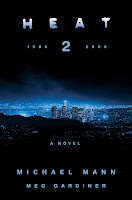
• Heat 2, by Michael Mann and Meg Gardiner (Morrow):

I’m one of those people who consistently rolls his eyes whenever he hears the word “prequel”. Even though I have been pleasantly surprised from time to time (Exhibit A: AMC-TV’s Better Call Saul), I always consider this to be an especially heavy lift. That was certainly the way I felt when I learned that Michael Mann and Meg Gardiner would be releasing Heat 2, based on the best heist movie of all time.

In fact, Heat 2 is a prequel and a sequel. Mann and Gardiner toggle between what occurred before the action of the 1995 film as well as what came after. Readers see inside the Neil McCauley crew, the scores they took down in Chicago before arriving in Los Angeles, as well as what became of thief Chris Shiherlis (played by Val Kilmer), the only principal character—SPOILER ALERT!—who survived the end of the iconic film.

Shiherlis, consumed with guilt and anger over the demise of his partner McCauley, and vowing revenge upon LAPD Lieutenant Vincent Hanna (Al Pacino), has been spirited out of L.A. to the ultimate free-trade zone of South America, working for a Taiwanese crime syndicate, and ultimately joining an international cartel that extends to Asia.

Running parallel to this is the backstory of not only the McCauley gang, but also of Vincent Hanna, the obsessed hunter of robbery crews. We learn about his origins in Chicago and his pursuit of one particularly sadistic gang, which specializes in breaking into affluent homes while their residents are sure to be present.

This novel has much to recommend it, the most impressive component being how Mann and Gardiner are able to revisit and inhabit the characters created for a single film nearly three decades ago. The cadences of Hanna’s dialogue sound just like Pacino’s rhythm in the movie, and the novel’s set pieces can easily be visualized with Mann’s signature directorial haze-and-darkness style. Supporting characters such as those played in the picture by Danny Trejo and Jon Voight are on hand. You wouldn’t ever want to run into those characters in a darkened alley, or inside a bank, but from the safety of your favorite reading chair, it’s fun to reconnect.

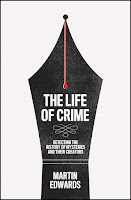
• The Life of Crime: Detecting the History of Mysteries and Their Creators, by Martin Edwards (Collins Crime Club):

The current renaissance in classic detective fiction owes a great deal to British author Martin Edwards. In addition to being a first-rate novelist and short story writer, Edwards is president of the Detection Club, a frequent anthologist, and the creator of some of the most noteworthy crime-fiction historical documents of recent years. The Golden Age of Murder won him a trophy case full of awards following its publication in 2015. Howdunit, his master class in mystery construction, was warmly received in 2020. Now comes the culmination of decades of writing and reading: The Life of Crime.

Dipping into this book can be a bit intimidating. At more than 600 pages long (not including its bibliography and indices), and spanning 55 chapters, the breadth and depth of the work is staggering. It seems that no one of significance has escaped Edwards’ attention and erudition. Covering English, American, and international authors, books and themes, The Life of Crime is both an exhilarating survey course and a graduate-level seminar in the genre. And yet, despite its length and level of detail, the book is immensely readable. By taking the reader’s hand in his collegial style, Edwards almost lets you believe it was you who discovered such bygone writers as Frank Froest and Anthony Wynne (the latter being a Scottish enthusiast of the locked-room mystery—a specialty of this book). While there are some readers, I suppose, who will tackle The Life of Crime cover to cover as they would a novel, I preferred to consume a handful of chapters a week as an appetizer to whatever else I was enjoying. This allowed me to remember that crime fiction is a continuum, stretching from the past to today. By conveying its treasures in such delightful fashion, Edwards guarantees his book’s place in the pantheon of popular-culture historical works.

Other 2022 Favorites: An Honest Living, by Dwyer Murphy (Viking); and Dangerous Rhythms: Jazz and the Underworld, by T.J. English (Morrow).

Monday, November 30, 2020

Favorite Crime Fiction of 2020,
Part I: Stephen Miller

Stephen Miller was a regular contributor to Mystery News, writing the “In the Beginning” column about new crime-fiction writers for several years. He has also penned posts for The Rap Sheet and reviews for January Magazine. Originally from Central Ohio, Miller now makes his home in Massachusetts with his wife, Leslie, and spends his days working in the insurance industry.

• Winter Counts, by David Heska Wanbli Weiden (Ecco):

Virgil Wounded Horse is the local enforcer on the Rosebud Indian Reservation in South Dakota. He’s the court of final appeal, the reservation distributor of retribution in a world of selectively enforced laws. When crimes against Native Americans are too small to interest the feds, and home-cooked justice turns a blind eye, Virgil is the one people call, to track down the bad guys and deliver some personalized punishment. Such is the premise of Winter Counts, the propulsive debut crime novel by David Heska Wanbli Weiden. When a tribal official approaches Virgil to investigate and rid the rez of a growing heroin problem, the appeal lies primarily in settling a long-overdue score with one of Virgil’s childhood antagonists, a courier within a mini-cartel out of Denver. But then, Virgil’s 14-year-old nephew, Nathan, accidentally overdoses on his first sample of smack and is arrested after too many opioids are found in his school locker. That’s all it takes for this mission to become far more personal. Virgil juggles his responsibilities to his community, his nephew, and his own sense of justice while navigating criminal lawyers, the tribal elders, and the feds who are incapable of executing on the sting that they have only haphazardly planned.

The hook of this novel is that it takes place largely on tribal land with an almost exclusive Native American cast of characters. That’s a good start, but what keeps the pages turning is the slow crescendo of action, with Virgil trying not to become overwhelmed in hopelessness as matters seem beyond anyone’s control. Despite his profession as hired muscle, Virgil is emblematic of his people and their desire to be allowed to peacefully go about their lives. It’s a conflict that makes for a gripping read.

• Blacktop Wasteland, by S.A. Cosby (Flatiron):

For my money, the strongest debut novel of the year is Blacktop Wasteland, by S.A. Cosby, a turbo-charged tale combining the best of Richard Stark, James Sallis, and George V. Higgins. If you like your noir crime fiction burying the accelerator at 120 miles an hour, this is the ride you’ve been looking for.

Close to nothing is going right for Beauregard “Bug” Montage. His teenage daughter is heading to college with no means to pay for her schooling, Bug’s body shop is losing business since a cut-rate competitor moved into town, and his mother got caught scamming her Medicaid-funded nursing home and is facing near-immediate eviction. It’s enough to make a guy take off and never return, which is what Bug’s father did back in the day. So, what does the best car mechanic and wheel man in the American South decide to do? Toss his better judgment out the driver’s-side window and take on one more job being run by a doofus covered in Elvis Presley tattoos.

Of course, the jewelry store heist goes sideways faster than a hydroplaning Buick. Not only was a civilian shot, but the store is a front for a crime lord who is willing to forgive the theft of his diamonds and the police attention it brought if Bug and the crew will pull one job to erase the debt: relieve his competition of a truckload of platinum.

Blacktop Wasteland is a tour-de-force, a ’65 Mustang with power and style to spare. The plot rockets forward, and the collection of characters, both high and low, haven’t been seen since the last Elmore Leonard tale. Take this one out for a spin.

• These Women, by Ivy Pochoda (Ecco):

Under normal circumstances, I avoid serial-killer novels. I often find them sacrificing any level of literary merit in favor of cheap thrills and high-gloss gore. But these days aren’t normal and Ivy Pochoda is not a writer plumbing the lowest common denominator. So, based on her track record, I reached for her fourth novel, These Women, after seeing rapturous reviews. Boy, were they right.

Pochoda’s twist on the serial-killer subgenre is to tell the story from the point of view of the killer’s prey, all found in the freeway-divided West Adams area of Los Angeles in 2014. It’s a quintessential transitional neighborhood, once containing upper-middle-class homes, but now home to strip malls and food trucks. It’s in this environment that someone was preying on sex workers years ago, went back underground after eluding detection, and now seems to be back on the scene, murdering again as though just awake from a long nap. The police aren’t connecting the dots and the victims are on the margins of society, not attracting much in the way of attention by anyone except the killer. This novel is structured as a series of interconnected stories, with characters from one narrative passing in the background of another. It is this technique that allows the reader to understand the ecosystem of the culture “these women” occupy. There are numerous ways this novel could have crashed, but under Pochoda’s steady hand, it seems natural and effortless.

• Columbus Noir, edited by Andrew
Welsh-Huggins (Akashic):


It was inevitable that this kid from Central Ohio was going to pick up Columbus Noir, one of the new entries in the iconic globetrotting series from Akashic Books. Edited by Andrew Welsh-Huggins (an occasional Rap Sheet contributor), this anthology presents 14 tales from distinct neighborhoods and suburbs of the Buckeye State capital.

While Columbus Noir brings us stories by rising stars of the crime-fiction world (Edgar nominees Craig Macdonald and Robin Yocum, together with Shamus Award winner Kristen Lepionka), there’s also a nice handful of writers who were previously unknown to me. I was pleased as well to see that Welsh-Huggins avoids allowing the stories to drift into the suburbs, instead focusing on the unique neighborhoods around the central city. One story in particular, “The Luckiest Man Alive,” by Pulitzer Prize finalist Lee Martin, takes place in a sliver of the west side barely known by outsiders—the Italian enclave of San Margherita, home to marble quarries, adult book shops, a bar literally by the railroad tracks, and St. Margaret of Cortona Catholic Church. Martin’s is the strongest story in this collection, and much of that has to do with its setting.

Like many anthologies, this is a mixed bag of the excellent and the serviceable. There is also a tendency to checkmark landmarks more to demonstrate authenticity than to actually add to the story, but overall this entry in Akashic’s signature series is solid and brings attention to a growing metropolis that is claiming homegrown crime-fiction talent. Columbus may not be as exotic as Belfast, Havana, or Baghdad, but this collection demonstrates that it is equally as sinister.

Finally, one work from the non-fiction stacks …

• Scandinavian Noir: In Pursuit of a Mystery, by Wendy Lesser (Farrar, Straus and Giroux):

Prior to reading Scandinavian Noir: In Pursuit of a Mystery, I had known Wendy Lesser as the editor of The Threepenny Review and the author of a terrific biography of architect Louis Kahn. What I learned in the midst of reading her latest book was that what she doesn’t know about Scandinavian crime-fiction writers isn’t worth knowing. Scandinavian Noir is the book-length essay by a close and passionate reader of a subgenre of which I am embarrassingly ignorant. Not any longer. If, like me, you haven’t stuck your toe into this particular fjord, Lesser’s enthusiasm is your passport to all things Swedish, Danish, and Norwegian in crime fiction.

The first half is a glossary of terms and features weaving in various aspects (tropes?) of the crime novel. For example, under “Alcohol,” Lesser writes, “I can’t think of a single Scandinavian mystery I’ve read that does not, somewhere in its pages, refer to alcohol consumption, and most of them refer to it as a noticeable welfare or health problem, even when the characters themselves are happily enjoying their drinks.” Other headings are “Isolation,” “Narrative,” “Religion,” and 22 more. The second half of this book, by contrast, is a travelogue in which Lesser visits these three countries to see how the real Norway, Denmark, and Sweden stack up against the settings depicted in the books. This half is written in third person, a little jarring at first, but trust me, it ultimately works.

Lesser is an unabashed fan of Per Wahlöö and Maj Sjöwall’s 10-book series featuring Martin Beck. She pulls no punches on the subject of another author, Karin Fossum, calling her a sadist, and is borderline obsessed with the 1986 assassination of Swedish Prime Minister Olof Palme (the repercussions of which she sees in every Swedish novel). You may not agree with all of her conclusions, but her passion is infectious, and she will send you in search of new authors. A great achievement.

Other 2020 Favorites: Eight Perfect Murders, by Peter Swanson (Morrow); City of Margins, by William Boyle (Pegasus); The Big Goodbye: Chinatown and the Last Years of Hollywood, by Sam Wasson (Flatiron); Unspeakable Acts: True Tales of Crime, Murder, Deceit and Obsession, edited by Sarah Weinman (Ecco); and Howdunit: A Master Class in Crime Writing by Members of the Detection Club, edited by Martin Edwards (Collins Crime Club).

Sunday, December 17, 2017

Favorite Crime Fiction of 2017,
Part IV: Stephen Miller

Stephen Miller was a regular contributor to Mystery News, writing the “In the Beginning” column about new crime-fiction writers for several years. He has also penned posts for The Rap Sheet and reviews for January Magazine. Originally from Central Ohio, Miller now makes his home in Massachusetts with his wife, Leslie, and spends his days working in the insurance industry.

• Bluebird, Bluebird, by Attica Locke (Mulholland):
Attica Locke’s fourth novel (following Pleasantville, which won the 2016 Harper Lee Prize for Legal Fiction) is a masterpiece. Bluebird, Bluebird is a crackling police procedural set in rural East Texas in the present day. Texas Ranger and law school dropout Darren Matthews is on suspension after testifying before a grand jury on what could well have been a calculated murder committed by one of his friends. While cooling his heels waiting to see if an indictment is handed down, Matthews is talked into investigating a pair of murders in a small town that may be related and appear to have been racially motivated. One victim was an African-American Chicago lawyer who wandered into a roughneck bar known to be an Aryan Brotherhood hangout; the second was the hapless wife of one of the ex-con Aryans. When the Chicago victim’s estranged wife arrives on the scene, followed by a television reporter, the tensions escalate and the secrets refuse to stay buried. Much of the action takes place in a diner owned by Geneva Sweet, the acknowledged matriarch of the local African-American community who has, over the years, buried both her husband and son, neither of whom met natural ends. Watching over Geneva, both literally and figuratively, is Wallace Jefferson III, the head of the current generation of the white family who calls all the shots in this backwater county. Reviews of Bluebird, Bluebird have centered on the locale of Lark, Texas (population 178), in heralding Locke’s book as a great Southern mystery. While this is true, the themes here transcend the setting. At many points in the narrative, the character of Matthews struck me as a modern-day incarnation of Walter Mosley’s Easy Rawlins, if the latter had gone into more traditional law enforcement. Bluebird, Bluebird will likely be found on many Best Books of 2017 lists, and deservedly so. I hope it’s also remembered come 2018 award season.

• Bosstown, by Adam Abramowitz (Thomas Dunne):
Ever since my wife and I moved to Boston, I have been seeking out books that take place in New England. I’ve been working my way through backlists of Robert B. Parker, Dennis Lehane, and Linda Barnes, so I was excited to hear about Bosstown, by debut novelist Adam Abramowitz. Here, the kinetic energy of the city is complimented by a gripping story. Zesty Myers is a bike messenger shooting through Boston streets, delivering anonymous packages to faceless recipients, when he is plowed over in an intersection by a hit-and-run Buick that seemed to gun for him. After regaining consciousness, Zesty looks around to see a shower of money that was in the package he’d just picked up from a record store in Back Bay. Later, when he is visited by agents from the FBI, he learns that the dough he lost in the accident may have been the proceeds from an armed robbery of a Wells Fargo truck that left one security guard dead. This is not Zesty’s first encounter with Boston’s sometimes sordid history. His father was a legendary local “fixer,” tight with both cops and pols. His long-gone mother was an explosions expert who worked with a band of bank robbers reminiscent of the Weather Underground. And his brother, Zero (OK,so the names are a bit much), runs a local moving company where he employs ex-cons … and at least one freshly dead Wells Fargo guard. In the midst of all this storytelling is a parallel plot involving Zesty’s father, now in the grip of Alzheimer’s, and how his former life intertwines with Zesty’s current troubles. A criminal mastermind clearly modeled on Whitey Bulger supplies the thread to tie these plot lines together. It all results in a bit of a jumble that, for this reader, required a second run-through. Yet as unnecessarily complicated as Abramowitz’s yarn can be on occasion, those frustrations are nitpicks when the overall book performs in high gear, racing along much like Zesty on his bike. I particularly enjoyed Bosstown’s high-octane dialogue, highly stylized but always smile-inducing, not unlike that of another Boston crime-fiction legend, George V. Higgins.

Gone to Dust, by Matt Goldman (Forge):
Fans of private-eye fiction who are weary of stories that lay the noir ambiance on with a trowel will find much to like in Matt Goldman’s inaugural novel, Gone to Dust. Highly entertaining without lapsing into triviality, Goldman writes an engaging story about Nils Shapiro (known as “Shap” by one and all), who is hired by a suburban police force outside of Minneapolis, Minnesota, to help solve the baffling case of a recent divorcée who was murdered in her home without signs of forced entry. The great hook of this yarn is that the killer contaminated the crime scene with copious amounts of dust brought in from an unknown outside source. Goldman, a former writer of television comedies (Seinfeld, Ellen), demonstrates in his fiction both skill and humor (for instance, he calls one setting “the kind of neighborhood where every parent makes their kid take piano lessons but no parent wants their kid to be a musician”). And he weaves into his whodunit issues relating to U.S immigration policies and a terrorist investigation underway by the FBI. Gone to Dust is not groundbreaking, but it returns to the tradition of American private-eye tales exemplified by Robert B. Parker, Arthur Lyons, and the chronically underappreciated Roger L. Simon. Shap is a sleuth without a dark and predictable back story, which keeps the narration from turning maudlin and overbearing. A very promising series introduction.

Finally, a couple of fine works from the crime non-fiction shelves …

• The Story of Classic Crime in 100 Books, by Martin Edwards (Poisoned Pen Press)
• The Otto Penzler Collection of Bibliomysteries: A Catalogue of First Editions of Mystery Fiction Set in the World of Books, 1849-2000 (The Mysterious Bookshop):
This year brought two superb reference books that crime-fiction aficionados should consider adding to their own library. In 2016, British author Martin Edwards won just about every award possible for The Golden Age of Murder, his entertaining study of classic crime fiction published between the two world wars. He now follows up with The Story of Classic Crime in 100 Books, an esoteric collection of seminal works both famous and obscure in the development of traditional crime fiction. In this latest offering, Edwards expands his focus to the period 1900-1950 and, as he puts it in the introduction, “My choice of books reflects a wish to present the genre’s development in an accessible, informative, and engaging way.” To the extent that Edwards both manages to remind me that Winnie-the-Pooh’s creator, A.A. Milne, penned a well-regarded locked-room whodunit (1922’s The Red House Mystery) and introduces me to dozens of authors I had not previously encountered, he has been successful in his mission. If, like me, you occasionally seek out the obscure for a good read, Edwards’ latest study of the genre should be placed within arm’s reach.

Someday a statue will be erected in honor of Otto Penzler. Or perhaps, more appropriately, a grand library. The founder of The Mysterious Press and New York City’s renowned Mysterious Bookshop, and an editor as well as a seemingly tireless anthologist, Penzler is the Protector of the Faith in the world of crime, mystery, and thriller fiction. Given this pedigree, it comes as no surprise to learn that he is also without peer as a collector of works from this genre. His interest in that enterprise has now led to the compiling of The Otto Penzler Collection of Bibliomysteries. This significant work is a directory of Penzler’s astounding assortment of mystery stories with a bookish theme. There are, of course, the expected entries (such as John Dunning’s Booked to Die and Lawrence Block’s Burglar series), but this index also runs to the enigmatic (G.B. Vale’s The Mystery of the Papyrus) and works pointing back to Penzler (including a 1999 chapbook by Ed McBain, I Saw Mommy Killing Santa Claus, which is set in The Mysterious Bookshop). If you are afflicted with what American author Nicholas A. Basbanes terms “the gentle madness” of bibliomania, then Penzler’s directory is a great source for helping you decide what to read next. Also included with each entry is a purchase price, should you wish to acquire one of Penzler’s books for your personal stock.

Thursday, December 15, 2016

Favorite Crime Fiction of 2016,
Part IV: Stephen Miller

Stephen Miller was a regular contributor to Mystery News, writing the “In the Beginning” column about new crime-fiction writers for several years. He has also penned posts for The Rap Sheet and reviews for January Magazine. Originally from Central Ohio, Miller now makes his home in Massachusetts with his wife, Leslie, and spends his days working in the insurance industry.

• Crime Plus Music: Twenty Stories of Music-Themed Noir,
edited by Jim Fusilli (Three Rooms Press)

• In Sunlight or In Shadow: Stories Inspired by the Paintings of Edward Hopper, edited by Lawrence Block (Pegasus)
Short-story anthologies look easy—a reasonably well-connected author or editor handpicks an assembly of similar writers, gives them the theme of the collection, sits back … and voila, a year later appears a perfectly balanced quilt of short fiction, memorable but not overwhelming, that readers can dip into every now and again. It strikes me as not unlike leading a jazz quintet—everyone gets a solo, but no one should be a spotlight hog to the detriment of the other journeymen. Well, that’s the theory, anyway. Often, the results are less than optimal. The theme is weak, perhaps, or the editing too light and the stories entirely forgettable once a page is turned. In late 2016, two terrific new anthologies broke the mold, favoring discerning readers of short fiction with tales of particularly high quality. Most of us know Jim Fusilli as the creator of the Terry Orr series of private eye novels (Hard, Hard City, etc.). In his day job, however, Fusilli is the rock and pop music critic of The Wall Street Journal, which makes him well-suited to edit an anthology of crime fiction set in and around the music scene. While many of the stories in Crime Plus Music focus on musicians (among them Naomi Rand’s “The Misfits,” about a creepy, predatory producer taking advantage of a naïve girl band), a surprising number of them center around the role music plays in the lives of civilians and how we react to music and let songs serve as the soundtracks of our lives (see “Me Untamed,” by David Liss, for what can result from some auditory courage). A particular standout here is David Corbett’s “Are You With Me, Doctor Wu?” which contains a terrific villain who reminded me of Dashiell Hammett’s Kaspar Gutman, plus several sly references to the Steely Dan album which contains the inspiration for Corbett’s title. (On a related note, this year I also dipped into Fusilli’s Catching Up: Connecting with Great 21st Century Music, a collection of essays about the current state of pop music, and I direct all music lovers to follow my lead.)

In his own 2016 collection, In Sunlight or in Shadow, Lawrence Block amasses another impressive roster of short-story writers (not a single one of whom is duplicated from Crime Plus Music), who were asked to choose a favorite painting by Edward Hopper, the 20th-century American master most closely identified with the theme of urban loneliness and solitude, and go at it. Not all the resulting yarns are mysteries; Jill D. Block’s “The Story of Caroline,” for instance, certainly has an element of the unknown, but it can’t be truly classified as crime fiction. Yet each contains the elements associated with Hopper—characters with troubled pasts and uncertain futures, alone in their thoughts with or without helpful accomplices. Many of the authors mustered here pop up frequently in themed anthologies (Stephen King, Michael Connelly, Joyce Carol Oates), but Block also throws two surprises at us. Craig Ferguson, formerly of late-night television, contributes a laugh-out loud yarn that contains both a whale and the ghost of Elvis Presley; while Gail Levin—author of the definitive Edward Hopper biography—offers a story about the value of owning a Hopper original (as Block notes in his introduction, Levin tells us about “an extraordinary little-known episode toward the end of the artist’s life, of which she has firsthand knowledge”).

Both of these short-fiction collections are well worth your attention.

• The Girls, by Emma Cline
(Random House)

I suppose it’s possible that reasonable minds could fairly debate the inclusion of young Emma Cline’s literary-fiction debut in a tally of exceptional crime fiction, but I long ago gave up that particular ghost—if there’s crime at the center of a story, that’s good enough for me. Cline’s coming-of-age novel about a girl at the periphery of a Manson Family-like cult envelops the reader in a cloud of foreboding that the noir masters could respect. Set during the Summer of Love, 1967, this tale finds an impressionable and largely abandoned 14-year-old Evie Boyd walking her bicycle on the side of a road in Marin County, California, just a few short weeks before she is due to be shipped off to boarding school. That’s when her life changes. After encountering a group of free-spirited girls in a park, she’s swept up by them and taken to their knockabout compound. There she is drawn not to the godlike Russell, this novel’s Charles Manson stand-in, but instead to raven-haired Suzanne, the leader of these acolytes who blindly follow Russell’s increasingly erratic orders. Although in the case of Suzanne, she also serves to provide subtle manipulation, egging Russell on to exercise his worst and deadliest tendencies. Suzanne provides the dramatic lynchpin to both this book’s final act of violence and the haunting secret that Evie will take with her into her adulthood. Cline’s prose is occasionally difficult to claw through, but the characters and atmosphere make up for any stylistic overreach. Fans of Laura Lippman and Donna Tartt will be rewarded here.

Wednesday, December 09, 2015

Favorite Crime Fiction of 2015,
Part III: Stephen Miller

Stephen Miller was a regular contributor to Mystery News, writing the “In the Beginning” column about new crime fiction writers for several years. He has also penned posts for The Rap Sheet and reviews for January Magazine. Originally from Central Ohio, Miller now makes his home in Massachusetts with his wife, Leslie, and spends his days working in the insurance industry.

• Dead Soon Enough, by Steph Cha (Minotaur):
Los Angeles private eye Juniper Song (simply “Song” to all those she encounters) is back for the third entry in this intriguing series. Hired by an affluent expectant mother to monitor her surrogate’s activities, Song soon finds herself investigating the disappearance of that surrogate’s best friend, Nora Mkrtchian, an Armenian political activist and blogger who was being stalked by Internet trolls protesting the erection of a centennial monument commemorating the Armenian Genocide. It becomes clear that the activist’s drumbeat of criticism against genocide deniers was striking many of the wrong chords among her opponents, who may be connected to the Turkish government. In trying to piece together Nora’s whereabouts, Song confronts wingtip corporate law firms, under-the-radar casinos, and her own struggles about what might have been an unwise decision made in her past. I’ve been a fan of author Cha’s ever since the release of the first entry in this series, Follow Her Home (2013), which introduced an amateur sleuth with a serious Philip Marlowe complex. In the succeeding two books, Song has developed into a fascinating private-eye protagonist with a millennial edge and sensibility. While the character clearly contrasts with many of the P.I. clichés, Cha still knows how to keep the classic elements of the genre moving forward. The climax of Dead Soon Enough contains a twist that is both surprising and chilling. Variations of it have been done before, but not with this level of skill and sensitivity to character. Cha is a major talent.

• Death in the Face, by Craig McDonald (Betimes):
Those of us who inhale the Hector Lassiter series (starting with 2007’s Edgar-nominated Head Games) enjoyed a big year in 2014, so it was fair to expect that 2015 might be a bit on the quiet side. Happily, this was not the case, as McDonald released a new and unexpected entry in the series late in the year. Death in the Face finds Lassiter on assignment for Playboy magazine, shadowing Ian Fleming’s research trip to Japan while the latter scouts locations for his next James Bond adventure, You Only Live Twice. Lassiter and Fleming were fighting comrades working for their respective intelligence services during World War II, and we soon learn that this literary junket has a more serious dual purpose: to bring an end to a Japanese biological weapon, Operation Flea, that’s still very potent and capable of decimating English and American agriculture. Lassiter also has his private motive for coming back to Japan--he’s heard a rumor that there’s a lost manuscript written by his late and beloved wife, Brinke Devlin, whose ghost has been lurking throughout all of the Lassiter books. In this, the ninth outing featuring the writer “who lives what he writes and writes what he lives,” Lassiter hasn’t lost a step. Rubbing elbows not only with Fleming, but also with actors Sean Connery and Robert Shaw, and Japanese author-poet Yukio Mishima, Lassiter dodges bullets and explosions, and the set piece here involving a pool of crocodiles is alone worth the price of admission. McDonald’s Lassiter stories represent a sorely needed throwback to ultra-hard-boiled adventure tales, and while the series is winding down (we can expect only one more novel and a collection of short stories, both due in 2016), the entire series hangs together as a multi-volume biography of the greatest fictional pulp writer ever created.

As a side note, 2015 also saw the release of the Craig McDonald-curated Borderland Noir (Betimes), an anthology of crime stories featuring a roster of writers that included Ken Bruen, James Sallis, and the chronically underrated Manuel Ramos, among others. It’s a terrific addition to the location-themed collections we’ve seen published over the last few years.

• The Harder They Come,
by T.C. Boyle (Ecco):

While literary staple T.C. Boyle might not appreciate being included here (at least judging by this Q&A exchange), I’m prepared to go out on a limb and state that The Harder They Come deserves a place in the fraternity of great suspense reads of 2015. On style points alone, this novel impresses mightily, but it doesn’t end there. It’s a penetrating study of extreme anarchists and the fracturing of families due to mental illness. Sten Stenson is a mild-mannered, retired school administrator on a vacation cruise. He’s also an ex-Marine, and during a poorly planned land excursion in Costa Rica, his tour group is robbed by local bandits. Guided by long-suppressed instinct and training, Stenson single-handedly strangles one of the robbers. Although he’s heralded as a hero back home in Northern California, all he wants to do is fade into the background. His son, however, has other plans. Adam is a mentally damaged pseudo-survivalist, living not only off the grid but at the indulgence of his parents and grandmother, while fantasizing that he’s a modern-day John Colter (Adam prefers to be addressed merely as “Colter” as an homage to the 18th-century frontiersman). Taking shelter with Sara, an older woman who subscribes to the theory that any level of government equals fascist oppression, Adam suddenly kills a local and leads law enforcement on a feral manhunt through the forests of redwoods lasting weeks, keeping the entire local population on edge. Readers who know Boyle as a wicked satirist will perhaps be surprised that this tale is told “straight,” with little authorial commentary. The characters offer their opinions and biases freely and their conflicts drive much of the action toward a climax sadly all too common these days.

Monday, October 19, 2009

Stick a Fork in Indy--It’s Done

Trying to compete with Jim Winter’s video dispatches from Bouchercon 40 would be a fool’s task, so this Rap Sheet correspondent will go with a low-tech approach (hell, I didn’t even take my BlackBerry to Indianapolis, for which I will pay dearly when I arrive back at work this week).

This last weekend’s convention was my seventh Bouchercon since 1996 and was far and away the best of those I have attended. It was flawlessly organized and ran like a Swiss watch from start to finish. Conference organizers Jim Huang and Mike Bursaw deserve a standing ovation from all 1,500 attendees.

Author Michael Connelly served as the Guest of Honor, and he acquitted himself superbly during a live interview (right) conducted by rising star Michael Koryta (The Silent Hour) in a cavernous room at the Indianapolis Convention Center. Koryta has joined Connelly as a Little, Brown author, and the publisher saw this as an opportunity to hand out advance copies of Koryta’s 2010 standalone, So Cold the River. My wife, Leslie, devoured the book in under 24 hours and reports that it is a gripping read.

For me, the conference was frosted with a touch of sadness, as this was the final Bouchercon at which Mystery News will play a part. As reported here earlier, Lynn Kaczmarek and Chris Aldrich are bringing the curtain down on that bi-monthly tabloid. At several points during this conference, Aldrich and Kaczmarek were besieged by well-wishers hoping that both would re-surface in visible roles within the mystery world soon. I have it on good authority that neither woman has any plans to fade from view.

Bouchercon, for me, is always a collection of small moments. Here are some of my favorites from the last few days:

• Harlan Coben, in his opening comment at the “What Do You Need to Know in Order to Write a Crime Novel?” panel, mentioned that it was a singular honor to appear as a panelist with Gary Phillips. As Coben told it, “When I was a young boy, I used to sit on my father’s knee and he would read me Gary Phillips stories.” This brought out a thunderous laugh from the overflow crowd, none louder than from the not-so-old Phillips himself.

• Craig McDonald, discussing the current requirement that authors attend conferences and signings in order to promote their work, remarked that he couldn’t imagine Ernest Hemingway on Facebook or Twitter, and if forced to do so, Papa “would have picked up the shotgun a decade earlier.”

• Loren D. Estleman telling the “Changing Gears” audience that he sometimes listens to audio versions of his books before going on tour so he “doesn’t have to read the damn thing again.”

• S.J. Rozan holding the Anthony Awards crowd in the palm of her hand, eliciting laughter by constantly having to adjust the microphone downward after each award recipient departed the podium. Earlier, in her warm-up, Rozan said that she had figured out a way to close the American detention camp at Guantanamo Bay, Cuba--turn it into an independent bookstore.

• Short-story master Clark Howard winning the re-christened Edward D. Hoch Memorial Golden Derringer Award for Lifetime Achievement. Ed Hoch was a friend of Howard’s for more than 30 years, and Howard regaled his listeners with the story about how neither he nor Hoch thought they were particularly skilled writers, but they were excellent storytellers.

And, of course, Bouchercon is always about the people, too. Although I wasn’t able to connect with Jim Winter, I was able to meet up with my fellow Rap Sheet contributors Mark Coggins, Megan Abbott (having just flown in from New York, where she attended the launch party for her husband Joshua Gaylord’s new novel, Hummingbirds), and the force of nature that is Ali Karim, resplendent in his Tom Ripley suit and black shades at the Little, Brown party.

Now that this Bouchercon is in the record books, our eyes turn westward to 2010’s Bouchercon by the Bay, to be held at the Hyatt Regency San Francisco, from October 14 to 17. I can already hear the cable cars clanging down the hills.

(Top photograph by Mark Coggins; bottom photograph by Leslie Hutchings Miller)

READ MORE: “Top 10 Things I Learned at Bouchercon,” by Jen Forbus (Jen’s Book Thoughts); “Bouchercon Panel Report: More Noir Than You Are,” by Donna Moore (Big Beat from Badsville); “Bouchercon VI: Post-con Post, Part I,” by Peter Rozovsky (Detectives Beyond Borders); “Back from Bouchercon, Ready to Boogie,” by Keith Raffel (Dot Dead Diary); “On the Road Again: Bouchercon Indianapolis,” by Mark Van Name (Mark’s Journal); “Indianapolis Bouchercon Highlights,” by George Kelley.

Tuesday, October 13, 2009

Don’t Stop the Presses!

As all hardcore mystery fans know, this is Bouchercon week, the 40th gathering of crime-fiction enthusiasts, authors, agents, editors, and assorted gadflies in the otherwise calm and collected city of Indianapolis, Indiana. But while the conference will offer much in the way of celebrating this genre (panel discussions, dinners, parties, and the inevitable late nights spent in hotel saloons), there will also be a twinge of sadness, as this will be the final conference graced with the presence of Mystery News. The Anthony Award-winning bimonthly periodical from Black Raven Press will cease publication with the about-to-be-released October/November issue.

Mystery News under the stewardship of Lynn Kaczmarek and Chris Aldrich began in 1997, the “evil twins” of crime fiction having purchased the tabloid from founder Harriet Stay. It was always a labor of love and maintained editorial independence by surviving on subscription revenue only--no advertising ever crossed the eyes of Mystery News’ faithful readers. Yet, despite operating on the proverbial shoestring budget, and having to co-exist within the busy professional lives of Kaczmarek and Aldrich, the bimonthly never missed an issue, nor did it slump in quality over its 11-year run. (Full disclosure: I was a contributing columnist for more than 10 of those years, writing about new authors.)

While the demise of Mystery News is rather depressing, crime-fiction fans will still be well served by other publications, among them Crimespree Magazine, Deadly Pleasures, and Mystery Scene. The last of those is edited by Kate Stine, who was editor of The Armchair Detective (1967-1997) in its final days, and also edited The Armchair Detective Book of Lists (1995). Stine and Mystery Scene will assume the subscription rolls for Mystery News, as they did for The Drood Review of Mystery, another late and lamented journal that covered crime fiction. Stine’s impressive tenure as an editor makes her uniquely qualified to discuss the state of mystery magazines today, and I was fortunate to secure a brief interview with her as she prepared for Bouchercon. Ironically, our exchange took place on the same day Condé Nast Publications announced the termination of Gourmet Magazine and three of its other periodicals.

Stephen Miller: With the growth of the Internet and mystery-themed blogs that provide free content, can a magazine without advertising income continue to be viable?

Kate Stine: I think it’s tough if you don’t take advertising. The economics of a publication with postal and printing costs is very challenging. In addition to advertising, I think you have to have real subscription rates, because newsstand sales, which represents the third pillar, are difficult. [Mystery Scene is] in Barnes & Noble and Borders, but a lot of times what you end up doing is providing some entertainment for those customers while they buy expensive coffees. They don’t buy the magazine; they get returned, so we don’t sell through. You really have to rely on the other two components, subscriptions and advertising.

SM: How would you characterize the quality of mystery magazines you’ve seen over the years?

KS: The Armchair Detective was exceptional. I edited it for five years, but I wouldn’t take credit for what they built there. The writers had incredible expertise, like the professors and long-term collectors who just loved and studied the genre intensely. But it’s tough to get people to put the time and effort into magazines when they don’t get paid, which is what’s happening on the Internet. The writing on blogs is much more personal and in a lot of cases, it’s a lot of marketing, with writers promoting their own work. It isn’t the same thing, though.

SM: So, would I be correct in saying that the blogs aren’t picking up any of the slack left by departing magazines like Mystery News
and Drood Review?

KS: Some of them are. But they’re labors of love and it’s hard to cover the mystery world and do it justice as a hobby.

SM: Blogs and the Internet have broken down a lot of international barriers; we now know more about books published in Europe and other parts of the world. Does this expanding world of crime fiction make a magazine editor’s job more demanding?

KS: Because we’re a primarily U.S. and Canada publication, we focus on books available to our readers here, and most of them are not going to buy books from Amazon UK.

The Web certainly gives us a heads-up on things that are coming this way and it makes it incredibly easy to get ahold of people, which is wonderful. When I edited The Armchair Detective, finding writers for an interview could be a nightmare. Now, you can easily find someone’s e-mail and you can be talking to them the next day. Fortunately, I’m not the sole person keeping track of things at Mystery Scene. We have a great team of freelancers like Betty Webb on the independent publishers, and Jon L. Breen covers the reference books. If something is slipping past me, someone else will bring it up. In one way, it’s a challenge for a magazine to try and cover everything; but the economics of this is such that we’re not going to talk about people who aren’t available to our readers.

SM: How do you see the current landscape for crime-fiction-
focused magazines?

KS: You know, I don’t really know what to tell people other than this is a business. If you’re going to pay your writers, which is what we do, and [pay] the people in the office who handle the subscription stuff, you need to make it work as a business. I think it’s always been difficult. There weren’t that many magazines 20 years ago--it’s not like there were a dozen of them. They always come in and out of publication. I do wonder, though, what’s going to happen to us when electronic publishing gets to be more prevalent. Our job is to talk about what’s good to read and in a sense it’s not going to affect us. But, on the other hand, there are no good electronic readers for magazines yet. A good part of magazines is the design. I don’t think Mystery Scene will be going electronic, which is almost too bad because printing and postage are killing us. People were saying that things like the Kindle were a terrible thing, and I’m not sure that it is. It will be hard on booksellers, but as far as publishers and writers go, I’m not so sure it’s so bad.

SM: Well, we’ll all be a lot smarter about that in five years or so.

KS: We don’t even have a good guess about what will happen.

Friday, August 14, 2009

The Book You Have to Read:
“Modus Operandi,” by Robin W. Winks

(Editor’s note: This is the 60th installment of our Friday blog series highlighting great but forgotten books. Today’s selection comes from Stephen Miller, a regular contributor to The Rap Sheet and a contributing editor at January Magazine. He has worked as a columnist for Mystery News ever since 1999, writing about new authors.)

For many readers of crime fiction, reference and critical works seem to fall into fairly broad buckets. First, there are the unabashed valentines to this genre, exemplified by Dilys Winn’s Murder Ink, or Raymond Chandler’s The Simple Art of Murder. On the opposite end of the spectrum are the tiresome (but blessedly less frequent) diatribes about the frivolity of whodunits, and we present as Exhibit A the pedantic hissy-fit thrown by American writer Edmund Wilson in his 1945 article, “Who Cares Who Killed Roger Ackroyd?” (Despite a lifetime of serious work, this remains Wilson’s best-known work, a piece of poetic justice for the ages.)

Between those extremes lie more modulated works--serious pieces of literary criticism that consider crime fiction at face value, neither as special-needs books requiring an exuberance of nurturing nor as imposters in the House of Literature. One of those books is Modus Operandi (1982), written by the late Robin Winks.

A historian who studied British imperialism and race relations, Winks joined the Yale University History department in 1957, remaining there until his death in 2003. His mystery reviews were a staple of The New Republic, and he was twice nominated for an Edgar Award, winning once for 1999’s Mystery and Suspense Writers. Winks went on to write four other volumes of crime-fiction criticism.

What the reader notices immediately upon opening Modus Operandi is the tone: highbrow to be sure, but not without a tongue firmly planted in cheek. From the acknowledgments page:
My daughter, Honor, helped type the manuscript and complained of its prose, for good reason, and my wife, Avril, undertook to renew her pledge never to read a word I write about detective fiction. My son, Eliot, says he will read the book one day, though he is rather busy right now, and my father will accept a free copy.
Commenting on William F. Buckley Jr.’s debut work of popular fiction, Saving the Queen (1976), in which Buckley’s hero, Blackford Oakes, seduces the Queen of England, Winks quips, “it’s a new way to fight the continuing American Revolution.” And in one spellbinding span of three pages, Winks effortlessly collects and connects Raymond Chandler, Stuart M. Kaminsky, Charles Alverson, Roger L. Simon, Lawrence Block, and Robert B. Parker before properly (and credibly, in my view) showing the link between Chandler and another California writer, Arthur Lyons. He concludes: “As Chandler worked the posh estates above Wilshire Boulevard, Lyons works their children and grandchildren, driven to the alternative culture by their parents’ affluence. They, too, have fallen out of The High Window.”

Like any passionate reader of crime fiction, Winks had his favorite authors. Time and again, he praised the work of stalwarts such as Tony Hillerman and Robert B. Parker, while also extolling the virtues of lesser-known (at least to American readers) talents like the South African writer James McClure, Michael Gilbert, and the chronically under-praised K.C. Constantine. Winks championed writers such as Joseph Hansen, whose detective Dave Brandstetter was a thoroughly competent and decent mainstream detective who just happened to be a homosexual. He vastly preferred Donald Hamilton over Mickey Spillane, who he dismissed as one of the authors who “pad out their manuscripts with warmed-over phrases from previous publications.”

At just over 130 pages in length, Modus Operandi is not a defense of crime fiction by an Ivy League academic. It is, as the subtitle states, “An Excursion into Detective Fiction.” Winks does not wander into the tempting morass of trying to give crime fiction a literary pedigree that others categorically reject and that, frankly, it doesn’t need. The book is a personal exploration of the genre that Winks loved, and that he points out early, lots of other people love as well.

While Modus Operandi touches on some writers who are still alive and working (Robert Barnard, Reginald Hill, Block, and Parker, etc.), its 1982 publication was too early for the author to have considered several of today’s crime-fiction stars. One wonders what Winks would have made of Dennis Lehane’s Mystic River, Stieg Larsson’s The Girl with the Dragon Tattoo, or James Ellroy’s recent work. How might he have praised the emergence of Hard Case Crime, with its retro cover art, dedication to hard-boiled history, and promotion of new writers cut from the same cloth? And would the champion of Dorothy Salisbury Davis have also heralded the novels of today’s bumper crop of strong women writers like S. J. Rozan, Laura Lippman, Megan Abbott, and Theresa Schwegel?

This kind of “what if” speculation is a parlor game of the most trivial sort. What we should focus on instead is the commentary and criticism Winks left behind, and the sensibilities that he imparts to us all. Those readers wanting an intelligent discussion of crime fiction would be well advised to turn to Modus Operandi or any of Winks’ other books on the same subject.

Wednesday, March 26, 2008

Foreign Bodies

Critic Stephen Miller goes globetrotting for his latest review in January Magazine, tackling a couple of crime-fiction works from arguably opposite ends of the earth.

The first is Adrian Hyland’s Moonlight Downs (which, under its original title, Diamond Dove, won a Ned Kelly Award last year). It focuses on Emily Tempest, “a half-Aboriginal roustabout” who returns home to the Australian Outback, only to become involved in the murder of her surrogate father, tribal leader Lincoln Flinders--a seeming victim of organ harvesting. Miller knocks Hyland for his heavy application of atmospherics, “so thick that not one but two glossaries are in the front of this book.” However, he finds in Tempest a protagonist worth getting to know better. “She’s tough as nails and vulnerable to a fault,” he writes, “not a bad combination for an intriguing amateur sleuth.”

No matter Moonlight Downs’ strengths, though, Miller still prefers The Fourth Man, by K.O. Dahl. Introducing Oslo, Norway, Detective Inspector Frank Frolich, “a sad sack of a man with little going for him other than work,” Dahl’s tale finds Frolich becoming obsessively involved with a woman named Elisabeth Faremo--only to discover that her brother is a chief suspect “in the murder of a young security guard working at an abandoned warehouse.” Complications increase in number when Elisabeth disappears, “after first providing her brother with an alibi for the warehouse crime--an alibi that is more than merely suspect, since Frolich knows she was with him at the time, instead.”

You will find Miller’s review of both novels here.

By the way, author Dahl is blogging all this week at St. Martin’s Minotaur’s Moments in Crime site. All of his posts can be found here.

Thursday, November 29, 2007

The Fix Is In

With a scant two months left before balloting begins in the 2008 U.S. presidential race, it’s a good time be publishing novels with a political election theme. Surely, Mark Coggins’ publisher, Bleak House, took that into consideration when it scheduled the release of his new book, Runoff, the fourth installment in his private eye August Riordan series. The story of election shenanigans in a San Francisco mayor’s race, Runoff gets January Magazine critic Stephen Miller’s vote as a work worthy of wider recognition.

Writing in January today, Miller applauds Runoff’s unlikely opening chase sequence (“a scene that wouldn’t be out of place in a Michael Mann film”), its exploration of the political ties between San Francisco’s City Hall and its famed Chinatown, and Riordan’s development as a series protagonist (he “has more than a trace of Philip Marlowe’s knight errant in him, which would do Raymond Chandler proud”). He also cheers Coggins for his unflinching willingness to portray “the violence endemic to gangs, large cities, and powerful business interests.”

You can--and should--read the whole review here.

Thursday, November 01, 2007

Say Your Prayers

Whenever a new crime-fiction series is begun, the reader approaches the first installment with a bit of trepidation. Does it have something special to offer? Are the characters worth concerning oneself with in the long-run? Is the writing distinctive enough and sufficiently remarkable to make the reading experience enjoyable?

Applying all those questions to Elena Forbes’ debut novel Die With Me, January Magazine critic Stephen Miller seems satisfied that the answer is “yes” on all counts. In his review today, he writes that “Forbes, a former investment banker, develops her story in much the same manner as the late Ed McBain did his 87th Precinct books.” Her premiere tale follows Detective Inspector Mark Tartaglia as he investigates the reported suicide of a “moody and depressed teenage girl” named Gemma Kramer. However, there are indications that this might not be a tragic but simple episode of self-destruction--notably, “the signs of date rape drugs in Gemma’s system, and the lock of hair that was shorn from the back of her head with a razor.” As Tartaglia and his colleagues investigate, they discover similar cases of “teenagers who fell from heights inside of churches and whose hair was cut in the same manner.”

Although reviewer Miller has a few reservations about Forbes’ cadre of London cops (“Many of these characters seem to have sprung from Central Casting ...”), and he says the novel’s conclusion could have benefited from more thought and novelty, he’s impressed with the author’s portrayal of “Tom,” the killer in this story:
While this is certainly not the first time we’ve been allowed inside a psychotic’s head as preparations are underway for claiming the next victim, Forbes is smart enough to show us a slayer whose best-laid plans, even those involving human targets of inferior intelligence, can sometimes go badly awry. Tom’s bobbing and weaving seems as much luck as cold-blooded skill, and the suspense is ratcheted as a result.
You can read all of the review here.

Friday, September 14, 2007

At the End of His Rope

“At a time when British crime fiction seems tipped toward the noir edge of things, it is a treat to come across a classic puzzle story.” So writes Stephen Miller in his January Magazine review, posted today, of Peter Lovesey’s The Secret Hangman.

The ninth entry in Lovesey’s excellent series featuring Inspector Peter Diamond, an “overweight, middle-aged, and occasionally imperious” copper in Bath, England, Hangman finds our hero still recovering from the murder of his wife, Steph (in Diamond Dust, 2002), as he deals with a secret admirer “who has apparently been following his career for a couple of years” and the shocking hanging of a woman in a public park. The deceased was related to a member of the community choir in which Diamond’s immediate superior participates, so this incident leaps to the top of the priority list. But just when evidence suggests a case of suicide, the dead woman’s ex-husband is found dangling by the neck from a roadway viaduct, and one of Diamond’s investigators “recalls that these hangings are markedly similar to a pair of unexplained deaths just a couple of years earlier, when Diamond was too desolate over his wife’s demise to be paying sufficient attention.”

Miller says that Lovesey takes what could have been an abstruse story, with a persistent and potentially “annoying subplot,” and instead produces a rewarding “throwback to the classic English whodunit, dressed up for the modern age.”

His full review can be found here.

Sunday, August 19, 2007

Dusting Off a True Classic

On the eve of The Black Orchid’s final anniversary party in New York City, Sarah Weinman’s moving tribute to that bookshop started me thinking about the various parts and components of the crime-fiction community. From the multitude of awards, to the proliferation and wide-ranging world of mystery blogs, the realm of crime-fiction fandom can trace its origin to a single reference work: Dilys Winn’s Murder Ink: The Mystery Reader’s Companion.

Murder Ink was the first of its kind: a hugely entertaining look at mysteries, their writers and readers. It made no claim to being comprehensive; indeed, the book is highly idiosyncratic and reflected the wit and taste of Winn, who opened the first mystery bookstore under that same name--a store that ultimately closed last year, a victim of rising rents in Manhattan.

The cover of the book tells you what you’re in for: a grim butler holding an ominous silver plate. Across the bottom of the image is written “Perpetrated by Dilys Winn.” The inside back cover, bathed in red, ends the book on a perfect coda: “This rich dark red exactly matches the color of arterial blood.” The black-and-white photographs that illustrate Winn’s work, heavy on silhouettes and shadows, add the perfect visual grace notes to the essays within, full of insight and love for the genre.

The contributors to Murder Ink are among the greatest (if often most under-heralded) names in crime fiction: William L. DeAndrea, Brian Garfield, H.R.F. Keating, James McClure, Marilyn Stasio, Lawrence Treat, Peter Dickinson, and Abraham Lincoln, whose 1846 short story “The Trailor Murder Mystery,” we learn, was published in Ellery Queen’s Mystery Magazine in 1952.

Abby Adams wrote a whimsical piece about the trials of living with a highly prolific mystery writer who works under several names. (“I have lived with the consortium that calls itself Don Westlake for five years now, and I still can’t always be sure, when I get up in the morning, which of the mob I’ll have coffee with.”) Elsewhere in the book, Westlake and three of his various pseudonyms (Richard Stark, Tucker Coe, and Timothy J. Culver) gather for an interview to discuss “the state of their art.”

To my knowledge, Winn was the first writer to classify a traditional mystery tale with no sex, offstage violence, and a dearth of profanity, as a “cozy,” a term that was meant affectionately at the time, but is now just as often used as an unnecessary pejorative. However, Winn was not a pushover for just any hard-boiled writer. Of Raymond Chandler, she wrote, “Take your Chandler friend by the hand, put a piece of tape over his mouth, and tell him to just shut up and hear how it ought to be done. [Dashiell] Hammett’s style does not date, as does Chandler’s, and The Glass Key puts to shame every other hard-boiled writer.”

Murder Ink’s success led to a sequel, Murderess Ink: The Better Half of the Mystery, published in 1979. While just as stylish and interesting as its predecessor, Murderess Ink suffers the fate of sequels: diminished novelty.

There have been many mystery reference books since Murder Ink, including the fine 1993 entry, The Fine Art of Murder, edited by Ed Gorman, Martin H. Greenberg, Larry Segriff, and Jon Breen, which largely mimics the Murder Ink format. However, for my money, the first remains the best. Thank you, Dilys.

READ MORE: “FFB: Murder Ink,” by B.V. Lawson (In Reference to Murder); “Winn Lost,” by J. Kingston Pierce (The Rap Sheet).

Monday, August 13, 2007

A Death Before the War

The encroachment of World War II on Europe, and Adolf Hitler’s shocking plan to euthanize disabled children help form the backdrop of David Downing’s new novel, Zoo Station, reviewed today in January Magazine by Stephen Miller.

Downing’s plot centers around John Russell, a divorced British freelance journalist “who’s been living and working in Berlin for the last 15 years” and “has no illusions about what is going on, but ... feels powerless to do much of anything about it.” Russell figures the best he can accomplish is to protect both his son (“an active member of the Hitler Youth”) and his starlet lover (“who is making a comfortable living appearing in state-sanctioned plays and films filled with pro-Nazi propaganda”). But then,
while in Danzig (today’s Gdańsk, Poland) during a lonely New Year’s Eve, Russell is met at his hotel by a mysterious Soviet agent, Shchepkin, who makes a startling proposal: would Russell be willing to write some pro-Nazi feature stories for the leading Soviet newspaper, Pravda? It seems the leadership of the Soviet Union is interested in pursuing a non-aggression pact with the Führer, and these articles could go a long way toward getting the Soviet citizenry ready for such an alliance. The money is good, there’s a reasonable amount of journalistic freedom involved, and for a former communist like Russell, there’s little moral reason to object. Even though this novel’s protagonist knows full well that it’s a very short distance from writing propaganda for the Soviets to spying for them, he accepts the assignment.
Not long after this, one of Russell’s fellow apartment tenants, an American journalist pursuing a “spectacular story he has uncovered,” is found dead--supposedly a suicide, though Russell is suspicious. And he only becomes more so as he tries to complete that other newsman’s investigation, in the process, seriously endangering those people he swore to protect.

Miller calls Zoo Station “a marvelous return to cerebral espionage.” You can read his full assessment here.

Tuesday, June 12, 2007

No Place Like Homicide

Rap Sheet contributor Stephen Miller today reviews two Bleak House Books titles in January Magazine: Dead Madonna, by Victoria Houston; and Soul Patch, by Reed Farrel Coleman. In both stories, he says, “the setting is not only interesting, but vitally important.” The eighth entry in Houston’s “Loon Lake Mystery” series finds small-town Chief of Police Lewellyn “Lew” Ferris investigating the deaths of a senior citizen and a Paris Hilton-wannabe.
The notion that these are two random victims, with nothing in common and with no apparent connections, is shattered when Chief Ferris is told by a pair of local bank presidents that they've noticed a disturbing series of transactions at their institutions involving phony deposits and mysterious but all too real withdrawals of large sums of money--transactions that appear to be part of a money-laundering scheme. And the two dead women? They were holders of accounts that had seen these transactions processed.
Meanwhile, Coleman’s new, fourth Moe Prager tale (after his award-winning The James Deans), set in George Bush I-era Brooklyn, New York, sends the ex-cop turned liquor merchant into the thick of a police corruption case involving the long-ago interrogation of drug dealers and the recent “suicide” of Prager’s former cop boss. Concludes Miller:
Coleman tells this story with the steady hand of a ship’s captain. This is Brooklyn of the late ’80s, long after the Dodgers had departed, but before the current round of gentrification. The earthiness and scrappiness of that borough and its middle-class inhabitants comes through on every page. There’s no inferiority complex here--there's pride on every street corner and in every restaurant and apartment building. Soul Patch brings to life the essence of dignity through the inevitable day-to-day struggle. It’s about trying to rescue the reputation of a man who didn’t deserve your loyalty, and was probably guilty as charged, anyway. It’s about trying to make the grade one more time, even after your time has passed and you should be moving on. It can happen to all of us, and fortunately, we have Moe Prager to show us the way.
Read all of Miller’s joint review here.

Thursday, April 05, 2007

... And Come Out Swinging

Reviewing James W. Hall’s latest crime thriller, Magic City, Stephen Miller describes it today in January Magazine as a “well-wrought juxtaposition of old crimes and modern consequences that takes Hall’s work to a level beyond mere thriller or crime novel.”

This novel featuring professional fishing lure tier and part-time detective Thorn (last seen in Off the Chart, 2003) begins on the evening of the first Cassius Clay-Sonny Liston fight, in Miami Beach, Florida, back in February 1964, when two Cuban boys are orphaned in their own home by assassins. Those tykes, Carlos and Snake Morales, are subsequently adopted by Miami’s powerful mayor. Decades later, when the aging ex-mayor needs their help, Carlos and Snake are more that willing to comply. But the assignment--to retrieve an incriminating photo snapped during the Clay-Liston bout--will put them at violent odds with Thorn, as he fights to protect both the former cop who owns one last copy of that snapshot and that man’s daughter, who happens to be Thorn’s inamorata, Alexandra “Alex” Rafferty.

“Magic City,” writes Miller, “is a tale of political intrigue and visceral revenge, set in the seductive swelter of Vietnam War-era Miami. It’s a kinetic book that moves with the power and speed of a cigarette boat slicing through Biscayne Bay.”

You can read his whole January Magazine review here.