As Robert Lopresti’s Today in Mystery History blog reminds us, actor Raymond Burr—who shifted from villainous movie roles in the 1940s and ’50s to star in the TV series Perry Mason, Ironside, and Kingston: Confidential—was born 100 years ago today in New Westminster, British Columbia, Canada. In his post, Lopresti recalls the familiar story about how, “in 1956 … Burr applied for the part of prosecutor Hamilton Burger in the TV version of Perry Mason. Erle Stanley Gardner, the creator of the character, supposedly took one look at Burr and shouted ‘That’s Perry Mason!’ The show ran until 1966.”
It seems the town of New Westminster, just southeast of Vancouver, B.C., still trades on its association with Burr, though the actor only lived there for a few years before moving with his family to California. According to the Vancouver Sun, the local Raymond Burr Performing Arts Society, along with the Douglas College Foundation and something called the Burr 100 committee “have established a legacy endowment to provide funding to theatre arts students at [New Westminster’s] Douglas College for generations to come honouring the talent and inspiration of the past with our own local celebrity, Raymond Burr.”
Raymond Burr died from cancer in the fall of 1993 during an extensive NBC-TV movie revival of Perry Mason.
LISTEN UP: “Episode 224—Burr in the Saddle: Pat Novak, Johnny Dollar, and Fort Laramie (Down These Mean Streets).
Showing posts with label Ironside. Show all posts
Showing posts with label Ironside. Show all posts
Sunday, May 21, 2017


Tuesday, November 29, 2016
Bullet Points: This and That Edition
• Things appear to be shaping up quite nicely for Scotland’s new Granite Noir festival. The Press and Journal reports that the inaugural event, set to take place in Aberdeen from February 24 to 26 of next year, “will feature famous literary guests including Denise Mina, Christopher Brookmyre, and the north-east’s own Stuart MacBride.”
• The blog It’s About TV! has posted this 1960 film clip in which author Brett Halliday (aka Davis Dresser) endorses the soon-to-debut—and ultimately short-lived—NBC-TV crime drama Michael Shayne, which starred Richard Denning as Halliday’s Miami private eye. Interestingly, one of the many Shayne novels conveniently displayed in front of the eye-patch-wearing Halliday in that clip is 1942’s The Corpse Came Calling, about which I wrote several years ago.
• In case you haven’t noticed yet, Mark Rogers’ excellent Web site, The Ironside Archive—devoted to the 1967-1975 Raymond Burr crime drama Ironside—is up and running once more. Rogers, a graphic designer in the UK, told me that he took his site down some while ago, “after I found it was attracting a lot of attention from some disturbed and disturbing people, who were looking for nude photos of the two regular female cast members, Barbara Anderson and Elizabeth Baur—and (more frighteningly) for images of them tied up.” Fortunately, the six-year-old Archive doesn’t seem to have suffered any during its time offline. In fact, that break allowed Rogers to upgrade his valuable Episode Guide.
• Another site of considerable interest is Reading Ellery Queen. There, museum curator/poet Jon Mathewson remarks on the numerous novels and short stories penned during the 20th century by cousins Manfred B. Lee and Frederic Dannay, who of course employed the joint pseudonym Ellery Queen. Mathewson also looks at fictional sleuth Queen’s appearances in other media, such as in the 1971 NBC-TV pilot Don’t Look Behind You (with a terribly miscast Peter Lawford in the lead role) and the far superior, 1975-1976 NBC series Ellery Queen (about which I wrote here). Mathewson says he’s now “read all but one [of the Queen novels]: the unfinished manuscript for The Tragedy of Errors.” If so, that puts him far ahead of me. I’ve enjoyed a couple of dozen Queen yarns, but still have a boxful of vintage paperback editions to open. Something to look forward to, indeed.
• TV writer-producer Ken Levine has some favorable things to say about On Her Majesty’s Secret Service, the 1969 film made from Ian Fleming’s 1963 James Bond novel of that same name. “It’s pretty much the forgotten Bond film,” Levine writes, “because it was the only one that starred George Lazenby. He had the misfortune of replacing Sean Connery and for good measure, was not an accomplished actor. He was more of a male model. … But the plot was pretty good. It stayed very true to Ian Fleming’s book and was a lot more realistic than later 007 adventures where he’s on the moon or taking Denise Richards seriously.”
• Meanwhile, Film Noir of the Week takes a look back at the 1997 motion picture L.A. Confidential—“a paradise with secrets behind every palm tree”—based on James Ellroy’s 1990 novel.
• R.I.P., former Barney Miller co-star Ron Glass.
• If you’re keeping track of bloggers delivering their “best novels of 2016” lists, here’s one from Australian booksellers Jon and Kate Page. Note than among their choices is Jane Harper’s The Dry, a debut work finally due out in the States come in January.
• The Amazon book-sales site has its own top-picks rundown of mysteries and thrillers published in 2016. Its choices include Carl Hiaasen’s Razor Girl, Graham Moore’s The Last Days of Night, Amy Gentry’s Good as Gone, and Bill Beverly’s Dodgers.
• And I don’t think I mentioned this necessarily opinionated tally of the year’s “best crime and thriller novels” by Jake Kerridge of the British Telegraph. Strangely, it appeared last June, so might not be as comprehensive as it could have been. But Kerridge does mention one novel I’m looking forward to reading: Jill Dawson’s The Crime Writer, which will finally receive a U.S. release this coming June.
• Because I’ve written at some length in the past about early 20th-century American outlaws Bonnie Parker and Clyde Barrow (see here and here), I was interested to glance through the design blog Eleven-Nineteen’s collection of photographs celebrating their ill-fated, Depression-era romance. “What’s odd,” observes Jon Wessel, “is that Bonnie and Clyde took so many pictures. Pictures of themselves, their gang, their guns, their loot. They would have been social media sensations had it been 40 years later.”
• The Defenders: Season 1, released in DVD format by Shout Factory! a few months back, is on my Christmas list, and I’m hoping to find it under the tree soon. If and when it appears, I shall be curious to see whether I agree with the Classic Film and TV Café’s recent selection of “the five best episodes” from that 1961 premiere season of the acclaimed CBS courtroom drama.
• After writing recently in my book-art blog, Killer Covers, about Sinclair Lewis’ 1935 political novel, It Can’t Happen Here, I received a note pointing me toward this excellent pre-election piece in The Washington Post, which finds book critic Carlos Lozada musing on how Donald Trump compares with the fictional dictators imagined by both Lewis and by Philip Roth, in 2004’s The Plot Against America.
• By the way, Money magazine notes that in the wake of Trump’s win, copies of It Can’t Happen Here have “sold out on some major online book retailers.” Fear of what the billionaire bigot might do in office can surely be credited with this purchasing stampede.
• While we’re on the subject of this month’s disastrous presidential election, here’s a quote from Washington Monthly that likely echoes many a voter’s thoughts: “The psychological shock progressives felt on November 8 will be minor compared to the shock they will feel on January 20. Not since Bill Clinton turned the White House over to George W. Bush has there been such a disparity in terms of decency and dignity between an outgoing and incoming President.”
• Grrr! As much as I enjoy writing about crime fiction for the Kirkus Reviews Web site, I am frustrated by the fact that reader comments on my biweekly pieces, along with their Facebook “share” counts—both of which are handled, apparently, through Facebook—periodically just … disappear. That happened again this last weekend, when the “share” number on several of my latest columns, after having climbed into the hundreds, suddenly plummeted back to zero. Sigh …
• In a trio of worthwhile author interviews, blogger S.W. Lauden fires questions at Andrew Nette (Gunshine State), Bob Truluck (The Big Nothing), and Angel Luis Colón (No Happy Endings).
• Since I somehow neglected to mention Neil S. Plakcy’s recent post for Criminal Element about the history of gay and lesbian characters in crime fiction, and how the writers responsible for those players influenced Plakcy’s own storytelling (The Next One Will Kill You), let me do it here and now.
• Finally, don’t fret any if The Rap Sheet goes quiet towards the end of this week. I’m taking a bit of time off, hoping to refresh my batteries before the coming holiday posting rush. You’ll hear much more from this corner of the Web next week.
• The blog It’s About TV! has posted this 1960 film clip in which author Brett Halliday (aka Davis Dresser) endorses the soon-to-debut—and ultimately short-lived—NBC-TV crime drama Michael Shayne, which starred Richard Denning as Halliday’s Miami private eye. Interestingly, one of the many Shayne novels conveniently displayed in front of the eye-patch-wearing Halliday in that clip is 1942’s The Corpse Came Calling, about which I wrote several years ago.
• In case you haven’t noticed yet, Mark Rogers’ excellent Web site, The Ironside Archive—devoted to the 1967-1975 Raymond Burr crime drama Ironside—is up and running once more. Rogers, a graphic designer in the UK, told me that he took his site down some while ago, “after I found it was attracting a lot of attention from some disturbed and disturbing people, who were looking for nude photos of the two regular female cast members, Barbara Anderson and Elizabeth Baur—and (more frighteningly) for images of them tied up.” Fortunately, the six-year-old Archive doesn’t seem to have suffered any during its time offline. In fact, that break allowed Rogers to upgrade his valuable Episode Guide.
• Another site of considerable interest is Reading Ellery Queen. There, museum curator/poet Jon Mathewson remarks on the numerous novels and short stories penned during the 20th century by cousins Manfred B. Lee and Frederic Dannay, who of course employed the joint pseudonym Ellery Queen. Mathewson also looks at fictional sleuth Queen’s appearances in other media, such as in the 1971 NBC-TV pilot Don’t Look Behind You (with a terribly miscast Peter Lawford in the lead role) and the far superior, 1975-1976 NBC series Ellery Queen (about which I wrote here). Mathewson says he’s now “read all but one
 [of the Queen novels]: the unfinished manuscript for The Tragedy of Errors.” If so, that puts him far ahead of me. I’ve enjoyed a couple of dozen Queen yarns, but still have a boxful of vintage paperback editions to open. Something to look forward to, indeed.
• TV writer-producer Ken Levine has some favorable things to say about On Her Majesty’s Secret Service, the 1969 film made from Ian Fleming’s 1963 James Bond novel of that same name. “It’s pretty much the forgotten Bond film,” Levine writes, “because it was the only one that starred George Lazenby. He had the misfortune of replacing Sean Connery and for good measure, was not an accomplished actor. He was more of a male model. … But the plot was pretty good. It stayed very true to Ian Fleming’s book and was a lot more realistic than later 007 adventures where he’s on the moon or taking Denise Richards seriously.”
• Meanwhile, Film Noir of the Week takes a look back at the 1997 motion picture L.A. Confidential—“a paradise with secrets behind every palm tree”—based on James Ellroy’s 1990 novel.
• R.I.P., former Barney Miller co-star Ron Glass.
• If you’re keeping track of bloggers delivering their “best novels of 2016” lists, here’s one from Australian booksellers Jon and Kate Page. Note than among their choices is Jane Harper’s The Dry, a debut work finally due out in the States come in January.
• The Amazon book-sales site has its own top-picks rundown of mysteries and thrillers published in 2016. Its choices include Carl Hiaasen’s Razor Girl, Graham Moore’s The Last Days of Night, Amy Gentry’s Good as Gone, and Bill Beverly’s Dodgers.
• And I don’t think I mentioned this necessarily opinionated tally of the year’s “best crime and thriller novels” by Jake Kerridge of the British Telegraph. Strangely, it appeared last June, so might not be as comprehensive as it could have been. But Kerridge does mention one novel I’m looking forward to reading: Jill Dawson’s The Crime Writer, which will finally receive a U.S. release this coming June.
• Because I’ve written at some length in the past about early 20th-century American outlaws Bonnie Parker and Clyde Barrow (see here and here), I was interested to glance through the design blog Eleven-Nineteen’s collection of photographs celebrating their ill-fated, Depression-era romance. “What’s odd,” observes Jon Wessel, “is that Bonnie and Clyde took so many pictures. Pictures of themselves, their gang, their guns, their loot. They would have been social media sensations had it been 40 years later.”
• The Defenders: Season 1, released in DVD format by Shout Factory! a few months back, is on my Christmas list, and I’m hoping to find it under the tree soon. If and when it appears, I shall be curious to see whether I agree with the Classic Film and TV Café’s recent selection of “the five best episodes” from that 1961 premiere season of the acclaimed CBS courtroom drama.
• After writing recently in my book-art blog, Killer Covers, about Sinclair Lewis’ 1935 political novel, It Can’t Happen Here, I received a note pointing me toward this excellent pre-election piece in The Washington Post, which finds book critic Carlos Lozada musing on how Donald Trump compares with the fictional dictators imagined by both Lewis and by Philip Roth, in 2004’s The Plot Against America.
• By the way, Money magazine notes that in the wake of Trump’s win, copies of It Can’t Happen Here have “sold out on some major online book retailers.” Fear of what the billionaire bigot might do in office can surely be credited with this purchasing stampede.
• While we’re on the subject of this month’s disastrous presidential election, here’s a quote from Washington Monthly that likely echoes many a voter’s thoughts: “The psychological shock progressives felt on November 8 will be minor compared to the shock they will feel on January 20. Not since Bill Clinton turned the White House over to George W. Bush has there been such a disparity in terms of decency and dignity between an outgoing and incoming President.”
• Grrr! As much as I enjoy writing about crime fiction for the Kirkus Reviews Web site, I am frustrated by the fact that reader comments on my biweekly pieces, along with their Facebook “share” counts—both of which are handled, apparently, through Facebook—periodically just … disappear. That happened again this last weekend, when the “share” number on several of my latest columns, after having climbed into the hundreds, suddenly plummeted back to zero. Sigh …
• In a trio of worthwhile author interviews, blogger S.W. Lauden fires questions at Andrew Nette (Gunshine State), Bob Truluck (The Big Nothing), and Angel Luis Colón (No Happy Endings).
• Since I somehow neglected to mention Neil S. Plakcy’s recent post for Criminal Element about the history of gay and lesbian characters in crime fiction, and how the writers responsible for those players influenced Plakcy’s own storytelling (The Next One Will Kill You), let me do it here and now.
• Finally, don’t fret any if The Rap Sheet goes quiet towards the end of this week. I’m taking a bit of time off, hoping to refresh my batteries before the coming holiday posting rush. You’ll hear much more from this corner of the Web next week.
Saturday, October 19, 2013
Flamin’ Out
Don’t presume that I was in any way surprised by the news that NBC-TV has cancelled Ironside, Blair Underwood’s sorta/kinda remake of Raymond Burr’s classic series of that same name.
I wanted to like this new show--really, I did--but right away it turned me off. Underwood can be an excellent performer; however, he was definitely not Robert T. Ironside, at least not the perspicacious, sniper-damaged, and chili-loving former chief of detectives remembered fondly by viewers of the 1967-1975 series. He came off as too tough, too violent--nothing like the foul-mouthed, yet compassionate character Burr offered to viewers. (That’s one of the principal risks of trying to remake a familiar program: Producers want very much to capitalize on the original, but any “new” show is inevitably compared with--and commonly suffers by contrast with--whatever it’s trying to imitate.) Another strike against this reboot was the decision to move the action from San Francisco to New York City. Why bother? And the small team of plainclothes cops Underwood’s Ironside assembled never seemed very interesting or cohesive. The whole cast appeared to be going through the motions of making a gritty cop series, without actually delivering anything out of the ordinary.
The fourth and final episode of NBC’s second shot at Ironside will air this coming Wednesday, October 23, at 10 p.m. ET/PT. (A fifth installment has evidently been made, but there is no word of whether it will ever be broadcast.) Hmm. Four episodes? That’s only 194 fewer than were produced of Burr’s original crime drama.
I wanted to like this new show--really, I did--but right away it turned me off. Underwood can be an excellent performer; however, he was definitely not Robert T. Ironside, at least not the perspicacious, sniper-damaged, and chili-loving former chief of detectives remembered fondly by viewers of the 1967-1975 series. He came off as too tough, too violent--nothing like the foul-mouthed, yet compassionate character Burr offered to viewers. (That’s one of the principal risks of trying to remake a familiar program: Producers want very much to capitalize on the original, but any “new” show is inevitably compared with--and commonly suffers by contrast with--whatever it’s trying to imitate.) Another strike against this reboot was the decision to move the action from San Francisco to New York City. Why bother? And the small team of plainclothes cops Underwood’s Ironside assembled never seemed very interesting or cohesive. The whole cast appeared to be going through the motions of making a gritty cop series, without actually delivering anything out of the ordinary.
The fourth and final episode of NBC’s second shot at Ironside will air this coming Wednesday, October 23, at 10 p.m. ET/PT. (A fifth installment has evidently been made, but there is no word of whether it will ever be broadcast.) Hmm. Four episodes? That’s only 194 fewer than were produced of Burr’s original crime drama.
Sunday, May 19, 2013
Live with Five
• I’ve tried to remain optimistic about the reboot of the 1960s series Ironside, which
NBC-TV has finally added to its fall 2013 schedule. However, a new video preview has raised my doubts. I’m particularly disappointed in the idea that “tough, sexy but acerbic”--and wheelchair-bound--former chief of detectives Robert Ironside (played here by Blair Underwood) has been moved to New York City, rather than keeping him and his crew in San Francisco, where the original Raymond Burr series was set. Watch the trailer for yourself here.
• In the aftermath of the poorly received 1998 movie version of The Avengers, I haven’t heard of any other serious efforts to adapt that durable, 1961-1969 British TV spy series for the big screen. However, if someone does decide to take on such an endeavor at any time soon, I hope he or she will consider a recommendation--spread recently on Facebook--to hire English starlet Jenna-Louise Coleman into the role of Emma Peel. The 27-year-old actress, currently appearing as Clara Oswald in Doctor Who, has demonstrated the requisite sass and style for the part (created by Diana Rigg), and she sure knows how to wear a black leather catsuit.
• Crime Factory No. 13 is now available.
• So is the fifth edition of ThugLit.
• And Black Scat Books, the small press started by California artist/author Derek Pell (of Missing Mysteries fame), has just released a paperback collection called Nickle Noir: The Art of John Nickle. Even if you’re not familiar with Nickle’s name, you may well know his artwork: he created the covers for Black Lizard’s line of Martin Beck novels, for instance. Nickle Noir contains the illustrator’s “best cover art and illustrations produced over the past 25 years,” including “moody crime scenes for novels by the likes of Ross MacDonald, James Swain, [Maj] Sjöwall and [Per] Wahlöö, and many others.” Examples of pieces from the book can be enjoyed here.
• In the aftermath of the poorly received 1998 movie version of The Avengers, I haven’t heard of any other serious efforts to adapt that durable, 1961-1969 British TV spy series for the big screen. However, if someone does decide to take on such an endeavor at any time soon, I hope he or she will consider a recommendation--spread recently on Facebook--to hire English starlet Jenna-Louise Coleman into the role of Emma Peel. The 27-year-old actress, currently appearing as Clara Oswald in Doctor Who, has demonstrated the requisite sass and style for the part (created by Diana Rigg), and she sure knows how to wear a black leather catsuit.
• Crime Factory No. 13 is now available.
• So is the fifth edition of ThugLit.
• And Black Scat Books, the small press started by California artist/author Derek Pell (of Missing Mysteries fame), has just released a paperback collection called Nickle Noir: The Art of John Nickle. Even if you’re not familiar with Nickle’s name, you may well know his artwork: he created the covers for Black Lizard’s line of Martin Beck novels, for instance. Nickle Noir contains the illustrator’s “best cover art and illustrations produced over the past 25 years,” including “moody crime scenes for novels by the likes of Ross MacDonald, James Swain, [Maj] Sjöwall and [Per] Wahlöö, and many others.” Examples of pieces from the book can be enjoyed here.
Wednesday, February 06, 2013
Bullet Points: Back in the Saddle Edition
OK, so I’m settling once more into my easy chair at The Rap Sheet’s sumptuous headquarters. Spending a week away from blogging certainly helped to recharge my batteries. It also let me catch up a bit on my reading. Predictably, I took some time for Web surfing, as well, which unearthed a couple of video gems I shall be sharing with everyone over the next week. But first, a few tidbits worth sharing.
• What a coincidence! Just yesterday morning, I picked up a copy of Francis M. Nevins’ authoritative new biography, Ellery Queen: The Art of Detection. Later that same day, I received word that The Mysterious Press and Open Road Media have re-released 14 Ellery Queen mystery novels in e-book format. As Les Blatt explains in Classic Mysteries, among those are “all of the early ‘puzzle’-type mysteries for which Queen was famous, with titles including a nationality (American Gun Mystery, Chinese Orange Mystery, Dutch Shoe Mystery, etc.). Also newly re-released: Cat of Many Tails, Ten Days Wonder, and And on the Eighth Day, which really are among the best and most powerful of the novels.” To promote this project, the publisher has shot a “mini-documentary” (less than two minutes long and embedded below) in which Mysterious Press editor Otto Penzler talks about the influence on this genre of Frederic Dannay and Manfred B. Lee, the cousins behind the Ellery Queen pseudonym; also interviewed are those authors’ sons, Richard Dannay and Rand Lee, respectively. If you haven’t read the Queen books, and are comfortable with e-books, then check out the available tiles here.
• Meanwhile, biographer Nevins raises the possibility that “there exists somewhere an ‘unknown’ Ellery Queen novel, perhaps finished, perhaps unfinished.” Writing in Mystery*File, he cites a letter penned by Manfred B. Lee to Fred Dannay that suggests the former might have been two-thirds of the way through writing a Queen novel that doesn’t appear among the known works. It’s an intriguing possibility, to be sure.
• Mike Ripley was early in posting his latest “Getting Away with Murder” column in Shots, but due to last week’s mini-vacation, I’m late in drawing your attention to it. His coverage this time ranges from two new books by Robert Wilson and Graham Hurley, to reports of the first (fictional) Maasai warrior detective, to his failed attempts at reading a new pair of serial-killer stories, and the reissuing of Donald Hamilton’s Matt Helm novels.
• No surprise: San Francisco is America’s happiest city.
• Just over six months after Warner Bros. Home Video released Harry O: The Complete First Season on DVD, it’s out with the complete second season of that 1974-1976 ABC-TV series starring David Janssen as cop-turned-private eye Harry Orwell. The blog TV Shows on DVD says “this 6-disc set contains all 22 episodes from the second and last season of the show, priced at $49.95 SRP.”
• By the way, 2013 marks the 90th birthday of Warner Bros. To help commemorate that milestone, Moviefone has posted a list of “25 things you didn’t know about the fabled Hollywood studio.” (Hat tip to Bill Crider’s Pop Culture Magazine.)
• If you haven’t noticed yet, Patrick Ohl, author of the blog At the Scene of the Crime, has made it his mission this year to read (or re-read) all of Ian Fleming’s James Bond novels. So far, he’s finished Casino Royale, Live and Let Die, Moonraker, and Diamonds Are Forever. Only nine more to go. You can keep up with his efforts here.
• The Lone Ranger celebrated his 80th birthday last week.
• Meanwhile, in the Radio Spirits blog, Ivan G. Shreve Jr. points out the connection between the Lone Ranger and the Green Hornet.
• A new study finds that mass shootings in the United States--“incidents in which at least four people were murdered by guns”--“have occurred at an average rate of about one per month since 2009. ... [T]here have been 43 mass shootings in 25 states over the past four years--or nearly one per month.” Still, the National Rifle Association (NRA) refuses to support any substantive gun safety measures, instead trying to scare Americans with double-talk about how the U.S. government is planning to confiscate their weapons. Isn’t it time for Congress to pass commonsense gun-safety laws to limit ammunition clips and track the possession of firearms?
• Adios, Muzak.
• The 12 important academic essays on crime fiction?
• Sergio Angelini offers a wholly different sort of rundown in Tipping My Fedora: the “Top 20 TV Spies,” including John Drake of Danger Man, McGill of Man in a Suitcase, Sidney Reilly of Reilly: Ace of Spies, and Sydney Bristow of Alias.
• When former New York Mayor Ed Koch died last Friday at age 88, it slipped my mind that he’d once penned a series of four mystery novels featuring a fictional character named Ed Koch. Fortunately, The Gumshoe Site reminded me of those books, beginning with Murder at City Hall (1995, composed with Herbert Resnicow) and concluding with The Senator Must Die (1998; with Wendy Corsi Staub).
• Also noted, thanks again to The Gumshoe Site’s Jiro Kimura, is the passing of Gordon Cotler. As Kimura explains, Cotler “died of Parkinson's disease on December 20, 2012, in New York City. He wrote a number of TV plays, such as episodes for McMillan & Wife and Lanigan's Rabbi. His TV script Deadly Deception (1987) was nominated for the 1988 Edgar [Award] in the TV features category, and he and his co-writer Don Mankiewicz won the 1978 Edgar in the TV features category for “Men Who Love Women,” the pilot for Rosetti & Ryan. He wrote six mystery novels. The Bottletop Affair (Simon & Schuster, 1959) was turned into the 1962 movie The Horizontal Lieutenant and The Cipher (as by Alex Gordon; Simon & Schuster, 1961) became the 1966 movie Arabesque, directed by Stanley Donen and starring Gregory Peck and Sophia Loren. He also wrote nine short stories featuring Detective Lieutenant Bernie Farber for Ellery Queen’s Mystery Magazine in the 2000s. He was 89.”
• Agatha Christie’s run-in with MI5.
• Scottish poet and novelist William McIlvanney, the winner of two Silver Dagger Awards from the British Crime Writers’ Association, is preparing to make “a rare appearance” at this year’s Theakstons Old Peculier Crime Writing Festival, set to take place in Harrogate, England, from July 18 to 21. Read more here.
• We told you in December that NBC-TV was hoping to reboot the 1967-1975 Raymond Burr series Ironside. Now, Omnimystery News brings word that the network has ordered a pilot for that program, starring Blair Underwood (L.A. Law) as the wheelchair-bound former chief of detectives. This could be considered an interesting development. A continuing thread of the original series found the grumpy chief’s African-American bodyguard/assistant, Mark Sanger (Don Mitchell), trying to prove his value in a city (San Francisco) and country both skeptical of black achievement. That Robert T. Ironside should now be portrayed by a black actor is a sign of America’s evolution on racial issues, though (evidenced, in part, by bigoted treatment of President Barack Obama) it still has a long way to go.
• A Thin Man film knock-off?
• Author Max Allan Collins is interviewed for the Mr. Media podcast series about his third and soon-forthcoming Jack Starr comics-oriented mystery, Seduction of the Innocent (Hard Case Crime), as well as his fifth and latest Mickey Spillane/Mike Hammer novel, Complex 90 (due out in May from Titan Books). Listen here.
• Also worth checking out sometime: Kristopher Zgorski, author of the promising new blog, BOLO Books, talks with Sara J. Henry, author of the Troy Chance mystery series.
• Megan Abbott and Alison Gaylin’s graphic novel, Normandy Gold, has been optioned for a film adaptation.
• And a decade after its initial run, the much-acclaimed crime Webcomic Gravedigger, by Christopher Mills and Rick Burchett, is back online. The original tale, “The Scavenger,” is set to roll out over the next 28 weeks, with one new page every Monday. That will be followed by “an all-new, never-before-seen Gravedigger story, ‘The Predators,’” which will run for 48 weeks, again on a Monday schedule.
• What a coincidence! Just yesterday morning, I picked up a copy of Francis M. Nevins’ authoritative new biography, Ellery Queen: The Art of Detection. Later that same day, I received word that The Mysterious Press and Open Road Media have re-released 14 Ellery Queen mystery novels in e-book format. As Les Blatt explains in Classic Mysteries, among those are “all of the early ‘puzzle’-type mysteries for which Queen was famous, with titles including a nationality (American Gun Mystery, Chinese Orange Mystery, Dutch Shoe Mystery, etc.). Also newly re-released: Cat of Many Tails, Ten Days Wonder, and And on the Eighth Day, which really are among the best and most powerful of the novels.” To promote this project, the publisher has shot a “mini-documentary” (less than two minutes long and embedded below) in which Mysterious Press editor Otto Penzler talks about the influence on this genre of Frederic Dannay and Manfred B. Lee, the cousins behind the Ellery Queen pseudonym; also interviewed are those authors’ sons, Richard Dannay and Rand Lee, respectively. If you haven’t read the Queen books, and are comfortable with e-books, then check out the available tiles here.
• Meanwhile, biographer Nevins raises the possibility that “there exists somewhere an ‘unknown’ Ellery Queen novel, perhaps finished, perhaps unfinished.” Writing in Mystery*File, he cites a letter penned by Manfred B. Lee to Fred Dannay that suggests the former might have been two-thirds of the way through writing a Queen novel that doesn’t appear among the known works. It’s an intriguing possibility, to be sure.
• Mike Ripley was early in posting his latest “Getting Away with Murder” column in Shots, but due to last week’s mini-vacation, I’m late in drawing your attention to it. His coverage this time ranges from two new books by Robert Wilson and Graham Hurley, to reports of the first (fictional) Maasai warrior detective, to his failed attempts at reading a new pair of serial-killer stories, and the reissuing of Donald Hamilton’s Matt Helm novels.
• No surprise: San Francisco is America’s happiest city.
• Just over six months after Warner Bros. Home Video released Harry O: The Complete First Season on DVD, it’s out with the complete second season of that 1974-1976 ABC-TV series starring David Janssen as cop-turned-private eye Harry Orwell. The blog TV Shows on DVD says “this 6-disc set contains all 22 episodes from the second and last season of the show, priced at $49.95 SRP.”
• By the way, 2013 marks the 90th birthday of Warner Bros. To help commemorate that milestone, Moviefone has posted a list of “25 things you didn’t know about the fabled Hollywood studio.” (Hat tip to Bill Crider’s Pop Culture Magazine.)
• If you haven’t noticed yet, Patrick Ohl, author of the blog At the Scene of the Crime, has made it his mission this year to read (or re-read) all of Ian Fleming’s James Bond novels. So far, he’s finished Casino Royale, Live and Let Die, Moonraker, and Diamonds Are Forever. Only nine more to go. You can keep up with his efforts here.
• The Lone Ranger celebrated his 80th birthday last week.
• Meanwhile, in the Radio Spirits blog, Ivan G. Shreve Jr. points out the connection between the Lone Ranger and the Green Hornet.
• A new study finds that mass shootings in the United States--“incidents in which at least four people were murdered by guns”--“have occurred at an average rate of about one per month since 2009. ... [T]here have been 43 mass shootings in 25 states over the past four years--or nearly one per month.” Still, the National Rifle Association (NRA) refuses to support any substantive gun safety measures, instead trying to scare Americans with double-talk about how the U.S. government is planning to confiscate their weapons. Isn’t it time for Congress to pass commonsense gun-safety laws to limit ammunition clips and track the possession of firearms?
• Adios, Muzak.
• The 12 important academic essays on crime fiction?
• Sergio Angelini offers a wholly different sort of rundown in Tipping My Fedora: the “Top 20 TV Spies,” including John Drake of Danger Man, McGill of Man in a Suitcase, Sidney Reilly of Reilly: Ace of Spies, and Sydney Bristow of Alias.
• When former New York Mayor Ed Koch died last Friday at age 88, it slipped my mind that he’d once penned a series of four mystery novels featuring a fictional character named Ed Koch. Fortunately, The Gumshoe Site reminded me of those books, beginning with Murder at City Hall (1995, composed with Herbert Resnicow) and concluding with The Senator Must Die (1998; with Wendy Corsi Staub).
• Also noted, thanks again to The Gumshoe Site’s Jiro Kimura, is the passing of Gordon Cotler. As Kimura explains, Cotler “died of Parkinson's disease on December 20, 2012, in New York City. He wrote a number of TV plays, such as episodes for McMillan & Wife and Lanigan's Rabbi. His TV script Deadly Deception (1987) was nominated for the 1988 Edgar [Award] in the TV features category, and he and his co-writer Don Mankiewicz won the 1978 Edgar in the TV features category for “Men Who Love Women,” the pilot for Rosetti & Ryan. He wrote six mystery novels. The Bottletop Affair (Simon & Schuster, 1959) was turned into the 1962 movie The Horizontal Lieutenant and The Cipher (as by Alex Gordon; Simon & Schuster, 1961) became the 1966 movie Arabesque, directed by Stanley Donen and starring Gregory Peck and Sophia Loren. He also wrote nine short stories featuring Detective Lieutenant Bernie Farber for Ellery Queen’s Mystery Magazine in the 2000s. He was 89.”
• Agatha Christie’s run-in with MI5.
• Scottish poet and novelist William McIlvanney, the winner of two Silver Dagger Awards from the British Crime Writers’ Association, is preparing to make “a rare appearance” at this year’s Theakstons Old Peculier Crime Writing Festival, set to take place in Harrogate, England, from July 18 to 21. Read more here.
• We told you in December that NBC-TV was hoping to reboot the 1967-1975 Raymond Burr series Ironside. Now, Omnimystery News brings word that the network has ordered a pilot for that program, starring Blair Underwood (L.A. Law) as the wheelchair-bound former chief of detectives. This could be considered an interesting development. A continuing thread of the original series found the grumpy chief’s African-American bodyguard/assistant, Mark Sanger (Don Mitchell), trying to prove his value in a city (San Francisco) and country both skeptical of black achievement. That Robert T. Ironside should now be portrayed by a black actor is a sign of America’s evolution on racial issues, though (evidenced, in part, by bigoted treatment of President Barack Obama) it still has a long way to go.
• A Thin Man film knock-off?
• Author Max Allan Collins is interviewed for the Mr. Media podcast series about his third and soon-forthcoming Jack Starr comics-oriented mystery, Seduction of the Innocent (Hard Case Crime), as well as his fifth and latest Mickey Spillane/Mike Hammer novel, Complex 90 (due out in May from Titan Books). Listen here.
• Also worth checking out sometime: Kristopher Zgorski, author of the promising new blog, BOLO Books, talks with Sara J. Henry, author of the Troy Chance mystery series.
• Megan Abbott and Alison Gaylin’s graphic novel, Normandy Gold, has been optioned for a film adaptation.
• And a decade after its initial run, the much-acclaimed crime Webcomic Gravedigger, by Christopher Mills and Rick Burchett, is back online. The original tale, “The Scavenger,” is set to roll out over the next 28 weeks, with one new page every Monday. That will be followed by “an all-new, never-before-seen Gravedigger story, ‘The Predators,’” which will run for 48 weeks, again on a Monday schedule.
Monday, December 10, 2012
New Wheels on an Old Concept?
I can’t tell you how disappointed I am in NBC-TV. When I was a boy back in the 1970s, it was my favorite American entertainment network, offering not only the fabled NBC Mystery Movie (Columbo! McMillan & Wife! Banacek!), but also The Rockford Files, The Magician, City of Angels, Ellery Queen, Petrocelli, Banyon, Search, Police Story, and the now largely forgotten Kingston:
Confidential. NBC went on to solidify my loyalty by scheduling such other
classics as Hill Street Blues, Miami Vice, Crime Story, and The West Wing.
Nowadays, though, do you know how many NBC shows I watch? One. That’s right, of my hours of boob-tube viewing each week, the only NBC series I regularly tune in is Tuesday night’s Parenthood. The network has practically fallen off my radar.
And I’m unlikely to spend more time with NBC, if it continues to make stupid decisions. Two years ago, the network tried to launch a remake of The Rockford Files, starring Dermot Mulroney. Fortunately, the project was soon shelved.
But now NBC hopes to resurrect another well-remembered drama: Ironside, the 1967-1975 series starring Raymond Burr as the San Francisco Police Department’s wheelchair-bound former chief of detectives. According to New York magazine’s Vulture site,
On the other hand, Burr’s Robert T. Ironside was a more surly sort, a chili-consuming spitter of TV-acceptable epithets (“flaming” being his favorite substitute for a certain other f-word). Because the character never struck me as reflective of the actor’s real personality, I can picture the part being taken by someone else--maybe Vincent D’Onofrio of Law & Order: Criminal Intent fame, or John Goodman. (I can even see Willem Dafoe making the Ironside role his own, though he’s mostly given television a wide berth during his career.)
So I am not going to rail on at length here about the injustice of relaunching Ironside (although if, as the A.V. Club blog suggests, the network decides to turn Chief Ironside into a robot, I’ll be sharing with it some choice insults). I still think, however, that it’s idiotic and lazy for TV executives to keep trying to recapture the magic of once-popular programs. NBC has already failed with big-budget reboots of The Bionic Woman, Knight Rider, and The Munsters. Yet it has a rich history of coming up with creative concepts for programs and protagonists. Why can’t it take an honest shot at trying something fresh and risky once more? Or is that too much to ask of U.S. television in the 21st century?
Nowadays, though, do you know how many NBC shows I watch? One. That’s right, of my hours of boob-tube viewing each week, the only NBC series I regularly tune in is Tuesday night’s Parenthood. The network has practically fallen off my radar.
And I’m unlikely to spend more time with NBC, if it continues to make stupid decisions. Two years ago, the network tried to launch a remake of The Rockford Files, starring Dermot Mulroney. Fortunately, the project was soon shelved.
But now NBC hopes to resurrect another well-remembered drama: Ironside, the 1967-1975 series starring Raymond Burr as the San Francisco Police Department’s wheelchair-bound former chief of detectives. According to New York magazine’s Vulture site,
Michael Caleo, who wrote Luc Besson’s upcoming Tommy Lee Jones–Robert De Niro thriller Malavita, is working on a script for the Ironside reboot, with Dave Semel (Person of Interest) attached to direct the pilot if it’s ordered to production. We have no idea if producers plan to retain the very cool Quincy Jones theme song, but as in the original, Detective Ironside will once again be a sarcastic, sometimes-abrasive type who’s aided by a team of specialized experts that help him solve the toughest cases. We’re tempted to call this House in a wheelchair, but Ironside got there first--by about 40 years.I have to admit, I’m somewhat less opposed to remaking Ironside after all these decades than I was to the Rockford revival. In the latter case, actor James Garner was so closely entwined with his role as a compassionate and perpetually impecunious Los Angeles private eye, that I can’t imagine anyone else filling those same shoes. (And no, the goofy Vince Vaughn won’t do the job any better in a theatrical translation of Rockford than the too-gentle Mulroney might have done in a small-screen revision.)
On the other hand, Burr’s Robert T. Ironside was a more surly sort, a chili-consuming spitter of TV-acceptable epithets (“flaming” being his favorite substitute for a certain other f-word). Because the character never struck me as reflective of the actor’s real personality, I can picture the part being taken by someone else--maybe Vincent D’Onofrio of Law & Order: Criminal Intent fame, or John Goodman. (I can even see Willem Dafoe making the Ironside role his own, though he’s mostly given television a wide berth during his career.)
So I am not going to rail on at length here about the injustice of relaunching Ironside (although if, as the A.V. Club blog suggests, the network decides to turn Chief Ironside into a robot, I’ll be sharing with it some choice insults). I still think, however, that it’s idiotic and lazy for TV executives to keep trying to recapture the magic of once-popular programs. NBC has already failed with big-budget reboots of The Bionic Woman, Knight Rider, and The Munsters. Yet it has a rich history of coming up with creative concepts for programs and protagonists. Why can’t it take an honest shot at trying something fresh and risky once more? Or is that too much to ask of U.S. television in the 21st century?
Thursday, August 19, 2010
Hills of Homicide:
The Mysteries of San Francisco -- TV Series
There have been a number of American TV crime dramas over the years that used San Francisco as a setting, even if they weren’t always shot on location. Most have  disappeared into history without significant lamentations. How many of you, for instance, remember Killer Instinct, a 2005 series that focused on a unit of the San Francisco Police Department (SFPD) charged with “track[ing] down the perpetrators of unusual crimes within the city”? How about The Lineup (aka San Francisco Beat), or Racket Squad, or Shannon, which starred Kevin Dobson as a former New York cop who moves to the Bay Area? And did you ever tune in to Wolf, or The Evidence, or even San Francisco International Airport, which starred Lloyd Bridges and debuted in 1970 as part of a “wheel series” with Dennis Weaver’s McCloud?
On the other hand, this most mesmeric metropolis has served as the backdrop for some detective and cop programs that were popular during their first runs, and are worth watching again. At least those that are available in DVD format. Below are the 10 I recall most fondly, not necessarily in order of endurance or excellence.
1. The Streets of San Francisco (1972-1977). The granddaddy of San Francisco crime dramas, and actually shot in the city, this Quinn Martin production starred the prominently broken-nosed Karl Malden and Michael Douglas as SFPD detectives. Lieutenant Mike Stone (Malden) was a trenches-scarred veteran, newly partnered with Assistant Inspector Steve Keller (Douglas), a considerably younger and less-experienced cop who figured he could teach the old dog some new tricks, but wound up becoming Stone’s student instead. San Francisco was lovingly showcased in Streets, whether the camera was turned on the Ferry Building, Chinatown, the Bay Bridge, or Fisherman’s Wharf.
2. McMillan & Wife (1971-1977). Although it was often likened to the old movie series inspired by Dashiell Hammett’s 1934 novel, The Thin Man, McMillan & Wife had neither the torrent of witticisms nor the cute little fox terrier that drew viewers to Nick and Nora Charles’ adventures. What it did have, though, were longtime film star Rock Hudson, who played the city’s unusually in-the-midst-of-the-action police commissioner, Stewart “Mac” McMillan, and the lovely Susan Saint James (formerly the only regular on The Name of the Game) playing his trouble-prone spouse, Sally. This pair often found themselves helping society friends who had been ripped off, stumbling across corpses in their hillside home, or investigating figures from Mac’s past. Unfortunately, a contract disagreement led to Saint James’ departure from the series at the end of Season 5 (with viewers being told that Sally had perished in a plane crash) and its renaming as McMillan. Without its romantic undercurrents, the show’s popularity tumbled and it--like the NBC Mystery Movie of which it was a part--lasted only a year more.
3. Crazy Like a Fox (1984-1986). Straight-laced types always make good butts of humor, so this CBS series featured the always-watchable Jack Warden as Harry Fox, a fly-by-the-seat-of-his pants private eye who frequently ropes his married, conservative attorney son, Harrison (John Rubinstein), into helping him solve cases. “Aw, come on son. All I need is a ride. What could possibly happen?” Harry asks in the show’s opener. The answer, of course, is everything. And that was the delight of watching the fast-paced Crazy Like a Fox, seeing how deep Harry could get himself and his worrywart son into trouble, and to what outrageous extent they’d have to go to dig themselves out of it again.
4. Ironside (1967-1975). Coming off his success as the star of Perry Mason (1957-1966), actor Raymond Burr played former SFPD Chief of Detectives Robert T. Ironside. An ever-impatient and frequently foul-mouthed cop whose shooting had left him in a wheelchair, Ironside was relegated to a different sort of investigative role, operating as a citizen volunteer with backup from a couple of police associates, Detective Sergeant Ed Brown (Don Galloway) and plainclothes officer Eve Whitfield (Barbara Anderson). Later, the lovely Elizabeth Baur, playing Policewoman Fran Belding, replaced Anderson. Throughout, Don Mitchell turned in excellent performances as Ironside’s reformed-delinquent assistant, Mark Sanger. Episodes found “the Chief” helping all classes of San Franciscans, the rich and the poor, the hip and the square. The stories tackled thorny issues (abortion and suicide), and much was made of the contrast between Ironside’s gruff exterior and the loyalty he engendered in his associates, who always seemed to be one step away from catching a bullet or being kidnapped.
5. Nash Bridges (1996-2001). One of the things I appreciated about this series was that star Don Johnson didn’t just try and re-create, on the opposite American coast, the success he had enjoyed as super-stylin’ Sonny Crockett in Miami Vice. Instead, he gave the character of Bridges, an inspector (later captain) with the SFPD’s Special Investigations Unit, a much deeper and more layered personality than we ever saw exhibited by the tightly wound Crockett. Bridges also had a much different partner in the form of Inspector Joe Dominguez (Cheech Marin), a life-loving guy who had the tendency to slip blithely into personal situations that demanded Bridges’ special brand of butt-saving. Like Crockett, Bridges boasted a flashy ride--an electric yellow 1971 Plymouth Barracuda convertible--and he could stimulate the libido of a woman at 40 paces. However, Miami Vice rarely exhibited humor, while Nash Bridges was rife with it. You got the sense that Johnson was showing more of his real self here than he had previously. Yet he and Marin weren’t the only two who lent strength, poignancy, and playful eccentricity to this show. Special kudos to Kelly Hu (who played Inspector Michelle Chan), Jodi Lyn O’Keefe (as Bridges’ fetching daughter, Cassidy), and James Gammon (who featured as Bridges’ dementia-suffering father).
6. Hooperman (1987-1989). This show, created by Steven Bochco and Terry Louise Fisher (who were also behind L.A. Law), was really more of a comedy-drama than an out-and-out crime series. Nonetheless, it had a great deal of charm and belongs on this list. Former Three’s Company star John Ritter led the cast as an SFPD plainclothes detective, Harry Hooperman, who has recently inherited both a dilapidated apartment building and a dog, but can only blame himself for his personal problems. His fellow cops provide ample humorous distractions, especially the redneck inspector and a comely young female officer (Sydney Walsh) who launches repeated advances toward the persistently unmarried Hooperman, if only to prevent his turning gay. But after hiring a new manager for his apartment building (played by Debrah Farentino), Hooperman hardly needs look further for love. This is one of those shows that cries out for a DVD release.
7. Have Gun--Will Travel (1957-1963). We never heard more than his surname: Paladin. Or maybe that was his first name, or not his name at all. In any event, he resided at the elegant Hotel Carlton in San Francisco during the 1870s, was a West Point graduate, and had come to be known in town as something of a dandy, donning swank attire and attending opera performances. On top of that, Paladin (played by Richard Boone) was a gunfighter, though he preferred to settle disputes with a minimum of bloodshed. He handed around his calling cards--marked with a chess piece and the slogan, “Have Gun--Will Travel”--and for a $1,000 fee served as a sort of “a knight without armor,” extricating clients from whatever trouble had sought them out. The last thing robbers, card sharps, and blackmailers wanted to see coming toward them on a dusty western trail was Paladin in his all-black clothing, his Colt revolvers at his side. A decade after Have Gun was canceled, Boone returned to television as another gunfighter, Hec Ramsey, though this one had shed his quick-trigger ways to become a frontier detective. “You know,” he once said, “Hec Ramsey is a lot like Paladin, only fatter.”
8. Checkmate (1960-1962). Created by none other than thriller writer Eric Ambler (Journey into Fear, A Coffin for Dimitrios), this CBS series starred Anthony George and Doug McClure as private investigators Don Corey and Jed Sills, respectively, the owners and operators of Checkmate, Inc. Sebastian Cabot (later to feature in the sitcom Family Affair) appeared as tweedy British criminologist and college professor Dr. Carl Hyatt, an adviser to the agency. The gimmick--and the source of their firm’s name--was that Corey, Sills, and Hyatt prevented crimes before they actually happened, rather than solving them after the fact. The trio originally employed Corey’s Nob Hill apartment as their base of operations (enjoying the city views that were available from there), but during the second season moved to a much less interesting suite of offices. Blogger Ivan G. Shreve reviews some of Checkmate’s best episodes here.
9. Amy Prentiss (1974-1975). Like McMillan & Wife, Amy Prentiss was part of the NBC Mystery Movie rotation, but it enjoyed far less acclaim. Although star Jessica Walter received an Emmy for her lead role, only three regular episodes of this series were made. A fourth--the pilot, “Amy Prentiss: AKA The Chief,” directed by Boris Sagal--was actually the final, two-hour episode of Ironside in May 1974. Prentiss found Walter, then in her mid-30s, playing an SFPD lieutenant who defies the odds to become the department’s new chief of detectives. Not surprisingly, this doesn’t sit at all well with some of her sexist male colleagues, so Prentiss has to be both tougher and smarter than her detractors. It looked like an uphill road. For instance, in the show’s first Mystery Movie installment, “Baptism by Fire,” a detective played by William Shatner just can’t give Prentiss enough grief while she is trying to concentrate on investigating a mad bomber. The show didn’t last long enough for us to see whether she could ever win over her critics. An interesting note: Helen Hunt appeared as the widowed Prentiss’ pre-teen daughter, Jill.
10. Monk (2002-2009). I must confess that I was never a big Monk enthusiast, which is why this USA Network show finds itself in my list’s No. 10 spot. I thought there was waaaaaaay too much attention paid to cop-turned-gumshoe Adrian Monk’s obsessive-compulsive disorder and too little effort made to just tell mystery stories that held together logically. The leaps of faith viewers were sometimes asked to make would have been impossible even for Olympics-trained athletes. At the same time, Tony Shalhoub did an excellent job of making Mr. Monk memorable in the annals of TV sleuths, and Captain Leland Stottlemeyer (Ted Levine) served as a splendid foil for Monk’s quirky doings. I was also quite fond of Monk’s second personal assistant, Natalie Teeger (Traylor Howard), a widow and mother who somehow managed to keep her employer in wipes and out of a straitjacket. (His original assistant, Sharona Fleming [Bitty Schram], was shrill and cartoonish by comparison.) While Monk supposedly took place in San Francisco, most episodes were shot either in Canada or in Los Angeles. Still, there were enough scenes filmed around Union Square, Nob Hill, and Chinatown to show respect for the city Monk called home.
Honorable Mention: I think the mostly forgotten Barbary Coast (1975-1976) failed in many respects, not only as a Western-detective series but as a portrayer of what San Francisco was really like during the 1870s. Still, I have a warm place in my heart for that program, which starred William Shatner as an undercover government agent working to clean up the town’s seediest quarter, and Doug McClure as the casino owner who supplied him (ever so reluctantly) with a secret deluxe apartment and valuable investigative assistance. The concept had much greater promise than was ever realized. Nonetheless, speaking as somebody with a tremendous love of San Francisco history, it was fun to journey back into the city’s past for one hour every week.
 disappeared into history without significant lamentations. How many of you, for instance, remember Killer Instinct, a 2005 series that focused on a unit of the San Francisco Police Department (SFPD) charged with “track[ing] down the perpetrators of unusual crimes within the city”? How about The Lineup (aka San Francisco Beat), or Racket Squad, or Shannon, which starred Kevin Dobson as a former New York cop who moves to the Bay Area? And did you ever tune in to Wolf, or The Evidence, or even San Francisco International Airport, which starred Lloyd Bridges and debuted in 1970 as part of a “wheel series” with Dennis Weaver’s McCloud?
On the other hand, this most mesmeric metropolis has served as the backdrop for some detective and cop programs that were popular during their first runs, and are worth watching again. At least those that are available in DVD format. Below are the 10 I recall most fondly, not necessarily in order of endurance or excellence.
1. The Streets of San Francisco (1972-1977). The granddaddy of San Francisco crime dramas, and actually shot in the city, this Quinn Martin production starred the prominently broken-nosed Karl Malden and Michael Douglas as SFPD detectives. Lieutenant Mike Stone (Malden) was a trenches-scarred veteran, newly partnered with Assistant Inspector Steve Keller (Douglas), a considerably younger and less-experienced cop who figured he could teach the old dog some new tricks, but wound up becoming Stone’s student instead. San Francisco was lovingly showcased in Streets, whether the camera was turned on the Ferry Building, Chinatown, the Bay Bridge, or Fisherman’s Wharf.
2. McMillan & Wife (1971-1977). Although it was often likened to the old movie series inspired by Dashiell Hammett’s 1934 novel, The Thin Man, McMillan & Wife had neither the torrent of witticisms nor the cute little fox terrier that drew viewers to Nick and Nora Charles’ adventures. What it did have, though, were longtime film star Rock Hudson, who played the city’s unusually in-the-midst-of-the-action police commissioner, Stewart “Mac” McMillan, and the lovely Susan Saint James (formerly the only regular on The Name of the Game) playing his trouble-prone spouse, Sally. This pair often found themselves helping society friends who had been ripped off, stumbling across corpses in their hillside home, or investigating figures from Mac’s past. Unfortunately, a contract disagreement led to Saint James’ departure from the series at the end of Season 5 (with viewers being told that Sally had perished in a plane crash) and its renaming as McMillan. Without its romantic undercurrents, the show’s popularity tumbled and it--like the NBC Mystery Movie of which it was a part--lasted only a year more.
3. Crazy Like a Fox (1984-1986). Straight-laced types always make good butts of humor, so this CBS series featured the always-watchable Jack Warden as Harry Fox, a fly-by-the-seat-of-his pants private eye who frequently ropes his married, conservative attorney son, Harrison (John Rubinstein), into helping him solve cases. “Aw, come on son. All I need is a ride. What could possibly happen?” Harry asks in the show’s opener. The answer, of course, is everything. And that was the delight of watching the fast-paced Crazy Like a Fox, seeing how deep Harry could get himself and his worrywart son into trouble, and to what outrageous extent they’d have to go to dig themselves out of it again.
4. Ironside (1967-1975). Coming off his success as the star of Perry Mason (1957-1966), actor Raymond Burr played former SFPD Chief of Detectives Robert T. Ironside. An ever-impatient and frequently foul-mouthed cop whose shooting had left him in a wheelchair, Ironside was relegated to a different sort of investigative role, operating as a citizen volunteer with backup from a couple of police associates, Detective Sergeant Ed Brown (Don Galloway) and plainclothes officer Eve Whitfield (Barbara Anderson). Later, the lovely Elizabeth Baur, playing Policewoman Fran Belding, replaced Anderson. Throughout, Don Mitchell turned in excellent performances as Ironside’s reformed-delinquent assistant, Mark Sanger. Episodes found “the Chief” helping all classes of San Franciscans, the rich and the poor, the hip and the square. The stories tackled thorny issues (abortion and suicide), and much was made of the contrast between Ironside’s gruff exterior and the loyalty he engendered in his associates, who always seemed to be one step away from catching a bullet or being kidnapped.
5. Nash Bridges (1996-2001). One of the things I appreciated about this series was that star Don Johnson didn’t just try and re-create, on the opposite American coast, the success he had enjoyed as super-stylin’ Sonny Crockett in Miami Vice. Instead, he gave the character of Bridges, an inspector (later captain) with the SFPD’s Special Investigations Unit, a much deeper and more layered personality than we ever saw exhibited by the tightly wound Crockett. Bridges also had a much different partner in the form of Inspector Joe Dominguez (Cheech Marin), a life-loving guy who had the tendency to slip blithely into personal situations that demanded Bridges’ special brand of butt-saving. Like Crockett, Bridges boasted a flashy ride--an electric yellow 1971 Plymouth Barracuda convertible--and he could stimulate the libido of a woman at 40 paces. However, Miami Vice rarely exhibited humor, while Nash Bridges was rife with it. You got the sense that Johnson was showing more of his real self here than he had previously. Yet he and Marin weren’t the only two who lent strength, poignancy, and playful eccentricity to this show. Special kudos to Kelly Hu (who played Inspector Michelle Chan), Jodi Lyn O’Keefe (as Bridges’ fetching daughter, Cassidy), and James Gammon (who featured as Bridges’ dementia-suffering father).
6. Hooperman (1987-1989). This show, created by Steven Bochco and Terry Louise Fisher (who were also behind L.A. Law), was really more of a comedy-drama than an out-and-out crime series. Nonetheless, it had a great deal of charm and belongs on this list. Former Three’s Company star John Ritter led the cast as an SFPD plainclothes detective, Harry Hooperman, who has recently inherited both a dilapidated apartment building and a dog, but can only blame himself for his personal problems. His fellow cops provide ample humorous distractions, especially the redneck inspector and a comely young female officer (Sydney Walsh) who launches repeated advances toward the persistently unmarried Hooperman, if only to prevent his turning gay. But after hiring a new manager for his apartment building (played by Debrah Farentino), Hooperman hardly needs look further for love. This is one of those shows that cries out for a DVD release.
7. Have Gun--Will Travel (1957-1963). We never heard more than his surname: Paladin. Or maybe that was his first name, or not his name at all. In any event, he resided at the elegant Hotel Carlton in San Francisco during the 1870s, was a West Point graduate, and had come to be known in town as something of a dandy, donning swank attire and attending opera performances. On top of that, Paladin (played by Richard Boone) was a gunfighter, though he preferred to settle disputes with a minimum of bloodshed. He handed around his calling cards--marked with a chess piece and the slogan, “Have Gun--Will Travel”--and for a $1,000 fee served as a sort of “a knight without armor,” extricating clients from whatever trouble had sought them out. The last thing robbers, card sharps, and blackmailers wanted to see coming toward them on a dusty western trail was Paladin in his all-black clothing, his Colt revolvers at his side. A decade after Have Gun was canceled, Boone returned to television as another gunfighter, Hec Ramsey, though this one had shed his quick-trigger ways to become a frontier detective. “You know,” he once said, “Hec Ramsey is a lot like Paladin, only fatter.”
8. Checkmate (1960-1962). Created by none other than thriller writer Eric Ambler (Journey into Fear, A Coffin for Dimitrios), this CBS series starred Anthony George and Doug McClure as private investigators Don Corey and Jed Sills, respectively, the owners and operators of Checkmate, Inc. Sebastian Cabot (later to feature in the sitcom Family Affair) appeared as tweedy British criminologist and college professor Dr. Carl Hyatt, an adviser to the agency. The gimmick--and the source of their firm’s name--was that Corey, Sills, and Hyatt prevented crimes before they actually happened, rather than solving them after the fact. The trio originally employed Corey’s Nob Hill apartment as their base of operations (enjoying the city views that were available from there), but during the second season moved to a much less interesting suite of offices. Blogger Ivan G. Shreve reviews some of Checkmate’s best episodes here.
9. Amy Prentiss (1974-1975). Like McMillan & Wife, Amy Prentiss was part of the NBC Mystery Movie rotation, but it enjoyed far less acclaim. Although star Jessica Walter received an Emmy for her lead role, only three regular episodes of this series were made. A fourth--the pilot, “Amy Prentiss: AKA The Chief,” directed by Boris Sagal--was actually the final, two-hour episode of Ironside in May 1974. Prentiss found Walter, then in her mid-30s, playing an SFPD lieutenant who defies the odds to become the department’s new chief of detectives. Not surprisingly, this doesn’t sit at all well with some of her sexist male colleagues, so Prentiss has to be both tougher
 and smarter than her detractors. It looked like an uphill road. For instance, in the show’s first Mystery Movie installment, “Baptism by Fire,” a detective played by William Shatner just can’t give Prentiss enough grief while she is trying to concentrate on investigating a mad bomber. The show didn’t last long enough for us to see whether she could ever win over her critics. An interesting note: Helen Hunt appeared as the widowed Prentiss’ pre-teen daughter, Jill.
10. Monk (2002-2009). I must confess that I was never a big Monk enthusiast, which is why this USA Network show finds itself in my list’s No. 10 spot. I thought there was waaaaaaay too much attention paid to cop-turned-gumshoe Adrian Monk’s obsessive-compulsive disorder and too little effort made to just tell mystery stories that held together logically. The leaps of faith viewers were sometimes asked to make would have been impossible even for Olympics-trained athletes. At the same time, Tony Shalhoub did an excellent job of making Mr. Monk memorable in the annals of TV sleuths, and Captain Leland Stottlemeyer (Ted Levine) served as a splendid foil for Monk’s quirky doings. I was also quite fond of Monk’s second personal assistant, Natalie Teeger (Traylor Howard), a widow and mother who somehow managed to keep her employer in wipes and out of a straitjacket. (His original assistant, Sharona Fleming [Bitty Schram], was shrill and cartoonish by comparison.) While Monk supposedly took place in San Francisco, most episodes were shot either in Canada or in Los Angeles. Still, there were enough scenes filmed around Union Square, Nob Hill, and Chinatown to show respect for the city Monk called home.
Honorable Mention: I think the mostly forgotten Barbary Coast (1975-1976) failed in many respects, not only as a Western-detective series but as a portrayer of what San Francisco was really like during the 1870s. Still, I have a warm place in my heart for that program, which starred William Shatner as an undercover government agent working to clean up the town’s seediest quarter, and Doug McClure as the casino owner who supplied him (ever so reluctantly) with a secret deluxe apartment and valuable investigative assistance. The concept had much greater promise than was ever realized. Nonetheless, speaking as somebody with a tremendous love of San Francisco history, it was fun to journey back into the city’s past for one hour every week.
Tuesday, December 29, 2009
Hall or Nothing
Recently, I had the opportunity to compose a chapter of a book about crime novelists and the cities they made famous through their fiction. (I’ll have more on that later.) My assignment was to write about Dashiell Hammett and San Francisco, California, where both Sam Spade and The Continental Op trod the “mean streets.”
During the course of my research for the piece, I discovered something that was unrelated, but nonetheless fascinating. It has to do with the popular 1967-1975 NBC-TV series Ironside. As you may remember, wheelchair-bound former Chief of Detectives Robert T. Ironside (played by Raymond Burr) lived in and worked out of spacious offices high up in San Francisco’s Hall of Justice (shown on the left), located directly across Kearny Street from historic Portsmouth Square on the edge of Chinatown. What I hadn’t realized until doing the Hammett research was that that broad-shouldered block of a building, designed by city architect Newton J. Tharp and completed in 1912 (it replaced a still grander Hall of Justice that was destroyed by the 1906 San Francisco earthquake and fire), was demolished in 1968 after a new Hall of Justice complex (and police headquarters) was erected at 850 Bryant Avenue.
What does this mean? That for most of Ironside’s eight-year run, “The Chief” and his small contingent of major-crime solvers conducted their investigations from a structure that no longer existed. It must have been fairly weird for San Franciscans, seeing their old Hall remain standing on television, even as it was razed and replaced in fact by an ugly hotel tower. And Ironside producers must have spent a lot of time collecting film footage of the 66-year-old building that they could use--and, in many cases, reuse--as the series continued.
READ MORE: “Chronological List of San Francisco County Jails 1846-Present” (San Francisco Sheriff’s Department History Online).
During the course of my research for the piece, I discovered something that was unrelated, but nonetheless fascinating. It has to do with the popular 1967-1975 NBC-TV series Ironside. As you may remember, wheelchair-bound former Chief of Detectives Robert T. Ironside (played by Raymond Burr) lived in and worked out of spacious offices high up in San Francisco’s
 Hall of Justice (shown on the left), located directly across Kearny Street from historic Portsmouth Square on the edge of Chinatown. What I hadn’t realized until doing the Hammett research was that that broad-shouldered block of a building, designed by city architect Newton J. Tharp and completed in 1912 (it replaced a still grander Hall of Justice that was destroyed by the 1906 San Francisco earthquake and fire), was demolished in 1968 after a new Hall of Justice complex (and police headquarters) was erected at 850 Bryant Avenue.
What does this mean? That for most of Ironside’s eight-year run, “The Chief” and his small contingent of major-crime solvers conducted their investigations from a structure that no longer existed. It must have been fairly weird for San Franciscans, seeing their old Hall remain standing on television, even as it was razed and replaced in fact by an ugly hotel tower. And Ironside producers must have spent a lot of time collecting film footage of the 66-year-old building that they could use--and, in many cases, reuse--as the series continued.
READ MORE: “Chronological List of San Francisco County Jails 1846-Present” (San Francisco Sheriff’s Department History Online).
Wednesday, September 03, 2008
The Best TV Crime Drama Openers, #17
Series Title: Ironside | Years: 1967-1975, NBC | Starring: Raymond Burr, Don Galloway, Don Mitchell, Barbara Anderson, Elizabeth Baur | Theme Music: Quincy Jones
You might not remember this, but there was a time in the late 1960s and ’70s when so many detectives (police and private) jockeyed for space on the American TV schedule, that they were distinguished to a great degree by their quirks. Lieutenant Columbo had his rumpled coat, his cigars, and his annoying habit of always asking “just one more question.” Lieutenant Kojak was bald and sucked on lollypops. Marshal Sam McCloud had his cowboy chapeaux, well-chewed toothpicks, and folksy drawl. Insurance investigator Thomas Banacek had his expensive cars and “old polish proverbs.” Harry Orwell had a bullet in his spine and a bad temper. Jim Rockford had his con games and allergy to guns. John Shaft was black. Joe Mannix was Greek American. Frank Cannon was fat. Barnaby Jones was old. Remington Steele was ... well, someone else entirely.
And Chief Robert T. Ironside? He was a self-described “cripple.” Not very PC, but there you have it. This was the era of Richard M. Nixon’s “expletives deleted,” after all.
After starring for nine years in the highly rated CBS-TV series Perry Mason (1957-1966), playing author Erle Stanley Gardner’s rabbit-out-of-a-hat-pulling criminal defense attorney, Canadian-born actor Raymond Burr took only a year and a half off before returning to the small screen as an irritable but brilliant cop in Ironside. The show was based on a story by Collier Young, who’d worked on General Electric Theater and The Wild Wild West before cooking up the character of Ironside. And what a character he was--ideal for Raymond Burr, a fine contrast with the more self-contained Mason.
When we met him in the March 1967 pilot film, Robert T. Ironside was a former navy commander and widower with 25 years experience in the San Francisco Police Department. His latest posting was as the SFPD’s chief of detectives--at 46 years old, the youngest person to ever hold that position. But Ironside lived up to his moniker, having a tendency to overwork and drive himself to exhaustion. So his superior, Police Commissioner Dennis Randall (Gene Lyons), finally convinced him to take some time off and visit his chicken farm up in Sonoma County, California--the first vacation Ironside had taken in a quarter-century. And, as it turned out, the most deadly.
The Internet Movie Database provides the film--and subsequent series--synopsis from there:
Citizens of San Francisco are stunned by the news that Robert Ironside, the city’s hard-nosed, tough-talking chief of detectives, has been shot and left for dead while vacationing at his friend the Police Commissioner’s rural retreat. Ironside survives the murder attempt, but the bullet has damaged nerves in his spine, leaving him a paraplegic. Unable to gain reinstatement as chief of detectives, Ironside gets permission to continue investigating criminal cases as a citizen volunteer. With the assistance of two former protégées, Det. Sgt. Ed Brown and Officer Eve Whitfield, and a newly-hired aide/driver, Mark Sanger, Ironside sets out to solve his first case as a civilian by finding the people responsible for the attempt on his life.Naturally, he succeeded--and then proceeded to bring down other criminals and keep the streets of San Francisco relatively safe for another eight years. You might call Robert T. Ironside one tough mother. A critic with Amazon.com calls him “one of the more distinctive characters on the cop show landscape. Gruff, stubborn, impatient, and utterly unwilling to suffer fools, he commands respect with a combination of tough love and unwavering fairness. There’s nothing touchy-feely about this guy.”
Ironside and Co. had their headquarters on a capacious attic floor of the old Hall of Justice beside Chinatown’s Portsmouth Square, which is also where “The Chief” lived. They powered around town in an antique armored police truck (later exchanged for a specially equipped van). And they solved crimes through means of reasoning and solid investigative efforts, rather than confrontations. Confined as he was to a leopard-print wheelchair (sometimes motorized, sometimes not), Ironside wasn’t an action hero; he depended on his brains and knowledge of criminal behavior to get things done. But as Richard Meyers pointed out in his 1981 book TV Detectives,
[T]he wheelchair made Burr’s action scenes all the more suspenseful. Here was a man who was supposedly helpless, but time after time he proved himself to be as physical as necessary. Over the years, Ironside avoided being thrown down an elevator shaft by grabbing the hanging wires, karate-chopped a few villains, and kept from falling off a wooden raft when stuck out in the bay. None of this stuff seemed unbelievable because Burr made the character seem completely capable. And this made his rare moments of doubt and vulnerability all the more effective.Loyal, by-the-book Ed Brown (Galloway) and Eve Whitfield (Anderson)--younger, warmer hearted, clothes conscious, and reared amidst wealth--took up joint responsibilities as Archie Goodwin to Bob Ironside’s Nero Wolfe. After the fourth season, former Tennessee beauty queen Anderson left the series, upset that producers weren’t giving her more to do. (She later appeared in Mission: Impossible, Harry O, Switch, and Simon & Simon). Her replacement was brunette Elizabeth Baur, a cousin of Sharon Gless of Cagney & Lacey fame, who came on board as policewoman Fran Belding, the daughter of a cop and slightly more outspoken than Whitfield had been.
Then there was Mark Sanger, probably the most interesting character on this show, outside of Ironside himself. A boxer and ex-juvenile delinquent, Sanger started out with a gargantuan chip on his shoulder, angry at the world for treating him like a second-class citizen, just because he was black. But as the series went on, you could see Sanger softening,
 learning from The Chief, becoming somebody better than even he himself had imagined. He eventually went to law school and earned his degree, then got married. None of this program’s other characters accomplished such change over the course of the series. Sanger evolved to such a degree, that people thought he was being groomed to star in his own spin-off series, but no such show ever appeared. However, Ironside did generate another, extremely short-lived spin-off called Amy Prentiss (part of the NBC Mystery Movie “wheel series” from 1974 to 1975), which starred Jessica Walter as San Francisco’s new chief of detectives, a promotion that earned her scant applause among the SFPD’s old-boy network. And ex-Mr. Lucille Ball, 67-year-old actor Desi Arnaz, starred as a very quirky but competent doctor-investigator, Juan Domingo, in a March 1974 Ironside episode titled “Riddle at 24,000,” which had been conceived as the pilot for a fall 1975 series, but ultimately failed to make the cut.
Ironside featured a wide variety of other noteworthy guest stars during its run, including Susan Saint James, Harrison Ford, William Shatner, Bill Bixby, Jack Lord, sort-of-musician Tiny Tim, and football star Roman Gabriel. Even musician Quincy Jones made a brief appearance on the show, though he is better remembered for having composed Ironside’s trumpets-dominant, tension-producing theme music.
That theme was used to maximum effect in the series’ main title sequence, which I have embedded at the top of this post. It’s a modification of what novelist-screenwriter Lee Goldberg might call a “format sequence,” laying out (through brief storytelling action in this case, rather than narration) what the program is all about. After establishing, through a succession of high-contrast still shots, that the series takes place in San Francisco, we’re offered images of Chief Ironside strolling without warning into a bright red sniper’s bulls-eye, lighting a cigarette (something he didn’t in fact do before being shot in the pilot film), and then being felled by a bullet. Suddenly, what was black and white in this opening becomes a glaring red and black, signaling that everything has changed--as indeed it has for the show’s protagonist. The opener then proceeds with more high-contrast imagery meant to convey that Ironside has been restricted to a wheelchair, yet continues to operate under the SFPD auspices, and remains capable of getting around dexterously and using a gun, when necessary.
There are no fancy features to this main title sequence. No whiz-bang special effects or combinations of film and illustration. No clips from episodes to show The Chief and his assistants bringing down bad guys or displaying camaraderie. All we get is dramatic build-up, a decidedly dark mood, and rapid-fire photos to establish the series’ back-story. It is simplicity itself, made especially powerful by the overlaying of Jones’ theme music. In the early years, co-stars Galloway, Mitchell, and Anderson weren’t even credited up front; their names appeared at the end of each Ironside episode, along with those of guest performers, producers, and lighting technicians, and only Burr got top billing.
Over the last few months, I’ve been screening the first and second seasons of Ironside, both of which are available in DVD sets. I am surprised at how well they hold up 30 years later. Other than some story lines involving drugs, rock music, and abortion (which was still unsanctioned by the U.S. Supreme Court when Ironside debuted), there aren’t any aspects of the series that make it seem particularly old-fashioned. You can’t say the same thing many other shows that broadcast concurrently with Ironside. I’m looking forward to seeing the remaining seasons of this show released on DVDs.
By the end of its eighth season, Ironside was sadly no longer the ratings powerhouse it had been, back when author Jim Thompson--yes, that Jim Thompson--could be persuaded to write a paperback novelization of the series for a hungry market. In the fall of 1975, its coveted Thursday night at 9 p.m. spot went to the William Link/Richard Levinson-created series Ellery Queen, starring Jim Hutton and David Wayne--a show that lasted only 22 episodes.
But following the resurrection of Raymond Burr’s Perry Mason in a succession of teleflicks, beginning in 1985, Burr and the gang decided to try their hands at a reunion movie. The Return of Ironside (1993) moved the action to Denver, Colorado, to which former Bay Area detective Ed Brown had transferred. Following the “untimely death” of Denver’s chief of police, Brown persuaded Ironside (recently retired, remarried, and sporting a goatee) to take on the job--if only on a temporary basis. When, shortly thereafter, a murder is committed and the prime suspect turns out to be Eve Whitfield’s daughter, Ironside calls on all of his former colleagues to help him solve the case. According to the Museum of Broadcast Communications Web site, that film was supposed to be the first in “a new series of Made-for-Television Movies, but only the first movie was completed.” Burr succumbed to cancer just five months after The Return of Ironside was broadcast.
As Ironside himself might have phrased it, “What a flamin’ shame.”
READ MORE: “Bullet Points: ‘Come Monday’ Edition,” by J. Kingston Pierce (The Rap Sheet); “Ironside: A Cop and His Chair,” by Kathryn Ware (The Beachwood Reporter).
Saturday, July 19, 2008
A Master of the Teleprompter
Earlier this month, I plugged an episode of the nostalgic Web radio show Talking Television with Dave White that focused on the career and partially concealed real life of actor Raymond Burr, known best for his portrayals of lawyer Perry Mason and San Francisco police detective Robert T. Ironside. That show, which featured Michael Seth Starr, author of Hiding in Plain Sight: The Secret Life of Raymond Burr, is now available on the KSAV.org Web site. You can listen here.
Tuesday, July 08, 2008
Court Is Now in Session
As I’ve noted before on this page, my maternal grandfather, Ewart E. Sprinkling, introduced me to Perry Mason--the television version, anyway, played by Canadian-born actor Raymond Burr. (It wouldn’t be until years later that I actually read one of Erle Stanley Gardner’s Mason novels.) My grandfather was a big fan of the 1957-1966 CBS series Perry Mason, and like many others he followed Burr when the actor made his comfortable transition in 1967 to playing a wheelchair-bound former San Francisco chief of police detectives in Ironside, introducing me to that show as well.
I remained a Burr watcher until the end of his life, back in 1993. I tuned in to his failed pilots (Mallory and The Jordan Chance), and was apparently among a minority of TV viewers who liked his 1977 series Kingston: Confidential, in which he played a media magnate with a penchant for solving crimes. Oh, and of course I saw almost all--if not all--of the Perry Mason movies he made during the 1980s and ’90s, as well as The Return of Ironside (1993). Burr was a guy you couldn’t watch casually; he commanded the scenes in which he appeared. I never thought much about the actor’s personal life, so was surprised to learn after his death that he’d enjoyed a 30-year gay relationship with a former actor named Robert Benevides.
Recently, thanks to the wonders of DVD, I have been rewatching the first two seasons of Ironside. Surprisingly, the show has not suffered tremendously with age, though a number of references to the youth culture of the late ’60s do seem a bit dated. I look forward to picking up the remaining six seasons of that series whenever they’re released on DVD. Like Perry Mason, Ironside reminds me of my grandfather, which is always a good thing.
Meanwhile, TV historian Ed Robertson has dropped me a note, saying that Raymond Burr will be the subject of tonight’s Web radio show Talking Television with Dave White, which begins at 10:30 p.m. ET, 7:30 p.m. PT on KSAV.org.
I remained a Burr watcher until the end of his life, back in 1993. I tuned in to his failed pilots (Mallory and The Jordan Chance), and was apparently among a minority of TV viewers who liked his 1977 series Kingston: Confidential, in which he played a media magnate with a penchant for solving crimes. Oh, and of course I saw almost all--if not all--of the Perry Mason movies he made during the 1980s and ’90s, as well as The Return of Ironside (1993). Burr was a guy you couldn’t watch casually; he commanded the scenes in which he appeared. I never thought much about the actor’s personal life, so was surprised to learn after his death that he’d enjoyed a 30-year gay relationship with a former actor named Robert Benevides.
Recently, thanks to the wonders of DVD, I have been rewatching the first two seasons of Ironside. Surprisingly, the show has not suffered tremendously with age, though a number of references to the youth culture of the late ’60s do seem a bit dated. I look forward to picking up the remaining six seasons of that series whenever they’re released on DVD. Like Perry Mason, Ironside reminds me of my grandfather, which is always a good thing.
Meanwhile, TV historian Ed Robertson has dropped me a note, saying that Raymond Burr will be the subject of tonight’s Web radio show Talking Television with Dave White, which begins at 10:30 p.m. ET, 7:30 p.m. PT on KSAV.org.
Whether you knew him as Perry Mason, Robert Ironside or the many movie villains he played (including Lars Thorwald in Alfred Hitchcock’s Rear Window), Raymond Burr was a powerful presence on television for over 40 years. But offscreen, he was something of an enigma. We’ll unwrap the mystery that was Burr with our guest Michael Seth Starr, author of Hiding in Plain Sight: The Secret Life of Raymond Burr, a compassionate look at the life and career of this TV icon. If you’re a fan of Raymond Burr, if you grew up watching Perry Mason and/or Ironside, we invite you to join guest hosts Ed Robertson and Frankie Montiforte ... What’s your favorite Raymond Burr movie role or TV series? Let us know and tell us why. Phone number is (800) 407-KSAV (5728), e-mail address is talk@ksav.org or ed@talkingtelevision.org.To hear tonight’s show, simply log on to KSAV.org and click the “Listen Live” button.
Tuesday, December 05, 2006
Seeing Is Believing
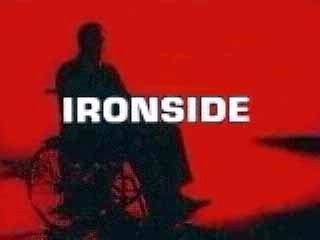 There are a number of older TV crime series that I think deserve to be “rediscovered” in DVD format. And one of those at the top of my list is Ironside, the NBC series that starred Raymond Burr as a paralyzed, wheelchair-bound former San Francisco police chief who went on to operate as an often-impatient consultant for the SFPD. It was a comeback opportunity for the actor who’d played brilliant California attorney Perry Mason on the small screen for more than nine years, and Ironside--with its cool theme song by Quincy Jones--proved to be popular, running for eight seasons, which makes it one of the longest-lasting police dramas in U.S. TV history.
Now, the Web site TV Shows on DVD brings this news:
Shout! Factory is set to release the first season of Ironside on April 24, 2007. Unfortunately, details are very slim right now; we can tell you the set will sell for a suggested price of $59.95, and that’s about all. Hopefully the set will include Ironside, the TV movie which kicked off the series, and the following 28 episodes from season 1; that information isn’t available yet, but we’ll check with our studio contacts.As Chief Robert T. Ironside himself might have exclaimed, “It’s about flaming time.”
Subscribe to:
Posts (Atom)