Showing posts with label John Connolly. Show all posts

Tuesday, July 23, 2024

For Your Entertainment

• Not being an Apple TV+ subscriber, I haven’t yet begun watching Lady in the Lake, the seven-part series based on Laura Lippman’s 2019 novel of that same title. But it premiered last Friday, July 19. The Guardian offers the following plot synopsis:
This is the story of two Baltimore women in the 1960s: affluent white Jewish housewife and mother Maddie Schwartz [played by Natalie Portman] and Black, all-but-single mother Cleo [Moses Ingram] who is working three jobs to try to lift herself and her children out of the life of struggle that otherwise beckons, and away from the temptations and dangers offered by the underbelly of the city.

Their lives begin to converge when a child, Tessie, goes missing at the Thanksgiving Day parade. The indifference of Maddie’s husband, Milton (Brett Gelman), triggers a fury in his long-frustrated wife, who ends up finding Tessie’s body herself and leaving Milton and her son, Seth (Noah Jupe), to start afresh. The only place she can afford on her own is in a Black area [of Baltimore, Maryland] and even that requires faking a robbery of her insured jewellery when she falls behind in rent. As the investigation into Tessie’s murder continues, Maddie’s latent journalistic ambitions stir and she begins to claw her way into the favour of the
Baltimore Sun.
Guardian critic Lucy Mangan calls this mini-series “altogether masterly” and “an incredibly sumptuous and fearless aesthetic experience.” She goes on to write: “The whole endeavour is a dense, clever, impeccably written, acted, shot and scored offering that is designed to be consumed slowly, episode by episode, not binged. You may finish each one feeling slightly battered and exhausted—perhaps more impressed than moved, but that’s OK. Give it a few days to bed in and the love will come.”

Lady in the Lake will run through August 23. A trailer is below.


• In Reference to Murder reports that “Michael Mann is making a sequel to his 1995 film Heat and is working on writing the screenplay, which is based on the novel Heat 2 that he co-authored with Meg Gardiner. Mann told the Los Angeles Times that he wants to begin shooting the film by the end of 2024 or the beginning of 2025. Heat followed the conflict between LAPD detective Vincent Hanna (Al Pacino) and a career thief, Neil McCauley (Robert DeNiro), and also starred Val Kilmer as McCauley's right-hand man. Heat 2 will function as both a prequel and a sequel to Heat, jumping between two time periods. Although there's no word official yet on casting, Adam Driver and Austin Butler are rumored to be taking over DeNiro and Kilmer’s roles.”

• Sherlock Holmes once again demonstrates his durability, as Deadline brings more news about the casting of Young Sherlock, a Prime Video series from director Guy Ritchie. The latest recruit is English actor Colin Firth, who is slated to play a character with a mouthful of a moniker, Sir Bucephalus Hodge. He joins previously confirmed cast members Hero Fiennes, Zine Tseng, Joseph Fiennes, and Natascha McElhone. “Written by Matthew Parkhill [and] inspired by Andy Lane’s Young Sherlock Holmes book series, the show re-imagines Sherlock Holmes at age 19,” Deadline explains. “Disgraced, raw, unfiltered, and unformed, he finds himself caught up in a murder mystery at Oxford University which threatens his freedom. Diving into his first-ever case with a wild lack of discipline, Sherlock (Fiennes Tiffin) manages to unravel a globe-trotting conspiracy that will change his life forever.” Filming of Young Sherlock began earlier this month.

• Speaking of Prime, we have finally received word that the crime thriller series Cross—produced by and starring Aldis Hodge—will debut on that Amazon premium channel come November 14. It is based on James Patterson’s long-running succession of novels about Alex Cross, described by Deadline as “a detective and forensic psychologist, uniquely capable of digging into the psyches of killers and their victims, to identify—and ultimately capture—the murderers.” I recall Hodge fondly from Leverage and its sequel, Leverage: Redemption; it’ll be nice to see him back on the small screen. He will be joined on Cross by Isaiah Mustafa, Juanita Jennings, Alona Tal, Samantha Walkes, Caleb Elijah, and others. Ben Watkins, formerly of Truth Be Told and Burn Notice, will serve as the drama’s showrunner.

• Tucked deep in this Variety piece about the influential Hollywood talent agency Independent Artists Group is news that a series adapted from John Connolly’s “beloved novels about the detective Charlie Parker” is in “early development” by Village Roadshow Television. Its producers include Colin Farrell and Bryan Cranston.

• A final TV-related note: Filming of the second season of Peacock’s Poker Face, starring Natasha Lyonne and created by Rian Johnson (Knives Out), began on July 1. Among the guest stars signed to appear in the new episodes, says Variety, are Giancarlo Esposito, Katie Holmes, Gaby Hoffmann, and Kumail Nanjiani. Lyonne directed one of those forthcoming installments.

Tuesday, October 02, 2012

Pierce’s Picks: “Books to Die For”

A weekly alert for followers of crime, mystery, and thriller fiction.

Books to Die For: The World’s Greatest Mystery Writers on the World’s Greatest Mystery Novels, edited by John Connolly and Declan Burke (Atria/Emily Bestler):
More than a month after its release in Britain, this 560-page compilation of tributes to more than 120 memorable works of crime, mystery, and thriller fiction has finally reached U.S. bookstores. Some of the essays included in this volume, edited by Irish wordsmiths John Connolly and Declan Burke (the latter a sometime Rap Sheet contributor), were predictable--Max Allan Collins writing about Mickey Spillane’s I, the Jury, for instance, or Linwood Barclay extolling the virtues of Ross Macdonald’s The Goodbye Look. However, there are also unexpected pairings of contributor and subject matter. I particularly relished Mark Billingham’s remarks on The Maltese Falcon, by Dashiell Hammett; Laura Lippman’s recommendation of Love’s Lovely Counterfeit, by James M. Cain; Eddie Muller’s piece about The Big Heat, by William P. McGivern; Megan Abbott’s praise for In a Lonely Place, by Dorothy B. Hughes; James W. Hall’s encomium to LaBrava, by Elmore Leonard; Gary Phillips’ ovation for The Scene, by Clarence Cooper Jr.; Val McDermid’s study of On Beulah Height, by Reginald Hill; and ... well, the real problem here is that there are so many intriguing choices, it’s hard to know where in the book to begin. Its contents do not include all of the genre’s best-known fictionists (where, I must inquire, are Erle Stanley Gardner, or Peter Lovesey, or Peter Robinson, or Stanley Ellin?); yet Books to Die For would provide fine guidance both for readers who are just starting to develop a curiosity about crime and mystery fiction, and others wishing to expand their familiarity with the field.

* * *

Also new and worth getting your hands on are Jo Nesbø’s Phantom (Knopf), which finds deeply troubled series detective Harry Hole working outside the Oslo police force to prove that a boy he’d helped rear, and then deserted, is innocent of murder; and Instrument of Slaughter (Allison & Busby), Edward Marston’s second World War I-era mystery (following A Bespoke Murder), focusing on efforts by Inspector Harvey Marmion and Sergeant Joe Keedy of Scotland Yard to solve the bludgeoning death of a young conscientious objector.

Friday, June 11, 2010

Shout Out for “Whispers”

Irish writer John Connolly’s new novel, The Whisperers (Atria)--his ninth to feature New York City cop turned private eye Charlie “Bird” Parker--isn’t due in U.S. bookstores until mid-July.
But in advance of that, the music-loving author has prepared a CD filled with songs that he says, in his liner notes, “have, in a sense, played in the background as I’ve written books, and particularly the two most recent Parker books, The Lovers and The Whisperers. While I prefer silence, I often use music as a way to recharge my batteries, and to remind me of the mood of a book. Thus, certain songs become associated with specific books, or with the Parker series as a whole, often because of a particular lyrical reference, but sometimes simply because their mood resonates with me.”

As a change of pace, I have decided that the prizes in The Rap Sheet’s latest giveaway contest should be five copies of this soundtrack, titled Love & Whispers. Included among the 13 specially selected songs are works by Nancy Sinatra and Lee Hazelwood, Emma Pollock, Richard Fontaine, Spiritualized, Patrick Phelan, and Shack.

If you’d like a shot at winning a copy of Love & Whispers, you need only send your name and mailing address to jpwrites@wordcuts.org. And be sure to write “John Connolly Contest” in the subject line. Entries will be accepted between now and midnight next Wednesday, June 16. Five winners will be chosen at random, and their names will be announced on this page the following day.

Sorry, but this contest is open only to U.S. residents.

Like Connolly, I prefer to write in silence, and to read the same way. But for others, listening to Love & Whispers, while also reading The Whisperers, might be just the ticket. If you don’t know about the forthcoming book yet, here’s Connolly’s plot synopsis:
The border between Maine and Canada is porous. Anything can be smuggled across it: drugs, cash, weapons, people.

Now a group of disenchanted former soldiers has begun its own smuggling operation, and what is being moved is infinitely stranger and more terrifying than anyone can imagine. Anyone, that is, except private detective Charlie Parker, who has his own intimate knowledge of the darkness in men’s hearts.

But the soldiers’ actions have attracted the attention of the reclusive Herod, a man with a taste for the strange. And where Herod goes, so too does the shadowy figure that he calls the Captain. To defeat them, Parker must form an uneasy alliance with a man he fears more than any other, the killer known as the Collector ...
It sounds chilling. Maybe a bit of soothing mood music would be a good thing. You have between now and next Wednesday to enter to win Love & Whispers. What are you waiting around for, a signed invitation?

Monday, August 17, 2009

The Power of 10

As the saying goes, sometimes it takes a decade to become an overnight success. In the case of Irish wordsmith John Connolly, he’s completed his first decade in style with his latest private eye Charlie Parker novel, The Lovers. Although I’ve read many fine works of fiction recently, The Lovers is the one that has haunted me most since I put it down.

Connolly has spent his career writing some of the most challenging crime fiction out there. I recall with clarity when I read his debut novel, Every Dead Thing, back in the autumn of 1999. That was a signal year for me, the same year that Thomas Harris ended a 10-year absence by releasing Hannibal (his much-anticipated sequel to The Silence of the Lambs) in a blaze of media interest. Connolly’s UK publisher, Hodder & Stoughton, had placed a sticker on the cover of Every Dead Thing comparing it favorably to Hannibal--and that sticker caught my eye, so I picked up Connolly’s book and read it over two nights. Despite its containing a pretty a tough opening sequence, in which Parker returns home after a night’s drinking to discover his wife and daughter butchered, I stuck with the story. And was glad I did. It didn’t surprise me in the least that Every Dead Thing went on to win the 2000 Shamus Award for Best First P.I. Novel.

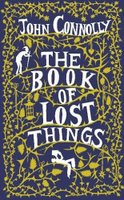
Since then, I’ve followed Connolly’s career with interest. I have watched him take chances not only with his first standalone novel, Bad Men (2003), but also with his surreal The Book of Lost Things, various short ghost stories (many of which were adapted for radio as well as collected in Nocturnes [2004]), and his determination to push toward the gothic and supernatural in his Charlie Parker series. I vividly recall spending an afternoon with the author in Dublin during the winter of 2002, watching him consume a hearty meal and drink some fine wine while we taped a lengthy interview for January Magazine. I also remember hearing sometime later that he’d been involved in a roadway accident with a car and been knocked him from his bicycle. Later, Connolly laughed off that incident, even though I knew it affected his writing.

So now we come to the summer of 2009, and The Lovers. As impressed as I was with Connolly’s sixth Charlie Parker novel, The Unquiet, a couple of years ago, I was not prepared for the wonders he manages to offer up in The Lovers. Here’s an excerpt from my review of that novel for Shots:
This is the eighth novel in Connolly’s Charlie Parker P.I. series (though Parker made a cameo in the standalone Bad Men and featured in a novella from his Nocturnes collection). The Lovers is without doubt the finest novel in the series, as it pulls together many of the strands that Connolly wove in the preceding novels. Each word, sentence, paragraph, and page in this book seems to have been considered, polished, and refined to form a picture-perfect narrative, and one that is as chilling as it is poignant. ...

The tale starts with Charlie Parker investigating the mysterious nature of his father William Parker’s suicide, following his shooting of two young lovers with no apparent motive. Parker, following the issues he faced in The Reapers [2008], is working as a barman while his P.I. licence is suspended pending a police investigation. Parker has often pondered why evil seems to shadow his every move, and why death seems to be an integral part of his life. His investigation into his father’s suicide will place his own life into context and reveal why shadowy figures such as the Collector, the Travelling Man, et al. seem to be interested in him and those around him. As the case in which William Parker gunned down two young lovers in their car is shrouded in secrecy, [Charlie] Parker hunts down his father’s colleagues, retired NYPD cops Jimmy Gallaher and Eddie Grace. It seems that Parker’s parents’ marriage had a problem that would cascade into their son’s adult life. Adding to the mix is journalist Mickey Wallace, who is writing a lurid true-crime book on Charlie Parker’s life, and the Jewish cleric Epstein who knows more than he will reveal until the bodies start to pile up. The only people that Charlie Parker can rely on are [his psychopathic sidekicks] Louis and Angel, who watch his back as the secrets of The Lovers [are] revealed.
Just recently, I decided to ring John Connolly up. I know he’s a busy guy, but I wanted to ask him a few questions--not only about how the plot of The Lovers evolved, but about his research methods, coping with a serious computer problem, Stephen King’s forthcoming novel, and the influence of the supernatural on his fiction. He was kind enough to answer my queries, at length and cheerfully.

Ali Karim: The Lovers marks an important turning point for your man Charlie Parker. Exactly when did you realize that his parents were harboring such an awful secret? Or had you always known all those details of Parker’s back-story?

John Connolly: When I wrote the first book, one of my editors was anxious to get rid of the stuff about Parker’s father, as she felt there was a lot of trauma in the book already--which, to be fair, was true. At the time, I felt that it was important to leave it in, not only because Every Dead Thing is, in a way, a book about fathers and father figures, but also because, if I was allowed to continue writing, I knew that his father’s death was a subject to which I’d want to return at some point. As the series went on, it was something that simmered away in the background, and gradually I started to figure out how that story could be told. So, no, I didn’t know at the beginning, but then the whole process of writing the Parker books has been interesting for me in the way that it has begun to come together in recent years. There wasn’t a grand plan at the start, but a pattern has started to emerge as I’ve got to know and understand the characters in the series. I think that’s probably true of a lot of mystery writers: with each book that you write, you discover another layer to the main characters.

AK: The revelations in The Lovers are very shocking, as you pull many strands together. Can you tell us a little about the process involved in writing that novel?

JC: Well, usually what happens is that midway through writing a book I start to get ideas for the next book; so during the writing of The Reapers I was accumulating information and strands for The Lovers. I suppose that process had begun as far back as The Unquiet, as that’s the novel in which hints are first given about Parker’s parentage. To be honest, the writing of The Lovers was difficult, and blighted at times. I lost the first twenty- or thirty-thousand words due to a computer mishap, and had to go back and start again. Then I had to do a lot of historical research, as large sections of the book are not set in the present day. And I think I was worried as well, because it was going to be the book that altered perceptions of the series, in particular the way in which the supernatural has been used so far. In the end, I’ve been kind of surprised at how well it has been received.

AK: You always fill your novels with vignettes and insights, many of which are surreal. Not to give too much away, but the one from The Lovers that really burned into my mind was the death of the infant at that party with the coats.

JC: That’s based on an actual incident, one that had always stayed with Peter English, the ex-NYPD guy who helped me a lot with the research for the book. I spent a lot of time talking with him, and listening, and making notes. When he told me that story, I felt that it could be incorporated into the novel, as I could see how it might have affected Parker’s father. Graham Greene said that a writer needs to have a little shard of ice in his heart, and it was in my willingness to use that story that I recognized the essential truth of Greene’s statement as it applied to my own work: to hear something as terrible as that and think, well, I can use it ...

I think that the research element appeals to the journalist in me, but I tend to use only a fraction of what I discover. That’s the trick, I suppose: to know what to keep, and what to throw away, and not be too precious about it.

AK: You mentioned that computer incident, which lost you a substantial portion of The Lovers, and which you also wrote about in your blog last year. What exactly happened, and how did you manage to recover from that disaster?

JC: Oh, it was dumb, just dumb. Somehow, I’d given the same name to the file on my laptop and the file on my desktop [computer]. My desktop had a huge chunk of the book, while my laptop had a couple of new chapters. I simply replaced the desktop file with the laptop file and, bang, it was gone. I was in shock for a few hours, then just shrugged my shoulders and recognized that there was nothing for it but to start again. I don’t know if what I lost was better than what I ended up with, though. In the end, I rewrite so much that losing a first draft is much less frustrating that, say, losing a 10th draft.

AK: I loved the supernatural elements in The Unquiet and The Lovers, more than I have your works that avoid the “woo-hoo” angles, such as The Reapers. Which do you prefer writing, straight P.I. fiction or supernatural-tinged P.I. tales?

JC: I think that the books in which the supernatural element is used feel richer and more layered to me. There are plenty of straightforward crime novelists out there, and what they do they do very well. But there are fewer, I think, who are prepared to experiment and hybridize, mainly because there still seems to be resistance to it among the more conservative sections of the genre. That comes, I think, from a fundamental misunderstanding of how it can be used.

In my books, it’s not a case of “the ghost did it.” I simply don’t find metaphysical and anti-rationalist concepts inimical or alien to the genre. I guess, if I have to defend myself, I take a wider, more inclusive view of the genre’s possibilities, and that can’t be a bad thing. Ultimately, open-minded beats narrow-minded every time.

AK: 2009 marks 10 years for you as a published novelist. What has the journey been like? And what have been its high and low points?

JC: Crumbs. High points? Being published to begin with, and still being published now. Also, the fact that my publishers have adopted a very hands-off approach to what I do, and I’ve been permitted to experiment through books like Nocturnes, The Book of Lost Things and, later this year, The Gates. That’s come at a cost, though, in that the sales of the Parker books would probably be higher if I was producing one of them every year instead of exploring other avenues with every second book. “The same, but slightly different” is the way to top the bestseller lists. So exploring different genres doesn’t help, but I’m comfortable with the balance that I’ve achieved.

There really aren’t many low points. I’ve seen a bit of the world, I’ve made some wonderful friends, and I make my living doing something that I love. Like Raymond Carver said, “It’s all gravy.”

AK: So tell us more about The Gates, which you’ve described as a young adult novel that “involves Satanism and quantum physics.” Will Charlie Parker make an appearance in that story?

JC: Hah! No, Parker doesn’t make an appearance in The Gates. It’s actually very different from what I’ve done before. Well, there are probably slight echoes of The Book of Lost Things, but essentially The Gates is a mischievous book. It’s about a small boy and his dog who discover that their new neighbors are Satanists who are trying to open the gates of Hell. The book is filled with odd little footnotes about science and history. It’s probably the lightest book I’ve written, and the most purely entertaining. Frankly, writing it was a blast.

AK: Finally, have you read any books lately that have cast a long shadow over your mind, that you’ve found particularly impressive?

JC: Well, I read the new Stephen King, Under the Dome, which cast a long shadow because it’s huge: almost 900 pages. It’s pulpy, and violent, and generally good fun but, my, it’s long. Mostly, though, I’m reading research books for The Whisperers, the next Parker novel, so it’s either war or archeology for me.

Thursday, May 10, 2007

Peace and “Unquiet”

It’s been a couple of years now since we heard from Charlie “Bird” Parker, Irish journalist-author John Connolly’s brooding former New York City cop turned private eye. The last time he appeared, in fact, was in The Black Angel (2005), a work I found rewardingly complex and deviously ambiguous, mirroring the darker side of real life. (Connolly followed that up with last year’s The Book of Lost Things, a non-series project.) So it was with great anticipation that I cracked the spine of his sixth Parker novel, The Unquiet (already available in the UK, but due on American bookshelves next week). To say I wasn’t disappointed with results, is a gross understatement.

This is a thoroughly unsettling work (what else, though, would one expect from Connolly?). It is a dark and dangerous literary journey that starts with a feeling of dread, and just builds and builds, until the tension becomes unbearable. If you’ve not been introduced to Connolly’s Maine-based private eye before, then this novel is a great place to start in the series. The Unquiet finds Parker looking back into both his past and that of others, to find redemption and atonement for past sins--some of which may never be completely forgiven.

We find Charlie Parker in these pages no less melancholic than he’s been before, hearing the voices of his deceased first wife and daughter (who were brutally murdered in 1999’s Every Dead Thing), and trying to find peace with his new, estranged wife, Rachel, and their daughter. To break the morose mood, he takes on what looks like a simple job, protecting a woman named Rebecca Clay and her daughter from a mysterious stalker. In Parker’s world, however, nothing is ever simple. His adventures inevitably contain supernatural aspects, because for P.I. Parker, the world of the living always intersects with the world of the dead, and past sins are propelled into the future.

It seems that the stalker harassing Rebecca Clay and her child is an underworld hit man by the name of Frank Merrick, who’s working for a lawyer called Eldritch (an apparent homage to American horror writer H.P. Lovecraft). Together, the men are attempting to trace Rebecca’s father, the child psychologist Dr. Daniel Clay, a man whose career was ruined by whispers of pedophilia, and who subsequently vanished in disgrace. This assignment proves troublesome, so Parker calls upon Louis and Angel, his rough-and-tough sidekicks, as well as Jackie Garner and his bodyguards, Tony and Paulie Fulci, to protect Ms. Clay from Merrick, while Parker probes further into the hit man’s motives. Our hero soon discovers much more amiss than he had expected. It appears Merrick’s young daughter went missing at the same time as Daniel Clay vanished (and while Merrick was still in prison). There’s also evidence that the children Clay was involved with drew pictures of their abusers, all wearing sinister bird-masks. We’re also told that along the Maine-Canada border rests an abandoned community known as Gilead--a place Dr. Clay was known to visit, but that was abandoned after it was discovered that ritual child abuse had taken place there.

Parker soon finds connections to members of Boston’s Russian mafia, who traffic in children, Internet child abuse, and murder. As this story develops, Parker and Merrick both hear voices from the dead, voices that are hollow, voices belonging to people who no longer walk the earth. And into that potent and chilling mix comes the cigarette-smoking and chilling avenger known as “The Collector,” who inquires of Parker: “You think you are a good man?” and continues, “How can one tell the good from the bad when their methods are just the same?”

The Unquiet is among the finest reads of this or any other year. I was simultaneously enthralled and terrified. But it’s the wit Connolly harnesses to his fiction that prevents his dark tales from overwhelming readers with malevolence.

I finished the novel one afternoon last week in London, sitting on a sunlit park bench near Leicester Square, preparing to attend a publisher’s party in Connolly’s honor that evening. With the yarn still haunting the corners of my mind, I hopped the Tube to Farringdon, near the restaurant where the party was to take place. There I found a bar and waited for my friend and colleague, Shots editor Mike Stotter. He and I chatted a while about the hustle and bustle of our respective professional lives, and our trip to ThrillerFest in New York this coming July. And finally we set off for The Bleeding Heart, an eatery in Hatton Garden, London’s diamond district.

This restaurant had been chosen by Connolly’s publisher, Hodder & Stoughton, because it boasts a spacious private room. There, helpful staff members took away our jackets, replacing them with brimming glasses of chilled champagne. Among those joining Mike and I were David Headley and Daniel Gedeon from Goldsboro Books, Guardian books critic Maxim Jakubowski, Crime Time editor Barry Forshaw, and author Mark Billingham with his ever-witty wife. During the festivities, I chatted with Sue Fletcher, Connolly’s editor, and we agreed that The Unquiet is his most disturbing work yet, not only due to its subject matter, but also its rather unnerving writing style, which gives the reader a feeling of dread and doom from the onset, and then intensifies to its grim conclusion. I had a quick chat, as well, with Connolly’s agent, the legendary Darley Anderson. And I spotted the hardworking Kerry Hood, head of publicity for Hodder & Stoughton. I thanked her for inviting me to this event, and also reiterated my appreciation for her introducing me to Stephen King last year. Somehow I slipped in the story of how I “met” Dean Koontz last month at the London Book Fair. She laughed at what a fan-boy I can be, but said that she appreciated my enthusiasm.

Finally, we were asked to take our seats. Hodder & Stoughton’s managing director remarked to the crowd on how much the publisher loves Connolly--not just because of his exceptional talent as a wordsmith, but also because of how willingly he works with Hodder & Stoughton to promote his books. He then asked Connolly to say a few words ... which, if I’m not mistaken, the author hadn’t expected. Fortunately, Connolly is an excellent raconteur, so he spontaneously let loose with one of his characteristically funny talks. It centered around his yeomanlike efforts to find “a town full of evil” along the Maine-Canadian border, on which he could base the abandoned Gilead in his story; but the best he could turn up was a homicide having taken place in the 1920s, so he had to let his imagination work overtime.

The dinner following all of this was fabulous, consisting of a terrine starter followed by the most delicious rosemary lamb, and vegetables. Dessert was a wicked chocolate pudding. We washed it all down with a plenitude of wine. Connolly did the rounds of tables, talking to everyone between courses. I told him how much I enjoyed The Unquiet, as well as his interview last fall with Stephen King, which can be found on his Web site. He mentioned that he’d be visiting the States this summer as part of his book tour--a schedule that will include a stopover in Seattle. (I have to remember to tell my Rap Sheet editor, Jeff Pierce, as he’ll want to see Connolly again. Jeff and his wife came to London last fall, from Seattle, to help celebrate the launch of The Book of Lost Things.)

Finally, after some more mingling and making sure that my copy of The Unquiet was signed by its author, I said my good-byes and set out into the night to catch my train home, my hands around the next book from my to-be-read pile.

READ MORE:John Connolly: ‘Dying Is an Art I Do Exceptionally Well,” by Barry Forshaw (The Independent); “The Book of Lost Things,” by Alyson Rudd (The Times).

Tuesday, November 28, 2006

The Surreal Influence of Fate

I came across this excellent piece today on the Web site of Irish writer John Connolly (The Book of Lost Things). In it, Connolly talks about meeting Stephen King during his tour through London a few weeks ago. The piece reminded me of the dilemma I faced, picking out just one of his books for signing (a restriction for those people queuing up to meet him). I ultimately settled on one of the most terrifying books I’ve ever read by King, Pet Sematary. So I was amused to hear that Connolly had quizzed King about that particular book, providing insight into the macabre and taboo-breaking work:
Pet Sematary, his 1983 novel about a Maine cemetery with the power to resurrect dead pets, is probably the most difficult of his novels for a parent to read, as Louis Creed, its protagonist, finds himself tempted to place the body of his little son, Gage, in the earth of the cemetery following a gruesome road accident, yet even this was derived from King’s own experience.

“There was a real pet cemetery near our house,” he says. “It’s gone now because the tourists took it. Basically, piece by piece, souvenir hunters took it, but everything in
Pet Sematary up to a certain point actually happened, and was true. There was a whole pet cemetery with all of these crosses and markers, and we thought it was just the cutest, quaintest thing until our cat, Smucky, got run over and wound up in the cemetery. The house was beside a busy highway which was used by a lot of heavy trucks, and there was an old geezer who lived nearby who told us, ‘You better be careful on that there road, because that there road uses up a lot of animals and you don’t want it to use up one of your children.’

“Then in the spring of that year, 1979, our son Owen, who was 18 months old, ran for the road while we were flying kites one day, and I heard one of those trucks coming, and I tackled him like a football player. I brought him down so, unlike Gage Creed in the book, he lived. But I thought to myself--and again, this is the impulse a lot of times with these things--I’m going to write the worst thing I can think of, and that way it won’t happen. So I sat down and wrote
Pet Sematary and as bad as I imagined it was going to be, the book turned out worse. And I thought, I’m never going to publish this and nobody is going to want to read this, but they did. It just goes to show: you should never underestimate the taste of the reading public.
To read the complete piece, click here.

* * *
One other thing Connolly’s story made me think about: the linkages and coincidences in our world. Connolly himself described those linkages in The Killing Kind (one of January Magazine’s favorite books of 2002) as making our reality a honeycombed place. To his way of thinking, the world underfoot is fragile and danger lurks at all times, waiting to do us harm.

I’ve known John Connolly for many years, and enjoyed his books, including his most recent private eye Charlie Parker novel, The Black Angel, as well as his short fiction. And I spent a wonderful afternoon with him in Dublin, Ireland, during the winter of 2002, during which we talked about crime fiction and life. We had lunch and then talked for the rest of the afternoon, with my tape recorder running. The results of that conversation were eventually published in January.

Readers familiar with Connolly’s gothic- and supernatural-tinged Parker series will know that much of their action is based in Maine (Stephen King’s home state). I asked him if he’d ever considered relocating to Maine:
I did consider that, but the odd thing about writing and researching the U.S. for my books is that the more I go over, the less I actually want to live there, especially under the current regime. I still like America, and perhaps would like to have a base to spend long periods of time, and that would be in Maine, I guess. Relocating permanently? No, I don’t think I would. I enjoy being an outsider looking in. I like living in Europe. It’s not perfect, but show me a place that is.
Our whole talk ran for more than three hours, so the results had to be edited down for publication. And my final question to Connolly never made the cut.
Q: Talking about gothic novels. To what would you attribute the current problems facing the horror genre?

A: Apart from Stephen King, I don’t really read much contemporary horror. Most of the guys I have read, like
M.R. James, have been dead for a long time. I think that one of the difficulties with the horror genre was that it shot itself in the foot. A great many bad writers started writing it, while British horror fiction had this obsession with sexual horror, and some were rather nasty, gruesome books. Clive Barker is a very talented bloke, but some of his stories are just vile, and although I really liked some of James Herbert’s work, there was a nasty streak in his work, too. You don’t get that level of unpleasantness in M.R. James. Another reason that has put people off horror was that the quality of the writing was so poor. You can call Stephen King many things, but no one can criticise the quality of his writing. He is probably the only truly popular horror writer that the genre has produced [in the last 20 years] that is read widely outside the genre.

I always remember an episode of that American cartoon series,
Family Guy. It's this very dark Simpsons-style series. The lead character … is this big fat bloke with glasses, and in this episode he runs over this guy in the street while driving. The guy gets up, dusting himself down, and the family guy asks, ‘Who are you?’ And the guy tells him, ‘I'm a writer.’ The family guy screams, ‘Oh no, I’ve hit Stephen King!’ and the guy says, ‘No, I’m Dean Koontz.’ And so the family guys just shrugs his shoulders and drives away, leaving poor old Dean by the roadside. …
Which brings me back again to the subject of linkages. For shortly after I returned home, I received a call from author Mark Billingham, asking me how John was. He had heard that Connolly was in a road accident! This was news to me. So I called John, only to learn that, to my horror, a few days after we’d recorded the January interview, a white van had run into him while he was cycling around Dublin. Connolly sustained a broken arm and some other light injuries. In light of the roadway accident that could well have killed King in 1999, I couldn’t help but think of how fate plays surreal games on us.

Then again, maybe I’ve just read too much Philip K. Dick.

Sunday, August 27, 2006

Connolly Has It His Way

I couldn’t help but chuckle at the headline over today’s profile of novelist John Connolly in Britain’s Independent newspaper--“John Connolly: ‘Never Listen to Readers’”--because it so directly contradicts the opinion expressed by Jeffery Deaver on the cover of this summer’s edition of Mystery Scene: “Readers Are Gods.”

The piece itself talks about Connolly’s latest standalone, The Book of Lost Things, which comes out in the UK this week (but isn’t due for U.S. publication till November). Independent writer Tim Martin describes that novel as a “wartime fairytale fantasy” about “a troubled, bookish 12-year-old ... [who] finds himself entering a shadow-world of allusion and illusion, built from stories and staffed by the characters from his bookshelves. This is a place in which the Seven Dwarfs are a gang of fretful Marxists downtrodden by a slatternly Snow White, in which a gay knight rides to save his lover from the clutches of Sleeping Beauty, in which the Loathly Lady tears apart her hapless courtier after he turns her down.” While such a shift of gears from Connolly’s series about police detective-turned-private eye Charlie “Bird” Parker (The Black Angel) will likely cause some consternation among booksellers, who prefer to see a successful author maintain his stride, Connolly contends that his fans won’t be overly disturbed. As he says:
“Mystery readers are very loyal, and they’ll look forward to their book every year, even if it’s a bad book. They’ll go out next year and buy another one in the hope that it’ll be a bit better.”

A glint of mischief enters his eyes. “And there are certain writers who have made a whole career out of the eternal optimism of the mystery reader. I can think of a couple. I got an e-mail from a woman who works in this bookstore in New York saying, ‘Well, we’ve ordered x number of copies but there was this collective groan from our readers when we heard it wasn’t going to be a Charlie Parker novel!’ Now that’s not really what you want to hear.” His eyes start out a bit. “Actually it makes you want to beat your head against the table, you know?

“Anyway,” he goes on merrily, “the last thing you want to do is to listen to readers. The nice lady who runs
my website started a poll so people could nominate their favourite book. And my career looks like a downward ski slope, you know? It’s profoundly depressing!” He is laughing hard. “It picks up again last year for The Black Angel, so it looks a bit like a heart patient who’s going to expire and then just took a little nudge at the end. You can’t listen to your readers, you really can’t.”
Parker enthusiasts, however, can rest assured that Connolly hasn’t abandoned his brooding New York protagonist. He tells The Independent that he’s currently finishing the next Parker outing, called The Unquiet.