Showing posts with label George Pelecanos. Show all posts

Friday, June 26, 2020

The Book You Have to Read:
“King Suckerman,” by George Pelecanos

(Editor’s note: This is the 164th installment in The Rap Sheet’s continuing series about great but forgotten books.)

By Steven Nester
King Suckerman reads like a blaxploitation blast from the past, with its references to that film genre, the soundtrack of the era (this tale is set in 1976, and the U.S. bicentennial is only days away), the vocabulary of young black inner-city America (with a profusion of the “N” word), and the glorification of the urban anti-hero. But beneath all of that, inextricable from the nonstop action in this 1997 George Pelecanos masterpiece, is a spot-on critique of racism, cultural appropriation, personal responsibility, and the hypocrisy of popular culture.

The themes in King Suckerman are seamlessly integrated into the story’s action. That’s as true when Real Right Records owner Marcus Clay admonishes a young employee for filing Jimi Hendrix albums under Soul, not Rock—really, a racial commentary here—as it is when the blasts of bicentennial fireworks blend with the gunfire of the good guys liberating themselves from the threat of nihilistic criminals at the book’s conclusion.

This adventure begins at a small-town North Carolina drive-in movie theater, where Wilton Cooper, a cool and manipulative ex-con, witnesses Bobby Roy “BR” Clagget—“a white boy, wanna-be-a-black-boy cracker” who sports an afro, four-inch heels, and a shirt with “Tarzan swinging on the vines”—strut into the projection building and murder his boss in cold blood. Cooper wants a trigger man for an upcoming dope deal, and in Clagget he sees talent, as well as a kid much in need of direction. Cooper approaches him, and after a smooth Q & A, the sure-handed sociopath expertly plays the stone-faced kid, calls him his “little brother,” and seals the deal for Clagget to star in the blaxploitation flick playing in his head.

Pelecanos’ plot revolves mostly around Cooper and Clagget’s crime spree, but a lesser story line, one quite salient on a thematic level, is the much-anticipated premiere of the blaxploitation movie King Suckerman (“The Man with the Master Plan Who Be Taking It to the Man”). It’s the talk of Washington, D.C., but the film turns out to be a huge disappointment to all, save for a few people. The audience expected the movie to offer the standard blaxploitation trope of anti-hero pimp as badass role model, but King Suckerman turns that stereotype upside down. In the end, the character of King Suckerman dies broken and behind bars, the film bombs, and a crestfallen BR is told the facts of life. “Little Brother?” says the nihilistic Cooper, who knows what he’s talking about. “That was the real deal.”

Delving deeper into the movie, Rasheed, the “woke” employee of Marcus Clay who miscategorized Hendrix, sees things differently. He recognizes racism and the perpetuation of stereotypes for profit, and fires off this bit of wisdom: “Those white producers tryin’ to exploit our culture, showin’ us what our ghetto thing is all about. And us, givin’ them our money like stone suckers.”

Then Rasheed explains it from the angle of a film fan who wants escapism and the kind of empowerment that can only come from fantasy. Outside the theater, he schools a coworker in this exchange:
“You know that picture’s not gonna do any business.”

“Oh yeah?”

“’Cause it tells the truth. And the brothers out here, they don’t want the truth.”
Back in the real world, where Cooper and Clagget live, the truth gets lurid quickly. Before they visit a biker gang to score some cocaine for an out-of-state associate, they pay a $20,000 finder’s fee to Eddie Marchetti, the creep who brokered the deal. Marchetti is a small-time fence and weed dealer who wishes to make it big, but his intelligence and gangster pretense are laughable. His right-hand man, Clarence Tate, runs the business due to Marchetti’s incompetence; but even so, Marchetti treats him, and his own girlfriend, Vivian Lee, with a lack of respect that’s as breathtaking as a punch to the gut.

Cooper and Marchetti are conducting business when Marcus Clay and his Greek pal, Dimitri Karras, approach them. Karras is a D.C. weed dealer in need of a pound. A slacker of little consequence, he’d rather play pick-up basketball and get high than find a job. Clay, meanwhile, is a Vietnam vet. (These same two characters will appear in subsequent Pelecanos novels. But in King Suckerman, they make their bones as stand-up guys who take personal responsibility for their actions and finish what they start.)

(Right) Author George Pelecanos

As this scene develops, Marchetti begins to throw his weight around and berate his associate, Tate; then he slaps Vivian. Karras, in turn, belts him. Clay disarms BR and knocks his front teeth out. As Clay and Karras leave, Clay impulsively grabs the $20,000, and Karras steers Vivian away from her toxic relationship. Karras and Clay know full well that they’ve put themselves into a position only violence can solve.

Cooper, Clagget, and their associates move rapidly to conclude the dope deal, which under Cooper’s direction becomes a massacre. A meeting is arranged for the return of the $20,000 to Cooper, but everybody knows that’s a pretense for an ambush, and King Suckerman, the book, ends even bloodier than the movie. By the close of this tale, Clay and Karras have grown a set, and more importantly, Karras has grown up.

It’s interesting to imagine how King Suckerman might be viewed, were it first released in our present age of “wokeness.” Pelecanos’ frequent use of the “N” word could be denounced as racist, and because King Suckerman was written by a Caucasian it might be shouted down as cultural appropriation. But the novel is not a cheap or shallow representation of lower-income African Americans. It’s the story of the melting pot, of interactions between African Americans and Caucasians, and a hard excoriation of stereotypes, as exemplified by BR Clagget, and the titular King Suckerman.

The tag line of King Suckerman, the motion picture—“The Man with the Master Plan Who Be Taking It to the Man”—may sound clumsy and redundant, but Pelecanos, who’s published 21 books and was part of the team behind HBO-TV’s The Wire, is neither of those. Exactly which “man” is Suckerman taking it to? The overlords of the society that oppress him? Or, more likely, to himself, “the man with the plan,” and the obvious sucker for the meretricious lure of the criminal life so glorified in popular culture.

Wednesday, September 05, 2018

Don’t Go Away, There’s More!

A few additions to yesterday’s wrap-up of crime-fiction news.

• January Magazine editor Linda L. Richards interviews Sam Wiebe, the author of Cut You Down, which stars Vancouver, Canada-based Dave Wakeland, an ex-cop turned private eye.

• Meanwhile, CrimeReads talks with George Pelecanos about his new Washington, D.C.-based novel, The Man Who Came Uptown. Contributor Lily Meyer explains:
I’m not a neutral reader of George Pelecanos. How could I be, when his newest novel, The Man Who Came Uptown, is set ten blocks from my apartment? Its characters eat at my favorite Sichuan restaurant and drink at the bar where my boyfriend plays darts. The hero, Michael Hudson, orders Elmore Leonard novels from Upshur Street Books, where I used to work. I’m delighted by seeing my city on paper, of course. But I’m implicated, too. The Man Who Came Uptown wrestles with gentrification on every page, and as both a reader and a Washingtonian, so do I.

Notice that I didn’t say
The Man Who Came Uptown was a novel about gentrification. I could have. I could also say it’s about the corrupting pursuit of money, or about how difficult it is to live according to your ideals—a struggle shared by Michael Hudson and his foil, a private investigator named Phil Ornazian. But at its core, The Man Who Came Uptown is a novel about reading. It’s an absolute love letter to books. Michael Hudson becomes an avid reader in the D.C. Jail, thanks to a prison librarian named Anna, and much of the novel is devoted to the characters and authors they love.
The Hollywood Reporter brings word that Universal TV and Adam Levine, a singer and judge/coach on The Voice, have together “optioned the rights to the Thorn series of novels by James W. Hall, which will be developed for television. There are 14 books in the series, which began with Under Cover of Daylight in 1987. The series follows Thorn, a fishing guide in the Florida Keys with a dark past.” Writers and actors for the project have yet to be announced.

• I forgot to mention that Craig Sisterson has posted the second edition of his Māwake Crime Review on the Crimespree Magazine site. Its purpose is to introduce readers to “great crime writers and crime novels from beyond the borders of North America and Europe.” This sophomore column includes an interview with Michael Sears and Stanley Trollip, who—under the joint nom de plume Michael Stanley—write the Botswana-based Detective Kubu series.

• And Evan Lewis tracks down the 10th issue of a Green Hornet comic book, from 1942. It features a Mickey Spillane-scripted feature about “gun-slinging private detective” Mike Lancer, who Lewis says was the “first incarnation” of Mike Hammer. That was four years before Spillane tried to launch another Hammer precursor, Mike Danger.

Sunday, October 04, 2009

Dashiell and George

The North American Branch of the International Association of Crime Writers has announced that American author George Pelecanos is the winner of this year’s Hammett Prize--given for “literary excellence in the field of crime writing”--for his novel The Turnaround (Little, Brown; 2008). On Sunday evening, during a banquet at the New Atlantic Independent Booksellers Trade Show in Baltimore, Pelecanos received a bronze trophy.

Other nominees for the 2009 Hammett Prize were Leading Lady, by Heywood Gould (Five Star); The Finder, by Colin Harrison, (Farrar, Straus & Giroux); City of the Sun, by David Levien, (Doubleday); and South by South Bronx, by Abraham Rodriguez (Akashic).

(Hat tip to The Gumshoe Site.)

Tuesday, July 29, 2008

Turning George Around

I’ve been a fan of Washington, D.C.-based author George Pelecanos ever since his work first appeared in the UK. That was thanks to publisher Serpent’s Tail, which took a chance on his early Nick Stefanos novels. (Pelecanos has since decamped, with his tales of Washington’s dark underworld, to Orion.) Over the years, I have interviewed Pelecanos on several occasions and learned much about his life and work. Of special interest has been his impact on the acclaimed HBO-TV series The Wire, though the author is quick to acknowledge that he finds his greatest pleasure in writing novels.

Having read a bit about his new book, The Turnaround, I already know it’s one that I shall be picking up shortly.

Meanwhile, I was delighted to discover an article in Britain’s Observer newspaper that charts the career of this quiet, 51-year-old man from D.C. Explains reporter Amy Raphael:
He is a meticulous chronicler of urban America: since A Firing Offense was published in 1992, he has produced virtually a book a year, all of which are set in Washington DC. Like The Wire, his novels reflect the troubles of a country that doesn’t know what to do about drug wars and inner-city collapse. When I ask Ian Rankin to place his friend George in modern American literature, he sends an e-mail saying: ‘I love the social context of his books, the sense of American history and the (small) place of the individual within it. They are not just (or even essentially) crime stories; they are about the roots of crime and its aftermath.’

His are anti-detective novels in which there are cops and law breakers, yet, as Rankin says, the structure is rarely based around solving the crime. Pelecanos introduced a black private eye, Derek Strange, in 2001’s Right as Rain, despite knowing that he’d face criticism as a white man writing about a black cop. He says it continues to be an issue with some people but he just ignores it; he’s not one to play by the book and he writes about what he sees around him. His work is celebrated for its realistic portrayal of the city in which he was born and has always lived; the dialogue is so sharp, natural and fast that you can hear the characters’ voices as you read; his perfectly timed popular culture references bring different eras to life.

I ask Pelecanos if he’s conscious of his novels creating an oral history of modern America. ‘Sure. I want to leave a record. Hopefully if you read a book set in 2004 after I’m dead and gone, it will provide you with an accurate picture of the way D.C. was in 2004. Down to the way people speak and the slang. I’m obsessed to the point where if I have a character walking down the street in April 1968 and there’s something playing in the movie theatre, you can believe the movie was playing that week. It’s a small detail that would pass most readers by, but if it’s wrong then someone’s going to know and they’ll call bullshit.’
The Observer feature is a fascinating primer for readers not familiar with Pelecanos’ work, especially as it includes a few substantive nuggets about The Turnaround. It just adds to my interest in the book--interest that was given another big boost thanks to a recent online review by novelist Linwood Barclay. He wrote:
Some crime writers impress us with their villains. They invent bad guys so heartless, so evil, we can’t shake them from our heads when we go to sleep. And you don’t have to go to the lengths of creating a brilliant serial killer like Hannibal Lecter. Someone like Marlo Stanfield, from The Wire, the brilliant HBO series to which George Pelecanos contributed, will do nicely.

Pelecanos has created some pretty nasty people in his fiction, but it’s his good guys that stay with me. Pelecanos writes about ordinary people whose simple acts of decency seem all the more extraordinary when measured against their daily struggles.

The Turnaround is Pelecanos’ 15th book and it’s one of his most satisfying.
Returning to The Observer, its story makes quite clear the direction Pelecanos is headed with both this latest book and future ones:
[The Turnaround is] an ambitious, complex story of a group of white and black adults who decide to make amends for the mistakes of their youth. As with all his books, Pelecanos brings in an autobiographical element; in this case, one of the central characters, Alex Pappas, works at his father’s lunch counter from a young age. The fact that one of the boys’ friends was murdered simply motivates the story; the focus is rather how people have to find a way to get along, even if it means absolving people of murder.

There’s a stipulation in Pelecanos’s contract that requires him to produce crime novels. Much as I don’t see him specifically as a crime writer, I’m surprised when he casually announces: ‘I can honestly say you’ll never read a straight mystery from me again. A murder being solved by the end of the book ... it’s just never going to happen. I’m just not interested in writing that kind of book.’ He smiles. ‘I'll probably move away from straight crime and just write books. But there will definitely be conflict. Because that’s what drives fiction.’
Read the full article here.

Monday, December 04, 2006

Pelecanos’ Big Lesson

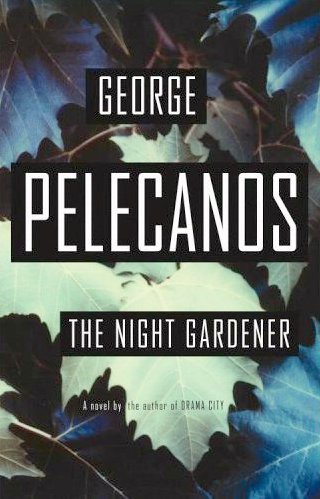
The personal finance section of The Washington Post stretched hard for human interest on Sunday when it ran a piece explaining why George Pelecanos (The Night Gardener) has only recently bought his first car, a Mustang GT, for which he paid cash.

“It goes back to my father and grandfather,” says the 49-year-old Silver Spring resident. “They never bought anything unless they had the cash in their pocket. I'm pretty conservative with my money.”
And not just that. The Post goes on to tell us that Pelecanos learned a hard lesson his first summer out of college when he lost all his hard-earned money in one ill-spent night.

The Washington Post piece is here.

Tuesday, November 14, 2006

Rhythm Behind the Writing

John Kenyon, an Iowa business writer who somehow finds enough time to put together the blog Things I’d Rather Be Doing, has recently launched what he says will be a regular feature called “The Monday Interview,” and his first subject is Washington, D.C., author George Pelecanos (The Night Gardener). Interestingly, most of their exchange has to do with “music and the way he uses it in his work,” Pelecanos being a big music enthusiast. (He recently wrote the lyrics for a Steve Wynn song titled “Cindy, It Was Always You.”)

About midway through this short piece, Kenyon asks Pelecanos about how he chooses the music mentioned in his books:
Does the mention of songs in your work happen organically or is there research involved to ensure that they are contemporaneous with what is taking place? If research has been involved, what discoveries have you made that you've added to your collection?
Both. I try to keep the mention of songs organic to the arena and especially to character. With some of the period novels I do extensive research, which can be little more than buying a shitload of music before I start to write the book.
Hard Revolution was like that. I was alive in the Sixties but I was a kid. Rock and soul really gets into your consciousness when you start feeling your sexuality. So I had to give myself an education in Deep Soul. I read many books (the best was Guralnick’s Sweet Soul Music) and soul-obsessive Web sites, like the John Ridley page. I bought and downloaded a bunch of tracks. Meanwhile, fans were sending me obscure compilations. Discovering all of those artists and that type of music left a lasting impression on me. I wrote that book three or four years ago and I am still collecting soul music from that period. It’s a perk that comes with my job.
As my grandfather used to tell me, any day you learn something new is a good damn day.

You can read Kenyon’s interview with Pelecanos here.

Wednesday, July 26, 2006

Pelecanos and What It Means to Write

There’s a nice article in today’s New York Times on George Pelecanos and his particular struggle to find commercial success, and the hopes that he and his publisher have for his newest novel, The Night Gardener. Written by Motoko Rich, the article details facts regarding Pelecanos’ sales figures and advances. It notes that “according to Nielsen BookScan, none of his last five books have sold more than 13,000 copies in hardcover ...” The article goes on to state that Michael Connelly has sometimes sold “as many as 30 times” that amount, and Dennie Lehane’s Shutter Island sold “about seven times the number of copies of Soul Circus.” It also recounts the smaller advances paid to Pelecanos years ago by St. Martin’s Press ($7,500), compared with the current higher advances he receives from Little, Brown ($1.5 million for a three-book contract). The article also mentions Little, Brown’s $150,000 marketing campaign to push The Night Gardener.

Rich’s piece is about more than facts and figures, however. It is about heart and soul. He covers brief bits on Pelecanos’ private life, and his desire to write characters that matter and stories that are authentic. He mentions that the novelist finally got permission to spend time with a homicide unit, and the value that leant his fiction in depicting detail. But this article also brings out the heart of the writer: the man laboring away in an attic room, writing stories, all the while wondering if he should be separating himself from his family for a pursuit that is giving back scant reward. That’s what Pelecanos’ early days were like, and his experience resonates with all beginning (or not so beginning) writers who work to be recognized: the soul of the author determined to write fiction that challenges, his unwillingness to change that style, and clearly how much he loves both writing and his family. Jim Born talks a bit about family on his Web site. Pelecanos talks about family, too (he keeps hardback editions of his books on a living room shelf, each with a picture of his three children taped inside its front cover). Family matters to Pelecanos and to his fictional creations.

You’ll learn much about Pelecanos from this article. And you’ll maybe get to challenge yourself, as well. How much are you willing to sacrifice as a writer? How long will you be willing to deal with low (or no) money and meager sales? How high will you place commercialism over craft? Pelecanos does have critical recognition--duh. He writes brilliant novels--duh. He did eventually find the bigger money, and he wrote for the critically successful HBO-TV series The Wire. Still, that elusive commercial success factor is not in his pocket. Is that what really matters?--Anthony Rainone

(A version of this post appeared originally here.)