The 2024 recipient of the George N. Dove Award for contributions to the serious study of mystery, detective, and crime fiction is British author, editor of Crime Time magazine, essayist, journalist, and commentator Barry Forshaw. The Dove Award, named for mystery fiction scholar George N. Dove, is presented by the Detective/Mystery Caucus of the Popular Culture Association; the chair of the Dove Award Committee is Rachel Schaffer (Montana State University Billings).Previous Dove prize recipients include Martin Edwards, Douglas G. Greene, P.D. James, Christine Jackson, H. R. F. Keating, Janet Rudolph, and Clues magazine editor Elizabeth Foxwell.
Showing posts with label Barry Forshaw. Show all posts
Showing posts with label Barry Forshaw. Show all posts
Wednesday, March 27, 2024
The Dove Has Landed
Congratulations to UK critic Barry Forshaw! From The Bunburyist:


Saturday, November 09, 2019
Bullet Points: Pre-Veterans Day Edition
• The “social cataloguing” Web site Goodreads has opened an online voting process to select the winners of its 2019 Choice Awards. The initial round of polling will continue through tomorrow, Sunday, November 10; a second stage will run from November 12 to 17, with the third one extending from November 19 through December 2. Winners are supposed to be announced on Tuesday, December 10. There are 20 categories of contestants, but those vying for Mystery & Thriller honors can be seen—and voted on—right here. Among the nominees are Adrian McKinty’s The Chain, Ruth Ware’s The Turn of the Key, Jane Harper’s The Lost Man, Alex Michaelides’ The Silent Patient, and Oyinkan Braithwaite’s My Sister, the Serial Killer.
• One of my happiest mail deliveries of late brought a copy of UK critic Barry Forshaw’s brand-new work, Crime Fiction: A Reader’s Guide (Oldcastle). I have been hearing about this endeavor for the last year, as Forshaw plumped and polished his tally of authors and individual books to include. (An appendix in this 448-page paperback features my personal suggestions of 27 writers Forshaw didn’t have room to address elsewhere in his text.) But the results surpass what I had been expecting. Although I might have made some different choices as far as individual recommendations go (why promote David Hewson’s 2003 Nic Costa tale, A Season for the Dead, but none of his equally gripping Pieter Vos novels? And I’d have substituted Robert Wilson’s “grimly bewitching” The Blind Man of Seville for its sequel, The Silent and the Damned), the author’s portrayal of this genre’s international evolution and current breadth is—like his literary taste—outstanding. And rewardingly diverse. I’m particularly pleased to see less-prominent yarns such as Anthony J. Quinn’s The Listeners, Jonathan Gash’s Spend Game, and James Sallis’ Ghost of a Flea given a boost in these pages. Together with mini-reviews of books (and of films adapted from best-sellers), Forshaw offers brief but percipient biographies of numerous authors, from Ross Macdonald and P.D. James to Kathy Reichs and Alan Williams, as well as short features on subjects ranging from “Sleuths on Screen” to “Ethnic Crime Writing.” This is a work to savor, though it’s not necessary to read it all at once; better to dip in and out casually, finding suggestions of authors you’ve never tackled and insights into works that merit your greater attention. The Times of London calls Crime Fiction: A Reader’s Guide “a labour of literary love,” and it’s definitely that. Yet this is also a product of sly scholarship, enticing veteran mystery readers to expand their familiarity with the field, and gently—with a depth of knowledge and wit—giving those less well acquainted with crime fiction a firm grounding on which to build their experience. Forshaw’s magnum opus was released this week in Great Britain; an American edition of the same book is due in June 2020.
• This coming Monday, November 11, will be Veterans Day here in the States (Remembrance Day in the UK). To honor the occasion, Mystery Fanfare has posted links to lists of Veterans Day-related mysteries.
• The following item comes from In Reference to Murder:
• “An expert panel” assembled by the BBC has chosen “100 novels that have shaped our world,” part of a yearlong British effort to “spark debate about the novels that have had a big impact on us all personally and culturally.” That campaign kicks off tonight at 9 p.m. with the premiere of a three-part BBC Two TV series also titled Novels That Shaped Our World. While I didn’t anticipate crime fiction would dominate this roster, there are several books from the genre included, among them Ken Follett’s Eye of the Needle, Raymond Chandler’s The Big Sleep, Harper Lee’s To Kill a Mockingbird, James Ellroy’s American Tabloid, Arthur Conan Doyle’s The Hound of the Baskervilles, and Patricia Highsmith’s The Talented Mr. Ripley.
• Really? A remake of The Equalizer starring Queen Latifa?
• To learn more about the original, 1985-1989 CBS-TV series The Equalizer, which starred English actor Edward Woodward as an ex-CIA operative who uses his skills to “[help] people who really need it, as penance for his previous life,” click here.
• Now, this looks like my kind of murder mystery vacation!
• What was the best episode of Columbo, Peter Falk’s long-running crime drama? That question could draw many opinions—as it did here. But the unidentified writer behind that wonderful blog, The Columbophile, seems to harbor no doubt as to the correct answer: “The Bye-Bye Sky High I.Q. Murder Case,” first broadcast as part of the NBC Sunday Mystery Movie on May 22, 1977, and guest-starring Theo Bikel as “a genius accountant … [who] has been embezzling funds in order to keep his high-maintenance wife in fine frocks and tropical getaways.” The blog goes on to describe that 40th Columbo installment as “70 minutes of television featuring major plot holes, an almost complete lack of cat-and-mouse suspense and, let’s face it, an episode title so contrived as to be ridiculous. Yet Bye-Bye rises above all this to deliver a thoroughly absorbing and entertaining adventure that doesn’t just salvage Columbo‘s sixth season—it proves that the show could be as good as, if not better than, ever before.”
• Here’s more proof that reading is beneficial. “Studies have shown,” says BookRiot, “that readers are more empathetic and that it can improve cognitive function. A new study by SuperSummary, an online resource that provides in-depth study guides, suggests reading has yet another benefit: self-identified readers are more satisfied with their lives than those who don’t identify as readers.”
• Earlier this week, author Andrea Bartz (The Lost Night) posted, on Twitter, “a very useful breakdown of why it’s important to preorder from independent bookshops.” Literary Hub offers the highlights.
• I’m very much looking forward to watching the BBC Two TV production Vienna Blood, a three-part mini-series filmed in the Austrian capital and based at least in part on Frank Tallis’ 2006 novel of that same name. As The Killing Times explains, “It’s set in 1900s Vienna and follows Max Liebermann [played by Matthew Beard], a brilliant young English doctor, studying under the famed psychoanalyst Sigmund Freud. When Max comes into contact with Oskar Rheinhardt [Jürgen Maurer], an Austrian Detective Inspector struggling with a strange case, he offers his assistance. Max’s extraordinary skills of perception and forensics, and his deep understanding of human behaviour and deviance, help Oskar solve some of Vienna’s most mysterious and deadly cases.” Vienna Blood is scheduled to debut in Great Britain on Monday, November 18. I haven’t seen word yet of when the show will be broadcast in the States; for the time being, I must content myself with the short introductory trailer below.
• By the way, this Vienna Blood is not to be confused with the identically titled 1942 German operetta film (no prominent crimes involved), which I learned only today was “one of the most financially successful films of the Nazi era.”
• Also due out from the BBC, though not until next year, is an adaptation of Ian McGuire’s historical thriller, The North Water (2016). That three-part TV drama, says The Killing Times, “tells the story of Patrick Sumner [played by Jack O’Connell], a disgraced ex-army surgeon who signs up as ship’s doctor on a whaling expedition to the Arctic. On board he meets the harpooner Henry Drax [Colin Farrell], a brutish killer whose amorality has been shaped to fit the harshness of his world. Hoping to escape the horrors of his past, Sumner finds himself in a male-dominated world, on an ill-fated journey with a murderous psychopath. In search of redemption, his story becomes a harsh struggle for survival in the Arctic wasteland.” That same Killing Times link contains a few early images from the production.
• Speaking of movie stills, here’s one (and, sadly, only one) from Perry Mason, the forthcoming HBO-TV “origin story” about Erle Stanley Gardner’s famous Los Angeles defense attorney, set in 1931. I have written previously about this project here.
• Finally, Deadline reports that British broadcast network ITV “is in advanced development on a sweeping adaptation of Lindsey Davis’ Falco Roman private detective novels after the project was originally in with the BBC. … [The lead character] Falco is described by Davis as a ‘laid-back’ operator whose adventures take place across the Roman Empire in 70 AD and beyond.”
• In praise of Michael Mann’s 1999 film, The Insider.
• Cincinnati, Ohio, writer T.S. Hottie—better known to crime-fiction fans as “Jim Winter” (a sometime Rap Sheet contributor)—has spent the last several months rewatching, and posting about, the James Bond film series. He began in July with Sean Connery’s Dr. No (1962) and on Friday commented on Pierce Brosnan’s Tomorrow Never Dies (1997), the 18th installment in that profitable spy-fi franchise. Hottie originally predicted his marathon rewatch escapade would take him six months, but with that deadline having already passed, it’s time for a reassessment. Click here to read all of his Bond posts.
• R.I.P., Bernard Slade. Although I don’t see any small-screen crime dramas among this screenwriter’s credits on the Internet Movie Database (IMDb), Slade did create a trio of TV sitcoms I remember quite well: The Partridge Family as well as the much less well-known Bridget Loves Bernie and The Girl with Something Extra.
• Talk about forgotten crime dramas! Who recalls CBS-TV’s Brenner, the father-and-son police drama starring Edward Binns and James Broderick, which—with breaks between spurts of episode broadcasts—took five years to roll out completely, from 1959 to 1964?
• I, for one, did not know this: The first book banned in America was 1637’s New English Canaan, by English businessman Thomas Morton. The Millions observes that the book “mounted a harsh and heretical critique of Puritan customs and power structures that went far beyond what most New English settlers could accept. So they banned it …”
• The latest Paperback Warrior Podcast looks back at Donald Hamilton’s Matt Helm thrillers as well as the 1963 novel Mute Witness, which inspired the 1968 Steve McQueen movie Bullitt.
• Bill S. Ballinger (1912-1980) was an Iowa-born author, college professor, and screenwriter. He penned standalone novels with titles such as The Wife of the Red-Haired Man (1957) and Not I, Said the Vixen (1965), along with episodes of TV shows such as M Squad, Mike Hammer, Ironside, and Kolchak: The Night Stalker. In the 1960s, though, Ballinger also concocted a five-book succession of thrillers starring Joaquin Hawks, a U.S. secret agent of Native American heritage who reported to Horace Burke, CIA Director of Operations in Los Angeles. I have never taken the opportunity to read the Hawks yarns, but have certainly come across mentions of them from time to now. More recently, I found that Joe Kenney, who writes the Glorious Trash blog, has reviewed four of those works already, and will presumably soon enlighten us all about number five, The Spy in the Java Sea (1966). He remarks that “This is a good series,” though Ballinger’s characterization of Hawks is thin and “he really needs to cut back on the arbitrary travelogue stuff and feature some actual pulp espionage thrills.” Worth keeping an eye out for.
• While I haven’t yet seen the new Edward Norton picture, Motherless Brooklyn, I have been reading a lot about it recently: CrimeReads’ Olivia Rutigliano muses on the difficulty of bringing Jonathan Lethem’s original 1999 novel to the silver screen in any coherent fashion; The Bowery Boys, a fine New York City history site, offers a rundown of “10 things to know” about the film’s 1950s setting before you buy your theater tickets; and Slate’s Marissa Martinelli breaks down the many ways in which this flick differs from Lethem’s book (“Edward Norton’s adaptation changes more than it keeps”).
• Yikes! I have been falling behind on my reading of Dervla McTiernan’s fiction. I really enjoyed that Irish-Australian writer’s inaugural novel, The Ruin (2018), but have not yet gotten around to cracking open its sequel, this year’s The Scholar. And now here comes a third tale featuring Galway police detective Cormac Reilly: The Good Turn, planned for publication in March 2020.
• Three CrimeReads features worth finding: Paul French makes the case that Havana, Cuba, is a “capital of crime fiction”; Wendy Trimboli and Alicia Zaloga (The Resurrectionist of Caligo) recount how “‘Penny Dreadfuls’ Scandalized Victorian Society—But Flew Off the Shelves”; and Shamus Dust author Janet Roger pays tribute to The Big Sleep, Raymond Chandler’s initial Philip Marlowe novel, which just a few months back celebrated its 80th year in print.
• In a short piece for Criminal Element, Shelley Noble applauds “Four Women Who Forever Changed the Gilded Age Mystery Genre.”
• Happy 10th anniversary to Murder by Gaslight, Robert Wilhelm’s blog about “notable nineteenth century American murders.”
• And I’ve read a great deal over the years about journalist Nellie Bly’s 1887 undercover investigation into brutality and neglect at the Women’s Lunatic Asylum on Blackwell’s Island, in New York City’s East River. Yet I still enjoyed Susannah Cahalan’s account, in Literary Hub, of Bly’s harrowing experiences and how the mentally ill were mistreated during America’s early years. Cahalan is the author of The Great Pretender: The Undercover Mission That Changed Our Understanding of Madness (Grand Central).
• One of my happiest mail deliveries of late brought a copy of UK critic Barry Forshaw’s brand-new work, Crime Fiction: A Reader’s Guide (Oldcastle). I have been hearing about this endeavor for the last year, as Forshaw plumped and polished his tally of authors and individual books to include. (An appendix in this 448-page paperback features my personal suggestions of 27 writers Forshaw didn’t have room to address elsewhere in his text.) But the results surpass what I had been expecting. Although I might have
made some different choices as far as individual recommendations go (why promote David Hewson’s 2003 Nic Costa tale, A Season for the Dead, but none of his equally gripping Pieter Vos novels? And I’d have substituted Robert Wilson’s “grimly bewitching” The Blind Man of Seville for its sequel, The Silent and the Damned), the author’s portrayal of this genre’s international evolution and current breadth is—like his literary taste—outstanding. And rewardingly diverse. I’m particularly pleased to see less-prominent yarns such as Anthony J. Quinn’s The Listeners, Jonathan Gash’s Spend Game, and James Sallis’ Ghost of a Flea given a boost in these pages. Together with mini-reviews of books (and of films adapted from best-sellers), Forshaw offers brief but percipient biographies of numerous authors, from Ross Macdonald and P.D. James to Kathy Reichs and Alan Williams, as well as short features on subjects ranging from “Sleuths on Screen” to “Ethnic Crime Writing.” This is a work to savor, though it’s not necessary to read it all at once; better to dip in and out casually, finding suggestions of authors you’ve never tackled and insights into works that merit your greater attention. The Times of London calls Crime Fiction: A Reader’s Guide “a labour of literary love,” and it’s definitely that. Yet this is also a product of sly scholarship, enticing veteran mystery readers to expand their familiarity with the field, and gently—with a depth of knowledge and wit—giving those less well acquainted with crime fiction a firm grounding on which to build their experience. Forshaw’s magnum opus was released this week in Great Britain; an American edition of the same book is due in June 2020.• This coming Monday, November 11, will be Veterans Day here in the States (Remembrance Day in the UK). To honor the occasion, Mystery Fanfare has posted links to lists of Veterans Day-related mysteries.
• The following item comes from In Reference to Murder:
The shortlist for the second annual Staunch Book Prize was announced recently. The list includes Only to Sleep (in the Philip Marlowe series) by Lawrence Osborne; the 15th-century literary mystery, The Western Wind, by Samantha Harvey; Liar’s Candle by August Thomas; Honey by Brenda Brooks; and The Godmother by Hannelore Cayre. The £1,000 award was set up in 2018 by author Bridget Lawless for the best thrillers in which no woman gets beaten, stalked, sexually exploited, raped, or murdered. The inaugural prize attracted criticism from authors such as Val McDermid and Sophie Hannah, while CrimeFest organizers withdrew an offer of a complimentary pass and panel appearance for the winning writer. BBC News gathered some authors together to share their thoughts on the controversy.This year’s Staunch Prize winner should be declared on November 25, which—not coincidentally—will be the International Day for the Elimination of Violence Against Women.
• “An expert panel” assembled by the BBC has chosen “100 novels that have shaped our world,” part of a yearlong British effort to “spark debate about the novels that have had a big impact on us all personally and culturally.” That campaign kicks off tonight at 9 p.m. with the premiere of a three-part BBC Two TV series also titled Novels That Shaped Our World. While I didn’t anticipate crime fiction would dominate this roster, there are several books from the genre included, among them Ken Follett’s Eye of the Needle, Raymond Chandler’s The Big Sleep, Harper Lee’s To Kill a Mockingbird, James Ellroy’s American Tabloid, Arthur Conan Doyle’s The Hound of the Baskervilles, and Patricia Highsmith’s The Talented Mr. Ripley.
• Really? A remake of The Equalizer starring Queen Latifa?
• To learn more about the original, 1985-1989 CBS-TV series The Equalizer, which starred English actor Edward Woodward as an ex-CIA operative who uses his skills to “[help] people who really need it, as penance for his previous life,” click here.
• Now, this looks like my kind of murder mystery vacation!
• What was the best episode of Columbo, Peter Falk’s long-running crime drama? That question could draw many opinions—as it did here. But the unidentified writer behind that wonderful blog, The Columbophile, seems to harbor no doubt as to the correct answer: “The Bye-Bye Sky High I.Q. Murder Case,” first broadcast as part of the NBC Sunday Mystery Movie on May 22, 1977, and guest-starring Theo Bikel as “a genius accountant … [who] has been embezzling funds in order to keep his high-maintenance wife in fine frocks and tropical getaways.” The blog goes on to describe that 40th Columbo installment as “70 minutes of television featuring major plot holes, an almost complete lack of cat-and-mouse suspense and, let’s face it, an episode title so contrived as to be ridiculous. Yet Bye-Bye rises above all this to deliver a thoroughly absorbing and entertaining adventure that doesn’t just salvage Columbo‘s sixth season—it proves that the show could be as good as, if not better than, ever before.”
• Here’s more proof that reading is beneficial. “Studies have shown,” says BookRiot, “that readers are more empathetic and that it can improve cognitive function. A new study by SuperSummary, an online resource that provides in-depth study guides, suggests reading has yet another benefit: self-identified readers are more satisfied with their lives than those who don’t identify as readers.”
• Earlier this week, author Andrea Bartz (The Lost Night) posted, on Twitter, “a very useful breakdown of why it’s important to preorder from independent bookshops.” Literary Hub offers the highlights.
• I’m very much looking forward to watching the BBC Two TV production Vienna Blood, a three-part mini-series filmed in the Austrian capital and based at least in part on Frank Tallis’ 2006 novel of that same name. As The Killing Times explains, “It’s set in 1900s Vienna and follows Max Liebermann [played by Matthew Beard], a brilliant young English doctor, studying under the famed psychoanalyst Sigmund Freud. When Max comes into contact with Oskar Rheinhardt [Jürgen Maurer], an Austrian Detective Inspector struggling with a strange case, he offers his assistance. Max’s extraordinary skills of perception and forensics, and his deep understanding of human behaviour and deviance, help Oskar solve some of Vienna’s most mysterious and deadly cases.” Vienna Blood is scheduled to debut in Great Britain on Monday, November 18. I haven’t seen word yet of when the show will be broadcast in the States; for the time being, I must content myself with the short introductory trailer below.
• By the way, this Vienna Blood is not to be confused with the identically titled 1942 German operetta film (no prominent crimes involved), which I learned only today was “one of the most financially successful films of the Nazi era.”
• Also due out from the BBC, though not until next year, is an adaptation of Ian McGuire’s historical thriller, The North Water (2016). That three-part TV drama, says The Killing Times, “tells the story of Patrick Sumner [played by Jack O’Connell], a disgraced ex-army surgeon who signs up as ship’s doctor on a whaling expedition to the Arctic. On board he meets the harpooner Henry Drax [Colin Farrell], a brutish killer whose amorality has been shaped to fit the harshness of his world. Hoping to escape the horrors of his past, Sumner finds himself in a male-dominated world, on an ill-fated journey with a murderous psychopath. In search of redemption, his story becomes a harsh struggle for survival in the Arctic wasteland.” That same Killing Times link contains a few early images from the production.
• Speaking of movie stills, here’s one (and, sadly, only one) from Perry Mason, the forthcoming HBO-TV “origin story” about Erle Stanley Gardner’s famous Los Angeles defense attorney, set in 1931. I have written previously about this project here.
• Finally, Deadline reports that British broadcast network ITV “is in advanced development on a sweeping adaptation of Lindsey Davis’ Falco Roman private detective novels after the project was originally in with the BBC. … [The lead character] Falco is described by Davis as a ‘laid-back’ operator whose adventures take place across the Roman Empire in 70 AD and beyond.”
• In praise of Michael Mann’s 1999 film, The Insider.
• Cincinnati, Ohio, writer T.S. Hottie—better known to crime-fiction fans as “Jim Winter” (a sometime Rap Sheet contributor)—has spent the last several months rewatching, and posting about, the James Bond film series. He began in July with Sean Connery’s Dr. No (1962) and on Friday commented on Pierce Brosnan’s Tomorrow Never Dies (1997), the 18th installment in that profitable spy-fi franchise. Hottie originally predicted his marathon rewatch escapade would take him six months, but with that deadline having already passed, it’s time for a reassessment. Click here to read all of his Bond posts.
• R.I.P., Bernard Slade. Although I don’t see any small-screen crime dramas among this screenwriter’s credits on the Internet Movie Database (IMDb), Slade did create a trio of TV sitcoms I remember quite well: The Partridge Family as well as the much less well-known Bridget Loves Bernie and The Girl with Something Extra.
• Talk about forgotten crime dramas! Who recalls CBS-TV’s Brenner, the father-and-son police drama starring Edward Binns and James Broderick, which—with breaks between spurts of episode broadcasts—took five years to roll out completely, from 1959 to 1964?
• I, for one, did not know this: The first book banned in America was 1637’s New English Canaan, by English businessman Thomas Morton. The Millions observes that the book “mounted a harsh and heretical critique of Puritan customs and power structures that went far beyond what most New English settlers could accept. So they banned it …”
• The latest Paperback Warrior Podcast looks back at Donald Hamilton’s Matt Helm thrillers as well as the 1963 novel Mute Witness, which inspired the 1968 Steve McQueen movie Bullitt.
• Bill S. Ballinger (1912-1980) was an Iowa-born author, college professor, and screenwriter. He penned standalone novels with titles such as The Wife of the Red-Haired Man (1957) and Not I, Said the Vixen (1965), along with episodes of TV shows such as M Squad, Mike Hammer, Ironside, and
 Kolchak: The Night Stalker. In the 1960s, though, Ballinger also concocted a five-book succession of thrillers starring Joaquin Hawks, a U.S. secret agent of Native American heritage who reported to Horace Burke, CIA Director of Operations in Los Angeles. I have never taken the opportunity to read the Hawks yarns, but have certainly come across mentions of them from time to now. More recently, I found that Joe Kenney, who writes the Glorious Trash blog, has reviewed four of those works already, and will presumably soon enlighten us all about number five, The Spy in the Java Sea (1966). He remarks that “This is a good series,” though Ballinger’s characterization of Hawks is thin and “he really needs to cut back on the arbitrary travelogue stuff and feature some actual pulp espionage thrills.” Worth keeping an eye out for.
• While I haven’t yet seen the new Edward Norton picture, Motherless Brooklyn, I have been reading a lot about it recently: CrimeReads’ Olivia Rutigliano muses on the difficulty of bringing Jonathan Lethem’s original 1999 novel to the silver screen in any coherent fashion; The Bowery Boys, a fine New York City history site, offers a rundown of “10 things to know” about the film’s 1950s setting before you buy your theater tickets; and Slate’s Marissa Martinelli breaks down the many ways in which this flick differs from Lethem’s book (“Edward Norton’s adaptation changes more than it keeps”).
• Yikes! I have been falling behind on my reading of Dervla McTiernan’s fiction. I really enjoyed that Irish-Australian writer’s inaugural novel, The Ruin (2018), but have not yet gotten around to cracking open its sequel, this year’s The Scholar. And now here comes a third tale featuring Galway police detective Cormac Reilly: The Good Turn, planned for publication in March 2020.
• Three CrimeReads features worth finding: Paul French makes the case that Havana, Cuba, is a “capital of crime fiction”; Wendy Trimboli and Alicia Zaloga (The Resurrectionist of Caligo) recount how “‘Penny Dreadfuls’ Scandalized Victorian Society—But Flew Off the Shelves”; and Shamus Dust author Janet Roger pays tribute to The Big Sleep, Raymond Chandler’s initial Philip Marlowe novel, which just a few months back celebrated its 80th year in print.
• In a short piece for Criminal Element, Shelley Noble applauds “Four Women Who Forever Changed the Gilded Age Mystery Genre.”
• Happy 10th anniversary to Murder by Gaslight, Robert Wilhelm’s blog about “notable nineteenth century American murders.”
• And I’ve read a great deal over the years about journalist Nellie Bly’s 1887 undercover investigation into brutality and neglect at the Women’s Lunatic Asylum on Blackwell’s Island, in New York City’s East River. Yet I still enjoyed Susannah Cahalan’s account, in Literary Hub, of Bly’s harrowing experiences and how the mentally ill were mistreated during America’s early years. Cahalan is the author of The Great Pretender: The Undercover Mission That Changed Our Understanding of Madness (Grand Central).
Friday, August 16, 2019
Friday Finds
• Series 7 of Endeavour has begun filming, according to The Killing Times, and an eighth season of that popular historical crime series has already been commissioned by British television network ITV. Endeavour shows in the States under PBS-TV’s Masterpiece Mystery! umbrella. The Killing Times has this to say about stories to come:
• It appears The Seattle Times is doubling up on its crime-fiction coverage. Adam Woog has been writing about this genre for many years, but now arts critic Moira Macdonald has posted the first installment of her new monthly column, “The Plot Thickens.” My initial impression is that she’s interested primarily in best-seller material, but let’s watch to see how her column develops over time.
• Criminal Element’s new entry in its series looking back at 65 years worth of books that have won the Edgar Award for Best Novel focuses on L.R. Wright’s The Suspect (1985). Writes Doreen Sheridan:
The seventh series will consist of three, brand-new interconnecting feature-length films. Each film will once again be written by Russell Lewis who has penned all 27 Endeavour screenplays to date. …• Here’s one non-fiction book I’m looking forward to reading this fall: Barry Forshaw’s Crime Fiction: A Reader’s Guide (Oldcastle). As press materials explain, that 448-page work strives to be quite comprehensive in its treatment of the genre: “Every major writer is included, along with many other more esoteric choices. Focusing on a key book (or books) by each writer, and with essays on key crime genres, Crime Fiction: A Reader's Guide is designed to be both a crime fan’s shopping list and a pithy, opinionated but unstuffy reference tool and history. Most judgements are generous (though not uncritical), and there is a host of entertaining, informed entries on related films and TV.” British critic Forshaw’s last, shorter book, Historical Noir, was a splendid resource, and I expect Crime Fiction: A Reader’s Guide to be equally enlightening. Amazon shows that it’s due out in Britain on November 21, and in the States next summer.
The new trilogy of films mark Endeavour [Morse, played by Shaun Evans] and his colleagues entering a new decade and era of change. Opening on New Year’s Eve 1970, normal order has been resumed, and the team reunited at Castle Gate CID, with Chief Superintendent Bright [Anton Lesser] back in charge. However, the events of the past year have left their mark, and the new series will see old friendships challenged and new relationships blossom.
In the dawn of women’s liberation, social progression and scientific growth, the 1970s begin for Oxford’s finest with the discovery of a body at the canal towpath on New Year’s Day. With the only clue in the investigation a witness who heard whistling on the night of the crime, the team have their work cut out to uncover their culprit.
With a strong, overarching plot connecting the three films, the seventh series will test Endeavour’s moral compass to breaking point, both personally and professionally.
• It appears The Seattle Times is doubling up on its crime-fiction coverage. Adam Woog has been writing about this genre for many years, but now arts critic Moira Macdonald has posted the first installment of her new monthly column, “The Plot Thickens.” My initial impression is that she’s interested primarily in best-seller material, but let’s watch to see how her column develops over time.
• Criminal Element’s new entry in its series looking back at 65 years worth of books that have won the Edgar Award for Best Novel focuses on L.R. Wright’s The Suspect (1985). Writes Doreen Sheridan:
The first Canadian winner ... features, perhaps stereotypically, ... a Mountie and a librarian politely declining to discuss a murder where they both know whodunnit. The Mountie is Staff Sergeant Karl Alberg, a divorced forty-something who misses his daughters back in Calgary but has no intention of leaving his posting on Canada’s Sunshine Coast, a beautiful if difficult-to-access stretch of shoreline just north of Vancouver. The librarian is Cassandra Mitchell, also in her forties, who moved to the town of Sechelt to be close to her aging mother. Cassandra and Karl connect through a lonely hearts ad she posted but find their burgeoning romance tested by their individual relationships with George Wilcox, the titular suspect who kills a man on the very first page of this novel.”• And William Lampkin is posting photos from PulpFest 2019 in his PulpNet.org blog, Yellowed Perils. PulpFest is currently underway in Pittsburgh, Pennsylvania. It strikes me as an annual event I really should attend sometime, though given the number of collectible items on sale, my bank account might be better off if I stay home.
Wednesday, October 17, 2018
Unearthing Villainies of Yore
If my memory is correct, I was initially drawn to historical crime fiction when I was still a boy, back in the 1970s. It was then that a trio of small- and large-screen entertainments—the 1972-1973 NBC-TV private-eye series Banyon, the 1974 motion-picture Chinatown, and the 1976 NBC series City of Angels—charmed me with their gauzy but gritty portrayals of 1930s Los Angeles and made me curious to learn more about urban crime from earlier times. As I matured and turned more toward books to satisfy my hunger for crime fiction, my interests expanded, taking in not only hard-edged yarns set in the early 20th century, such as Philip Kerr’s March Violets (1989) and Max Allan Collins’ True Detective (1983), but also Victorian-era whodunits on the order of Peter Lovesey’s Waxwork (1978) and the Sergeant Verity series by “Francis Selwyn” (aka Donald Thomas). My discovery of  books by Umberto Eco, Stuart M. Kaminsky, Caleb Carr, Susanna Gregory, Charles Todd, Edward Marston, Rennie Airth, J. Sydney Jones, and Walter Mosley soon followed.
For a mystery lover and part-time historian like me, novels of murder and other misdeeds rooted in vivid yesteryears represented a pretty ideal reading combination.
British critic-author Barry Forshaw came to the historical mystery genre via a rather different route than mine, but wound up equally enamored of its accomplishments and potential. A longtime editor of Crime Time (both in its original magazine days and its current electronic incarnation), and former vice chair of the British Crime Writers’ Association, Forshaw has penned a variety of authoritative directories to crime, mystery, and thriller fiction over the years. Among those are British Crime Writing: An Encyclopedia (2008), Death in a Cold Climate (2012), and last year’s American Noir, the fourth in a series of compact guides to criminous tales from around the world (following Nordic Noir [2013], Euro Noir [2014], and Brit Noir [2016].) His latest book, Historical Noir (Oldcastle/Pocket Essentials)—released last month in the States—is the fifth and probably final installment in that “Noir” series.
Historical Noir’s contents roll out chronologically, beginning with novels set in the Ancient World and continuing through the 1970s. As time moves forward, Forshaw focuses increasingly on the history of Great Britain, though there are ample mentions of works taking place elsewhere—in 1830s Istanbul, 19th-century New York City, 1920s Shanghai, pre-World War II Munich, 1940s Italy, and Soviet Russia. (A preview of Historical Noir’s range is found in this piece the author contributed to the blog Crime Fiction Lover.) Like Forshaw’s previous installments in the “Noir” series, this book is made up primarily of brief profiles of authors and the works for which they’re best recognized. In cases where a writer explores different epochs in different books, that’s noted. Additionally, Forshaw dashes into his mix crime-fiction films and TV shows, as well as abbreviated interviews with writers prominent in the genre (among them Candace Robb, L.C. Tyler, Matthew Pearl, Robert Ryan, Barbara Nadel, and Andrew Taylor).
This paperback isn’t a comprehensive guide to historical mystery fiction. At just over 200 pages long, it’s a volume to be leafed through at leisure and enjoyed, especially by folks who can claim minimal familiarity with the genre but are curious to learn more. Even knowledgeable readers, however, may find themselves surprised by Forshaw’s insights into the spectrum of historical mysteries currently available and the ways in which this genre has evolved.
I recently took the opportunity to ask Barry Forshaw, via e-mail, a number of questions related to Historical Noir, including about his personal experience with this mystery-fiction field, how he selected the authors about whom he writes in the book, and the growing number of “celebrity sleuths” appearing in crime fiction nowadays. The Q&A below has been edited a bit to enhance its readability.
J. Kingston Pierce: Have you long been a devotee of historical mysteries, or is this just an area in which you’ve dabbled for the purposes of writing a book? If the former is true, do you remember which book(s) got you hooked on this genre?
Barry Forshaw: Well, I’m no more a devotee of historical mysteries than any other genre, though—of course—I like them. I’m sure you’ll agree that enthusiasts such as you and I, Jeff, regard the whole crime/thriller genre as a broad church, and allow our enthusiasms to spread far and wide. As to which book might be said to have hooked me on the genre, that’s easy: Umberto Eco’s The Name of the Rose, in William Weaver’s superb [1983 English] translation. Not only does it conjure an entire, richly drawn medieval world with tremendous vividness, it’s a book of ideas, hotly debated. I can understand, though, why so many people find it daunting—it’s not an easy read. And along with the Brother Cadfael novels of Ellis Peters, it inaugurated the “historical crime” genre as a specific, identifiable field—even though there had been many examples, not so named, beforehand. Bookshops now began to sport “Historical Crime” sections (“Historical Mysteries” in the U.S.) as a category description.
JKP: Oh yes, a couple of those previous examples of historical crime fiction that come to mind would be Josephine Tey’s The Daughter of Time (1951) and Ken Follett’s Eye of the Needle (1978). But again, as you say, they didn’t carry the label.
(Left) Barry Forshaw
BF: The situation was rather similar to translated crime fiction. When I read the novels of Georges Simenon as a boy, I did not perceive them as “translated crime”—that became a specific genre more recently. The newspapers I’ve written for over the years would just ask me to cover individual authors from various countries (Britain, the U.S., France, Sweden, et al.) and eras; now the literary editors say, “What's new in the translated or historical crime field?” I think bookshops were a factor in the labeling process—they like to have specific sections to which they can point their customers. And there’s nothing wrong with that, is there?
JKP: So what’s your definition of “historical noir”? I ask this, because many of the authors mentioned in your new book don’t write stories that I’d consider especially dark. Did you call it Historical Noir simply to fit it in with the rest of your series?
BF: Your second sentence hits it on the nail. The fact that my series is called American Noir, Brit Noir, Nordic Noir, Euro Noir, and now Historical Noir is basically a marketing ploy by my publisher. I usually point out in the books that as a series title, “Noir” can simply be taken to mean “Crime”—there are a lot of authors in all the books that by no stretch of the imagination inhabit the dark world that noir implies. Alexander McCall Smith, for instance, told me he was taken aback at being featured in Brit Noir as he “couldn’t be less ‘Noir’!”
JKP: How much has the field of historical mysteries grown over the years? Do you have any metrics—or an educated guesses—as to what percentage of new crime, mystery, and thriller novels are now being published annually with historical settings?
BF: Metrics and figures are most definitely not my thing, so I’ll pass on the figures side of the question. But certainly the market share has grown in the UK because of the prize-winning success of such writers as C.J. Sansom and Andrew Taylor. There are also currently some formidable female talents ensuring that the genre is buoyant, including M.J. Carter, Antonia Hodgson, Kate Griffin, and S.J. Parris—all of whom I’m asked to do historical noir panels with. We have Anglo-Asian writers such as the prize-winning Abir Mukherjee with his Raj-set series—and there are American writers equally skilled in the genre, as you know.
JKP: Is it your sense that Americans and Brits are equally interested in historical mysteries, or is this genre more popular in one country than the other?
BF: Americans have had a long interest in the genre—possibly even longer than British readers. That’s only appropriate as (speaking more generally) it was an American who created most of the tropes of the crime-fiction genre—the great Edgar Allan Poe (who was an unhappy schoolboy in my part of London—I was at the unveiling of a bust of him over a restaurant on the site of his school).
JKP: But since U.S. history is short when compared with the history of Great Britain or many other countries, Americans interested in mysteries rooted in the long-ago past wind up reading stories that take place in your part of the world, so often penned by Brits.
BF: Yes, we have historical mysteries set in Roman Britain and the Tudor era. In fact, when I was a judge on the Crime Writers’ Association Historical Dagger Award panel, barely a week passed without a Tudor mystery popping through my letterbox. And certain useful historical figures began to appear again and again—such as the Elizabethan spymaster Sir Francis Walsingham. It got very confusing, let me tell you—what was his function in Novel X or Novel Y? Is he good guy or a bad guy in this novel? …
The Tudor era was rich in possibilities—such a sprawling, colorful canvas for an author to draw on with the possibility of larger-than-life historical figures having walk-ons. And the Roman era has produced two splendid series: Lindsey Davis’ Falco books in the UK, and Steven Saylor’s Gordianus the Finder series in the U.S.
JKP: You’ve profiled a great many authors in this book. Yet there are numerous others missing, among them J. Robert Janes, Terence Faherty, Max Allan Collins, Kelli Stanley, Andrew Bergman, Martin Holmén, Kate Ross, Gaylord Dold, Loren D. Estleman, Andrew Hunt, Kris Nelscott, Bruce Alexander, Ed Gorman, Stuart M. Kaminsky, Francis Selwyn, Louis Bayard, Robert J. Randisi, Alex Grecian, Bill Pronzini, David Downing, Tasha Alexander, Robert Wilson, Michael Kurland, and … well, that’s quite enough. How did you go about deciding who to include and who to leave out?
BF: Space, as you will understand, was a key consideration, and I’ve also been frequently told that my books are used as shopping lists, so I tried to ensure that the majority of the authors I discussed were available. Many of the authors you mention—despite their skills—are not readily available (at least in the UK).
JKP: And how frustrating is it for someone, like me, to come along now that the book is in print and list all of the people you didn’t mention? I bet I’m not the first to do so.
BF: I always flinch in advance from people saying—as you just did—“Why didn’t you include X or Y?” My pleas about space considerations generally fall on deaf ears. Also people relish pointing out omissions—hell, I'm as guilty as anyone else. Even J. Kingston Pierce!
JKP: On the other hand, I did make some author discoveries by leafing through Historical Noir. For instance, I hadn’t previously been familiar with the works of Armand Cabasson, Sara Conway, Pablo de Santis, or A.C. Koning. Did you, too, become acquainted with some new names while assembling this work?
BF: As well as writing for such UK newspapers as the Financial Times and The Guardian, I’m asked to chair a lot of events for places such as the Institut Français and the Italian Cultural Institute—getting to meet writers such as Armand Cabasson and Pierre Lemaitre, and asking them questions on stage (in English, not my woeful French) was a useful entree into the world of such books. And the novels of new authors are sent to me by the bushel—it’s a bloody hard job keeping up. But, usefully, there’s a freemasonry of the London crime critics—we swap notes at our meals on new discoveries.
JKP: You call C.J. Sansom, creator of the Matthew Shardlake series, “the gold standard for historical crime fiction.” In what respects are his novels exemplars of this field? And which other historical mystery writers do you think rank at least near him in stature?
BF: Many authors have vaunting ambition, but their ambition is not actually matched by their reach. In C.J. Sansom’s case, it most unquestionably is. His books sport a Dickensian richness of character and an evocative sense of place. As to the second part of your question, while I could name several maladroit contemporary crime writers (though I’ll be charitable and avoid doing so), the level of achievement in historical mysteries field is generally high—I can't remember when I last read a really bad book in the field. Although in my days as a judge for the Historical Dagger Award, there were certainly several novels that both I and my fellow judges agreed were damned lucky to be published.
JKP: Who else, in your opinion, are consistently dependable or creative historical mystery writers—either living or not?
BF: Apart from the names listed above, there are wonderfully entertaining writers such as Ray Celestin, Lyndsay Faye, Alan Furst, and the late Philip Kerr’s highly accomplished Bernie Gunther series. And your country’s Dennis Lehane has contributed mightily to the genre. Peter Ackroyd’s Hawksmoor is a key novel in the field. Current talents of note? The excellent Imogen Robertson, William Ryan, William Shaw—oh, and the first Arkady Renko books by Martin Cruz Smith.
JKP: While other subgenres of crime and thriller fiction continue to be relatively male-dominated, such as hard-boiled detective fiction and spy fiction, the field of historical mysteries seems better balanced between male and female authors. How is this genre richer as a result of women contributing to it?
BF: It is a field in which women excel. One British writer in particular (who I mentioned before), Imogen Robertson [Theft of Life, etc.] is a constant delight, as the whole of history is her playground—and one of the pleasures of her books is not knowing which era and settings she will choose next. I’m not sure one can identify a specific male or female ethos in the field—for instance, I mentioned above Lindsey Davis and Steven Saylor, whose takes on ancient Rome have much in common.
JKP: A number of historical mysteries in recent years have cast as their protagonists “celebrity sleuths,” real people—such as Humphrey Bogart, Mark Twain, Isaac Newton, Bram Stoker, Eleanor Roosevelt, and even Groucho Marx—who demonstrate unexpected crime-solving skills, at least in fiction. How do you feel about this trend?
BF: You want the unvarnished truth? I have a real problem with this subgenre. Giles Brandreth, for instance, has Oscar Wilde solving mysteries. How did he have time when holding London spellbound with his plays—or his visits to the capital’s fleshpots that did him such damage? If we are to accept them as sleuths, the day-job for celebrities always gets in the way. Bram Stoker, for instance, was not just writing Dracula—he was working flat out in the theater. Which is why I have a distinct preference for fictitious historical sleuths.
JKP: Your previous books in the “Noir” series have devoted separate sections to films/TV series and, in American Noir, to author interviews. Yet you mixed all those components together in Historical Noir. Why the formatting change? And are you intending to carry on this blending of components in future series entries?
BF: Just to keep things fresh for myself. There’s nothing worse for a writer than to settle into rigid routine—I’m sure you know what I mean. One must ring the changes.
JKP: This leads to the question: What do you have planned for your next installment in this wonderful series of “Noir” guides?
BF: I’m often asked this question, but I think that the five books I’ve done so far cover pretty well all I wanted say about their various fields. What can I do next? Future Noir? Finding the crime elements in Philip K. Dick?
JKP: As you’ve told me, you are currently working on a non-fiction book called Crime Fiction: A Reader’s Guide. What will that publication encompass? What are your intentions with it? And how will it differ from your various other guides to this genre we all love so much? When might this next book finally reach bookshops?
 BF: Everything! Every country. Every era, from Chandler and Christie through to James Lee Burke and Sara Paretsky. Every genre, every language, film, TV—making sure I don’t repeat elements from my earlier books. It’s to be published (if I finish it—and I will) sometime in 2019.
JKP: Beyond your labors on the Pocket Essentials guides and penning other books, what else are you up to nowadays? I know you write a monthly review column for The Guardian, continue to have some hand in the Crime Time Web site, and threaten to become ubiquitous at UK crime-fiction festivals. But what else occupies you?
BF: Apart from the newspapers I write for (along with broadcasting duties), I’m kept busy by the number of chairing author events I’m asked to do here and abroad. I particularly enjoy doing them—and my favorite part is when I know I’ve asked the right questions and then just sit back so the author can provide a witty or intelligent response. I also emcee the Crime Writers’ Association Dagger Awards dinners, the Oscars of the British crime-fiction field. Oh, and I provide to-camera extras for various Blu-rays—not just crime, although that is my main field (I’m also an enthusiast for horror and arthouse movies). It’s useful when doing the latter if I can remember my meetings with authors or directors—Eddie Bunker, for instance, when I was working on the extras for Steve Buscemi’s Animal Factory, or Roger Corman for The St. Valentine's DayMassacre. And as a very young journo, I once met Alfred Hitchcock!
JKP: I know little about your personal life. Where did you grow up, and where were you educated? Do you live in London or elsewhere?
BF: Originally from the city of the Beatles, Liverpool; moved to London at 20. It was the only place to be if you wanted to work in journalism (that was my perception, at least). I still love London but have vague thoughts of moving somewhere bucolic—but that will probably never happen. I’m addicted to the buzz of great cities: London, New York, Paris. Although I don’t get to New York as often as I used to—I worked for the American publisher Abrams, and one of the best parts of that job was the visits to the Big Apple. I always visited the cavernous Strand bookshop—a wonderland!
JKP: Finally, what’s this I hear about your having once been an illustrator? How did that come about, and what did it entail? Do you still keep your hand in the art world?
BF: I was a UK comics illustrator for eight years—I even treasure a letter from Stan Lee, sort of offering me a job when I was 20—but only if I moved to America. I was ready to do so at the time, but didn’t—I often think of the direction my life would have taken if I'd said yes. As for keeping my hand in with illustration—sadly, I fear I’ve lost my mojo in that regard. Any creative instincts I might have are now thankfully slaked by the writing!
books by Umberto Eco, Stuart M. Kaminsky, Caleb Carr, Susanna Gregory, Charles Todd, Edward Marston, Rennie Airth, J. Sydney Jones, and Walter Mosley soon followed.For a mystery lover and part-time historian like me, novels of murder and other misdeeds rooted in vivid yesteryears represented a pretty ideal reading combination.
British critic-author Barry Forshaw came to the historical mystery genre via a rather different route than mine, but wound up equally enamored of its accomplishments and potential. A longtime editor of Crime Time (both in its original magazine days and its current electronic incarnation), and former vice chair of the British Crime Writers’ Association, Forshaw has penned a variety of authoritative directories to crime, mystery, and thriller fiction over the years. Among those are British Crime Writing: An Encyclopedia (2008), Death in a Cold Climate (2012), and last year’s American Noir, the fourth in a series of compact guides to criminous tales from around the world (following Nordic Noir [2013], Euro Noir [2014], and Brit Noir [2016].) His latest book, Historical Noir (Oldcastle/Pocket Essentials)—released last month in the States—is the fifth and probably final installment in that “Noir” series.
Historical Noir’s contents roll out chronologically, beginning with novels set in the Ancient World and continuing through the 1970s. As time moves forward, Forshaw focuses increasingly on the history of Great Britain, though there are ample mentions of works taking place elsewhere—in 1830s Istanbul, 19th-century New York City, 1920s Shanghai, pre-World War II Munich, 1940s Italy, and Soviet Russia. (A preview of Historical Noir’s range is found in this piece the author contributed to the blog Crime Fiction Lover.) Like Forshaw’s previous installments in the “Noir” series, this book is made up primarily of brief profiles of authors and the works for which they’re best recognized. In cases where a writer explores different epochs in different books, that’s noted. Additionally, Forshaw dashes into his mix crime-fiction films and TV shows, as well as abbreviated interviews with writers prominent in the genre (among them Candace Robb, L.C. Tyler, Matthew Pearl, Robert Ryan, Barbara Nadel, and Andrew Taylor).
This paperback isn’t a comprehensive guide to historical mystery fiction. At just over 200 pages long, it’s a volume to be leafed through at leisure and enjoyed, especially by folks who can claim minimal familiarity with the genre but are curious to learn more. Even knowledgeable readers, however, may find themselves surprised by Forshaw’s insights into the spectrum of historical mysteries currently available and the ways in which this genre has evolved.
I recently took the opportunity to ask Barry Forshaw, via e-mail, a number of questions related to Historical Noir, including about his personal experience with this mystery-fiction field, how he selected the authors about whom he writes in the book, and the growing number of “celebrity sleuths” appearing in crime fiction nowadays. The Q&A below has been edited a bit to enhance its readability.
J. Kingston Pierce: Have you long been a devotee of historical mysteries, or is this just an area in which you’ve dabbled for the purposes of writing a book? If the former is true, do you remember which book(s) got you hooked on this genre?
Barry Forshaw: Well, I’m no more a devotee of historical mysteries than any other genre, though—of course—I like them. I’m sure you’ll agree that enthusiasts such as you and I, Jeff, regard the whole crime/thriller genre as a broad church, and allow our enthusiasms to spread far and wide. As to which book might be said to have hooked me on the genre, that’s easy: Umberto Eco’s The Name of the Rose, in William Weaver’s superb [1983 English] translation. Not only does it conjure an entire, richly drawn medieval world with tremendous vividness, it’s a book of ideas, hotly debated. I can understand, though, why so many people find it daunting—it’s not an easy read. And along with the Brother Cadfael novels of Ellis Peters, it inaugurated the “historical crime” genre as a specific, identifiable field—even though there had been many examples, not so named, beforehand. Bookshops now began to sport “Historical Crime” sections (“Historical Mysteries” in the U.S.) as a category description.
JKP: Oh yes, a couple of those previous examples of historical crime fiction that come to mind would be Josephine Tey’s The Daughter of Time
 (1951) and Ken Follett’s Eye of the Needle (1978). But again, as you say, they didn’t carry the label.
(Left) Barry Forshaw
BF: The situation was rather similar to translated crime fiction. When I read the novels of Georges Simenon as a boy, I did not perceive them as “translated crime”—that became a specific genre more recently. The newspapers I’ve written for over the years would just ask me to cover individual authors from various countries (Britain, the U.S., France, Sweden, et al.) and eras; now the literary editors say, “What's new in the translated or historical crime field?” I think bookshops were a factor in the labeling process—they like to have specific sections to which they can point their customers. And there’s nothing wrong with that, is there?
JKP: So what’s your definition of “historical noir”? I ask this, because many of the authors mentioned in your new book don’t write stories that I’d consider especially dark. Did you call it Historical Noir simply to fit it in with the rest of your series?
BF: Your second sentence hits it on the nail. The fact that my series is called American Noir, Brit Noir, Nordic Noir, Euro Noir, and now Historical Noir is basically a marketing ploy by my publisher. I usually point out in the books that as a series title, “Noir” can simply be taken to mean “Crime”—there are a lot of authors in all the books that by no stretch of the imagination inhabit the dark world that noir implies. Alexander McCall Smith, for instance, told me he was taken aback at being featured in Brit Noir as he “couldn’t be less ‘Noir’!”
JKP: How much has the field of historical mysteries grown over the years? Do you have any metrics—or an educated guesses—as to what percentage of new crime, mystery, and thriller novels are now being published annually with historical settings?
BF: Metrics and figures are most definitely not my thing, so I’ll pass on the figures side of the question. But certainly the market share has grown in the UK because of the prize-winning success of such writers as C.J. Sansom and Andrew Taylor. There are also currently some formidable female talents ensuring that the genre is buoyant, including M.J. Carter, Antonia Hodgson, Kate Griffin, and S.J. Parris—all of whom I’m asked to do historical noir panels with. We have Anglo-Asian writers such as the prize-winning Abir Mukherjee with
 his Raj-set series—and there are American writers equally skilled in the genre, as you know.
JKP: Is it your sense that Americans and Brits are equally interested in historical mysteries, or is this genre more popular in one country than the other?
BF: Americans have had a long interest in the genre—possibly even longer than British readers. That’s only appropriate as (speaking more generally) it was an American who created most of the tropes of the crime-fiction genre—the great Edgar Allan Poe (who was an unhappy schoolboy in my part of London—I was at the unveiling of a bust of him over a restaurant on the site of his school).
JKP: But since U.S. history is short when compared with the history of Great Britain or many other countries, Americans interested in mysteries rooted in the long-ago past wind up reading stories that take place in your part of the world, so often penned by Brits.
BF: Yes, we have historical mysteries set in Roman Britain and the Tudor era. In fact, when I was a judge on the Crime Writers’ Association Historical Dagger Award panel, barely a week passed without a Tudor mystery popping through my letterbox. And certain useful historical figures began to appear again and again—such as the Elizabethan spymaster Sir Francis Walsingham. It got very confusing, let me tell you—what was his function in Novel X or Novel Y? Is he good guy or a bad guy in this novel? …
The Tudor era was rich in possibilities—such a sprawling, colorful canvas for an author to draw on with the possibility of larger-than-life historical figures having walk-ons. And the Roman era has produced two splendid series: Lindsey Davis’ Falco books in the UK, and Steven Saylor’s Gordianus the Finder series in the U.S.
JKP: You’ve profiled a great many authors in this book. Yet there are numerous others missing, among them J. Robert Janes, Terence Faherty, Max Allan Collins, Kelli Stanley, Andrew Bergman, Martin Holmén, Kate Ross, Gaylord Dold, Loren D. Estleman, Andrew Hunt, Kris Nelscott, Bruce Alexander, Ed Gorman, Stuart M. Kaminsky, Francis Selwyn, Louis Bayard, Robert J. Randisi, Alex Grecian, Bill Pronzini, David Downing, Tasha Alexander, Robert Wilson, Michael Kurland, and … well, that’s quite enough. How did you go about deciding who to include and who to leave out?
BF: Space, as you will understand, was a key consideration, and I’ve also been frequently told that my books are used as shopping lists, so I tried to ensure that the majority of the authors I discussed were available. Many of the authors you mention—despite their skills—are not readily available (at least in the UK).
JKP: And how frustrating is it for someone, like me, to come along now that the book is in print and list all of the people you didn’t mention?
 I bet I’m not the first to do so.
BF: I always flinch in advance from people saying—as you just did—“Why didn’t you include X or Y?” My pleas about space considerations generally fall on deaf ears. Also people relish pointing out omissions—hell, I'm as guilty as anyone else. Even J. Kingston Pierce!
JKP: On the other hand, I did make some author discoveries by leafing through Historical Noir. For instance, I hadn’t previously been familiar with the works of Armand Cabasson, Sara Conway, Pablo de Santis, or A.C. Koning. Did you, too, become acquainted with some new names while assembling this work?
BF: As well as writing for such UK newspapers as the Financial Times and The Guardian, I’m asked to chair a lot of events for places such as the Institut Français and the Italian Cultural Institute—getting to meet writers such as Armand Cabasson and Pierre Lemaitre, and asking them questions on stage (in English, not my woeful French) was a useful entree into the world of such books. And the novels of new authors are sent to me by the bushel—it’s a bloody hard job keeping up. But, usefully, there’s a freemasonry of the London crime critics—we swap notes at our meals on new discoveries.
JKP: You call C.J. Sansom, creator of the Matthew Shardlake series, “the gold standard for historical crime fiction.” In what respects are his novels exemplars of this field? And which other historical mystery writers do you think rank at least near him in stature?
BF: Many authors have vaunting ambition, but their ambition is not actually matched by their reach. In C.J. Sansom’s case, it most unquestionably is. His books sport a Dickensian richness of character and an evocative sense of place. As to the second part of your question, while I could name several maladroit contemporary crime writers (though I’ll be charitable and avoid doing so), the level of achievement in historical mysteries field is generally high—I can't remember when I last read a really bad book in the field. Although in my days as a judge for the Historical Dagger Award, there were certainly several novels that both I and my fellow judges agreed were damned lucky to be published.
JKP: Who else, in your opinion, are consistently dependable or creative historical mystery writers—either living or not?
BF: Apart from the names listed above, there are wonderfully entertaining writers such as Ray Celestin, Lyndsay Faye, Alan Furst, and the late Philip Kerr’s highly accomplished Bernie Gunther series. And your country’s Dennis Lehane has contributed mightily to the genre. Peter Ackroyd’s Hawksmoor is a key novel in the field. Current talents of note? The excellent Imogen Robertson, William Ryan, William Shaw—oh, and the first Arkady Renko books by Martin Cruz Smith.
JKP: While other subgenres of crime and thriller fiction continue to be relatively male-dominated, such as hard-boiled detective fiction
 and spy fiction, the field of historical mysteries seems better balanced between male and female authors. How is this genre richer as a result of women contributing to it?
BF: It is a field in which women excel. One British writer in particular (who I mentioned before), Imogen Robertson [Theft of Life, etc.] is a constant delight, as the whole of history is her playground—and one of the pleasures of her books is not knowing which era and settings she will choose next. I’m not sure one can identify a specific male or female ethos in the field—for instance, I mentioned above Lindsey Davis and Steven Saylor, whose takes on ancient Rome have much in common.
JKP: A number of historical mysteries in recent years have cast as their protagonists “celebrity sleuths,” real people—such as Humphrey Bogart, Mark Twain, Isaac Newton, Bram Stoker, Eleanor Roosevelt, and even Groucho Marx—who demonstrate unexpected crime-solving skills, at least in fiction. How do you feel about this trend?
BF: You want the unvarnished truth? I have a real problem with this subgenre. Giles Brandreth, for instance, has Oscar Wilde solving mysteries. How did he have time when holding London spellbound with his plays—or his visits to the capital’s fleshpots that did him such damage? If we are to accept them as sleuths, the day-job for celebrities always gets in the way. Bram Stoker, for instance, was not just writing Dracula—he was working flat out in the theater. Which is why I have a distinct preference for fictitious historical sleuths.
JKP: Your previous books in the “Noir” series have devoted separate sections to films/TV series and, in American Noir, to author interviews. Yet you mixed all those components together in Historical Noir. Why the formatting change? And are you intending to carry on this blending of components in future series entries?
BF: Just to keep things fresh for myself. There’s nothing worse for a writer than to settle into rigid routine—I’m sure you know what I mean. One must ring the changes.
JKP: This leads to the question: What do you have planned for your next installment in this wonderful series of “Noir” guides?
BF: I’m often asked this question, but I think that the five books I’ve done so far cover pretty well all I wanted say about their various fields. What can I do next? Future Noir? Finding the crime elements in Philip K. Dick?
JKP: As you’ve told me, you are currently working on a non-fiction book called Crime Fiction: A Reader’s Guide. What will that publication encompass? What are your intentions with it? And how will it differ from your various other guides to this genre we all love so much? When might this next book finally reach bookshops?
 BF: Everything! Every country. Every era, from Chandler and Christie through to James Lee Burke and Sara Paretsky. Every genre, every language, film, TV—making sure I don’t repeat elements from my earlier books. It’s to be published (if I finish it—and I will) sometime in 2019.
JKP: Beyond your labors on the Pocket Essentials guides and penning other books, what else are you up to nowadays? I know you write a monthly review column for The Guardian, continue to have some hand in the Crime Time Web site, and threaten to become ubiquitous at UK crime-fiction festivals. But what else occupies you?
BF: Apart from the newspapers I write for (along with broadcasting duties), I’m kept busy by the number of chairing author events I’m asked to do here and abroad. I particularly enjoy doing them—and my favorite part is when I know I’ve asked the right questions and then just sit back so the author can provide a witty or intelligent response. I also emcee the Crime Writers’ Association Dagger Awards dinners, the Oscars of the British crime-fiction field. Oh, and I provide to-camera extras for various Blu-rays—not just crime, although that is my main field (I’m also an enthusiast for horror and arthouse movies). It’s useful when doing the latter if I can remember my meetings with authors or directors—Eddie Bunker, for instance, when I was working on the extras for Steve Buscemi’s Animal Factory, or Roger Corman for The St. Valentine's DayMassacre. And as a very young journo, I once met Alfred Hitchcock!
JKP: I know little about your personal life. Where did you grow up, and where were you educated? Do you live in London or elsewhere?
BF: Originally from the city of the Beatles, Liverpool; moved to London at 20. It was the only place to be if you wanted to work in journalism (that was my perception, at least). I still love London but have vague thoughts of moving somewhere bucolic—but that will probably never happen. I’m addicted to the buzz of great cities: London, New York, Paris. Although I don’t get to New York as often as I used to—I worked for the American publisher Abrams, and one of the best parts of that job was the visits to the Big Apple. I always visited the cavernous Strand bookshop—a wonderland!
JKP: Finally, what’s this I hear about your having once been an illustrator? How did that come about, and what did it entail? Do you still keep your hand in the art world?
BF: I was a UK comics illustrator for eight years—I even treasure a letter from Stan Lee, sort of offering me a job when I was 20—but only if I moved to America. I was ready to do so at the time, but didn’t—I often think of the direction my life would have taken if I'd said yes. As for keeping my hand in with illustration—sadly, I fear I’ve lost my mojo in that regard. Any creative instincts I might have are now thankfully slaked by the writing!
Wednesday, April 25, 2018
Choosing to Live in the Past
Linked to today’s publication, in Britain, of Historical Noir (Pocket Essentials), author Barry Forshaw has posted a piece on the Web site Historia featuring remarks from five acclaimed historical mystery writers on the subject of how they became interested in this popular subgenre. In his introduction to the post, Forshaw provides a précis of his new book, which follows last year’s American Noir:
The historical crime genre might be said to have begun in earnest with Ellis Peters’ crime-solving monk Brother Cadfael in the 1970s, and Umberto Eco’s The Name of the Rose in 1980 (with another monkish detective), but it has now taken readers to virtually every era and locale. When I wrote Historical Noir, I tried to deal with the phenomenon right from its inception, with such writers as Josephine Tey, examining the work of such multi-prize-winning authors as C.J. Sansom (with his Elizabethan-set mysteries) to Robert Harris (whose books span the centuries), the late Philip Kerr (wartime Berlin) and such writers as Boris Akunin, Antonia Hodgson, Rory Clements, Martin Cruz Smith and Andrew Taylor (who has tackled everything from Edgar Allan Poe’s 19th-century America to the Great Fire of London), along with virtually every other important writer in this still-burgeoning genre.Historical Noir is due out in the States in September.
Thursday, March 29, 2018
Tidbits Both Meaty and Minor
• As CrimeReads’ Dwyer Murphy notes, there have been “hundreds of editions” of Raymond Chandler’s The Long Goodbye produced since that novel first appeared in 1953. “Some are beautiful, some bizarre; often they’re both,” he writes. Click here to see what Murphy says are “47 of the best covers of The Long Goodbye from around the world. They’re organized by language (almost certainly some are placed in the wrong section—my apologies), and chit-chat has been favored over rigorous analysis of aesthetics. Better, I think, to embrace the chaos. This is, after all, The Long Goodbye.” By the way, Murphy says, “My own personal favorite from the English language paperbacks is
the 1962 Pocket edition, with cover art by the great Harry Bennett.”
• I was not previously familiar with arts supporter Deen Kogan, who passed away on March 28 at age 87, but Janet Rudolph’s obituary of her in Mystery Fanfare provides a bit of background:
• Also in Mystery Fanfare: Dozens of crime and mystery novels that would be appropriate to tackle this coming Easter weekend.
• British books critic Barry Forshaw—author of the new-in-the-UK work Historical Noir (Pocket Essentials)—selects “10 of the best historical crime novels” for Crime Fiction Lover. His choices, arranged by era, include Umberto Eco’s The Name of the Rose (representing the Middle Ages), Antonia Hodgson’s The Devil in the Marshalsea (the 18th century), Philip Kerr’s A Man Without Breath (World War II), and David Peace’s The Red Riding Quartet (the 1970s).
• Are you feeling at something of a loss now that TNT-TV’s The Alienist has ended? For more murder and mystery in the New York City of old, turn to The Bowery Boys. That history blog has gathered together five of its foremost podcasts having to do with real-life crime of the 19th and early 20th centuries, stories ranging from journalist Nellie Bly’s infiltration of an insane asylum to the never-solved disappearance of wealthy young socialite Dorothy Arnold.
• Meanwhile, Simon Baatz—an associate professor of history at Manhattan’s John Jay College and the author of The Girl on the Velvet Swing: Sex, Murder, and Madness at the Dawn of the Twentieth Century (Mulholland)—picks works by seven authors that illuminate New York during the Gilded Age and Progressive Era. Click here.
• In Reference to Murder brings this news:
• Finally, did you know that Steve Hockensmith was working on a new “Holmes on the Range” mystery starring cowpokes-turned-gumshoes Big Red and Old Red Amlingmeyer? Yeah, neither did I. But his Web site says he’s completed more than half of a sixth novel in that series, to be titled The Double-A Western Detective Agency. I look forward to reading the finished product sometime soon.
• I was not previously familiar with arts supporter Deen Kogan, who passed away on March 28 at age 87, but Janet Rudolph’s obituary of her in Mystery Fanfare provides a bit of background:
She and her husband, Jay Kogan, founded Society Hill Playhouse, a staple of Philadelphia theatre for over 60 years. The theatre’s mission was to serve the community, and over the years it did just that with the first integrated cast in Philadelphia in the ’60s, a summer theatre ‘camp’ for kids, and free tickets to Philadelphia high school classes. She was a theatre legend.The Gumshoe Site adds that Kogan died “at her home in Philadelphia, Pennsylvania, while recovering from a recent back injury.”
In terms of mystery, Dean Kogan put on several mystery conventions, including Bouchercon in Philadelphia in 1998 and in Las Vegas in 2003 and stepped in to co-chair the Chicago [Bouchercon] in 2005 when Hal Rice passed away. … She also put on a Mid-Atlantic Mystery convention in Philadelphia for several years. More recently she was active in the organizing of NoirCon, also held in Philadelphia. She served for many years as a reader for the International Association of Crime Writers’ Hammett Awards.
• Also in Mystery Fanfare: Dozens of crime and mystery novels that would be appropriate to tackle this coming Easter weekend.
• British books critic Barry Forshaw—author of the new-in-the-UK work Historical Noir (Pocket Essentials)—selects “10 of the best historical crime novels” for Crime Fiction Lover. His choices, arranged by era, include Umberto Eco’s The Name of the Rose (representing the Middle Ages), Antonia Hodgson’s The Devil in the Marshalsea (the 18th century), Philip Kerr’s A Man Without Breath (World War II), and David Peace’s The Red Riding Quartet (the 1970s).
• Are you feeling at something of a loss now that TNT-TV’s The Alienist has ended? For more murder and mystery in the New York City of old, turn to The Bowery Boys. That history blog has gathered together five of its foremost podcasts having to do with real-life crime of the 19th and early 20th centuries, stories ranging from journalist Nellie Bly’s infiltration of an insane asylum to the never-solved disappearance of wealthy young socialite Dorothy Arnold.
• Meanwhile, Simon Baatz—an associate professor of history at Manhattan’s John Jay College and the author of The Girl on the Velvet Swing: Sex, Murder, and Madness at the Dawn of the Twentieth Century (Mulholland)—picks works by seven authors that illuminate New York during the Gilded Age and Progressive Era. Click here.
• In Reference to Murder brings this news:
Former Major Crimes star Kearran Giovanni has landed a lead role opposite Derek Luke, Jeri Ryan, and Paula Newsome in NBC’s drama pilot, Suspicion.• Also worth investigating: Kate Jackson names more than a dozen of her favorite country house mysteries in Cross-Examining Crime.
Based on the book by Joseph Finder and directed by Brad Anderson, Suspicion is described as a Hitchcockian thriller about how far one man will go to save the people he loves. After Danny Goldman (Luke) accepts a handshake loan from his new friend and millionaire neighbor, he gets a visit from the FBI and learns that the decision is one he will regret for the rest of his life. Coerced to work as an informant for the FBI to earn back his freedom, Danny is forced to infiltrate a world of violence and corruption while trying to protect his family. Giovanni will play Lucy Fletcher, a psychotherapist.
• Finally, did you know that Steve Hockensmith was working on a new “Holmes on the Range” mystery starring cowpokes-turned-gumshoes Big Red and Old Red Amlingmeyer? Yeah, neither did I. But his Web site says he’s completed more than half of a sixth novel in that series, to be titled The Double-A Western Detective Agency. I look forward to reading the finished product sometime soon.
Wednesday, December 06, 2017
Bragging Rights
British books critic and American Noir author Barry Forshaw kindly invited me recently to add my two cents to a survey of “the great and the good from the world of crime-fiction reviewing,”  the task being to select the 10 most outstanding crime, mystery, and thriller novels published in 2017. He has just posted the results of that sampling. They find me in remarkably esteemed company, with other respondents being Marcel Berlins of the London Times, writer-editor Maxim Jakubowski, Laura Wilson of The Guardian, Jake Kerridge of The Daily Telegraph, and Sarah Ward of the blog Crime Pieces. Some of our most frequently touted releases of the year: Attica Locke’s Bluebird, Bluebird; John le Carré’s A Legacy of Spies, Don Winslow’s The Force, and Jane Harper’s The Dry. My own 10 picks are confined to works originally published in 2017, meaning I have excluded UK novels re-released on this side of the Atlantic during the last 12 months.
Meanwhile, Oline H. Cogdill is out with her own “Best Mystery Novels of 2017” list for the South Florida Sun-Sentinel. Her 25 choices (presented in one of those annoying slideshows) include The Blinds, by Adam Sternbergh; He Said/She Said, by Erin Kelly; The Fallen, by Ace Atkins; The Roanoke Girls, by Amy Engel; The Marsh King’s Daughter, by Karen Dionne; and The Late Show, by Michael Connelly.
the task being to select the 10 most outstanding crime, mystery, and thriller novels published in 2017. He has just posted the results of that sampling. They find me in remarkably esteemed company, with other respondents being Marcel Berlins of the London Times, writer-editor Maxim Jakubowski, Laura Wilson of The Guardian, Jake Kerridge of The Daily Telegraph, and Sarah Ward of the blog Crime Pieces. Some of our most frequently touted releases of the year: Attica Locke’s Bluebird, Bluebird; John le Carré’s A Legacy of Spies, Don Winslow’s The Force, and Jane Harper’s The Dry. My own 10 picks are confined to works originally published in 2017, meaning I have excluded UK novels re-released on this side of the Atlantic during the last 12 months.Meanwhile, Oline H. Cogdill is out with her own “Best Mystery Novels of 2017” list for the South Florida Sun-Sentinel. Her 25 choices (presented in one of those annoying slideshows) include The Blinds, by Adam Sternbergh; He Said/She Said, by Erin Kelly; The Fallen, by Ace Atkins; The Roanoke Girls, by Amy Engel; The Marsh King’s Daughter, by Karen Dionne; and The Late Show, by Michael Connelly.
Thursday, May 11, 2017
Dead, White, and Blue: A Brit’s
Coast-to-Coast Survey of U.S. Crime Lit
Assembling a guide to modern American crime fiction sounds like a task guaranteed to frustrate even the most astute observer and critic of
the field—especially such an authority, in fact, because he or she would be unlikely to ever earn enough payment or be granted sufficient pages to do the subject justice. My office contains several shelves of reference books on this very topic,  and yet every month I hear about a freshly published author or a sub-sub-subgenre of U.S. crime, mystery, or thriller fiction that I had not previously thought to investigate. American crime fiction is as sprawling and varied as the nation itself, and just as ambitious.
Nonetheless, British reviewer and raconteur Barry Forshaw has stepped up to deliver American Noir (Oldcastle/Pocket Essentials), which he calls “a snapshot” of the authors, books, films, and TV shows defining U.S. crime fiction in the early 21st century. At 192 pages long, this paperback overview—which is currently for sale in Great Britain (the American release isn’t expected until September)—can obviously not be comprehensive. It leaves out a number of rising writers and recognizable Hollywood productions that other specialists in this school of storytelling might have featured. However, for all its supposed concentration on “noir” narratives (that term is applied here only in the loosest sense), the book’s focus is broad enough that readers who think themselves well-versed in this genre might still discover new works and wordsmiths to sample next.
American Noir is the fourth entry in Forshaw’s series of brief directories to criminous yarns from around the world. It follows Nordic Noir (2013), Euro Noir (2014), and Brit Noir (2016). The author, a former vice chair of the British Crime Writers’ Association who for many years edited Crime Time magazine, also counts among his credits volumes as diverse as British Crime Writing: An Encyclopedia, The Man Who Left Too Soon: The Biography of Stieg Larsson, Death in a Cold Climate: A Guide to Scandinavian Crime Fiction, and Italian Cinema: Arthouse to Exploitation. Oh, and let’s not forget The Rough Guide to Crime Fiction, to which Forshaw directs readers wishing to learn more about U.S. writers of “the hard-boiled and pulp era.”
He devotes most of American Noir to alphabetically organized mini-profiles of novelists. Familiar names abound, from David Baldacci, Sara Paretsky, and James Ellroy to David Morrell, Laura Lippman, Walter Mosley, Carl Hiaasen, Karin Slaughter, George Pelecanos, Tess Gerritsen, Linwood Barclay, Megan Abbott, and Jeffery Deaver. Yet Forshaw finds room as well to remark upon the first-rate efforts of fictionists who less often draw the spotlight, folks such as Max Allan Collins, Dan Fesperman, Chris Holm, S.J. Rozan, Loren D. Estleman, Steve Hamilton, Linda Barnes, Robert Ferrigno, Philip Margolin, Chelsea Cain, Wiley Cash, and Wallace Stroby. (A requirement for admittance to these ranks was that the person still be living, which explains why such names as Donald E. Westlake, Stuart M. Kaminsky, and Elmore Leonard are missing from the book.) Included, too, are a few writers not usually associated with crime novels—Stephen King, Richard Price, Steven Bochco, etc. In most cases, Forshaw commends one or more books by the author, so you’ll have a starting point from which to explore his or her oeuvre.
By way of full disclosure, let me note—in all modesty—that I was among the “experts” Forshaw solicited for advice in compiling his list of authors to represent the current state of U.S. crime fiction. I had no say, though, over his final selections. If I had, I would probably have made a few minor alterations. For instance, I don’t see why Karen Kijewski
 (creator of the private eye Kat Colorado series, which hasn’t seen a fresh installment since 1998’s Stray Kat Waltz) should have merited attention here, while Stephen Greenleaf (whose John Marshall Tanner books are, I think, far superior) did out. Nor do I understand devoting a write-up to Viet Thanh Nguyen (who has published only one crime novel, be it the Pulitzer Prize-winning The Sympathizer), but referencing the more prolific Ingrid Thoft (Duplicity) and Dick Lochte (Sleeping Dogs) only in a back-pages tally of “other authors.” And why did Lawrence Block—still breathing and entertaining Bouchercon crowds at age 78—merit no mention at all? Perhaps Forshaw was satisfied with having included him in The Rough Guide to Crime Fiction. Less mysterious are the omissions of such historical mystery writers as Kris Nelscott (aka Kristine Kathryn Rusch), Louis Bayard, Kelli Stanley, D.E. Johnson, and Caleb Carr: Apparently, Forshaw is planning a separate study of their literary field.
Of course, these are mere quibbles, right up there with my lament that this paperback does not boast the sort of useful index found in the previous three Noir guides; and that Forshaw several times cites Ellery Queen’s Mystery Magazine, even though the title of that publication became the non-possessive Ellery Queen Mystery Magazine back in the early 1990s. Thankfully, such flaws are more than made up for in other respects—by the fact, for instance, that the section of “Selected Crime Films and TV of the New Millennium” embraces worthy but forgotten productions on the order of the small-screen dramas Big Apple and Karen Sisco, plus the 2001 movie adaptation of Friedrich Dürrenmatt’s The Pledge starring Jack Nicholson. Forshaw’s picks of “The Thirty Best Contemporary U.S. Crime Novels” are also excellent.
Nitpicking aside, American Noir offers a lively little tour of crime fiction sprouted from the Land of the Free and the Home of the Deranged, conducted by someone skilled at distinguishing gems from junk. As I said before, it’s not complete in addressing its subject; you’ll need complementary works, such as Steven Powell’s 100 American Crime Writers, to fill in the gaps. But Forshaw’s confident, often playful writing style and this book’s information-capsule format make American Noir a work that’s easy to dip into now and then, put aside, and come back to later. Consider yourself warned, though: The longer you spend with this guide and the more you learn about the current state of U.S. crime and thriller fiction, the taller your to-be-read pile is likely to grow.
and yet every month I hear about a freshly published author or a sub-sub-subgenre of U.S. crime, mystery, or thriller fiction that I had not previously thought to investigate. American crime fiction is as sprawling and varied as the nation itself, and just as ambitious.Nonetheless, British reviewer and raconteur Barry Forshaw has stepped up to deliver American Noir (Oldcastle/Pocket Essentials), which he calls “a snapshot” of the authors, books, films, and TV shows defining U.S. crime fiction in the early 21st century. At 192 pages long, this paperback overview—which is currently for sale in Great Britain (the American release isn’t expected until September)—can obviously not be comprehensive. It leaves out a number of rising writers and recognizable Hollywood productions that other specialists in this school of storytelling might have featured. However, for all its supposed concentration on “noir” narratives (that term is applied here only in the loosest sense), the book’s focus is broad enough that readers who think themselves well-versed in this genre might still discover new works and wordsmiths to sample next.
American Noir is the fourth entry in Forshaw’s series of brief directories to criminous yarns from around the world. It follows Nordic Noir (2013), Euro Noir (2014), and Brit Noir (2016). The author, a former vice chair of the British Crime Writers’ Association who for many years edited Crime Time magazine, also counts among his credits volumes as diverse as British Crime Writing: An Encyclopedia, The Man Who Left Too Soon: The Biography of Stieg Larsson, Death in a Cold Climate: A Guide to Scandinavian Crime Fiction, and Italian Cinema: Arthouse to Exploitation. Oh, and let’s not forget The Rough Guide to Crime Fiction, to which Forshaw directs readers wishing to learn more about U.S. writers of “the hard-boiled and pulp era.”
He devotes most of American Noir to alphabetically organized mini-profiles of novelists. Familiar names abound, from David Baldacci, Sara Paretsky, and James Ellroy to David Morrell, Laura Lippman, Walter Mosley, Carl Hiaasen, Karin Slaughter, George Pelecanos, Tess Gerritsen, Linwood Barclay, Megan Abbott, and Jeffery Deaver. Yet Forshaw finds room as well to remark upon the first-rate efforts of fictionists who less often draw the spotlight, folks such as Max Allan Collins, Dan Fesperman, Chris Holm, S.J. Rozan, Loren D. Estleman, Steve Hamilton, Linda Barnes, Robert Ferrigno, Philip Margolin, Chelsea Cain, Wiley Cash, and Wallace Stroby. (A requirement for admittance to these ranks was that the person still be living, which explains why such names as Donald E. Westlake, Stuart M. Kaminsky, and Elmore Leonard are missing from the book.) Included, too, are a few writers not usually associated with crime novels—Stephen King, Richard Price, Steven Bochco, etc. In most cases, Forshaw commends one or more books by the author, so you’ll have a starting point from which to explore his or her oeuvre.
By way of full disclosure, let me note—in all modesty—that I was among the “experts” Forshaw solicited for advice in compiling his list of authors to represent the current state of U.S. crime fiction. I had no say, though, over his final selections. If I had, I would probably have made a few minor alterations. For instance, I don’t see why Karen Kijewski
(creator of the private eye Kat Colorado series, which hasn’t seen a fresh installment since 1998’s Stray Kat Waltz) should have merited attention here, while Stephen Greenleaf (whose John Marshall Tanner books are, I think, far superior) did out. Nor do I understand devoting a write-up to Viet Thanh Nguyen (who has published only one crime novel, be it the Pulitzer Prize-winning The Sympathizer), but referencing the more prolific Ingrid Thoft (Duplicity) and Dick Lochte (Sleeping Dogs) only in a back-pages tally of “other authors.” And why did Lawrence Block—still breathing and entertaining Bouchercon crowds at age 78—merit no mention at all? Perhaps Forshaw was satisfied with having included him in The Rough Guide to Crime Fiction. Less mysterious are the omissions of such historical mystery writers as Kris Nelscott (aka Kristine Kathryn Rusch), Louis Bayard, Kelli Stanley, D.E. Johnson, and Caleb Carr: Apparently, Forshaw is planning a separate study of their literary field.Of course, these are mere quibbles, right up there with my lament that this paperback does not boast the sort of useful index found in the previous three Noir guides; and that Forshaw several times cites Ellery Queen’s Mystery Magazine, even though the title of that publication became the non-possessive Ellery Queen Mystery Magazine back in the early 1990s. Thankfully, such flaws are more than made up for in other respects—by the fact, for instance, that the section of “Selected Crime Films and TV of the New Millennium” embraces worthy but forgotten productions on the order of the small-screen dramas Big Apple and Karen Sisco, plus the 2001 movie adaptation of Friedrich Dürrenmatt’s The Pledge starring Jack Nicholson. Forshaw’s picks of “The Thirty Best Contemporary U.S. Crime Novels” are also excellent.
Nitpicking aside, American Noir offers a lively little tour of crime fiction sprouted from the Land of the Free and the Home of the Deranged, conducted by someone skilled at distinguishing gems from junk. As I said before, it’s not complete in addressing its subject; you’ll need complementary works, such as Steven Powell’s 100 American Crime Writers, to fill in the gaps. But Forshaw’s confident, often playful writing style and this book’s information-capsule format make American Noir a work that’s easy to dip into now and then, put aside, and come back to later. Consider yourself warned, though: The longer you spend with this guide and the more you learn about the current state of U.S. crime and thriller fiction, the taller your to-be-read pile is likely to grow.
Sunday, November 29, 2015
Forshaw’s Fortunate 13
British critic and author Barry Forshaw has come out with two completely different rundowns of what he believes are the most notable crime novels released in 2015. His first selection--eight books in total--was published in The Independent this last week. You can read more about them at the link, but here are the titles:
• The Girl Who Wasn’t There, by Ferdinand von Schirach
(Little, Brown)
• The Kind Worth Killing, by Peter Swanson (Faber and Faber)
• Camille, by Pierre Lemaitre (Quercus)
• Pleasantville, by Attica Locke (Serpent’s Tail)
• Snowblind, by Ragnar Jónasson (Orenda)
• Life or Death, by Michael Robotham (Sphere)
• Dark Corners, “the final novel by the late Ruth Rendell” (Hutchinson)
In addition, Forshaw recommends a biography: “The life of one of the great golden age crime writers is granted a forensic examination in Josephine Tey (Sandstone, £19.99) by Jennifer Morag Henderson, who has an unusual take on Tey’s much-disputed sexuality.”
Meanwhile, in The Financial Times (a story hidden inconveniently behind a paywall) Forshaw picks five other works as the “top crime reads of 2015.” They are as follows:
• Tell No Tales, by Eva Dolan (Harvill Secker)
• The Killing of Bobbi Lomax, by Cal Moriarty (Faber and Faber)
• Icarus, by Deon Myer (Hodder & Stoughton)
• The Mulberry Bush, by Charles McCarry (Head of Zeus)
• Wolf Winter, by Cecilia Ekbäck (Hodder & Stoughton)
What’s most interesting about these lists, at least from my perspective, are the touted works that haven’t yet been published in the States, including von Schirach’s The Girl Who Wasn’t There, Jónasson’s Snowblind, and Dolan’s Tell No Tales. I guess I’ll just have to direct the people generous enough to give me gifts during the holidays to purchase those works from the UK.
• The Girl Who Wasn’t There, by Ferdinand von Schirach
(Little, Brown)
• The Kind Worth Killing, by Peter Swanson (Faber and Faber)
• Camille, by Pierre Lemaitre (Quercus)
• Pleasantville, by Attica Locke (Serpent’s Tail)
• Snowblind, by Ragnar Jónasson (Orenda)
• Life or Death, by Michael Robotham (Sphere)
• Dark Corners, “the final novel by the late Ruth Rendell” (Hutchinson)
In addition, Forshaw recommends a biography: “The life of one of the great golden age crime writers is granted a forensic examination in Josephine Tey (Sandstone, £19.99) by Jennifer Morag Henderson, who has an unusual take on Tey’s much-disputed sexuality.”
Meanwhile, in The Financial Times (a story hidden inconveniently behind a paywall) Forshaw picks five other works as the “top crime reads of 2015.” They are as follows:
• Tell No Tales, by Eva Dolan (Harvill Secker)
• The Killing of Bobbi Lomax, by Cal Moriarty (Faber and Faber)
• Icarus, by Deon Myer (Hodder & Stoughton)
• The Mulberry Bush, by Charles McCarry (Head of Zeus)
• Wolf Winter, by Cecilia Ekbäck (Hodder & Stoughton)
What’s most interesting about these lists, at least from my perspective, are the touted works that haven’t yet been published in the States, including von Schirach’s The Girl Who Wasn’t There, Jónasson’s Snowblind, and Dolan’s Tell No Tales. I guess I’ll just have to direct the people generous enough to give me gifts during the holidays to purchase those works from the UK.
Saturday, December 06, 2014
Forshaw’s Finest
Let’s add another “best crime fiction of 2014” list to our collection: UK critic Barry Forshaw’s selections in The Independent.
 • The Axeman’s Jazz, by Ray Celestin (Mantle)
• Long Way Home, by Eva Dolan
(Harvill Secker)
• The Girl with a Clock for a Heart,
by Peter Swanson (Faber)
• Those Who Walk Away,
by Patricia Highsmith (Little, Brown)
• The Devil in the Marshalsea,
by Antonia Hodgson (Hodder)
• The Secret Place, by Tana French (Hodder)
You’ll find Forshaw’s comments about each of these works here.
• The Axeman’s Jazz, by Ray Celestin (Mantle)• Long Way Home, by Eva Dolan
(Harvill Secker)
• The Girl with a Clock for a Heart,
by Peter Swanson (Faber)
• Those Who Walk Away,
by Patricia Highsmith (Little, Brown)
• The Devil in the Marshalsea,
by Antonia Hodgson (Hodder)
• The Secret Place, by Tana French (Hodder)
You’ll find Forshaw’s comments about each of these works here.
Tuesday, November 26, 2013
The Devil and Barry Forshaw
I’ve been a friend of journalist Barry Forshaw for many years now. In the UK he’s probably one of the most distinguished literary and film critics opining on works of crime, thriller, horror, and science fiction. In between all of that, he somehow  finds energy and hours enough to edit Crime Time magazine as well as appear (in his trademark dark suits) on television programs and in DVDs examining the genres he loves.
Most of us in the British crime- and thriller-fiction community are familiar with his book reviews, film criticism, and articles, and also with his more recent involvement with Nordic crime fiction. (That latter interest stemmed largely from his being the first biographer of Stieg Larsson.) Mention must be made as well of the fact that Forshaw edited the invaluable resource British Crime Writing: An Encyclopedia (2009), drawing together contributions from many of his fellow writers and reviewers. I was one of those people, and the published two-volume work sits proudly on my bookshelf.
A little while back, Barry contacted me because he knows of my longstanding devotion to the work of Thomas Harris, and that I first corresponded with the reclusive Harris a few decades ago. Barry had been commissioned by Auter Publications to pen a critical examination (for Auter’s Devil’s Advocate line) of The Silence of the Lambs--both Harris’ 1988 novel and director Jonathan Demme’s subsequent film adaptation (scripted by Ted Tally). Barry has since completed that examination, the publication of which was timed to coincide with the 25th anniversary of the debut of The Silence of the Lambs, a work that really changed the direction of the crime novel, moving it toward the Gothic horror side of the street. I would urge you to purchase a copy of Random House UK’s 25th anniversary edition of Silence, if only to enjoy Harris’ short but interesting new introduction. I also can’t speak highly enough of Barry Forshaw’s Auter study of that novel, an excellent companion to one of this genre’s milestone works.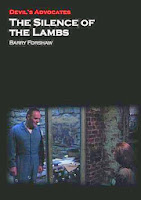 But don’t just take my word for it; read Paul Worts review, written in association with Film Four’s Frightfest Festival:
The celebration was opened by current CWA chair Alison Joseph, who announced the hotly anticipated results of a CWA poll meant to determine the foremost author and books in this genre. In case you’ve forgotten, here are the winners:
CWA Best Ever Novel:
The Murder of Roger Ackroyd (1926), by Agatha Christie
CWA Best Ever Crime Author: Agatha Christie
CWA Best Ever Crime Series:
Sherlock Holmes, from Arthur Conan Doyle
Barry’s job that evening was to moderate a panel debate, which featured fellow writers David Stuart Davies, Belinda Bauer, and Zoë Sharp. They discussed and dissected the “greats” in the crime, mystery, and thriller field. Barry proved to be rather mischievous, reiterating all-too-familiar knocks against the masters (Agatha Christie just wrote puzzle books, some of Raymond Chandler’s work had no discernible plot, Thomas Harris was solely responsible for the glut of serial-killer novels, etc.). Barry admitted to me later that he was concerned attendees who didn’t realize he had planned to play devil’s advocate might be offended by his approach. And in fact, there were some negative murmurs behind me, with listeners disturbed that Barry was being unkind to their “sacred cows,” and a tad flippant--though that was the whole point of the discussion, to provoke heated disagreements. Despite such undercurrents of displeasure, the session was highly amusing and informative, and there were some terrific insights delivered on crime-fiction classics.
I had the chance to film much of the discussion, and you can enjoy the results of that effort below, in three parts:
finds energy and hours enough to edit Crime Time magazine as well as appear (in his trademark dark suits) on television programs and in DVDs examining the genres he loves.Most of us in the British crime- and thriller-fiction community are familiar with his book reviews, film criticism, and articles, and also with his more recent involvement with Nordic crime fiction. (That latter interest stemmed largely from his being the first biographer of Stieg Larsson.) Mention must be made as well of the fact that Forshaw edited the invaluable resource British Crime Writing: An Encyclopedia (2009), drawing together contributions from many of his fellow writers and reviewers. I was one of those people, and the published two-volume work sits proudly on my bookshelf.
A little while back, Barry contacted me because he knows of my longstanding devotion to the work of Thomas Harris, and that I first corresponded with the reclusive Harris a few decades ago. Barry had been commissioned by Auter Publications to pen a critical examination (for Auter’s Devil’s Advocate line) of The Silence of the Lambs--both Harris’ 1988 novel and director Jonathan Demme’s subsequent film adaptation (scripted by Ted Tally). Barry has since completed that examination, the publication of which was timed to coincide with the 25th anniversary of the debut of The Silence of the Lambs, a work that really changed the direction of the crime novel, moving it toward the Gothic horror side of the street. I would urge you to purchase a copy of Random House UK’s 25th anniversary edition of Silence, if only to enjoy Harris’ short but interesting new introduction. I also can’t speak highly enough of Barry Forshaw’s Auter study of that novel, an excellent companion to one of this genre’s milestone works.
But don’t just take my word for it; read Paul Worts review, written in association with Film Four’s Frightfest Festival:
To coincide with the 25th anniversary of the publication of Thomas Harris’s novel ‘The Silence of the Lambs’, Auteur Publishing have released a new addition to their Devil’s Advocates series. Author Barry Forshaw begins with a look into the origins and inspirations for writer Thomas Harris’s first foray into the twisted mindset of Dr. Hannibal Lecter, (‘Red Dragon’ 1981) and the subsequent film adaptation by Michael Mann. He then dissects the world-famous follow-up novel and Oscar winning screen interpretation directed by Jonathan Demme and continues on his dissection of the Lector legacy with the resulting ‘Hannibal’ and ‘Hannibal Rising’ novel and films (not forgetting the almost entirely forgettable 2002 film ‘Red Dragon’), and ending up with the current television series: ‘Hannibal’.In the wake of my excitement over Forshaw’s book and Harris’ novel, I recalled a presentation Barry gave during the Crime Writers’ Association’s 60th anniversary party in London, held on Guy Fawkes’ Night (November 5). It found Barry yet again playing devil’s advocate.
Little is known about the less than prolific (5 novels in 38 years) author Thomas Harris. Refusing to give interviews or even do book signings, the most significant detail we do know is that as an editor and reporter he covered crime-related events and he spent time at the F.B.I. researching serial killers for his second novel: ‘Red Dragon’(1981). Whilst there he (naturally) came across the case of our old friend, the famous farmer fiend from Wisconsin, Ed Gein. Forshaw wastes little time in wheeling out the well-known and well-worn influences Gein had on both Robert Bloch’s novel ‘Psycho’ and Hitchcock’s cinematic masterpiece. However, to his credit, Forshaw also includes lesser-known works such as Jack Smight’s ‘No Way to Treat a Lady’ (1968), and suitably tips his hat to the giallo works of Bava and Argento in particular in filmic influences.
The celebration was opened by current CWA chair Alison Joseph, who announced the hotly anticipated results of a CWA poll meant to determine the foremost author and books in this genre. In case you’ve forgotten, here are the winners:
CWA Best Ever Novel:
The Murder of Roger Ackroyd (1926), by Agatha Christie
CWA Best Ever Crime Author: Agatha Christie
CWA Best Ever Crime Series:
Sherlock Holmes, from Arthur Conan Doyle
Barry’s job that evening was to moderate a panel debate, which featured fellow writers David Stuart Davies, Belinda Bauer, and Zoë Sharp. They discussed and dissected the “greats” in the crime, mystery, and thriller field. Barry proved to be rather mischievous, reiterating all-too-familiar knocks against the masters (Agatha Christie just wrote puzzle books, some of Raymond Chandler’s work had no discernible plot, Thomas Harris was solely responsible for the glut of serial-killer novels, etc.). Barry admitted to me later that he was concerned attendees who didn’t realize he had planned to play devil’s advocate might be offended by his approach. And in fact, there were some negative murmurs behind me, with listeners disturbed that Barry was being unkind to their “sacred cows,” and a tad flippant--though that was the whole point of the discussion, to provoke heated disagreements. Despite such undercurrents of displeasure, the session was highly amusing and informative, and there were some terrific insights delivered on crime-fiction classics.
I had the chance to film much of the discussion, and you can enjoy the results of that effort below, in three parts:
Monday, March 25, 2013
Scandinavian Nights: Nordic Noir and Wallander
(Editor’s note: In the essay below, British editor and critic Barry Forshaw briefs us on the roots of his passion for crime fiction, as well as on his latest
non-fiction work about Nordic crime fiction.)
It’s the Americans that got me started.
My lifelong love of crime fiction certainly began with such Brits as Arthur Conan Doyle, Graham Greene, and Eric Ambler, but I found myself perfectly able to resist (for quite some time) the cozy charms of Agatha Christie and her comfortable, unreal world; a qualified appreciation came later. Ah, but the Americans! I know I’m not alone among British crime-fiction aficionados in finding my first acquaintance with such writers as Raymond Chandler and Dashiell Hammett to be like a bolt from the blue--prose written with such pungency that the British variety seemed rather thin-blooded. And then I discovered Ross Macdonald ... and never looked back.
By the time I began reviewing crime for a variety of newspapers, though, I was covering writers from all points of the compass--and I realized that even among people who knew me, my initial enthusiasm for the American writers was actually something I hadn’t written about (this was before I began to publish books on crime fiction). After all, I was rather too young to have reviewed The Big Sleep when it first appeared. Or even The Galton Case.
I’m more likely these days to be covering Jo Nesbø or Jussi Adler-Olsen. And the result? American and British writers I meet can bridle whenever the words “Scandinavian crime” are mentioned. After an otherwise amiable evening spent with a well-known writer recently, I was asked, with a tight smile just this side of friendliness: “Why the hell do you continue promoting these Nordic writers in book after book--and in review after review? What about the Americans and the British? Don’t we deserve a mention now and again?” I can only protest, feebly, that if (after I’m pushing up the daisies) anybody cares to tally the nationalities of the crime writers I’ve covered, the Scandinavians would be massively outnumbered by, say, the Brits (I do, after all, have three books under my belt with the same word in the title: British Crime Writing, British Crime Film, and--shortly--British Gothic Cinema). But perhaps every writer on the planet feels that he or she is not receiving enough attention. (Gone, I suspect, are the days when writers would, like Kafka, suggest that their agents burn their complete output.)
I’ve ruefully come to an accommodation with myself: I just have to ride with the punches while the “Scandi Crime” wave continues to roll over everything--and I continue to be seen as one of its spokesmen. After all, my new book is Nordic Noir (Oldcastle/Pocket Essentials).
I was musing on this recently, after being asked to interview the great Krister Henriksson--most viewers’ favorite Kurt Wallander--for a new magazine called (like my tome!) Nordic Noir.
Henriksson, who is best known for playing detective Wallander in a widely praised Swedish TV series based on Henning Mankell’s best-selling novels, will make his West End debut in Doktor Glas, which transfers to London following its acclaimed run at Sweden’s National Theatre.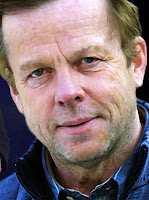 Adapted from the classic novel by Hjalmar Söderberg (and performed in its original Swedish with English surtitles),
 it will preview at Wyndham’s Theatre on April 16.
(Right) Actor Krister Henriksson
But I’m here, principally, to talk about his role as Henning Mankell’s dour and intuitive Swedish copper with the troubled private life. As we sip aquavit, I tentatively bring up with Henriksson the tricky subject of which, among the three actors who’ve portrayed Wallander (Rolf Lassgård and Kenneth
Branagh being the other two), is Mankell’s favorite--and point out
how the novelist always gives a diplomatic answer when asked this question.
Henriksson smiles; he’s also been asked this before.
“Yes, Henning is always diplomatic when he’s asked this question--and I appreciate that. After all, what else could he be? When he was in London recently with Kenneth Branagh, he wasn’t going to say, ‘Of course, Krister is my favorite!’
“Although speaking for myself, it wasn’t a part I instantly leapt at. When it was first offered to me, I said firmly no, no, no. I really didn’t want to do it, not least because of the length of the production. I simply didn’t want to make the kind of commitment that filming a series like that would involve--I have lots of things I want to do in the theater, and I was genuinely resistant to taking the part. Of course, this had one corollary effect--every time they came back to me, the proposed salary was being adjusted upwards. But this wasn’t why I was resisting--I genuinely wanted to do other things. And I had always described myself as a theater actor first and foremost.
“And then they sent the man himself to persuade me. And Henning Mankell is a man it is very difficult to say no to. He asked me why I kept declining--and I told him one of the reasons was quite simply that I hadn’t read the books.” Henriksson laughs. “But when I read them--I read three of them--I thought to myself: ‘Why the hell didn’t they offer me this part first, rather than Rolf Lassgård?’”
So what finally persuaded Henriksson, after all this pleading, to accept the role? Was it really just reading the books? “No,” he replies, “it was something else. Actually, to be frank, it was that meeting with Henning Mankell. We instantly established contact and had this strange sensation that we had known each other for a long time, even though we had just met.
“I’m glad that Wallander was so popular in the UK--not least because I had a hand in writing the scripts; that was, in fact, part of the reason why I said yes.”
I’ve tried to anatomize the nigh-obsessive appeal of this subject, meeting virtually every key practitioner in every corner of the field. If that means a few more British crime writers will cross me off their Christmas card list, well, I suppose it’s a price I’ll have to pay ...
In the video above, Wallander star Krister Henriksson and author Henning Mankell talk about the character of Ystad, Sweden’s favorite fictional detective.
It’s the Americans that got me started.
My lifelong love of crime fiction certainly began with such Brits as Arthur Conan Doyle, Graham Greene, and Eric Ambler, but I found myself perfectly able to resist (for quite some time) the cozy charms of Agatha Christie and her comfortable, unreal world; a qualified
appreciation came later. Ah, but the Americans! I know I’m not alone among British crime-fiction aficionados in finding my first acquaintance with such writers as Raymond Chandler and Dashiell Hammett to be like a bolt from the blue--prose written with such pungency that the British variety seemed rather thin-blooded. And then I discovered Ross Macdonald ... and never looked back.By the time I began reviewing crime for a variety of newspapers, though, I was covering writers from all points of the compass--and I realized that even among people who knew me, my initial enthusiasm for the American writers was actually something I hadn’t written about (this was before I began to publish books on crime fiction). After all, I was rather too young to have reviewed The Big Sleep when it first appeared. Or even The Galton Case.
I’m more likely these days to be covering Jo Nesbø or Jussi Adler-Olsen. And the result? American and British writers I meet can bridle whenever the words “Scandinavian crime” are mentioned. After an otherwise amiable evening spent with a well-known writer recently, I was asked, with a tight smile just this side of friendliness: “Why the hell do you continue promoting these Nordic writers in book after book--and in review after review? What about the Americans and the British? Don’t we deserve a mention now and again?” I can only protest, feebly, that if (after I’m pushing up the daisies) anybody cares to tally the nationalities of the crime writers I’ve covered, the Scandinavians would be massively outnumbered by, say, the Brits (I do, after all, have three books under my belt with the same word in the title: British Crime Writing, British Crime Film, and--shortly--British Gothic Cinema). But perhaps every writer on the planet feels that he or she is not receiving enough attention. (Gone, I suspect, are the days when writers would, like Kafka, suggest that their agents burn their complete output.)
I’ve ruefully come to an accommodation with myself: I just have to ride with the punches while the “Scandi Crime” wave continues to roll over everything--and I continue to be seen as one of its spokesmen. After all, my new book is Nordic Noir (Oldcastle/Pocket Essentials).
I was musing on this recently, after being asked to interview the great Krister Henriksson--most viewers’ favorite Kurt Wallander--for a new magazine called (like my tome!) Nordic Noir.
* * *
“My career as an actor,” Krister Henriksson tells me (as London taxis creep around the eponymous Seven Dials obelisk below his hotel), “could have been very short-lived. During a performance of Ibsen’s Peer Gynt in my 20s, I fainted onstage--and when I came to I was in hospital. They told me I had fainted because of stage fright--not the best thing to happen to a young actor early in his career, was it?”Henriksson, who is best known for playing detective Wallander in a widely praised Swedish TV series based on Henning Mankell’s best-selling novels, will make his West End debut in Doktor Glas, which transfers to London following its acclaimed run at Sweden’s National Theatre.
 Adapted from the classic novel by Hjalmar Söderberg (and performed in its original Swedish with English surtitles),
 (Right) Actor Krister Henriksson
But I’m here, principally, to talk about his role as
“Yes, Henning is always diplomatic when he’s asked this question--and I appreciate that. After all, what else could he be? When he was in London recently with Kenneth Branagh, he wasn’t going to say, ‘Of course, Krister is my favorite!’
“Although speaking for myself, it wasn’t a part I instantly leapt at. When it was first offered to me, I said firmly no, no, no. I really didn’t want to do it, not least because of the length of the production. I simply didn’t want to make the kind of commitment that filming a series like that would involve--I have lots of things I want to do in the theater, and I was genuinely resistant to taking the part. Of course, this had one corollary effect--every time they came back to me, the proposed salary was being adjusted upwards. But this wasn’t why I was resisting--I genuinely wanted to do other things. And I had always described myself as a theater actor first and foremost.
“And then they sent the man himself to persuade me. And Henning Mankell is a man it is very difficult to say no to. He asked me why I kept declining--and I told him one of the reasons was quite simply that I hadn’t read the books.” Henriksson laughs. “But when I read them--I read three of them--I thought to myself: ‘Why the hell didn’t they offer me this part first, rather than Rolf Lassgård?’”
So what finally persuaded Henriksson, after all this pleading, to accept the role? Was it really just reading the books? “No,” he replies, “it was something else. Actually, to be frank, it was that meeting with Henning Mankell. We instantly established contact and had this strange sensation that we had known each other for a long time, even though we had just met.
“I’m glad that Wallander was so popular in the UK--not least because I had a hand in writing the scripts; that was, in fact, part of the reason why I said yes.”
* * *
So, back to the coffee machine and a cool London dusk outside my window, as I write up my interview with Henriksson. And, meanwhile, put the finishing touches to Nordic Noir. The latter is sub-titled The Pocket Essential Guide to Scandinavian Crime Fiction, Film & TV, and attempts to be a compact and
authoritative trawl through a phenomenally popular genre, from Maj Sjöwall and
Per Wahlöö’s highly influential Martin Beck series and Henning Mankell’s Wallander (as mentioned above), to Stieg Larsson’s The
Girl with the Dragon Tattoo and cult TV hits such as The
Killing, The Bridge, and Borgen, up to the hugely successful books and movies of the current king in this field, Norway’s Jo
Nesbø. (I’ve tried this before with Death in a Cold Climate, but Nordic
Noir is a more compact, accessible guide--and shopping list--collecting all
the new novels, films, and TV series that have appeared since the last book was published.)I’ve tried to anatomize the nigh-obsessive appeal of this subject, meeting virtually every key practitioner in every corner of the field. If that means a few more British crime writers will cross me off their Christmas card list, well, I suppose it’s a price I’ll have to pay ...
In the video above, Wallander star Krister Henriksson and author Henning Mankell talk about the character of Ystad, Sweden’s favorite fictional detective.
Subscribe to:
Posts (Atom)