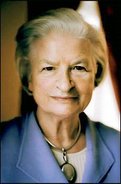
Showing posts with label P.D. James. Show all posts

Saturday, January 23, 2021

Bullet Points: Justly Overloaded Edition

• Earlier this month, I noted that among the authors whose work I read for the first time in 2020 were Rachel Maddow and Michael Yarvitz, who last year gave us the remarkable—and remarkably sleazy—Bag Man: The Wild Crimes, Audacious Cover-up, and Spectacular Downfall of a Brazen Crook in the White House. That non-fiction tale recounts the swift rise and ignominious toppling, in 1973, of Spiro Agnew, U.S. President Richard M. Nixon’s first vice president. Prior to picking up Maddow and Yarvitz’s book, I had only a vague recollection of the financial kicbacks that had provoked Agnew’s (not wholly voluntary) resignation, just 10 months before Nixon himself quit in the wake of the Watergate scandal. And I had no memory whatsoever of the fact, mentioned in their penultimate chapter, that Agnew had tried his hand at fiction writing after leaving government. They explain that his 1976 political thriller, The Canfield Decision,
centered on a fictional vice president who—and this was not much of a stretch—was eventually crippled by his own ambition. The protagonist, Porter Canfield (“wealthy, handsome and self-assured”), did manage to bed the “beautiful, amber-eyed” secretary of health, education and welfare. Agnew was sarcastically credited for “extreme inventiveness,” in a New York Times review, but that was as good as it got. The book was widely panned as a “mean-spirited piece of work” in which Agnew bitterly took aim at his old targets. “The book is anti-press, anti-Semitic, anti-woman and anti-black,” wrote one reviewer.
A frequent Goodreads reviewer describes The Canfield Decision as “wondrous in its baffling badness.” Nonetheless, if you would like a copy for yourself, I see Abebooks currently has used editions available for as little as $1 for a paperback, and $4 for a hardcover. Before his death in 1996, Agnew penned one more book, this time a memoir, Go Quietly ... or Else (1980), which Wikipedia says “protested his total innocence of the charges that had brought his resignation, and claimed that he had been coerced by the White House to ‘go quietly’ or face an unspoken threat of possible assassination.”

• The British Crime Writers’ Association has a new sponsor for its annual international writing competition for unpublished authors. Crimespree Magazine reports that “ProWritingAid, a platform that operates as a grammar checker, style editor and writing mentor,” will lend its support to the CWA’s Debut Dagger award. Incidentally, submissions to the 2021 contest are currently being accepted. Entrants should “send in their first 3,000 words and a 1,500-word synopsis of their novel. Writers do not need to have completed their novel in order to enter.” The deadline for entries is Friday, February 26.

• With COVID-19 still raging around the globe, is anybody remotely shocked by news that the release of the 25th James Bond picture, No Time to Die, has been delayed—again? As The Hollywood Reporter recalls, that picture “was set to open on April 2. Now, it is planning to hit the big screen on Oct. 8 as Hollywood faces more delays before moviegoing resumes in earnest. No Time to Die is likely to spark another wave of high-profile moves among spring and early summer movies.” There’s one surprise regarding this latest rescheduling, though, writes Bill Koenig in The Spy Command: “The announcement on [production company] Eon’s official website said No Time to Die will be released ‘globally’ on Oct. 8. Typically, Bond films are spread out a bit, often starting in the U.K. but not arriving in the U.S. until days later. We’ll see if a simultaneous release actually happens.”

I mentioned on this page last summer that the PBS-TV umbrella series Masterpiece is co-producing, with Eleventh Hour Films, a six-part drama based on Anthony Horowitz’s 2017 whodunit, Magpie Murders. Now comes word that 64-year-old British actress Lesley Manville has been cast in the prominent role of Susan Ryeland, a book editor “who is given an unfinished manuscript of author Alan Conway’s latest mystery novel, with little idea it will change her life.” A Masterpiece news release quotes Manville as saying, “I could not be happier to be playing Susan Ryeland—what a fabulous character for me to grapple with!” The actress’ stage, film, and TV career of more than four decades long has made her a critical success, but I’m not sure I would have signed her up to play Ryeland. For one thing, she’s quite a bit older than the character Horowitz describes. In last year’s Magpie sequel, Moonflower Murders, the author gives Ryeland’s age as 48, which means that she would’ve been in her mid-40s in Magpie Murders, not her mid-60s. I might have hesitated over hiring Manville, too, because I see Ryeland as a sympathetic figure, and Manville has made herself synonymous with some demonstrably unsympathetic characters in the past. For instance, she appeared as starchy British Prime Minister Margaret Thatcher in the UK’s 2009 drama-documentary The Queen; as James Bond creator Ian Fleming’s snobbish mother in the 2014 mini-series Fleming: The Man Who Would Be Bond; and as the chilly, misanthropic Robina Chase in BBC One’s more recent World on Fire. Still, part of appreciating fiction to the fullest is suspending one’s disbelief in the improbable. So let’s wait and see what Manville can bring to her portrayal of Susan Ryeland. Horowitz is preparing the script for this small-screen rendering, and he’s sufficiently creative to reshape his character to fit whoever plays her.

• A new series based on P.D. James’ Adam Dalgliesh novels is coming to Acorn TV, according to Mystery Fanfare. “Bertie Carvel will play Detective Chief Inspector Dalgliesh,” explains Janet Rudolph. “The 43-year-old English actor is best known for his roles in Doctor Foster, The Crown, The Pale Horse, and Jonathan Strange & Mr. Norrell. [This new] Dalgliesh will begin in 1970s England, following Dalgliesh’s career as he solves unusual murders and reveals buried secrets.” Watch for this show’s premiere sometime later in 2021.

• It seems next month is shaping up to be a good one for television viewing. Literary Hub reports that The Luminaries, a six-part adaptation of Eleanor Catton’s Man Booker Prize-winning 2013 novel of that same name, will finally begin streaming in the States on Valentine’s Day, February 14, via STARZ. This British-New Zealand mini-series starring Eve Hewson, Himesh Patel, and ex-“Bond girl” Eva Green was broadcast last summer in the UK. A trailer is below.


• The recent posting of an official teaser for the CBS-TV psychological thriller Clarice—inspired by Thomas Harris’ best-selling 1988 novel, The Silence of the Lambs, and debuting on February 11—has Literary Hub wondering when Dr. Hannibal Lecter will make an appearance on this midseason replacement series.

• In Reference to Murder brings word that “Netflix has given a series order to The Lincoln Lawyer, a drama based on Michael Connelly’s series of bestselling novels, from Big Little Lies and Big Sky creator, David E. Kelley and A+E Studios. This is a new incarnation of the project, which originally was set up at CBS with a series production commitment last season. Manuel Garcia-Rulfo (The Magnificent Seven) has been tapped to play the titular character in the Netflix series as it honors the story’s Hispanic origins. The 10-episode first season is based on the second book in the Lincoln Lawyer series, The Brass Verdict.” A big-screen adaptation of Connelly’s 2005 Edgar-nominated novel, The Lincoln Lawyer, debuted in 2011.

• The Fall River, Massachusetts, home in which Lizzie Borden resided when her father and stepmother were murdered in August 1892—allegedly by Lizzie’s own axe-wielding hand—is currently for sale. CNN says that eight-bedroom house, built in 1845, can be yours for the paltry sum of $2 million. Any takers out there?

Your quirky musical entertainment for this weekend.

Perfect for Ellery Queen fans: “The American Mystery Classics Book Club”—linked to Otto Penzler’s publishing line of that same name, which last year released a fresh edition of Queen’s The Dutch Shoe Mystery—“will be meeting on Zoom on February 1st at 6:30 p.m. EST to discuss [that] puzzling tale of murder in the hospital …” The event will be free to the public, and feature a special guest: Richard Dannay, the son of Ellery Queen co-creator Frederic Dannay. Simply drop an e-mail note to charles@penzlerpublishers.com to RSVP.

• Well, this should be fun! Down & Out Books will publish, in February, The Great Filling Station Holdup: Crime Fiction Inspired by the Songs of Jimmy Buffett. The collection takes its title from an early and boisterous Buffett song, first released as a single in 1973. (On the flipside was
“Why Don’t We Get Drunk.”) As Kristopher Zgorski writes in BOLO Books, “editor Josh Pachter presents sixteen short crime stories by sixteen popular and up-and-coming crime writers, each story based on a song from one of the twenty-eight studio albums Jimmy has released over the last half century, from Leigh Lundin’s take on ‘Truckstop Salvation’ (which appeared on Jimmy’s first LP, 1970’s Down to Earth) to M.E. Browning’s interpretation of ‘Einstein Was a Surfer’ (from Jimmy’s most recent recording, 2013’s Songs from St. Somewhere).” Other contributors include Michael Bracken, Don Bruns, Isabella Maldonado, Rick Ollerman, John M. Floyd, Alison McMahan, and Robert J. Randisi. As a veteran fan of Buffett’s music (I was introduced to it by my roommates way back in college), I’m more than likely to procure a copy of this book for my library. There’s no listing for it yet on Amazon, but Down & Out invites you to “pre-order” it here. The book boasts a most eye-catching cover!

• Author Max Allan Collins wrote, in a recent blog post, that he’s working on a “coda” to his popular series about the hired killer known only as Quarry. Since Collins referenced this in association with remarks about Skim Deep (2020), which he says is “a coda”—or concluding entry—“to the Nolan series,” I presumed that his forthcoming Quarry novel, to be titled Quarry’s Blood and published by Hard Case Crime, would also bring the Quarry series to a close. Au contraire! As Collins tells me in an e-mail note, “Quarry’s Blood is a coda but not necessarily the last book. If we know anything about the series, it’s that I don’t write them in chronological order.” Ah, so Quarry’s Blood will follow chronologically from The Last Quarry (2006), but won’t mark an end to the often-sexy adventures of Collins’ hit man. I haven’t seen a publication date yet for Quarry’s Blood, but it will carry cover art (left) by the great Ron Lesser.

• Although Quarry’s end isn’t near, Collins explains that “Quarry production will likely slow” in the near future, because the author is planning to move his longer-running series, about Chicago private eye Nathan Heller (Do No Harm), to Hard Case Crime as well. And HCC editor “Charles [Ardai]—who is incredibly supportive—doesn’t want more than one book a year from me. So I’ll likely do a Heller, a Quarry, a Heller, and so on in a yearly fashion until the show is over.”

• I’m a bit tardy in offering my condolences to the family of Peter Mark Richman, the Philadelphia-born actor who passed away on January 14, aged 93, but am no less sincere because of that delay. If you look at Richman’s credits on the International Movie Database (IMDb), you’ll see he was incredibly prolific during his six-decades-long career. Richman appeared in more than two dozens films and on TV shows ranging from The Wild Wild West, Blue Light, Voyage to the Bottom of the Sea, Hawaii Five-O, Banacek, and McCloud to Barnaby Jones, Starsky and Hutch, T.J. Hooker, Matlock, and Star Trek: The Next Generation. He starred in the 1961-1962 TV crime drama Cain’s Hundred (see its opening and closing sequences here), and he played Duke Paige, the friend and occasional employer of blinded insurance investigator Mike Longstreet (James Franciscus) on ABC-TV’s 1971-1972 series Longstreet. Richman also produced at least three books: Hollander’s Deal (2000) and The Rebirth of Ira Masters (2001), both novels; and Peter Mark Richman: I Saw a Molten, White Light …: An Autobiography of My Artistic and Spiritual Journey (2018).

• Also now deceased is Gregory Sierra, who—to quote from The Hollywood Reporter—“endeared himself to 1970s sitcom fans as the genial Julio Fuentes on Sanford and Son and the impassioned Sgt. Miguel ‘Chano’ Amenguale on Barney Miller.” Defined by the Reporter as a “proud Puerto Rican New Yorker,” Sierra died on January 4 at age 83, following “a battle with cancer.” In addition to his aforementioned small-screen roles, Sierra filled guest slots on It Takes a Thief, Ironside, Mission: Impossible, Banyon, Columbo, Hill Street Blues, Miami Vice, and Murder, She Wrote.

• Before we venture too far from the subject of Longstreet, let me point out that it’s one of seven series highlighted in Keith Roysdon’s CrimeReads piece about “classic TV’s most unusual investigators.” Other shows he recalls include Coronet Blue, The Immortal, and Cannon. I’m only surprised he didn’t bring up Randall and Hopkirk (Deceased), the 1969-1970 British series featuring a really offbeat mystery-solver—the ghost of a gumshoe slain in the line of duty.

• Four other CrimeReads pieces worth reading: Olivia Rutigliano’s introduction to Arsène Lupin, the gentleman thief created in 1905 by French writer Maurice Leblanc, who also inspired the character played by Omar Sy in the new Netflix series Lupin; a second piece by Rutigliano, looking back at how Leblanc endeavored to incorporate Sherlock Holmes into a Lupin story; Neil Nyren’s excellent primer on the 10 Martin Beck detective novels composed in the 1960s and ’70s by Maj Sjöwall and Per Wahlöö; Camilla Bruce’s mini-biographies of “The Most Notorious Lonely Hearts Killers of All Time”; Sabina Stent’s reassessment of Hollywoodland, the 2006 movie portraying the complex life and alleged 1959 suicide of George Reeves, who starred in The Adventures of Superman; and yet another Rutigliano article (she has been busy of late), this one about how Edgar Allan Poe’s C. Auguste Dupin changed detective fiction forever.

• I, for one, am enjoying the new, all-digital, full-color version of Deadly Pleasures Mystery Magazine, edited by George Easter. Its latest quarterly edition (#90) was sent out earlier this week. Among the contents can be found a profile of author Louise Penny; George H. Madison’s delightful remembrance of Harold Q. Masur’s Scott Jordan mysteries; another recap of Sjöwall and Wahlöö’s Martin Beck tales, this one by Donus Roberts; obituaries of Parnell Hall, John le Carré, Alanna Knight, John Lutz, and DPMM reviewer Sally Sugarman; and the typical abundance of reviews covering books issued on both sides of the Atlantic. The magazine is now e-mailed to subscribers, for the low annual price of $10. Click here for ordering information.

• If you thought critics had long ago finished applauding the crime and mystery fiction of 2020, you would be incorrect. Earlier this month Sons of Spade’s Jochem van der Steen identified his favorite private-eye stories from last year, while Robert Lopresti provides his 12th annual list of best short stories in this SleuthSayers post.

• Finally, Amazon’s online book review, formerly called Omnivoracious, has sadly gone downhill over the last few years, becoming even more celebrity-oriented than it started. I have continued, however, to check out its contents every once in a while, and even included it in Killer Covers’ news-aggregating blogroll. But now I give up. An announcement reached my e-mailbox yesterday, saying that what’s now known simply as The Amazon Book Review (boy, I hope nobody made a dime off that pinheaded name change!) has migrated from its previous location to this one inside the larger Amazon.com sales realm. In the process it abandoned its RSS Web feed, so can no longer be accessed by news-aggregating tools built into blog-publishing services. So arrivederci, Amazon Book Review!

Saturday, October 24, 2020

A Basketful of Oddments

• In late August, Rap Sheet contributor Steven Nester wrote a review of the “forgotten” 1999 neo-noir novel East of A, Russell Atwood’s first of two mysteries starring New York City private eye Payton Sherwood. (Its sequel was 2009’s Losers Live Longer.) Then just last week, I received an e-note from Atwood himself, saying, “I have a new novel out, not a Payton Sherwood mystery but a haunted house novel with a difference.” Titled Apartment Five Is Alive, the book was released in late September. Atwood adds: “Currently, I am a bookshop owner in my hometown of Westfield, Massachusetts, and I wrote this novel specifically to save my bookstore from closing, so I hope you can see your way to promoting it.” His business, it turns out, is Blue Umbrella Books, in downtown Westfield, and as this story for Western Mass News makes clear, it has been hurt partly by “a combination of online book sales, Audibles, and digital books.” This year’s COVID-19 pandemic has done further damage to Blue Umbrella’s prospects. Atwood created a GoFundMe page last December, but he’s apparently not yet achieved his funding goal of $10,000. With Halloween on the horizon, it’s certainly the right time to think about buying a haunted house tale. If your purchase can also improve the chances that an independent bookstore can keep its lights on, so much the better. To learn more about Apartment Five Is Alive, visit its Amazon page. Then scroll down to a video of Atwood reading his new novel’s opening chapter.

• Despite it being only late October, Publishers Weekly is already out with its “best books of 2020” list. Included are a dozen picks from the mystery/thriller stacks, among them Rachel Howzell Hall’s And Now She’s Gone, Matthew Carr’s Black Sun Rising, Stuart Turton’s The Devil and the Dark Water, Karen Dionne’s The Wicked Sister, and David Heska Wanbli Weiden’s Winter Counts.

From In Reference to Murder: The finalists for the An Post Irish Book Awards were announced this week. Readers and fans will be able to vote online for their favorites through November 16, with the category winners to be announced in a virtual awards ceremony on November 25th. Those vying for Best Crime Fiction [are] The Nothing Man by Catherine Ryan Howard; The Cutting Place by Jane Casey; Our Little Cruelties by Liz Nugent; After the Silence by Louise O'Neill; The Guest List by Lucy Foley; and Fifty Fifty by Steve Cavanagh.” Click here to choose your favorite from among those.

• Deadline reports that The Son, Norwegian writer Jo Nesbø’s 2014 standalone vengeance thriller, The Son, is being adapted as a TV series for HBO. Jake Gyllenhaal (The Sisters Brothers, Velvet Buzzsaw) has been signed to star in the production.

• Meanwhile, actor Bertie Carvel (Jonathan Strange & Mr. Norrell) will take the lead in a six-episode UK TV series based on P.D. James’ stories about UK police detective Adam Dalgliesh. The Killing Times says this show “starts in 1970s England and follows Dalgliesh’s career to present day as he solves unusual murders and reveals buried secrets. Each murder mystery will offer its own unique setting and extraordinary cast. The six episodes will comprise three two-part stories, all of which are based on three of the Dalgiesh novels. The novels being adapted for the first season are Shroud for a Nightingale, The Black Tower, and A Taste for Death.” This new Dalgliesh (not to be confused with previous ITV adaptations starring Roy Marsden and Martin Shaw) is expected to air sometime in 2021.

• And this is more ammunition for critics who say there are no new ideas on television these days. Blogger B.V. Lawson says that “NBC has put in development Always Wright, a drama from For Life executive producer Sonay Hoffman and Sony Pictures TV. Written by Hoffman, Always Wright is set in Los Angeles and revolves around a young, wealthy, and jet-setting African-American couple who solve mysteries, run their own successful empires, and are completely head-over-heels in love with each other.” That sounds suspiciously similar to the premise of that 1979-1984 ABC series Hart to Hart?

• What a cock-up! Last week, the small bookshop where I help out had to send back its copies of John Grisham’s latest novel, A Time for Mercy. Shelf Awareness explains why:
At least some copies of A Time for Mercy by John Grisham contain printing errors so extensive that Doubleday has recalled copies and is replacing them. The book’s pub date was last Tuesday, October 13.

The publisher commented: “Doubleday has discovered some defective copies in the first printing of John Grisham’s
A Time for Mercy. We are currently working with our accounts to replace inventory, and have already begun shipping out corrected copies."

One bookseller who is receiving replacement copies tomorrow described the printing errors as including “pages in the wrong order and some repeated with chapter numbers following themselves.” The books were printed in the U.S.
• Finally, we bid a sad good-bye to English novelist Jill Paton Walsh, who died on October 18. Walsh was likely best known to Rap Sheet readers for having completed Dorothy L. Sayers’ previously unfinished Lord Peter Wimsey/Harriet Vane murder mystery, Thrones, Dominations (1998), and then going on to pen three Wimsey continuation novels, including The Last Scholar, which was shortlisted for the Crime Writers’ Association’s Endeavour Historical Dagger award in 2014. Walsh, who also wrote children’s books, was 83 years old. Martin Edwards offers a fond remembrance of her here.

Sunday, July 30, 2017

Bullet Points: Brimming Over Edition

• With so much news about crime-fiction prizes coming out of late, it’s been difficult to keep up with it all. For instance, organizers of the annual Killer Nashville conference (set to take place this year from August 24 to 27 in Tennessee’s capital city) just announced the finalists for their 2017 Silver Falchion Awards. There are 14 categories of contenders for those reader’s choice commendations (10 of which have already been publicized, with more to come), but two of particular interest to Rap Sheet followers are these:

Best Fiction Adult Mystery:
Amaretto Amber, by Traci Andrighetti
The Heavens May Fall, by Allen Eskens
Fighting for Anna, by Pamela Fagan Hutchins
Love You Dead, by Peter James
Coyote, by Kelly Oliver
Grace, by Howard Owen
Exit, by Twist Phelan
Dead Secrets, by L.A. Toth
A Brilliant Death, by Robin Yocum

Best Fiction Adult Thriller:
Blonde Ice, by R.G. Belsky
Blood Trails, by Diane Capri
Ash and Cinders, by Rodd Clark
The 7th Canon, by Robert Dugoni
Clawback, by J.A. Jance
Assassin’s Silence, by Ward Larsen
Child of the State, by Catherine Lea
Blood Wedding, by Pierre LeMaitre
The Last Second Chance, by Jim Nesbitt
Brain Trust, by Lynn Sholes

A full list of 2017 Silver Falchion nominees can be found here.

• Meanwhile, the recipients of this year’s Scribe Awards—sponsored by the International Association of Media Tie-in Writers—were declared on July 21, during the Comic-Con International gathering in San Diego, California. According to a post on the IAMTW’s Facebook page, Assassin’s Creed, by Christie Golden, won in the Best Adapted—General and Speculative category, while Robert B. Parker’s Slow Burn, by Ace Atkins, took home honors in the General Original category. The full list of contenders in both of those groups can be found here.

• And Madrid-born Prague writer David Llorente has been given the Dashiell Hammett Black Novel Award for Madrid: Frontera (2016). Sponsored by the International Association of Black Novel Writers and the Asociación Internacional de Escritores Policíaco, this prize was presented earlier in July, during the annual Semana Negra literary festival in Gijón, Spain. (Hat tip to Janet Rudolph’s Mystery Fanfare.)

• I mentioned way back in March that I had been invited to become a regular columnist for Down & Out: The Magazine, a new crime-fiction digest being planned by Eric Campbell of Down & Out Books, with Rick Ollerman acting as editor. The original idea was to premiere this potential quarterly in June, in both print and e-book formats. However, June came and went, and then July did likewise, and there was still no sign of the thing. As Campbell explained in an e-note sent to contributors this weekend, “due to life events beyond control we are a little behind.” Fortunately, those problems appear to have been resolved at last. The cover of Issue No. 1, touting a new Moe Prager yarn by Reed Farrel Coleman, has been finalized and is shown on the right. Other writers featured this time around include Eric Beetner, Michael A. Black, Jen Conley, Terrence McCauley, and Thomas Pluck. The contents mix will also include a short story from “forgotten master” Frederick Nebel, and the debut of my book review column “Placed in Evidence”—which earns me a welcome cover credit. Campbell’s note suggests Down & Out: The Magazine will be soon become widely available; check its Facebook page and Web page for updates and subscription information. UPDATE: The e-book version of Down & Out: The Magazine can now be purchased from retailers Amazon, Barnes & Noble, and Kobo.

• With a few facts now known about the as-yet-untitled 25th James Bond film, and Daniel Craig having finally been confirmed to star, The Spy Command asks: Might it be appropriate to dedicate that 2019 big-screener to the memory of Roger Moore, who played Agent 007 in seven Bond pictures and died earlier this year at age 89? Were the producers to ask me, I’d say yes, without a doubt.

• There’s lots of speculation about the plot of that next Bond flick. Britain’s Daily Mirror suggests the working title is Shatterhead, and that its story will be based on Raymond Benson’s 2001 Bond continuation novel, Never Dream of Dying. (If so, this would make it the first 007 movie adapted from a continuation novel.) However, in a Facebook post, Benson throws cold water on that rumor: “I know nothing of this, but as I have not spoken with any Mirror journalists at all, I can only assume that the article is a piece of fabrication. It would of course be wonderful if it were true.”

• In association with the release earlier this month of the Library of America omnibus Ross Macdonald: Four Later Novels: Black Money/The Instant Enemy/The Goodbye Look/The Underground Man, editor Tom Nolan has composed an excellent essay about the origins and creation of Black Money, Macdonald’s 1966 Lew Archer private-eye novel. Nolan tells me he’s put together similar pieces about the other three novels contained in this new volume. Those will be posted individually on the Library of America site between now and September, when the three-volume set of LoA’s classic Macdonald tales goes on sale.

• Nancie Clare’s two most recent guests on her Speaking of Mysteries podcast are Glen Erik Hamilton, author of the Van Shaw thriller Every Day Above Ground (Morrow), released just last week; and Karen Dionne, who penned the much-acclaimed psychological suspense yarn The Marsh King’s Daughter (Putnam).

• British “Queen of Crime” P.D. James passed away in 2014, but only now is publisher Faber and Faber getting around to releasing Sleep No More: Six Murderous Tales, a collection of her short stories that The Bookseller says all build around the “dark motive of revenge.” It goes on to explain that James’ yarns “feature bullying schoolmasters, unhappy marriages, a murder in the small hours of Christmas Day, and an octogenarian exerting ‘exquisite’ retribution from the safety of his nursing home.” Sleep No More, something of a companion to last year’s The Mistletoe Murder and Other Stories, should see print in the UK in early October, with an American edition due out from Knopf in mid-November—just in time for holiday gift-giving.

Direct from In Reference to Murder:
Toni Collette’s Vocab Films and RadicalMedia are adapting Julia Dahl’s novel Invisible City
into a [TV] series, with Collette already writing the pilot script. The actress optioned the book and will serve as executive producer along with Jen Turner. Dahl’s novel centers on Rebekah Roberts, whose mother, an Hasidic Jew from Brooklyn, abandoned her Christian boyfriend and newborn baby to return to her religion. Now a recent college graduate, Rebekah has moved to New York City to follow her dream of becoming a big-city reporter, but her coverage of a story involving a murdered Hasidic woman takes her into some uneasy truths and dangerous territory. Click here to revisit my 2017 interview with author Dahl.

• FirstShowing.net has posted an English-translated trailer for Swedish filmmaker Tarik Saleh’s The Nile Hilton Incident, described as “an intense political thriller set against the backdrop of the Egyptian Revolution. … The story is about a police officer investigating the murder of a woman at [Cairo’s Nile] Hilton hotel, who discovers there’s much more going on than it seems.” The picture, which stars Fares Fares, Mari Malek, and Yasser Ali Maher, is scheduled to premiere at select U.S. theaters on August 11.

• Ohio resident Kristen Lepionka, author of The Last Place You Look, delivers a list to The Guardian of what she contends are the “Top 10 Female Detectives in Fiction.” Among her picks: Tana French’s Antoinette Conway, Rachel Howzell Hall’s Elouise “Lou” Norton, Linda Barnes’ Carlotta Carlyle, and Peter Høeg’s Smilla Jaspersen.

• Another character who might have found a spot among Lepionka’s choices, but did not, is Lynda La Plante’s Detective Chief Inspector Jane Tennison, whom we saw portrayed most recently by fetching Stefanie Martini in the prequel series Prime Suspect: Tennison. I had my doubts going into that three-part mini-series, broadcast last month as part of PBS-TV’s Masterpiece Mystery! lineup. I was quite thoroughly convinced beforehand that only Helen Mirren could possibly play the role … only to slowly but surely be swept away by the drama’s characters, plot, and 1970s background music. And I was evidently not the only one to be so struck. In a retrospective piece for Criminal Element, Leslie Gilbert Elman writes, “I was hooked from the first moment with Jane on the double-decker bus and Blind Faith on the soundtrack. If Jane had compiled the soundtrack to her life, it would sound like this one (okay, it would sound like my iPod), and Series 2 would kick off with ‘Won’t Get Fooled Again.’” Unfortunately, there will not be any additional installments; the show was cancelled even before its PBS run. Maybe if it hadn’t sought to resurrect LaPlane’s protagonist, but had instead employed different character names but the same story, it would’ve fared better. We’ll never know.

• Speaking of Masterpiece Mystery!, look to that umbrella series tonight for the seventh and concluding episode of Grantchester, Season 3. Its begins at 9 p.m. ET/PT. If you have missed any of the preceding installments, you can catch yourself up with Leslie Gilbert Elman’s recaps, available here.

• And don’t forget that Season 4 of Endeavour, starring Shaun Evans and Roger Allam (and inspired by the last Colin Dexter’s Inspector Morse novels), will commence its four-episode roll-out on Masterpiece Mystery! come Sunday, August 20.

• For several years now, I’ve been pondering whether to give up my subscription to Esquire magazine, a publication I have been reading ever since the early 1980s (and have the boxes of back issues in my basement to prove it). Do I still fit Esquire’s demographic target, since I no longer aspire to be a snappy dresser, am mostly bored by celebrities, and have no need to keep up with the very latest films, musical groups, or vacation destinations? Probably not. But it seems every time I’m prepared to cancel, Esquire publishes something I would have been sorry to miss, and I put off pulling the plug for another month. The August issue, for example, showcases this profile of English actor Idris Elba, former co-star of The Wire and ex-headliner on Luther. And though it fails to answer the question posed on the cover, “Is Idris Elba the Next James Bond,” it does contain this anecdote about Elba scoring his part on HBO’s The Wire:
The role that changed his life, as Elba puts it, came as a consolation prize. He badly wanted to play drug kingpin Avon Barksdale. David Simon, the show’s creator, was on the casting team; he tells me he had no idea Elba was from London because the actor never broke his American accent throughout the audition process. After several callbacks, the Wire team informed Elba that they wanted him not for Barksdale but for [narcotics trafficker] Stringer Bell.

“I was like, ‘Great, great!’” Elba says. “But really, I was like,
Who?” As initially sketched out in the pilot, Bell came off as a shrewd Baltimore dealer, but Elba set out to make the character more his own, as though asking himself, How the fuck do I approach this to get anything that no one else has done before? “Where I grew up, gangsters had to be smart,” he says. “That whole flashy thing—no, mate. It was suits and smiles. I said, ‘That's how I’m going to make Stringer.'’”
Elsewhere in the August Esquire—though not available online without charge—is Alex Belth’s mini-preview of Lawrence P. Jackson’s new biography, Chester B. Himes (Norton). It includes the suggestion that anyone embarking on a cruise through Himes’ series of Harlem Detectives novels starring Gravedigger Jones and Coffin Ed Johnson would do well to start with All Shot Up (1959). Good advice.

Variety reports on a new original-for-TV series, Safe, being concocted by best-selling author Harlan Coben and starring Michael C. Hall (Dexter). In the show, says Variety, Hall “will play a British pediatric surgeon raising two teenage daughters, Jenny and Carrie, alone after the death of his wife. The family is seemingly safe inside a gated community when the elder daughter sneaks out to a party and a murder and disappearance follow, changing all of their lives.” Safe is a joint venture between Netflix and France’s Canal+ Group.

• T. Jefferson Parker (The Room of White Fire) writes in Criminal Element about his favorite crime movies and novels. No great surprises here, but I am pleased to see him include in the latter category Norman Mailer’s Tough Guys Don’t Dance, a 1984 murder mystery that doesn’t always receive the respect it deserves.

• The latest issue of Mystery Readers Journal focuses on wartime mysteries. You’ll find a complete list of contents, plus links to several stories available online, by clicking here.

• A few author interviews worth checking out, from Mystery People: Rob Hart talks about The Woman from Prague; Bill Loehfelm remarks on The Devil’s Muse; and Jordan Harper has a few things to say about She Rides Shotgun. Finally, one discussion from a different source—K.J. Howe chats with Crimespree Magazine about The Freedom Broker.

• Good news for Amazon streaming customers. According to The Hollywood Reporter, that service is “adding a series of adaptations to its originals lineup from Agatha Christie Limited, the company that manages the literary and media rights to the late English crime novelist’s works. The first show to come from the deal is an adaptation of Ordeal by Innocence, which began production earlier this month in the UK.” No word yet on when these adaptations be broadcast.

• In Shotsmag Confidential, Michael Sears and Stanley Trollip—who write the Botswana-set Detective Kubu series (Dying to Live) as “Michael Stanley”—offer a rather brief, but useful overview of Africa’s underappreciated mystery fiction.

Jon Jordan on the “10 Best Cop Shows Ever.”

• Late last month we brought you the 2017 Macavity Award nominees, including the half-dozen Best Short Story rivals. The winner is set to be identified on Thursday, October 12, during the opening ceremonies at Bouchercon in Toronto, Ontario. If you’d like to read and judge all of those stories before then, however, just click on over to Mystery Fanfare to find the necessary online links.

• By the way, I have to deliver some bad news regarding this year’s Bouchercon. Although I insisted in March that I was going to take part in those festivities, I have subsequently changed my mind. A variety of factors went into this decision, but what ultimately swayed me was my good friend and colleague Ali Karim’s choice not to make the journey either, due to racism and over-the-top airport searches he’s had to endure as an Anglo-Indian male flying from Britain to North America during the time of Trump. (Ali explains some of his experiences here.) If Ali isn’t traveling to Toronto, then a significant part of the enjoyment I usually find at Bouchercon will be missing, so I’m also bowing out. This doesn’t mean I am swearing off Bouchercons; goodness knows, I have had tremendous fun at such convocations over the years, and would like to have more. But this time around, Bouchercon-goers will just have to get along without me.

Thursday, November 27, 2014

Death Comes to James

This is definitely not the sort of news I expected to be waking up to on Thanksgiving morning. From The Guardian:
P.D. James, Lady James of Holland Park, who has died aged 94, was the grande dame of mystery, and a link with the golden age of detective writing that flourished between the wars, the successor to Agatha Christie, Dorothy L. Sayers and Margery Allingham. After Christie’s death, James was called the new Queen of Crime. It was a title she did not at all mind.

Yet Phyllis James had not started writing until her 40s, and said she only wrote a whodunnit as practice for a serious novel. Later on, though, she never fretted about being locked into crime writing. She said she could write everything she wanted while remaining in the genre. She wrote one futuristic satire,
The Children of Men (1992, made into a film in 2006), set in 2021, about the human race facing extinction as a result of infertility but, unlike her great rival Ruth Rendell, did not attempt to break away from crime.
Of James’ first novel, 1962’s Cover Her Face, the paper writes:
In many ways it harked back to the cosy murders of the golden age, set in a country house with a body in a locked room and an old-fashioned cast including the village vicar, a genial country doctor and a home for wayward girls. It featured Adam Dalgliesh, the poet-policeman, and he seemed old-fashioned, too, an intellectual and a trifle upper-class. It was as if the noir school of hardboiled realism had never occurred.

In 1962, on the verge of the swinging 60s, she was lucky to get such a piece published. But
Cover Her Face showed that James had a natural ability to create mystery. The reader was never quite sure what was happening and the uncovering of the murderer came as a complete surprise. James also had the courage to be preposterous. She knew sudden shocks and twists would keep readers engaged. In Cover Her Face, for instance, a prime suspect proves he could not have done it by revealing he has an artificial hand. In Unnatural Causes (1967), there is a specially constructed sidecar in which a man with a weak heart is murdered and taken out of London. At a time when other crime writers were attempting to make their stories more literary, James knew that she was dealing not with real life but a genre that demanded the unbelievable. But while James was happy to remain in detective fiction, the critics often said how literary she was. Kingsley Amis called her “Iris Murdoch with murder”.
My introduction to James came in my 20s, when I picked up a copy of Death of an Expert Witness (1977), her sixth Dalgliesh mystery. I can’t say that I have been a faithful reader of her novels ever since, but I have read a number of them (or, in the case of The Lighthouse, listened to their audiobook versions). And only recently, I watched the BBC One adaptation of her 2011 Jane Austen tribute, Death Comes to Pemberley. (See reviews of that two-part drama here and here.)

I am particularly intrigued by this note in Time magazine’s obituary of James: “James told the BBC last year that she was working on another novel, though she noted, ‘With old age, it becomes very difficult. It takes longer for the inspiration to come, but the thing about being a writer is that you need to write.’” Whether that work-in-progress was completed before her demise this morning, I do not know. But if it ever sees publication, you can bet I’ll find a copy for my own library.

P.D. James spent more than half her life bringing delight and diversion to millions of readers worldwide. With that, if nothing else, she achieved greatness.

READ MORE:P.D. James, Novelist Known as ‘Queen of Crime,’ Dies at 94,” by Marilyn Stasio (The New York Times); “P.D. James: She Was Fascinated by Death All Her Life,” by Jake Kerridge (The Telegraph); “P.D. James: ‘Any of the Events in Phyllis’s Books Might Have Happened,’” by Ruth Rendell (The Guardian); “Farewell, P.D. James,” by Sergio Angelini (Tipping My Fedora); “P.D. James--A Few Thoughts,” by Martin Edwards (‘Do You Write Under Your Own Name?’); “P.D. James (1920-2014)--A Personal Reminiscence by Mike Ripley and Obituary” (Shotsmag Confidential); “Post-40 Bloomers: You’ve Come a Long Way, Lady James,” by Jill Kronstadt (The Millions); “P.D. James, The Art of Fiction No. 141,” interviewed by Shusha Guppy (The Paris Review).

Monday, July 01, 2013

Scribbler Sleuths “Solve” Schemer’s Shooting

Last November, when actor Larry Hagman died at age 81, I went looking for a particular monthly publication I’d remembered saving: the September 1980 edition of Panorama, a short-lived (17 issues only!) features magazine about television produced by TV Guide’s then parent company, Triangle Publications. It was the only issue of Panorama that made it into my long-term storage, the others having been jettisoned as I went through the years and moved from one residence to the next.

What interested me most about that edition of Panorama was a piece, tucked into the middle of its 112 pages, in which several prominent crime-fictionists of the time speculated on who had shot J.R. Ewing, Hagman’s manipulative oil baron character on the popular CBS-TV nighttime soaper, Dallas. That shooting took place at the conclusion of the March 21, 1980, season finale episode of the series, and a resolution to the crime would not be delivered until the November 21, 1980, episode. In the meantime, Panorama editors enlisted an all-star panel of “experts” to figure out whodunit: P.D. James, Nan and Ivan Lyons (Someone Is Killing the Great Chefs of Europe), John D. MacDonald, Emma Lathen, and Collin Wilcox.

Of course, when I searched for that issue of Panorama in late November, I couldn’t find it. There were simply too many boxes of old magazines stuffed away in the corners of my basement. I finally abandoned my quest, fearing I’d lost the magazine.

This last (hot!) weekend, though, I decided to clear out some of my storage. And wouldn’t you know it, I just stumbled across that Panorama I’d been seeking. It proved to be an entertaining reminder of what the American TV landscape was like 32 years ago, with stories about “Why You Can’t Always Trust 60 Minutes Reporting,” the rise of women executives in the broadcasting business, the chances that cable-TV news might overtake conventional network news shows, and an odd breed of programming called “reality TV.”

But the centerpiece of that magazine for me, still, is its collection of five short essays headlined “Dallas and the Smoking Gun: Revealing Who Pulled the Trigger.” I can tell you right now that none of the authors who contributed their speculations to Panorama got the answer right. Yet there’s fun to be had in seeing what reasons they came up with for getting the murderer’s identity wrong.

Click here to view scans of those Panorama pages. And if you don’t remember who actually drew the gun on J.R., the answer is here.

Thursday, October 13, 2011

Pride and Prejudice ... and Murder!

This news release from U.S. publisher Alfred A. Knopf brings word of a novel that you might not expect to receive from 91-year-old P.D. James, but could nonetheless look forward to reading:
Best-selling British novelist P.D. James has written a new book that picks up where Pride and Prejudice left off and introduces a decidedly sinister twist to the Jane Austen classic: a deadly crime. Death Comes to Pemberley will be published by Knopf on December 6th ...

Set in 1803 at Pemberley, the Darcy family estate, five years after Austen concluded her original story, James’ new novel finds Elizabeth and Darcy happily married, with two fine sons, and enjoying regular visits from Elizabeth’s sister Jane and her husband Bingley. There is talk about the prospect of marriage for Darcy’s sister Georgiana, lingering resentment over the elopement of Elizabeth’s sister Lydia with the dishonorable Wickham, and rumors that war will soon break out between England and France.

Still, life continues at Pemberley, and preparations are being made for the annual ball. But on the evening before it is to take place, the idyll is suddenly shattered. There are gunshots and screams, a body is discovered in the woods, and all at once the story evolves into a murder mystery--one recognizable as P.D. James at her best, yet conveyed with all the charm and wit of Jane Austen.

“I have to apologize to Jane Austen,” says James, “for involving her beloved Elizabeth in a murder investigation. It has been a joy to revisit
Pride and Prejudice and to discover, as one always does, new delight and fresh insights. This fusion of my two enthusiasms--for the novels of Jane Austen and for writing detective novels--has given me great pleasure.”
Knopf obviously has high hopes for Death Comes to Pemberley. It’s ordered a first printing of 300,000 copies. The same book will be published in Britain on November 3.

Friday, December 17, 2010

The Book You Have to Read: “An Unsuitable
Job for a Woman,” by P.D. James

(Editor’s note: This is the 111th installment of our ongoing Friday blog series highlighting great but forgotten books. Today’s pick comes from Oregon coast author Kristine Kathryn Rusch, better known to crime-fiction enthusiasts under her pseudonym Kris Nelscott. As Nelscott, she has written six critically acclaimed mystery novels about African-American private eye Smokey Dalton. She’s won the Herodotus Award for Best Historical Mystery, and been short-listed for the Edgar and Shamus awards. Her latest Smokey Dalton short story, “Family Affair,” was reprinted in By Hook or By Crook and 27 More of the Best Crime and Mystery Stories of the Year, edited by Ed Gorman and Martin H. Greenberg. In 2011, WMG Publishing will reissue all six Smokey novels in anticipation of her next installment in that series, The Day After, which will appear in 2012.)

I grew up in a very different time. At the age of 17, I was on the short list to become a page in the United States Senate. Several someones from a Wisconsin high school would be chosen, and my record of extracurricular activities--from debate to Model United Nations--as well as my high grades gave me the best credentials in the state. I was, as my social studies teacher told me, a shoo-in.

Until it came time for the interview. Four of my classmates and I had to travel to Madison, the state capital, to meet the senator and his staff. My four classmates went. I could not.

Not because of anything I had done, mind you. The senator’s staff simply took one look at our list and barred me from attending. Seems I was the only girl in the state to try to become a Senate page.

I didn’t protest. At 17, I already knew there was nothing I could do except hope things would get better. Later that year, I won a prestigious local scholarship that would pay my tuition for all four years of college. That scholarship, given every year to a boy and a girl from the local high school, was the best the school had to offer.

The boy did not have the restrictions built into his scholarship that I had. His scholarship had no restrictions at all. Mine had several, including this one: I would lose the scholarship if I got married while still in college. Silly me, I got married at 19 and forfeited the scholarship. Again, I did not protest the inequity. I knew there was no point--even though I planned to (and did) graduate within the usual four years. Marriage didn’t slow me down. Lack of financial resources hurt, however. I really could have used that money.

At one point, I held four jobs because I had lost that scholarship. Although if I mentioned to my father, a college professor, that I “lost” the scholarship, he would correct me. I had chosen to give it up. True enough. But had I had a penis, I would not have had to make that choice. The inequity was on me solely because of my gender.

One Saturday afternoon, as I manned the used bookstore that provided both one of my four jobs and the only major leak in my income, I stumbled upon a book by a mystery writer who was just becoming famous in the United States. Phyllis Dorothy James White knew all about the inequities that women suffered. Her books resonated with them.

Only I didn’t know that yet, because I had never read a P.D. James novel. The title of this one, An Unsuitable Job for a Woman (1972), caught my eye. It spoke to me for obvious reasons and for reasons not so obvious: the fact that I couldn’t try out for the baseball team even though I was a good hitter, because I was a girl; the fact that I was told to stay out of politics, radio, and medicine, all because I was a girl; and the fact that no one thought anything about those limitations, because it was normal back then to restrict the expectations of girls. Sure, women all over the country, all over the world, were fighting for women’s rights at that point, but the fight was just beginning, and if you mentioned them, you must be one of those bra burners, those wimmen’s libbers, those feministas, all of which sounded really, really bad.

An Unsuitable Job for a Woman. Every job I wanted was unsuitable. Everything I wanted to do was “for boys, honey,” as my mother would gently tell me. Stubborn, resistant girl that I was, I ignored it all. So I picked up James’ book and read it cover to cover.

A confession now: I haven’t re-read that novel in preparation for this essay. I had planned to. Well, actually, I had planned to look through my shelf and find something really obscure, something so forgotten that people would slap their foreheads and go, Oh, yeah! I read that! So I can’t tell you how old-fashioned this P.D. James book is or if it still holds up by modern standards. (It’s P.D. James, so I’m secure in the knowledge that the characters are stellar, the plot good, and the writing fine. I’m just not sure if the politics are, um, politically correct.)

As I thought about The Rap Sheet’s request that I write about a really obscure book, I kept coming back to the James. No one discusses this novel of hers. Cordelia Grey, the heroine, is a one-off. James never revisited her, to my great disappointment.

I loved the book. The unsuitable job, of course, was that of a private detective. Cordelia Grey wasn’t one of those faintly Gothic heroines who fell in love with the man who abused her. She took charge, even when it was hard, and she did things women weren’t supposed to do.

I adored that. So, years later, when I started reading the history of the modern detective novel, and I saw mentions of the largely unsung women who had started the modern female detective subgenre, I was happy. I read about Margaret Maron, who--let’s be honest now--hasn’t ever completely gotten her due outside of the field. I read about Sue Grafton, of course. And about Sara Paretsky, whose writing is exceedingly political and the stronger for it. But all of those writers, at least to me, hark back to Cordelia Grey and her unsuitable job.

Yet no one mentions her anymore. Maybe because she was a one-off. Or maybe because she didn’t influence anyone but me.

My first female detective novel is nearly done. It has taken me 30 years to work up the courage to write about my own gender--at least at novel length. (I have written a number of women-centric short stories for Alfred Hitchcock Mystery Magazine and Ellery Queen Mystery Magazine under my real name, Kristine Kathryn Rusch.) It took me a long time to figure out why I waited to write about a female detective.

It’s because back in the day, I swallowed a lot of anger. I was furious that I--the most qualified candidate--couldn’t meet the United States senator and be considered for that job. I was furious that I had to relinquish a scholarship because of a personal choice that had nothing to do with academics and everything to do with my femaleness. I was furious at being barred from sports, at the sexual harassment that was common at my various jobs, at the casual sexism of my professors and mentors.

And I felt (I still feel) that fury does not make good fiction. Fury makes great speeches. Good fiction has great characters in a great story. Everything else is gravy--especially political points. Political points from a place of fury.

Maybe that’s what I admired most about An Unsuitable Job for a Woman. The title hinted at that fury, but the fury was an undercurrent, barely there. Again, I haven’t re-read the book. I’m not sure if I would see the fury for what it is now, or if I just imagined it.

But it was there for me. Understated, important, and hidden beneath a good story.

For most of my life, I have aspired to write an emotional, political point beneath good storytelling. And I’ve aspired to it because of one book I might never have seen if I had kept that long-ago scholarship. If I hadn’t been in that bookstore, trying to earn my way through college.

I guess that’s a lesson. I’m here despite the limitations I faced. Or maybe because of them. I certainly wouldn’t have discovered Cordelia Grey without them.

Thursday, August 03, 2006

Birthday for a Baroness

It was on this day, in 1920, that now-celebrated crime-fictionist P.D. James (Phyllis Dorothy James) was born at Oxford, England. She has since been heralded as one of the top mystery writers of her generation, with her most recent novel being The Lighthouse (2005). In 1983 she was awarded the Order of the British Empire (OBE), and in 1991 became a life peer and was created as Baroness James of Holland Park, a non-inheritable title.

Although James has said that she always wanted to be a novelist, because of the Second World War, the illness of her husband (she was widowed in 1964), and other matters, she didn’t actually get started on the writing part of becoming an author until she was in her 30s. Her first published work was Cover Her Face (1962), which introduced a character who has since become almost as famous as his creator, Scotland Yard detective and poet Adam Dalgliesh. Despite that fact that James--and Dalgliesh--have gained an immense following, the author has said that, to her, Cover Her Face now seems “disconcertingly like an early Agatha Christie.”

If James’ earliest works were somewhat labored, it didn’t take her long to find her stride. She had perhaps nailed it by 1971 when Shroud for a Nightingale, her fourth Dalgliesh outing, was named as the best novel of the year by the Mystery Writers of America and was also awarded the Macallan Silver Dagger for Fiction by the Britain’s Crime Writers’ Association.

Many books, accolades, and readers have followed. And over the decades, she’s given considerable thought to the purpose and promise of mystery fiction. As she’s said,
All fiction is an attempt to create order out of disorder and to make sense of personal experience. But the classical detective story does this within its own established conventions; a central mystery which is usually but not necessarily a murder, a closed circle of suspects, a detective, either professional or amateur, who comes in like an avenging deity to solve the crime, and a final solution which the reader should be able to arrive at himself by logical deduction from the clues. This apparent formula writing is capable of accommodating a remarkable variety of books and talents. Within the formal constraints of the detective novel I try to say something true about men and women under the stress of the ultimate crime and about the society in which they live.
Happy 86th birthday, Baroness James. May there be many more.