• The Web site Pop Culture Nerd has announced its nominees for the inaugural Stalker Awards. No, these aren’t to be given out to people who dog the heels of celebrities or to ex-husbands checking up on their newly dating wives. The Stalkers are meant to recognize “authors and mysteries/thrillers published in 2010 that you’re obsessed about.” Categories include Favorite Novel, Most Memorable Dialogue, Best Title, and Most Underrated Author. You have until next Tuesday, June 7, 9 p.m. PST, to make your preferences known here.
• Tipping My Fedora brings word of a special Stieg Larsson symposium to be presented on Britain’s University of Hertfordshire, de Havilland Campus, on June 9. The keynote speaker will be Barry Forshaw, author of The Man Who Left Too Soon: The Biography of Stieg Larsson (2010).
• Was the very early release of a trailer for the American movie version of The Girl with the Dragon Tattoo really the result of a pirating scheme, or was it simply a “hoax put out by distributor Sony in order to create some viral buzz for the film”?
• James Ellroy, Don Winslow, and Nelson DeMille are among the finalists for the 2011 Moby Awards, “celebrating the best and worst of book trailers made in 2010.” Winners and losers are to be named during an event in New York City on Thursday. The Moby Awards are sponsored by publisher Melville House.
• Seasons 5 and 6 of Ironside, the memorable 1967-1975 Raymond Burr TV series, may become available to fans in direct-to-consumer DVD sets “later this year,” according to the Web site TV Shows on DVD.
• Meanwhile, there’s been a slight delay in the U.S. release of The Snoop Sisters: The Complete Series. Look for it now on June 14.
• Jacqueline Kennedy Onassis turns detective? Believe it.
• Peter Andrew Leonard at The Man Eating Book Worm has declared this Dave Zeltserman Week, and is posting reviews of that author’s books to prove it. All of his associated posts should be available here.
• And one last good-bye to the San Francisco Mystery Book Store, a favorite stop in my younger years, which is slated to close today.
Tuesday, May 31, 2011


Hired for Spenser
This morning brings my latest contribution to the Kirkus Reviews Web site, its subject being Sixkill, the 39th--and last--novel Robert B. Parker finished writing before he died in January of last year at age 77. You’ll find my thoughts on the book and its author here.
Since the announcement that he’ll take over Parker’s series, I haven’t seen Atkins quizzed about either what he hopes to do with Spenser in the future or what affect this new responsibility will have on his existing career as a novelist. (After all, Atkins is just starting a new series of his own with the release next month of The Ranger [Putnam], which introduces Army Ranger Quinn Colson.) So I hope this material will be enlightening to Rap Sheet readers.

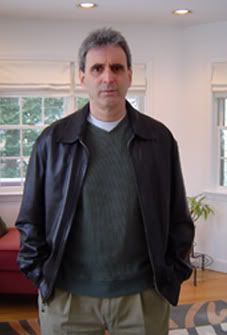
Author Atkins samples the winter delights in Parker territory, Boston. (Photo by Carrefour, Ltd. Used with permission.)
J. Kingston Pierce: Did you ever meet Robert B. Parker?
Ace Atkins: I never met Bob, but we corresponded. He thought it was pretty great that we shared the nickname Ace. He’d been called Ace Parker by his close friends. The nickname was after the Pro Hall of Fame football player Ace Parker, who, in a strange twist, was a friend of my father’s.
I had been a big fan of his work since I was a teenager. Spenser turned me on to [Dashiell] Hammett, [Raymond] Chandler, and [Ross] Macdonald. Parker and those writers helped me form the backbone of my career and find my voice as a writer.
JKP: Did you have to audition to become the new author of the Spenser series, maybe by submitting a sample story of some sort?
AA: Yep, I became aware of the search for a new Spenser author last fall, and turned in 50 pages in October. I was already into my sequel to The Ranger, but felt very strongly about trying my hand.
JKP: What made you the right guy to take over the Spenser series?
AA: More than any other writer, except perhaps Elmore Leonard, Bob shaped my style and taste in storytelling. I learned a lot from him and use much of his technique in everything I do. We also have a very similar worldview and an appreciation for sports, beer, food, and dogs. I also draw a lot into my work from my love of Westerns. You can see a lot of that influence in the Spenser novels.
I also think there is a certain musical quality to his novels--much like Chandler. My earlier writing was shaped by turning music into prose. Bob wrote Spenser like classic jazz.
JKP: Are you picking up the Spenser series right where Parker left off in Sixkill, or are you planning your books to be prequels, transporting Spenser back to his younger days?
AA: I would love to write about some cases in the Spenser files from long ago. But it was very important to everyone involved that Spenser remains a very contemporary character right now. Much of the fun of Spenser is his reaction to pop culture in America. Reading the entire series, you get such a pulse on trends that Bob thought were pretty silly at the time.
JKP: I’ve heard that you are just wrapping up work on your first Spenser novel. Does it have a title?
AA: The novel is done. I’m sending it to Bob’s longtime editor at Putnam this week. Spenser #40 has a title, but not an official title yet. Although, I hope it’s kept. I think Bob would’ve liked it, as it comes from a jazz standard.
JKP: Finally, what does this new assignment mean as far as your writing non-Spenser books? While penning the Spenser series, will you have time and energy enough to keep up a separate writing career?
AA: Very good question! I was half into the next Ranger novel when Spenser knocked on my door. I will be finishing up that novel this summer and fall and will have two novels on bookstore shelves in 2012. For the immediate future, I look forward to rotating between Boston and the Deep South for my Quinn Colson stories. For someone who was born in the South but raised in many northern cities, this just seems ideal.
READ MORE: “Let’s Talk Ranger” (Official Site of Ace Atkins).
* * *
While working on that Kirkus article, I had the chance to interview Mississippi author Ace Atkins, who has been hired by publisher Putnam to compose new entries in Parker’s renowned series featuring Boston gumshoe Spenser. Because Kirkus blog posts are limited in length, I wasn’t able to include most of my exchange with Atkins. Rather than let the excess go to waste, I’m featuring it below.Since the announcement that he’ll take over Parker’s series, I haven’t seen Atkins quizzed about either what he hopes to do with Spenser in the future or what affect this new responsibility will have on his existing career as a novelist. (After all, Atkins is just starting a new series of his own with the release next month of The Ranger [Putnam], which introduces Army Ranger Quinn Colson.) So I hope this material will be enlightening to Rap Sheet readers.

Author Atkins samples the winter delights in Parker territory, Boston. (Photo by Carrefour, Ltd. Used with permission.)
J. Kingston Pierce: Did you ever meet Robert B. Parker?
Ace Atkins: I never met Bob, but we corresponded. He thought it was pretty great that we shared the nickname Ace. He’d been called Ace Parker by his close friends. The nickname was after the Pro Hall of Fame football player Ace Parker, who, in a strange twist, was a friend of my father’s.
I had been a big fan of his work since I was a teenager. Spenser turned me on to [Dashiell] Hammett, [Raymond] Chandler, and [Ross] Macdonald. Parker and those writers helped me form the backbone of my career and find my voice as a writer.
JKP: Did you have to audition to become the new author of the Spenser series, maybe by submitting a sample story of some sort?
AA: Yep, I became aware of the search for a new Spenser author last fall, and turned in 50 pages in October. I was already into my sequel to The Ranger, but felt very strongly about trying my hand.
JKP: What made you the right guy to take over the Spenser series?
AA: More than any other writer, except perhaps Elmore Leonard, Bob shaped my style and taste in storytelling. I learned a lot from him and use much of his technique in everything I do. We also have a very similar worldview and an appreciation for sports, beer, food, and dogs. I also draw a lot into my work from my love of Westerns. You can see a lot of that influence in the Spenser novels.
I also think there is a certain musical quality to his novels--much like Chandler. My earlier writing was shaped by turning music into prose. Bob wrote Spenser like classic jazz.
JKP: Are you picking up the Spenser series right where Parker left off in Sixkill, or are you planning your books to be prequels, transporting Spenser back to his younger days?
AA: I would love to write about some cases in the Spenser files from long ago. But it was very important to everyone involved that Spenser remains a very contemporary character right now. Much of the fun of Spenser is his reaction to pop culture in America. Reading the entire series, you get such a pulse on trends that Bob thought were pretty silly at the time.
JKP: I’ve heard that you are just wrapping up work on your first Spenser novel. Does it have a title?
AA: The novel is done. I’m sending it to Bob’s longtime editor at Putnam this week. Spenser #40 has a title, but not an official title yet. Although, I hope it’s kept. I think Bob would’ve liked it, as it comes from a jazz standard.
JKP: Finally, what does this new assignment mean as far as your writing non-Spenser books? While penning the Spenser series, will you have time and energy enough to keep up a separate writing career?
AA: Very good question! I was half into the next Ranger novel when Spenser knocked on my door. I will be finishing up that novel this summer and fall and will have two novels on bookstore shelves in 2012. For the immediate future, I look forward to rotating between Boston and the Deep South for my Quinn Colson stories. For someone who was born in the South but raised in many northern cities, this just seems ideal.
READ MORE: “Let’s Talk Ranger” (Official Site of Ace Atkins).
Sunday, May 29, 2011
Bullet Points: Memorial Day Weekend Edition
• Mike Ripley’s latest “Getting Away with Murder” column has been posted early in Shots. His subjects of puckish reflection this month include: the 25th birthday of publisher Serpent’s Tail; Sara Gran’s “strangely hypnotic” novel, City of the Dead; Paul Denver’s 1963 crime novel, The Last Laugh; and a one-day conference on Agatha Christie, to be held in September at Britain’s University of Derby.
 ◄ Is this not the worst cover EVER for Sir Arthur Conan Doyle’s The Hound of the Baskervilles? Check out more such frontal assaults in the Caustic Cover Critic blog.
• Peter Lovesey fans should know about this: the complete 1979-1981 UK TV series Sergeant Cribb (or simply Cribb, as British viewers knew it)--based on Lovesey’s early novels about a dogged Victorian police detective--will finally be released in DVD format in the States come June 14. I own a previous release of Cribb episodes on VHS tape, but it isn’t complete. So I’ll have make this DVD set a wish list item.
• Turning to U.S. police dramas, the E-Advisor Blog has produced a list of “10 TV Cop Shows That Changed the Medium.” Although its source is unlikely, this compilation is right-on with its choices, which include Miami Vice, Hill Street Blues, The Fugitive, and The Wire.
• May 27 brought the 84th birthday of U.S. novelist and short-story writer Marijane Meaker, who--under the pseudonym Vin Packer--wrote the 1952 paperback novel Spring Fire, widely considered to be the first lesbian pulp novel. Both Cullen Gallagher and Todd Mason took the occasion to remark on Meaker’s legacy.
• Winners of the 2011 Lambda Literary Awards were announced this last week, including victors in two categories of particular significance to Rap Sheet readers: Gay Mystery (won by Echoes, from David Lennon) and Lesbian Mystery (won by Fever of the Bone, from Val McDermid. All the nominees in these categories were listed here.
• This week’s new short story in Beat to a Pulp is called “LoVINg the Alien” and was written by England-born Polish author Paul D. Brazill.
• Meanwhile, issue #6 of Crimefactory has just gone live, with stories by Tony Black, Angela Savage, Eric Beetner, and many others. And Part XVIII of Ken Bruen and Russell Ackerman’s tale, “Black Lens,” is now available in the Mulholland Books blog.
• Robert Lewis considers the ties from The Streets of San Francisco.
• Canada’s Vancouver Sun offers a preview of the 2011 Bloody Words convention, slated to run June 3-5 in Victoria, British Columbia.
• And since tomorrow is Memorial Day in the United States, Mystery Fanfare’s Janet Rudolph provides us with a list of Memorial Day Mysteries. Any other suggestions along this line?
 ◄ Is this not the worst cover EVER for Sir Arthur Conan Doyle’s The Hound of the Baskervilles? Check out more such frontal assaults in the Caustic Cover Critic blog.
• Peter Lovesey fans should know about this: the complete 1979-1981 UK TV series Sergeant Cribb (or simply Cribb, as British viewers knew it)--based on Lovesey’s early novels about a dogged Victorian police detective--will finally be released in DVD format in the States come June 14. I own a previous release of Cribb episodes on VHS tape, but it isn’t complete. So I’ll have make this DVD set a wish list item.
• Turning to U.S. police dramas, the E-Advisor Blog has produced a list of “10 TV Cop Shows That Changed the Medium.” Although its source is unlikely, this compilation is right-on with its choices, which include Miami Vice, Hill Street Blues, The Fugitive, and The Wire.
• May 27 brought the 84th birthday of U.S. novelist and short-story writer Marijane Meaker, who--under the pseudonym Vin Packer--wrote the 1952 paperback novel Spring Fire, widely considered to be the first lesbian pulp novel. Both Cullen Gallagher and Todd Mason took the occasion to remark on Meaker’s legacy.
• Winners of the 2011 Lambda Literary Awards were announced this last week, including victors in two categories of particular significance to Rap Sheet readers: Gay Mystery (won by Echoes, from David Lennon) and Lesbian Mystery (won by Fever of the Bone, from Val McDermid. All the nominees in these categories were listed here.
• This week’s new short story in Beat to a Pulp is called “LoVINg the Alien” and was written by England-born Polish author Paul D. Brazill.
• Meanwhile, issue #6 of Crimefactory has just gone live, with stories by Tony Black, Angela Savage, Eric Beetner, and many others. And Part XVIII of Ken Bruen and Russell Ackerman’s tale, “Black Lens,” is now available in the Mulholland Books blog.
• Robert Lewis considers the ties from The Streets of San Francisco.
• Canada’s Vancouver Sun offers a preview of the 2011 Bloody Words convention, slated to run June 3-5 in Victoria, British Columbia.
• And since tomorrow is Memorial Day in the United States, Mystery Fanfare’s Janet Rudolph provides us with a list of Memorial Day Mysteries. Any other suggestions along this line?
Enough to Make Your TBR Stacks Tumble
There are two great lists newly available on the Web, both by bloggers who’ve demonstrated fine knowledge of the crime-fiction field.
The first comes from the mysterious “Sergio” at Tipping My Fedora, who offers a rundown of his top 100--really, top 78--mystery novels. It’s a good mix of classic and more contemporary works, including most of the authors you’d expect (George V. Higgins, Raymond Chandler, Margaret Millar, Ellery Queen, John le Carré, etc.) and some rather less familiar choices (such as Leonardo Sciascia and C. Daly King). Click here to investigate Sergio’s picks, and suggest additions if you’d like. He seems amenable to adding works he might have forgotten.
Also worth your study is Cullen Gallagher’s compilation of “50 Great Gold Medal Titles.” During the mid-20th century, you’ll recall, Fawcett Publications launched a then-innovative line of inexpensive paperback originals, most which were crime, mystery, or western novels. Those Gold Medal Books were largely unappreciated in their time, but they’ve become collectors items since. Among the wordsmiths represented on Gallagher’s list: Mike Avallone, Jonathan Craig, Gil Brewer, Charles Williams, and Donald Hamilton. Click here to see all the titles.
The first comes from the mysterious “Sergio” at Tipping My Fedora, who offers a rundown of his top 100--really, top 78--mystery novels. It’s a good mix of classic and more contemporary works, including most of the authors you’d expect (George V. Higgins, Raymond Chandler, Margaret Millar, Ellery Queen, John le Carré, etc.) and some rather less familiar choices (such as Leonardo Sciascia and C. Daly King). Click here to investigate Sergio’s picks, and suggest additions if you’d like. He seems amenable to adding works he might have forgotten.
Also worth your study is Cullen Gallagher’s compilation of “50 Great Gold Medal Titles.” During the mid-20th century, you’ll recall, Fawcett Publications launched a then-innovative line of inexpensive paperback originals, most which were crime, mystery, or western novels. Those Gold Medal Books were largely unappreciated in their time, but they’ve become collectors items since. Among the wordsmiths represented on Gallagher’s list: Mike Avallone, Jonathan Craig, Gil Brewer, Charles Williams, and Donald Hamilton. Click here to see all the titles.
Friday, May 27, 2011
Now Read This
I’m pleased to see that my adopted hometown of Seattle, Washington, ranks among Amazon’s list of the 20 best-read U.S. cities. In fact, two other places I have previously lived--Portland, Oregon, and Boulder, Colorado--also earn spots on this role of honor.
How Many Have You Read?
Esquire magazine’s “unranked, incomplete, utterly biased list of [75 of] the greatest works of literature ever published” includes half a dozen obvious crime and thriller titles:
You can see the whole list in a slideshow here. I’m pleased to say that I have read about half of the works chosen. I guess I had better get cracking on the other half.
(Hat tip to Art Taylor via Facebook.)
• Deliverance, by James Dickey
• The Postman Always Rings Twice, by James M. Cain
• Winter’s Bone, by Daniel Woodrell
• The Spy Who Came in from the Cold, by John le Carré
• American Tabloid, by James Ellroy
• The Continental Op, by Dashiell Hammett
You can see the whole list in a slideshow here. I’m pleased to say that I have read about half of the works chosen. I guess I had better get cracking on the other half.
(Hat tip to Art Taylor via Facebook.)
In the Frame
As January Magazine notes, today would have been author Dashiell Hammett’s 117th birthday. By way of celebration, San Francisco Hammett expert and tour guide Don Herron offers in his blog an extremely rare and brief film clip of the Maltese Falcon author hobnobbing with the Hollywood film crowd. Watch it for yourself here.
READ MORE: “Happy 100th Birthday, Vincent Price,” by Mercurie (A Shroud of Thoughts).
READ MORE: “Happy 100th Birthday, Vincent Price,” by Mercurie (A Shroud of Thoughts).
Wednesday, May 25, 2011
The Story Behind the Story:
“Drop By Drop,” by Keith Raffel
(Editor’s note: This 22nd installment in our “Story Behind the Story” series welcomes back Northern California author Keith Raffel. After writing here a couple of years ago about his Silicon Valley novel, Smasher, he returns now to offer some background on his brand-new, Washington, D.C.-based political thriller, Drop By Drop, which is available as an e-book from both Amazon and Smashwords.)
 I’m going to confess a deep, dark secret right up front--I went to law school. This was in the Northeast during the second half of the 1970s. In my own defense, though, I must mention that a summer working for a big Wall Street firm cured me of any desire to enter private practice.
Being young and idealistic, I went down to Washington, D.C., after graduation and managed to wrangle an interview with the staff director of the Senate Select Committee on Intelligence. It went well, but I then needed to pass muster with the chairman, Senator Daniel K. Inouye, Democrat of Hawaii. I knew he’d lost an arm as a hero in World War II, and while sitting in his anteroom, I panicked. How would I shake hands with him if it was his right arm that was missing? It turned out that his right sleeve was indeed the empty one. I stuck out my left hand and shook his. That seemed to work out fine. (I later learned that Inouye preferred to grasp your right hand while twisting his left one.)
Senator Inouye opened the interview by saying, “By the time you get to me you probably will get the job, unless you’ve done something bad in the last few weeks. Have you?” I smiled and said, “Well, I’ve taken the bar exam.” He barked, “Did you pass?” No joking with him. The results were months away, but I still replied, “Yes, sir.” I got the position.
The Intelligence Committee had just been made permanent based on the recommendation of the Church Committee, which had deemed the CIA a “rogue elephant.” I started as the junior of three lawyers on the committee staff. Before the end of my first year, the other two had left. I was 27 years old and suddenly the senior attorney on the committee overseeing the government’s secret intelligence activities. Holy shit!
I didn’t realize how much of what happens in my new novel, Drop By Drop, was inspired by my experiences back then till I started writing this “Story Behind the Story” essay. One example: The hero of the book, former Stanford professor Sam Rockman, has to figure out how to shake hands with U.S. President Lucas, who lost his right arm in Desert Storm.
Senator Birch Bayh (D-Indiana) replaced Inouye as chairman of the committee in my second year on the staff. When I walked down the halls with Senator Bayh, he emphasized each important point with a physical imprint. I gave my book’s Senator Marty Vincent that same quirk:
“Because you are running for reelection and your opponent will hammer you if you vote the other way.”
“But Keith is right,” he said.
You can see why Birch lost his seat in 1981 to Dan Quayle. That result was enough to make me question my commitment to democracy. I still gave my fictional Senator Vincent the same deep commitment to the Constitution and doing what’s right that I saw from Birch in real life.
The head of the legislation subcommittee for most of my stint on Capitol Hill was Senator Walter D. Huddleston (D-Kentucky). Unlike almost all his colleagues, he had not run for president, was not running, and had no desire to run. In Drop By Drop I give Senator Vincent that same distinction, as well as the same Bluegrass State background. Huddleston’s staff used to call him “Senator” as if that were his first name. I might get a call from his admin who would say, “Senator wants you up here.” Or I might come up to speak to him and be told, “Senator is on the floor.” I use all of that in the book, too.
In the photo below, I’m in the White House with Senator Huddleston. He’d been invited to the Executive Mansion to discuss the legislative charter for the CIA and the intelligence community we’d been working on. He had been told the meeting was for “principals only.” Senator thought that “principals only” was baloney. He figured congressmen and senators were principals--they were elected by the people. By that criterion, the president and vice president were the only principals in the executive branch. In his view the head of the CIA was no “principal”; he was just a staffer, same as I was. “Principals only” was code for excluding congressional staffers and obtaining an advantage in negotiations. Anyway, when Senator stopped his car at the White House gate before this meeting, the uniformed guard noted that he was on the admission list, but I was not. Senator Huddleston said, “If I’m on the list, so is he,” and he pushed down on the accelerator. What a way to inspire loyalty! An incident unfolds pretty much that same way in Drop By Drop.

A meeting at the White House in 1980. Vice President Walter Mondale sits at the head of the table, with CIA Director Stansfield Turner to his right and Senator Walter D. Huddleston to Mondale’s left. Author Raffel appears in the foreground, on the right.
Over half of the book’s Senator Vincent I made up. The rest is an amalgam of other senators, including Bayh and Huddleston.
My duties with the committee took me to CIA headquarters in Langley, Virginia, pretty regularly. A fellow in his late 60s or early 70s, whose furrowed, weathered face was protected from the sun by a pith helmet, directed parking at that secure facility. Effusive as could be, he always called me “Senator” when I hopped out of my car, though I promise in those days I looked more nerd than lawmaker. I use a character based on him in the book, as well.
A signal accomplishment of the Intelligence Committee in those days was passage of the Foreign Intelligence Surveillance Act (FISA), which set up a procedure to obtain warrants for national security wiretaps. (The law seemed to work fine until the second Bush administration decided to ignore it.) Anyway, I was on the Senate floor during the vote on FISA when Senator Ted Kennedy (D-Massachusetts), co-manager of the bill along with Senator Bayh, asked me for a count.
“Ninety-five to one in favor,” I told him. (Note: There were two Republican Senator Scotts in those days, the respected Hugh Scott from Pennsylvania and William Scott from Virginia, once voted the stupidest senator in a Capitol Hill poll.)
“And who was the one?” Senator Kennedy asked.
“Scott of Virginia.”
Senator Kennedy rubbed his hands and said, “Ah, better than unanimous.”
I confess to stealing that line for an early draft of Drop By Drop, but perhaps my conscience eventually got the better of me, because I can’t find it in the final draft.
Two FBI agents visited me one afternoon in the Dirksen Senate Office Building. An internal memo written by the CIA’s general counsel had been found on the sidewalk near my house. They wanted to polygraph me to see if the general counsel and I were conspiring somehow. (To this day, I wonder what was going on.) Unsurprisingly, Sam Rockman has a similar experience in Drop By Drop.
In my fourth year in Washington, the Republicans gained control of the Senate and, as a consequence, conservative lion Barry Goldwater (R-Arizona) took over chairmanship of the Intelligence Committee. Once in a closed hearing, I was seated directly behind Senator Huddleston, ready to whisper in his ear as required. Senator Goldwater’s back was creaky, so whenever he turned to ask a staff member a question, he could only make it three-quarters of the way around. That left him looking directly at me, someone who worked for a Democratic senator. At one point, Goldwater asked a question, and his own staffer hastened to answer as usual. But Goldwater pointed a thumb in my direction, glared at the guy who’d spoken, and growled, “I didn’t ask you. I asked him.” When it came to foreign policy, national defense, and intelligence activities, Senator Goldwater didn’t care much for partisanship.
In fact, partisanship on the committee overall was not quite at the level it reached elsewhere on the Hill. Late one afternoon, I heard from then-Senator Joe Biden (D-Delaware) that he wanted to deliver a speech on the Senate floor the next morning concerning a bill I was working on. I stayed up all night drafting and editing. At 9 a.m. the next morning, I went up the senator’s office, speech in hand. His chief of staff told me that Senator Biden had changed his mind about making the speech. I went back downstairs and hurled the binder holding the draft against the wall of my cubicle. A staffer from the other party, whom I rarely agreed with on anything, heard the crash and stuck his head around the corner to see what was going on. I told him, “Three-quarters of what I do around this place is wasted effort.” He smiled and said, “That makes you the most effective staffer on Capitol Hill.” Republican and Democratic staff members even socialized. A colleague from those days tells me she still has a photograph of Fred Thompson, Law & Order district attorney and real-life Republican senator and presidential candidate, taken during a party at my place near Dupont Circle back when Thompson served as special counsel to the committee.
Despite the cross-aisle fraternization, I knew no one in the nation’s capital like Drop By Drop’s Cecilia Plant, the smart-as-a-whip, foul-mouthed, hard-drinking, red-haired six-footer who serves as the Intelligence Committee’s majority staff director and the nemesis of Sam Rockman, who works for the minority party. Even though she was smart, my girlfriend back then in D.C. was a tennis-playing dark blonde who, to the best of my recollection, never once dropped an F-bomb. Where did Cecilia come from? My imagination?
When I started writing Drop By Drop, I worried whether that imagination of mine would be able to transport me back to Capitol Hill. As it turned out, once I sat down in my regular place at the local café and started guzzling my green tea, I became Sam Rockman, the Senate Intelligence Committee staff member. It was as him I entered a parallel world, similar to this one but different, where a terrorist bomb explodes just yards away from me, where secret documents show up on my doorstep, and where Russians try to poison me. I guess that’s the magic of writing fiction.
READ MORE: “Keith 5.0,” by Keith Raffel (Dot Dead Diary).
 I’m going to confess a deep, dark secret right up front--I went to law school. This was in the Northeast during the second half of the 1970s. In my own defense, though, I must mention that a summer working for a big Wall Street firm cured me of any desire to enter private practice.
Being young and idealistic, I went down to Washington, D.C., after graduation and managed to wrangle an interview with the staff director of the Senate Select Committee on Intelligence. It went well, but I then needed to pass muster with the chairman, Senator Daniel K. Inouye, Democrat of Hawaii. I knew he’d lost an arm as a hero in World War II, and while sitting in his anteroom, I panicked. How would I shake hands with him if it was his right arm that was missing? It turned out that his right sleeve was indeed the empty one. I stuck out my left hand and shook his. That seemed to work out fine. (I later learned that Inouye preferred to grasp your right hand while twisting his left one.)
Senator Inouye opened the interview by saying, “By the time you get to me you probably will get the job, unless you’ve done something bad in the last few weeks. Have you?” I smiled and said, “Well, I’ve taken the bar exam.” He barked, “Did you pass?” No joking with him. The results were months away, but I still replied, “Yes, sir.” I got the position.
The Intelligence Committee had just been made permanent based on the recommendation of the Church Committee, which had deemed the CIA a “rogue elephant.” I started as the junior of three lawyers on the committee staff. Before the end of my first year, the other two had left. I was 27 years old and suddenly the senior attorney on the committee overseeing the government’s secret intelligence activities. Holy shit!
I didn’t realize how much of what happens in my new novel, Drop By Drop, was inspired by my experiences back then till I started writing this “Story Behind the Story” essay. One example: The hero of the book, former Stanford professor Sam Rockman, has to figure out how to shake hands with U.S. President Lucas, who lost his right arm in Desert Storm.
Senator Birch Bayh (D-Indiana) replaced Inouye as chairman of the committee in my second year on the staff. When I walked down the halls with Senator Bayh, he emphasized each important point with a physical imprint. I gave my book’s Senator Marty Vincent that same quirk:
The senator put his arm around my shoulder as we walked through narrow, twisty corridors. He squeezed. No politician since LBJ pressed the flesh as literally as Senator Vincent. He used a touch, slap, or squeeze to punctuate each statement, just as a writer would turn to an exclamation point, italics, or a bold font.One time, Senator Bayh called another staff member and me up to his office because we’d given him conflicting recommendations on how to vote on a bill. After 20 minutes or so of discussion, he asked my colleague, “Why are you advocating this position?”
“Because you are running for reelection and your opponent will hammer you if you vote the other way.”
“But Keith is right,” he said.
You can see why Birch lost his seat in 1981 to Dan Quayle. That result was enough to make me question my commitment to democracy. I still gave my fictional Senator Vincent the same deep commitment to the Constitution and doing what’s right that I saw from Birch in real life.
The head of the legislation subcommittee for most of my stint on Capitol Hill was Senator Walter D. Huddleston (D-Kentucky). Unlike almost all his colleagues, he had not run for president, was not running, and had no desire to run. In Drop By Drop I give Senator Vincent that same distinction, as well as the same Bluegrass State background. Huddleston’s staff used to call him “Senator” as if that were his first name. I might get a call from his admin who would say, “Senator wants you up here.” Or I might come up to speak to him and be told, “Senator is on the floor.” I use all of that in the book, too.
In the photo below, I’m in the White House with Senator Huddleston. He’d been invited to the Executive Mansion to discuss the legislative charter for the CIA and the intelligence community we’d been working on. He had been told the meeting was for “principals only.” Senator thought that “principals only” was baloney. He figured congressmen and senators were principals--they were elected by the people. By that criterion, the president and vice president were the only principals in the executive branch. In his view the head of the CIA was no “principal”; he was just a staffer, same as I was. “Principals only” was code for excluding congressional staffers and obtaining an advantage in negotiations. Anyway, when Senator stopped his car at the White House gate before this meeting, the uniformed guard noted that he was on the admission list, but I was not. Senator Huddleston said, “If I’m on the list, so is he,” and he pushed down on the accelerator. What a way to inspire loyalty! An incident unfolds pretty much that same way in Drop By Drop.

A meeting at the White House in 1980. Vice President Walter Mondale sits at the head of the table, with CIA Director Stansfield Turner to his right and Senator Walter D. Huddleston to Mondale’s left. Author Raffel appears in the foreground, on the right.
Over half of the book’s Senator Vincent I made up. The rest is an amalgam of other senators, including Bayh and Huddleston.
My duties with the committee took me to CIA headquarters in Langley, Virginia, pretty regularly. A fellow in his late 60s or early 70s, whose furrowed, weathered face was protected from the sun by a pith helmet, directed parking at that secure facility. Effusive as could be, he always called me “Senator” when I hopped out of my car, though I promise in those days I looked more nerd than lawmaker. I use a character based on him in the book, as well.
A signal accomplishment of the Intelligence Committee in those days was passage of the Foreign Intelligence Surveillance Act (FISA), which set up a procedure to obtain warrants for national security wiretaps. (The law seemed to work fine until the second Bush administration decided to ignore it.) Anyway, I was on the Senate floor during the vote on FISA when Senator Ted Kennedy (D-Massachusetts), co-manager of the bill along with Senator Bayh, asked me for a count.
“Ninety-five to one in favor,” I told him. (Note: There were two Republican Senator Scotts in those days, the respected Hugh Scott from Pennsylvania and William Scott from Virginia, once voted the stupidest senator in a Capitol Hill poll.)
“And who was the one?” Senator Kennedy asked.
“Scott of Virginia.”
Senator Kennedy rubbed his hands and said, “Ah, better than unanimous.”
I confess to stealing that line for an early draft of Drop By Drop, but perhaps my conscience eventually got the better of me, because I can’t find it in the final draft.
Two FBI agents visited me one afternoon in the Dirksen Senate Office Building. An internal memo written by the CIA’s general counsel had been found on the sidewalk near my house. They wanted to polygraph me to see if the general counsel and I were conspiring somehow. (To this day, I wonder what was going on.) Unsurprisingly, Sam Rockman has a similar experience in Drop By Drop.
In my fourth year in Washington, the Republicans gained control of the Senate and, as a consequence, conservative lion Barry Goldwater (R-Arizona) took over chairmanship of the Intelligence Committee. Once in a closed hearing, I was seated directly behind Senator Huddleston, ready to whisper in his ear as required. Senator Goldwater’s back was creaky, so whenever he turned to ask a staff member a question, he could only make it three-quarters of the way around. That left him looking directly at me, someone who worked for a Democratic senator. At one point, Goldwater asked a question, and his own staffer hastened to answer as usual. But Goldwater pointed a thumb in my direction, glared at the guy who’d spoken, and growled, “I didn’t ask you. I asked him.” When it came to foreign policy, national defense, and intelligence activities, Senator Goldwater didn’t care much for partisanship.
In fact, partisanship on the committee overall was not quite at the level it reached elsewhere on the Hill. Late one afternoon, I heard from then-Senator Joe Biden (D-Delaware) that he wanted to deliver a speech on the Senate floor the next morning concerning a bill I was working on. I stayed up all night drafting and editing. At 9 a.m. the next morning, I went up the senator’s office, speech in hand. His chief of staff told me that Senator Biden had changed his mind about making the speech. I went back downstairs and hurled the binder holding the draft against the wall of my cubicle. A staffer from the other party, whom I rarely agreed with on anything, heard the crash and stuck his head around the corner to see what was going on. I told him, “Three-quarters of what I do around this place is wasted effort.” He smiled and said, “That makes you the most effective staffer on Capitol Hill.” Republican and Democratic staff members even socialized. A colleague from those days tells me she still has a photograph of Fred Thompson, Law & Order district attorney and real-life Republican senator and presidential candidate, taken during a party at my place near Dupont Circle back when Thompson served as special counsel to the committee.
Despite the cross-aisle fraternization, I knew no one in the nation’s capital like Drop By Drop’s Cecilia Plant, the smart-as-a-whip, foul-mouthed, hard-drinking, red-haired six-footer who serves as the Intelligence Committee’s majority staff director and the nemesis of Sam Rockman, who works for the minority party. Even though she was smart, my girlfriend back then in D.C. was a tennis-playing dark blonde who, to the best of my recollection, never once dropped an F-bomb. Where did Cecilia come from? My imagination?
When I started writing Drop By Drop, I worried whether that imagination of mine would be able to transport me back to Capitol Hill. As it turned out, once I sat down in my regular place at the local café and started guzzling my green tea, I became Sam Rockman, the Senate Intelligence Committee staff member. It was as him I entered a parallel world, similar to this one but different, where a terrorist bomb explodes just yards away from me, where secret documents show up on my doorstep, and where Russians try to poison me. I guess that’s the magic of writing fiction.
READ MORE: “Keith 5.0,” by Keith Raffel (Dot Dead Diary).
Dramatic Delivery
Shots e-zine contributor Peter Guttridge reports on the stunt-assisted launch, in Britain, of Jeffery Deaver’s new James Bond novel, Carte Blanche. Deaver’s book won’t be released in the States until mid-June.
Sound Off!
The Audio Publishers Association has announced the winners of its 2011 Audie Awards, “recognizing the best in audiobooks.” Here are the victors in several categories of particular interest to Rap Sheet readers:
Best Original Work: The New Adventures of Mickey Spillane’s Mike Hammer, Vol. 2: The Little Death, by Max Allan Collins from a story by Mickey Spillane and Max Allan Collins; read by Stacy Keach and a supporting cast
Author Max Allan Collins talked about The Little Death during an interview I conducted with him last year.
Click here to find a full list of this year’s Audie nominees.
Best Original Work: The New Adventures of Mickey Spillane’s Mike Hammer, Vol. 2: The Little Death, by Max Allan Collins from a story by Mickey Spillane and Max Allan Collins; read by Stacy Keach and a supporting cast
Best Mystery & Suspense: The Reversal, by Michael Connelly;
read by Peter Giles
read by Peter Giles
Best Thriller/Suspense: The Girl Who Kicked the Hornet’s Nest, by Stieg Larsson; read by Simon Vance
Best Classic: The Woman in White, by Wilkie Collins; read by Roger Rees, Rosalyn Landor, John Lee, and Judy Geeson
Author Max Allan Collins talked about The Little Death during an interview I conducted with him last year.
Click here to find a full list of this year’s Audie nominees.
Tuesday, May 24, 2011
Hot Weather, Cool Reads
On the Kirkus Reviews site, I have written today about “the 10 new U.S.-published crime novels I’m most hoping to enjoy over the next three months.” Those works include The Quest for Anna Klein, by Thomas H. Cook; The End of Everything, by Megan Abbott; Misery Bay, by Steve Hamilton; and The Keeper of Lost Causes, by Jussi Adler-Olsen.
Click here to read about all of them. And feel free there to suggest other summer releases the rest of us might like.
Click here to read about all of them. And feel free there to suggest other summer releases the rest of us might like.
Monday, May 23, 2011
Amazon Beefs Up Its Publishing Division
Once again, the divine Sarah (Weinman, that is, not Bernhardt) is right on top of this development, writing at Publishers Lunch:
Amazon announced to a group of agents Sunday night that Larry Kirshbaum will leave agenting and return to publishing, serving as VP and publisher for Amazon Publishing’s New York office, effective immediately (officially starting July 5). Kirshbaum, who celebrates his birthday on Monday, says, “On my sixty-seventh birthday, I’m reinventing myself.”Hmm. Do you think Kirshbaum & Co. might be interested in a mystery novel about a senile detective named Al Zymer?
Reporting to Amazon’s Jeff Belle, Kirshbaum is charged with building something that will look like a general trade publisher, with “a specific focus on non-fiction, but also literary fiction,” Belle says, since Amazon has already been rolling out other imprints focused on genre fiction. …
Kirshbaum tells us “the aim is not just to produce books that work, but also to innovate. What really excites me about this opportunity is the idea that we can help build electronic publishing and digital distribution as an even bigger force in publishing.” …
A launch date, target title counts and even a name for the new line are among the many details still to be resolved. “We have a lot of work to do,” Belle said. …
This is Surely Shirley’s Day!
Well, that was quick, eh? Last Wednesday we announced the kickoff of The Rap Sheet’s latest book-giveaway contest, the prize being one copy of Laura Lippman’s 2010 standalone thriller, I’d Know You Anywhere. Today we have a winner, chosen completely at random. She is Shirley Weese of Sidney, British Columbia, Canada, who writes: “This is the first time I’ve ever entered one of your drawings. I love The Rap Sheet and have been a subscriber for ages.”
Thanks for the compliments, Shirley. Your book should be winging its way to your mailbox very shortly.
Everyone else should watch this page for more giveaway contests.
Thanks for the compliments, Shirley. Your book should be winging its way to your mailbox very shortly.
Everyone else should watch this page for more giveaway contests.
Sunday, May 22, 2011
Live at Five
It hardly seems possible, but today marks five years since The Rap Sheet was launched as a blog separate from its great mother ship, January Magazine. Little did I know then what would come of this project. I didn’t ever expect it to last as long as it has, or to gain the popularity it now enjoys.  But I’ve been pleased by it all. And I owe a tremendous debt of gratitude to the many contributors who have added their voices to The Rap Sheet since 2006.
The last year has been a big one, in many respects. The Rap Sheet clocked its one-millionth visitor on--of all dates--my birthday, March 18. And since then, it has been nominated for an Anthony Award in the Best Web Site/Blog category. This marks the second time in three years that The Rap Sheet has been in the running for such a prestigious commendation. While I still don’t expect to walk away with the prize, I do think that after five years, more than 4,400 posts, and well in excess now of one million visitors, The Rap Sheet deserves its nomination. I’m almost ridiculously proud of all it has become.
Also, I am very grateful to the readers who turn to this blog on a regular basis. The Rap Sheet has found a terrifically receptive and loyal community, members of which not only read it enthusiastically, but offer plenty of news tips and suggestions for its editorial expansion. Without their help, this site would be a poorer place, indeed.
So here’s to five years already, and hopes for five more!
(The artwork above is a 1928 painting called I Saw the Figure Five in Gold, by Charles Demuth.)
 But I’ve been pleased by it all. And I owe a tremendous debt of gratitude to the many contributors who have added their voices to The Rap Sheet since 2006.
The last year has been a big one, in many respects. The Rap Sheet clocked its one-millionth visitor on--of all dates--my birthday, March 18. And since then, it has been nominated for an Anthony Award in the Best Web Site/Blog category. This marks the second time in three years that The Rap Sheet has been in the running for such a prestigious commendation. While I still don’t expect to walk away with the prize, I do think that after five years, more than 4,400 posts, and well in excess now of one million visitors, The Rap Sheet deserves its nomination. I’m almost ridiculously proud of all it has become.
Also, I am very grateful to the readers who turn to this blog on a regular basis. The Rap Sheet has found a terrifically receptive and loyal community, members of which not only read it enthusiastically, but offer plenty of news tips and suggestions for its editorial expansion. Without their help, this site would be a poorer place, indeed.
So here’s to five years already, and hopes for five more!
(The artwork above is a 1928 painting called I Saw the Figure Five in Gold, by Charles Demuth.)
Bullet Points: Post-End of the World Edition
• Salon editor Sarah Hepola interviews Swedish actor Joel Kinnaman, who plays one of the two main cops on AMC-TV’s The Killing, the latest episode of which will be broadcast tonight. Writes Hepola:
• Meanwhile, the original, Danish version of The Killing has won the BAFTA (British Academy of Film and Television Arts) Award for Best International program. The BBC One series Sherlock picked up the prize for Best Drama Series, and Martin Freeman, who plays Dr. John Watson on that show, won the award for Best Supporting Actor. (Hat tip to Omnimystery News.)
• If you haven’t noticed already, blogger “Guy Savage,” master of His Futile Preoccupations, has been reading and writing (very well indeed) about several of Jim Thompson’s novels. Here’s his intro to this series. Then go to his reviews of Savage Night, A Swell-Looking Dame, and A Hell of a Woman. More to come.
• We note, with sorrow, the passing of American TV and film actress Barbara Stuart, who died on May 15 at age 81. Although most of the obituaries have referred to her roles in Batman, The Twilight Zone, and the 1980 film Airplane!, Stuart was also a fixture on small-screen crime dramas, including Banyon, Banacek, Barnaby Jones, Get Christie Love!, Quincy, M.E., and Nash Bridges. Her full credits are here.
• Another departure from earlier this month: British-born actress Dana Wynter, whose work was seen in Invasion of the Body Snatchers, The F.B.I., Ironside, Cannon, Hawaii Five-O, Ellery Queen, and The Rockford Files, and other shows. She died on May 5 at age 79.
• Tom Selleck’s latest Jesse Stone movie, Innocents Lost (not based on a Robert B. Parker novel), airs tonight on CBS-TV.
• This week’s new short story in Beat to a Pulp comes from Indianapolis, Indiana, writer Alec Cizak. His tale is called “Katy Too.”
• Arthur Conan Doyle was born 152 years ago today.
• UK author Frank Tallis, author of the Detective Inspector Oskar Rheinhardt/psychoanalyst Dr. Max Liebermann mysteries (Death and the Maiden), interviews himself for Sea Minor. Read the results here.
• Mystery Scene contributor Oline Cogdill was fortunate enough to interview Mary McCormack, brilliant star of the USA Network series In Plain Sight, for the magazine’s Web site. You’ll find Part I of their exchange here, with Part II available here.
• TomCat at Detection by Moonlight applauds The Wrong Murder, a 1940 novel by largely forgotten author Craig Rice.
• Lest we miss mentioning the winners of the Independent Publisher Book Awards in the Mystery/Suspense/Thriller category, here they are.
• Another new blog worth following: Only Detect.
• Tipping My Fedora tips readers to what it thinks are the 10 best mystery novels and 10 best mystery films set in San Francisco. You’ll find those lists here. Only one curiosity about these selections: The Underground Man, by Ross Macdonald, which most people will remember as set in Los Angeles, not the Bay Area.
• And congratulations to movie expert Ivan G. Shreve Jr., whose Thrilling Days of Yesteryear has been nominated for a LAMMY Award in the Best Classic Film Blog category. The LAMMYs, of course, take their name from the Large Association of Movie Blogs.
In a gripping show about grief, murder, and our utter inability to know anyone else, Joel Kinnaman provides a much-needed shot of sexual energy. His Detective Stephen Holder has a slithery charm--all shifty eyes and defiant slouch, a far cry from the barrel-chested, middle-aged men in Burlington Coat Factory suits we usually see in the homicide office. (As his partner Sarah Linden, played by the marvelous Mireille Enos, sniffs at him: “You dress like Justin Bieber.”)By the way, TV Squad reports that AMC is “said to be close” to renewing The Killing for a second season.
It’s a sign of just how magnetic Kinnaman’s performance is--and how great and unpredictable The Killing is--that for at least two episodes, I actually thought Detective Holder was the perp.
• Meanwhile, the original, Danish version of The Killing has won the BAFTA (British Academy of Film and Television Arts) Award for Best International program. The BBC One series Sherlock picked up the prize for Best Drama Series, and Martin Freeman, who plays Dr. John Watson on that show, won the award for Best Supporting Actor. (Hat tip to Omnimystery News.)
• If you haven’t noticed already, blogger “Guy Savage,” master of His Futile Preoccupations, has been reading and writing (very well indeed) about several of Jim Thompson’s novels. Here’s his intro to this series. Then go to his reviews of Savage Night, A Swell-Looking Dame, and A Hell of a Woman. More to come.
• We note, with sorrow, the passing of American TV and film actress Barbara Stuart, who died on May 15 at age 81. Although most of the obituaries have referred to her roles in Batman, The Twilight Zone, and the 1980 film Airplane!, Stuart was also a fixture on small-screen crime dramas, including Banyon, Banacek, Barnaby Jones, Get Christie Love!, Quincy, M.E., and Nash Bridges. Her full credits are here.
• Another departure from earlier this month: British-born actress Dana Wynter, whose work was seen in Invasion of the Body Snatchers, The F.B.I., Ironside, Cannon, Hawaii Five-O, Ellery Queen, and The Rockford Files, and other shows. She died on May 5 at age 79.
• Tom Selleck’s latest Jesse Stone movie, Innocents Lost (not based on a Robert B. Parker novel), airs tonight on CBS-TV.
• This week’s new short story in Beat to a Pulp comes from Indianapolis, Indiana, writer Alec Cizak. His tale is called “Katy Too.”
• Arthur Conan Doyle was born 152 years ago today.
• UK author Frank Tallis, author of the Detective Inspector Oskar Rheinhardt/psychoanalyst Dr. Max Liebermann mysteries (Death and the Maiden), interviews himself for Sea Minor. Read the results here.
• Mystery Scene contributor Oline Cogdill was fortunate enough to interview Mary McCormack, brilliant star of the USA Network series In Plain Sight, for the magazine’s Web site. You’ll find Part I of their exchange here, with Part II available here.
• TomCat at Detection by Moonlight applauds The Wrong Murder, a 1940 novel by largely forgotten author Craig Rice.
• Lest we miss mentioning the winners of the Independent Publisher Book Awards in the Mystery/Suspense/Thriller category, here they are.
• Another new blog worth following: Only Detect.
• Tipping My Fedora tips readers to what it thinks are the 10 best mystery novels and 10 best mystery films set in San Francisco. You’ll find those lists here. Only one curiosity about these selections: The Underground Man, by Ross Macdonald, which most people will remember as set in Los Angeles, not the Bay Area.
• And congratulations to movie expert Ivan G. Shreve Jr., whose Thrilling Days of Yesteryear has been nominated for a LAMMY Award in the Best Classic Film Blog category. The LAMMYs, of course, take their name from the Large Association of Movie Blogs.
Snap Judgments
Most readers of this blog weren’t on hand for the events of CrimeFest 2011, which took place in Bristol, beginning this last Thursday. But fortunately, Rap Sheet contributor Ali Karim was there, and has sent back pictures. Click on any of these images for enlargements.

CrimeFest co-organizer Adrian Muller welcomes authors, fans, and others to the convention’s Gala Dinner.

Author Paul Johnston (far right) in the “hot seat” during the Criminal Mastermind challenge, hosted by Maxim Jakubowski. Johnston ultimately won that challenge, fielding questions about Sherlock Holmes, while fellow fictionist Lauren Henderson (second from left) took second place, demonstrating her impressive knowledge of Modesty Blaise.

Critic Peter Guttridge interviewing featured guest author Peter James, who’s also chair of the Crime Writers’ Association.

British thriller writers Charlie Charters and Matt Hilton signing copies of their books during CrimeFest 2011.

Writer Ann Cleeves (far left) moderates a panel discussion about translated crime fiction. To her right are Nick Sayers from Hodder & Stoughton, South African novelist Deon Meyer (another featured guest of this convention), Boyd Tonkin from The Independent, and Meyer’s literary agent, Isobel Dixon.
All photos © 2011 by Ali Karim
READ MORE: “More on CrimeFest,” by Martin Edwards (‘Do You Write Under Your Own Name?’); “CrimeFest Panel Report--Born to Be Bad,” by Donna Moore (Big Beat from Badsville).

CrimeFest co-organizer Adrian Muller welcomes authors, fans, and others to the convention’s Gala Dinner.

Author Paul Johnston (far right) in the “hot seat” during the Criminal Mastermind challenge, hosted by Maxim Jakubowski. Johnston ultimately won that challenge, fielding questions about Sherlock Holmes, while fellow fictionist Lauren Henderson (second from left) took second place, demonstrating her impressive knowledge of Modesty Blaise.

Critic Peter Guttridge interviewing featured guest author Peter James, who’s also chair of the Crime Writers’ Association.

British thriller writers Charlie Charters and Matt Hilton signing copies of their books during CrimeFest 2011.

Writer Ann Cleeves (far left) moderates a panel discussion about translated crime fiction. To her right are Nick Sayers from Hodder & Stoughton, South African novelist Deon Meyer (another featured guest of this convention), Boyd Tonkin from The Independent, and Meyer’s literary agent, Isobel Dixon.
All photos © 2011 by Ali Karim
READ MORE: “More on CrimeFest,” by Martin Edwards (‘Do You Write Under Your Own Name?’); “CrimeFest Panel Report--Born to Be Bad,” by Donna Moore (Big Beat from Badsville).
Saturday, May 21, 2011
Celebrating in Bristol
Thanks to Rap Sheet contributor Ali Karim’s Facebook alerts, we can now announce the winners of the four awards presented earlier today at CrimeFest in Bristol, England.
Last Laugh Award (for best humorous crime novel of 2010): The Herring in the Library, by L.C. Tyler (Macmillan)
Also nominated: Dr. Yes, by Colin Bateman (Headline); Love Songs from a Shallow Grave, by Colin Cotterill (Quercus); The Good Thief’s Guide to Vegas, by Chris Ewan (Simon & Schuster); Bank of the Black Sheep, by Robert Lewis (Serpent’s Tail); and Old Dogs, by Donna Moore (MaXcrime)
E-Dunnit Award (for best crime e-book of 2010): Field Grey, by Philip Kerr (Quercus)
Also nominated: Spies of the Balkans, by Alan Furst (Weidenfeld & Nicolson); A Room Swept White, by Sophie Hannah (Hodder & Stoughton); Where the Shadows Lie, by Michael Ridpath (Corvus); Heartstone, by C.J. Sansom (Mantle); The Anatomy of Ghosts, by Andrew Taylor (Penguin); and To Kill a Tsar, by Andrew Williams (John Murray)
Sounds of Crime Awards (for best audiobooks of 2010):
Abridged: Our Kind of Traitor, by John le Carré; read by John le Carré, abridged by Peter Mackie (AudioGO)
Also nominated: Fear the Worst, by Linwood Barclay; read by Jeff Harding, abridged by Elsbeth McPherson (Orion); Worth Dying For, by Lee Child; read by Kerry Shale, abridged by Carolanne Lyme (Random House); The Reversal, by Michael Connelly; read by Michael Brandon, abridged by Kati Nicholl (Orion); Dead Like You, by Peter James; read by William Gaminara, abridged by Kati Nicholl (Macmillan); Mortal Remains, by Kathy Reichs; read by Linda Emond, abridged by Jan Werner (Random House); and Heartstone, by C. J. Sansom; read by Anton Lesser, abridged by Kati Nicholl (Macmillan)
Unabridged: Dead Like You, by Peter James; read by David Bauckham (Whole Story Audio Books)
Also nominated: Fear the Worst, by Linwood Barclay; read by Buck Schirner (Orion); Caught, by Harlan Coben; read by Christopher Evan Welch (Whole Story Audio Books); The Reversal, by Michael Connelly; read by Peter Giles (Orion); Nemesis, by Lindsey Davis; read by Christian Rodska (AudioGO); and Edge, by Jeffery Deaver; read by Skipp Sudduth (Whole Story Audio Books)
Congratulations to everyone, victors and nominees alike!
(NOTE: This post has been modified from its original incarnation in order to include the Last Laugh Award results.)
READ MORE: “CrimeFest Day 3,” by Ayo Onatade (Shotsmag Confidential).
Last Laugh Award (for best humorous crime novel of 2010): The Herring in the Library, by L.C. Tyler (Macmillan)
Also nominated: Dr. Yes, by Colin Bateman (Headline); Love Songs from a Shallow Grave, by Colin Cotterill (Quercus); The Good Thief’s Guide to Vegas, by Chris Ewan (Simon & Schuster); Bank of the Black Sheep, by Robert Lewis (Serpent’s Tail); and Old Dogs, by Donna Moore (MaXcrime)
E-Dunnit Award (for best crime e-book of 2010): Field Grey, by Philip Kerr (Quercus)
Also nominated: Spies of the Balkans, by Alan Furst (Weidenfeld & Nicolson); A Room Swept White, by Sophie Hannah (Hodder & Stoughton); Where the Shadows Lie, by Michael Ridpath (Corvus); Heartstone, by C.J. Sansom (Mantle); The Anatomy of Ghosts, by Andrew Taylor (Penguin); and To Kill a Tsar, by Andrew Williams (John Murray)
Sounds of Crime Awards (for best audiobooks of 2010):
Abridged: Our Kind of Traitor, by John le Carré; read by John le Carré, abridged by Peter Mackie (AudioGO)
Also nominated: Fear the Worst, by Linwood Barclay; read by Jeff Harding, abridged by Elsbeth McPherson (Orion); Worth Dying For, by Lee Child; read by Kerry Shale, abridged by Carolanne Lyme (Random House); The Reversal, by Michael Connelly; read by Michael Brandon, abridged by Kati Nicholl (Orion); Dead Like You, by Peter James; read by William Gaminara, abridged by Kati Nicholl (Macmillan); Mortal Remains, by Kathy Reichs; read by Linda Emond, abridged by Jan Werner (Random House); and Heartstone, by C. J. Sansom; read by Anton Lesser, abridged by Kati Nicholl (Macmillan)
Unabridged: Dead Like You, by Peter James; read by David Bauckham (Whole Story Audio Books)
Also nominated: Fear the Worst, by Linwood Barclay; read by Buck Schirner (Orion); Caught, by Harlan Coben; read by Christopher Evan Welch (Whole Story Audio Books); The Reversal, by Michael Connelly; read by Peter Giles (Orion); Nemesis, by Lindsey Davis; read by Christian Rodska (AudioGO); and Edge, by Jeffery Deaver; read by Skipp Sudduth (Whole Story Audio Books)
Congratulations to everyone, victors and nominees alike!
(NOTE: This post has been modified from its original incarnation in order to include the Last Laugh Award results.)
READ MORE: “CrimeFest Day 3,” by Ayo Onatade (Shotsmag Confidential).
Friday, May 20, 2011
Dueling Daggers
Earlier today, during CrimeFest in Bristol, England, the British Crime Writers’ Association made public its shortlists of nominees for four of this year’s Dagger Awards. Those commendations are intended to recognize excellence in mystery, crime, and thriller fiction.
The shortlist of nominees for the CWA Dagger in the Library Award was announced previously.
Winners of these commendations will be announced during an event held alongside the Theakstons Old Peculier Crime Writing Festival in Harrogate on Friday, July 22. Also to be revealed during that ceremony will be the shortlists of contenders for three additional CWA Daggers: the Gold, the Ian Fleming Steel, and the John Creasey.
(Hat tip to Mystery Fanfare.)
CWA International Dagger:
• The Wings of the Sphinx, by Andrea Camilleri,
translated by Stephen Sartarelli (Mantle)
• Needle in a Haystack, by Ernesto Mallo,
translated by Jethro Soutar (Bitter Lemon Press)
• The Saint-Florentin Murders, by Jean-François Parot,
translated by Howard Curtis (Gallic)
• Three Seconds, by Anders Roslund and Börge Hellström,
translated by Kari Dickson (Quercus)
• River of Shadows, by Valerio Varesi,
translated by Joseph Farrell (MacLehose)
• An Uncertain Place, by Fred Vargas,
translated by Siân Reynolds (Harvill Secker)
• Death on a Galician Shore, by Domingo Villar,
translated by Sonia Soto (Abacus)
CWA Gold Dagger for Non-fiction:
translated by Stephen Sartarelli (Mantle)
• Needle in a Haystack, by Ernesto Mallo,
translated by Jethro Soutar (Bitter Lemon Press)
• The Saint-Florentin Murders, by Jean-François Parot,
translated by Howard Curtis (Gallic)
• Three Seconds, by Anders Roslund and Börge Hellström,
translated by Kari Dickson (Quercus)
• River of Shadows, by Valerio Varesi,
translated by Joseph Farrell (MacLehose)
• An Uncertain Place, by Fred Vargas,
translated by Siân Reynolds (Harvill Secker)
• Death on a Galician Shore, by Domingo Villar,
translated by Sonia Soto (Abacus)
CWA Gold Dagger for Non-fiction:
• The Invention of Murder, by Judith Flanders (HarperCollins)
• Slaughter on a Snowy Morn, by Colin Evans (Icon Books)
• The Killer of Little Shepherds, by Douglas Starr (Simon & Schuster)
• In the Place of Justice, by Wilbert Rideau (Profile)
• The Murder Room, by Michael Capuzzo (Michael Joseph)
• Mr. Briggs’ Hat, by Kate Colquhoun (Little, Brown)
The CWA Short Story Dagger:
• Slaughter on a Snowy Morn, by Colin Evans (Icon Books)
• The Killer of Little Shepherds, by Douglas Starr (Simon & Schuster)
• In the Place of Justice, by Wilbert Rideau (Profile)
• The Murder Room, by Michael Capuzzo (Michael Joseph)
• Mr. Briggs’ Hat, by Kate Colquhoun (Little, Brown)
The CWA Short Story Dagger:
• “Wednesday’s Child,” by Ken Bruen (from First Thrills,
edited by Lee Child; Forge)
• “The Princess of Felony Flats,” by Bill Cameron (from First Thrills)
• “East of Suez, West of Charing Cross Road,” by John Lawton (from Agents of Treachery, edited by Otto Penzler; Vintage)
• “Homework,” by Phil Lovesey (from The Mammoth Book of Best British Crime, Vol. 8, edited by Maxim Jakubowski; Constable & Robinson)
• “The Dead Club,” by Michael Palmer and Daniel Palmer
(from First Thrills)
edited by Lee Child; Forge)
• “The Princess of Felony Flats,” by Bill Cameron (from First Thrills)
• “East of Suez, West of Charing Cross Road,” by John Lawton (from Agents of Treachery, edited by Otto Penzler; Vintage)
• “Homework,” by Phil Lovesey (from The Mammoth Book of Best British Crime, Vol. 8, edited by Maxim Jakubowski; Constable & Robinson)
• “The Dead Club,” by Michael Palmer and Daniel Palmer
(from First Thrills)
CWA Debut Dagger Award (for not-yet-published works):
• A Burial Place for Strangers, by Sharon Hunt (Canada)
• A Quiet Night in Entebbe, by Peter Wynn Norris (UK)
• A Vicious Indulgence, by Annie Hauxwell (Australia)
• Biographies of a Victim, by Gunnar Lange-Nielsen (Norway)
• The Boy Who Loved Penguins, by S.W.C. Webb (UK)
• The Greengrocers and Fruiterers’ Convention, by Martin Ungless (UK)
• Hide and Seek, by Sarah Darby (UK)
• Men of the Rose, by Jessica Ramage (UK)
• The Outrageous Behaviour of Left-Handed Dwarves,
by Graham Brack (UK)
by Graham Brack (UK)
• The Temp, by Luke Melia (UK)
• Unveiled Threats, by Stephanie Light (UK)
• What Hidden Lies, by Michele Rowe (South Africa)
The shortlist of nominees for the CWA Dagger in the Library Award was announced previously.
Winners of these commendations will be announced during an event held alongside the Theakstons Old Peculier Crime Writing Festival in Harrogate on Friday, July 22. Also to be revealed during that ceremony will be the shortlists of contenders for three additional CWA Daggers: the Gold, the Ian Fleming Steel, and the John Creasey.
(Hat tip to Mystery Fanfare.)
Making His Mørck
I feel fairly comfortable in predicting that there will be lots of talk this August about Jussi Adler-Olsen, the Danish ovelist whose first book featuring Copenhagen detective Carl Mørck, The Keeper of Lost Causes (also known in the UK as Mercy), is set to be released that month in the States by Dutton. Before then, check out parts one, two, and three of Bookdagger’s video interview with the author.
READ MORE: “Review: Mercy by Jussi Adler-Olsen,” by Ben Hunt
(Material Witness).
READ MORE: “Review: Mercy by Jussi Adler-Olsen,” by Ben Hunt
(Material Witness).
The Book You Have to Read:
“The Egyptian Cross Mystery,” by Ellery Queen
(Editor’s note: This is the 116th installment of our ongoing Friday blog series highlighting great but forgotten books. Today’s pick comes from author Tony Hays, who has written--among many other things--three “Dark Ages mysteries” set in 5th-century Britain,  the age of King Arthur and magician Merlin. His opening installment in that series was The Killing Way [2009], followed a year later by The Divine Sacrifice, and this last March by The Beloved Dead [Forge]. A fourth book, The Stolen Bride, is due out in April 2012.]
I cut my teeth on Ellery Queen. I believe it was his “Challenge to the Reader” that really captured my attention. The sheer audacity of an author saying, essentially, “OK, now you know everything that I know and everything that you need to solve this mystery. So, go for it.” (Pardon the 21st-century language.) That was simply fuel for my fire. And go for it, I did. Of course, I never solved a single one. Oh, I might have guessed one or two, but I never was able to follow, exactly, Queen’s logic.
Of all of Queen’s many novels, the one that comes to mind immediately is The Egyptian Cross Mystery. It’s one of the early ones, published in 1932. It was also the first of the Queen novels that found Ellery investigating independently of his policeman father, Inspector Richard Queen, and doing so outside the environs of New York City. And, for 1932, the tale had some interesting features, including a nudist cult and ancient symbols--elements of sensationalism that are still popular today.
In brief, and without giving away too much of the story, a man is murdered in a small Virginia village. He is found headless, crucified on a kind of totem, at a crossroads. It turns out that the murdered man is the local schoolteacher, who had come from a larger city. He had no real intimate friends in the village, and Ellery is unable to find enough evidence to name a culprit, though the appearance of a strange old man who leads some kind of cult that mixes Egyptology and nudism adds spice to the investigation. So, the great detective retreats to New York City.
Then, a few months later, an old professor of Ellery’s calls him. A second, similar murder has been committed in the professor’s neighborhood in New York. And guess who happens to be in the vicinity? Yes, the same old “prophet,” preaching his brand of nudism and Egyptology. Ellery is off and running, chasing his suspect wildly across the country.
Unlike The Roman Hat Mystery (1929) and The French Powder Mystery (1930), The Egyptian Cross Mystery has so many elements common to 21st-century crime fiction that it would be a good choice for anyone who hasn’t tasted a Queen mystery before. Those first two mentioned novels, by the way, were the first ones by the writing duo who created Ellery Queen--cousins Frederick Dannay and Manfred B. Lee. And they fell very narrowly into the “locked room” type of mystery, more in the Agatha Christie school than anything else.
Some people have called The Egyptian Cross Mystery Queen’s strangest adventure, but it is very much an American novel. The cult, the symbolism of the Egyptian T, a mass murderer, and most certainly the cross-country chase are firmly embedded in the American school of mysteries. Queen still uses logic and clues to solve the case, but there is an action element that is generally not found in British mysteries of the same period, and that is absolutely American.
My own novels, set in Dark Ages Britain, are often called both standard mysteries and thrillers. The thriller element involves that danger and suspense of the chase that Queen pioneered in his works. While Edgar Allan Poe is called the Father of the Detective Story, I would suggest that Ellery Queen is the father of the American Mystery. In my book, he certainly deserves the title.
READ MORE: “Long Lives the Queens!,” by J. Kingston Pierce
(Killer Covers); “An Ellery Queen Bibliography, or, A Challenge to This Reader,” by Puzzle Doctor (In Search of the Classic Mystery Novel).
 the age of King Arthur and magician Merlin. His opening installment in that series was The Killing Way [2009], followed a year later by The Divine Sacrifice, and this last March by The Beloved Dead [Forge]. A fourth book, The Stolen Bride, is due out in April 2012.]
I cut my teeth on Ellery Queen. I believe it was his “Challenge to the Reader” that really captured my attention. The sheer audacity of an author saying, essentially, “OK, now you know everything that I know and everything that you need to solve this mystery. So, go for it.” (Pardon the 21st-century language.) That was simply fuel for my fire. And go for it, I did. Of course, I never solved a single one. Oh, I might have guessed one or two, but I never was able to follow, exactly, Queen’s logic.
Of all of Queen’s many novels, the one that comes to mind immediately is The Egyptian Cross Mystery. It’s one of the early ones, published in 1932. It was also the first of the Queen novels that found Ellery investigating independently of his policeman father, Inspector Richard Queen, and doing so outside the environs of New York City. And, for 1932, the tale had some interesting features, including a nudist cult and ancient symbols--elements of sensationalism that are still popular today.
In brief, and without giving away too much of the story, a man is murdered in a small Virginia village. He is found headless, crucified on a kind of totem, at a crossroads. It turns out that the murdered man is the local schoolteacher, who had come from a larger city. He had no real intimate friends in the village, and Ellery is unable to find enough evidence to name a culprit, though the appearance of a strange old man who leads some kind of cult that mixes Egyptology and nudism adds spice to the investigation. So, the great detective retreats to New York City.
Then, a few months later, an old professor of Ellery’s calls him. A second, similar murder has been committed in the professor’s neighborhood in New York. And guess who happens to be in the vicinity? Yes, the same old “prophet,” preaching his brand of nudism and Egyptology. Ellery is off and running, chasing his suspect wildly across the country.
Unlike The Roman Hat Mystery (1929) and The French Powder Mystery (1930), The Egyptian Cross Mystery has so many elements common to 21st-century crime fiction that it would be a good choice for anyone who hasn’t tasted a Queen mystery before.
 Those first two mentioned novels, by the way, were the first ones by the writing duo who created Ellery Queen--cousins Frederick Dannay and Manfred B. Lee. And they fell very narrowly into the “locked room” type of mystery, more in the Agatha Christie school than anything else.
Some people have called The Egyptian Cross Mystery Queen’s strangest adventure, but it is very much an American novel. The cult, the symbolism of the Egyptian T, a mass murderer, and most certainly the cross-country chase are firmly embedded in the American school of mysteries. Queen still uses logic and clues to solve the case, but there is an action element that is generally not found in British mysteries of the same period, and that is absolutely American.
My own novels, set in Dark Ages Britain, are often called both standard mysteries and thrillers. The thriller element involves that danger and suspense of the chase that Queen pioneered in his works. While Edgar Allan Poe is called the Father of the Detective Story, I would suggest that Ellery Queen is the father of the American Mystery. In my book, he certainly deserves the title.
READ MORE: “Long Lives the Queens!,” by J. Kingston Pierce
(Killer Covers); “An Ellery Queen Bibliography, or, A Challenge to This Reader,” by Puzzle Doctor (In Search of the Classic Mystery Novel).
Finding the Forgottens
If the world ends tomorrow, as some have prophesized, then there’s really no reason to think about what to read next. You won’t have time to read anything. However, you might want to keep your options open, and add to your list some of the “forgotten” works of crime-fiction being recommended elsewhere on the Web today:
• There Was a Crooked Man, by Day Keene
In addition, Evan Lewis has posted a forgotten short story: 1949’s “The Tasting Machine,” written by Paul Cain and published in Black Mask.
For a full list of today’s series participants, plus two more suggestions of older books worth reading, click over to Patti Abbott’s blog.
• There Was a Crooked Man, by Day Keene
• A Stone of the Heart, by John Brady
• The Six Men, by E. and M.A. Radford
• Brittle Innings, by Michael Bishop
• The Green Jade Hand, by Harry Stephen Keeler
• Private Heat, by Robert Bailey
• The Problem of the Green Capsule, by John Dickson Carr
• Too Many Women, by Rex Stout
• The Man with a Load of Mischief, by Martha Grimes
• Old Scores, by Aaron Elkins
• The Mystery of the Green Ray, by William Le Queux
• Give Us a Kiss, by Daniel Woodrell
• The Sour Lemon Score, by Richard Stark
• Sin Camp, by Anthony Calvano
• The Devil Met a Lady, by Stuart M. KaminskyIn addition, Evan Lewis has posted a forgotten short story: 1949’s “The Tasting Machine,” written by Paul Cain and published in Black Mask.
For a full list of today’s series participants, plus two more suggestions of older books worth reading, click over to Patti Abbott’s blog.
Long Days, Long on Delights
Losing the Luster
After a 26-year run, renowned international jeweler Cartier has finally chosen to discontinue its sponsorship of the British Crime Writers’ Association’s annual Diamond Dagger Award, leaving the CWA on the hunt for a new supporter.
Thursday, May 19, 2011
Don’t Mess with This Woman!
A couple of weeks ago, I fielded a Facebook offer I just couldn’t refuse. It was sent by Linda L. Richards, the editor of January Magazine and a contributing editor of The Rap Sheet. She was asking whether I’d be interested in receiving a free copy of her brand-new, 5,000-word e-book short story titled Hitting Back (Smashwords).
 I’d already read and enjoyed Richards’ first novel about stockbroker-turned-sleuth Madeline Carter, Mad Money (2004), which began one of the few mystery series that managed to make the world of business as fascinating as the crimes outlined in the books.
But Hitting Back is something else again--an absolutely perfect (except I want a whole book!) look at the life of a professional hit woman. Spare, cool, and totally convincing, it tells the story of a cipher (“Did you notice?--you never learn her name or where she’s from. A complete shadow figure, yet I’m fairly confident I’ll spend time in her company again ...,” writes Richards in her notes), whom the author manages to turn into a human being in a few short passages.
Not to spoil your reading pleasure, but here’s one passage from the tale that caught my attention early on:
Hitting Back is a genuine original, both in its writing and the imagination that went into its creation. Here’s another selection from the story, relating the downside of becoming an assassin:
 I’d already read and enjoyed Richards’ first novel about stockbroker-turned-sleuth Madeline Carter, Mad Money (2004), which began one of the few mystery series that managed to make the world of business as fascinating as the crimes outlined in the books.
But Hitting Back is something else again--an absolutely perfect (except I want a whole book!) look at the life of a professional hit woman. Spare, cool, and totally convincing, it tells the story of a cipher (“Did you notice?--you never learn her name or where she’s from. A complete shadow figure, yet I’m fairly confident I’ll spend time in her company again ...,” writes Richards in her notes), whom the author manages to turn into a human being in a few short passages.
Not to spoil your reading pleasure, but here’s one passage from the tale that caught my attention early on:
I reach into my purse. It is Coach--authentic Coach, not something you’d buy on Canal Street--and my fingers touch the cold skin of my thirty-eight. It’s a Bersa Thunder, considered to be a good gun for a woman ...Anyone who has read Richards’ previous books--not just the Carter ones, but the historical mysteries featuring Kitty Pangborn (Death Was the Other Woman)--doesn’t need me to tell them how sharp (and often very funny) they are. Critics have been equally appreciative of her work. “Mad Money is a breezy debut,” wrote Adam Woog in The Seattle Times. “For unforgettable characters and sheer suspense, remember Linda L. Richards’ name,” remarked Gayle Lynds.
Hitting Back is a genuine original, both in its writing and the imagination that went into its creation. Here’s another selection from the story, relating the downside of becoming an assassin:
It’s more of a temperament thing. That’s what I’ve found. More of life lining up in a certain way, showing you what you’re made of. And this probably isn’t true for everyone, but for me it was also a combination of rage and desperation. And, obviously, there’s no road back. Once you’ve taken a life for money, it’s not like you can return to whatever you were doing before. You can’t just go back to being a stockbroker or a gardener or someone’s secretary. For so many reasons, once you turn that corner, you can’t ever find your way home.Richards takes the opportunity in Hitting Back to spread the word about the forthcoming e-book version of her second, 2005 Madeline Carter novel, The Next Ex. Given how much I enjoyed Hitting Back, you can bet I’ll be wanting a copy of that story as well.
Wishing for Some Good New Shows
While other U.S. TV networks are spewing forth dreary remakes, TNT might actually have stumbled onto some worthwhile crime-drama projects for the near future. In addition to Eric McCormack’s forthcoming series, Perception (in which he plays a crime-solving neuroscientist named--wait for it--Geoffrey Pierce), those hopefuls include a program inspired by Laura Lippman’s series character, Tess Monaghan, a movie-of-the-week series that will “feature contemporary crime dramas adapted from bestselling authors of the genre,” and Enigma, “a modern-day mystery ... in the style of Sherlock Holmes.” I live in hope ...
My Favorite Title of the Month
Written by Adam Mansbach, and with illustrations by Ricardo Cortés, Go the F**k to Sleep (Akashic) has been called “beautiful, subversive, and pants-wettingly funny--a book for parents new, old, and expectant.” It’s also described as “profane, affectionate, and radically honest.” A.J. Jacobs, author of The Year of Living Biblically and the father of three, describes Go the F**k to Sleep as “the most honest children’s book ever written. And it’s f*cking hilarious.” But, parents are cautioned, “you probably should not read it to your children.”
Wednesday, May 18, 2011
Suspense for the Taking
It’s been a whole two weeks now since The Rap Sheet’s last book-giveaway contest--time to supply our many loyal readers with a new opportunity to win free novels.
Or at least one free novel. That’s right, we have a single paperback copy of Laura Lippman’s I’d Know You Anywhere to send to some lucky individual. First published last year, I’d Know You Anywhere has been nominated for an Anthony Award and already won the Spinetingler Award for Best Novel by a “Legend.” It was just released in softcover earlier this month. If you are not familiar with this work already, here’s the plot line, as explained by Amazon critic Daphne Durham:
If you would like to be entered in the drawing for this copy of I’d Know You Anywhere, all you need do is e-mail your name and snail-mail address to jpwrites@wordcuts.org. Oh, and please write “Laura Lippman Contest” in the subject line. Contest entries will be accepted between now and midnight this coming Sunday, May 22. Winners will be selected at random and their names announced on this page the next day.
Sorry, but this competition is open only to residents of the United States and Canada.
Yes, this is a short contest. So move fast to participate!
Or at least one free novel. That’s right, we have a single paperback copy of Laura Lippman’s I’d Know You Anywhere to send to some lucky individual. First published last year, I’d Know You Anywhere has been nominated for an Anthony Award and
 already won the Spinetingler Award for Best Novel by a “Legend.” It was just released in softcover earlier this month. If you are not familiar with this work already, here’s the plot line, as explained by Amazon critic Daphne Durham:
A cryptic letter from death row shatters Eliza Benedict’s peaceful summer with her family, and forces her to face her long-buried past. Walter Bowman, the man who kidnapped Eliza the summer she was 15 and kept her hostage for weeks, spots her picture in a local magazine and reaches out to her to make amends before his execution. I’d Know You Anywhere is a tremendous novel about fear, manipulation, and survival. Award-winning author Laura Lippman unfurls Eliza’s story in tightly written chapters alternating from present day to that horrifying summer of 1985, creating an emotionally complex drama that is as riveting as it is ultimately rewarding.And you can click here to read the novel’s opening chapter. Baltimore author Lippman gives some background on the book here.
If you would like to be entered in the drawing for this copy of I’d Know You Anywhere, all you need do is e-mail your name and snail-mail address to jpwrites@wordcuts.org. Oh, and please write “Laura Lippman Contest” in the subject line. Contest entries will be accepted between now and midnight this coming Sunday, May 22. Winners will be selected at random and their names announced on this page the next day.
Sorry, but this competition is open only to residents of the United States and Canada.
Yes, this is a short contest. So move fast to participate!
A Sidekick’s Passing
We’re sorry to hear that Edward Hardwicke, the English actor who for many years played Dr. John Watson opposite Jeremy Brett in Granada Television’s The Adventures of Sherlock Holmes, has died at age 78.
READ MORE: “Edward Hardwicke Passes On,” by Mercurie (A Shroud of Thoughts); “Edward Hardwicke, Dr. Watson, R.I.P.,” by Janet Rudolph (Mystery Fanfare).
READ MORE: “Edward Hardwicke Passes On,” by Mercurie (A Shroud of Thoughts); “Edward Hardwicke, Dr. Watson, R.I.P.,” by Janet Rudolph (Mystery Fanfare).
Cape, Cowl, and Camp
In his new, self-titled blog, radio and television historian Martin Grams Jr. looks back at the 1960s TV series Batman--how it first came into existence, its colorful villains (both seen and proposed), efforts to expand the show beyond its half-hour format, the introduction of Batgirl, and proposed spin-off films (including Batman Meets Godzilla!). Grams calls Batman “ridiculous and silly.” Yet he offers lots of insider stuff that--to someone like me, who watched the Adam West/Burt Ward series as a boy--is absolutely fascinating.
Lurid and Loving It
When you get a chance (and after you’ve read all you can on this page, of course), hop over to Pulp Curry, where you’ll find two well-illustrated posts about the heyday of Australian pulp fiction. Click here to read about Down Under private-eye novelists of the 1940s and ’50s, and click here for the follow-up piece about their 1960s brethren.
Tuesday, May 17, 2011
“Socrates in a Raincoat”
Earlier today I posted a link to my interview, at the Kirkus Reviews site, with UK novelist R.N. Morris. During the course of that exchange with Morris, he’d reminded me that his protagonist, Porfiry Petrovich--originally the creation of Fyodor Dostoevsky--had been the model for 1970s TV detective Lieutenant Columbo.
All of this stirred my recollection of an old TV Guide essay about Columbo, Porfiry, and their mutual connections to the ancient Greek philosopher, Socrates. So I went looking through my files, and finally found the article. Titled “Socrates in a Raincoat,” and written by David Weinberger, it appeared in the June 8, 1974, edition of the magazine. I’ve posted it below. Click on the image for an enlargement.

All of this stirred my recollection of an old TV Guide essay about Columbo, Porfiry, and their mutual connections to the ancient Greek philosopher, Socrates. So I went looking through my files, and finally found the article. Titled “Socrates in a Raincoat,” and written by David Weinberger, it appeared in the June 8, 1974, edition of the magazine. I’ve posted it below. Click on the image for an enlargement.

Taking the Tour
• I was skeptical when I heard that NBC-TV wanted to remake the highly acclaimed British series Prime Suspect, only this time starring Maria Bello. I was very fond of Bello in the short-lived Mr. and Mrs. Smith, and later in ER. But could she really step into the shoes previously worn by the brilliant Helen Mirren? Well, if the series preview clip here represents what this show will offer, it might just be something to look forward to in the fall. Bello isn’t Mirren, but her protagonist can certainly hold her own amid a cop-shop fraternity.
• I hold out less hope for the sci-fi/cop series Grimm.
• Meanwhile, sneak peaks of this fall’s new ABC shows, including the unnecessary Charlie’s Angels reboot, can be seen here.
• Really, Jessica Fletcher as one of “The 10 Coolest TV Private Investigators”? I don’t think so. But I can go along with Jim Rockford, Joe Mannix, and most of the other characters mentioned.
• Den of Geek brings news about what episodes we can expect from the second series of Sherlock, BBC One’s updated version of Arthur Conan Doyle’s stories, starring Benedict Cumberbatch and Martin Freeman. Those three 90-minute installments are slated for broadcasting in the fall on both sides of the Atlantic.
• The anonymous author of Tipping My Fedora has chosen his 10 favorites films noir, a rundown that includes Double Indemnity, Out of the Past, and Touch of Evil.
• British author P.D. James and Catherine Ross Nickerson of Emory University have won the latest George N. Dove Awards for their contributions to the serious study of mystery and crime fiction.
• This is a pretty funny James Bond artwork change.
• For those unfamiliar with the name Anna Katharine Green, Mystery Scene offers an archived profile of this “mother of American mystery.”
• While I’ve long enjoyed watching Law & Order: Criminal Intent, was a regular viewer of the original Law & Order, and have liked what I’ve seen of Law & Order: UK, the series Law & Order: Special Victims Unit has never been among my favorites, principally because a frequent diet of sex crimes is just too much for me to take. However, I am intrigued by the possibility that Jennifer Love Hewitt might be hired to replace Mariska Hargitay as Christopher Meloni’s partner on that show. Hewitt is not the finest actress in the world, but her sex appeal might stimulate the development of an interesting back-story for her cop character.
• Tony Black’s Pulp Pusher is definitely back, with new stories from William Blick, Greg Bardsley, and Eric Beetner, plus a “Push-Ups” interview with Hard Case Crime’s Charles Ardai.
• Just Press Play’s Lee Jutton is less enthusiastic about Marlowe as a whole than she is about James Garner’s performance in that 1969 picture, which has the future Rockford Files star playing Raymond Chandler’s series gumshoe, Philip Marlowe. (The movie itself was adapted from Chandler’s 1949 novel, The Little Sister.) A remastered DVD version of Marlowe--which just happens to be one of my favorite private-eye flicks--is due out from Warner Bros. Archive on May 26. But don’t look for Carroll O’Connor to play Marlowe’s client, innocent Orfamay Quest, in the film. No matter what Jutton says, that part belongs instead to Sharon Farrell; O’Connor plays Lieutenant Christy French. Somebody at Just Press Play ought to have caught this error.
• Interviews worth reading: Publishers Weekly talks with spy chief-turned-spy fictionist Stella Rimington; Jedediah Ayres chats up Lawrence Block; the Web site Bookdagger quizzes Eoin Colfer; and Ed Lynskey turns the hot lights on himself for Sea Minor. If you would prefer to listen to an author being questioned, click here for Art Taylor’s exchange with Alan Orloff, author of Killer Routine.
• Why is Scotland Yard “fighting an extraordinary legal battle to withhold 123-year-old secret files which experts believe could finally provide the identity of Jack the Ripper”? The Daily Telegraph has the story.
• This is one of the stupidest ideas ever proposed by man.
• And Squeezegut Alley’s Nicolas Pillai isn’t betting on the success of Johnny Depp’s plans to remake The Thin Man, the 1934 film based on Dashiell Hammett’s last novel. He seems particularly concerned by the signing of Jerry Stahl as screenwriter, but also doubts that Depp can do justice to the cinematic role of Nick Charles, which originally went to William Powell. Pillai has an excellent alternative actor in mind, but he’s stumped on who might fill the part of Nora Charles, formerly held by Myrna Loy. If you’d like to offer some suggestions, do so here.
• I hold out less hope for the sci-fi/cop series Grimm.
• Meanwhile, sneak peaks of this fall’s new ABC shows, including the unnecessary Charlie’s Angels reboot, can be seen here.
• Really, Jessica Fletcher as one of “The 10 Coolest TV Private Investigators”? I don’t think so. But I can go along with Jim Rockford, Joe Mannix, and most of the other characters mentioned.
• Den of Geek brings news about what episodes we can expect from the second series of Sherlock, BBC One’s updated version of Arthur Conan Doyle’s stories, starring Benedict Cumberbatch and Martin Freeman. Those three 90-minute installments are slated for broadcasting in the fall on both sides of the Atlantic.
• The anonymous author of Tipping My Fedora has chosen his 10 favorites films noir, a rundown that includes Double Indemnity, Out of the Past, and Touch of Evil.
• British author P.D. James and Catherine Ross Nickerson of Emory University have won the latest George N. Dove Awards for their contributions to the serious study of mystery and crime fiction.
• This is a pretty funny James Bond artwork change.
• For those unfamiliar with the name Anna Katharine Green, Mystery Scene offers an archived profile of this “mother of American mystery.”
• While I’ve long enjoyed watching Law & Order: Criminal Intent, was a regular viewer of the original Law & Order, and have liked what I’ve seen of Law & Order: UK, the series Law & Order: Special Victims Unit has never been among my favorites, principally because a frequent diet of sex crimes is just too much for me to take. However, I am intrigued by the possibility that Jennifer Love Hewitt might be hired to replace Mariska Hargitay as Christopher Meloni’s partner on that show. Hewitt is not the finest actress in the world, but her sex appeal might stimulate the development of an interesting back-story for her cop character.
• Tony Black’s Pulp Pusher is definitely back, with new stories from William Blick, Greg Bardsley, and Eric Beetner, plus a “Push-Ups” interview with Hard Case Crime’s Charles Ardai.
• Just Press Play’s Lee Jutton is less enthusiastic about Marlowe as a whole than she is about James Garner’s performance in that 1969 picture, which has the future Rockford Files star playing Raymond Chandler’s series gumshoe, Philip Marlowe. (The movie itself was adapted from Chandler’s 1949 novel, The Little Sister.) A remastered DVD version of Marlowe--which just happens to be one of my favorite private-eye flicks--is due out from Warner Bros. Archive on May 26. But don’t look for Carroll O’Connor to play Marlowe’s client, innocent Orfamay Quest, in the film. No matter what Jutton says, that part belongs instead to Sharon Farrell; O’Connor plays Lieutenant Christy French. Somebody at Just Press Play ought to have caught this error.
• Interviews worth reading: Publishers Weekly talks with spy chief-turned-spy fictionist Stella Rimington; Jedediah Ayres chats up Lawrence Block; the Web site Bookdagger quizzes Eoin Colfer; and Ed Lynskey turns the hot lights on himself for Sea Minor. If you would prefer to listen to an author being questioned, click here for Art Taylor’s exchange with Alan Orloff, author of Killer Routine.
• Why is Scotland Yard “fighting an extraordinary legal battle to withhold 123-year-old secret files which experts believe could finally provide the identity of Jack the Ripper”? The Daily Telegraph has the story.
• This is one of the stupidest ideas ever proposed by man.
• And Squeezegut Alley’s Nicolas Pillai isn’t betting on the success of Johnny Depp’s plans to remake The Thin Man, the 1934 film based on Dashiell Hammett’s last novel. He seems particularly concerned by the signing of Jerry Stahl as screenwriter, but also doubts that Depp can do justice to the cinematic role of Nick Charles, which originally went to William Powell. Pillai has an excellent alternative actor in mind, but he’s stumped on who might fill the part of Nora Charles, formerly held by Myrna Loy. If you’d like to offer some suggestions, do so here.
Table This
From Computer Sherpa via Drew Lebby comes “The Periodic Table for Storytelling,” an absolutely poifect tool for every fiction writer.
* * *
Speaking of periodic things, the latest installment of my serial novel, Forget About It: The First Al Zymer Senile Detective, is up and running here. An archive of all the chapters so far can be found here.
Death and Causes
For my Kirkus Reviews column this week, I interviewed British historical novelist R.N. “Roger” Morris, whose fourth thriller starring Porfiry Petrovich--the investigating magistrate borrowed from Fyodor Dostoevsky’s famous 1866 novel, Crime and Punishment--has just been published by Faber and Faber in the UK. Titled The Cleansing Flames, it takes place in 1872 and finds Porfiry, along with his junior associate, Pavel Pavlovich Virginsky, probing the discovery of a corpse in St. Petersburg’s Winter Canal and efforts by radical intellectuals to foment revolution in Tsarist Russia.
You’ll can read that interview here.
J. Kingston Pierce: How has your perspective on Crime and Punishment--or, perhaps, on Dostoevsky himself--changed since you began writing this series?
R.N. Morris: Interesting question. I think I’m even more in awe of it, and him, than I was to begin with. As well as being extremely grateful to him, and it. And it’s only now that I’ve written the four books, that I really understand how insane my original idea was. So I think if I’d had the attitude to Dostoevsky then that I have now, I would probably not have attempted it.
Many people think of Russian novels as downbeat and turgid. With the Porfiry series, it seems you’ve sought to incorporate a flavor of Dostoevsky’s style without trying to copy it. Am I right?
Actually, I think there’s a lot of humor in Dostoevsky, maybe not so much in Crime and Punishment, but there’s certainly social satire in The Idiot, for example. I haven’t tried to copy Dostoevsky’s style--I couldn’t, because essentially my only experience of his style is through translation. I’m not a Russian speaker, or reader even, so I’m reliant on translation. The New York Times said that Gentle Axe felt like a translation of an overlooked book by one of Dostoevsky’s contemporary imitators. I think that’s pretty fair, and pretty much the effect I was going for. I imagined myself using his literary palette, trying to stick to the mood and atmosphere of his work, using some of his themes. But essentially my intention has been simply to write some entertaining mystery stories.
Only the first two Porfiry novels have been published in the United States. Are there any plans to release the latter pair here as well?
I’d love for the other two books to be published in America but, so far, no publisher has offered to do that. It’s a shame, because I think as a writer I’ve improved over the series. In my own view, the books do get better. And I do get some lovely e-mails from American readers who have enjoyed the first books and want to continue the series.
You’ll can read that interview here.
* * *
Because Kirkus prefers that its posts ring in at not too much over 1,000 words in length, I had to cut out some parts of my exchange with Morris. But there’s no sense in letting those go to waste. So here’s what didn’t make it into the finished piece:J. Kingston Pierce: How has your perspective on Crime and Punishment--or, perhaps, on Dostoevsky himself--changed since you began writing this series?
R.N. Morris: Interesting question. I think I’m even more in awe of it, and him, than I was to begin with. As well as being extremely grateful to him, and it. And it’s only now that I’ve written the four books, that I really understand how insane my original idea was. So I think if I’d had the attitude to Dostoevsky then that I have now, I would probably not have attempted it.
Many people think of Russian novels as downbeat and turgid. With the Porfiry series, it seems you’ve sought to incorporate a flavor of Dostoevsky’s style without trying to copy it. Am I right?
Actually, I think there’s a lot of humor in Dostoevsky, maybe not so much in Crime and Punishment, but there’s certainly social satire in The Idiot, for example. I haven’t tried to copy Dostoevsky’s style--I couldn’t, because essentially my only experience of his style is through translation. I’m not a Russian speaker, or reader even, so I’m reliant on translation. The New York Times said that Gentle Axe felt like a translation of an overlooked book by one of Dostoevsky’s contemporary imitators. I think that’s pretty fair, and pretty much the effect I was going for. I imagined myself using his literary palette, trying to stick to the mood and atmosphere of his work, using some of his themes. But essentially my intention has been simply to write some entertaining mystery stories.
Only the first two Porfiry novels have been published in the United States. Are there any plans to release the latter pair here as well?
I’d love for the other two books to be published in America but, so far, no publisher has offered to do that. It’s a shame, because I think as a writer I’ve improved over the series. In my own view, the books do get better. And I do get some lovely e-mails from American readers who have enjoyed the first books and want to continue the series.
Subscribe to:
Posts (Atom)