In an interview published May 31 in The New York Times, literary lion John Updike discusses his new novel, Terrorist, which is sure to make a dent in summer reading this season. You can find the interview here.
In the final paragraph, Updike considers his next project, stating, “I see a slightly plump book with a lot of people in it, like Gosford Park. But it’s not a murder mystery because I’m not clever enough to write one of those.”
Perhaps. But Updike did write one excellent story in the late ’90s featuring his character Henry Bech, a perpetually blocked author whose life prevents him from creating anything close to the quality of his debut novel, Travel Light. “Bech Noir” (at least the first version of it) appeared in The New Yorker, the longtime home of Updike’s prose, in June 1998, and was later collected in The Complete Henry Bech and Best American Mystery Stories of 1999, edited by Ed McBain. Any writer who has wanted to silence a critic will appreciate this little gem.
Wednesday, May 31, 2006


Tuesday, May 30, 2006
When Two Aren’t Better Than One

 Our recent story about copycat covers has already incited one Rap Sheet reader, British novelist Ray Banks (The Saturday Boy), to send in another example of publishers employing look-alike art on their book jackets--and hoping nobody will notice. (Hah!) These two covers come from Charlie Huston’s first Joe Pitt vampire private-eye novel, Already Dead (2006), published by Del Rey; and a reissue of Derek Raymond’s 1984 book (the debut entry in his Factory series), He Died with His Eyes Open, which is due out from Serpent’s Tail in September.
Sharp-eyed readers are encouraged to e-mail us more copycat covers, and we’ll post them occasionally.
The Madness of King Jim
I somehow managed to miss seeing, until now, Craig McDonald’s interview with author James Crumley, which was posted at the Hardluck Stories site earlier this month. Fortunately, the thing is still online. So go read it. Today.
Although I was not as impressed as several critics were by Crumley’s latest novel, The Right Madness (2005), McDonald draws some terrific stuff out of the writer himself, on subjects ranging from his frightening illnesses, to Crumley’s perpetually unfinished (and 880-page) Texas novel, to his aborted plan to kill off P.I. Milo Milodragovitch, and why he hasn’t put up his own Web site (“I don’t know that my fans are interested in sitting down in front of a computer ... I’ve often thought most of my fans were in jail, or should be ... on the lam or in the slam.”).
Although I was not as impressed as several critics were by Crumley’s latest novel, The Right Madness (2005), McDonald draws some terrific stuff out of the writer himself, on subjects ranging from his frightening illnesses, to Crumley’s perpetually unfinished (and 880-page) Texas novel, to his aborted plan to kill off P.I. Milo Milodragovitch, and why he hasn’t put up his own Web site (“I don’t know that my fans are interested in sitting down in front of a computer ... I’ve often thought most of my fans were in jail, or should be ... on the lam or in the slam.”).
More Daggers in the Wind
Following last week’s announcement of nominees for the 2006 Duncan Lawrie Dagger Award (formerly known as the Gold Dagger), the British Crime Writers’ Association (CWA) now brings forth its shortlists for half a dozen other prestigious annual commendations. And the contenders are …
Duncan Lawrie International Dagger
(“For crime, thriller, suspense novels or spy fiction which have been translated into English from their original language, for UK publication.”)
● Excursion to Tindari, by Andrea Camilleri; translated by Stephen Sartarelli (Picador)
● Autumn of the Phantoms, by Yasmina Khadra; translated by Aubrey Botsford (Toby Crime)
● Dead Horsemeat, by Dominique Manotti; translated by Amanda Hopkinson and Ros Schwartz (Eurocrime)
● Borkmann’s Point, by Håkan Nesser; translated by Laurie Thompson (Macmillan)
● Blood on the Saddle, by Rafael Reig; translated by Paul Hammond (Serpent’s Tail)
● The Three Evangelists, by Fred Vargas; translated by Sian Reynolds (Harvill)
The Ian Fleming Steel Dagger
(“[F]or the best adventure/thriller novel in the vein of James Bond.” Sponsored by Ian Fleming Publications Ltd.)
● The Lincoln Lawyer, by Michael Connelly (Orion UK)
● Sweet Gum, by Jo-Ann Goodwin (Bantam Press)
● Pig Island, by Mo Hayder (Bantam Press)
● The English Assassin, by Daniel Silva (Penguin)
● Mr. Clarinet, by Nick Stone (Penguin)
● The Mercy Seat, by Martyn Waites (Pocket)
● Contact Zero, by David Wolstencroft (Hodder & Stoughton)
The CWA Non-Fiction Gold Dagger
● A Death in Belmont, by Sebastian Junger (Fourth Estate)
● The Story of Chicago May, by Nuala O’Faolain (Michael Joseph)
● The Death of Innocents, by Sister Helen Prejean (Canterbury Press)
● Under and Alone, by William Queen (Mainstream)
● The Dagenham Murder, by Linda Rhodes, Lee Sheldon, and Kathryn Abnett (Borough of Barking and Dagenham)
● And Then the Darkness, by Sue Williams (John Blake)
The New Blood Dagger
(“[A]warded in memory of CWA founder John Creasey, for first books by previously unpublished writers.” Sponsored by BBC Audiobooks.)
● Immoral, by Brian Freeman (Headline)
● Still Life, by Louise Penny (Headline)
● Ice Trap, by Kitty Sewell (Honno Welsh Women’s Press)
The Dagger in the Library
(“[A]warded to ‘the author of crime fiction whose work is currently giving the greatest enjoyment to readers.’” Sponsored by Random House.)
● Anthony Horowitz
● Lesley Horton
● Jim Kelly
● Margaret Murphy
● Danuta Reah (aka Carla Banks)
● C.J. Sansom
● Cath Staincliffe
CWA Debut Dagger
(“[O]pen to anyone who has not yet had a novel published commercially.” Sponsored by Orion.)
● Celina Alcock (UK), The House on Fever Street
● Paul Curd (UK), The Belfast Boy
● Diane Janes (UK), Moonshadow
● Sarah Kotler (USA), Special Delivery
● Iain Rowan (UK), One of Us
● Elizabeth Saccente (UK), Ikumo
● Michael Sears (South Africa) and Stanley Trollip (USA), A Carrion Death
● Richard A. Thompson (USA), Fiddle Game
● Megan Toogood (UK), A Random Act of Generosity
● D.V. Wesselmann (aka Otis Twelve) (USA), Imp
The winners of these awards are to be announced during a black tie/evening dress dinner on June 29 at London’s Waldorf Hilton Hotel. Still to come are the shortlists for this year’s Ellis Peters Award and Short Story Award. Both of those commendations will be presented to winners later in the year.
Duncan Lawrie International Dagger
(“For crime, thriller, suspense novels or spy fiction which have been translated into English from their original language, for UK publication.”)
● Excursion to Tindari, by Andrea Camilleri; translated by Stephen Sartarelli (Picador)
● Autumn of the Phantoms, by Yasmina Khadra; translated by Aubrey Botsford (Toby Crime)
● Dead Horsemeat, by Dominique Manotti; translated by Amanda Hopkinson and Ros Schwartz (Eurocrime)
● Borkmann’s Point, by Håkan Nesser; translated by Laurie Thompson (Macmillan)
● Blood on the Saddle, by Rafael Reig; translated by Paul Hammond (Serpent’s Tail)
● The Three Evangelists, by Fred Vargas; translated by Sian Reynolds (Harvill)
The Ian Fleming Steel Dagger
(“[F]or the best adventure/thriller novel in the vein of James Bond.” Sponsored by Ian Fleming Publications Ltd.)
● The Lincoln Lawyer, by Michael Connelly (Orion UK)
● Sweet Gum, by Jo-Ann Goodwin (Bantam Press)
● Pig Island, by Mo Hayder (Bantam Press)
● The English Assassin, by Daniel Silva (Penguin)
● Mr. Clarinet, by Nick Stone (Penguin)
● The Mercy Seat, by Martyn Waites (Pocket)
● Contact Zero, by David Wolstencroft (Hodder & Stoughton)
The CWA Non-Fiction Gold Dagger
● A Death in Belmont, by Sebastian Junger (Fourth Estate)
● The Story of Chicago May, by Nuala O’Faolain (Michael Joseph)
● The Death of Innocents, by Sister Helen Prejean (Canterbury Press)
● Under and Alone, by William Queen (Mainstream)
● The Dagenham Murder, by Linda Rhodes, Lee Sheldon, and Kathryn Abnett (Borough of Barking and Dagenham)
● And Then the Darkness, by Sue Williams (John Blake)
The New Blood Dagger
(“[A]warded in memory of CWA founder John Creasey, for first books by previously unpublished writers.” Sponsored by BBC Audiobooks.)
● Immoral, by Brian Freeman (Headline)
● Still Life, by Louise Penny (Headline)
● Ice Trap, by Kitty Sewell (Honno Welsh Women’s Press)
The Dagger in the Library
(“[A]warded to ‘the author of crime fiction whose work is currently giving the greatest enjoyment to readers.’” Sponsored by Random House.)
● Anthony Horowitz
● Lesley Horton
● Jim Kelly
● Margaret Murphy
● Danuta Reah (aka Carla Banks)
● C.J. Sansom
● Cath Staincliffe
CWA Debut Dagger
(“[O]pen to anyone who has not yet had a novel published commercially.” Sponsored by Orion.)
● Celina Alcock (UK), The House on Fever Street
● Paul Curd (UK), The Belfast Boy
● Diane Janes (UK), Moonshadow
● Sarah Kotler (USA), Special Delivery
● Iain Rowan (UK), One of Us
● Elizabeth Saccente (UK), Ikumo
● Michael Sears (South Africa) and Stanley Trollip (USA), A Carrion Death
● Richard A. Thompson (USA), Fiddle Game
● Megan Toogood (UK), A Random Act of Generosity
● D.V. Wesselmann (aka Otis Twelve) (USA), Imp
The winners of these awards are to be announced during a black tie/evening dress dinner on June 29 at London’s Waldorf Hilton Hotel. Still to come are the shortlists for this year’s Ellis Peters Award and Short Story Award. Both of those commendations will be presented to winners later in the year.
Monday, May 29, 2006
The Wisdom of Brown’s Father
 Is there something about being born in late May that turns people into crime novelists? Just over the last week, we’ve celebrated the birthdays of Sir Arthur Conan Doyle, Dashiell Hammett, and Ian Fleming, as well as John Gregory Dunne. And today just happens to mark what would’ve been the 132nd birthday of G.K. (Gilbert Keith) Chesterton, the English biographer, polemicist, journalist, and late Catholic convert who, in his 1911 collection of puzzle-plot mysteries, The Innocence of Father Brown, introduced the reading world to a short, flat-hatted, and umbrella-wielding Catholic priest renowned for his crime-solving acumen.
Chesterton would go on to pen five collections of Father Brown yarns--51 stories in all--which greatly influenced the works of Agatha Christie, John Dickson Carr, and Ellery Queen. (Queen has been quoted as saying that Father Brown was one of the three greatest fictional sleuths ever created, alongside Conan Doyle’s Sherlock Holmes and Edgar Allan Poe’s C. Auguste Dupin). The kindly little cleric detective subsequently appeared in a couple of theatrical releases (Father Brown, Detective [1934] and The Detective [1954]), and at least three times on the small screen: in a 1970s British television series starring Kenneth More; in a mediocre 1979 series pilot called Sanctuary of Fear (starring Barnard Hughes); and in a still-running German series. The character also, undoubtedly, influenced ABC-TV’s Father Dowling Mysteries (1987-91), which had actor Tom Bosley (previously of Happy Days) starring as a Catholic priest who seemed forever to be stumbling over crimes in Chicago.
During his prolific career, Chesterton composed some 80 books, including the 1907 novel The Man Who Was Thursday and a 1906 biography of Charles Dickens that was apparently influential in reviving critical interest in Dickens’ prose. He also penned hundreds of poems, 4,000 essays, and a stage play. His fifth and final Father Brown story collection, The Scandal of Father Brown, saw print in 1935, just a year before the author died.
READ MORE: The American Chesterton Society; “The Blue Cross,” Chesterton’s First Father Brown Mystery; Impossible Crime Fiction: G.K. Chesterton.
Foyle’d Again
Enthusiastic viewers (that would include me) of the British TV detective series Foyle’s War, set in Hastings, England, during World War II, will be interested in listening to a new radio interview with the series’ creator, Anthony Horowitz. Under questioning by Elizabeth Foxwell, the host of “It’s a Mystery,” a weekly production of WEBR in Fairfax, Virginia, Horowitz starts out talking about his Alex Ryder teenage spy series (Storm Breaker, Ark Angel), his early experience as a novelist (he wrote his first novel at age 17, but didn’t publish a book until the ripe old age of 22!), his efforts to make the Ryder books “believable,” and his use of Alfred Hitchcock film references. But he eventually turns to the subject of Foyle’s War, saying that he (like so many Brits) has always been fascinated by World War II, that he loves being able to use “the apparatus of war as red herrings,” and that something he finds particularly intriguing about creating these historical TV mysteries is “there were so many crimes committed during the Second World War which could only be committed then”--crimes such as desertion, hoarding, profiteering, etc. “Curiously,” Horowitz adds, “the only crime that was not very prevalent in the ’40s, although we don’t mention this to our viewers, was murder. Murder dropped during the course of the war.”
READ MORE: The Unofficial Foyle’s War Web Site.
READ MORE: The Unofficial Foyle’s War Web Site.
The Answer to Ferrigno’s Prayers
Earlier this month, I heard that Seattle-area novelist Robert Ferrigno was going to spawn more books from his latest work of fiction, Prayers for the Assassin. With some abnormal free time on my hands today (thank goodness for national holidays), I decided to e-mail the author and ask how many sequels he has in mind writing,  when those sequels might begin showing up in bookstores, and whether--after making a career of penning noirish contemporary thrillers (The Wake-Up, Scavenger Hunt, etc.)--this detour into futuristic fiction set in an Islamic America might lose him some members of his previous fan base. His reply came swiftly:
 when those sequels might begin showing up in bookstores, and whether--after making a career of penning noirish contemporary thrillers (The Wake-Up, Scavenger Hunt, etc.)--this detour into futuristic fiction set in an Islamic America might lose him some members of his previous fan base. His reply came swiftly:
I had always fantasized about [Prayers] being a trilogy, but knew it was impossible without sufficient sales. Prayers was the biggest seller I’ve had since [1990’s] The Horse Latitudes (making the New York Times extended and the L.A. Times bestseller lists, and getting reviewed everywhere from The New York Times to USA Today, Tom Tomorrow to Little Green Footballs), so when I suggested it to Scribner, they were eager. Bought the next two [books] at a very good bump in my advance. I don’t see it as a series, but as a trilogy, which will give me room to explore the world I created, without having to sacrifice the creative frisson you can only get when everything is on the table. I mean, no matter what, Harry Bosch ain’t gonna die or betray his principles.
The next book, titled Hymn for the Assassin (branding is the name of the game), takes [protagonist] Rakkim Epps into the [Southern] Bible Belt. Fun ensues. This should come out ... fall 2007, with the final installment a year later.
I don’t worry about losing my longtime readers. Although this is undoubtedly why Pantheon [which had published earlier Ferrigno novels] bailed on Prayers (thank God, because no one could have done as good a publishing job as Scribner), and why my agent evinced huge misgivings (the phrase “career suicide” was mentioned when I first told her about the book I envisioned). It didn’t matter. Prayers was a book I was compelled to write, no matter what happened.
Ultimately, I’m still writing about good and evil and all the shades between; tough guys and girls, smart/cool bad guys; love and honor and greed and grace, and the myriad ways we lose our souls without even being aware of it. All the things that matter the most to me. Just in a more interesting and highly charged fictional landscape. It’s like poker--the game remains the same, but bigger stakes, bigger risks, increase the joy.
Prayers is high-risk writing. Some people just don’t buy into it. Even very positive reviews seemed to take pains to assure potential readers that the book wouldn’t bite, that once you got past the shock of the premise, the book delivered. No problem, I consider myself very well treated by critics and readers.
My work has always been an attempt to make sense of the world, and myself. Writing Prayers helped. When the trilogy is complete, I anticipate starting work on another “big canvas” project, which I would vaguely describe as a religious thriller. But I could change my mind.
Sunday, May 28, 2006
Another Good Reason to Contribute to
Those Pesky Pledge Drives
National Public Radio’s Linda Wertheimer spoke yesterday with South African crime novelist Deon Meyer, whose novel Dead Before Dying has just been released in the States. During their brief discussion, Meyer talked about how former President Nelson Mandela “freed up” crime fiction dealing with private investigators and police detectives in his country, and what it’s like for an Afrikaner to write about a black detective. Listen to the interview here.
NPR is probably the friendliest broadcast outlet when it comes to books in general and crime fiction, specifically. Recent stories have included a good interview with Michael Connelly, and the frequent reviews submitted by Maureen Corrigan on Fresh Air.
NPR is probably the friendliest broadcast outlet when it comes to books in general and crime fiction, specifically. Recent stories have included a good interview with Michael Connelly, and the frequent reviews submitted by Maureen Corrigan on Fresh Air.
Here Come the Barrys
Deadly Pleasures has announced its 2006 Barry Award nominees. “As happens each year,” writes editor George Easter, “some of my favorites that I hoped would get on the final short list didn’t make it (Deon Meyer’s Dead at Daybreak, P.J. Tracy’s Dead Run, Chris Knopf’s The Last Refuge, to mention a few)--but that happened to each nominating committee member also. That is what consensus is all about--and the list we came up with is pretty darned good.”
But you decide that for yourself. This year’s nominees are ...
Best Novel: Bloodlines, by Jan Burke (Simon & Schuster); Red Leaves, by Thomas H. Cook (Harcourt); Mercy Falls, by William Kent Krueger (Atria); Sudden Death, by David Rosenfelt (Mysterious); Mr. Lucky, by James Swain (Ballantine); and The Power of the Dog, by Don Winslow (Knopf)
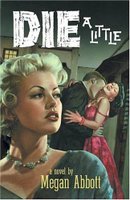 Best First Novel Published in the U.S. in 2005: Die a Little, by Megan Abbott (Simon & Schuster); Immoral, by Brian Freeman (St. Martin’s Minotaur); Baby Game, by Randall Hicks (Wordslinger Press); Dark Harbor, by David Hosp (Warner); Cold Granite, by Stuart MacBride (St. Martin’s Minotaur); and The Firemaker, by Peter May (St. Martin’s Minotaur)
Best British Novel Published in the UK in 2005: The Blood-Dimmed Tide, by Rennie Airth (Macmillan); Lifeless, by Mark Billingham (Little, Brown UK); Silence of the Grave, by Arnaldur Indridason (Harvill); A Good Day to Die, by Simon Kernick (Bantam Press); The Field of Blood, by Denise Mina (Bantam Press); and Lost, by Michael Robotham (Time Warner)
Best Thriller: Company Man, by Joseph Finder (St. Martin’s Minotaur); Consent to Kill, by Vince Flynn (Atria); The Inside Ring, by Michael Lawson (Doubleday); Seven Deadly Wonders, by Matthew Reilly (Simon & Schuster); Map of Bones, by James Rollins (Morrow); and Private Wars, by Greg Rucka (Bantam)
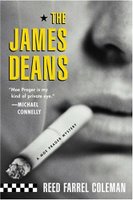 Best Paperback Novel: The James Deans, by Reed Farrell Coleman (Plume); Six Bad Things, by Charlie Huston (Ballantine); Night’s Child, by Maureen Jennings (McClelland & Stewart); Now You See Me, by Rochelle Krich (Ballantine); The Dead Don’t Get Out Much, by Mary Jane Maffini (Napoleon Publishing); and Inside Out, by John Ramsey Miller (Dell)
Best Short Story: “The Big Road,” by Steve Hockensmith (Alfred Hitchcock’s Mystery Magazine, May 2005); “Needle Match,” by Peter Lovesey (from Murder Is My Racket; Mysterious Press, edited by Otto Penzler); “There Is No Crime on Easter Island,” by Nancy Pickard (Ellery Queen Mystery Magazine, September-October 2005); “Love and Death in Africa,” by Joan Richter (Ellery Queen Mystery Magazine, January 2005); and “The Method in Her Madness,” by Tom Savage (Alfred Hitchcock’s Mystery Magazine, June 2005)
The winners in all of these categories will be announced during Bouchercon, to be held in Madison, Wisconsin, from September 28 through October 1.
But you decide that for yourself. This year’s nominees are ...
Best Novel: Bloodlines, by Jan Burke (Simon & Schuster); Red Leaves, by Thomas H. Cook (Harcourt); Mercy Falls, by William Kent Krueger (Atria); Sudden Death, by David Rosenfelt (Mysterious); Mr. Lucky, by James Swain (Ballantine); and The Power of the Dog, by Don Winslow (Knopf)
 Best First Novel Published in the U.S. in 2005: Die a Little, by Megan Abbott (Simon & Schuster); Immoral, by Brian Freeman (St. Martin’s Minotaur); Baby Game, by Randall Hicks (Wordslinger Press); Dark Harbor, by David Hosp (Warner); Cold Granite, by Stuart MacBride (St. Martin’s Minotaur); and The Firemaker, by Peter May (St. Martin’s Minotaur)
Best British Novel Published in the UK in 2005: The Blood-Dimmed Tide, by Rennie Airth (Macmillan); Lifeless, by Mark Billingham (Little, Brown UK); Silence of the Grave, by Arnaldur Indridason (Harvill); A Good Day to Die, by Simon Kernick (Bantam Press); The Field of Blood, by Denise Mina (Bantam Press); and Lost, by Michael Robotham (Time Warner)
Best Thriller: Company Man, by Joseph Finder (St. Martin’s Minotaur); Consent to Kill, by Vince Flynn (Atria); The Inside Ring, by Michael Lawson (Doubleday); Seven Deadly Wonders, by Matthew Reilly (Simon & Schuster); Map of Bones, by James Rollins (Morrow); and Private Wars, by Greg Rucka (Bantam)
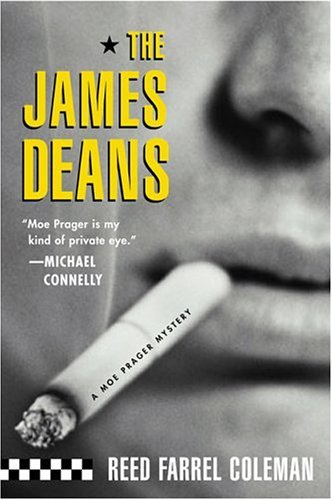 Best Paperback Novel: The James Deans, by Reed Farrell Coleman (Plume); Six Bad Things, by Charlie Huston (Ballantine); Night’s Child, by Maureen Jennings (McClelland & Stewart); Now You See Me, by Rochelle Krich (Ballantine); The Dead Don’t Get Out Much, by Mary Jane Maffini (Napoleon Publishing); and Inside Out, by John Ramsey Miller (Dell)
Best Short Story: “The Big Road,” by Steve Hockensmith (Alfred Hitchcock’s Mystery Magazine, May 2005); “Needle Match,” by Peter Lovesey (from Murder Is My Racket; Mysterious Press, edited by Otto Penzler); “There Is No Crime on Easter Island,” by Nancy Pickard (Ellery Queen Mystery Magazine, September-October 2005); “Love and Death in Africa,” by Joan Richter (Ellery Queen Mystery Magazine, January 2005); and “The Method in Her Madness,” by Tom Savage (Alfred Hitchcock’s Mystery Magazine, June 2005)
The winners in all of these categories will be announced during Bouchercon, to be held in Madison, Wisconsin, from September 28 through October 1.
A Toast to Bond’s Papa
Were he still alive (instead of having died in 1964), spy novelist Ian Fleming would today be celebrating his 98th birthday. He was born on May 28, 1908, to a member of the British Parliament and his wife, aspired to be a diplomat (but failed the Foreign Office qualifying exam), instead became a journalist with Reuters news service, and then went on to join British Naval Intelligence during World War II (a fact that has inspired many a novel). The dashing Fleming created an even more dashing spy in the form of James Bond, secret agent 007, who first appeared in the 1953 novel Casino Royale (currently being adapted by Hollywood for the third time, with a film release date in November 2006). Fleming wrote 12 Bond books in total, as well as nine short stories featuring the same ever-randy and resourceful character. He also penned (for his only son, Caspar) the children’s story Chitty Chitty Bang Bang (1964), which was turned into a 1968 movie starring Dick Van Dyke and Sally Ann Howes.
Saturday, May 27, 2006
When Covers Are Two of a Kind
All the recent hullabaloo over Kaavya Viswanathan, the previously unpublished Harvard sophomore who raked in close to $500,000 for a two-book deal with Little, Brown and Company, only to have her first novel (How Opal Mehta Got Kissed, Got Wild, and Got a Life) exposed as rife with plagiarized passages, got me to thinking more about a trend I’ve noticed over the last couple of years: books that feature strikingly similar, if not exactly the same artwork on their covers. Publishers of crime fiction seem to be particularly prone to this abuse of originality, but they certainly aren’t alone. How many times have you spotted a novel or other book that duplicates the cover photo from a different work you have seen or read?
The causes of this trend seem pretty obvious. Corporate publishers, looking to enhance their bottom lines by producing more and more titles, and trying to capitalize on marketplace crazes (though, really, how many Da Vinci Code knockoffs does the world need?) are prone these days to hasten the draft-to-finished-book process. As a consequence, they’re susceptible to using the same art as others. The fact that they can use identical artwork results from the creation and consolidation of stock photography companies, notably Corbis, Getty Images, and JupiterMedia, which make it easy and relatively cheap for publishers to find high-quality images that designers can use in putting together book covers. Also in the mix here, I suspect, is a calculation by publishers that their readers simply won’t notice that they’re employing the identical book jacket art (or even titles) that others have used before. In the same way as George W. Bush thinks nobody will notice when he says one thing and does another, or companies responsible for failures or tragedies swear they’ll mend their ways but ultimately don’t, so publishers believe that readers have short enough memories that they can duplicate jacket art without public complaints or even awareness.
Wasn’t it William Ralph Inge, the English author-prelate, who said, “Originality is undetected plagiarism”? Of course, what publishers didn’t expect was that some few of us would notice this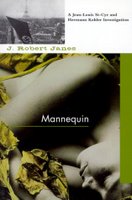
 proliferation of copycat covers. In fact, I’ve been keeping a small file on my computer of such book jackets. (Click on each for an enlargement.)
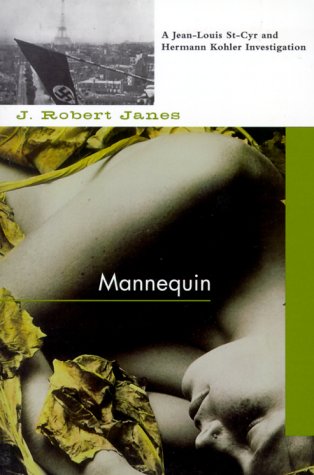
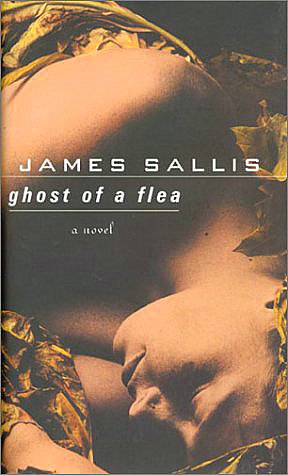
Exhibit A: The cover from a 1999 Soho paperback edition of J. Robert Janes’ Mannequin, alongside the 2001 Walker hardcover edition of James Sallis’ Ghost of a Flea. The jacket photo, taken by Paul Winternitz, is treated only slightly differently on each book.

 Exhibit B: Sometimes book designers will tint stock photos, hoping thereby to create “new” images. That was surely the intent behind the jacket on Forge’s hardcover version of Stuart M. Kaminsky’s Midnight Pass (2003). However, there’s no mistaking its similarity to the shot fronting the Abacus paperback edition of José Carlos Somoza’s The Art of Murder (2004). The photo is Getty stock art by Denis Felix.

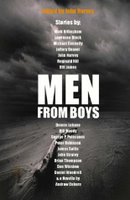 Exhibit C: A similar approach was taken in producing these next two covers. For the Hyperion hardback edition of T. Jefferson Parker’s Cold Pursuit (2003), a photograph of what looks like a large, snaking branch on a beach has been washed over with an electric blue tint that pairs handsomely with the book’s yellow title. Now, contrast that with the same shot, employed on the front of Men from Boys, a 2003 British collection of short crime fiction edited by the award-winning John Harvey. In the latter, the image has been turned slightly so that the branch protrudes from the bottom of the frame, and the sky has taken on an ominous gray that shadows both sand and sea.
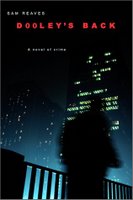
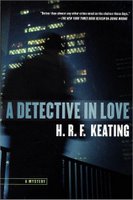 Exhibit D: Another trick is to use only some portion of a full-size image for your cover, hoping that nobody else will do the same. And it’s true, someone cruising fast through a bookstore’s crowded stacks probably wouldn’t realize immediately that the photo fronting the hardback edition of H.R.F. Keating’s A Detective in Love (2002) is the same one from which the original face of Sam Reaves’ Dooley’s Back (2002) was drawn. Note that the indistinct figure hustling along on the left side of Keating’s novel graces the lower-right quadrant of Reaves’ book.

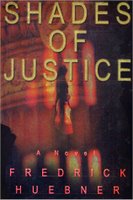 Exhibit E: Cover designers often “flip” photos to lend stock images uniqueness. They might also lighten or darken the original shot. Both techniques were employed to separate the Soho Press hardcover version of Peter Lovesey’s Diamond Dust (2002) from the original, 2001 Simon & Schuster edition of Frederick Huebner’s Shades of Justice. But there’s no mistaking that both began with the same photo by David H. Wells.

 Exhibit F: Overlaying a photograph with text or even another, vaguer image can distinguish one cover from another, too. For the façade of Code to Zero, Ken Follett’s 2000 thriller, publisher Dutton slapped a series of code-suggesting numbers onto a shot later used by Little, Brown for Walter Mosley’s second Fearless Jones novel, Fear Itself (2003).

 Exhibit G: Copycat covers aren’t only found in the crime fiction/mystery section of bookstores, though. Publishers are probably right that there’s considerably less likelihood of consumers noticing duplication if artwork is used on books in different genres, attracting separate audiences. Yet one needn’t try too hard to locate twin covers across category lines. Just compare the jacket from Jim Fusilli’s 2004 Putnam release, Hard, Hard City, with that of Between Two Rivers, a mainstream 2004 novel, written by Nicholas Rinaldi and published by HarperCollins.

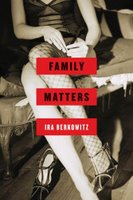 Exhibit H: The latest comparison, in that same vein, might be between the jacket of Ira Berkowitz’s noirish crime novel, Family Matters, released just last month by Justin, Charles & Company, and the front of Seduction, a book about “the aesthetic of erotic femininity,” written by fashion authority Caroline Cox and scheduled for publication (by Collins Design) in the fall.
Now, I don’t live under any fantasy that publishers with more figures in their incomes than I have numbers in my Social Security card will, having been caught out for duplicating covers in this way, reform their behavior. But it’s always good to let them know that those of us who read widely aren’t as oblivious as they think.
The causes of this trend seem pretty obvious. Corporate publishers, looking to enhance their bottom lines by producing more and more titles, and trying to capitalize on marketplace crazes (though, really, how many Da Vinci Code knockoffs does the world need?) are prone these days to hasten the draft-to-finished-book process. As a consequence, they’re susceptible to using the same art as others. The fact that they can use identical artwork results from the creation and consolidation of stock photography companies, notably Corbis, Getty Images, and JupiterMedia, which make it easy and relatively cheap for publishers to find high-quality images that designers can use in putting together book covers. Also in the mix here, I suspect, is a calculation by publishers that their readers simply won’t notice that they’re employing the identical book jacket art (or even titles) that others have used before. In the same way as George W. Bush thinks nobody will notice when he says one thing and does another, or companies responsible for failures or tragedies swear they’ll mend their ways but ultimately don’t, so publishers believe that readers have short enough memories that they can duplicate jacket art without public complaints or even awareness.
Wasn’t it William Ralph Inge, the English author-prelate, who said, “Originality is undetected plagiarism”? Of course, what publishers didn’t expect was that some few of us would notice this
 proliferation of copycat covers. In fact, I’ve been keeping a small file on my computer of such book jackets. (Click on each for an enlargement.)
Exhibit A: The cover from a 1999 Soho paperback edition of J. Robert Janes’ Mannequin, alongside the 2001 Walker hardcover edition of James Sallis’ Ghost of a Flea. The jacket photo, taken by Paul Winternitz, is treated only slightly differently on each book.

 Exhibit B: Sometimes book designers will tint stock photos, hoping thereby to create “new” images. That was surely the intent behind the jacket on Forge’s hardcover version of Stuart M. Kaminsky’s Midnight Pass (2003). However, there’s no mistaking its similarity to the shot fronting the Abacus paperback edition of José Carlos Somoza’s The Art of Murder (2004). The photo is Getty stock art by Denis Felix.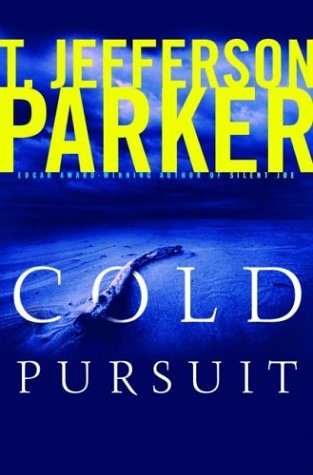
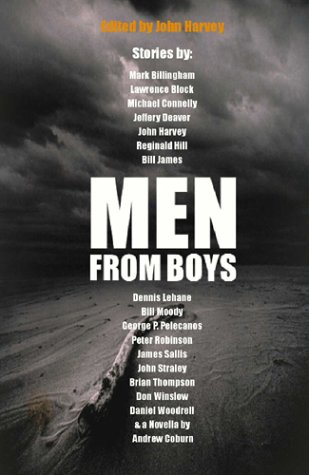 Exhibit C: A similar approach was taken in producing these next two covers. For the Hyperion hardback edition of T. Jefferson Parker’s Cold Pursuit (2003), a photograph of what looks like a large, snaking branch on a beach has been washed over with an electric blue tint that pairs handsomely with the book’s yellow title. Now, contrast that with the same shot, employed on the front of Men from Boys, a 2003 British collection of short crime fiction edited by the award-winning John Harvey. In the latter, the image has been turned slightly so that the branch protrudes from the bottom of the frame, and the sky has taken on an ominous gray that shadows both sand and sea.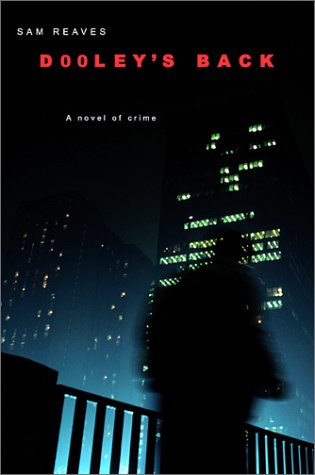
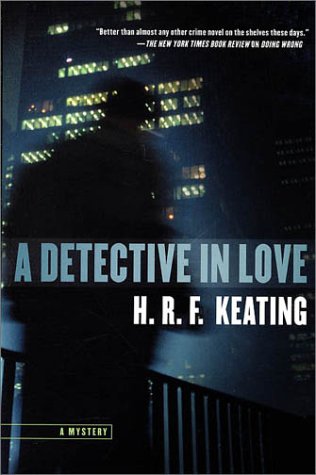 Exhibit D: Another trick is to use only some portion of a full-size image for your cover, hoping that nobody else will do the same. And it’s true, someone cruising fast through a bookstore’s crowded stacks probably wouldn’t realize immediately that the photo fronting the hardback edition of H.R.F. Keating’s A Detective in Love (2002) is the same one from which the original face of Sam Reaves’ Dooley’s Back (2002) was drawn. Note that the indistinct figure hustling along on the left side of Keating’s novel graces the lower-right quadrant of Reaves’ book.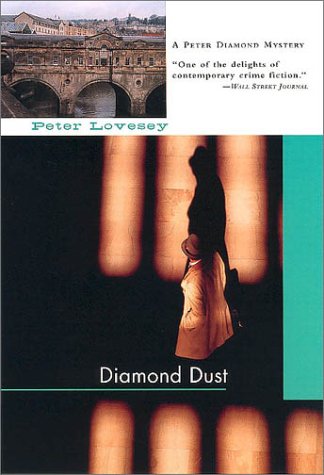
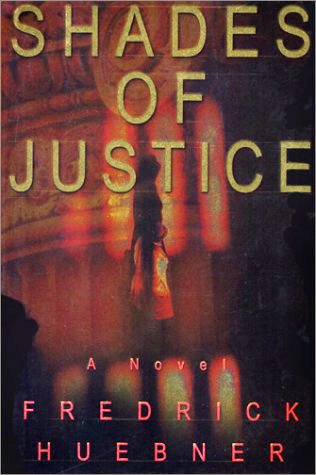 Exhibit E: Cover designers often “flip” photos to lend stock images uniqueness. They might also lighten or darken the original shot. Both techniques were employed to separate the Soho Press hardcover version of Peter Lovesey’s Diamond Dust (2002) from the original, 2001 Simon & Schuster edition of Frederick Huebner’s Shades of Justice. But there’s no mistaking that both began with the same photo by David H. Wells.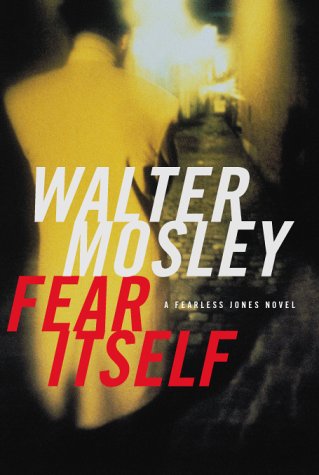
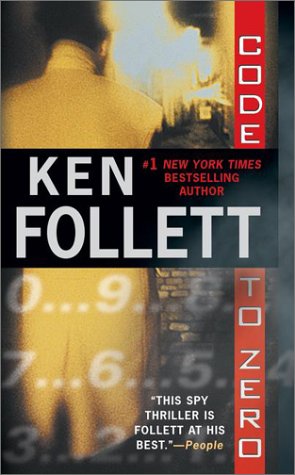 Exhibit F: Overlaying a photograph with text or even another, vaguer image can distinguish one cover from another, too. For the façade of Code to Zero, Ken Follett’s 2000 thriller, publisher Dutton slapped a series of code-suggesting numbers onto a shot later used by Little, Brown for Walter Mosley’s second Fearless Jones novel, Fear Itself (2003).
 Exhibit G: Copycat covers aren’t only found in the crime fiction/mystery section of bookstores, though. Publishers are probably right that there’s considerably less likelihood of consumers noticing duplication if artwork is used on books in different genres, attracting separate audiences. Yet one needn’t try too hard to locate twin covers across category lines. Just compare the jacket from Jim Fusilli’s 2004 Putnam release, Hard, Hard City, with that of Between Two Rivers, a mainstream 2004 novel, written by Nicholas Rinaldi and published by HarperCollins.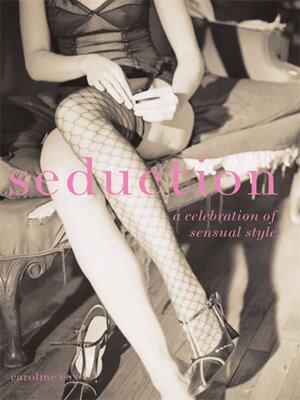
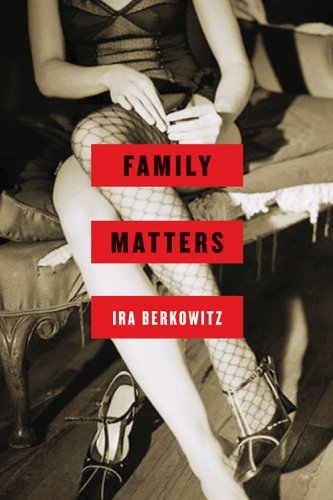 Exhibit H: The latest comparison, in that same vein, might be between the jacket of Ira Berkowitz’s noirish crime novel, Family Matters, released just last month by Justin, Charles & Company, and the front of Seduction, a book about “the aesthetic of erotic femininity,” written by fashion authority Caroline Cox and scheduled for publication (by Collins Design) in the fall.
Now, I don’t live under any fantasy that publishers with more figures in their incomes than I have numbers in my Social Security card will, having been caught out for duplicating covers in this way, reform their behavior. But it’s always good to let them know that those of us who read widely aren’t as oblivious as they think.
Judgment on Ambler
The fact that The Rap Sheet blog happens to have debuted in the same week Slate magazine chose to publish a series of essays about pulpish crime fiction is coincidental. That I have now managed to create three posts around those essays is no accident. Before we bid Slate’s special section a long good-bye, let me direct you to critic Stephen Metcalf’s fine treatise on how 20th-century English author Eric Ambler invented the modern spy novel by doing away, “once and for all, with cloak-and-dagger melodrama in favor of the qualmish chill of realism.” Although Ambler’s best-known espionage work is probably 1939’s The Mask of Dimitrios (aka A Coffin for Dimitrios), Metcalf chooses to focus, instead, on his 1938 novel Epitagh for a Spy, a distinctive combination of detective tale and spy story that Metcalf commends particularly for its “relaxed urbanity and its tolerance for commonplace experience.”
Gayle Lynds on a Bubble
 Today on the Murderati Bubble, Barry Award-winning author Elaine Flinn talks with thrillermeistress extraordinaire Gayle Lynds about her latest novel, The Last Spymaster, and ... well ... mostly silly stuff. (’Tis the nature of the Bubble.)
Flinn, whose most recent book is Deadly Collection (2005), has recently subjected David Montgomery, Paul Guyot, Stephen Booth, Elaine Viets, Denise Hamilton, and others to similar treatment. All are accessible on the Murderati blog Flinn shares with fellow mystery authors Pari Noskin Taichert, Denise Dietz, Naomi Hirahara, Jeffrey Cohen, Simon Wood, and J.T. Ellison.
Friday, May 26, 2006
Crashing Dash’s Pad
Honestly, The Rap Sheet aspires to be more than a birthday blog, but hey, it’s been a big week.
Dashiell Hammett was born on this date, 1894. Lots has been written about Hammett, and I won’t try to improve on any of it, especially what has already appeared on the Mother Ship; so instead, I’d like to share this tour of Hammett’s apartment that was posted by San Francisco writer Mark Coggins in January. Coggins is the creator of the August Riordan series, which began with The Immortal Game (recently reissued by those shrewd folks at Bleak House Books), and continues with the forthcoming Candy from Strangers. Mark is a very interesting P.I. writer, well worth your attention (and in the interest of full disclosure, I should add he’s a former Mystery News interview subject of mine).
Happy Birthday, Dash.
Dashiell Hammett was born on this date, 1894. Lots has been written about Hammett, and I won’t try to improve on any of it, especially what has already appeared on the Mother Ship; so instead, I’d like to share this tour of Hammett’s apartment that was posted by San Francisco writer Mark Coggins in January. Coggins is the creator of the August Riordan series, which began with The Immortal Game (recently reissued by those shrewd folks at Bleak House Books), and continues with the forthcoming Candy from Strangers. Mark is a very interesting P.I. writer, well worth your attention (and in the interest of full disclosure, I should add he’s a former Mystery News interview subject of mine).
Happy Birthday, Dash.
Thursday, May 25, 2006
The “Gone, but Not Forgotten” Files
John Gregory Dunne would have been 74 today, and that’s reason enough to recall his impressive career. He’s primarily known today as the husband of Joan Didion, and the aftermath of his death in 2003 was the subject of  her most recent memoir, The Year of Magical Thinking. He was also the younger brother to Dominick Dunne, gossip maven to the stars, and the obvious model for a supporting character in the best mystery I’ve read this year.
But beyond familial connections, Dunne was also a writer of the first tier. Equally at home in fiction, non-fiction, and Hollywood, he published in 1997 one of the great modern classics of crime fiction, True Confessions. Taking more than a few cues from the infamous Black Dahlia murder of 1947, True Confessions explores the masks that obscure the faces of even close family, while dissecting the official Los Angeles power structure and the Catholic Church. Dunne and Didion collaborated on the screenplay for the Ulu Grosbard film, itself a noir treasure.
In between novels and film assignments, Dunne contributed frequently to The New York Review of Books, writing numerous reviews, essays, and political commentary. True, his career contained some dreck amongst the nuggets of gold, but he was never less than compelling.
I first encountered John Gregory Dunne in the mid-’80s, while I was still in college. I had taken full advantage of “student discount” magazine subscriptions, and it was during this time that Dunne began writing a column about writing for Esquire. To my knowledge, few of those pieces have been collected, although the best of the bunch, “Laying Pipe,” appears in Regards, his posthumous collection. In that essay, he describes how he wrote The Red White and Blue, plowing ahead despite lucrative interruptions from Hollywood. Among the charming idiosyncrasies divulged was Dunne’s habit of not beginning a book until he knew both the first and last lines.
As I said, those were marvelous essays, and well worth spending time in the microfilm room at your local public library to read. Meanwhile, the years have rolled, I’m older, he’s gone, but his work still makes me smile and shake my head in admiration.
 her most recent memoir, The Year of Magical Thinking. He was also the younger brother to Dominick Dunne, gossip maven to the stars, and the obvious model for a supporting character in the best mystery I’ve read this year.
But beyond familial connections, Dunne was also a writer of the first tier. Equally at home in fiction, non-fiction, and Hollywood, he published in 1997 one of the great modern classics of crime fiction, True Confessions. Taking more than a few cues from the infamous Black Dahlia murder of 1947, True Confessions explores the masks that obscure the faces of even close family, while dissecting the official Los Angeles power structure and the Catholic Church. Dunne and Didion collaborated on the screenplay for the Ulu Grosbard film, itself a noir treasure.
In between novels and film assignments, Dunne contributed frequently to The New York Review of Books, writing numerous reviews, essays, and political commentary. True, his career contained some dreck amongst the nuggets of gold, but he was never less than compelling.
I first encountered John Gregory Dunne in the mid-’80s, while I was still in college. I had taken full advantage of “student discount” magazine subscriptions, and it was during this time that Dunne began writing a column about writing for Esquire. To my knowledge, few of those pieces have been collected, although the best of the bunch, “Laying Pipe,” appears in Regards, his posthumous collection. In that essay, he describes how he wrote The Red White and Blue, plowing ahead despite lucrative interruptions from Hollywood. Among the charming idiosyncrasies divulged was Dunne’s habit of not beginning a book until he knew both the first and last lines.
As I said, those were marvelous essays, and well worth spending time in the microfilm room at your local public library to read. Meanwhile, the years have rolled, I’m older, he’s gone, but his work still makes me smile and shake my head in admiration.
That’s One Way to Work Out Aggression
There are plenty of stories about restaurant waiters spitting on food in retaliation against obnoxious diners, and somewhat fewer tales of café baristas serving bossy customers who want decaffeinated coffee with high-octane fuel, instead. But beware of pissing off a novelist, because he or she may just get their revenge in print. The best part of a new Seattle Times exchange between interviewer Adam Woog and author Donna Leon (Through a Glass Darkly) comes when Woog asks her about a particularly offensive neighbor in Venice, Italy.
Q: You killed off a noisy neighbor in one book.
A: Ahhh! This woman plagued my life for four years! I had just come back from a trip and was asleep, and I woke at about 4 a.m. with this terrible noise--gunshots or something. For the next four years, every other night or so--in the summer, when everyone’s windows are open--her television was on at deafening volumes, from 11 at night till 5 in the morning.
Q: Was she hard of hearing?
A: No! She was just a nasty old cow. If I called her to turn it down she wouldn’t. She was mean as a snake, and universally reviled in the neighborhood. Italians are pretty humane about speaking well of old people, but no one had a good word for her. Finally she died, but not before I put her in a book and beat her head in with a statue of Padre Pio.
A Prize By Any Other Name ...
Forgive me if my face went absolutely blank at the announcement of nominees for this year’s Duncan Lawrie Dagger Award. The what award? Somehow, I managed to miss the memo about how the British Crime Writers Association (CWA) was renaming its esteemed Gold Dagger Award after a private, London-based bank, which has agreed to kick in the noteworthy sum of £20,000 for the top prize winner. (Ah, what money can buy in our sponsors-obsessed age.)
Anyway, the half dozen nominees for this “biggest crime-writing prize in the world” are:
● The Chemistry of Death, by Simon Beckett (Bantam Press)
● Raven Black, by Ann Cleeves (Macmillan)
● Red Leaves, by Thomas H. Cook (Quercus)
● Safer Than Houses, by Frances Fyfield (Little, Brown)
● Wolves of Memory, by Bill James (Constable)
● A Thousand Lies, by Laura Wilson (Orion)
The winner will be announced during a black tie/evening dress dinner on June 29 at London’s Waldorf Hilton Hotel.
Last year’s Cartier winner was Scottish novelist Ian Rankin.
Anyway, the half dozen nominees for this “biggest crime-writing prize in the world” are:
● The Chemistry of Death, by Simon Beckett (Bantam Press)
● Raven Black, by Ann Cleeves (Macmillan)
● Red Leaves, by Thomas H. Cook (Quercus)
● Safer Than Houses, by Frances Fyfield (Little, Brown)
● Wolves of Memory, by Bill James (Constable)
● A Thousand Lies, by Laura Wilson (Orion)
The winner will be announced during a black tie/evening dress dinner on June 29 at London’s Waldorf Hilton Hotel.
* * *
By the way, I don’t want to fail to mention that American novelist Elmore Leonard was the recipient of the CWA’s 2006 Cartier Diamond Dagger Award for lifetime achievement. This commendation was actually presented to the 80-year-old novelist in early May, but that was before the new Rap Sheet debuted. We offer our own round of cheers to Mr. Leonard, even if it’s belated.Last year’s Cartier winner was Scottish novelist Ian Rankin.
Mommie Damndest
When James M. Cain is mentioned nowadays, it’s usually in association with his first novel, 1934’s The Postman Always Rings Twice, which has been filmed three times, most recently in 1981 (with Jessica Lange and Jack Nicholson). As hard as a “six-minute egg” (to quote The New York Times), fatalistic in its viewpoint and unusually open in its treatment of sex and violence, Postman was banned as obscene in Boston and Canada, but won Cain the admiration of American critic Edmund Wilson, who labeled the novelist the “poet of the tabloid murder.” (Raymond Chandler wasn’t nearly so admiring; he dismissed Cain as “a Proust in greasy overalls.”) Cain went on to publish more than a dozen subsequent novels, many with historical settings, and put his stamp on the field of film noir, before he died at age 85 in 1977. However, explains novelist Laura Lippman, “the conventional wisdom is that he never equaled his debut novel, The Postman Always Rings Twice.”
But Lippman insists that conventional wisdom is wrong. Writing in Slate, the Baltimore author (whose ninth private eye Tess Monaghan novel, No Good Deeds, should hit bookstores late next month) instead applauds Mildred Pierce, Cain’s somewhat less-celebrated 1941 novel of greed, ambition, and betrayal, as “my favorite Cain work ... the unicorn of crime fiction, a noir novel with no murder and very little crime.”
Lippman observes: “With this book’s subversively skeptical view of maternal love, Cain proved that noir could be set in the most domestic, middle-class locales. He also showed that a man can write beautifully from a woman’s point of view.” She goes on to decry the sanitized 1941 film version of Mildred Pierce, for which star Joan Crawford won an Academy Award, because it eliminated the adultery from Cain’s grim yarn and substituted murder--considered somehow more acceptable to film audiences. The movie also changed the novel’s “cleverer” ending. And Lippman concludes with an anecdote sure to send Cain fans running to their bookshelves for confirmation:
But Lippman insists that conventional wisdom is wrong. Writing in Slate, the Baltimore author (whose ninth private eye Tess Monaghan novel, No Good Deeds, should hit bookstores late next month) instead applauds Mildred Pierce, Cain’s somewhat less-celebrated 1941 novel of greed, ambition, and betrayal, as “my favorite Cain work ... the unicorn of crime fiction, a noir novel with no murder and very little crime.”
Lippman observes: “With this book’s subversively skeptical view of maternal love, Cain proved that noir could be set in the most domestic, middle-class locales. He also showed that a man can write beautifully from a woman’s point of view.” She goes on to decry the sanitized 1941 film version of Mildred Pierce, for which star Joan Crawford won an Academy Award, because it eliminated the adultery from Cain’s grim yarn and substituted murder--considered somehow more acceptable to film audiences. The movie also changed the novel’s “cleverer” ending. And Lippman concludes with an anecdote sure to send Cain fans running to their bookshelves for confirmation:
Read Lippman’s full essay here.Cain, who didn’t believe in advances, sold Mildred Pierce, his fourth novel, for $5,000, a significant sum at the time. To celebrate the sale, [biographer Roy] Hoopes writes, Cain bought a snowball maker, like the one he remembered from his boyhood. The snowballs weren’t much good, but the machine made divine mint juleps. This is an apt metaphor for Mildred Pierce, a book that delivers much more of a wicked kick than expected, especially if you’ve been raised on the saccharine pieties of the film.
Wednesday, May 24, 2006
Do Bestsellers Need to Be Reviewed?
Editor’s note: One of the things I hope we’ll do more of in The Rap Sheet is feature commentary by published crime writers and professional critics. Dick Adler, who reviews mysteries and thrillers for the Chicago Tribune, and who’s recently seen the publication of Dreams of Justice, a collection of his reviews and essays, sent me the following observations about how he selects books worthy of reviewing. I hope you will find this piece as entertaining as I did.
 I sometimes wonder if I’m short-changing readers by deliberately not reviewing the latest certain-to-be-bestsellers by writers whose names have become household words. Don’t these genre icons deserve critical attention as well as their hefty royalty checks?
In a better world, one where newspapers and magazines have limitless space for reviews, the answer would be, “Of course they do.” But out of the 60 or 70 books a month I get sent by publishers, I have space to write about 12 to 14 of them in any kind of coherent way that doesn’t look like a laundry list.
If the author of previous bestsellers seems to be trying something new, moving into virgin territory, he or she certainly deserves to be reviewed--even if I know that their publishers have already collected a string of heavyweight blurbs to fill the back jacket cover and have signed up for co-op advertising deals with bookstores to guarantee sales.
But if the book in question is the eighth or 16th in a series whose past successes guarantee a spot on the bestseller lists, isn’t my review irrelevant? If I liked the book, who gives a flying press release? If I didn’t, who will be warned and/or dissuaded by my rapier-like savagery?
Not all bestsellers get ignored in my column. When I got an advance reader copy of a book called The Da Vinci Code, I had already reviewed a couple of early thrillers by Dan Brown. I liked his latest, in spite of its lame ending, and suggested a longer, standalone review. This was many weeks before the book took off like a literary missile and went on to earn the jealousy of other writers, the wrath of religious true believers, and what looks like a permanent place on bestseller lists. But had all of that happened before I decided to review The Da Vinci Code, I probably would have passed and given the space to the next Dan Brown.
Every regular reviewer I know has personal areas of special interest as well as places they’d rather not visit. My own preferences include darker shades of noir, mysteries set in foreign countries or unfamiliar cities, and ones that reinvent various periods of history. As for the kinds of mysteries that my hand naturally moves away from, I’ll read 20 pages of anything: 10 if it’s about cats. Cozies for the most part don’t shout, “Review me!” although I have been pleasantly surprised by many books that fall into that category.
In general, I try to observe that wonderful dictum of Anthony Boucher, the man who invented serious crime reviewing: “The important distinction is not between the schools of the whodunit but between the good and bad books whatever the school.”
The absolute best thing about the planning and writing of my column is that I get to choose the books I review--a freedom not available to all reviewers, many of whom must take on what editors send them or risk not being asked again. Stories set in Chicago get special consideration on my list: a provincial admission, perhaps, but one appreciated by readers. Veteran writers who have slipped from the public eye for no discernable reason other than the pressures of publishing fancy also have a leg up.
And best of all are those new writers and their publishers who take chances and work hard to improve the field. Olen Steinhauer, Reggie Nadelson, Jim Kelly, Barbara Nadel, Nichelle D. Tramble, Jacqueline Winspear, Qiu Xiaolong, and Rebecca C. Pawel aren’t household names as yet, and they may never make it to a bestseller list. But I’d rather review their books than virtually any of the blockbusters blocking the doors at the big chain bookstores.
* * *
On those occasions when I venture into the land of introspection (usually prompted by no decent baseball on television), 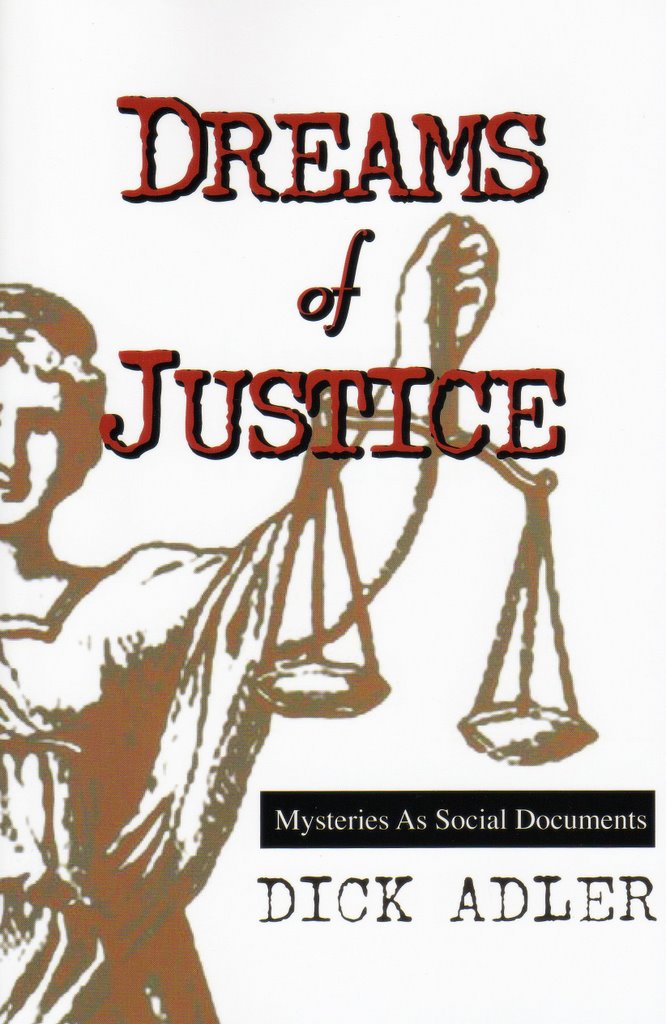 I sometimes wonder if I’m short-changing readers by deliberately not reviewing the latest certain-to-be-bestsellers by writers whose names have become household words. Don’t these genre icons deserve critical attention as well as their hefty royalty checks?
In a better world, one where newspapers and magazines have limitless space for reviews, the answer would be, “Of course they do.” But out of the 60 or 70 books a month I get sent by publishers, I have space to write about 12 to 14 of them in any kind of coherent way that doesn’t look like a laundry list.
If the author of previous bestsellers seems to be trying something new, moving into virgin territory, he or she certainly deserves to be reviewed--even if I know that their publishers have already collected a string of heavyweight blurbs to fill the back jacket cover and have signed up for co-op advertising deals with bookstores to guarantee sales.
But if the book in question is the eighth or 16th in a series whose past successes guarantee a spot on the bestseller lists, isn’t my review irrelevant? If I liked the book, who gives a flying press release? If I didn’t, who will be warned and/or dissuaded by my rapier-like savagery?
Not all bestsellers get ignored in my column. When I got an advance reader copy of a book called The Da Vinci Code, I had already reviewed a couple of early thrillers by Dan Brown. I liked his latest, in spite of its lame ending, and suggested a longer, standalone review. This was many weeks before the book took off like a literary missile and went on to earn the jealousy of other writers, the wrath of religious true believers, and what looks like a permanent place on bestseller lists. But had all of that happened before I decided to review The Da Vinci Code, I probably would have passed and given the space to the next Dan Brown.
Every regular reviewer I know has personal areas of special interest as well as places they’d rather not visit. My own preferences include darker shades of noir, mysteries set in foreign countries or unfamiliar cities, and ones that reinvent various periods of history. As for the kinds of mysteries that my hand naturally moves away from, I’ll read 20 pages of anything: 10 if it’s about cats. Cozies for the most part don’t shout, “Review me!” although I have been pleasantly surprised by many books that fall into that category.
In general, I try to observe that wonderful dictum of Anthony Boucher, the man who invented serious crime reviewing: “The important distinction is not between the schools of the whodunit but between the good and bad books whatever the school.”
The absolute best thing about the planning and writing of my column is that I get to choose the books I review--a freedom not available to all reviewers, many of whom must take on what editors send them or risk not being asked again. Stories set in Chicago get special consideration on my list: a provincial admission, perhaps, but one appreciated by readers. Veteran writers who have slipped from the public eye for no discernable reason other than the pressures of publishing fancy also have a leg up.
And best of all are those new writers and their publishers who take chances and work hard to improve the field. Olen Steinhauer, Reggie Nadelson, Jim Kelly, Barbara Nadel, Nichelle D. Tramble, Jacqueline Winspear, Qiu Xiaolong, and Rebecca C. Pawel aren’t household names as yet, and they may never make it to a bestseller list. But I’d rather review their books than virtually any of the blockbusters blocking the doors at the big chain bookstores.
Sand, Sea, and Slaying
Wow! To welcome the approaching summer season (which isn’t approaching nearly fast enough, if you ask me), the online magazine Slate is spending this week celebrating pulp fiction, both past and present. Stories already available:
● “My Favorite Beach Book: What Scott Turow, Joyce Carol Oates, and Michael Connelly Read on Vacation”
● “Requiem for Pulp Fiction: The Bygone Days of Seedy Literature,” by Bryan Curtis
● “Pulp Valentine: Patricia Highsmith’s Erotic Lesbian Thriller,” by Terry Castle
● “Pulp Valentine: Donald Westlake’s Parker Novels Are a Genre of Their Own,” by John Banville
● “Purloined Poe: Fact Is Invading Fiction,” by Christopher Benfey
● “Pulp Valentine: Erskine Caldwell’s Lurid Vision of the American South,” by Dwight Garner
Check here for additional essays as the week progresses.
● “My Favorite Beach Book: What Scott Turow, Joyce Carol Oates, and Michael Connelly Read on Vacation”
● “Requiem for Pulp Fiction: The Bygone Days of Seedy Literature,” by Bryan Curtis
● “Pulp Valentine: Patricia Highsmith’s Erotic Lesbian Thriller,” by Terry Castle
● “Pulp Valentine: Donald Westlake’s Parker Novels Are a Genre of Their Own,” by John Banville
● “Purloined Poe: Fact Is Invading Fiction,” by Christopher Benfey
● “Pulp Valentine: Erskine Caldwell’s Lurid Vision of the American South,” by Dwight Garner
Check here for additional essays as the week progresses.
The Stylish Subversive
In case you missed it, the Los Angeles Times Sunday Book Review this last weekend published an admiring, even hagiographic profile of James Sallis, a born Southerner and legendary prose stylist, whose latest novel is Cripple Creek. Written by fellow author Judith Freeman, the piece muses on what being classified as a crime fictionist might have cost Sallis, in terms of popularity; but concludes with a comparison to Raymond Chandler that encourages Sallis to appreciate his classification for all its worth:
Reading Sallis, we can’t help but be aware of the intelligence behind the work, as well as how much reading he has done in his life. He’s an erudite man, and this informs the work at the deepest level. For him, reading is the most subversive activity in life: “Open any true book,” he has written, “and you begin to see the world through somebody else’s eyes. Nothing is more redeeming than that, or more dangerous.”
Mystery is not a subgenre to him, but rather a finely shaped container to be filled with all the tender morsels of his imagination--those fine literary foods of which he speaks. Like [Walter] Mosley, whose most engaging novels are still the Easy Rawlins books, Sallis is most successful when telling stories about cops and crooks. Yet who can blame him for wanting to flex different literary muscles? The amazing thing about Sallis is the way he continues to mine a genre for all its possibilities.
He seems to have adopted an attitude toward mysteries very much like the one Chandler eventually did. Early on, Chandler longed to write literary fiction, to try different forms and avoid getting stuck. In 1939, the year he published his first novel, The Big Sleep, he had his wife, Cissy, type into a notebook his plans for the future. He wanted to write a dramatic novel, as well as six or seven fantastic stories--an ironic tale, a spooky story, a farcical tale, even a pure fairy tale, as well as three more detective novels to be written over the next two years.
At the end of this list, Cissy added a comment, using her nickname for him. “Dear Raymio,” she wrote, “you’ll have fun looking at this maybe, and seeing what useless dreams you had. Or perhaps it will not be fun.” Chandler responded to her comment several times over the next few years. “It was not,” he wrote a year later. A few months after that, he reaffirmed this feeling with one word: “Check.” In another nine months, he wrote, “Double Check,” and three years later, “God help us.”
But by the time he made his last notation, dated almost five years later, he had changed his mind. “Yes it was [fun],” he wrote, “because I had now achieved it, although not with these stories.” He put his trust in the mystery novel, and to the end of his life it served him very well. It appears to be doing the same for Sallis, who is one of our finest existential novelists. In a world beset by violence, he reminds us of what it is to be a human being.
Monday, May 22, 2006
Opening Arguments
To quote the immortal Mark Twain, “Rumors of my death have been greatly exaggerated.” Yes, there have been a number of loyal January Magazine readers who surmised, given the unexplained absence of “The Rap Sheet” since November, that yours truly must either be  terminally depressed, or just plain terminal. In fact, neither was the case. I simply found myself overwhelmed by the success that January’s crime-fiction newsletter was enjoying.
When I began producing “The Rap Sheet” back in the spring of 1999 (wow, can it really have been that long ago?), it was of a manageable size. The first edition ran to only 2,684 words long. However, in the ensuing years, what with the addition of mini-reviews written by others, our crime-fiction report expanded to more than 16,000 words and turned into a daunting project for all concerned. It also started to seem ... well, rather old-fashioned. As the Web filled up with new and more timely sources of useful information about this genre, our schedule--posting a magazine-like journal once a month, with no chance to update the thing in between--appeared out of step. It was a resource made available via the most modern technology, but one that simultaneously ignored some of the great opportunities presented by that same technology.
So by last year, I was feeling frustrated with the venture. But, just when I was ready to throw in the towel, to tell readers that I couldn’t keep going at the pace I’d been maintaining, January Magazine's Crime Fiction department won the Gumshoe Award for Web sites, making it only the second site (after Sarah Weinman’s Confessions of an Idiosyncratic Mind in 2004) to be so commended for its coverage of this literary field. It would’ve looked strange to fold up “The Rap Sheet” at that moment, right after having earned such acclaim, partly on the popularity of the “Sheet”; so instead I persevered, hoping to ride the invigoration brought on by the Gumshoe win for at least a year or two more. No such luck. A few months later, I was right back where I’d started--exhausted and needing a change. Therefore, as January closed out 2005, I placed the newsletter on an unannounced hiatus, unsure of its future.
In the meantime, last summer I launched a blog called Limbo. It started out as a lark, a limitless venue for my writings about politics, culture, television, and other subjects, but soon turned into something of which I was rather proud. Readers and other bloggers both started to notice my efforts and compliment me on them; another blog, The Reaction, even began adding some of my Limbo posts to its own contents. And I found that, far from being the technological throwback I imagined was my shameful lot in life, I was in fact somewhat adept at designing blogs and working out their code-writing quirks. It all started me thinking: Could “The Rap Sheet” be transformed from a once-a-month periodical into a freer-flowing, ever-expanding blog, instead?
What you’re looking at now is the result of those musings. My intentions with this revamped Rap Sheet are similar to those I expressed when I initially launched the newsletter in January. I want to spread the word about new and noteworthy crime novels. I want to keep readers apprised of developments in the genre and alert them to stories found elsewhere, in print or on the Web, that might increase their interest in crime novelists. And I want to celebrate the mystery story--past and present--for its intentions and potential (not always realized, sadly). But this new Rap Sheet can do other things, besides. I hope it will become a place for timely info about awards presentations and clues to the best available new reading matter, as well as home to what we used to call in the newspaper game “brites”: short posts intended to be humorous, whether their subject is some oddball statement made by a “name” author or a contributor’s rant about an annoying trend in the genre. The Rap Sheet should be flexible enough, too, to address crime fiction’s role in the larger world of book publishing. (Two posts--here and here--about The New York Times’ choice of a “single best work of American fiction published in the last 25 years” already demonstrate that flexibility.)
To keep you in touch with, or introduce you to the astounding breadth of writing about crime fiction, we’ve discontinued January’s separate Crime Fiction Links page in favor of including those links--upwards of 200 so far--in this blog, where they can be updated more easily. We’ll limit our tendency to review books here, and concentrate such criticism in the well-trafficked main pages of January Magazine. However, we’ll be taking advantage of this new format to occasionally expand our field of view from books to television and film, since crime fiction isn’t confined to a single modern medium. We’ll also try to keep you apprised of any close encounters we have with members of the crime-writing fraternity, especially if those meetings are (1) educational, (2) humorous in some regard, or (3) lubricated with copious amounts of drinking. Or all of the aforementioned.
Fortunately, several other January veterans have volunteered (and I do mean that literally) to help out. In the future, you’re likely to spot the occasional post by Anthony Rainone, Stephen Miller, Ali Karim, January editor Linda L. Richards (whose third Madeline Carter novel, Calculated Loss, is due out in September), and maybe even the wonderfully controversial Kevin Burton Smith. I’ll see what I can do, too, about coercing a few published crime writers to join us in this handsome new sandbox of ours.
Let us know what you think, as the reincarnated Rap Sheet tests its newfound freedom.
 terminally depressed, or just plain terminal. In fact, neither was the case. I simply found myself overwhelmed by the success that January’s crime-fiction newsletter was enjoying.
When I began producing “The Rap Sheet” back in the spring of 1999 (wow, can it really have been that long ago?), it was of a manageable size. The first edition ran to only 2,684 words long. However, in the ensuing years, what with the addition of mini-reviews written by others, our crime-fiction report expanded to more than 16,000 words and turned into a daunting project for all concerned. It also started to seem ... well, rather old-fashioned. As the Web filled up with new and more timely sources of useful information about this genre, our schedule--posting a magazine-like journal once a month, with no chance to update the thing in between--appeared out of step. It was a resource made available via the most modern technology, but one that simultaneously ignored some of the great opportunities presented by that same technology.
So by last year, I was feeling frustrated with the venture. But, just when I was ready to throw in the towel, to tell readers that I couldn’t keep going at the pace I’d been maintaining, January Magazine's Crime Fiction department won the Gumshoe Award for Web sites, making it only the second site (after Sarah Weinman’s Confessions of an Idiosyncratic Mind in 2004) to be so commended for its coverage of this literary field. It would’ve looked strange to fold up “The Rap Sheet” at that moment, right after having earned such acclaim, partly on the popularity of the “Sheet”; so instead I persevered, hoping to ride the invigoration brought on by the Gumshoe win for at least a year or two more. No such luck. A few months later, I was right back where I’d started--exhausted and needing a change. Therefore, as January closed out 2005, I placed the newsletter on an unannounced hiatus, unsure of its future.
In the meantime, last summer I launched a blog called Limbo. It started out as a lark, a limitless venue for my writings about politics, culture, television, and other subjects, but soon turned into something of which I was rather proud. Readers and other bloggers both started to notice my efforts and compliment me on them; another blog, The Reaction, even began adding some of my Limbo posts to its own contents. And I found that, far from being the technological throwback I imagined was my shameful lot in life, I was in fact somewhat adept at designing blogs and working out their code-writing quirks. It all started me thinking: Could “The Rap Sheet” be transformed from a once-a-month periodical into a freer-flowing, ever-expanding blog, instead?
What you’re looking at now is the result of those musings. My intentions with this revamped Rap Sheet are similar to those I expressed when I initially launched the newsletter in January. I want to spread the word about new and noteworthy crime novels. I want to keep readers apprised of developments in the genre and alert them to stories found elsewhere, in print or on the Web, that might increase their interest in crime novelists. And I want to celebrate the mystery story--past and present--for its intentions and potential (not always realized, sadly). But this new Rap Sheet can do other things, besides. I hope it will become a place for timely info about awards presentations and clues to the best available new reading matter, as well as home to what we used to call in the newspaper game “brites”: short posts intended to be humorous, whether their subject is some oddball statement made by a “name” author or a contributor’s rant about an annoying trend in the genre. The Rap Sheet should be flexible enough, too, to address crime fiction’s role in the larger world of book publishing. (Two posts--here and here--about The New York Times’ choice of a “single best work of American fiction published in the last 25 years” already demonstrate that flexibility.)
To keep you in touch with, or introduce you to the astounding breadth of writing about crime fiction, we’ve discontinued January’s separate Crime Fiction Links page in favor of including those links--upwards of 200 so far--in this blog, where they can be updated more easily. We’ll limit our tendency to review books here, and concentrate such criticism in the well-trafficked main pages of January Magazine. However, we’ll be taking advantage of this new format to occasionally expand our field of view from books to television and film, since crime fiction isn’t confined to a single modern medium. We’ll also try to keep you apprised of any close encounters we have with members of the crime-writing fraternity, especially if those meetings are (1) educational, (2) humorous in some regard, or (3) lubricated with copious amounts of drinking. Or all of the aforementioned.
Fortunately, several other January veterans have volunteered (and I do mean that literally) to help out. In the future, you’re likely to spot the occasional post by Anthony Rainone, Stephen Miller, Ali Karim, January editor Linda L. Richards (whose third Madeline Carter novel, Calculated Loss, is due out in September), and maybe even the wonderfully controversial Kevin Burton Smith. I’ll see what I can do, too, about coercing a few published crime writers to join us in this handsome new sandbox of ours.
Let us know what you think, as the reincarnated Rap Sheet tests its newfound freedom.
147 Candles Add Up to a Bonfire
 I was rather caught off-guard this morning, when I clicked over to Google and found this artwork at the top of the page. Google is known for its special-occasion illustrated headings, but it took me a few seconds to realize the significance of this particular one. All evidence points to there being a Sherlock Holmes fan in residence at that Brobdingnagian Internet search engine--and one pretty well versed in crime-fiction history, to boot. After all, how many regular folk happened to know that today was the birthday of Sir Arthur Conan Doyle, the Scottish-born doctor-turned-author who, in 1887, first introduced the world to fictional detective Holmes and his remarkably faithful sidekick, Dr. John H. Watson, in the novel A Study in Scarlet (originally titled A Tangled Skein)?
Conan Doyle was born in Edinburgh, to Irish parents, on May 22, 1859. He died of a heart attack on July 7, 1930, in the small town of Crowborough, in Sussex, England. In between, he worked as an ophthalmologist, took a voyage on an Arctic whaler, popularized skiing in Switzerland, did a stint as a doctor in the Second Boer War, stood twice (unsuccessfully) for election to the British Parliament, invented safety aids for use in World War I, tried to prove the existence of fairies, and incidentally created the best-known private investigator (and part-time cocaine addict) in fiction--a character he came to despise so much, that he tried to kill him off at Reichenbach Falls, in Meiringen, Switzerland. But Holmes’ fans refused to accept this death, and wrote so many letters to Conan Doyle, that the novelist finally relented and brought Sherlock back to life. The creation ultimately outlived the creator.
Sunday, May 21, 2006
Respect Is Overrated
Anthony Rainone has written a thoughtful post below regarding the soon-to-be-infamous New York Times Book Review survey of post-1980 fiction. This will, without a doubt, be great fodder for the blogosphere for several days.
I don’t disagree with a word Anthony has said; in fact, he may be guilty only of soft-pedaling the issue. Anyone who purports to discuss American life, particularly urban American life, in the last 25 years without mentioning the work of Lawrence Block or Ed McBain displays irrelevance that may be beyond hope of redemption.
But let me address a larger point--why is this even necessary? Why does the NYTBR even need to publish such a piece?
The easy answer, of course, is that it sells papers and provokes discussion, both of which will certainly be true. Fine; the Gray Lady has to make some money. But editor Sam Tanenhaus has managed to fall victim to one of the more pernicious practices of the past few years: making lists of books that “enlightened people” feel the need to read.
When I was in college, I was well familiar with lists of required books assigned by those who thought they knew better than I did what I needed to read. They are called syllabi, and I suppose during my late teens and early 20s, they were necessary and beneficial to my education. But while the pursuit of a good liberal arts education is a worthwhile goal that can stand a few reading commandments from on high, a little of this goes a long way.
Today, of course, even those of us with sheepskins well in hand are often confronted with “reading lists.” You see them in the Listmania section of Amazon.com. You see them in the “best of” lists that compete for our attention in December. BookSense publishes one every month that appears to be little more than a collection of press releases. There are even Web sites devoted to suggesting what we ought to be consuming, this one and this woman being among the most irritating.
Are these lists inherently bad? I suppose not. But they’re not very illuminating either, and can have the effect of diminishing one of the great joys of going to a public library or a bookstore--simply browsing the aisles waiting for something to catch your eye, something unanticipated, unheralded and perhaps well beyond the media’s shelf date. The day I go to the library with Nancy Pearl’s reading list in my hands is the day I start watching more television.
Thanks for your input, Sam. Maybe one of these days I’ll get around to reading Beloved. Right now, I’m pretty excited about the new Victor Gischler I stumbled upon at Barnes & Noble.
READ MORE: "Rank Insubordination," by Laura Miller (Salon).
I don’t disagree with a word Anthony has said; in fact, he may be guilty only of soft-pedaling the issue. Anyone who purports to discuss American life, particularly urban American life, in the last 25 years without mentioning the work of Lawrence Block or Ed McBain displays irrelevance that may be beyond hope of redemption.
But let me address a larger point--why is this even necessary? Why does the NYTBR even need to publish such a piece?
The easy answer, of course, is that it sells papers and provokes discussion, both of which will certainly be true. Fine; the Gray Lady has to make some money. But editor Sam Tanenhaus has managed to fall victim to one of the more pernicious practices of the past few years: making lists of books that “enlightened people” feel the need to read.
When I was in college, I was well familiar with lists of required books assigned by those who thought they knew better than I did what I needed to read. They are called syllabi, and I suppose during my late teens and early 20s, they were necessary and beneficial to my education. But while the pursuit of a good liberal arts education is a worthwhile goal that can stand a few reading commandments from on high, a little of this goes a long way.
Today, of course, even those of us with sheepskins well in hand are often confronted with “reading lists.” You see them in the Listmania section of Amazon.com. You see them in the “best of” lists that compete for our attention in December. BookSense publishes one every month that appears to be little more than a collection of press releases. There are even Web sites devoted to suggesting what we ought to be consuming, this one and this woman being among the most irritating.
Are these lists inherently bad? I suppose not. But they’re not very illuminating either, and can have the effect of diminishing one of the great joys of going to a public library or a bookstore--simply browsing the aisles waiting for something to catch your eye, something unanticipated, unheralded and perhaps well beyond the media’s shelf date. The day I go to the library with Nancy Pearl’s reading list in my hands is the day I start watching more television.
Thanks for your input, Sam. Maybe one of these days I’ll get around to reading Beloved. Right now, I’m pretty excited about the new Victor Gischler I stumbled upon at Barnes & Noble.
READ MORE: "Rank Insubordination," by Laura Miller (Salon).
Crime Fiction Doesn't Get Any Respect
New York Times Book Review editor Sam Tanenhaus conducted a survey asking several hundred writers, critics, editors, and “other literary sages” which book they consider to be the “single best work of American fiction published in the last 25 years.” The results appear in today’s paper. The book voted most influential (i.e., received the most votes) was Toni Morrison’s Beloved. It’s an outstanding work and clearly influential--though I actually preferred The Bluest Eye. The runners-up include several books by Don DeLillo, Cormac McCarthy, and Philip Roth, as well as books by Raymond Carver, Richard Ford, etc.
I’ve read Beloved and almost all of DeLillo’s works (a great writer who has influenced James Ellroy), as well many of the books on the runners-up list. The literary figures asked to vote are all estimable, and many are some of my all-time favorite writers--such as John Irving (who should have been on the runners-up list himself, certainly, for The World According to Garp or A Prayer for Owen Meany). No one can seriously argue that the selections on this list are not great books. Morrison is flat-out brilliant. And of course, things of this nature are subjective and fluid.
Still … still … Not one crime-fiction book on the runners-up list? Take a look at the Times Best Sellers list for this week. Do you see all the crime fiction/mystery/thriller (pick your camp) books on that rundown? Take this list and back-date it for the past 25 years, and you know what won’t change? The number of crime fiction/mystery/thriller books that the American public has been reading in large numbers and enjoying. Books that have been influencing the American culture. I’m not saying that numbers alone translate to greatness. I’m saying that preference should be considered in selecting those asked to vote. There should have been a greater selection (any selection) of those in the mystery/thriller community.
How can you not have Ed McBain, or Robert B. Parker, or Elmore Leonard, or Sue Grafton, or Michael Connelly, or Robert Crais, or Walter Mosley, or James Lee Burke (Are you kidding me? No Jim Burke?), or George Pelecanos, or even Dennis Lehane (for Mystic River) on the runners-up list, at least? These writers are my subjective choices off the top of my head, and my apologies for the obvious other numerous talented writers I am failing to mention. Oh--no Donald Westlake? Come on, New York Times! Crime fiction has produced, serious, influencing works of fiction not only in the past 25 years, but going back decades. Give us our due. The American public already has.
READ MORE: “Why Is Beloved Beloved?” by Stephen Metcalf (Slate); “In Search of the Best,” by A.O. Scott (The New York Times); “Debating the New ‘Best American Fiction’ List,” by Meghan O’Rourke (Slate).
I’ve read Beloved and almost all of DeLillo’s works (a great writer who has influenced James Ellroy), as well many of the books on the runners-up list. The literary figures asked to vote are all estimable, and many are some of my all-time favorite writers--such as John Irving (who should have been on the runners-up list himself, certainly, for The World According to Garp or A Prayer for Owen Meany). No one can seriously argue that the selections on this list are not great books. Morrison is flat-out brilliant. And of course, things of this nature are subjective and fluid.
Still … still … Not one crime-fiction book on the runners-up list? Take a look at the Times Best Sellers list for this week. Do you see all the crime fiction/mystery/thriller (pick your camp) books on that rundown? Take this list and back-date it for the past 25 years, and you know what won’t change? The number of crime fiction/mystery/thriller books that the American public has been reading in large numbers and enjoying. Books that have been influencing the American culture. I’m not saying that numbers alone translate to greatness. I’m saying that preference should be considered in selecting those asked to vote. There should have been a greater selection (any selection) of those in the mystery/thriller community.
How can you not have Ed McBain, or Robert B. Parker, or Elmore Leonard, or Sue Grafton, or Michael Connelly, or Robert Crais, or Walter Mosley, or James Lee Burke (Are you kidding me? No Jim Burke?), or George Pelecanos, or even Dennis Lehane (for Mystic River) on the runners-up list, at least? These writers are my subjective choices off the top of my head, and my apologies for the obvious other numerous talented writers I am failing to mention. Oh--no Donald Westlake? Come on, New York Times! Crime fiction has produced, serious, influencing works of fiction not only in the past 25 years, but going back decades. Give us our due. The American public already has.
READ MORE: “Why Is Beloved Beloved?” by Stephen Metcalf (Slate); “In Search of the Best,” by A.O. Scott (The New York Times); “Debating the New ‘Best American Fiction’ List,” by Meghan O’Rourke (Slate).
Wednesday, May 17, 2006
The Once and Future Spy Novelist
 Many years ago, and on the basis of a recommendation by one of my college journalism professors, I read a novel called The Defection of A.J. Lewinter. It turned out to be a spy thriller, the plot of which grew around the decision by an eccentric U.S. engineer, Augustus Lewinter, to switch sides, abscond to the Soviet Union with all of his knowledge about ballistic-missile nose-cone technology. This traitorous act incites a quite comical competition between intelligence agents representing the two Cold War rival countries, amid which the author illuminates deficiencies in both the democratic and socialist political models. Lewinter was pretty much my introduction to espionage fiction. It was also my introduction to novelist Robert Littell, a former Newsweek reporter who’d once been involved in the clandestine effort to make public the real story of Czechoslovakia’s 1968 invasion by the Soviet Union, and whose work has since been compared favorably with that of the rather better-known John le Carré (The Spy Who Came in from the Cold, The Constant Gardener, etc.).
I mention all of this by way of pointing you to an intriguing, in-depth, and rare interview with Littell that was posted this morning in January Magazine, the books-oriented Webzine I have helped edit for many years now. Over the course of Littell’s exchange with British freelance journalist Ali Karim, the novelist recounts his memories of World War II and the Cold War, as well as his brushes with fame (including an unlikely encounter with actor Errol Flynn); suggests that a former CIA counterintelligence chief might in fact have been a Soviet agent; explains the inspirations for his latest pair of novels, The Company and Legends; and worries that George W. Bush, “for all his posturing,” doesn’t begin to understand the terrorist threats present in our modern world.
If you’re already familiar with Littell’s excellent work, you won’t want to miss this interview. And if you’ve never read any of his 14 novels, this is just the sort of introduction to get you interested. Read on.
(Photograph by Ali Karim)
Godspeed, Mr. Doyle!
Yet another reason to go on living: British screenwriter/novelist David Pirie reports at his Web site that there’s “new life” ahead for his acclaimed historical series featuring the investigative duo of Arthur Conan Doyle and his mentor, Dr. Joseph Bell. Since publishing three Doyle and Bell books--The Patient’s Eyes (2001), The Night Calls (2002), and The Dark Water (2004)--Pirie and his often touchy protagonists pretty much disappeared. Just at the time when the thrilling and often frightening yarn, which had been unfurling in those last two novels, seemed finally on its way to a conclusion. But the author now brings word  that he has a new U.S. publisher, Pegasus, which will be bringing out The Dark Water in America come September; and that his next Doyle-Bell adventure, The Dead Time, should see print soon after that.
Meanwhile, a two-disk DVD set of Pirie’s 2000 British series featuring this pair of forensic crime-solvers in Edinburgh--who make brilliant stand-ins for Sherlock Holmes and Dr. John Watson, it should be noted--is scheduled for release in the States at the end of June. Murder Rooms: The Dark Beginnings of Sherlock Holmes, starring Ian Richardson and Charles Edwards, comprises four delightfully atmospheric tales: “The Patient’s Eyes,” “The Photographer’s Chair,” “The Kingdom of Bones,” and “The White Knight Stratagem.” If you missed those episodes when they were originally broadcast, this is your second chance to see them. Unfortunately, the original Murder Rooms pilot, Dr. Bell and Mr. Doyle, which had previously been released on DVD, isn’t included with this new set, and is currently unavailable.
 that he has a new U.S. publisher, Pegasus, which will be bringing out The Dark Water in America come September; and that his next Doyle-Bell adventure, The Dead Time, should see print soon after that.
Meanwhile, a two-disk DVD set of Pirie’s 2000 British series featuring this pair of forensic crime-solvers in Edinburgh--who make brilliant stand-ins for Sherlock Holmes and Dr. John Watson, it should be noted--is scheduled for release in the States at the end of June. Murder Rooms: The Dark Beginnings of Sherlock Holmes, starring Ian Richardson and Charles Edwards, comprises four delightfully atmospheric tales: “The Patient’s Eyes,” “The Photographer’s Chair,” “The Kingdom of Bones,” and “The White Knight Stratagem.” If you missed those episodes when they were originally broadcast, this is your second chance to see them. Unfortunately, the original Murder Rooms pilot, Dr. Bell and Mr. Doyle, which had previously been released on DVD, isn’t included with this new set, and is currently unavailable.
Assignment: Munich
If you were alive and reading detective fiction in the late 1980s and early ’90s, you probably recognize the name Bernie Gunther. The captivating creation of then still-green British novelist Philip Kerr, Gunther started out (in March Violets, 1989) as a 38-year-old ex-soldier and former Berlin cop, who in 1936--during the run-up to World War II--worked the often seedy streets of Adolf Hitler’s capital as a private eye specializing in missing-persons cases, of which there were appallingly many. Tough-guy Gunther went on to star in two more novels, The Pale Criminal (1990), and German Requiem (1991), the latter of which finds the war over, Berlin in shambles, and Bernie married and seeking some solace in Vienna. But after that third book, his adventures were over. Kaput. Kerr went on to other things, writing a number of standalone crime works (such as 1993’s Dead Meat, 1999’s The Shot, and his wonderful Sir Isaac Newton sleuthing yarn, 2002’s Dark Matter). He even branched out into children’s lit, penning a series of fantastical novels under the name P.B. Kerr.
But now it seems Bernie Gunther is returning from the grave. G.P. Putnam’s Sons’ fall 2006 catalogue contains a page devoted to The One from the Other, the unexpected fourth installment of Kerr’s memorable historical P.I. series, due out in early September. Apparently, much has changed since we last checked in on our cynical German hero. As Putnam explains:
You can say that again. Sign me up for a copy.
But now it seems Bernie Gunther is returning from the grave. G.P. Putnam’s Sons’ fall 2006 catalogue contains a page devoted to The One from the Other, the unexpected fourth installment of Kerr’s memorable historical P.I. series, due out in early September. Apparently, much has changed since we last checked in on our cynical German hero. As Putnam explains:
For Bernie Gunther, Berlin has become too dangerous, and he now works as a private detective in Munich. Business is slow and his funds are dwindling when a woman hires him to investigate her husband’s disappearance. No, she doesn’t want him back--he’s a war criminal. She merely wants confirmation that he is dead. It’s a simple job, but in postwar Germany, nothing is simple--nothing is what it appears to be. Accepting the case, Bernie takes on far more than he’d bargained for, and before long, he is on the run, facing enemies from every side.At 400 pages long, it sounds like a classic Gunther thriller. The question is, though, whether author Kerr intends to stop with The One from the Other, or will be continuing the Gunther series from this point onward.
* * *
Speaking of books to be on the watch for, Mark Coggins reported on his blog not so long ago that author Joe Gores, who in his 1975 thriller, Hammett, imagined detective-turned-novelist Dashiell Hammett returning to the mean streets of San Francisco in pursuit of a killer, is going to write a prequel to The Maltese Falcon (1930), which introduced private eye Sam Spade. In a letter to Coggins, Gores explains that “My title is Spade & Archer and I’m revving up the research right now. I have my own research from 1975 for Hammett, and am digging out a great deal of new stuff now. I hope to start writing the novel in March or April ... It is a really exciting project to be working on.”You can say that again. Sign me up for a copy.
Subscribe to:
Posts (Atom)